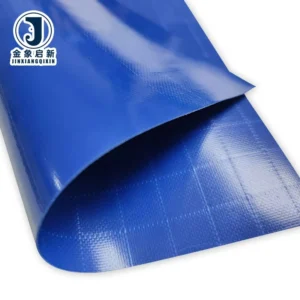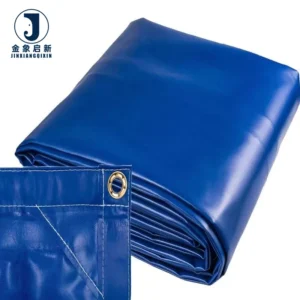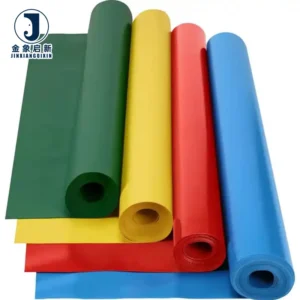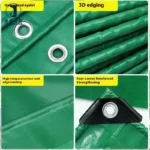
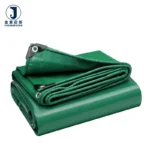
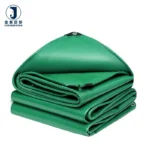
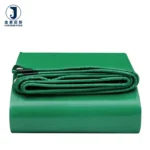
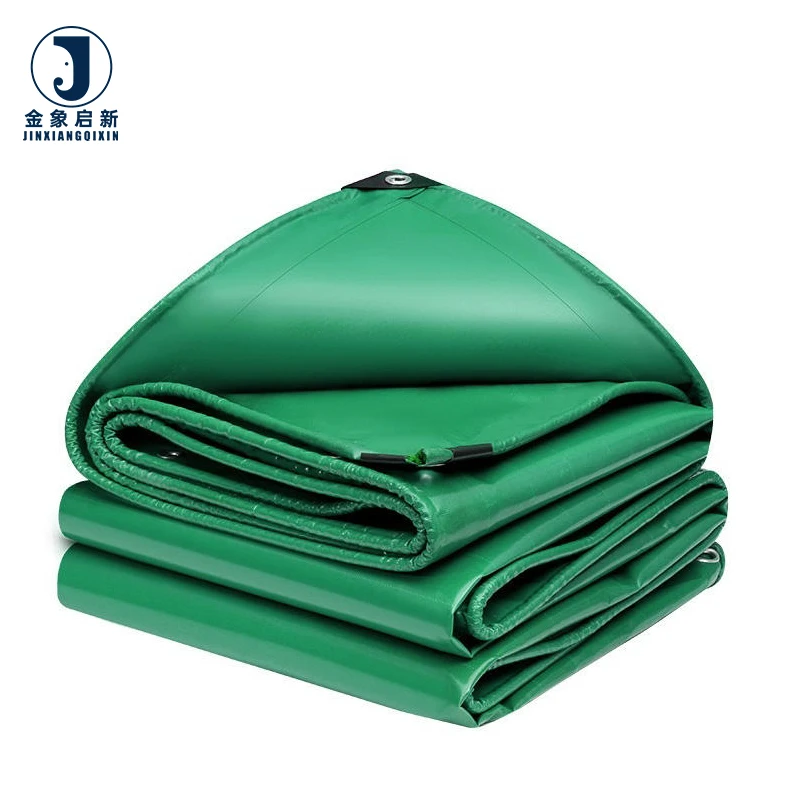
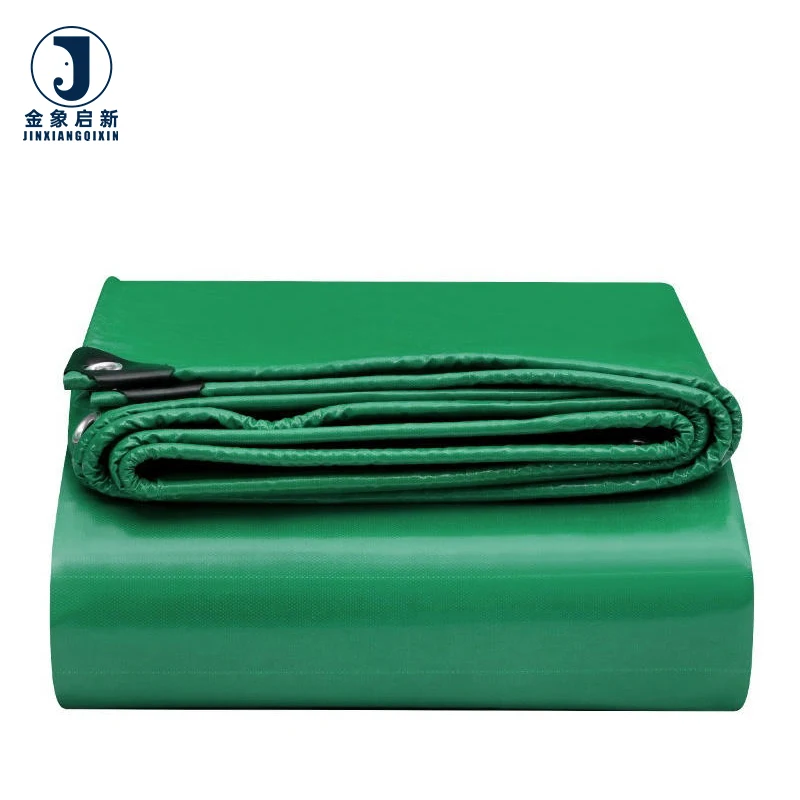
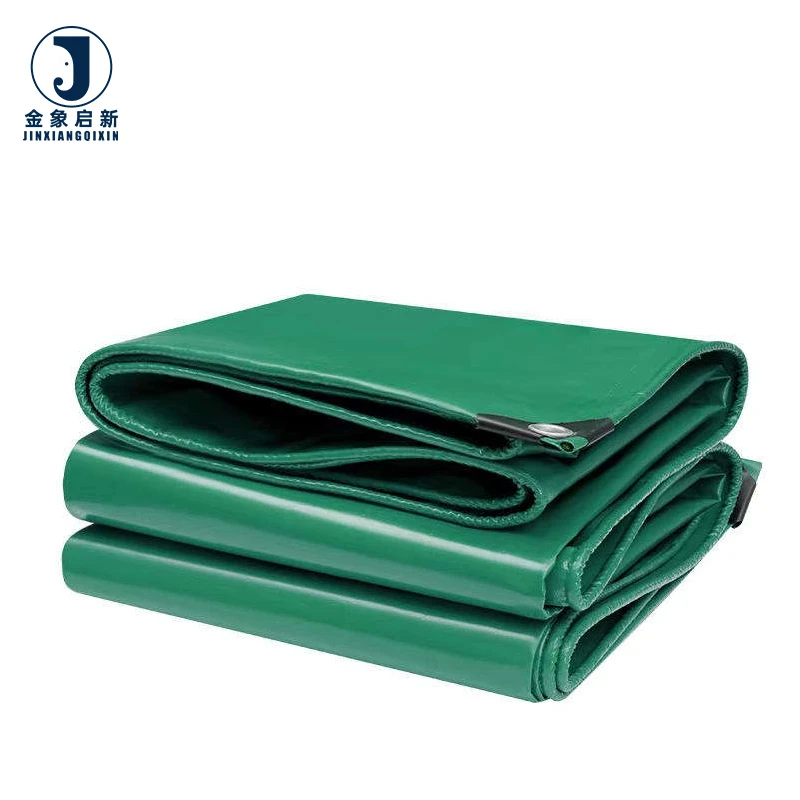
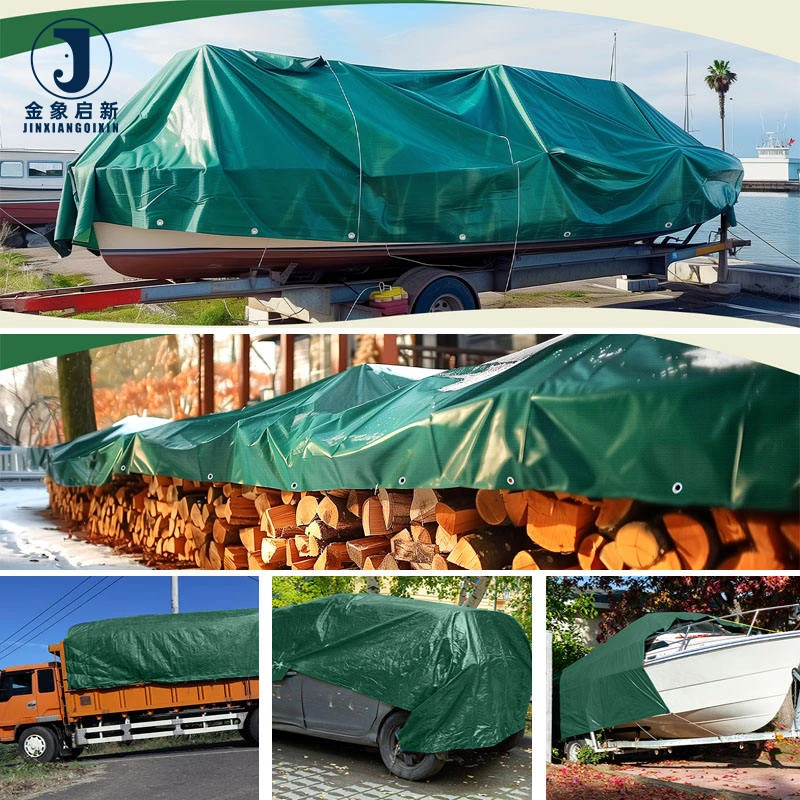
Precision Coating Control — Every roll undergoes in-process QA against the quoted specification, ensuring GSM consistency and documented traceability from base fabric to final dispatch.
Technical Specifications
| Parameter | Value |
|---|---|
| Product Type | PVC Coated Tarpaulin |
| Weight (GSM) | 500 to 800 g/m² (confirm grade required for your application) |
| Waterproof Rating | Anti-permeable ≥20KPa |
| Flame Retardant Grade | Flame retardant ≤10 seconds (grade not stated — request test report for your compliance standard) |
| Low-Temperature Flexibility | Will not fracture at -30°C |
| Coating Method | Heat combined with high-frequency |
| Anti-Corrosion | Acid, alkali and brine corrosion resistant |
| Mildew Proofing | Stated (test basis not stated in source) |
| Anti-Static | Stated (standard not confirmed — request surface resistance value) |
| Absorbability | Almost no absorbable of water, drying quickly after rain |
| Tensile Strength | High strength of tensile (test standard not stated in source) |
| Standards | ISO, CE |
Application Suitability
| Application | Exposure & Requirement |
|---|---|
| Mining and tunnelling ventilation duct covers | Continuous air movement, particulate abrasion, mandatory fire-retardant and anti-static site compliance |
| Industrial site equipment and machinery covers | Chemical splash, corrosive atmosphere, acid and alkali exposure, weather cycling |
| Aviation ground support and specialist structure fabric | High wind loading, membrane tension, regulatory fire classification, UV exposure |
| Transport and logistics side curtain fabric | Constant flexing at load points, road spray, tie-down abrasion, temperature extremes |
Why Certification Documentation Matters More Than the Quoted PVC Coated Tarpaulin fire retardant anti-static certified Label
A fabric that cannot prove its fire classification is simply fabric.
Buyers sourcing PVC Coated Tarpaulin fire retardant anti-static certified material for regulated environments often receive quotation sheets that claim performance without referencing a recognised test standard. [NEED_CITE: common industrial site compliance frameworks for flexible fabric ventilation ducts]. When the site inspector arrives and asks for the test report, the supplier then scrambles to produce one — or admits the grade was never tested. This creates project delays, failed inspections and in some cases, mandatory replacement at the buyer’s cost. The specification you quote must match the documentation you receive on the roll.
Ventilation Duct Compliance for Underground and Confined Spaces
Mining and tunnelling sites operate under strict fire and static discharge regulations. The PVC Coated Tarpaulin fire retardant anti-static certified range is engineered for these environments, where the fabric must resist ignition and dissipate static charge to prevent hazardous discharge in methane or dust-rich atmospheres. [NEED_CITE: anti-static surface resistance thresholds for underground ventilation materials]. Confirming the specific fire-retardant grade and anti-static value required by your site safety plan before ordering prevents non-compliance on delivery.
Coating Integrity Under Chemical and Corrosive Exposure
Industrial environments expose covers and duct fabric to chemical splash, alkaline dust, saline moisture and acidic condensation. The acid, alkali and brine corrosion resistant treatment on this PVC Coated Tarpaulin fire retardant anti-static certified fabric is designed for sustained contact with aggressive agents. The heat combined with high-frequency coating method ensures the coating remains bonded to the base fabric under chemical exposure, reducing the risk of delamination that compromises both protection and fire performance.
How Heat Combined with High-Frequency Coating Affects Weld Performance
The coating method directly determines how well panels can be joined on-site or in the workshop. Heat combined with high-frequency processing creates a molecular bond between the PVC coating and the base fabric, producing a surface that responds predictably to subsequent heat-sealing or welding. This matters when duct runs require field joints or when covers are fabricated from multiple panels — the weld must perform to the same standard as the parent fabric. [NEED_CITE: high-frequency versus hot-air weld behaviour on PVC coated fabrics]. A coating method that delivers consistent adhesion also supports low-temperature flexibility, with this fabric specified to remain fracture-free at -30°C, a critical boundary for cold-climate installations and winter transport exposure.
What Happens When Anti-Static Certification Is Missing at Site Inspection
Failing a site inspection due to missing or incorrect anti-static documentation halts installation and delays project timelines. Ventilation duct fabric delivered without the surface resistance value the site safety officer requires cannot be hung, regardless of how well it performs in every other respect. The PVC Coated Tarpaulin fire retardant anti-static certified specification must therefore be backed by a test report that names the standard, the measured value, and the testing laboratory. Sourcing teams should treat this documentation as part of the product itself, not an optional extra. [NEED_CITE: site compliance documentation requirements for anti-static flexible ductwork].
Why the Documentation Chain Defines the Purchase Decision
Sourcing from a facility with nearly 30 years focused on coated fabric production means process control is embedded at every stage, not added at final inspection. Three full production lines and 36 sets of equipment support bulk roll capacity with scheduled throughput. The 10-person R&D team handles material selection, custom sizing and sample development — allowing specification adjustments before production begins rather than after. Dedicated QA/QC at every production stage with 100% inspection before shipment ensures every roll is checked against its own specification sheet, not a batch average. Samples are developed within days for custom requirements, reducing the lead time between inquiry and confirmed order.
Documentation & Verification
- Material specification sheet stating GSM, base fabric denier and coating weight per roll
- Test reports for flame-retardant and anti-static grades matched to your site compliance standard
- Pre-shipment inspection record with documented GSM verification per roll
- ISO and CE certificates applicable to the supplied batch
- Certificate of origin and customs support documentation for export clearance
Fabrication, Handling & Storage
- Heat-seal joined panels at temperatures matched to the heat combined with high-frequency coating to prevent delamination at flex points
- Store rolls upright on pallets to prevent permanent creasing across the 500 to 800 g/m² coated surface
- Allow cold-weather rolls to reach ambient temperature before unrolling to protect low-temperature flexibility rated to -30°C
- Clean chemical-exposed covers with pH-neutral agents to preserve the acid, alkali and brine corrosion resistant surface treatment
- Verify weld seam strength on test pieces before committing full panel fabrication runs
What to Include in Your Inquiry
Specify the fire-retardant classification and anti-static surface resistance value required by your site regulations, along with the compliance standard your inspector will reference. Confirm whether you require raw roll stock for in-house fabrication or finished panels cut to dimension. Provide your target roll width, annual volume and any colour or marking requirements so the specification can be aligned to your procurement schedule.
Frequently Asked Questions
Q: What fire-retardant standard does this PVC tarpaulin meet, and can you provide a third-party test report?
A: The flame-retardant performance is stated at under 10 seconds, but the specific test standard must be confirmed against your site requirement. A third-party test report can be issued per batch — request the standard reference your compliance framework demands before production begins.
Q: How is anti-static performance measured, and what surface resistance value is guaranteed?
A: Anti-static treatment is applied during coating, but the guaranteed surface resistance value depends on the standard specified for your application. Request the measured value and test method on the documentation package so your site safety officer can verify compliance before installation.
Q: How do you verify GSM on each roll before shipment to prevent weight discrepancy on arrival?
A: Every roll is individually weighed and checked against the material specification sheet during 100% pre-shipment inspection. The documented GSM verification travels with the packing list, so the weight you receive matches the weight you ordered — not a lighter substitute.
Q: What is the recommended heat-sealing or welding method for joining panels on-site?
A: The heat combined with high-frequency coating method responds well to compatible heat-sealing equipment. Run test welds on offcuts first to establish temperature and dwell time settings, then verify peel strength before committing to full-length panel joints.
Q: Can this fabric be supplied with the specific certification required by mine site regulations?
A: Certification alignment depends on the regulatory framework governing your site. Provide the exact standard reference during inquiry so the test report, material specification sheet and pre-shipment documentation are prepared to match before the rolls ship.