

Technical Specification Clarity — base fabric denier, coating method and tensile data published per grade so technical buyers can match material properties to structural and environmental load without relying on verbal claims.
Technical Specifications
| Parameter | Value |
|---|---|
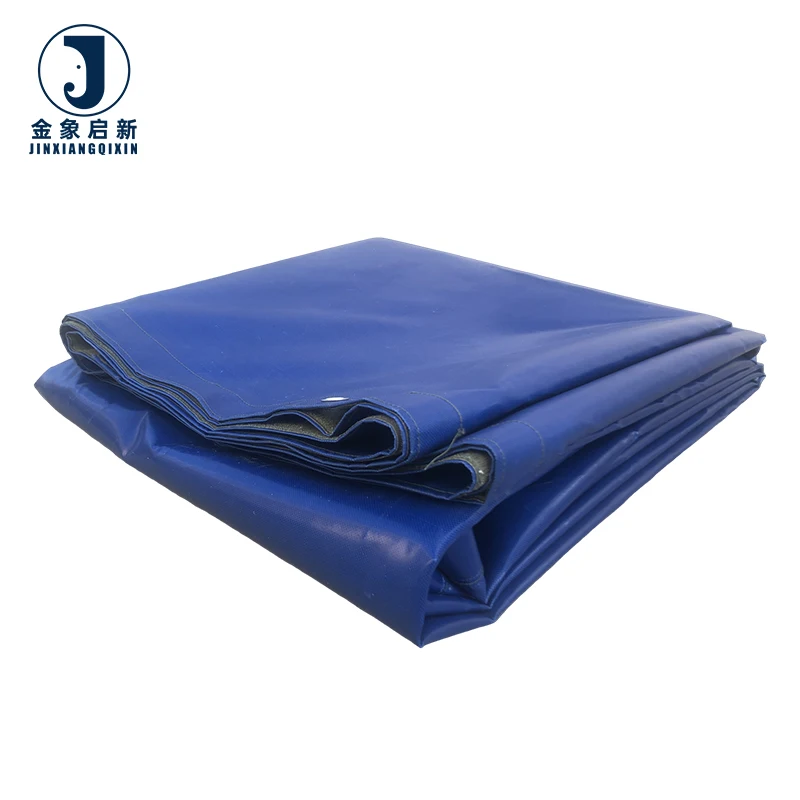
| Product Type | PVC Coated Tarpaulin Roll |
| Base Fabric | 100% high tenacity polyester yarn |
| Base Fabric Denier | 500D / 1000D / 500D–2000D (varies by grade) |
| Coating Material | PVC |
| Coating Method | Lamination technology and hot melt coating technology |
| Total Thickness | 0.35–0.45 mm (500D) / 0.70–1.0 mm (1000D) / 1.2–1.5 mm (super heavy) |
| Weight (GSM) | 400–500 (500D) / 700–1000 (1000D) / 1100–1500 (super heavy) |
| Tensile Strength (Warp) | 1500–2000 N/5cm (500D) / 2000–2500 N/5cm (1000D) / 2500–3000 N/5cm (super heavy) |
| Tensile Strength (Weft) | 1200–1800 N/5cm (500D) / 1800–2200 N/5cm (1000D) / 2200–2800 N/5cm (super heavy) |
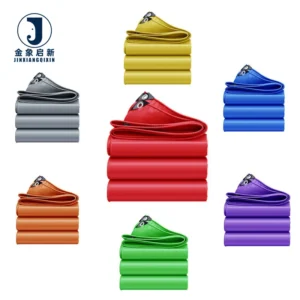
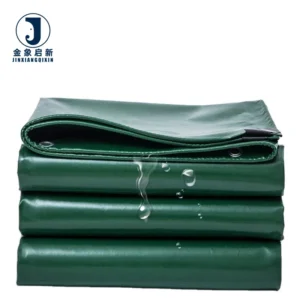
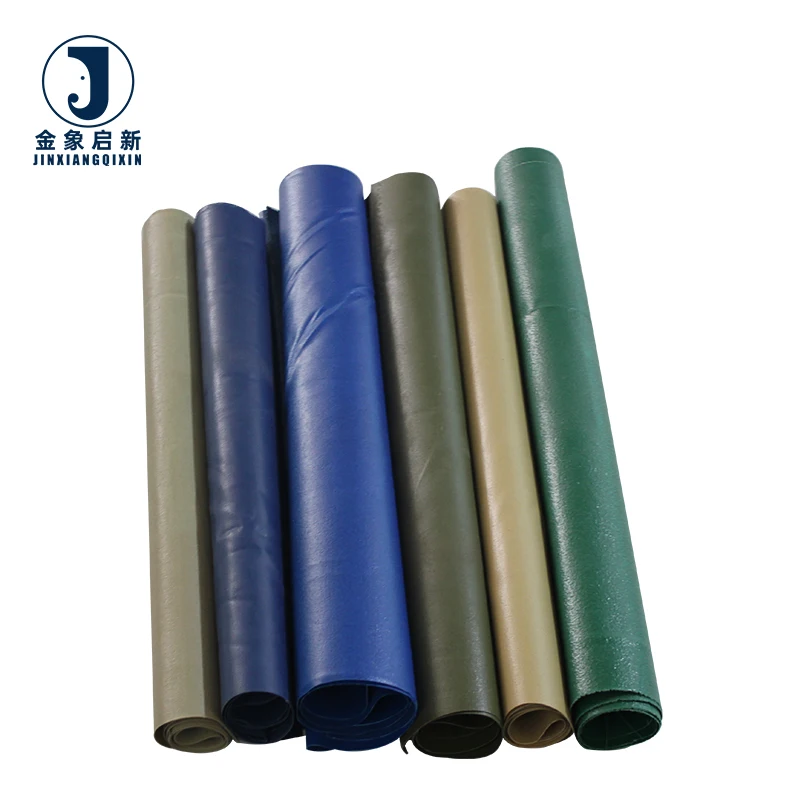
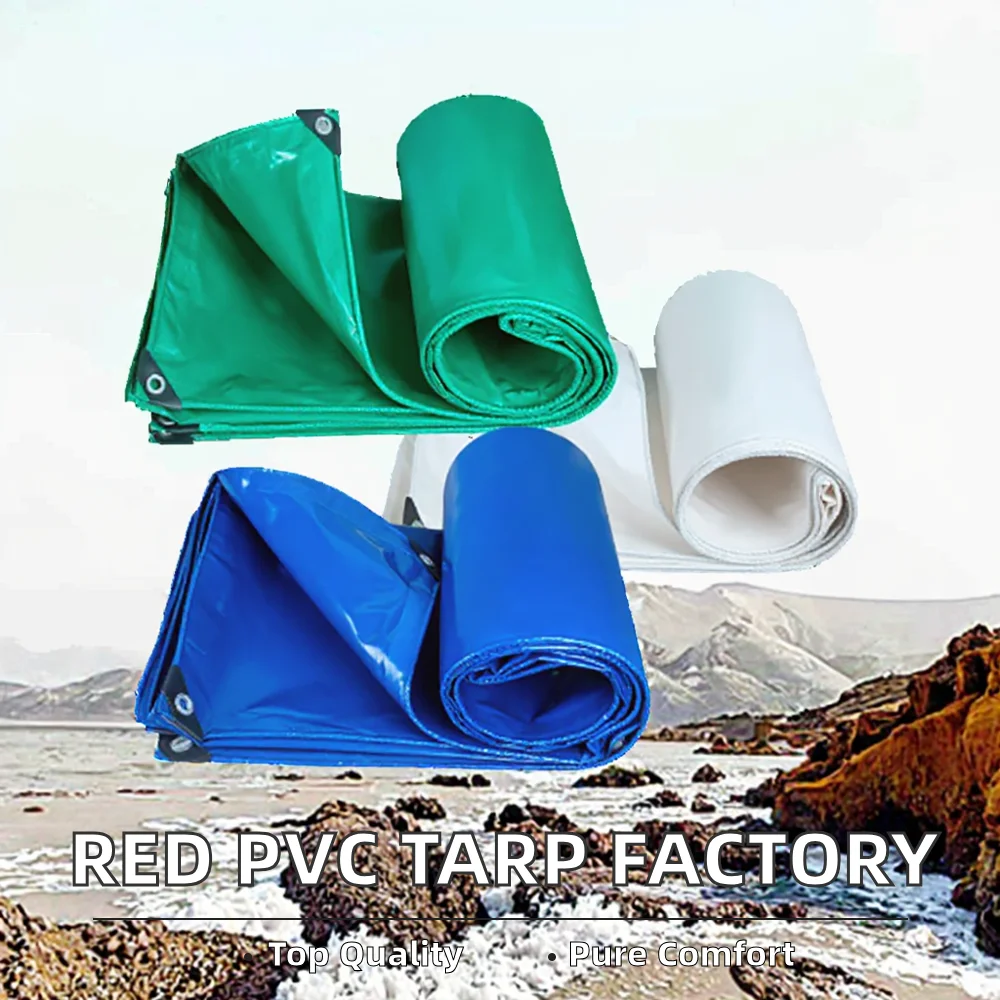
| Colour Options | Blue, Blue/Orange, Green, Grey, Black, Clear, Grey/Green, Orange, or custom |
| Surface Finish | Glossy and matte available (confirm grade for specific order) |
| Treatment Options | Flame retardant, anti-static, cold resistant, anti-mildew, anti-UV (grades available on request — confirm standard required) |
| Welding Tear Strength | Excellent (qualitative — request test report for project specification) |
| Weather Resistance | Suited to extended outdoor exposure |
| Standards | ISO, CE |
Application Suitability
| Application | Exposure & Requirement |
|---|---|
| Membrane and tensioned structures | Permanent tensile load, wind uplift, UV exposure — requires super heavy grade with high warp/weft tensile balance |
| Industrial ventilation ducting | Continuous airflow, fire and static discharge risk in mining or tunnelling — demands certified flame retardant and anti-static treatment |
| Inflatable structure fabric | Repeated inflation cycles, seam stress at weld lines — needs consistent coating adhesion and reliable welding tear strength |
| Engineering protective cloth | Abrasion from equipment contact, weather and chemical splash — calls for heavy-duty 1000D base with verified tensile data |
| Industrial pipe canopy | Long-term outdoor coverage, pooling water, temperature fluctuation — requires cold-resistant and anti-mildew treatment |
Why PVC Coated Tarpaulin Fabric Specification Matters Beyond the GSM Number
GSM alone does not determine whether the fabric will hold at the weld line under load — base fabric denier and coating adhesion method are equally critical.
Technical buyers often receive a quotation stating a single GSM figure, yet the delivered rolls measure lighter than agreed, or a flame-retardant claim appears on the invoice without a corresponding test report. When the PVC coated tarpaulin fabric specification lacks denier, coating method and treatment grade, there is no baseline to hold the supplier accountable at pre-shipment inspection. [NEED_CITE: tensile and tear test methods for coated fabrics per ISO 1421]
Coating Adhesion and Its Effect on Weld Integrity
The hot melt coating and lamination technologies used across this PVC coated fabric range directly control how well the PVC layer bonds to the polyester base. When heat-seam fabrication is applied, poor adhesion causes delamination at the weld before the fabric itself reaches its tear threshold. Specifiers working on membrane structures or ventilation ducts should request the coating adhesion value alongside the PVC coated tarpaulin fabric specification to confirm the seam will survive cyclic loading.
Denier Progression and Structural Load Matching
The three-tier denier system — 500D through 1000D up to 2000D — maps directly to warp and weft tensile strength. A 500D base suits lightweight engineering covers where flex is moderate, while tensioned membrane fabricators selecting fabric for permanent structural load need the super heavy grade to resist sustained wind uplift and snow load without progressive yarn failure. [NEED_CITE: relationship between base fabric denier and coated fabric tensile performance]
Reading the PVC Coated Tarpaulin Fabric Specification Correctly
Weight in GSM tells you how much PVC and polyester are present per square metre, but it does not reveal how that weight is distributed between coating and base fabric. Two rolls at the same GSM can have very different tear resistance if one uses a denser base yarn and thinner coating while the other relies on a heavy coating over a lighter weave. Hot melt coating tends to produce stronger adhesion and better peel resistance than simple lamination, which matters where welded seams carry the design load. The available glossy and matte finish options also influence surface behaviour: glossy sheds dirt and water more readily, while matte reduces glare and can improve ink adhesion for printed markings. Flame retardant and anti-static treatments are offered across the range, but the specific grade must be confirmed against the fire classification required in the destination market.
What Happens When the Specification Is Incomplete
Rolls that arrive with GSM below the quoted value leave the fabric underweight, reducing tensile margin at the exact points where the load flexes most — typically at welded seams and tie-down zones. A flame-retardant claim without a cited standard means the material may fail site inspection in regulated environments such as mining ventilation or aviation maintenance hangars. Batch-to-batch colour variation across rolls in a single order becomes visible once panels are installed side by side, forcing costly replacement. [NEED_CITE: DIN 4102 fire classification for building materials]
Why Procure This PVC Coated Fabric Through Jinxiang
Three full production lines and 36 sets of professional equipment support bulk roll output with consistent coating weight across the run. The 10-person R&D team handles material selection and custom sizing, developing samples within days for non-standard width or treatment combinations. Dedicated QA/QC runs at every production stage, with 100% inspection before shipment verifying GSM, colour and coating adhesion against the agreed PVC coated tarpaulin fabric specification. ISO and CE certification underpins the documentation package, and the team provides full customs support for international dispatch.
Documentation & Verification
- Material specification sheet stating exact GSM, base fabric denier and coating method per roll
- Test reports for flame retardant and anti-static grades citing the applicable standard
- Pre-shipment inspection record confirming coating weight and colour consistency
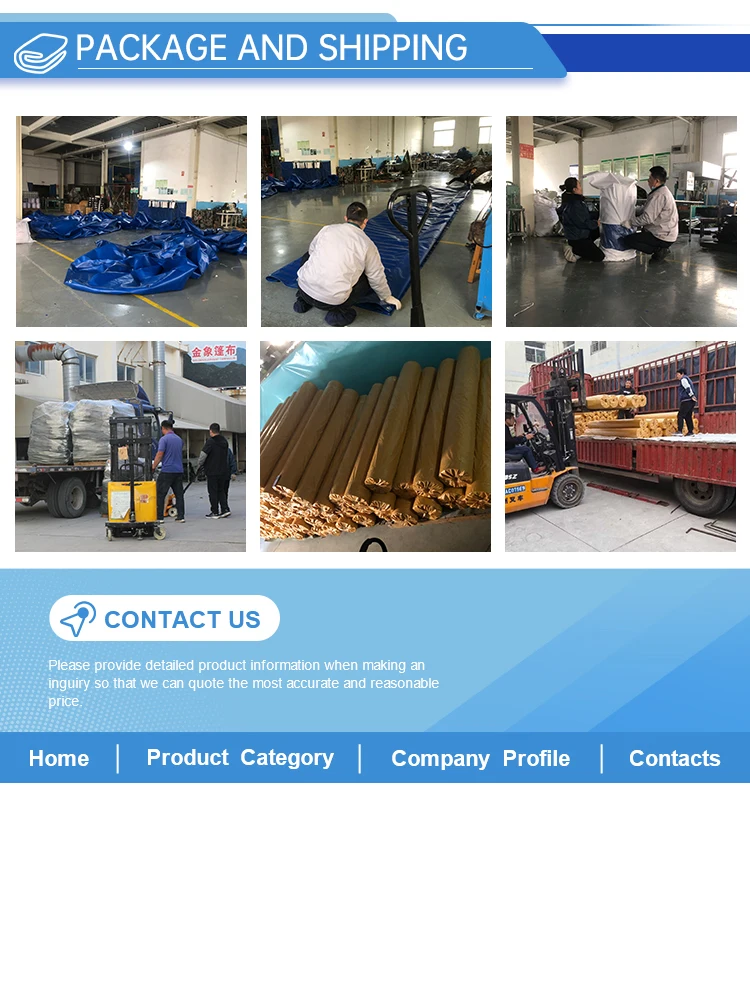
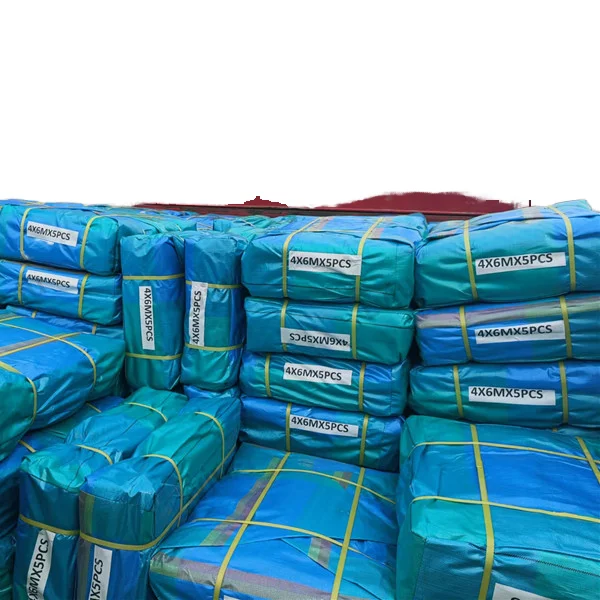
- Roll packing list with net weight and dimensions for container planning
- Certificate of origin and customs documentation for international shipment
- Colour reference swatch matched to the production batch before dispatch
Fabrication, Handling & Storage
- Heat-seam parameters should be calibrated to the hot melt or laminated coating type to avoid delamination at weld points
- Store rolls upright on a flat surface to prevent permanent creasing in heavy-grade 1000D and super heavy fabric
- Allow cold-resistant treated rolls to acclimatise before unrolling in low-temperature environments to reduce stiffness
- Use compatible PVC solvent or hot-air welding for repairs, matching the coating method of the original roll
- Cut panels with allowance for hem and weld overlap to maximise yield from the available roll width
How to Structure Your Enquiry
Provide the target application, expected mechanical and environmental load, and the fire or static classification required in your market. Specify the roll width, colour and whether you need fabric only or finished panels with welded hems. Confirm the annual volume so production can be scheduled for batch-consistent output across your order cycle.
Frequently Asked Questions
Q: How can I verify the GSM matches the quoted PVC coated tarpaulin fabric specification before shipment?
A: Every roll undergoes weight verification at the coating line and again during pre-shipment inspection. You receive an inspection record stating the measured GSM per roll alongside the agreed specification, so any deviation is caught before the goods leave the facility.
Q: Are test reports available for flame retardant and anti-static treatments?
A: Yes. Flame retardant and anti-static grades are available across the range, and test reports citing the applicable standard are provided with the documentation package. Confirm the fire classification your market requires so the correct grade is selected and tested.
Q: How do you maintain colour consistency across multiple rolls in one order?
A: Colour matching is controlled at the coating stage with reference swatches approved before production. The QA team checks each roll against the batch standard, and the pre-shipment inspection record confirms that all rolls fall within the agreed colour tolerance.
Q: What denier should I specify for high-flex applications like ventilation ducts?
A: The choice depends on the flex frequency and internal pressure of the duct. The 10-person R&D team can review your airflow and structural requirements, recommend the appropriate denier and coating method, and produce a sample roll for your fabrication trial.
Q: Is custom roll width available, and what is the typical lead time?
A: Custom widths are available through the R&D team, subject to production line capacity and minimum order requirements. Lead times vary by width and treatment combination; confirm your specification early so the production schedule can accommodate your roll dimensions.