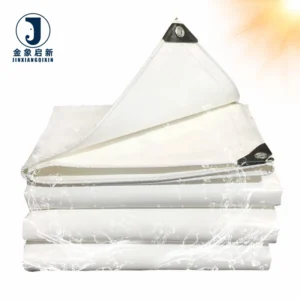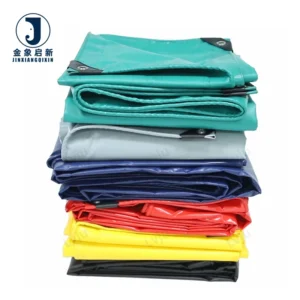
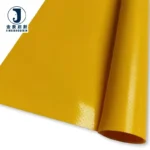
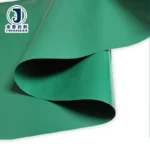
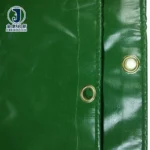
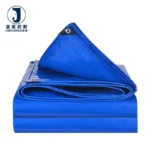
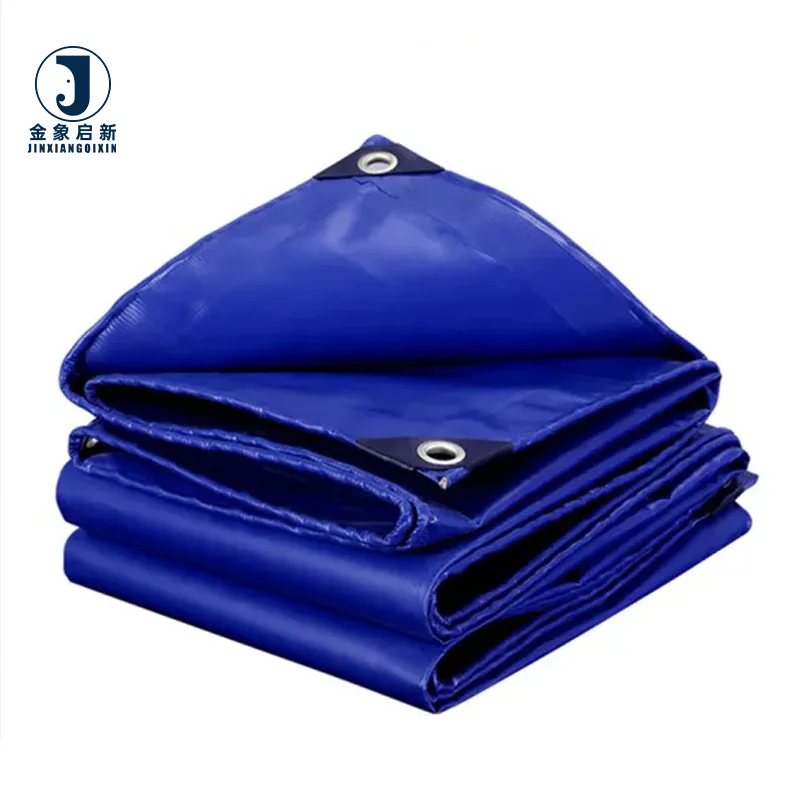
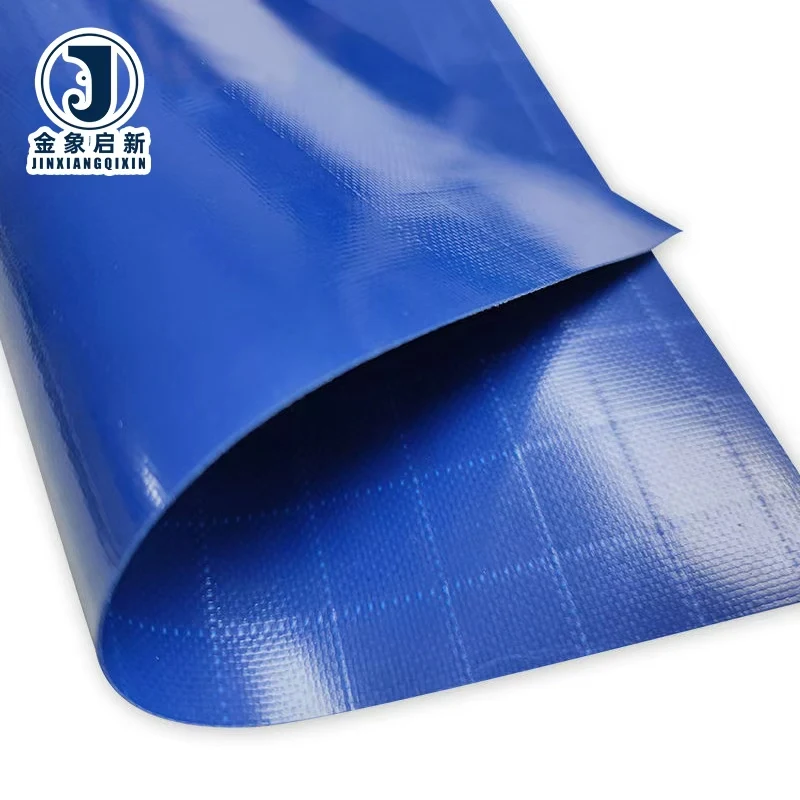
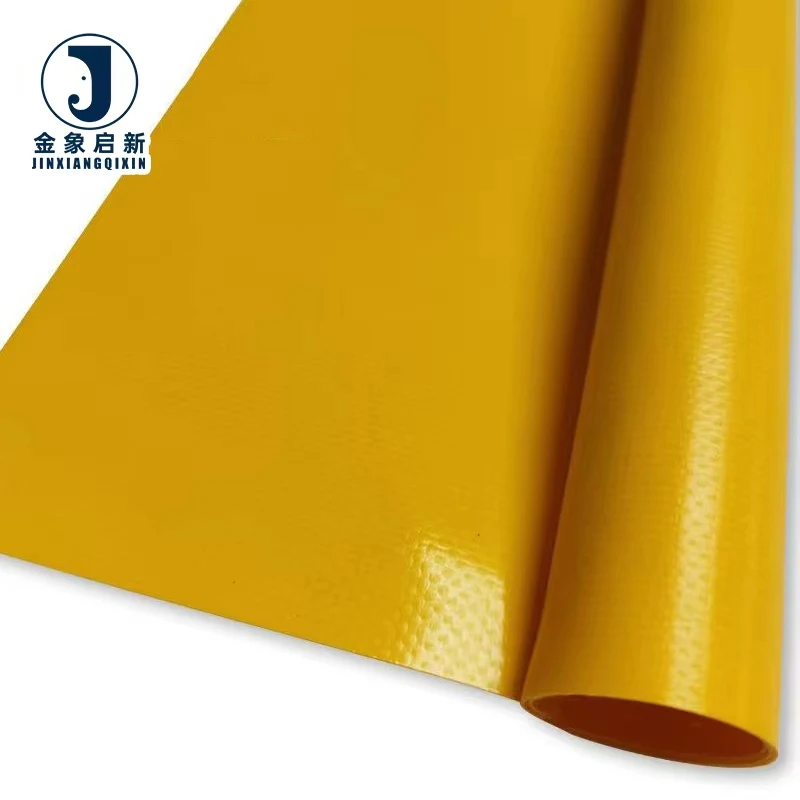
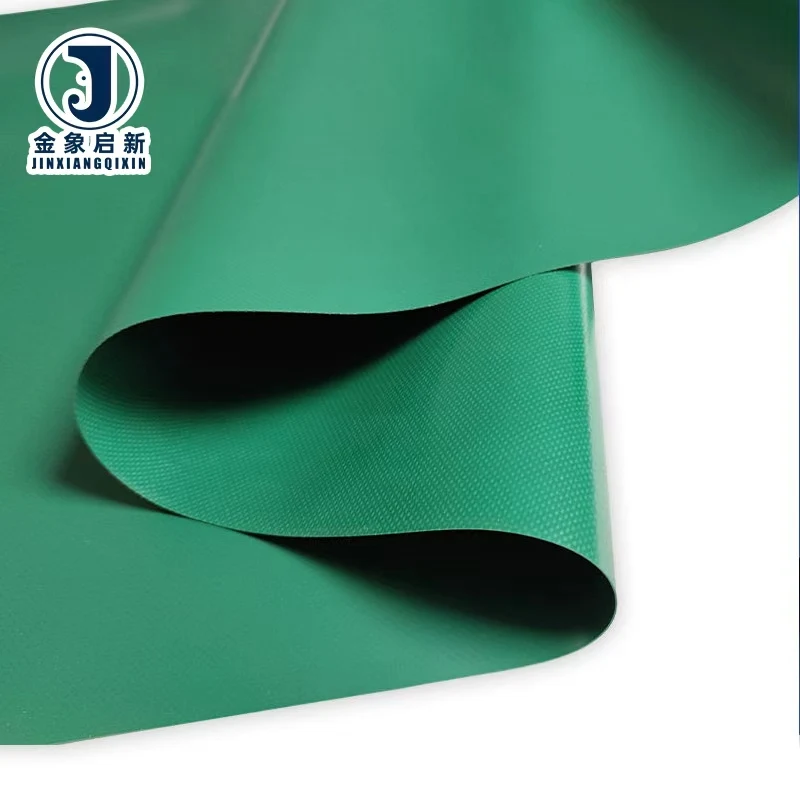
Specification Traceability — every roll of PVC knife-coated tarpaulin is tied to a denier, density and coating record so technical buyers can verify material properties before fabrication begins.
Technical Specifications
| Parameter | Value |
|---|---|
| Product Type | PVC Coated Tarpaulin |
| Base Fabric Yarn Count Options | 500D×840D / 500D×1000D / 1000D×1000D / 1000D×1300D / 1300D×1300D / 1000D×2000D |
| Coating Method | Knife coated, double side |
| GSM Range | 350gsm – 900gsm |
| Thickness Range | 0.29mm – 0.65mm |
| Weave Density Options | 20×20 / 30×15 / 30×19 |
| Tensile Strength (Warp) | 1650N – 3900N (varies by grade) |
| Tensile Strength (Weft) | 1600N – 3500N (varies by grade) |
| Density | 1.15 – 2.00 g/cm³ |
| Brittle Temperature | ≤ -50°C to -60°C |
| Softening Temperature | ≥ 80°C |
| Melting Point | 212°C |
| Key Features | Water resistant, waterproof, flame retardant (grade not stated — confirm grade required for your market), anti-UV (test basis not stated — request test report) |
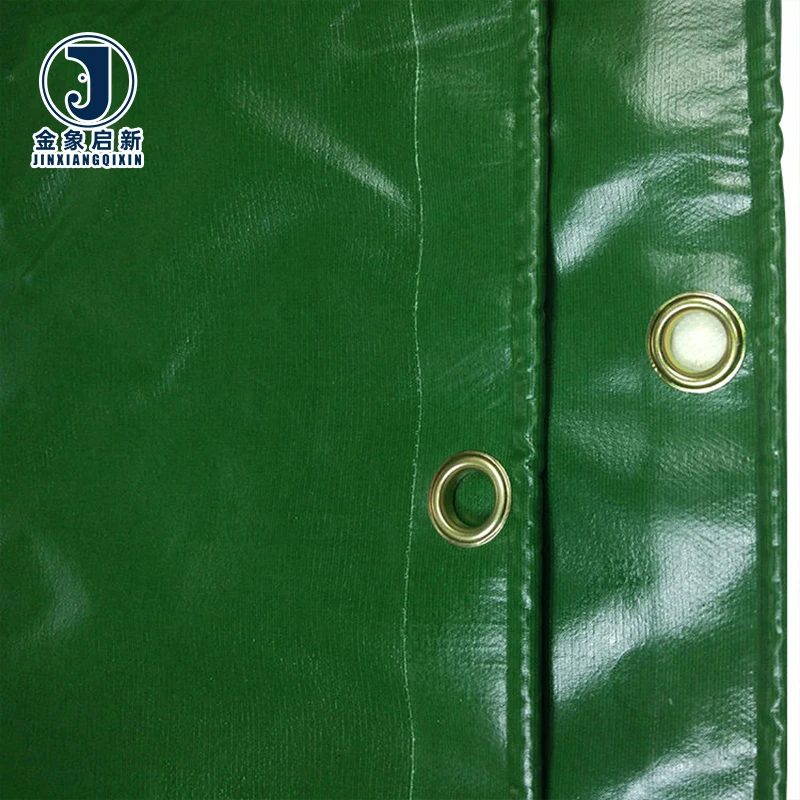
| Edge Treatment | High temperature heat sealed seamless edge wrapping |
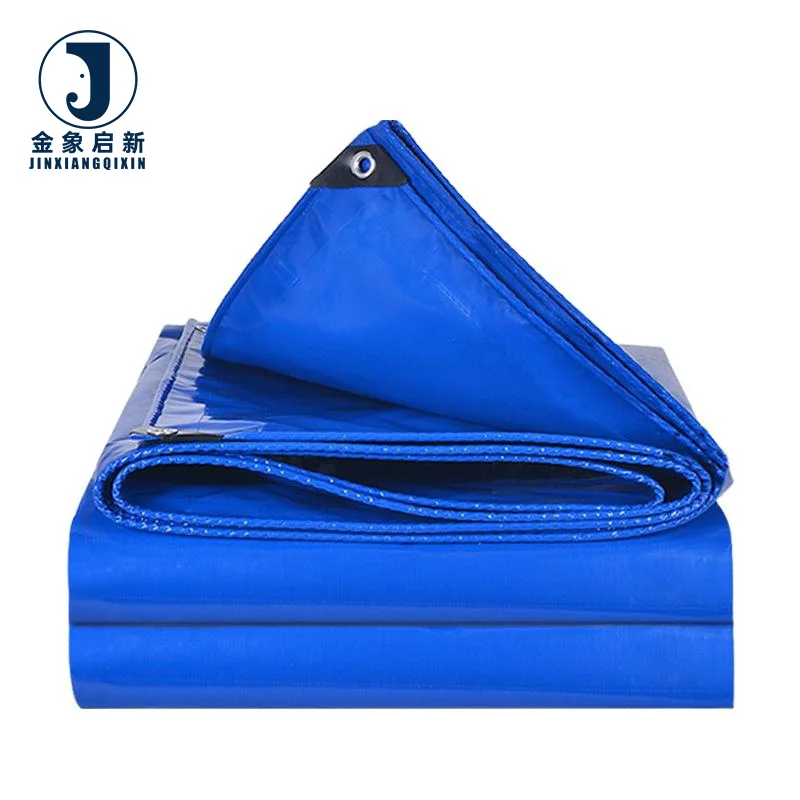
| Reinforcement | Reinforced corners on all sides |
| Eyelet | 3cm enlarged aluminum alloy buttonhole |
| Rope | 5mm thick rope without splicing |
Application Suitability
| Application | Exposure & Requirement |
|---|---|
| Railway wagon cover | Bulk load abrasion, wind uplift tension, prolonged outdoor weathering, tie-down stress at eyelets |
| Truck and trailer cover | Road vibration, flex fatigue at load shift points, UV and rain exposure, frequent handling |
| Construction equipment cover | Job-site dust and debris, chemical splash, puncture from irregular shapes, UV degradation |
| Awning and tent structure | Continuous tension loading, wind gust cycles, solar heat buildup, fold crease fatigue |
| Machine and wood cover | Indoor and outdoor storage moisture, abrasion from sharp edges, forklift contact during handling |
Why Denier Selection Determines Cover Survival More Than Weight Class Alone
Base fabric construction governs when and how the material fails under tension, not the total coating weight on the label.
A railway wagon cover experiences sustained tie-down tension across the eyelet line and repetitive flexing as bulk loads shift during transit. When the base fabric denier is undersized for the tensile demand, the first failure typically appears as yarn pull-out around reinforced corners — long before the PVC coating shows any sign of wear. Selecting yarn count from 500D×840D through 1000D×2000D based on the actual load and tie-down configuration prevents this mismatch. [NEED_CITE: tensile and tear test methods for coated fabrics per ISO 1421]
How Knife Coating Seals the Fabric for Weld Repair and Seam Integrity
The knife-coated PVC construction applies coating material directly into the polyester base fabric on both sides, filling the interstices between yarns. This produces a continuous PVC mass that bonds mechanically and chemically to the base yarns, which directly influences how the material behaves during hot-air welding. Fabricators working with PVC knife-coated tarpaulin fabric report more consistent weld strength when the coating has fully penetrated the weave, because the heat-activated PVC flows uniformly across the seam interface rather than bridging gaps between partially coated yarns.
Tensile Mapping Across the Denier Range for Structural Covers
Moving from 500D×840D to 1000D×2000D increases warp tensile capacity from 1650N to 3900N and weft from 1600N to 3500N. For railway wagon covers that must resist wind uplift and secure uneven bulk loads, the higher denier grades distribute tie-down forces across a wider yarn matrix. Weave density options of 20×20, 30×15 and 30×19 further refine this behaviour — a tighter weave resists yarn displacement under point loads, while a more open weave can offer better drape over irregular equipment profiles. [NEED_CITE: relationship between woven base fabric density and tear propagation resistance in coated textiles]
Reading GSM, Thickness and Coating Weight as a System
GSM in the 350gsm to 900gsm range reflects the combined weight of base fabric and PVC coating, but does not reveal how that mass is distributed. A 650gsm roll built on a 1000D×1000D base with moderate coating will behave very differently from a 650gsm roll built on a lighter 500D×840D base with heavier coating applied to reach the same target weight. Thickness values from 0.29mm to 0.65mm correlate more closely with coating mass than with base fabric contribution. Technical buyers specifying PVC knife-coated tarpaulin fabric for structural or transport applications should request the base fabric denier and coating weight stated separately so that tensile performance and surface durability can be evaluated independently.
The Hidden Cost of Specifying on GSM Without Verifying Construction
Covers that fail at welded seams before the field fabric shows damage usually point to a mismatch between the base fabric construction and the thermal profile used during fabrication. When the denier is lighter than expected for a given GSM, the coating mass may be sufficient to reach the quoted weight but the underlying yarn structure lacks the tear resistance needed at flex points where loads shift. Batch-to-batch consistency in denier and density matters here — a cover fabricated successfully from one production batch may develop seam failures when the next batch delivers a slightly different construction under the same GSM label. [NEED_CITE: hot-air welding parameters and peel strength testing for PVC coated polyester fabrics]
Why Technical Buyers Source This Fabric Here
Three full production lines with 36 sets of professional equipment support consistent output across the denier and GSM range, reducing the variation that causes fabrication rework. The 10-person R&D team develops samples within days for custom sizing and treatment requirements, allowing technical buyers to validate weld parameters and seam strength before committing to production volume. A 10-person dedicated QA/QC team inspects every roll before shipment against the stated denier, density and coating weight, addressing the common pain point of material arriving lighter than the quotation specified. ISO and CE certified production supports documentation requirements for projects in regulated environments such as mining and aviation ventilation.
Documentation & Verification
- Material specification sheet stating GSM, base fabric denier and coating weight per roll
- Test report for flame retardant and anti-UV grades tied to production batch
- Pre-shipment inspection record confirming denier and density against quotation
- ISO and CE certificates included in customs documentation package
- Roll packing list with net and gross weight for logistics planning
- Certificate of origin for preferential tariff treatment where applicable
Fabrication, Handling & Storage
- Set hot-air welder temperature and speed to match the specific PVC coating thickness from 0.29mm to 0.65mm
- Reinforce eyelet zones with additional PVC patches at 3cm aluminum alloy buttonhole locations to distribute tie-down load
- Store rolls upright on pallets to prevent flat-spot deformation of the knife-coated surface
- Allow rolls to acclimatise above 10°C before unrolling to avoid creasing at the brittle temperature boundary
- Use mild detergent without solvents when cleaning the PVC surface to preserve coating integrity
- Cut patterns with sealed edges to prevent yarn fraying at the high temperature heat sealed edge wrapping boundary
What We Need From Your Inquiry
Provide the specific application and exposure conditions — whether the cover will face sustained tie-down tension on rail wagons, flexing on truck loads or static storage on construction equipment. Specify any flame retardant grade or compliance standard your market or site requires so we can match the treatment and supply the corresponding test documentation. Indicate whether you need roll stock by denier and GSM grade, or finished covers cut to exact wagon or equipment dimensions with eyelet spacing and edge reinforcement detailed.
Frequently Asked Questions
Q: How is GSM verified against the stated base fabric denier and coating weight?
A: Each production batch is weighed and measured for thickness, and the pre-shipment inspection record confirms both values against your specification. We supply a material specification sheet that separates base fabric denier from total GSM, so you can verify the coating contribution independently before the rolls leave our facility.
Q: What test standards support the flame-retardant and anti-UV claims?
A: Flame retardant and anti-UV treatments are available in multiple grades. The specific test standard and grade depend on the formulation selected for your application. We recommend confirming the compliance standard required by your market or project specification, and we will supply the matching test report tied to your production batch.
Q: How does tensile strength vary across the denier options?
A: Warp tensile strength ranges from 1650N at 500D×840D to 3900N at 1000D×2000D, with weft values from 1600N to 3500N across the same range. Weave density options further influence tear behaviour. Request the tensile data sheet for your target denier to confirm suitability against your load calculations.
Q: What is the weld behaviour of knife-coated PVC compared to laminated alternatives?
A: Knife coating fills the weave interstices with PVC on both sides, producing a continuous coating mass that melts uniformly during hot-air welding. This typically yields more consistent peel strength at the seam compared to laminated fabrics where the coating sits primarily on the surface. We recommend weld testing on a sample from your specific batch.