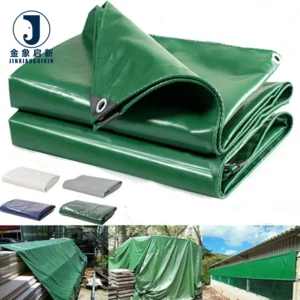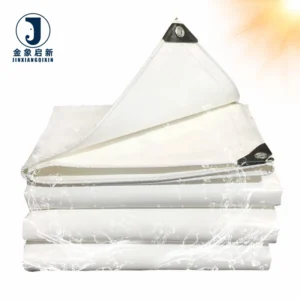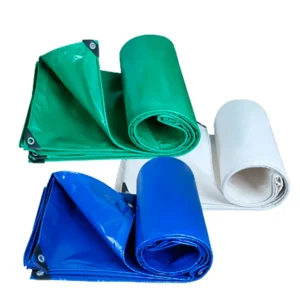
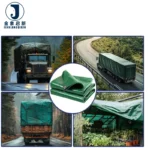
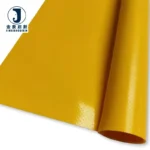
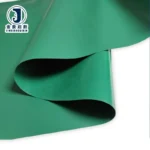
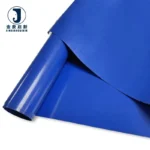
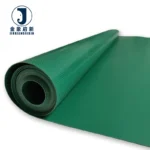
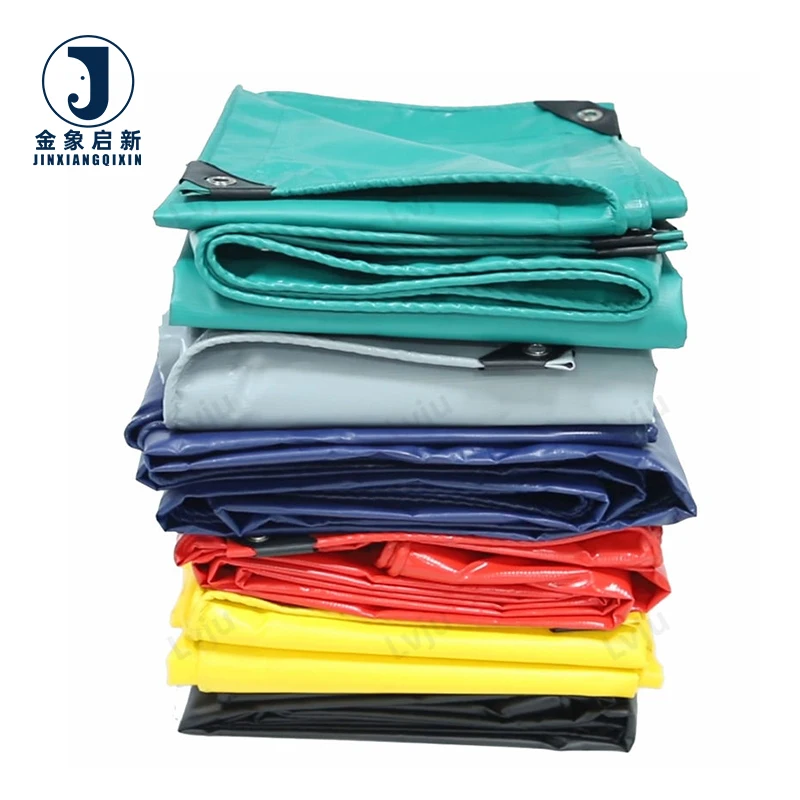
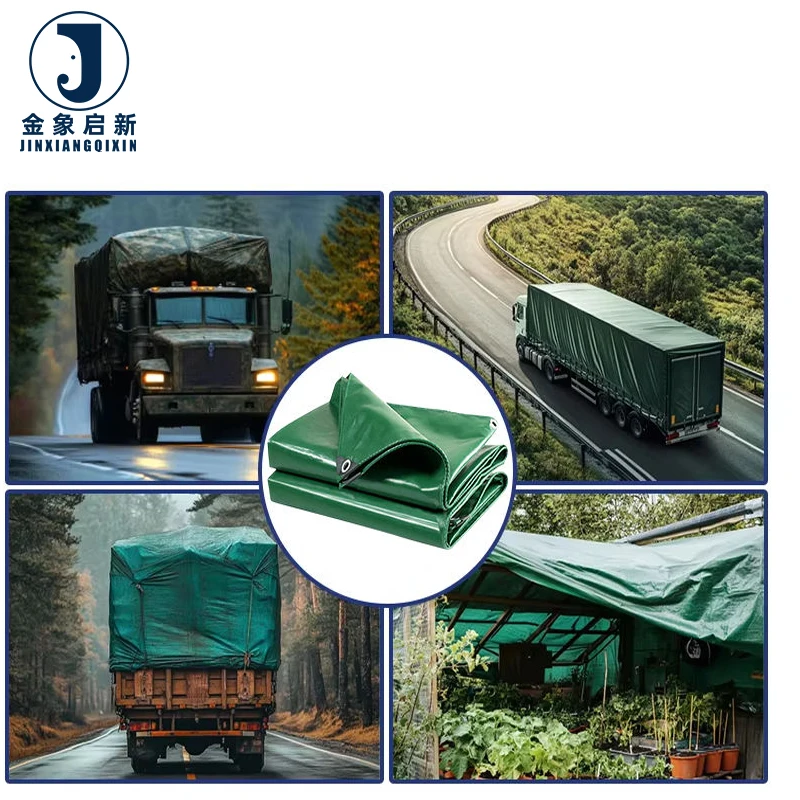


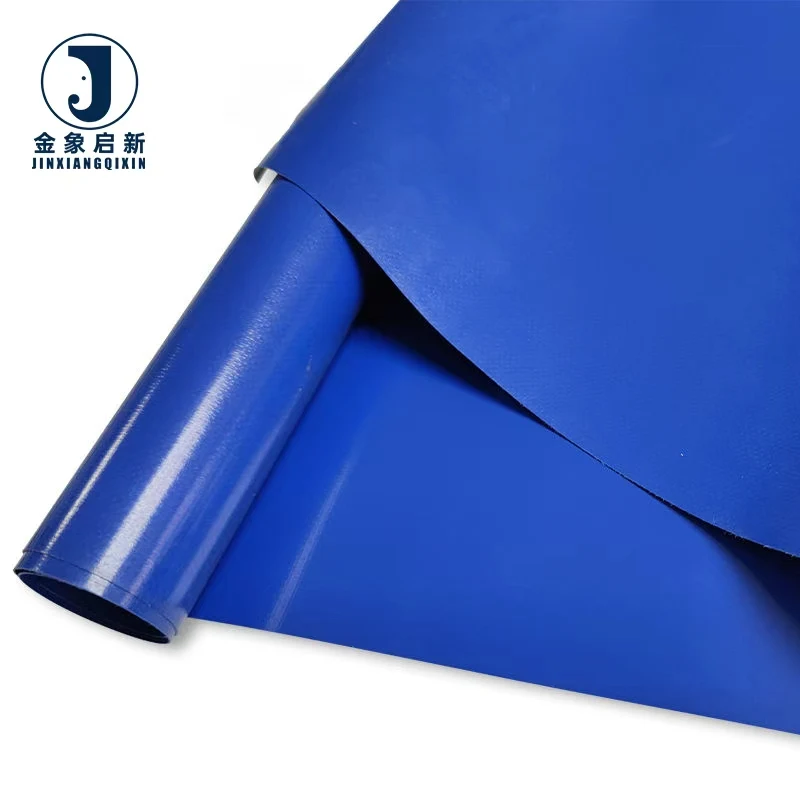
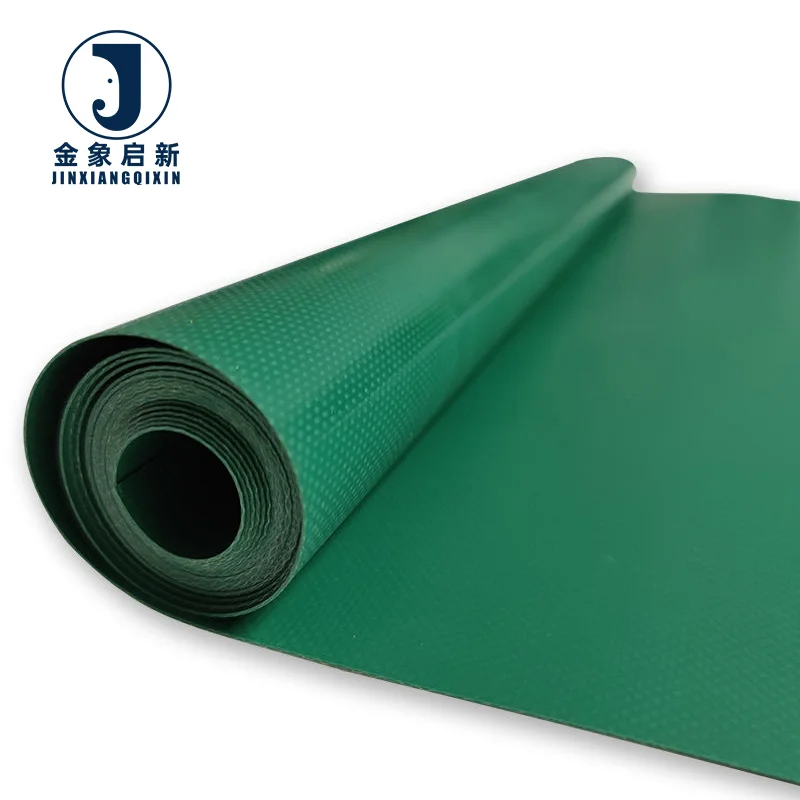
Coating Process Control — Deep oversight of PVC penetration and adhesion on knife-coated lines ensures the 650GSM fabric maintains consistent seam weld integrity across every roll dispatched.
Technical Specifications
| Parameter | Value |
|---|---|
| Product Type | PVC Coated Tarpaulin |
| Weight | 650 GSM |
| Coating Method | Knife Coated |
| Coating Material | PVC |
| Base Fabric Denier | 1000D (heavy-duty family range — confirm for this grade) |
| Tensile Strength | Meridian 2000–2500 / Latitude 1800–2200 N/5cm (test basis not stated) |
| Color | Black |
| Waterproof | Yes |
| UV Treatment | Available (test basis not stated) |
| Flame Retardant | Available in flame retardant grades — confirm the grade required for your market |
| Anti-Static | Available upon specification (grade not stated) |
| Certification | ISO, CE (company level) |
Application Suitability
| Application | Exposure & Requirement |
|---|---|
| Industrial ventilation duct outer fabric | Continuous airflow pressure, underground moisture, mine dust abrasion, mandatory fire and anti-static compliance |
| Tensioned membrane and inflatable structures | Constant tensile load, wind uplift, UV exposure, welded seam integrity at stress points |
| Heavy-duty outdoor protective enclosures | Rain and standing water, equipment contact abrasion, thermal cycling across seasons |
| Mining and tunnelling brattice cloth | Flame propagation risk, electrostatic discharge in gassy atmospheres, physical damage from machinery |
What "Flame Retardant" Means Without a Verified Grade for 650GSM PVC Knife Coated Tarpaulin
A flame retardant claim only matters when it matches the specific classification your site inspector will check against.
When ventilation ducts or membrane structures arrive on a mining or tunnelling site, the safety officer does not look for the words "flame retardant" on the label — they look for a classification mark such as B1, M2, or NFPA 701 backed by a test report from an accredited lab. I have seen fabric shipments held at the gate because the accompanying certificate referenced a generic self-extinguishing claim rather than the standard the project specification demanded [NEED_CITE: fire classification standards for underground ventilation materials]. This delay costs weeks of reordering and can idle an entire tunnel advance. Requesting the exact grade and test method before production begins eliminates that bottleneck.
Fire Classification Alignment for Technical Structures
Different jurisdictions and project owners specify different fire classification systems. A 650GSM PVC knife coated tarpaulin destined for European construction membranes may need to meet EN 13501-1, while the same weight class sold into Australian mining ventilation must satisfy AS/NZS 1530 or local mine safety directives. The coating formulation can be adjusted during production to target the required classification, but this adjustment must be specified at the inquiry stage so the correct PVC compound is compounded and applied on the knife coating line.
Anti-Static Performance in Gassy and Dusty Environments
Underground mining and grain handling facilities require fabric surfaces that dissipate static charge to prevent spark ignition. Anti-static treatment for PVC knife coated fabric involves incorporating conductive additives into the coating compound or applying a topical finish. The surface resistivity target varies by regulation — some standards require values below a defined threshold measured in ohms per square [NEED_CITE: surface resistivity standards for anti-static industrial fabric]. Confirming the required threshold before the coating run ensures the compound is formulated correctly and the test report matches the site acceptance criteria.
Reading the Spec Sheet: Weight, Denier, and Coating Together
The 650 GSM weight places this fabric in the heavy-duty tier, but weight alone does not predict how the material behaves under tension or during welding. The 1000D base fabric denier provides the structural yarn backbone that carries tensile loads — when a ventilation duct inflates under positive pressure, the yarns absorb hoop stress while the PVC coating transfers load between intersecting threads. Knife coating forces PVC paste into the weave interstices under blade pressure, producing stronger coating-to-yarn adhesion than dip or spray methods. This adhesion directly affects how well a hot-air weld holds at flex points where the fabric repeatedly bends under air pulsation.
When the Wrong Grade Costs More Than the Fabric
Selecting a lighter grade for a duct that will run at high static pressure leads to fabric creep and eventual seam separation at the weld line. Conversely, specifying an over-engineered weight for a temporary brattice curtain adds unnecessary material cost and handling difficulty underground. Colour inconsistency between rolls in a single membrane structure order becomes visible once panels are installed side by side in sunlight, forcing partial replacement. Weld failures that originate at the coating interface rather than the yarn suggest the coating adhesion was insufficient for the welding temperature used — a parameter that should be validated on a sample before full production runs [NEED_CITE: weld adhesion testing methods for coated technical textiles].
Why Source This Fabric Through Jinan Jinxiang
Three full production lines with 36 sets of equipment give the factory capacity to run bulk roll orders for ventilation duct fabricators without sacrificing lead time reliability. The 10-person R&D team handles compound formulation adjustments for fire and anti-static grades, developing samples within days for approval before full coating runs begin. Dedicated quality control at every production stage — from base fabric inspection through coating weight verification to final roll winding — means the 650GSM PVC knife coated tarpaulin leaving the factory matches the specification sheet agreed at inquiry. ISO and CE certification at the company level provides the management framework that underpins this process discipline.
Documentation & Verification
- Material specification sheet confirming GSM, base fabric denier, and coating weight for the 650GSM grade
- Flame retardant test report matching the specific classification required for your project jurisdiction
- Anti-static surface resistivity test data where mining or tunnelling compliance mandates it
- Pre-shipment inspection record with per-roll weight verification against the stated 650 GSM
- Roll packing list with batch identification for traceability across the full order
Fabrication, Handling & Storage
- Heat welding trials on 650GSM samples to establish optimum temperature before joining duct sections
- Store rolls upright on pallets to prevent flat-spot deformation of the PVC coating surface
- Allow cold-stored rolls to acclimatise before unrolling to avoid coating crack at low temperature
- Clean with mild detergent only — solvent-based cleaners can soften the PVC coating layer
- Reinforce tie-down and suspension points with extra PVC patches welded over the base fabric
Preparing Your Inquiry for Technical Fabric Supply
Provide the ventilation duct diameter, operating static pressure, and the fire classification your site specification demands so the correct PVC compound can be selected. If the fabric will serve a membrane or inflatable structure, share the tensile load calculations and expected service environment including UV exposure duration. Specify whether you need rolls at standard mill widths or slit to narrower widths for your duct fabrication line, along with the target annual volume to support production planning.
Frequently Asked Questions
Q: What flame retardant grade is available for this 650GSM PVC knife coated fabric, and which test reports accompany shipment?
A: The fabric can be produced in flame retardant grades aligned with standards such as B1, M2, or NFPA 701 depending on your market requirement. The specific grade must be stated at the inquiry stage so the correct PVC compound is formulated. A test report from an accredited laboratory covering the agreed classification is provided with the shipment documentation for site inspector review.
Q: Can this fabric be supplied with anti-static treatment meeting mining and tunnelling surface resistance standards?
A: Yes, anti-static treatment can be incorporated into the PVC coating compound during production. You must provide the surface resistivity threshold required by your site safety directive or the governing mining regulation. The finished rolls are tested against that threshold, and the results are included in the pre-shipment documentation package.
Q: What are the recommended heat welding parameters for seams on 650GSM knife coated PVC to prevent seam failure?
A: Optimal welding temperature, pressure, and speed depend on the specific PVC compound used for your order, including any fire or anti-static additives. We recommend running weld trials on the pre-production samples we supply to establish your machine settings before full fabrication. Our technical team can advise on starting parameter ranges based on the compound formulation.
Q: How is the 650 GSM weight verified during production and what documentation supports arrival-weight inspection?
A: Coating weight is monitored at each stage of the knife coating process and verified against the target GSM before the roll is wound. A weight verification record accompanies the pre-shipment inspection report. On arrival, you can cross-check individual roll weights against the packing list using a calibrated scale to confirm consistency with the agreed specification.
Q: What custom widths and roll lengths are available for specialist duct and membrane structure fabrication?
A: The production lines can accommodate custom slit widths and roll lengths to suit your duct fabrication equipment or membrane panel cutting layout. Minimum order quantities apply to non-standard dimensions and are confirmed during the quotation stage based on the specific width, colour, and treatment combination you require.