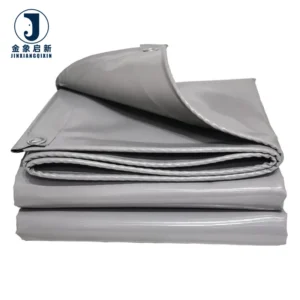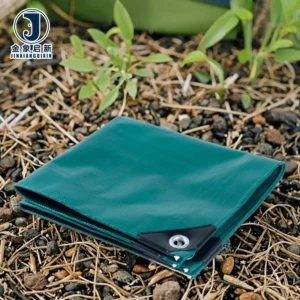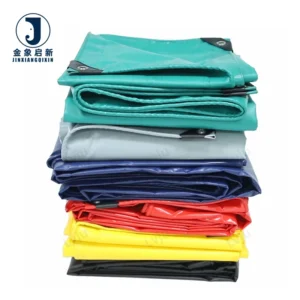


Deep Coating Process Control — Every roll of PVC knife-coated tarpaulin for tents and awnings we produce is backed by nearly 30 years of coated fabric expertise, with in-process QA and 100% pre-shipment inspection ensuring that what you specify is exactly what arrives at your fabrication floor.
Technical Specifications
| Parameter | Value |
|---|---|
| Product Type | PVC Knife-Coated Tarpaulin |
| Coating Material | PVC |
| Coating Method | Knife coated |
| Base Fabric Style | Plain weave / tricot |
| Weight | 500GSM |
| Waterproof Rating | ≥ 20KPa |
| Flame Retardant Grade | ≤ 10 seconds self-extinguishing (grade not stated — confirm required standard before specifying) |
| Low-Temperature Flexibility | Down to -30°C without fracture |
| Anti-Mildew | Mildew proofing stated |
| Chemical Resistance | Acid, alkali, brine corrosion resistance |
| Finish | Wrinkle resistant |
| UV Treatment | Anti-UV (test basis not stated — request documentation) |
Application Suitability
| Application | Exposure & Requirement |
|---|---|
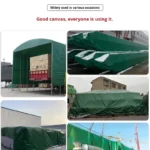
| Frame tents and pagoda tents | Sustained rain, wind loading, UV exposure, repeated assembly and teardown cycles |
| Retractable awnings | Continuous sun exposure, fabric folding stress, colour retention under UV |
| Inflatable membrane structures | Internal air pressure, seam integrity, flame retardant compliance for enclosed spaces |
| Construction site shelters | Abrasion from equipment, chemical exposure, low-temperature installation in winter |
| Mining and tunnelling ventilation covers | Dust ingress, chemical-laden air, fire safety requirements underground |
Why a Flame Retardant Claim Without a Test Report Is a Liability on Your Job Site
We supply the test report with the roll, not after the fire inspector asks for it.
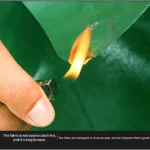
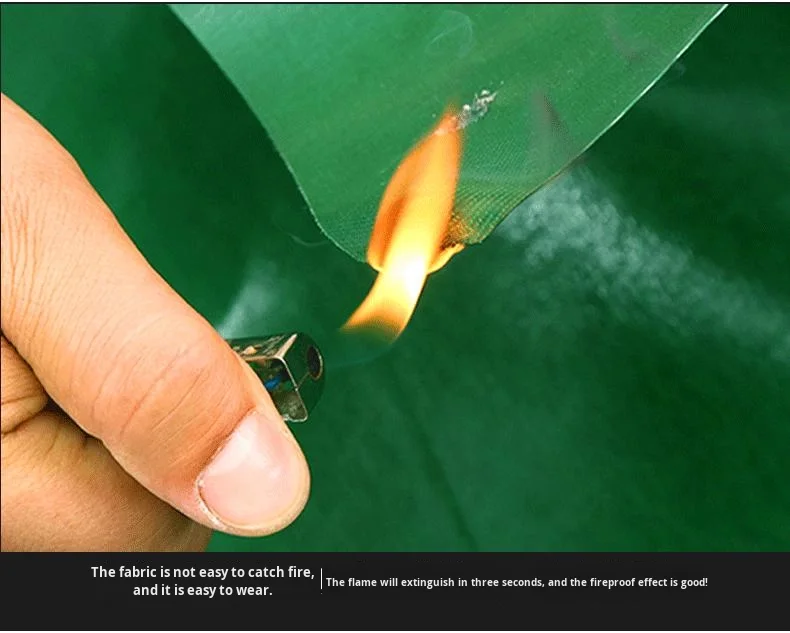
A PVC knife-coated tarpaulin fire retardant anti-static certified claim only matters if you can hand the documentation to the safety officer standing on your site. Fabric that self-extinguishes within 10 seconds under test conditions is a starting point — but the standard behind that number determines whether your tent or membrane structure passes local inspection. Too many fabricators have watched an entire installation get rejected because the mill certificate referenced a test method the local authority does not recognise [NEED_CITE: fire safety compliance standards for temporary structures]. We recommend you confirm the exact grade and standard your project requires before placing your order.
How Knife Coating Builds a Reliable Membrane for Tents and Awnings
The knife-coated process forces PVC paste directly into the interstices of the plain weave or tricot base fabric, creating a mechanical bond that resists delamination under the repeated tension cycles a tent or awning endures. This PVC knife-coated tarpaulin for tents canopies awnings benefits from a wrinkle-resistant finish that keeps the membrane surface smooth when deployed across a frame, reducing stress concentrations that lead to premature cracking.
Waterproof and Chemical-Resistant Performance in Harsh Installations
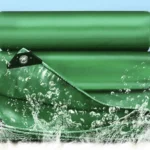
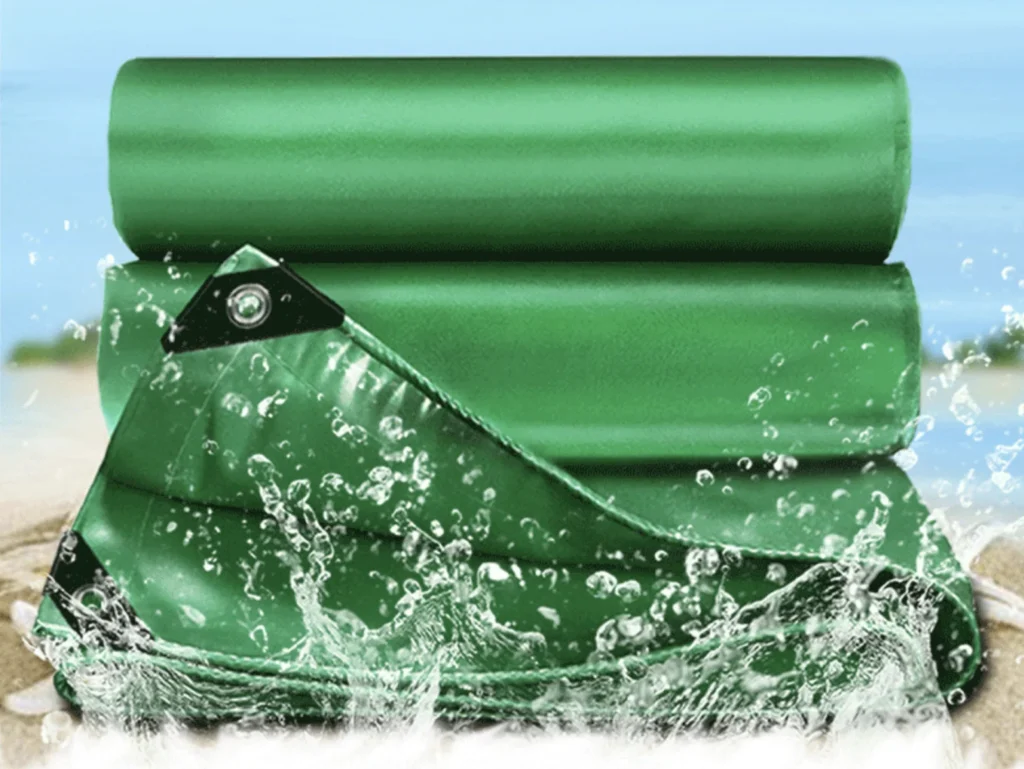
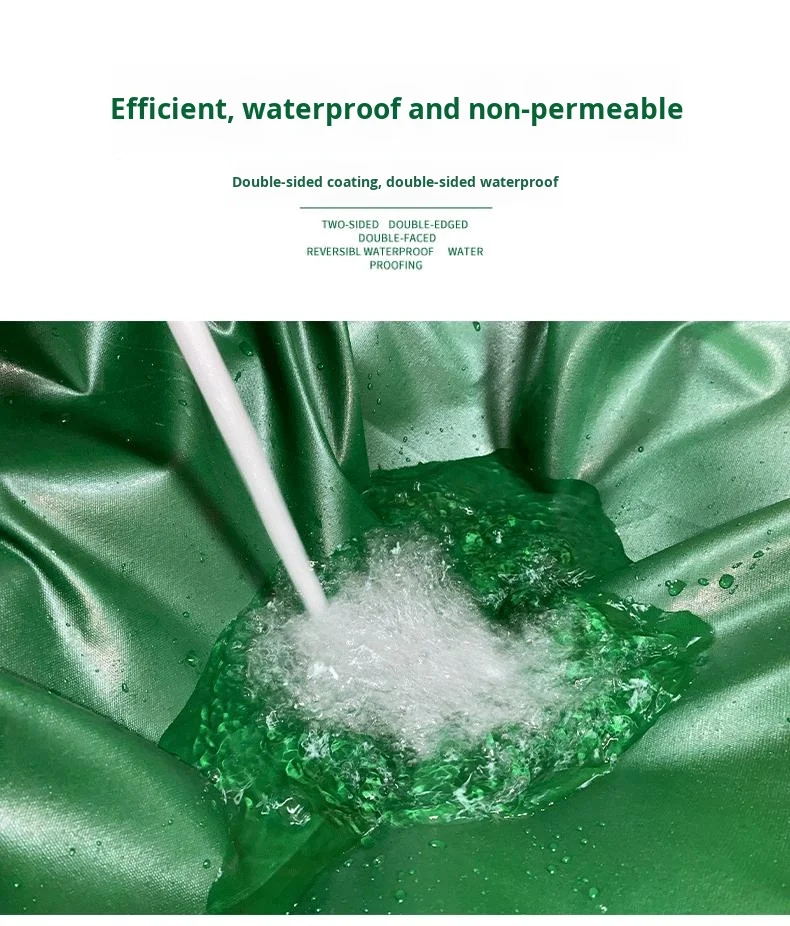
A waterproof rating of ≥ 20KPa means this fabric resists water penetration under sustained hydrostatic pressure, which translates directly to dry interiors during heavy rainfall on a construction site or at an outdoor event. The stated acid, alkali and brine corrosion resistance makes the material suitable for coastal installations or industrial environments where airborne chemical residues settle on the fabric surface over time. Low-temperature flexibility down to -30°C ensures the PVC knife-coated fabric remains pliable during winter installation without risk of coating fracture.
Reading the Specifications That Actually Determine Field Performance
Weight at 500GSM tells you how much coating and base fabric are present per square metre, but tensile and tear strength depend equally on the denier of the yarns and the density of the weave — a lighter fabric with a tighter weave can outperform a heavier one with a loose construction. The knife coating method delivers strong adhesion between coating and base, which is critical for hot-air welding: if the coating peels from the base at the weld line, the seam fails before the fabric does [NEED_CITE: tensile and tear test methods for coated fabrics per ISO 1421]. Anti-UV treatment slows the degradation of the PVC polymer chain under solar exposure, preserving both mechanical strength and colour — request the test basis to understand the documented exposure duration. The wrinkle-resistant finish is not merely cosmetic; a smooth surface reduces micro-creases that become initiation points for coating cracks under thermal cycling.
The Hidden Cost of Skipping Verification Before You Cut
When flame retardant grade is assumed rather than documented, a failed inspection can mean dismantling an entire tent structure and replacing every panel — at your cost, on your schedule. Colour variation between rolls in the same order becomes immediately visible once panels are joined side by side on a pagoda tent or awning, forcing selective sorting or complete rejection of the batch [NEED_CITE: batch colour consistency standards in coated textile production]. Welded seams that fail before the fabric body does are almost always traceable to inconsistent coating thickness or incompatible welding temperatures, both of which are preventable with proper in-process quality control.
What Process Discipline Means for Your Fabric Supply
Nearly 30 years of focus on coated fabric means our coating weight and adhesion parameters are controlled at every stage, not adjusted after a failed batch. Three full production lines and 36 sets of professional equipment support the volume required for large tent and awning orders with reliable on-time delivery. A 10-person R&D team handles material selection, custom sizing, and sample development — so if your membrane structure requires a specific width or fire classification, we develop the sample within days. Dedicated QA/QC runs at every production stage with 100% inspection before any roll leaves our facility, and we back every dispatch with supporting documentation.
Documentation & Verification
- Material specification sheet confirming 500GSM, base fabric construction, and PVC knife-coating method
- Flame retardant test report — request before ordering to confirm grade matches your project requirement
- Anti-UV treatment documentation with stated test basis and exposure parameters
- Pre-shipment inspection record verifying weight, dimensions, and surface quality per roll
- ISO and CE certificates plus certificate of origin for customs clearance and project compliance
Fabrication, Handling & Storage
- Hot-air welding parameters should be calibrated to the 500GSM PVC knife-coated construction to prevent coating delamination at seams
- Store rolls vertically on padded racks to prevent permanent creasing in the wrinkle-resistant finish
- Allow cold-stored rolls to acclimatise before unrolling to avoid coating micro-cracking below -30°C
- Use compatible PVC-based repair patches and adhesive for field repairs on tent and awning panels
- Plan cutting layouts to maximise yield from the roll width and minimise the number of welded joints
Before You Request a Quote — What We Need to Know
Tell us the specific tent, canopy, or awning structure you are fabricating and the environmental conditions it will face — wind load, rainfall intensity, UV index, and minimum installation temperature. Specify the flame retardant grade and test standard your local authority or client requires, so we can match the correct material formulation. Let us know your target roll width, annual volume, colour requirements, and whether you need raw rolls or finished cut sizes with edge reinforcement.
Frequently Asked Questions
Q: What flame retardant standard does this PVC knife-coated fabric meet, and can I review the test report before placing an order?
A: The fabric achieves self-extinguishing within 10 seconds under test conditions, but the specific standard classification depends on your market. Request the test report before ordering to confirm the grade aligns with your local fire safety requirements. Our QA team will provide the documentation matched to your project specification.
Q: How is the anti-UV treatment validated, and what test basis is documented?
A: Anti-UV treatment is applied during the PVC knife-coating process to slow polymer degradation under solar exposure. The test basis and documented exposure duration vary by formulation. We recommend requesting the UV test documentation before confirming your order, particularly for awning applications with continuous direct sun exposure.
Q: How do you ensure colour consistency across multiple rolls in a single tent or awning order?
A: Colour matching is controlled through in-process QA at every production stage, with 100% pre-shipment inspection comparing rolls against the approved reference. If your project involves large panel joins where side-by-side colour differences are visible, specify this at inquiry so we apply tighter batch control parameters.
Q: What are the low-temperature handling limits for this fabric during winter installations?
A: The PVC knife-coated tarpaulin maintains flexibility down to -30°C without coating fracture, making it suitable for cold-climate tent and canopy installations. For storage and transport in freezing conditions, allow rolls to acclimatise gradually before unrolling to protect the coating surface integrity.
Q: Can this knife-coated PVC fabric be used for inflatable and membrane structures with fire safety requirements?
A: The fabric’s flame retardant and anti-static properties make it a candidate for inflatable and membrane structures, but compliance depends on the specific classification your jurisdiction mandates. Confirm the required standard at inquiry stage so we can supply the matching formulation and full test documentation with your order.