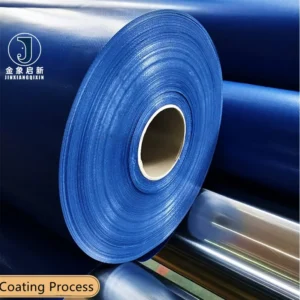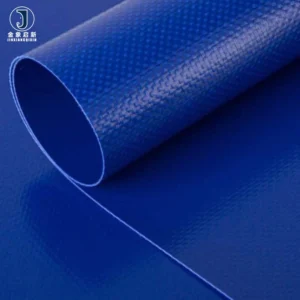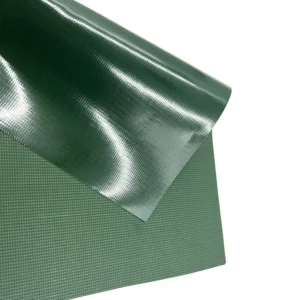
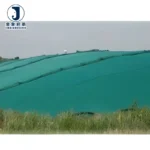
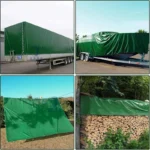
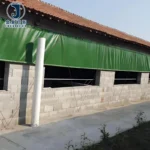
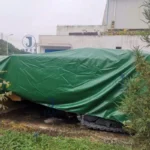
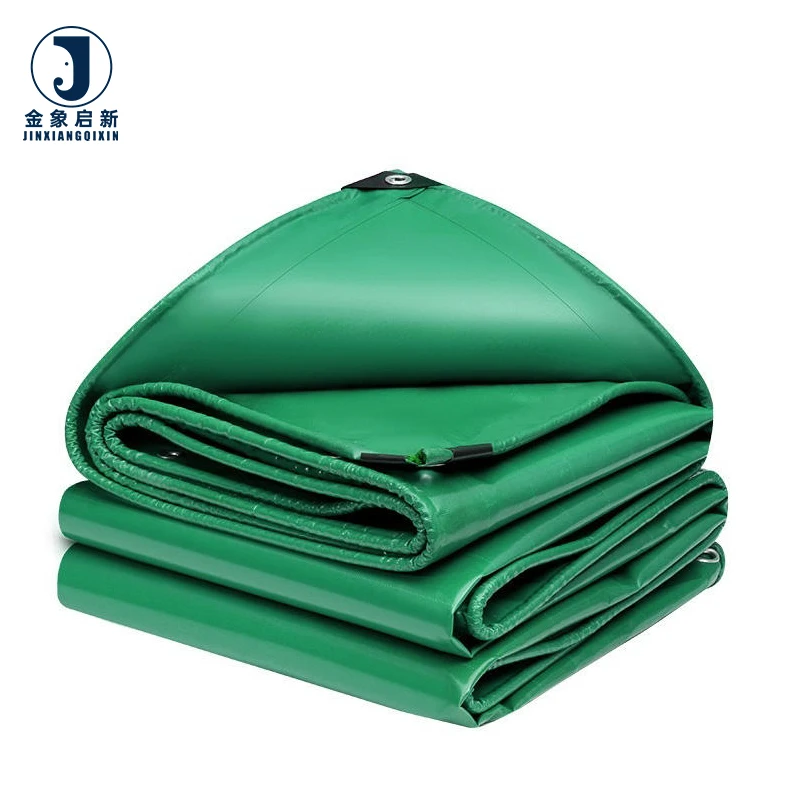
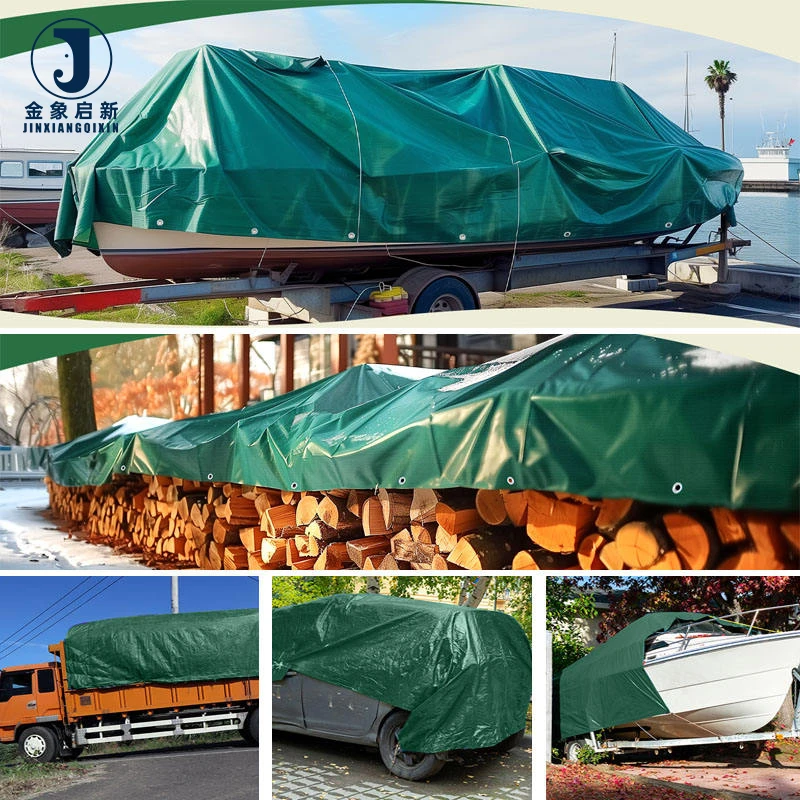
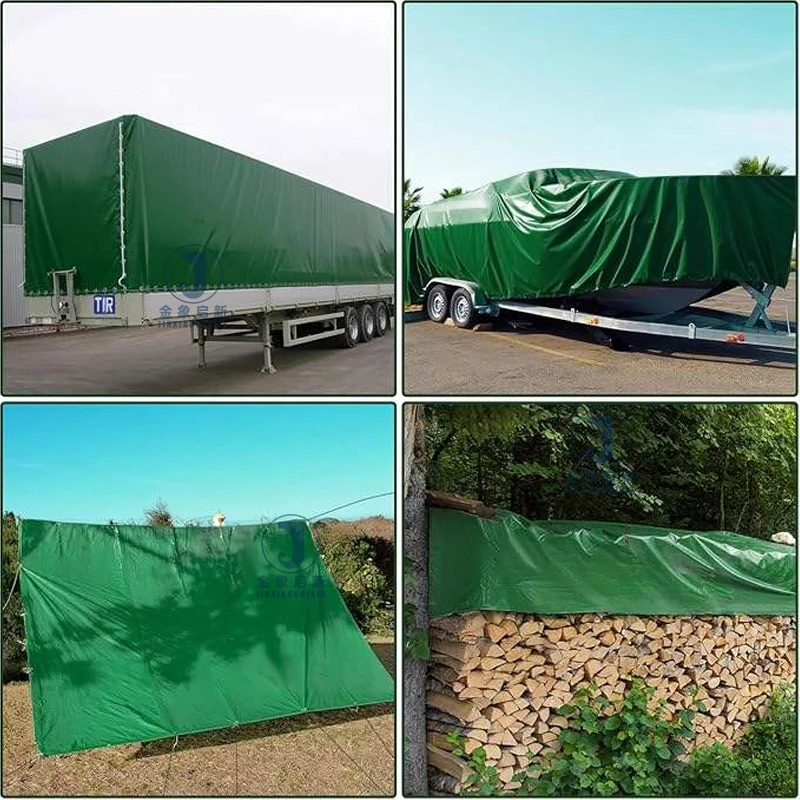
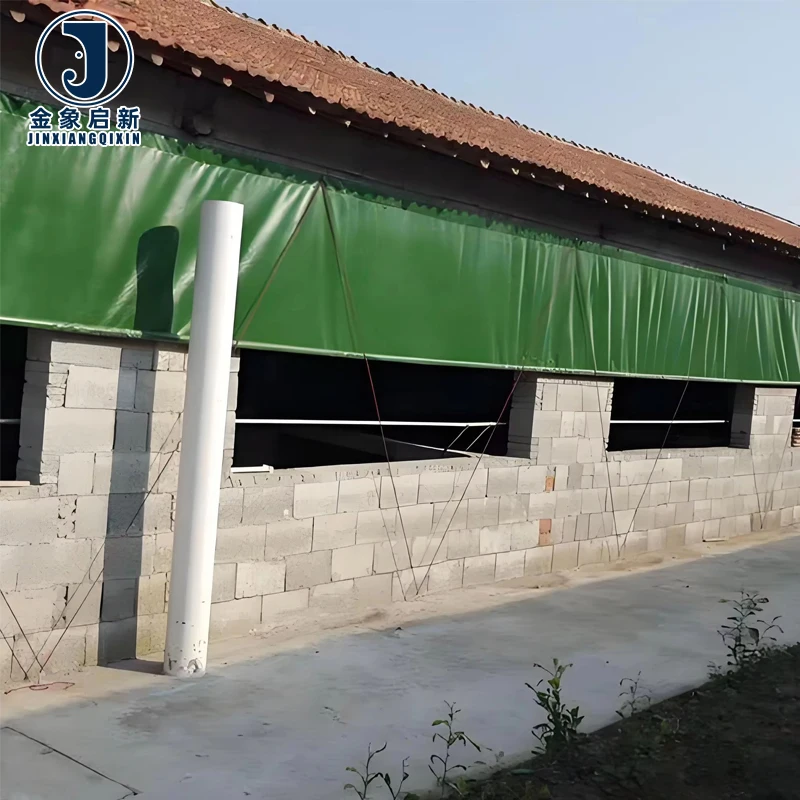
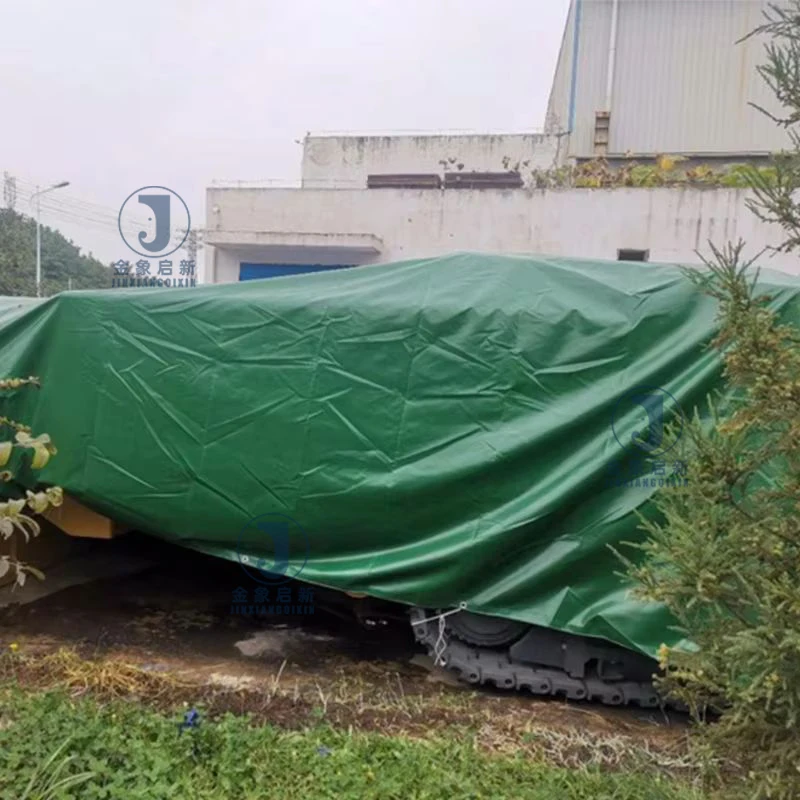
Warp Knitted Coating Expertise — Three full production lines control PVC adhesion and weight distribution on warp knitted base fabric, ensuring anti-static treatment remains consistent through every linear metre of roll stock produced for technical agricultural structures.
Technical Specifications
| Parameter | Value |
|---|---|
| Product Type | PVC Coated Tarpaulin |
| Material | PVC coated warp knitted fabric |
| Fabric Style | Warp knitted, plain woven |
| Waterproof | Yes |
| Anti-Static | Yes (test standard not stated in source) |
| Tear Resistance | Claimed durable and tear resistant (test standard not stated in source) |
| Color | Customizable colors |
| Coating Material | PVC |
| Flame Retardant Grade | Not stated — confirm the grade required for your jurisdiction |
| UV Treatment | Not stated — available upon request with test basis |
| GSM | Not stated — request material specification sheet per order grade |
| Certification | ISO, CE |
Application Suitability
| Application | Exposure & Requirement |
|---|---|
| Poultry and broiler farm ventilation enclosures | Sustained moisture, ammonia-rich air, static discharge risk in confined environments |
| Pig and sheep farm shelter tents | Rain exposure, wind loading, tensioned structures at flex points |
| Agricultural feed storage and warehouse covers | Continuous waterproof demand, dust accumulation, handling abrasion |
| Inflatable and membrane agricultural structures | Anti-static compliance, air pressure retention, welded seam integrity |
Why "Anti-Static" Without a Test Report Is a Liability on Farm Structures
Static buildup in confined livestock environments is not an annoyance — it is a documented ignition and animal stress hazard that demands measurable proof of mitigation.
PVC coated tarpaulin for agricultural tents and ventilation enclosures operates in dry, dust-laden air where charge accumulation on untreated fabric surfaces reaches levels that interfere with electronic feeding systems and disturb livestock behaviour. Buyers who accept a supplier claim of anti-static performance without requesting the underlying surface resistivity test report inherit a compliance gap that surfaces only during site inspection or insurance audit. The PVC coated tarpaulin fire retardant anti-static certified specification you order must arrive with documentation that names the standard and the measured value. [NEED_CITE: anti-static test methods for coated textiles in agricultural and industrial environments]
When the test report is missing, the installation either fails the site safety sign-off or proceeds with an unverified assumption about charge dissipation. Neither outcome serves the contractor or the farm operator.
Charge Dissipation in Confined Livestock Environments
In broiler houses and pig shelters, dust and low humidity create the exact conditions for triboelectric charge accumulation on standard PVC surfaces. This PVC coated tarpaulin incorporates anti-static treatment designed to reduce surface charge in these confined agricultural settings. The warp knitted base fabric provides dimensional stability so the coating — and the treatment within it — remains evenly distributed across the installed panel rather than concentrating at stress points.
Waterproof Integrity Under Sustained Agricultural Moisture
Farm tent structures face rain, condensation, and washing cycles that test coating adhesion continuously. The PVC coating on this warp knitted fabric is applied to deliver waterproof performance across the full panel, including at welded seams where water ingress typically begins. The plain woven construction supports consistent coating penetration, reducing the risk of pinholes that compromise shelter environments where livestock health depends on dry conditions. [NEED_CITE: coating adhesion and waterproof performance standards for PVC coated technical textiles]
Reading the Specification Sheet Beyond the Marketing Claim
The GSM of a PVC coated tarpaulin determines its weight per square metre but tells you nothing about tear behaviour without knowing the base fabric denier and mesh count. A lighter fabric with a high-denier warp knitted structure can outperform a heavier one built on a low-denier base. Coating weight and base fabric weight are separate values that together produce the total GSM — and a supplier who quotes only the total is withholding the information you need to assess how the material will behave at welded seams and eyelet reinforcement points. The PVC coated tarpaulin fire retardant anti-static certified grade you specify must be matched to the mechanical demands of your particular tent geometry and wind-load calculations. Flame retardant performance is available in multiple grades; confirm which standard your local agricultural building code references before finalising the specification.
The Cost of Ordering Without Verified Documentation
When anti-static treatment is claimed but the roll arrives without a supporting test report, the contractor faces a choice between installing unverified material or halting the project to source replacement fabric. Both paths carry cost. Similarly, when GSM on the quotation differs from the material that arrives on site, the installed structure carries a load capacity that does not match the engineering assumption. [NEED_CITE: pre-shipment inspection practices for coated fabric roll stock]
Welded seams on underspecified material fail at flex points under wind load — not because the welding was poor, but because the fabric could not carry the tension the structure imposed. Batch colour variation across rolls installed side by side on a large farm shelter forces either a visual compromise or a complete re-order.
Why Technical Buyers Source This Fabric Here
The 10-person R&D team develops sample panels with your specified anti-static and flame retardant requirements before production begins, so you confirm performance on the actual coating formulation — not a generic datasheet. Three full production lines and 36 sets of professional equipment support the volume consistency required when a single farm complex needs multiple container loads of colour-matched roll stock.
Dedicated QA and QC runs at every production stage with full inspection before dispatch, catching GSM deviation and coating defects before they reach your site. The facility’s ISO and CE certification underpins documentation you can submit directly to project compliance auditors. Samples for custom widths, colours, and treatment grades are developed within days, compressing the approval cycle for time-sensitive agricultural construction schedules.
Documentation & Verification
- Material specification sheet stating GSM, base fabric denier, and coating weight for the ordered grade
- Anti-static test report naming the measurement standard and surface resistivity value
- Flame retardant test certificate matching the grade specified for your agricultural building jurisdiction
- Pre-shipment inspection record covering roll-by-roll weight and colour verification
- Certificate of origin and customs documentation for international agricultural project clearance
Fabrication, Handling & Storage
- Hot-air welding temperature and speed must be calibrated to the PVC coating weight before full-panel joining begins
- Store rolls horizontally on padded racks to prevent permanent creasing in the warp knitted base fabric
- Allow cold-transported rolls to reach ambient temperature before unrolling to avoid coating micro-cracking
- Reinforce tie-down points with PVC patch overlays welded to both sides of the panel
- Use only PVC-compatible cleaning agents to preserve the anti-static treatment on the coating surface
- Plan panel cutting layout to minimise welded seams across high-tension zones of the tent structure
What We Need to Quote Accurately
Provide the tent or enclosure geometry, the wind and snow load expectations for your site, and the anti-static or flame retardant standards your local jurisdiction enforces for agricultural structures. Specify the roll width and colour reference you require, the estimated annual volume, and whether you need finished panels with welded hems or raw roll stock for your own fabrication facility. Request a sample panel if this is a new specification so you can verify welding parameters and colour match before committing the full order.
Frequently Asked Questions
Q: What anti-static standard does this tarpaulin meet, and is it accepted for confined livestock environments?
A: Anti-static treatment is applied during the PVC coating process, but the specific test standard and measured surface resistivity value must be confirmed per order. Request the test report before finalising your specification to ensure the result satisfies the safety requirements of your poultry or pig farm jurisdiction. We supply the documentation alongside the shipment.
Q: Does this farm tarpaulin carry a flame-retardant certification required by local agricultural building codes?
A: Flame retardant grades are available, but the applicable standard depends on your installation jurisdiction. Specify the fire classification your local building code references — whether NFPA 701, DIN 4102, or another regional standard — and we confirm whether the formulation meets it, supported by a test certificate with your shipment documentation.
Q: How can I verify the GSM stated on quotation matches the roll I receive?
A: Every roll undergoes weight verification during pre-shipment inspection, and the recorded GSM is documented in the inspection report included with your dispatch papers. You can cross-reference this against the material specification sheet provided at the quotation stage to confirm the grade you ordered is the grade that shipped.
Q: What welding or seaming method is recommended for joining this warp knitted PVC tarpaulin into large tent structures?
A: Hot-air welding is the standard joining method for PVC coated warp knitted fabric, producing seams that match the panel strength when temperature and speed are correctly calibrated. Request a sample panel to establish your machine settings before full production, particularly when working with custom coating weights or anti-static treated grades.
Q: Is UV treatment available, and what test basis supports the outdoor exposure claim?
A: UV treatment can be incorporated into the PVC coating formulation for agricultural structures exposed to sustained sunlight. The specific test standard and exposure rating must be confirmed at the quotation stage so the result aligns with the outdoor service life your project demands. Request the test report with your sample approval.