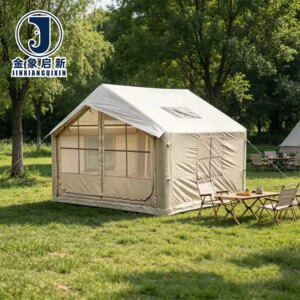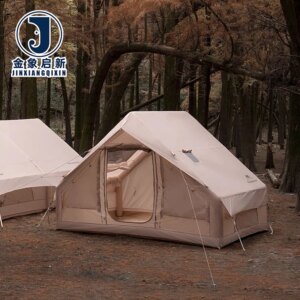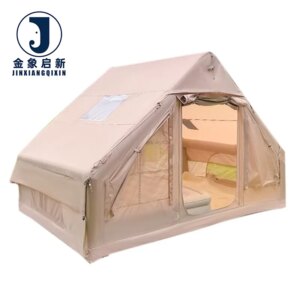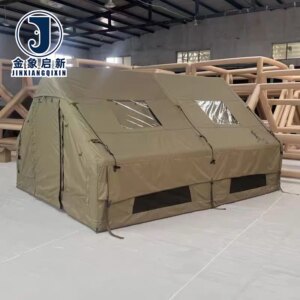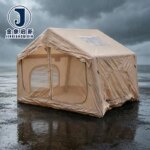
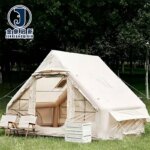
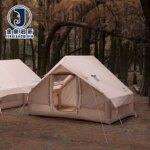
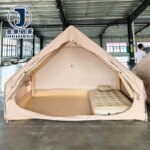
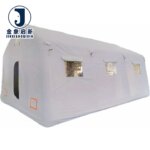
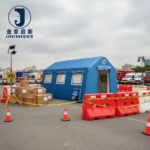
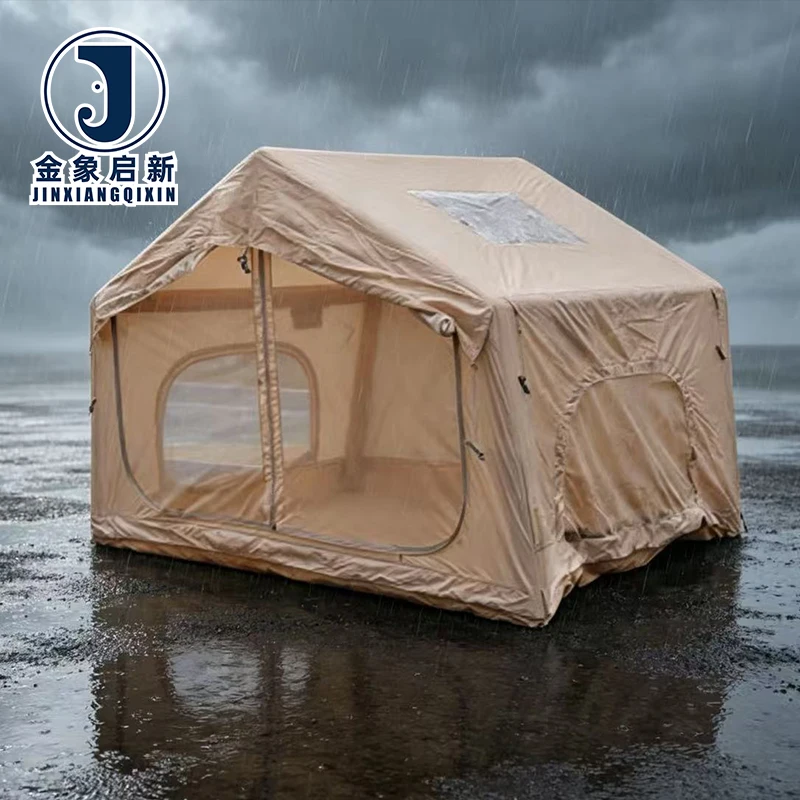
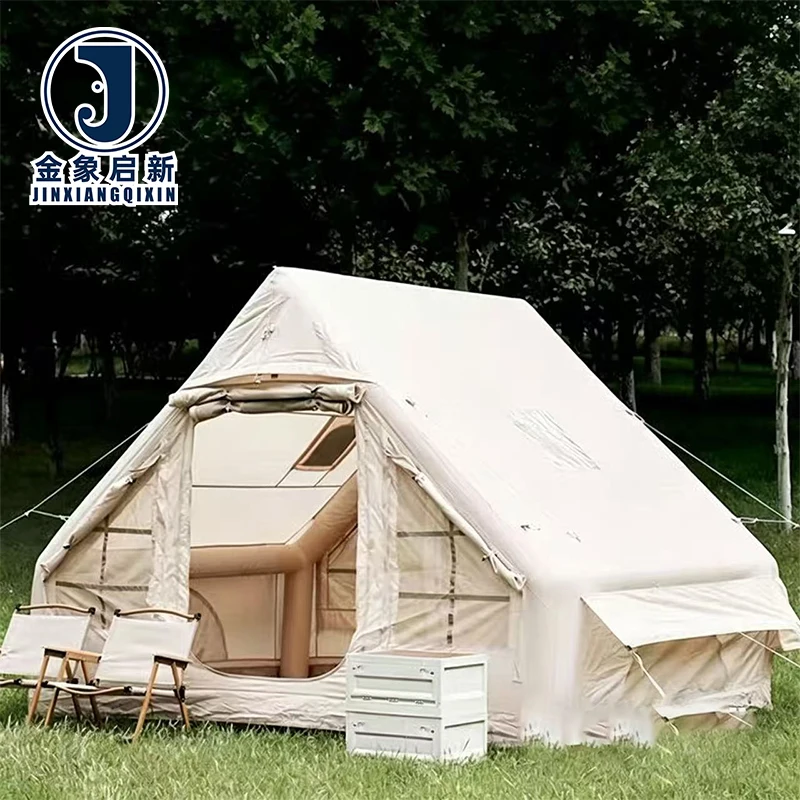
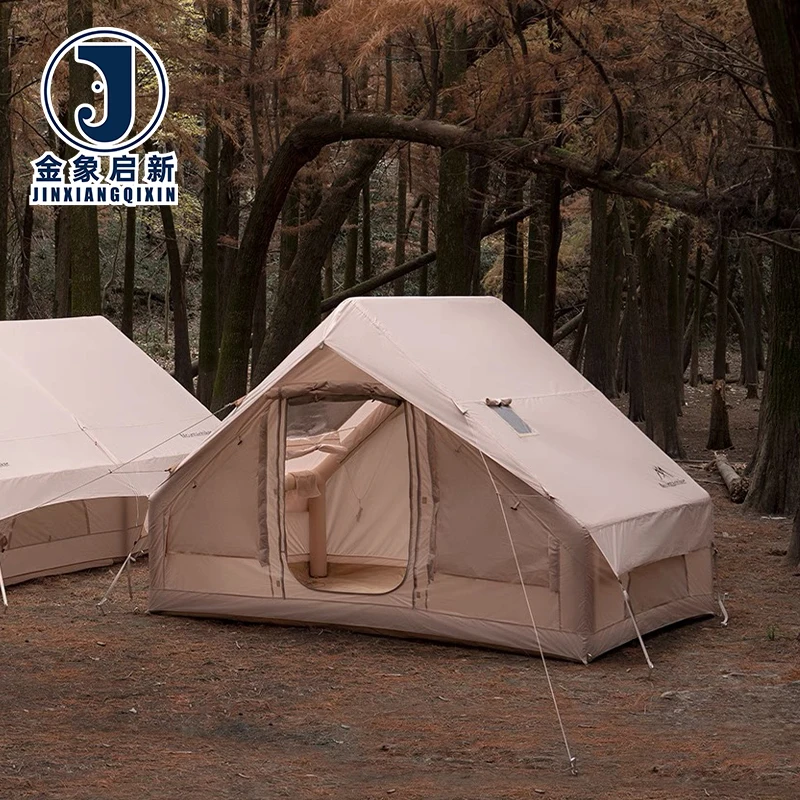
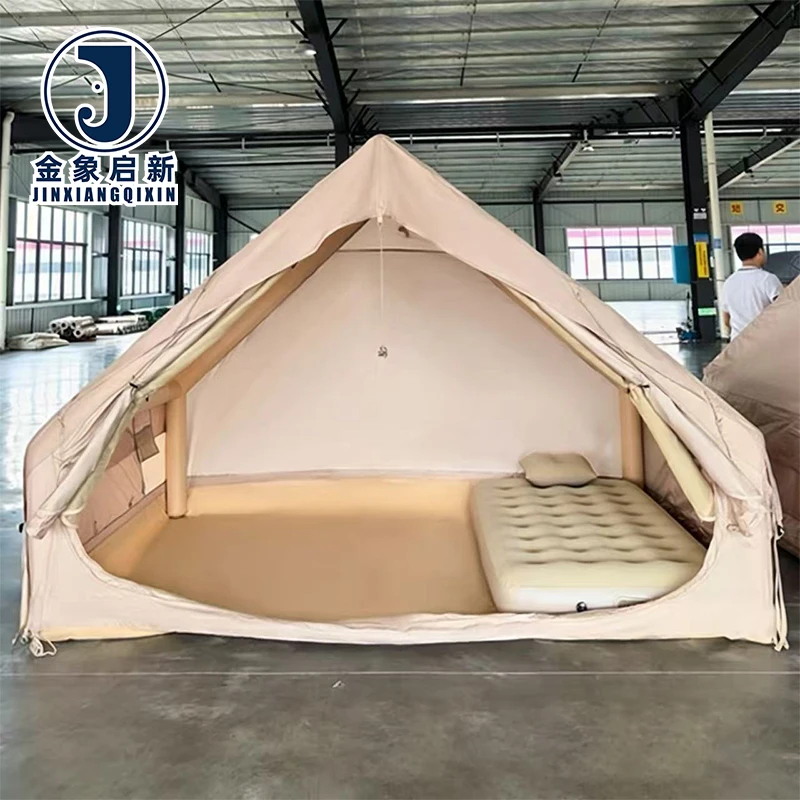
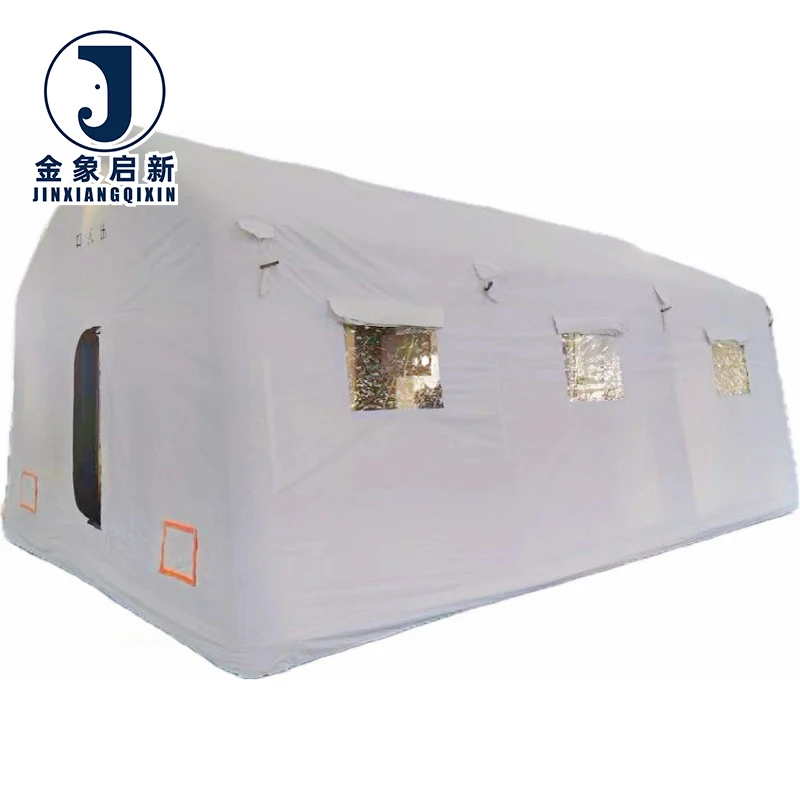
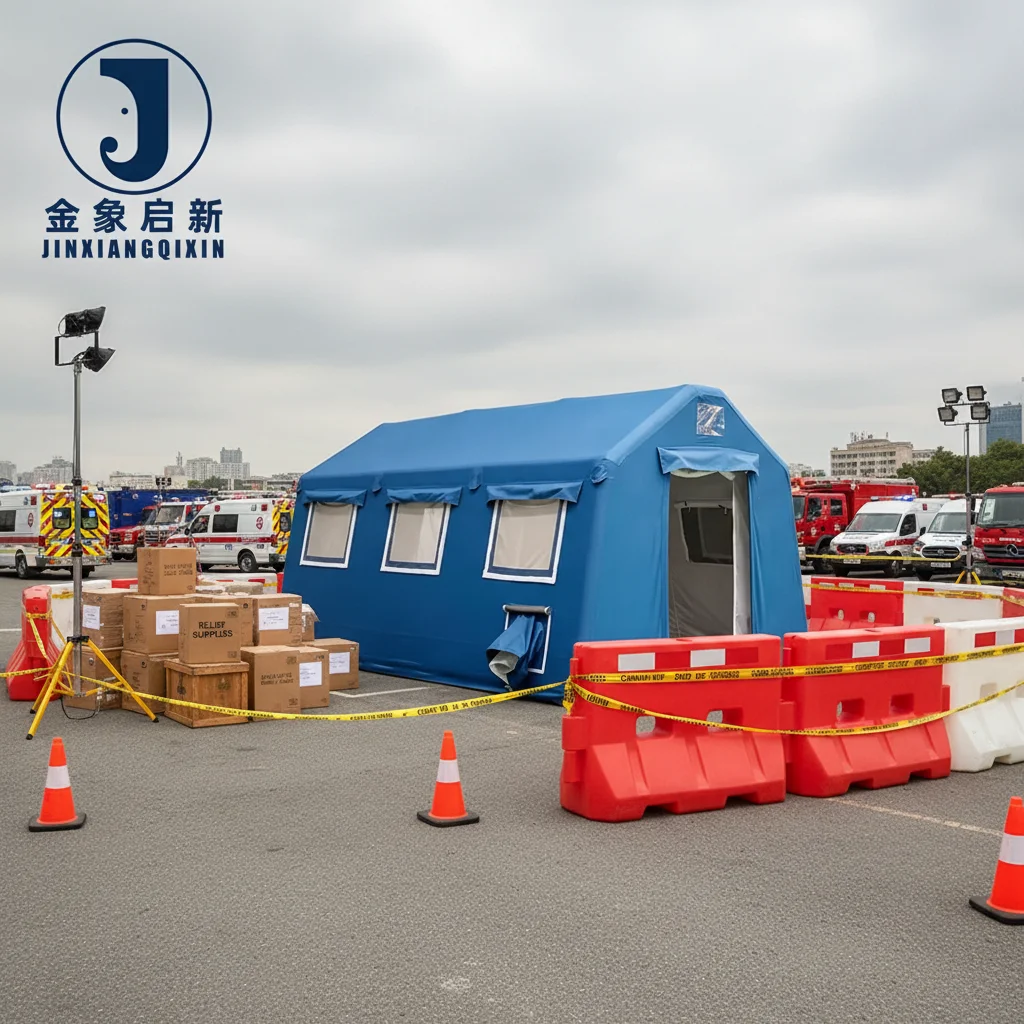
Process-Controlled Membrane Engineering — Every inflatable shelter leaves our facility with verified pressure retention data and full material compliance documentation.
Technical Specifications
| Parameter | Value |
|---|---|
| Product Type | Inflatable Tent |
| Core Material | UV-Resistant PVC |
| Waterproof Rating | Hydrostatic head exceeding 5000 mm |
| UV Treatment | 5000+ hours sunlight exposure; maintains 85% tensile strength after 2 years outdoor exposure (test basis not stated) |
| Deployment Mechanism | Rapid auto-opening, deploys in under 60 seconds |
| Inflation System | Industrial-grade inflation valves with rapid pressure retention |
| Temperature Range | -30 °C to 70 °C (validated via temperature cycling test) |
| Construction | Single-layer |
| Customization Options | Size adjustments, color customization, logo printing, structural design modification |
| Quality Control | 12 inspection points; 24-hour pressure retention testing; ultrasonic seam integrity checks |
| Certifications | ISO 9001, ISO 14001, ISO 45001, CE |
Application Suitability
| Application | Exposure & Requirement |
|---|---|
| Mining and tunnelling temporary shelters | Dust ingress, confined-site deployment, fire-retardant and anti-static compliance on regulated sites |
| Aviation ground support enclosures | Rapid deployment on tarmac, wind loading, fuel-adjacent environment requiring certified membrane |
| Emergency relief field shelters | Immediate weather protection, transport portability, multi-climate temperature tolerance |
| Construction site equipment enclosures | Prolonged UV exposure, mechanical abrasion from site activity, moisture protection for stored assets |
| Outdoor event weather-protected workspaces | Public-facing aesthetics, quick setup and teardown between events, rain and sun protection |
What Happens When an Inflatable Shelter Arrives Without the Certification Your Site Demands
A certified inflatable shelter must ship with the test reports and compliance documents your safety officer needs before it touches the ground.
Mining and tunnelling projects operate under strict ventilation and membrane structure regulations. When the supplier ships an inflatable tent without verifiable fire-retardant or anti-static documentation, the site compliance team halts deployment. That delay cascades — crews stand idle, equipment sits exposed, and the procurement team scrambles to source a replacement while the project schedule slips. We have seen regulated sites reject entire shipments because the membrane certificate did not match the jurisdiction’s required grade [NEED_CITE: fire-retardant classification standards for temporary industrial membrane structures]. Specifying the correct inflatable tent fire retardant grade at inquiry stage prevents this.
Ventilation and Membrane Compliance for Regulated Environments
In mining and tunnelling, inflatable structures often sit adjacent to ventilation ductwork or serve as temporary pressurised enclosures. The membrane must meet site-specific fire performance requirements, and the documentation must be traceable to the batch deployed. Our certified inflatable shelter range ships with material specification sheets that confirm the PVC compound, coating weight, and treatment grades applied. Third-party laboratory test reports for fire-retardant and anti-static compliance are available on request so your safety team can cross-reference before installation.
Pressure Retention and Structural Integrity Under Field Conditions
An inflatable structure is only reliable if it holds pressure through temperature swings, wind loading, and extended deployment. Every unit undergoes 24-hour pressure retention testing and ultrasonic seam integrity checks before dispatch. The industrial-grade inflation valves maintain internal pressure across the -30 °C to 70 °C operating range, validated through temperature cycling tests. On a tunnelling project where the inflatable tent serves as a dust containment enclosure, consistent pressure retention means the structure does not sag or deform during shift changes [NEED_CITE: pressure retention testing standards for inflatable industrial structures].
Reading the Specifications That Actually Matter for Inflatable Shelters
Hydrostatic head rating, tensile strength retention, and temperature cycling range define how a membrane performs once it is inflated on-site. A hydrostatic head exceeding 5000 mm indicates the PVC fabric can withstand prolonged rain exposure without moisture penetration — critical for emergency relief shelters deployed in monsoon-prone regions. The stated 85% tensile strength retention after extended outdoor exposure (test basis not stated) suggests the UV-resistant PVC compound resists degradation, but buyers should request the underlying test method to verify the claim against their local climate conditions. Temperature tolerance from -30 °C to 70 °C covers most deployment environments, but the validation method matters: a cycling test that repeatedly transitions between extremes is more indicative of field performance than a static hold at each boundary. For buyers comparing inflatable shelter options, these three parameters together — water resistance, UV stability, and thermal range — determine whether the membrane will perform through an entire project duration without replacement.
The Cost of Specifying the Wrong Membrane Grade
When a buyer selects an inflatable shelter based on price without verifying the membrane treatment grade, the consequences surface after deployment. A membrane lacking adequate UV stabilisation becomes brittle within months, developing micro-cracks at stress points that compromise pressure retention. In fire-regulated environments, a tent that carries no traceable flame-retardant certification forces the site manager to either halt operations or assume liability for non-compliant temporary structures [NEED_CITE: regulatory consequences of uncertified temporary membrane structures on mining sites]. Colour inconsistency across a multi-unit order becomes visible once the shelters are erected side by side at an event or logistics hub, triggering a cosmetic rejection even when the fabric itself performs.
Why Industrial Buyers Source Inflatable Shelters Through This Facility
Nearly 30 years of coated fabric process control means coating weight and adhesion are managed at every production stage, not spot-checked after the fact. Three full production lines and 36 sets of professional processing equipment support bulk orders of certified inflatable shelters with consistent on-time delivery across multiple units. A 10-person R&D team handles structural design modification — resizing beam diameters, adjusting valve placement, or reconfiguring entry points to match your site layout. Dedicated quality assurance covers 12 inspection points per unit, including the 24-hour pressure retention test that catches seam leaks before they become field failures. Samples for custom-sized inflatable tents are developed within days, letting you validate dimensions and valve positions before committing to a production run.
Documentation & Verification
- Material specification sheet confirming PVC compound, coating weight, and UV treatment grade per batch
- ISO 9001, ISO 14001, ISO 45001, and CE certificates included with every shipment
- Batch inspection report detailing dimensional verification, seam test records, and pressure retention results
- Third-party laboratory test reports for fire-retardant and anti-static compliance available on request
- Pre-shipment inspection record covering all 12 quality control checkpoints
Fabrication, Handling & Storage
- Ultrasonic seam welding parameters calibrated to the UV-resistant PVC single-layer construction for structural beam joints
- Store deflated units flat or loosely rolled to prevent permanent creasing in the PVC membrane
- Deploy inflation valves within the -30 °C to 70 °C range; allow cold-stored units to acclimatise before full pressurisation
- Clean with mild detergent only; aggressive solvents degrade the UV treatment coating layer
- Repair minor punctures with compatible PVC adhesive patches matched to the single-layer membrane thickness
Requesting a Specification Match for Your Project
Provide your deployment environment — including altitude, prevailing wind speeds, and whether the site falls under mining, aviation, or general construction regulation. Confirm the fire-retardant or anti-static grade your jurisdiction requires so we can match the membrane treatment and prepare the corresponding test documentation. If your project demands non-standard dimensions or structural modifications, share the target footprint and any access point requirements to begin sample development.
Frequently Asked Questions
Q: What fire-retardant grade or anti-static certification does the inflatable tent carry for my jurisdiction?
A: The membrane is available in fire-retardant and anti-static grades suitable for mining, aviation, and tunnelling environments. We provide third-party laboratory test reports matched to the grade you specify. Confirm the exact standard your site compliance officer requires at inquiry stage so we align the documentation before production begins.
Q: How is UV resistance validated, and what test data supports the outdoor exposure claim?
A: The UV-resistant PVC compound is tested to over 5000 hours of sunlight exposure with stated tensile strength retention after extended outdoor use. We can supply the underlying test method and results on request. For projects in high-UV regions, ask for the specific test protocol to verify it matches your local solar radiation conditions.
Q: Can the structural design be modified to meet specific site load or wind conditions?
A: Our 10-person R&D team handles structural design modifications including beam diameter adjustments, valve repositioning, and custom entry configurations. Submit your site load requirements, target dimensions, and environmental exposure data. We develop a sample for your approval before full production proceeds.
Q: What documentation ships with each order for compliance audits and safety inspections?
A: Every shipment includes material specification sheets, ISO and CE certificates, a batch inspection report with pressure retention and seam test records, and a pre-shipment inspection record. Third-party fire-retardant and anti-static test reports are included where applicable. All documents reference the specific production batch for full traceability.