







Certified Compliance Focus — Our inflatable tent fabric is engineered to meet stringent fire-retardant and anti-static standards, ensuring your disaster relief operations pass every regulatory inspection without costly re-procurement delays.
Technical Specifications
| Parameter | Value |
|---|---|
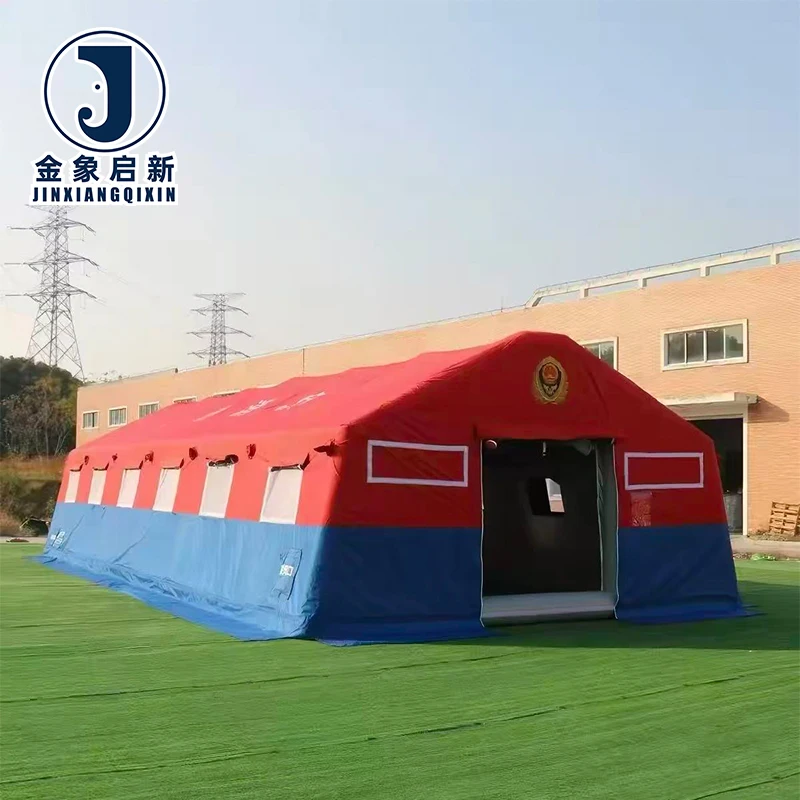
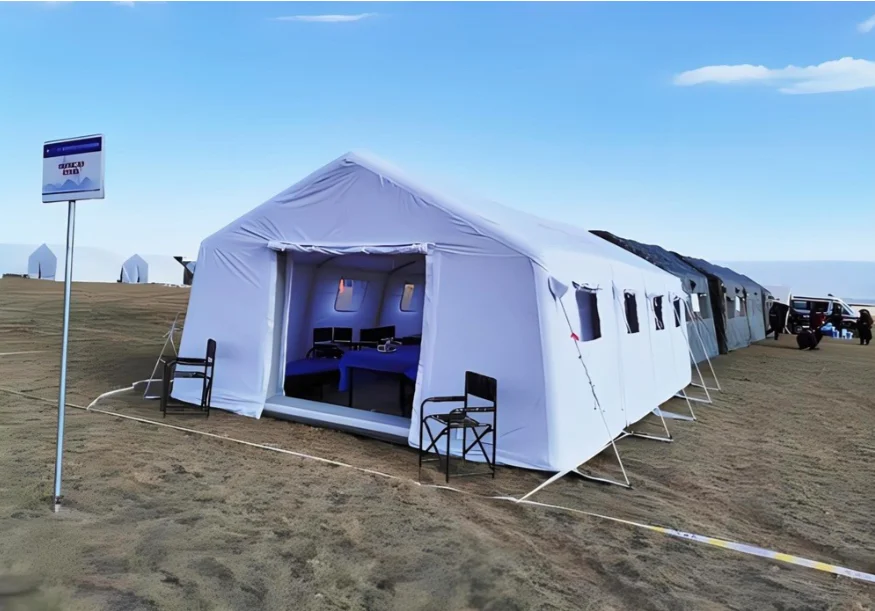
| Product Type | Inflatable Tent |
| Core Material | PVC tarpaulin |
| Construction | Single layer inflatable structure |
| Waterproof | Yes (grade not stated in source) |
| UV-resistant | Yes (test basis not stated in source) |
| Tear-resistant | Yes (test standard not stated in source) |
| Flame Retardant | Yes (grade not stated in source) |
| Anti-Static | Yes (surface resistance / standard not stated in source) |
| Customization | OEM & ODM available |
| Production Facility | 9,180 square meters |
| Production Lines | 3 full production lines |
| Processing Equipment | 36 sets of professional equipment |
| R&D Team | 10 technicians |
| Standards | ISO9001, ISO14001, ISO45001, CE |
Application Suitability
| Application | Exposure & Requirement |
|---|---|
| Mining and tunnelling site shelters | Underground environments requiring certified fire-retardant fabric compliance for worker safety |
| Aviation emergency command centers | Sensitive electronic equipment handling demanding anti-static surface performance |
| Construction site temporary shelters | Four-season weather exposure with rapid deployment needs and UV degradation resistance |
| Disaster relief rapid deployment | Immediate field operations requiring documented material certifications for regulatory approval |
| Mobile field operations bases | Remote locations with extended outdoor exposure and structural integrity demands |
What "Certified" Means When Your Inflatable Tent Fails the Site Inspection
Inflatable tent fire retardant certification without the proper test documentation stops your operation before it starts.
I’ve watched mining contractors halt production because their emergency shelters lacked the specific fire classification their site safety plan required. Aviation response teams have been forced to re-procure entire tent inventories when anti-static claims couldn’t be verified against surface resistance standards. The cost isn’t just the replacement fabric—it’s the weeks of delayed operations and failed compliance audits [NEED_CITE: fire safety compliance requirements for temporary industrial structures].
When you specify an inflatable tent for disaster relief or industrial field use, you’re not just buying shelter. You’re buying documented proof that the material meets your destination market’s regulatory framework. Without that documentation, even premium-grade PVC tarpaulin becomes a liability.
Fire-Retardant Performance: Which Grade Does Your Site Actually Require?
Different markets demand different fire classifications. European mining operations often reference M2 or B1 ratings, while North American facilities may require NFPA 701 compliance. Our PVC inflatable tent is available in flame retardant grades — confirm the grade required for your market before placing your order. The material can be formulated to meet various standards, but specifying the exact test method and classification upfront prevents costly re-procurement cycles. Request the fire-retardant test report citing the specific standard applicable to your destination market.
Anti-Static Compliance for Sensitive Equipment Environments
Aviation maintenance hangars, mobile command centers, and mining operations handling electronic instrumentation all require controlled static dissipation. Anti-static fabric performance must be verified through surface resistance testing against recognized standards. Before committing to volume, confirm the anti-static surface resistance value or test standard that matches your site specification. Our material can be engineered with anti-static treatment, but the exact performance parameters depend on your compliance requirements [NEED_CITE: anti-static surface resistance standards for industrial fabric applications].
Single-Layer Inflatable Structure and Pre-Shipment Validation
Every inflatable tent we produce undergoes airtightness testing and structural load capacity verification before dispatch. The single-layer construction relies on precise seam welding and material integrity to maintain inflation pressure under wind load and temperature fluctuation. Our QA process includes full inspection of valve integrity, seam strength, and fabric performance characteristics. You receive a pre-shipment inspection record documenting these test results per batch, ensuring your inflatable structure meets specifications before it leaves our facility.
Understanding How Base Fabric and Coating Determine Real-World Performance
The relationship between PVC tarpaulin weight and actual structural strength involves more than GSM alone. Base fabric denier and weave density establish the tensile foundation, while coating weight and method determine flexibility, weld strength, and environmental resistance. A heavier coating doesn’t automatically mean stronger fabric if the base scrim is under-engineered for the load application [NEED_CITE: tensile and tear test methods for coated fabrics per ISO 1421].
Coating method affects critical performance characteristics. Knife-coated fabrics typically achieve superior adhesion between coating and base fabric, which matters when inflatable structures flex under pressure changes. The coating must maintain bond integrity through repeated inflation cycles without delamination. Surface finish selection—glossy or matte—affects both cleaning protocols and print adhesion for branding applications. Flame retardant treatment integration into the coating formulation must be balanced against flexibility requirements, as some retardant chemistries can stiffen the material and reduce low-temperature performance.
The Compliance Gap That Halts Operations Mid-Deployment
When inflatable tent fabric arrives without the fire-retardant or anti-static certification your site requires, you face immediate operational shutdown. I’ve seen disaster relief deployments delayed because the tent documentation didn’t match the procurement specification, forcing emergency re-sourcing under compressed timelines. Mining operations have incurred regulatory fines when inspectors found uncertified temporary shelters on active sites. The material itself might perform adequately, but without the proper test reports and certification documentation, it fails the compliance audit [NEED_CITE: regulatory inspection requirements for temporary industrial shelters].
Batch-to-batch consistency also matters when you’re deploying multiple units across different sites. Color variation between rolls becomes visible once tents are installed side by side, damaging the professional appearance of your operation. Weld integrity must be consistent across production runs, as seam failure at flex points typically occurs before the fabric itself reaches end-of-life.
Why Procure Your Inflatable Tent Fabric Here
Our 9,180 square meter facility operates three full production lines specifically configured for coated fabric manufacturing, giving us capacity to handle volume orders without compromising lead time. The 36 sets of professional processing equipment include specialized welding and testing stations for inflatable structure production. Our 10-person R&D team handles material selection, custom sizing, pattern printing, and sample development, allowing full OEM and ODM customization from initial specification through production.
We maintain dedicated QA and QC staff at every production stage, with full-process inspection protocols specific to inflatable structure requirements. Pre-shipment testing covers airtightness, structural load capacity, and material performance verification. Samples can be developed within days for custom requirements, letting you validate dimensional accuracy and performance characteristics before committing to bulk production. We’ve exported to over 20 countries across North America, Europe, and Asia, building experience with diverse regulatory frameworks and compliance documentation requirements.
Documentation & Verification
- Material specification sheet stating base fabric, coating material, and all treatment claims
- Fire-retardant test report citing the specific standard and grade for your market
- Anti-static surface resistance value or test standard documentation
- Pre-shipment inspection record including airtightness and structural load test results
- ISO and CE certificates supporting regulatory compliance requirements
- Certificate of origin and customs documentation for international shipment
Fabrication, Handling & Storage
- Confirm fire-retardant and anti-static treatment levels match your welding temperature parameters before fabrication
- Store PVC tarpaulin rolls flat to prevent permanent creasing that affects inflatable structure inflation
- Use compatible adhesives and primers formulated for PVC-coated fabrics when making field repairs
- Verify surface finish—glossy or matte—before selecting cleaning agents to avoid coating damage
- Maintain minimum bend radius during transport to prevent coating crack formation at low temperatures
- Request custom width and length specifications to minimize waste during tent panel cutting
Request Your Inflatable Tent Specification
To provide accurate pricing and lead time, share your intended application environment, including whether the tent will handle sensitive electronic equipment requiring anti-static compliance. Specify your destination market’s fire safety regulations so we can confirm the appropriate retardant grade and test standard. Let us know your required dimensions, quantity, and whether you need sample validation before bulk production. If you have specific color or branding requirements, include those details for complete customization assessment.
Frequently Asked Questions
Q: What fire-retardant grade does the inflatable tent fabric meet, and which test standard is referenced?
A: Our PVC inflatable tent is available in flame retardant grades, but the specific classification depends on your market requirements. European operations often require M2 or B1 per DIN 4102, while North American sites may specify NFPA 701. Request the test report citing the standard applicable to your destination market before placing your order to ensure compliance documentation matches your procurement specification.
Q: Is the anti-static performance verified by a surface resistance test, and what standard applies?
A: Anti-static treatment can be incorporated into the PVC tarpaulin formulation for environments handling sensitive electronic equipment. Before committing to volume, confirm the surface resistance value or test standard that matches your site specification. We provide documentation showing the anti-static performance parameters, but the exact standard depends on your compliance framework and operational requirements.
Q: Can the tent be customized to meet site-specific compliance requirements for mining or aviation use?
A: Yes, our 10-person R&D team handles full OEM and ODM customization, including material specification modifications to meet your site’s regulatory framework. We can adjust fire-retardant grades, anti-static performance levels, dimensions, and pattern printing. Request samples developed within days to validate that the customized specifications meet your compliance requirements before committing to bulk production.
Q: What documentation is provided with each shipment to support regulatory inspections?
A: Each shipment includes a material specification sheet, fire-retardant test report with applicable standard citation, anti-static documentation if specified, pre-shipment inspection records showing airtightness and structural load test results, ISO and CE certificates, and certificate of origin. This documentation package supports regulatory inspections and compliance audits at your deployment site without requiring additional verification steps.
Q: How is batch-to-batch consistency ensured across large-volume inflatable structure orders?
A: Our three full production lines and dedicated QA staff maintain full-process inspection protocols throughout manufacturing. Pre-shipment testing verifies airtightness, structural load capacity, and material performance per batch. We provide inspection records documenting these results, and our coating process control ensures consistent fire-retardant and anti-static treatment levels across all rolls in your order to prevent performance variation between production batches.