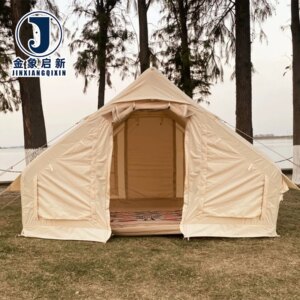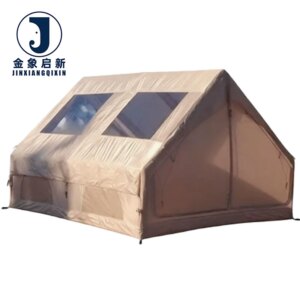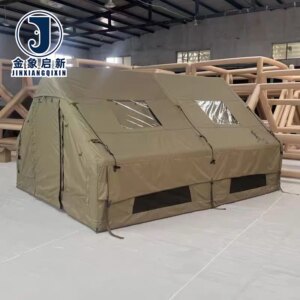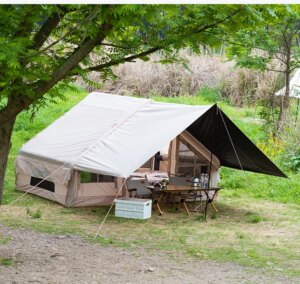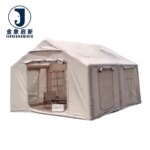
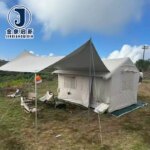
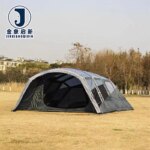
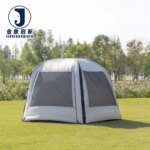
Certified Fabric Engineering — Nearly 30 years of PVC coated fabric expertise ensures every inflatable tent membrane meets exacting inflation and structural integrity demands before it leaves the factory.
Technical Specifications
| Parameter | Value |
|---|---|
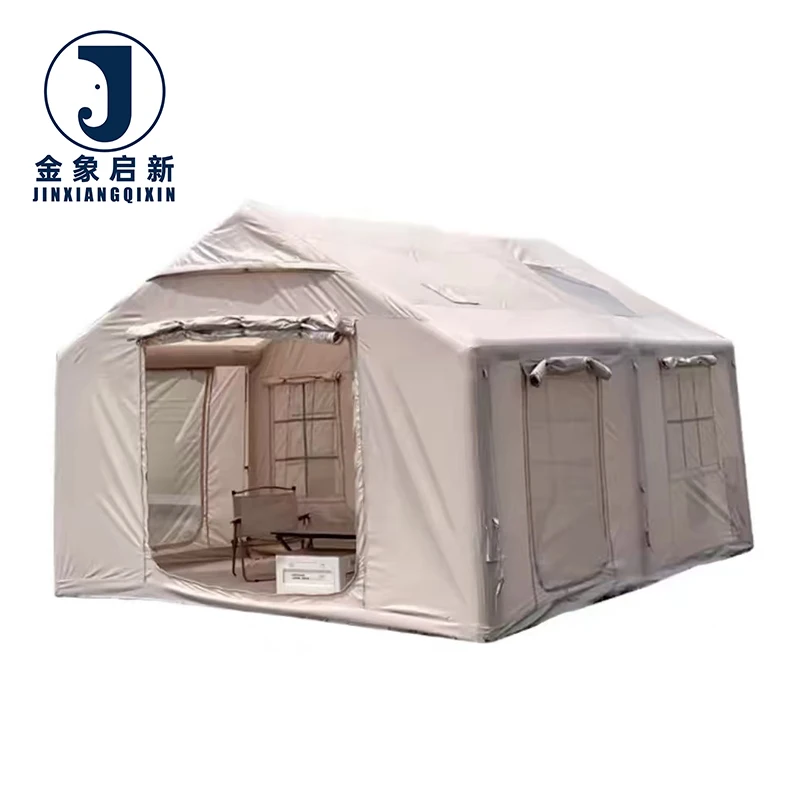
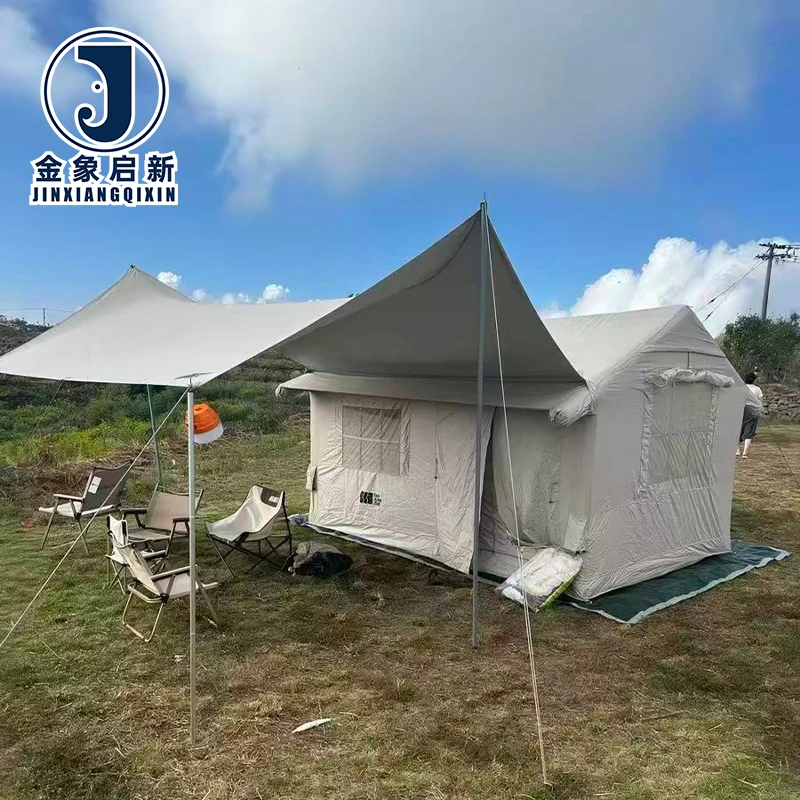
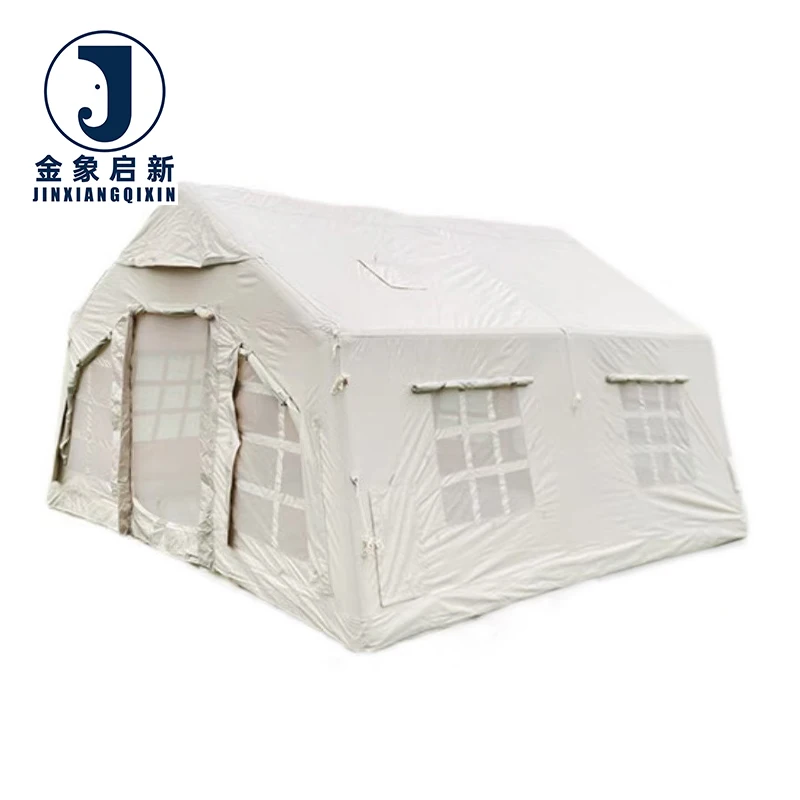
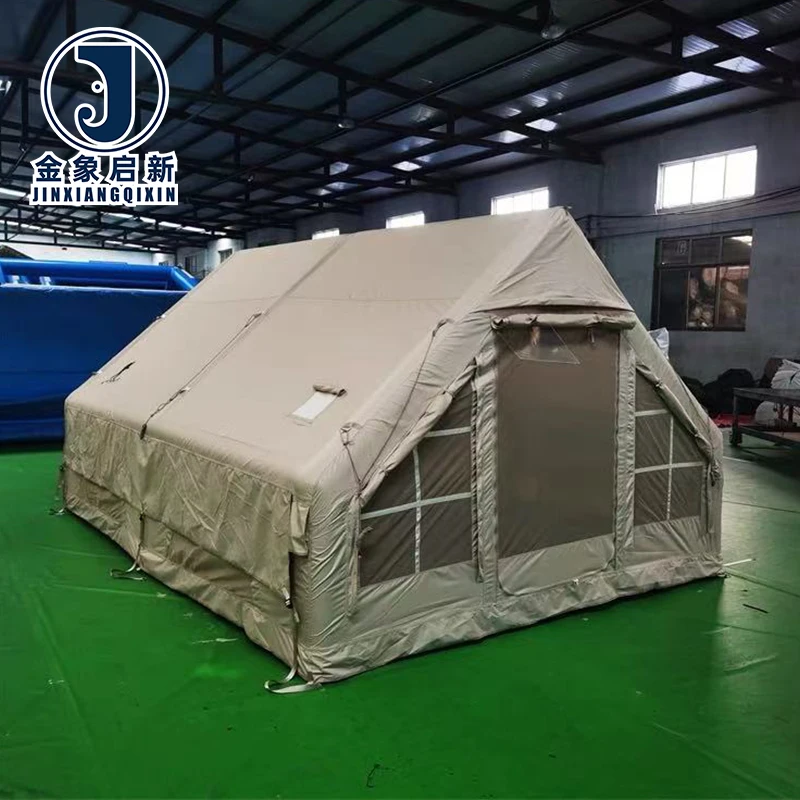
| Product Type | Inflatable Tent |
| Core Material | PVC tarpaulin (PVC knife-coated fabric) |
| Capacity | 3-5 person |
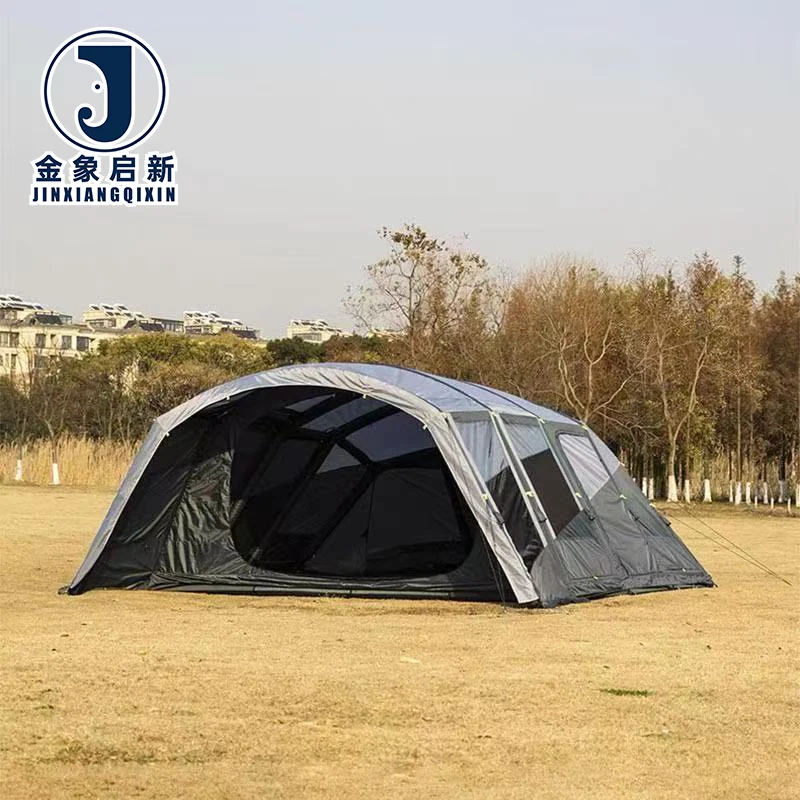
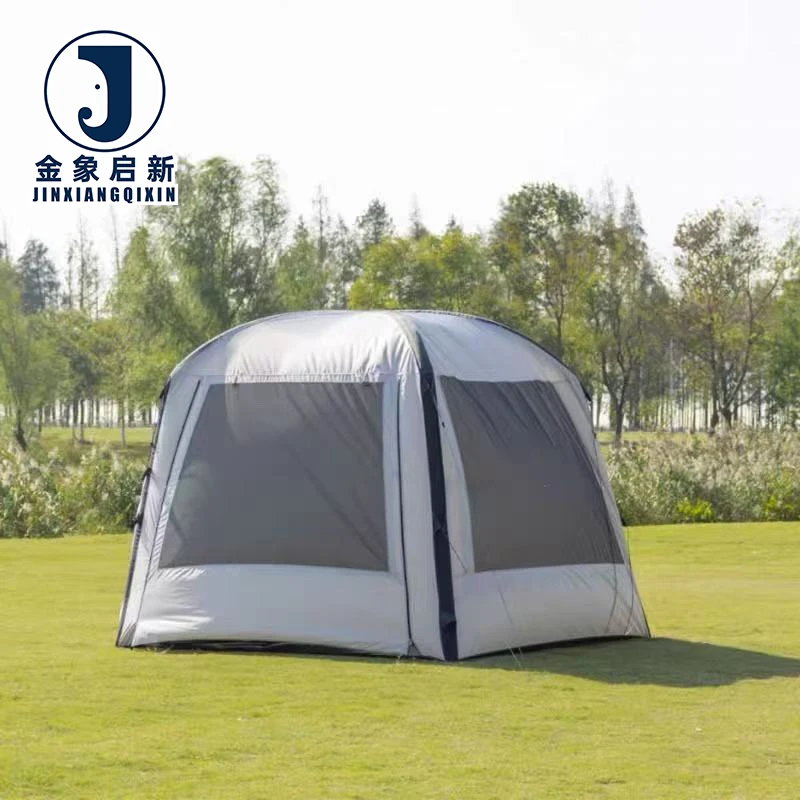
| Design | Four-Season Use, Single Layer Construction, Extended Type |
| Key Performance | Waterproof, UV-resistant (test basis not stated), tear-resistant, quick automatic opening |
| Coating Method | Knife coated |
| Customization Service | OEM & ODM support (size adjustments, material thickness variations, custom color options) |
| Quality Control | Full-process quality inspection with dedicated QA & QC staff, inflation testing and structural integrity checks before shipment |
| R&D Support | 10-technician R&D team, pre-production sample confirmation |
| Production Facility | 9,180 m² facility, 3 dedicated production lines, 36 sets of professional processing equipment |
| Standards | ISO9001, ISO14001, ISO45001, CE |
Application Suitability
| Application | Exposure & Requirement |
|---|---|
| Temporary site offices during infrastructure recovery | Prolonged outdoor UV exposure, wind load on inflated structure, frequent assembly and disassembly |
| Equipment storage shelters in post-disaster operations | Abrasion from stored machinery, moisture ingress risk, rapid deployment under adverse conditions |
| Emergency command centers for large-scale industrial facilities | High occupant traffic, interior climate retention, sustained inflation pressure stability |
| Material staging and operational coordination in industrial disaster response | Ground contact abrasion, variable weather patterns, multi-crew access points requiring structural rigidity |
| Year-round industrial emergency preparedness and temporary shelter | Seasonal temperature fluctuations, long-term storage without material degradation, immediate readiness for deployment |
Why a UV Claim Without a Test Report Is a Liability on the Job Site
A tent fabric marketed as UV-resistant must carry a verifiable test basis, or the four-season deployment claim is simply marketing language.
When industrial facilities stockpile emergency shelters for disaster response, the material often sits in storage for extended periods before deployment. If the PVC coating degrades unpredictably once exposed to direct sunlight, the inflatable structure loses tensile integrity exactly when the site team relies on it most. Procurement specifications require documented evidence—whether hours of xenon arc exposure or a recognized weathering standard—rather than supplier assertions [NEED_CITE: ISO 4892 methods for plastics exposure to laboratory light sources]. Without that documentation, the inflatable emergency tent manufacturer custom order you placed may fail its first real-world validation under continuous sun.
How Knife Coating Secures the Air-Holding Membrane
The knife-coated construction method applies a precise PVC layer directly onto the base fabric under controlled tension. This process delivers a uniform coating weight across the entire membrane surface, which directly influences how the inflatable tent manufacturer custom product holds internal air pressure over sustained operational periods. Unlike laminated alternatives, knife coating produces a bond between the PVC and the substrate that resists delamination even when the structure flexes under wind load. The result is a membrane engineered specifically for the inflation cycles and structural demands of emergency shelter deployment.
Balancing Portability Against Four-Season Demands
The single-layer extended type design prioritizes rapid transport and automatic inflation without sacrificing weather protection. For industrial disaster response teams moving between sites, minimizing transport weight while maintaining waterproof and tear-resistant performance is a constant engineering tension. This inflatable tent fabric addresses that balance by concentrating material performance in the coating chemistry rather than adding secondary layers that increase pack volume and slow deployment speed during critical response windows.
Reading the Specification Sheet Beyond Surface Claims
PVC knife-coated fabric achieves its waterproof and tear-resistant properties through the relationship between base fabric denier, weave density, and coating penetration depth. The knife coating method forces PVC into the interstices of the woven substrate, creating mechanical interlock rather than mere surface adhesion [NEED_CITE: coated fabric adhesion test methods per ISO 2411]. When evaluating an inflatable emergency tent manufacturer custom order, buyers should examine whether the specification sheet states the base fabric construction alongside the coating weight, because coating applied to a loosely woven base will tear along the weave pattern regardless of how thick the PVC layer measures. The four-season use designation requires the membrane to remain flexible at low temperatures without becoming brittle and resist softening at elevated temperatures—the glass transition characteristics of the PVC compound determine this operational envelope.
The Hidden Cost of Skipping Pre-Production Sample Validation
When procurement teams approve an inflatable tent specification based solely on a data sheet and skip the sample confirmation stage, they discover batch-to-batch color variation only after multiple units are deployed side by side at a disaster response site. Coating adhesion failures at welded seams often appear only after repeated inflation cycles, by which time the shelters are already committed to active service. These quality escapes trace back to insufficient verification of how the specific PVC formulation behaves under the thermal conditions required for field seam welding [NEED_CITE: hot air welding parameters for PVC coated fabrics]. The inflatable emergency tent manufacturer custom product then requires emergency replacement, disrupting the very disaster response operations it was meant to support.
Why This Facility Handles the Full Specification Chain
Three dedicated production lines and 36 sets of professional processing equipment allow this inflatable tent manufacturer to control coating application, cutting, welding, and inflation testing under one roof without outsourcing critical stages. The 10-technician R&D team develops pre-production samples that validate your dimensional and material requirements before full-scale manufacturing commits resources. Full-process quality inspection with dedicated QA and QC staff means every production stage—from coating weight verification through final inflation and structural integrity checks—carries documented accountability. This vertical control eliminates the specification drift that occurs when coating, fabrication, and testing happen at separate facilities.
Documentation & Verification
- Material specification sheet detailing PVC knife-coated fabric construction, base weave, and coating parameters
- Batch-specific quality inspection report with inflation test data and structural integrity verification
- ISO9001, ISO14001, ISO45001, and CE certificates included as standard documentation
- Pre-shipment inspection record confirming dimensional accuracy and color consistency
- Roll packing list with order reference for full traceability back to production batch
Fabrication, Handling & Storage
- Hot air welding temperature must match the specific PVC knife-coated formulation to prevent seam delamination during inflation cycles
- Store deflated tent membranes flat or loosely rolled to prevent permanent crease marks in the single-layer construction
- Avoid dragging the PVC tarpaulin surface across abrasive ground during deployment to protect coating integrity
- Clean only with mild detergent solutions that do not attack the PVC coating chemistry or compromise UV resistance
- Inspect welded seam lines before each inflation cycle for early signs of coating separation at stress concentration points
Initiating a Specification Discussion
Provide your target deployment climate, anticipated UV exposure duration, and any site-specific compliance requirements so the technical team can recommend the appropriate material formulation. Specify dimensional requirements, desired color, and whether you need finished units or fabric roll stock for your own fabrication operations. Confirm whether pre-production sample approval is required before your procurement system releases full production authorization.
Frequently Asked Questions
Q: How does the factory verify PVC inflatable fabric weight and coating thickness before shipment?
A: Dedicated QA staff conduct full-process quality inspection including coating weight verification at multiple production stages. Each batch receives documented measurement against the stated specification. The pre-shipment inspection record details actual values measured, providing traceability from raw material through finished membrane without relying on supplier claims alone.
Q: What evidence supports the four-season UV resistance claim on this inflatable tent fabric?
A: The product carries a UV-resistant designation, though the specific test basis or exposure hours are not stated in the standard specification. Buyers requiring documented UV performance should request the applicable test report during the inquiry stage to confirm the coating formulation meets their deployment climate requirements before committing to production.
Q: How does the factory control color consistency across multiple units in a custom OEM order?
A: The 10-technician R&D team confirms color standards during pre-production sample development before full manufacturing begins. Full-process quality inspection includes visual and instrumental color verification at coating and final inspection stages. Any variation detected triggers corrective action before the inflatable emergency tent manufacturer custom order proceeds to shipment.
Q: What OEM and ODM customization parameters are available for size, material thickness, and color?
A: The facility supports dimensional adjustments to match your specific deployment requirements, material thickness variations to balance weight against durability needs, and custom color matching to your corporate or site identification standards. Sample confirmation validates all custom parameters before production commitment, ensuring the final product meets your exact specification.
Q: Which compliance documents ship with each order for industrial procurement system requirements?
A: Standard documentation includes ISO9001, ISO14001, ISO45001, and CE certificates alongside the material specification sheet, batch-specific inspection report, pre-shipment inspection record, and packing list. These documents provide the traceability and verification evidence that industrial procurement and quality management systems require for audit compliance.