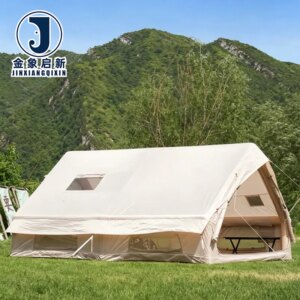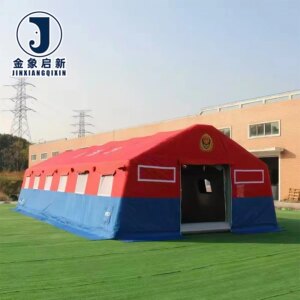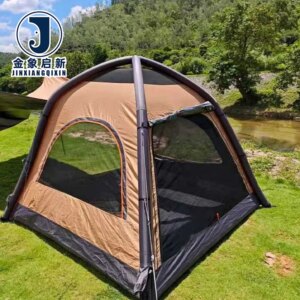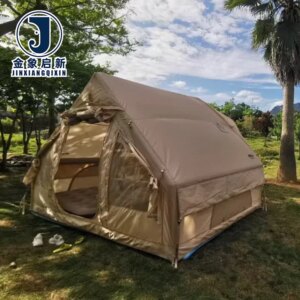



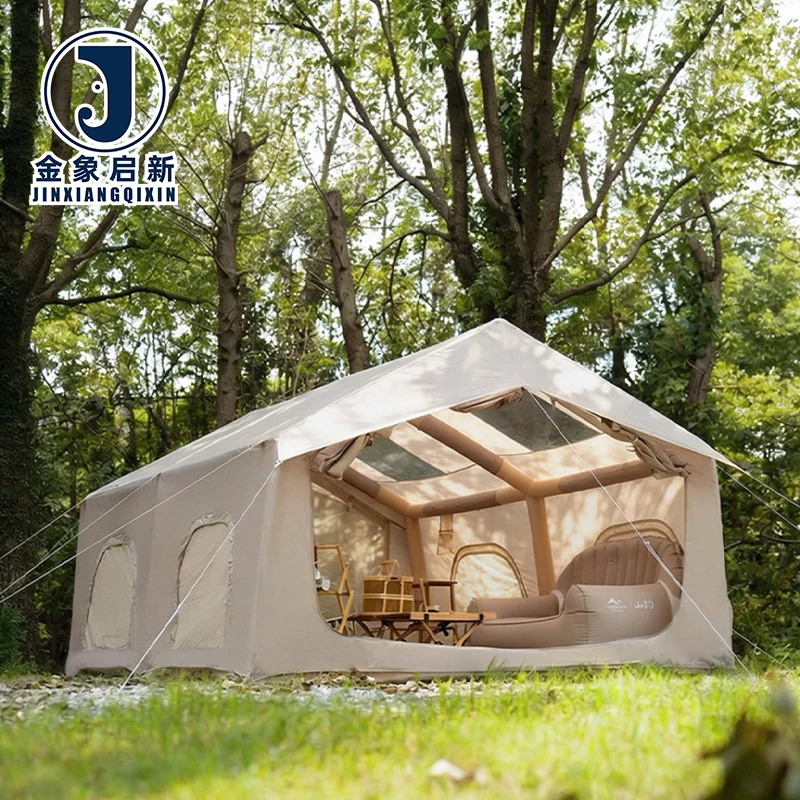
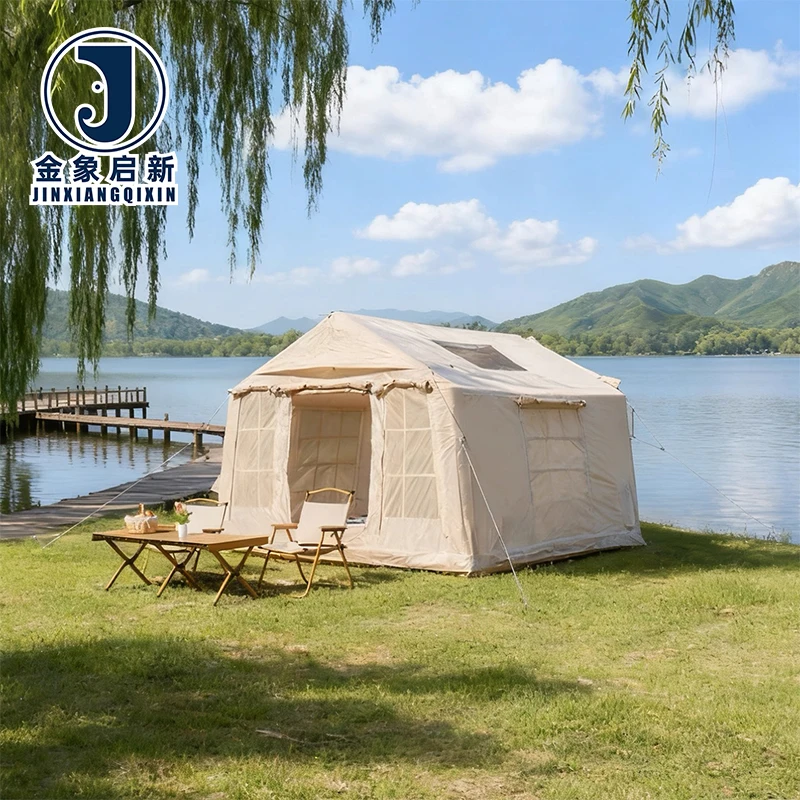

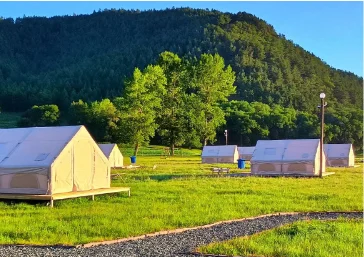
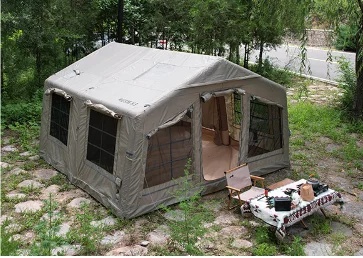
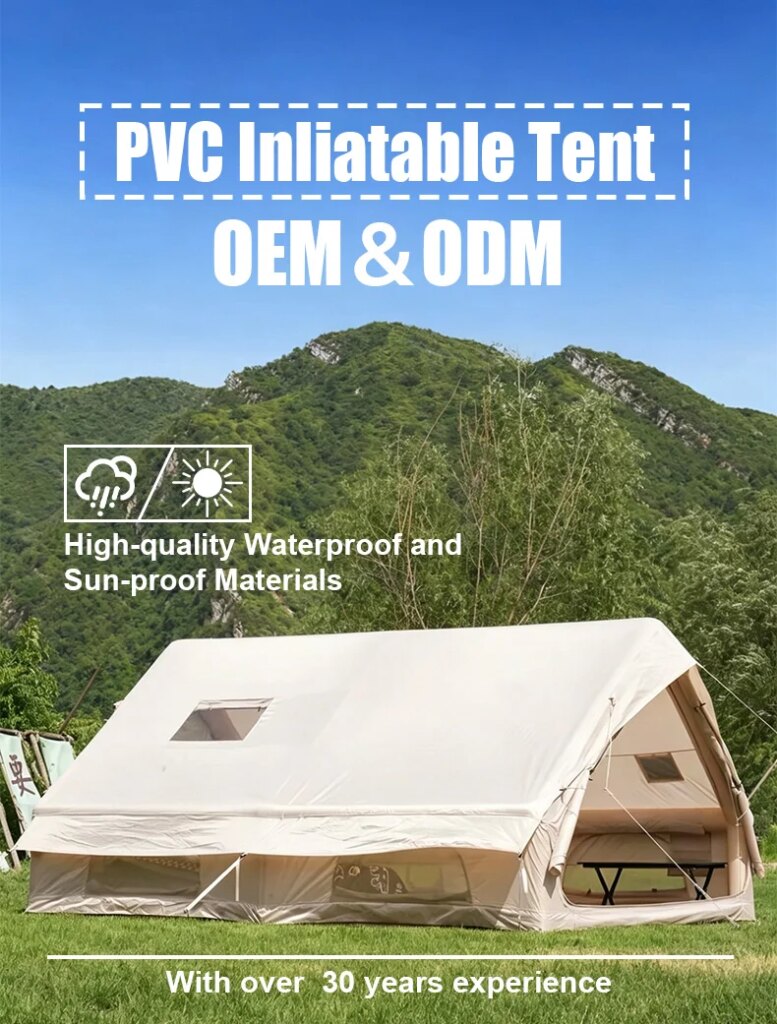
Precision-Coated Fire Safety — A single-layer inflatable tent fabric engineered for environments where fire-retardant and anti-static compliance can halt operations if documentation is missing, backed by dedicated QA/QC inspection at every production stage.
Technical Specifications
| Parameter | Value |
|---|---|
| Product Type | Inflatable Tent Fabric |
| Core Material | PVC Tarpaulin |
| Product Forms | Single Layer Inflatable Tent |
| Waterproof | Fully waterproof coated construction |
| UV Resistance | UV-resistant (test basis not stated — confirm grade required for your market) |
| Tear Resistance | Tear-resistant PVC coated structure |
| Fire-Retardant | Available in fire-retardant grades (grade not stated — confirm compliance standard required) |
| Anti-Static | Available with anti-static treatment (standard not stated — confirm surface resistance specification) |
| Customization | Sample customization, pattern printing, OEM & ODM services |
| Production Facility | 9,180 m² with 3 full production lines |
| Processing Equipment | 36 sets of professional equipment |
| R&D Team | 10 technicians |
| Quality Control | Full-process inspection with dedicated QA/QC staff |
| Standards | ISO9001, ISO14001, ISO45001, CE |
Application Suitability
| Application | Exposure & Requirement |
|---|---|
| Mining and tunnelling emergency shelters | Proximity to active ventilation zones requiring certified fire-retardant and anti-static materials |
| Aviation emergency response command centres | Rapid deployment in fuel-adjacent areas where static discharge must be controlled |
| Construction site equipment maintenance enclosures | Outdoor weather exposure with mandatory fire safety compliance for temporary structures |
| Disaster relief temporary storage facilities | Waterproof protection for sensitive supplies with rapid setup capability |
| Infrastructure inspection field stations | Remote deployment in variable weather requiring tear-resistant and durable fabric |
Why Fire-Retardant Certification Gaps Shut Down Industrial Sites
A tent or shelter arriving without the fire-retardant grade your project requires is not a delay — it is an immediate compliance failure that stops work.
Industrial sites operating near ventilation systems, fuel storage, or flammable processes cannot accept emergency shelters or inflatable structures based on a supplier’s claim alone. When procurement specifies Inflatable Tent Fabric fire retardant anti-static certified, the documentation must match the site’s safety audit requirements exactly. Shelters deployed in mining corridors or aviation maintenance zones face scrutiny from safety officers who check test reports against local fire codes before the structure is inflated [NEED_CITE: fire classification standards for temporary structures in mining and aviation environments]. The cost of replacing non-compliant fabric mid-project far exceeds the time invested in verifying certification before the order is placed.
Compliance Documentation That Matches the Site Audit
Every batch of Inflatable Tent Fabric fire retardant anti-static certified must ship with test reports that name the specific standard tested against. Mining contractors need documentation referencing the fire safety regulations their jurisdiction enforces, while aviation-adjacent deployments require anti-static surface resistance values that match the site’s explosive atmosphere classification. The fabric itself may perform adequately, but without the correct paperwork, the structure cannot legally remain inflated on a regulated site.
Rapid Deployment Without Sacrificing Safety Verification
The single-layer inflatable design enables automatic opening with minimal on-site labour, which matters when emergency response teams need functional workspace within hours. However, speed of deployment does not eliminate the need for pre-arrival verification. Procurement teams should request sample test reports during the specification phase rather than discovering gaps when the shipment arrives [NEED_CITE: pre-shipment documentation verification for fire-retardant industrial textiles]. This approach allows the R&D team to confirm the correct treatment grade before full production begins.
Understanding How Coating Weight and Base Fabric Interact for Inflatable Structures
Inflatable tent fabric must balance air-holding integrity with structural rigidity when pressurised. The PVC coating weight and the base fabric’s denier and weave density together determine how the material behaves under internal pressure and external wind load. A heavier coating improves air retention and waterproof performance but adds weight that affects transport and setup. The base fabric’s warp and weft density controls tear propagation — if a puncture occurs, a tighter weave limits the damage spread. For inflatable applications, the coating adhesion strength matters more than in flat tarpaulin use, because the fabric flexes continuously under pressure cycles [NEED_CITE: coating adhesion test methods for inflatable fabric structures per ISO standards]. Selecting the correct combination requires knowing the expected inflation pressure and the environmental loads the structure will face.
What Happens When Inflatable Tent Fabric Fails the Fire Test on Arrival
A shelter that fails site fire inspection after deployment creates a cascade of operational problems. The structure must be deflated and removed, replacement fabric must be sourced and shipped, and the project timeline absorbs the full delay. In regulated environments like mining or aviation, the incident may trigger a formal safety review that extends beyond the fabric itself [NEED_CITE: compliance incident reporting requirements for temporary structures in regulated industries]. Anti-static performance gaps carry similar risk — if a structure in a flammable atmosphere cannot demonstrate the required surface resistance, the entire operational zone may be shut down until compliant material is installed.
Why Procurement Teams Source This Fabric Here
Three full production lines allow batch consistency across large-volume orders for disaster preparedness stockpiles, where every roll must meet identical fire-retardant and anti-static specifications. The 36 sets of processing equipment support the specific welding and coating parameters inflatable structures require for airtight seam integrity. A 10-technician R&D team develops samples within days, allowing buyers to verify material performance and documentation accuracy before committing to full production. Dedicated QA/QC staff inspect every production stage rather than relying on end-of-line sampling, catching treatment inconsistencies before they reach the dispatch stage. Full batch traceability means documentation can be matched to specific roll numbers when site auditors request proof of compliance.
Documentation & Verification
- Material specification sheet stating PVC coating type, base fabric construction, and treatment basis
- Fire-retardant test report matched to the compliance standard your project requires
- Anti-static surface resistance test results confirming the specification for your environment
- ISO9001, ISO14001, ISO45001 and CE certificates included with each shipment
- Pre-shipment inspection record with roll-level quality data for batch traceability
- Batch quality inspection report linking fabric rolls to production parameters
Fabrication, Handling & Storage
- Heat welding parameters must match the PVC coating thickness to ensure airtight seams on inflatable structures
- Reinforcement at valve attachment points prevents stress concentration where inflation pressure is highest
- Store rolls vertically in climate-controlled conditions to prevent permanent creasing in the coated surface
- Allow cold-stored rolls to reach ambient temperature before unrolling to avoid coating cracking
- Use PVC-compatible cleaners only — solvent-based products can degrade the fire-retardant treatment layer
- Field repairs require compatible PVC adhesive and patch material matching the coating weight
What to Include in Your Enquiry
Specify the fire-retardant grade and anti-static standard your project requires, along with the deployment environment — mining ventilation corridor, aviation maintenance zone, or general construction site. Provide the required dimensions, colour, and any pattern printing needs for site identification. Confirm whether you need finished inflatable tents or fabric rolls for your own fabrication, and indicate your annual volume to receive accurate lead time and production scheduling information.
Frequently Asked Questions
Q: What fire-retardant grade does the inflatable tent fabric meet for mining or tunnelling compliance?
A: The fabric is available in fire-retardant grades, and the specific grade is confirmed against your project’s compliance standard during the specification phase. We provide test reports naming the exact standard tested, allowing your safety team to verify alignment with local mining or tunnelling fire regulations before production begins.
Q: How is anti-static performance measured for use near flammable environments?
A: Anti-static treatment is applied to meet the surface resistance specification your site requires. The test report documents the measured values against the relevant standard, which your procurement team can cross-reference with the explosive atmosphere classification of the deployment zone before the order is finalised.
Q: Can the tent be customised in size and printing for site identification?
A: Yes. Sample customization covers dimensions, colour, and pattern printing to match your site branding or identification requirements. The 10-person R&D team develops samples within days, allowing you to verify appearance and material performance before authorising full production across our three production lines.
Q: What documentation ships with each order for site safety audits?
A: Each shipment includes a material specification sheet, fire-retardant and anti-static test reports matched to your standards, ISO and CE certificates, a pre-shipment inspection record, and a batch quality report. This documentation package supports site safety audits and procurement compliance verification.
Q: How does the sample process work before committing to full production?
A: You provide your application requirements and compliance standards, and the R&D team produces a sample reflecting the exact coating weight, treatment, and customisation specified. Once you approve the sample and its accompanying test documentation, full production proceeds with identical parameters and QA/QC inspection at every stage.