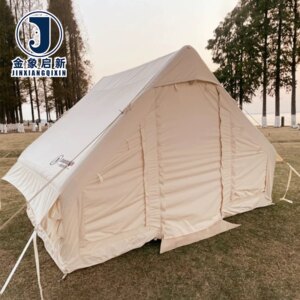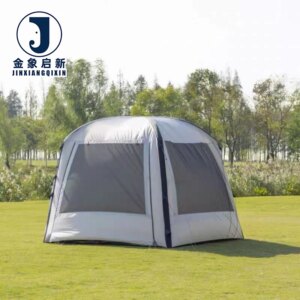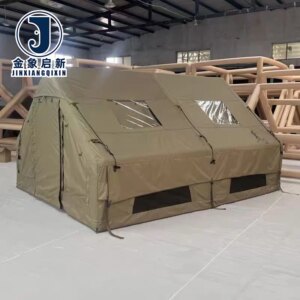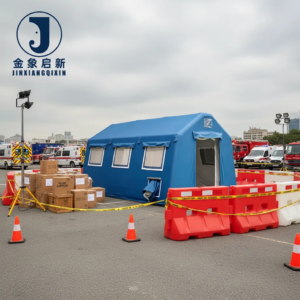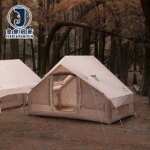
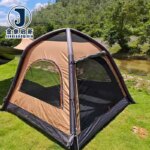
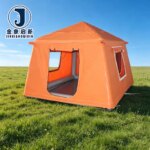


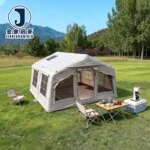

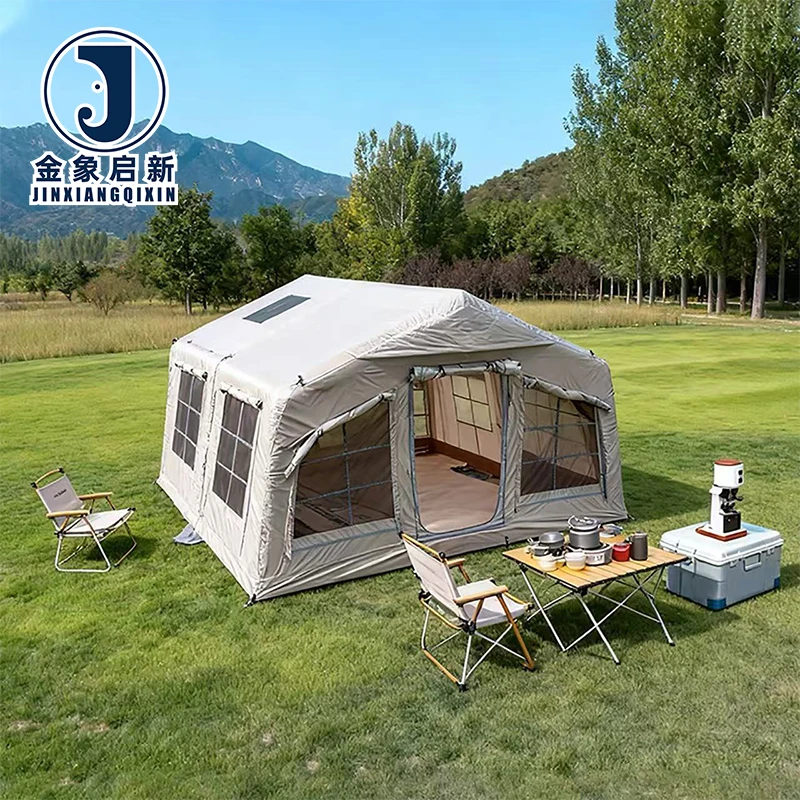
Batch-Certified Compliance — Every roll of PVC inflatable tent fabric ships with fire-retardant and anti-static test reports traceable to the production batch, verified across three dedicated coating lines.
Technical Specifications
| Parameter | Value |
|---|---|
| Product Type | Inflatable Fabric |
| Core Material | PVC Tarpaulin (PVC coated fabric / PVC knife-coated fabric) |
| Coating Material | PVC |
| Waterproof Construction | Yes |
| UV Treatment | UV-resistant (test basis not stated) |
| Flame Retardant Grade | Fire-retardant (grade not stated) |
| Anti-Static Treatment | Anti-static (standard not stated) |
| Tear Resistance | Tear-resistant |
| Customization Options | OEM & ODM, sample customization, pattern printing, custom dimensions, material thickness adjustment |
| Quality Certifications | ISO9001, ISO14001, ISO45001, CE |
Application Suitability
| Application | Exposure & Requirement |
|---|---|
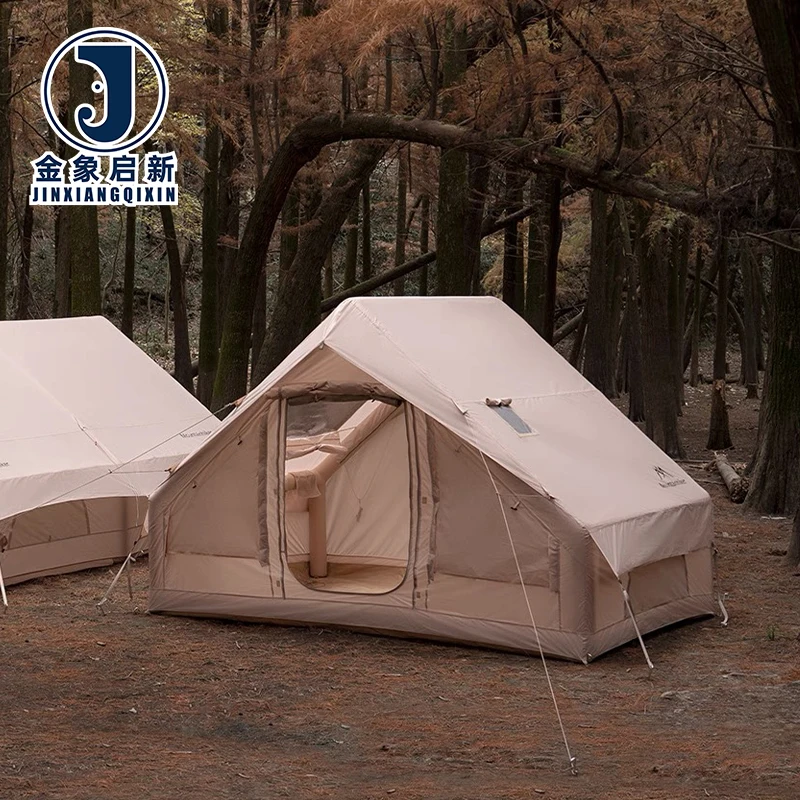
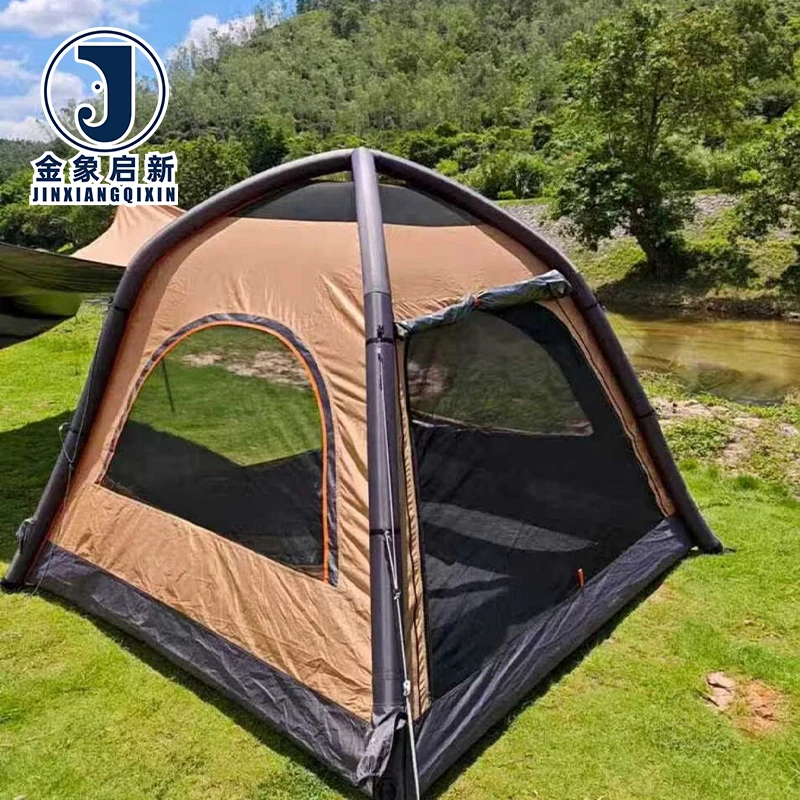
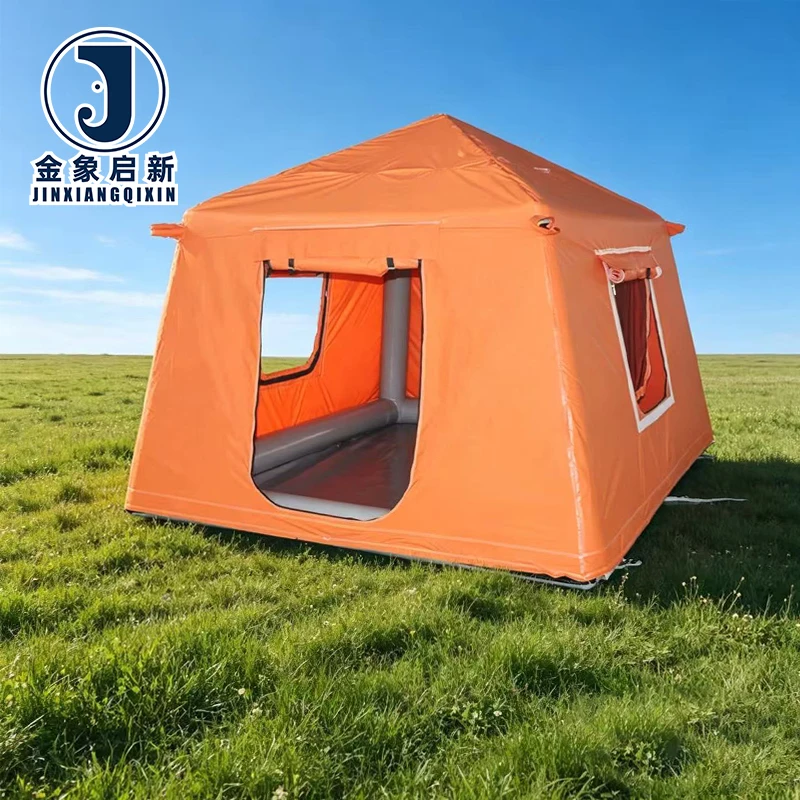
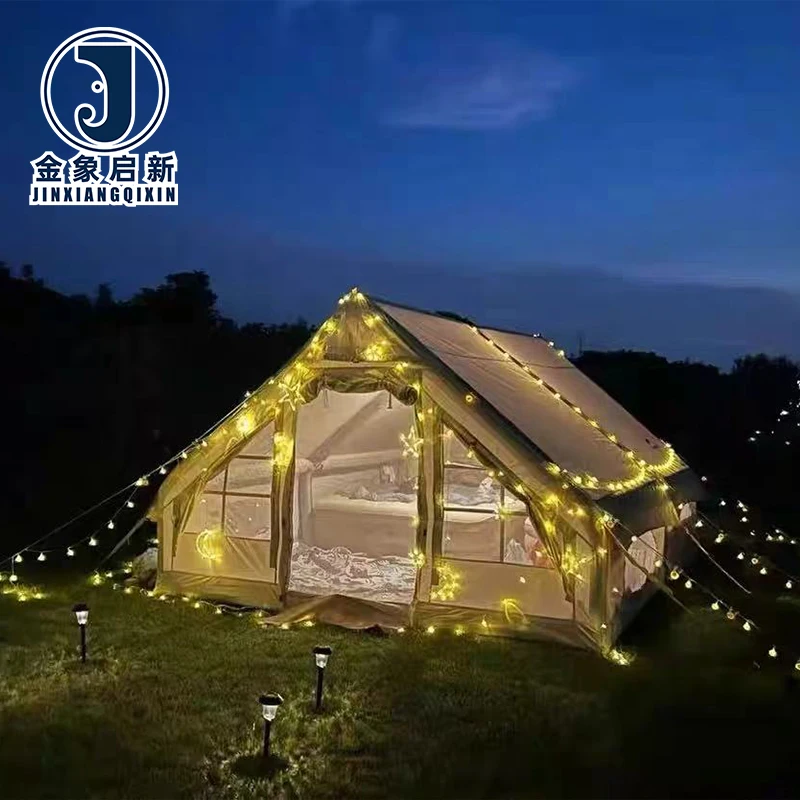
| Commercial inflatable camping tent production (4–6 person) | Repeated inflation cycles, internal air pressure on beam structures, UV exposure, packed-and-unpacked abrasion |
| Adventure tourism inflatable shelters | Prolonged sunlight in arid or high-altitude environments, dry atmospheric conditions increasing static accumulation risk |
| Industrial camping and remote-site enclosures | Exposure to dust, heat sources, and confined work zones requiring verified flame resistance |
| Membrane and inflatable structure fabrication | Structural rigidity from knife-coated construction, airtight seam integrity under sustained internal pressure |
| Outdoor equipment brand OEM supply | Batch-to-batch colour and performance consistency across production runs, fire safety documentation for end-market compliance |
Why Certified Test Reports Matter More Than Claimed Performance
Specified fire-retardant and anti-static properties mean little without batch-matched test documentation that your site safety officer can audit.
I have seen inflatable structure projects halted at the inspection stage because the fabric supplier provided a general product brochure instead of a test report tied to the actual roll batch on site. Safety officers at mining camps, adventure tourism installations, and commercial event venues increasingly demand traceable certification — not a statement that the material "meets relevant standards." When the Inflatable Tent Fabric fire retardant anti-static certified grade cannot be confirmed against the shipment in hand, the entire structure fails compliance regardless of how the fabric performs in the field [NEED_CITE: fire classification standards for temporary structures and inflatable assemblies].
Formulation Engineering for Inflatable Beam Integrity
PVC knife-coated fabric delivers the dimensional stability and air-holding capability that inflatable tent beam systems require. The coating penetrates and encapsulates the base fabric, creating a composite that resists delamination under the repeated stress of inflation and deflation cycles. For specialist structure contractors, this means beam walls maintain rigidity without creep or softening during sustained pressurisation, and the material holds welded seams at the stress points where beam geometry changes direction.
Anti-Static and Fire-Retardant Compliance for Enclosed Environments
Dry climates, dusty mining-adjacent camps, and enclosed adventure tourism installations create conditions where static discharge accumulation poses a genuine ignition risk. Anti-static treatment in this PVC inflatable tent fabric addresses that hazard, while fire-retardant formulation provides an additional layer of protection around heat sources such as portable heaters, cooking equipment, and electrical distribution boards. Both properties must be verified per batch — confirm the grade required for your specific site regulations before committing to a production order [NEED_CITE: anti-static surface resistance standards for technical textiles].
Reading the Material Construction for Your Application
The knife-coating process applies PVC in controlled layers to both sides of the base fabric, building a multi-layered structure that is fully waterproof while maintaining the tear resistance needed for inflatable panels that flex under wind load. Base fabric denier and weave density work together with the coating weight to determine how the material behaves at weld lines — a high-denier, tight-weave base provides the structural backbone, while the coating contributes to airtight sealing and surface durability. UV-resistant treatment protects against degradation during prolonged sunlight exposure, though the specific test basis should be confirmed against your end-market requirements. Flame retardancy and anti-static properties are integrated into the coating formulation rather than applied as a surface finish, which means they persist through normal handling and field use without washing off or abrading away.
The Cost of Undocumented Compliance Grades
When a site inspector asks for the fire-retardant grade of the inflatable structure fabric and the answer is "we can check with the supplier," the project stalls. Fabricators have had completed inflatable enclosures rejected at handover because the documentation trail did not match the installed material batch. Anti-static properties face the same scrutiny in environments where combustible dust or dry atmospheric conditions are present. Ordering without locking in the specific test standard — and receiving the corresponding report with your shipment — turns a compliance requirement into a project risk that surfaces only after the structure is built [NEED_CITE: site safety documentation requirements for temporary inflatable structures].
What This Supply Chain Brings to Your Project
Three full production lines and 36 sets of professional processing equipment handle volume orders with consistent output scheduling. A 10-technician R&D team develops sample panels for your specific inflatable structure design — including custom thickness, colour, and pattern printing — with turnaround measured in days rather than weeks. Dedicated QA and QC staff monitor coating weight, colour consistency, and treatment performance at every production stage, with 100% inspection before any roll ships. Nearly 30 years of coated fabric process control underpins the adhesion quality and batch repeatability that inflatable structure manufacturers depend on when welding seams at scale.
Documentation & Verification
- Material specification sheet stating base fabric, coating type, and treatment properties per order
- Fire-retardant and anti-static test reports matched to the shipment batch number
- ISO9001, ISO14001, ISO45001, and CE certificates included as standard documentation
- Pre-shipment inspection record covering coating weight and visual consistency across all rolls
- Material safety data sheets available by order reference for site compliance filing
Fabrication, Handling & Storage
- Weld temperature and dwell time must be calibrated to PVC knife-coated fabric thickness — request recommended parameters with your sample panel
- Store rolls upright on a clean, dry surface to prevent creasing that compromises coating adhesion at fold lines
- Cut patterns should account for seam allowance at beam junctions where inflation pressure concentrates stress on the welded joint
- Avoid dragging rolls across abrasive surfaces during warehouse handling to protect the coated face finish
- Clean fabricated panels with mild detergent only — solvents can degrade the PVC coating surface and compromise anti-static treatment
- Inspect weld line peel strength on sample pieces before committing to full production panel fabrication
What to Include in Your Enquiry
Provide the specific fire-retardant grade or anti-static standard your site or end-market requires so we can confirm formulation availability before sampling. Share your inflatable structure design dimensions, target material thickness, and annual roll volume to receive accurate lead time and batch scheduling. If colour matching or pattern printing is part of your product specification, submit reference samples or colour codes with your initial enquiry to align sample development from the first iteration.
Frequently Asked Questions
Q: Can you supply fire-retardant and anti-static test reports matched to my shipment batch?
A: Yes. Each batch of PVC inflatable tent fabric ships with test documentation tied to the production batch number. Fire-retardant and anti-static reports are included as part of the standard documentation package. Confirm the specific grade or standard required for your site so we align the formulation and testing scope to your compliance needs before production begins.
Q: What fire-retardant grade does the inflatable tent fabric carry, and does it meet my site requirements?
A: The fabric is available in fire-retardant grades — confirm the grade required for your market and site regulations. Different jurisdictions reference different classification systems. Share your applicable standard with us during the enquiry stage so we can verify formulation compatibility and provide the corresponding test report with your sample panel for pre-approval.
Q: How is anti-static performance verified, and what surface resistance standard applies?
A: Anti-static treatment is integrated into the PVC coating formulation and verified through production-stage testing. The applicable surface resistance standard depends on your operating environment and site safety code. Provide your required standard during enquiry so we confirm the correct treatment level and include the matching test data in your shipment documentation [NEED_CITE: surface resistivity testing methods for coated technical textiles].
Q: Can fabric thickness and dimensions be customized for specific inflatable structure designs?
A: Yes. Custom thickness, width, colour, and pattern printing are developed by our 10-person R&D team. Sample panels are produced within days for your evaluation, allowing you to validate welding behaviour, inflation rigidity, and handling characteristics before committing to a full production order. OEM and ODM specifications are supported across all custom parameters.
Q: How is batch-to-batch consistency controlled across large-volume orders?
A: Dedicated QA and QC staff monitor coating weight, colour matching, and treatment performance at every production stage across all three lines. Pre-shipment inspection covers every roll before dispatch, and batch inspection records are provided with each shipment. This ensures that inflatable tent manufacturers running multi-container orders receive uniform material from first roll to last.