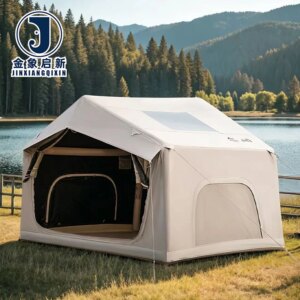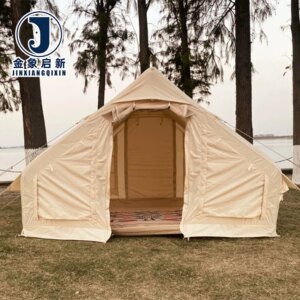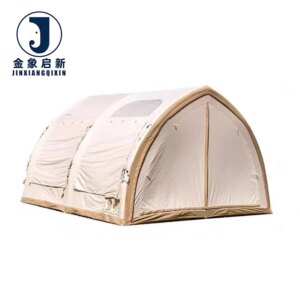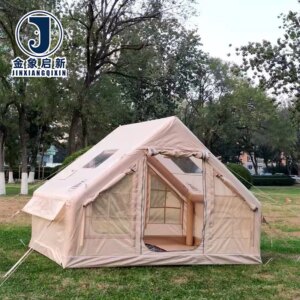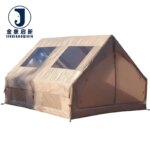
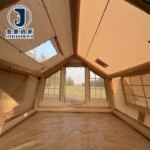

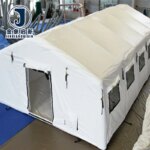
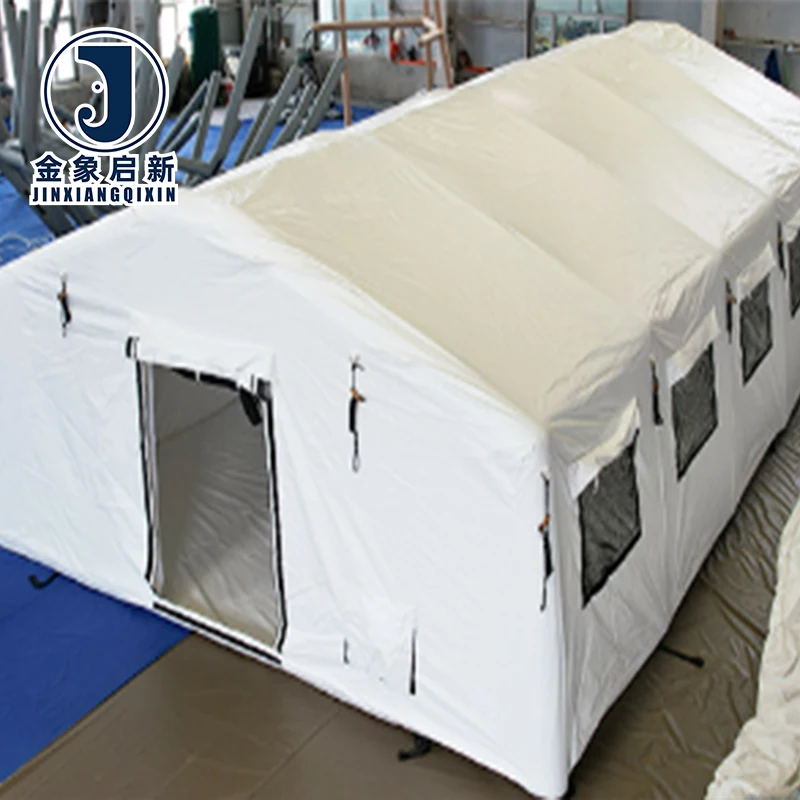
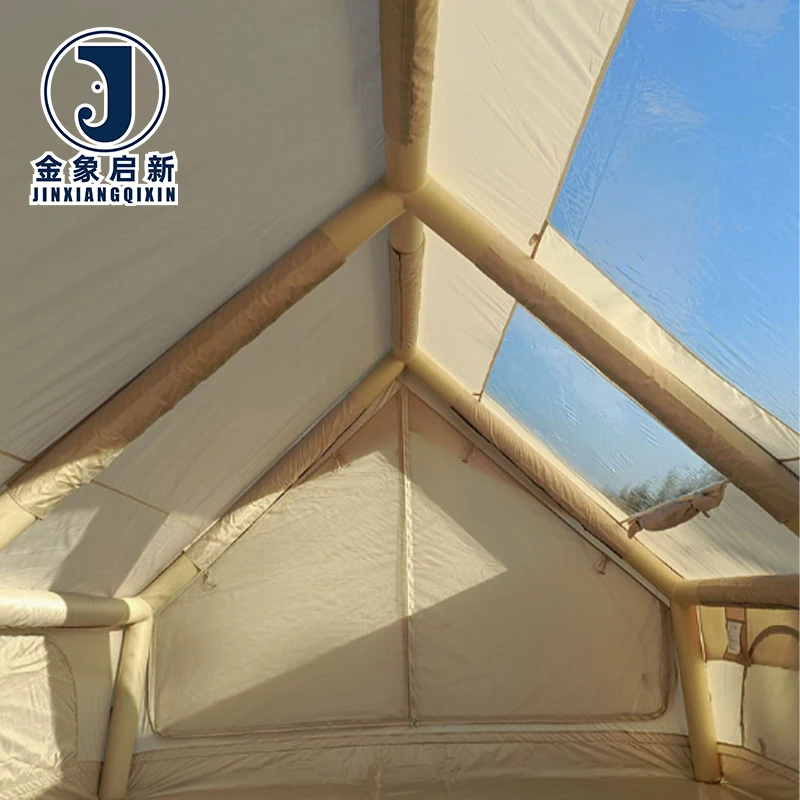
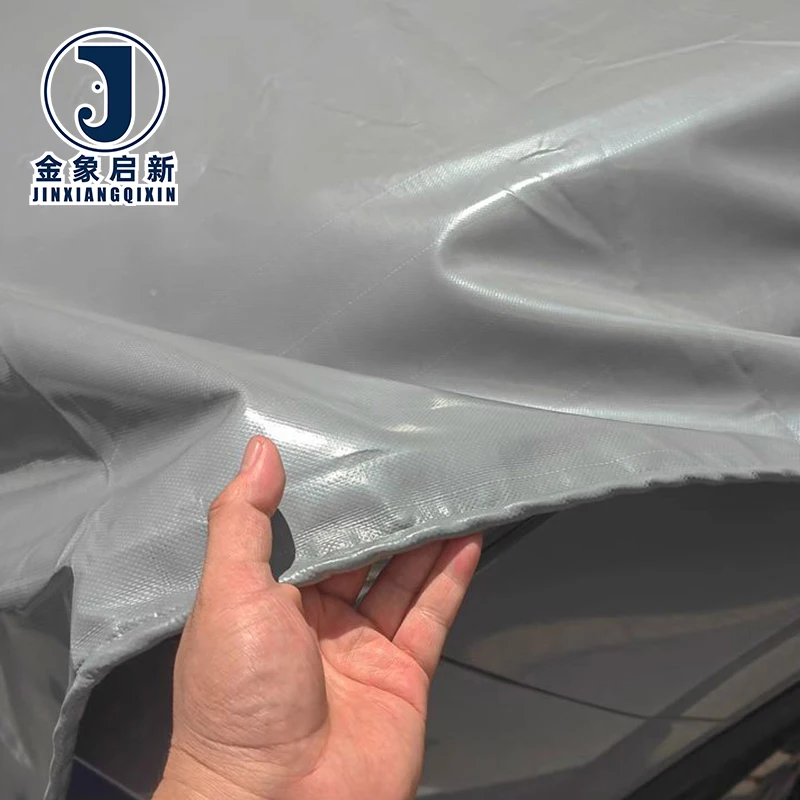
Compliance-First Fabric Supply — Inflatable tent fabric supplied with batch-specific fire-retardant and anti-static test reports so your site inspection passes the first time.
Technical Specifications
| Parameter | Value |
|---|---|
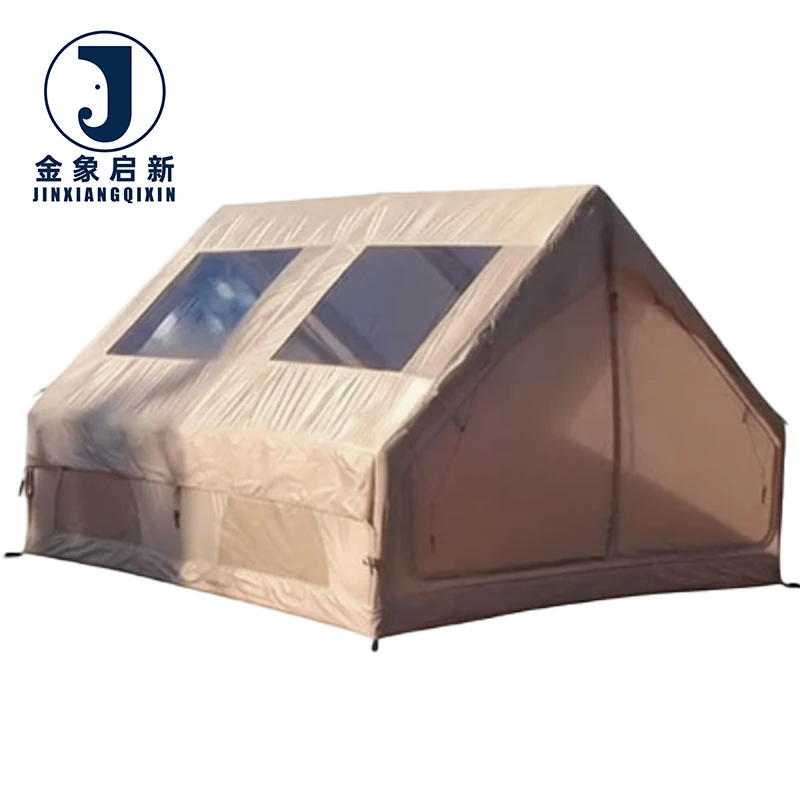
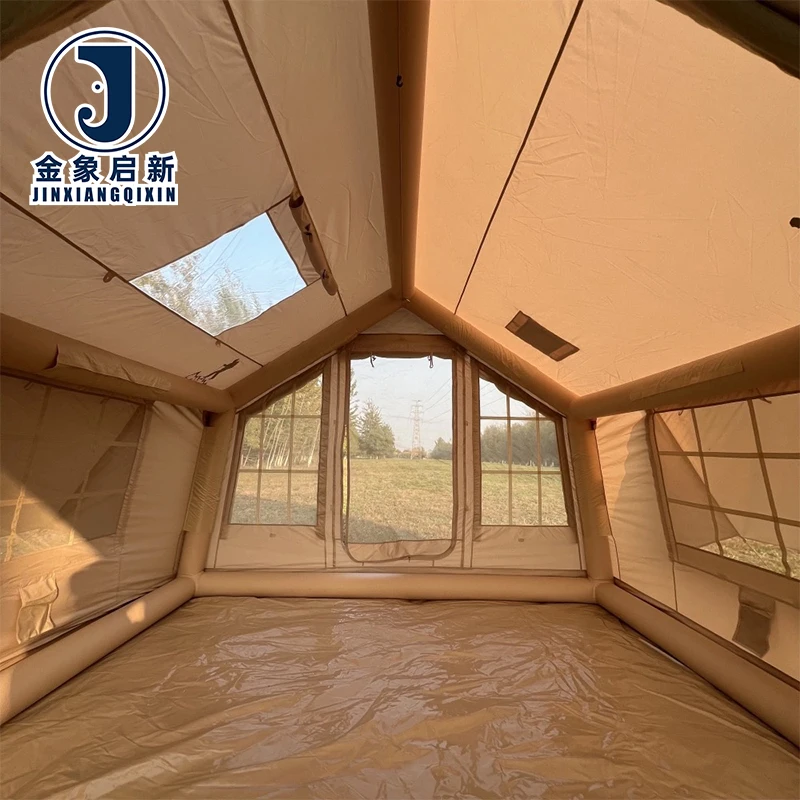
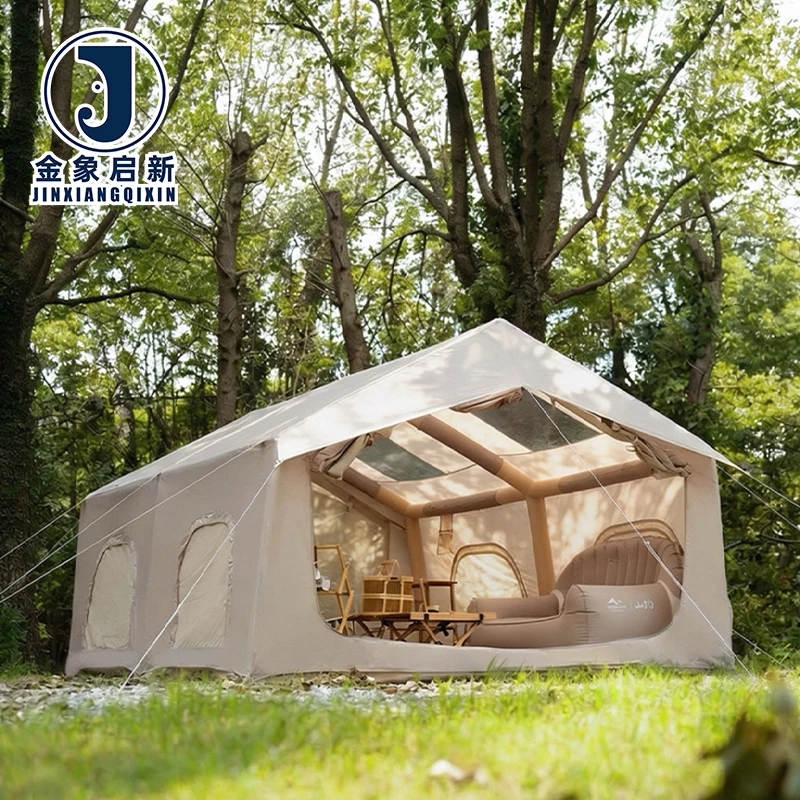
| Product Type | Inflatable Tent |
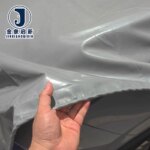
| Core Material | PVC Tarpaulin |
| Key Performance | Waterproof, UV-resistant, tear-resistant, flame retardant (grade not stated), anti-static (standard not stated) |
| Capacity | 6-8 Person |
| Season Rating | Four-Season |
| Opening Mechanism | Quick Automatic Inflatable Opening |
| Production Lines | 3 |
| Processing Equipment | 36 sets |
| R&D Team | 10 technicians |
| Customization | OEM & ODM — sample development, pattern printing |
| Quality Control | Dedicated QA & QC on-site full-process inspection |
| Certifications | ISO 9001, ISO 14001, ISO 45001, CE |
Application Suitability
| Application | Exposure & Requirement |
|---|---|
| Commercial glamping resort deployment | Repeated inflation/deflation cycles, UV exposure, guest safety compliance, batch color consistency across multiple units |
| Outdoor event and hospitality temporary structures | Rapid deployment, fire-retardant code compliance, wind and rain resistance, public safety certification |
| Specialist membrane and inflatable structures (mining, aviation, construction) | Anti-static requirements in combustible dust environments, fire-retardant mandates, chemical exposure, regulatory audit documentation |
| Tourism and eco-resort seasonal shelters | Four-season thermal performance, waterproof integrity, aesthetic consistency across adjoining tent units |
What Happens When Inflatable Tent Fabric Lacks the Certification Your Site Demands
Fire-retardant and anti-static claims without verifiable test reports shut down projects before the first structure is inflated.
Purchasing inflatable tent fabric on the basis of a supplier’s verbal assurance or a generic certificate creates a compliance gap that only surfaces during the site safety audit — the point where delays cost the most. When the inspector asks for the fire classification test report and the anti-static measurement standard, a missing document halts installation entirely. I have seen entire festival deployments held in storage while operators scrambled to source replacement material that carried the correct documentation. [NEED_CITE: fire safety classification requirements for temporary outdoor structures]
Fire-Retardant Grades and What They Actually Mean for Your Project
Not every fire-retardant designation carries the same weight across jurisdictions, and specifying inflatable tent fabric without confirming the required grade for your target market invites rejection at the compliance stage. A material may pass one national standard and fail another, even when both are described as "flame retardant" on the quotation. Request the specific test report that matches your local building code or event safety regulation before committing to production.
Anti-Static Performance in Hazardous Atmospheres
In mining ventilation corridors, aviation maintenance hangars, and construction zones where combustible dust is present, anti-static fabric is a regulatory requirement rather than an optional upgrade. The inflatable tent fabric must demonstrate measured surface resistivity or charge decay performance against a recognized standard — a claim without a test basis provides no protection during an audit. Confirm the applicable anti-static standard with your site safety officer before finalizing the specification. [NEED_CITE: anti-static fabric test methods for hazardous environments]
How Base Fabric Construction Determines Structural Integrity
The PVC coating provides waterproofing and surface protection, but the tensile and tear performance of inflatable tent fabric depends primarily on the base fabric denier and weave density. A higher denier yarn resists puncture and limits tear propagation when the structure flexes under wind load, while the weave pattern controls how stress distributes across the panel. The coating method — whether knife-over-roll, calendering, or lamination — determines the adhesion bond between the PVC layer and the base fabric, which directly affects how well welded seams hold under repeated inflation cycles. Glossy and matte finish options influence cleaning behavior and print adhesion for branding applications. Width and roll length specifications determine cutting layout efficiency and the number of welded joints required per structure.
The Hidden Cost of Specifying the Wrong Material Grade
When inflatable tent fabric arrives on site without the fire-retardant grade documentation the local authority requires, the structure sits uninstalled while you source compliant material — at event-season pricing and compressed lead times. Anti-static performance that was never independently tested becomes a liability the moment an incident investigation traces back to your material specification. Weld failures at flex points often reveal that the coating adhesion was insufficient for the inflation pressure and folding frequency the structure endures in daily use. [NEED_CITE: coating adhesion and seam strength test methods for PVC coated fabrics per ISO 1421]
Why Source Inflatable Tent Fabric Through This Facility
Three full production lines and 36 sets of processing equipment provide the throughput capacity needed for multi-unit glamping deployments without sacrificing coating consistency across rolls. The 10-technician R&D team handles material selection, structural pattern development, and sample production before you commit to bulk quantities, so the fabric weight and coating adhesion are validated against your inflation design. Dedicated QA and QC personnel conduct full-process inspection rather than sampling at the end, catching coating weight deviation and color shift before rolls reach the packing stage. Available fire-retardant and anti-static treatments are supported by batch-specific test reports — confirm the grade required for your market at inquiry. OEM and ODM customization extends to custom width, pattern printing, and structural panel sizing matched to your inflatable frame design.
Documentation & Verification
- Material specification sheet stating base fabric denier, coating weight, and PVC formulation per roll batch
- Fire-retardant and anti-static test reports matched to the specific production batch supplied
- ISO 9001, ISO 14001, ISO 45001, and CE certificates cross-referenced against shipment documentation
- Pre-shipment inspection record covering GSM verification, color consistency, and weld seam sampling
- Certificate of origin and customs documentation package aligned with destination country requirements
Fabrication, Handling & Storage
- Heat-weld parameters must be calibrated to the specific PVC coating thickness and base fabric denier of this inflatable tent fabric to prevent seam delamination at flex points
- Store rolls horizontally on padded racks to prevent permanent crease marks that weaken the coating layer at fold lines
- Inflate test structures at ambient temperature before cold-weather deployment to verify PVC flexibility and seam adhesion under operating pressure
- Use PVC-compatible cleaners only — solvent-based products degrade the coating surface and compromise fire-retardant treatment integrity
- Allow cutting layout to account for fabric width and pattern repeat to minimize welded seam count across the inflatable panel structure
Before You Request a Quote
Share your deployment environment, the fire classification or anti-static standard your local authority enforces, and the number of units you plan to deploy so we can confirm batch consistency and documentation coverage. Let us know whether you need roll stock for your own fabrication line or finished cut panels matched to your inflatable frame pattern. Specify any custom width, color, or pattern printing requirements early so we can develop a sample for your approval before production scheduling.
Frequently Asked Questions
Q: What fire-retardant grade does this inflatable tent fabric meet for my market?
A: Fire-retardant treatment is available in multiple grades. The specific grade required depends on your local building code or event safety regulation — some markets require DIN 4102 B1, others NFPA 701 or regional equivalents. State your target market and applicable standard at inquiry stage so we can confirm grade availability and supply the matching batch-specific test report with your shipment.
Q: How is anti-static performance verified for inflatable structures in mining or aviation environments?
A: Anti-static performance is measured against recognized surface resistivity or charge decay standards applicable to hazardous atmospheres. The required standard depends on your site’s safety classification. Provide your site safety officer’s specification at inquiry so we can confirm the correct treatment and include the corresponding test report with your documentation package.
Q: What customization options exist for dimensions, fabric weight, and pattern printing?
A: Our R&D team supports OEM and ODM development including custom width, panel sizing matched to your inflatable frame design, and pattern printing for branding. Samples are produced for your approval before bulk production begins. Confirm your structural design requirements and aesthetic specifications early to allow time for sample iteration and testing validation.
Q: How do you ensure color and coating consistency across multiple inflatable tent orders?
A: Dedicated QA and QC inspectors conduct full-process inspection across all three production lines, checking coating weight, color reference, and surface finish at every stage rather than sampling at dispatch. Batch-specific inspection records accompany each shipment so you can verify consistency across all rolls deployed side by side at your site.
Q: What compliance documentation ships with each order?
A: Each shipment includes a material specification sheet, batch-matched fire-retardant and anti-static test reports where applicable, pre-shipment inspection records, ISO and CE certificates, certificate of origin, and a roll packing list. Specify any additional documentation your regulatory authority requires at the inquiry stage so it is prepared before dispatch.