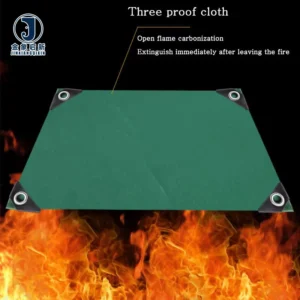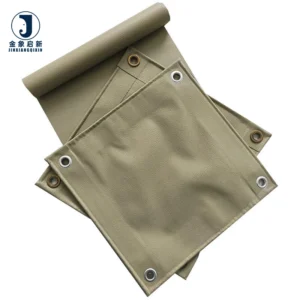

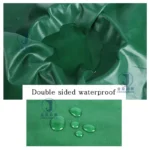
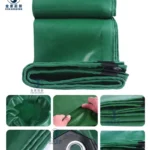
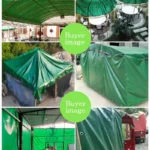
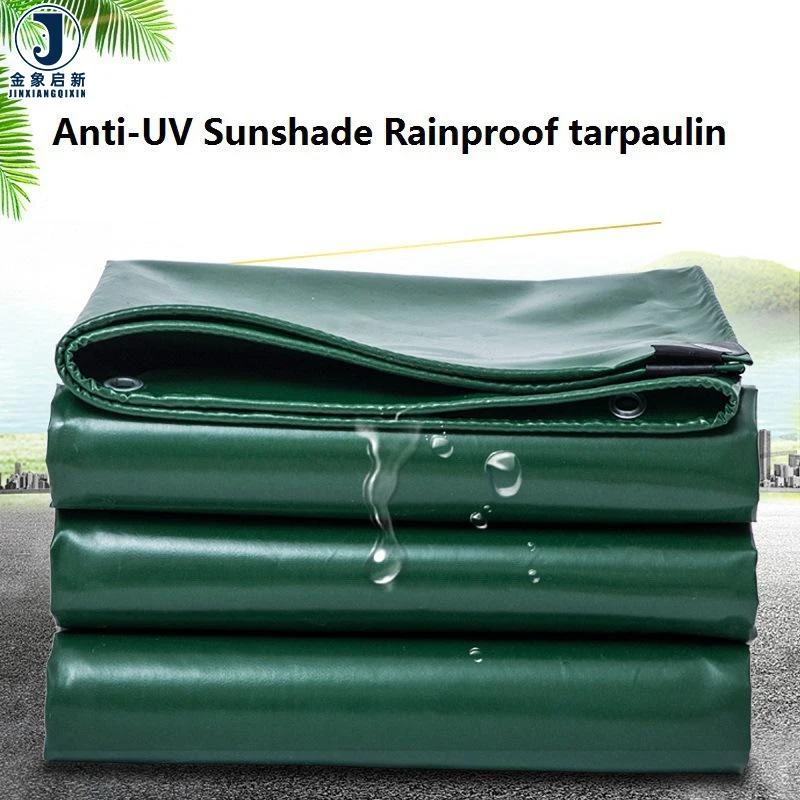
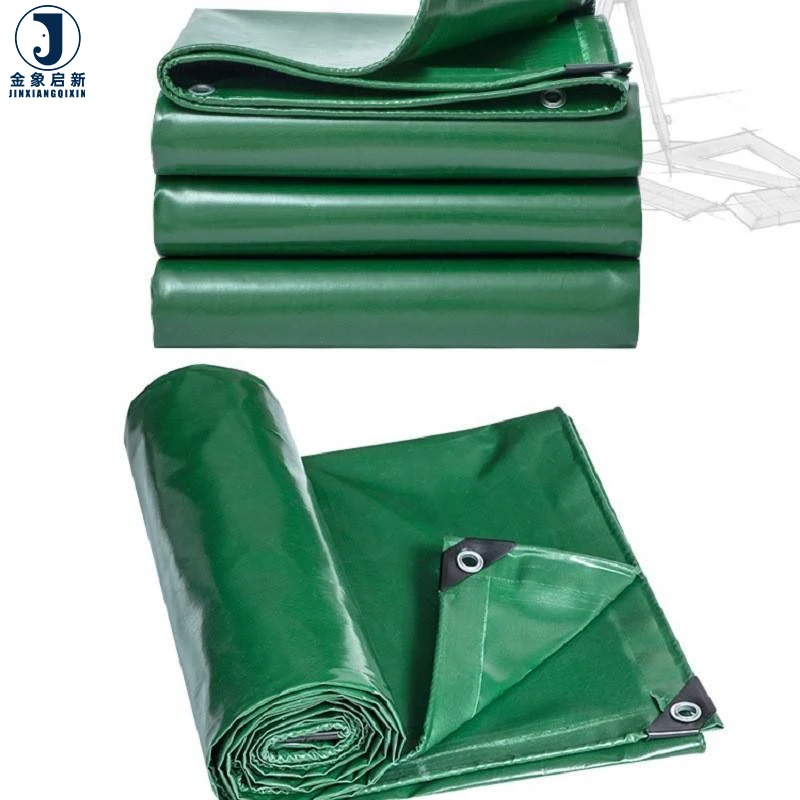
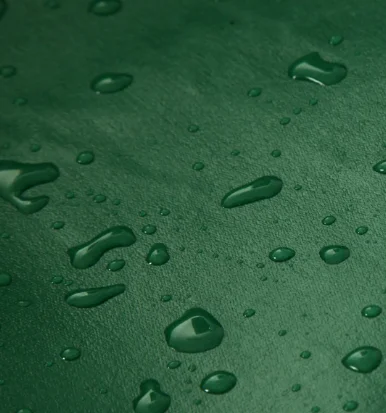
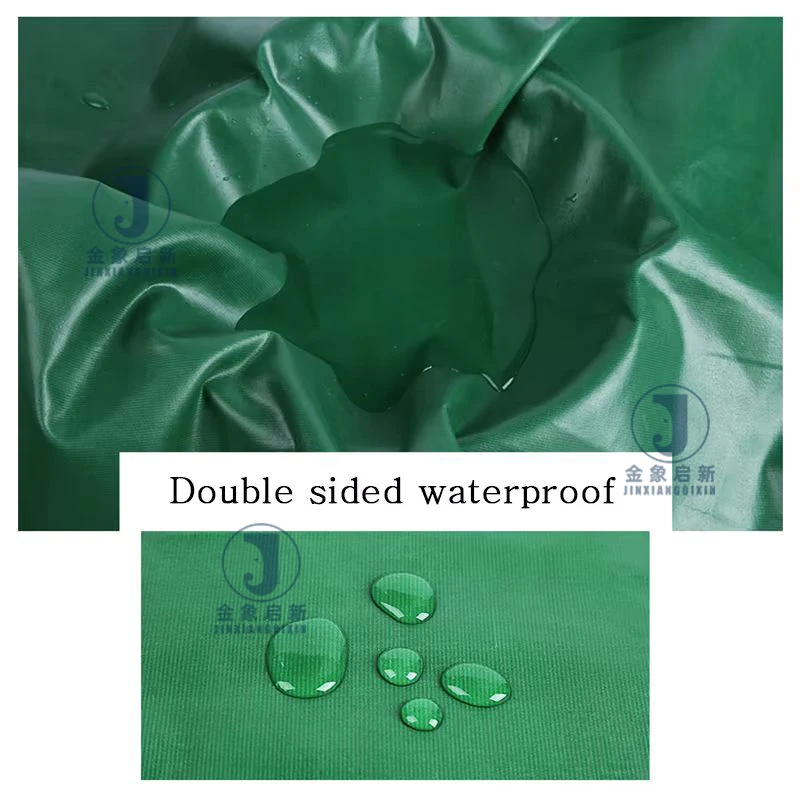
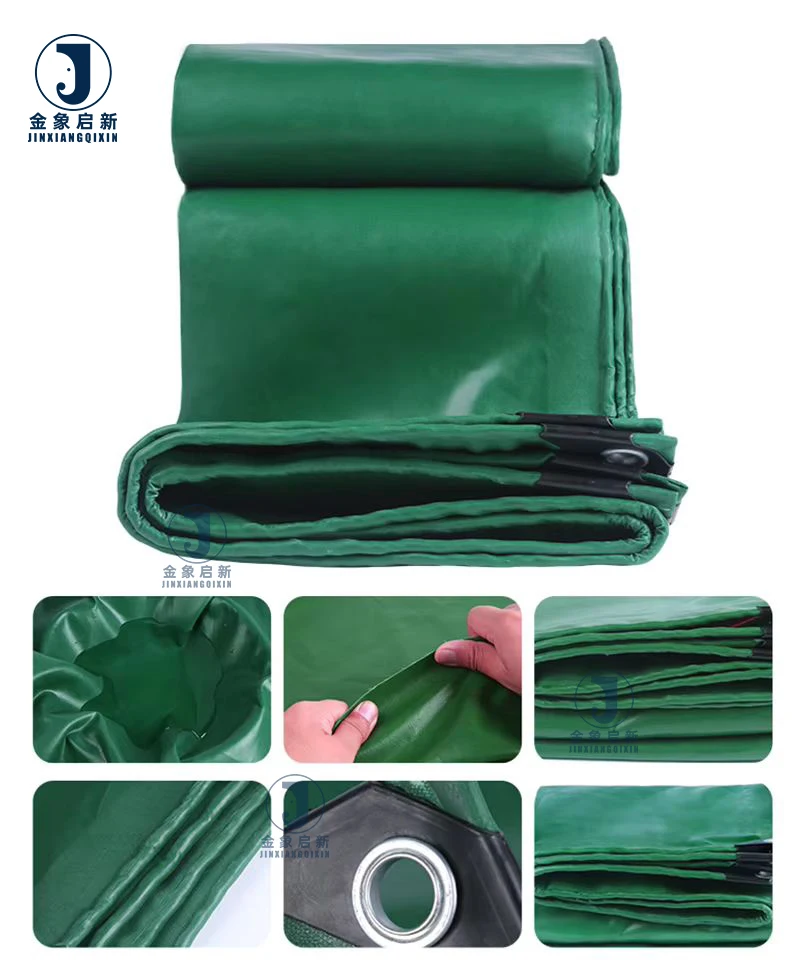
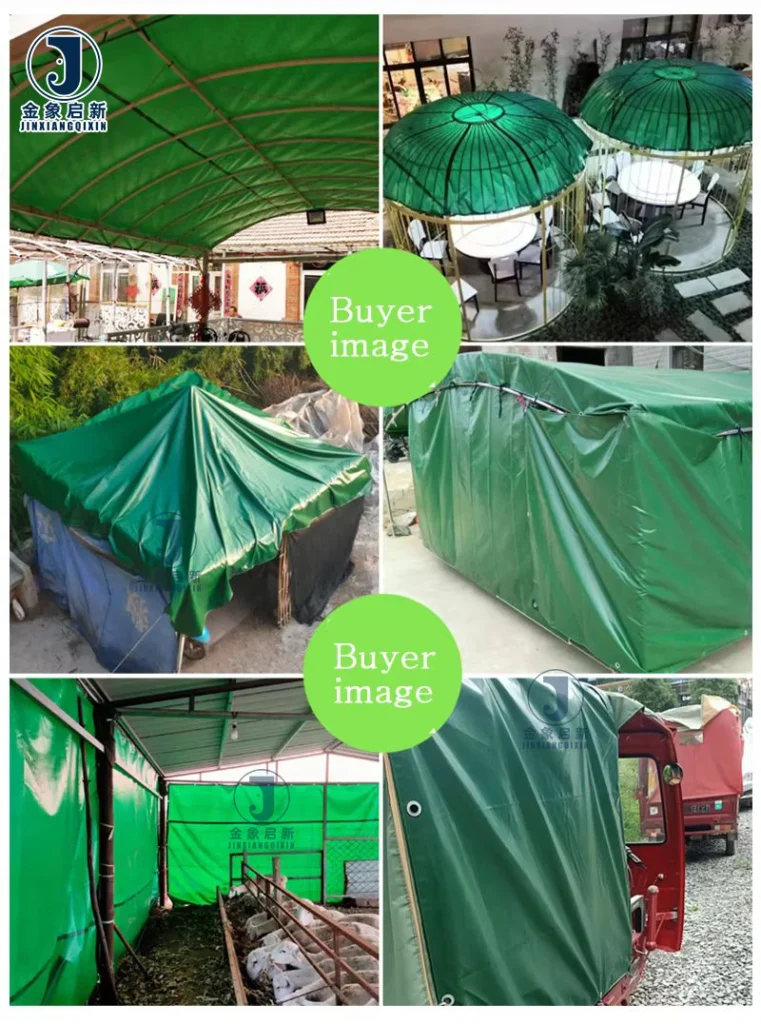
Controlled coating weight and adhesion — nearly 30 years of process control on PVC coated polyester ensures the GSM stated on the quotation is the GSM verified on arrival.
Technical Specifications
| Parameter | Value |
|---|---|
| Product Type | PVC Coated Tarpaulin |
| Yarn Count | 500D × 500D |
| Base Material | Polyester woven fabric |
| Coating Material | PVC (polyvinyl chloride), double-sided |
| Features | Water resistant, waterproof, flame retardant (grade not stated in source — confirm grade required for your market), anti-UV (test basis not stated in source — request test report before specifying) |
| Construction | Hot air weldable for fabricated seams |
| Packaging | Roll packing, bale packing, carton |
| Standards | ISO, CE |
Application Suitability
| Application | Exposure & Requirement |
|---|---|
| Mining ventilation duct | Fire-retardant and anti-static compliance, continuous airflow abrasion, underground chemical exposure |
| Tunnelling ventilation system | Flame-retardant certification required by site safety officer, high tensile demand under negative pressure |
| Aviation ground ventilation duct | Documented fire classification, fuel vapour exposure, frequent connection and disconnection |
| Membrane and inflatable structures | Certified flame-retardant grade for public assembly, UV exposure, wind load tension |
| Truck and trailer side curtains | Road abrasion, flex fatigue at tie-down points, UV and weather exposure |
| Awnings and tents | Waterproof performance, UV degradation from permanent outdoor installation, wind uplift stress |
What "Flame Retardant" Means Without a Documented Grade Behind It
A flame-retardant claim without a matched test report is a liability your site safety officer cannot sign off.
Specifying PVC coated tarpaulin for ventilation duct or membrane structure work without confirming the exact fire classification creates a gap between the fabric delivered and the compliance standard the site demands. Contractors routinely receive rolls labelled "flame retardant" only to find the site inspector asks for a test report matched to M2, B1, NFPA 701 or DIN 4102 — and none ships with the load. [NEED_CITE: DIN 4102 fire classification for building materials] The result is material sitting on the dock while the project schedule slips. Requesting the test report at inquiry stage, not after delivery, eliminates this failure point entirely.
Ventilation Duct Fabric Where Compliance Is the Deliverable
In mining and tunnelling, the ventilation duct must carry documented fire-retardant and anti-static certification before it enters the underground environment. This PVC coated polyester fabric is supplied with test reports matched to the grade your project specifies — not a generic data sheet covering an entire product family. The polyester base provides dimensional stability under the negative pressure of forced ventilation, and the hot air weldable coating allows fabrication into duct sections with seams that match the fabric’s tensile performance.
Membrane Structures and Public Assembly Applications
Inflatable and membrane structures in public spaces require certified flame-retardant grades, not just a supplier declaration. The 500D × 500D polyester base delivers predictable tensile behaviour under wind load, and the PVC coating formulation can be matched to the fire classification required by the authority having jurisdiction. [NEED_CITE: tensile and tear test methods for coated fabrics per ISO 1421] Fabric rolls ship with the specific test report so the fabricator can include it in the project compliance file from day one.
Understanding How Base Fabric and Coating Work Together
The 500D × 500D yarn count defines the denier of warp and weft threads in the polyester base fabric, which directly governs how the material distributes load before a tear propagates. GSM alone does not determine strength — a heavy coating on a loosely woven base will resist puncture but may tear more readily than a lighter-coated fabric with a tighter weave. The double-sided PVC coating is applied to encapsulate the base fabric, and the adhesion between coating and yarn determines whether the layers delaminate under cyclic stress or hold together through the service life of the duct or cover. Surface finish — whether glossy or matte — affects how the fabric sheds dirt and accepts printed branding, which matters for awning and tent applications where visual appearance is part of the specification.
The Cost of Specifying on Claim Instead of Documentation
When flame-retardant PVC coated tarpaulin arrives on a construction site without the test report the safety officer requires, the entire roll inventory becomes unuseable until documentation is produced — if it can be produced at all. Batch-to-batch colour inconsistency across rolls in the same order forces the fabricator to sort and match panels manually, adding labour and waste to every cut sheet. [NEED_CITE: coating weight verification methods for PVC tarpaulin quality control] Welded seams that fail before the fabric does typically trace back to coating formulations that were not matched to the hot air welding temperature, a preventable fault when the fabrication parameters are confirmed at the sample stage.
Why Procure This Fabric Through Jinxiang
Three full production lines with 36 sets of professional equipment support bulk roll output with consistent coating weight across the production run. A 10-person R&D team handles material selection and sample development so custom fire-retardant grades and widths are confirmed before the production order is released. Every roll undergoes dedicated QA/QC inspection at each production stage with 100% pre-shipment verification against the stated specification. Sample rolls are developed within days for custom requirements, allowing fabrication trials and weld parameter testing before committing to a container load. ISO and CE certified processes underpin the documentation chain from inquiry to dispatch.
Documentation & Verification
- Material specification sheet stating 500D × 500D base fabric, coating material and confirmed GSM
- Flame-retardant test report matched to the specific grade required for your project standard
- Anti-UV test report documenting the exposure basis when UV treatment is specified
- Pre-shipment inspection record with weight verification per roll against the stated GSM
- ISO and CE certificates with certificate of origin and customs support documentation
Fabrication, Handling & Storage
- Hot air welding temperature must match the specific PVC coating formulation — confirm parameters with sample rolls first
- Seam allowances on 500D polyester base should account for the load direction in duct and membrane applications
- Store rolls horizontally on racking to prevent flat spots that affect unrolling and cutting accuracy
- Avoid dragging roll ends on concrete surfaces to protect the PVC coating edge from abrasion damage
- Use PVC-compatible cleaners only — solvent-based products may attack the coating plasticiser layer
- Repair minor field damage with compatible PVC patch material heat-welded to the existing coating surface
Request a Specification Match for Your Project
Provide the application environment, the fire classification or anti-static standard required by your local authority, and the roll widths needed for your fabrication setup. If the fabric is destined for a membrane or inflatable structure, include the tensile demand and whether the authority having jurisdiction requires a specific test method. We will return a material specification sheet, matched test reports and a sample roll so you can validate weld parameters and colour before committing to production volume.
Frequently Asked Questions
Q: How is the flame-retardant grade verified and which test standard applies to my market?
A: The applicable test standard depends on your region and application — common frameworks include M2, B1, NFPA 701 and DIN 4102. We supply a test report matched to the grade you specify at inquiry stage, not a generic family data sheet. Confirm the standard your site safety officer or local authority requires so we match it from the production run.
Q: What anti-static surface resistance can be achieved for mining ventilation duct?
A: Anti-static treatment is formulated to meet the surface resistance range required by mining ventilation standards. The specific value depends on the grade specified and must be confirmed with a test report. State your compliance requirement at inquiry and we will include the corresponding documentation with the shipment.
Q: How do you ensure batch-to-batch colour and coating consistency across rolls?
A: Each production run undergoes in-process QA checks on coating weight and colour reference. A 100% pre-shipment inspection verifies roll-to-roll consistency before dispatch. For orders spanning multiple rolls, request the inspection record so you can confirm the batch matches before fabrication begins.
Q: What documentation ships with the fabric?
A: Every shipment includes the material specification sheet confirming base fabric denier and coating, the test report for any specified flame-retardant or anti-UV grade, the pre-shipment inspection record, ISO and CE certificates, certificate of origin and a roll packing list for customs clearance.
Q: Can the fabric be hot air welded for duct and membrane structure seams?
A: Yes, the PVC coating on this 500D × 500D polyester base is hot air weldable. We recommend fabricating sample pieces first to confirm the welding temperature and speed that produce a seam matching the fabric’s tensile performance, particularly at flex and tie-down stress points.