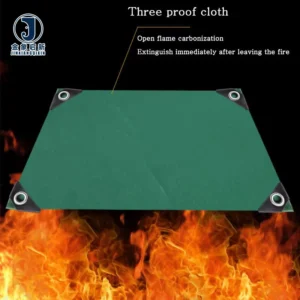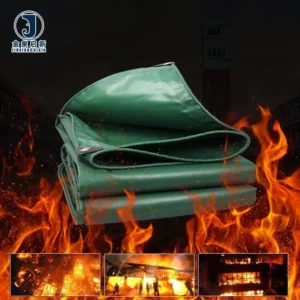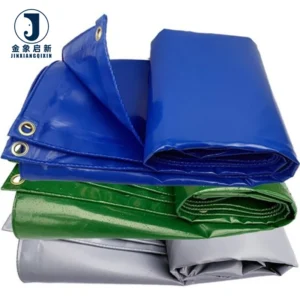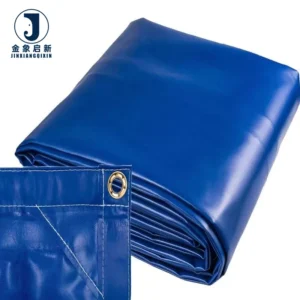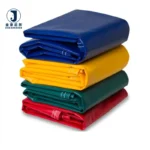
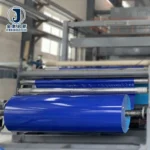
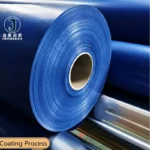


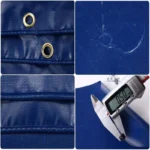
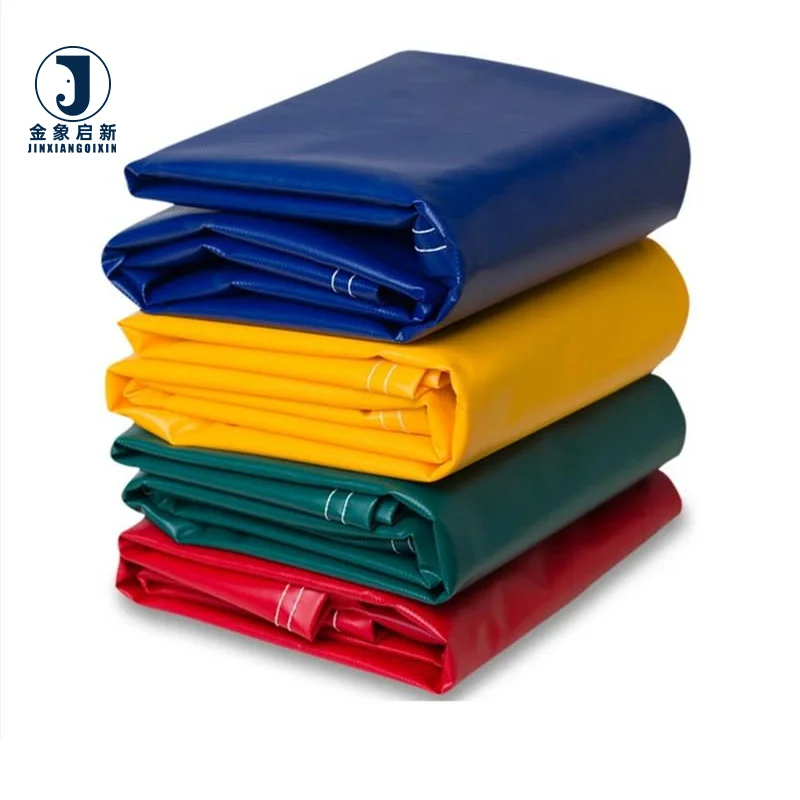
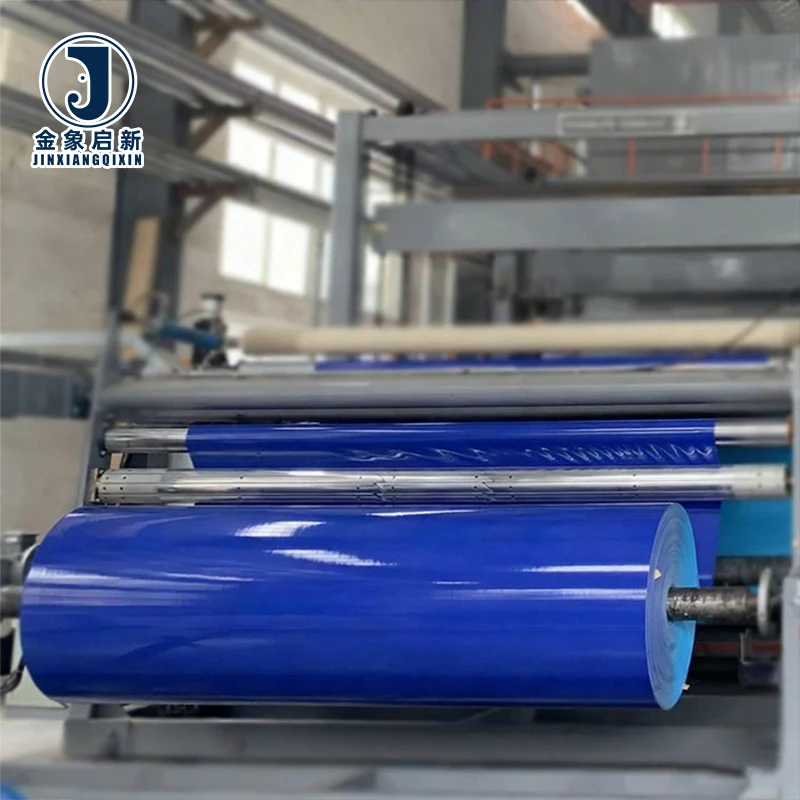
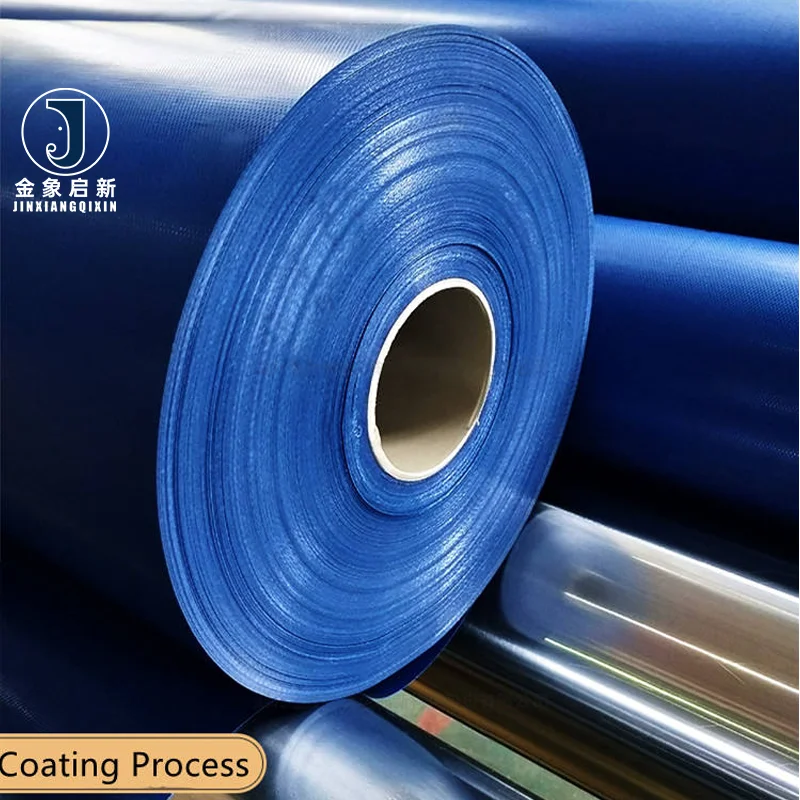
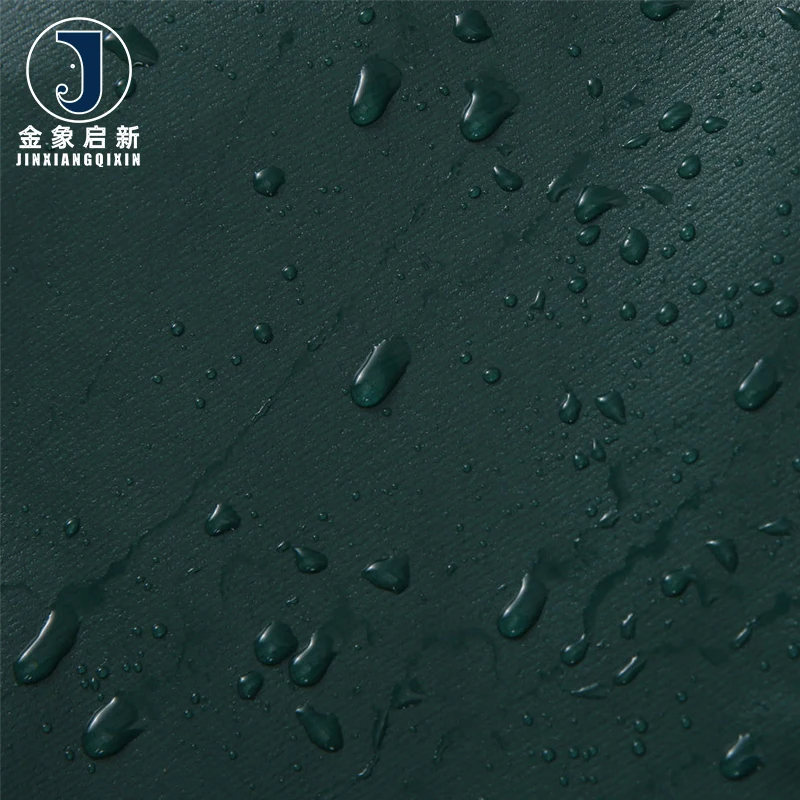
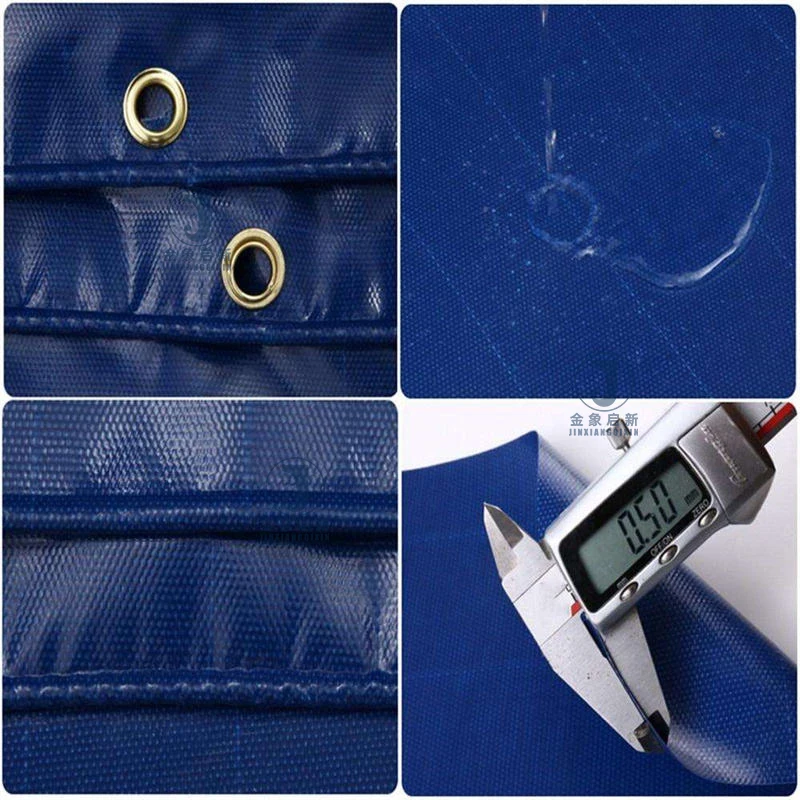
Process-Controlled Coating — three dedicated production lines manage adhesion and coating weight for PVC coated fabric grades, with 100% pre-shipment inspection verifying roll consistency before dispatch.
Technical Specifications
| Parameter | Value |
|---|---|
| Product Type | PVC Coated Fabric |
| Base Fabric Denier | 500D (medium); 1000D (heavy-duty); 500D–2000D (super heavy) |
| Total Thickness | 0.35–0.45 mm (medium); 0.70–1.0 mm (heavy-duty); 1.2–1.5 mm (super heavy) |
| Weight (GSM) | 400–500 g/m² (medium); 700–1000 g/m² (heavy-duty); 1100–1500 g/m² (super heavy) |
| Tensile Strength (N/5cm) | Warp 1500–2000 / Weft 1200–1800 (medium); Warp 2000–2500 / Weft 1800–2200 (heavy-duty); Warp 2500–3000 / Weft 2200–2800 (super heavy) |
| Coating Material | PVC |
| Surface Treatment | Anti-UV treatment available (grade not stated in source); flame retardant grades available (confirm the grade required for your market) |
| Custom Width and Length | Available |
| Certifications | ISO, CE |
Application Suitability
| Application | Exposure & Requirement |
|---|---|
| Mining and tunnelling ventilation duct | Continuous airflow, underground humidity, fire-retardant and anti-static compliance required by site safety regulation |
| Aviation ground support ducting | Jet blast proximity, fuel vapour exposure, certified flame-retardant fabric mandatory |
| Inflatable and tensioned membrane structures | Sustained wind load, UV exposure, structural tensile demand across large spans |
| Industrial pipe canopy covers | Chemical splash, weather cycling, abrasion from maintenance access and equipment movement |
What "Certified" Really Means on a Regulated Site
Choosing a PVC coated fabric with fire-retardant or anti-static claims but no test certificate behind them is a compliance gap that stops work until the paperwork is resolved.
A fabric certificate must name the standard, the grade achieved, and the issuing laboratory — anything less leaves the site safety officer with no basis for approval.
On mining and tunnelling projects, ventilation duct fabric without documented anti-static and flame-retardant test results fails the pre-installation audit. The duct sits in the laydown area while procurement scrambles for a replacement or retroactive documentation — costing days of ventilation downtime [NEED_CITE: fire-retardant and anti-static compliance requirements for underground ventilation ductwork]. Aviation ground support ducting faces the same gate: the fabric roll must arrive with a test report that maps to the authority having jurisdiction, not a generic data sheet.
How Denier and Coating Weight Interact Under Tension
The base fabric denier sets the structural backbone of any PVC coated fabric used in tensioned or inflated applications. A 500D weave handles moderate tensile loads for lightweight engineering covers, while the 1000D and 2000D grades carry the sustained inflation pressure and wind uplift forces encountered in membrane structures and large-diameter ventilation ducts. Coating weight must match: a heavier base fabric demands sufficient PVC penetration to lock the yarn intersections and prevent fibre pull-out under cyclic loading.
Matching Flame-Retardant Treatment to Jurisdiction
Fire-retardant requirements differ sharply across markets and site types. A mining ventilation duct in Australia must meet a different test protocol than a temporary membrane structure in continental Europe. The PVC coated fabric can be formulated with flame-retardant additives during coating, but the specific grade — whether M2, B1 per DIN 4102, NFPA 701, or a regional mining standard — must be confirmed against the project specification before production begins [NEED_CITE: comparative fire classification frameworks for coated technical textiles]. Supplying a generic flame-retardant fabric without the exact test report the site requires is the most common documentation failure on regulated industrial projects.
Reading the Specification Sheet Beyond GSM
GSM alone does not predict how a PVC coated fabric will perform under load. A 700 g/m² fabric built on a loosely woven 500D base will tear more easily than a 650 g/m² fabric on a tightly woven 1000D substrate, because tear propagation follows the yarn path and dense weaves arrest it. Tensile strength values — listed here up to 2500–3000 N/5cm warp for the super-heavy grade — combine base fabric density with coating adhesion; a high GSM with poor coating penetration yields a heavy but weak material. Total thickness, ranging from 0.35 mm to 1.5 mm across the weight tiers, correlates with puncture resistance and flex fatigue life, making it a critical parameter for duct inflation cycles and membrane tension applications. Coating method also matters: knife-over-edge coating typically delivers higher peel strength at the weld line than laminated constructions, directly affecting how long a heat-welded seam survives in service.
The Hidden Cost of Specifying on Weight Alone
Selecting ventilation duct or membrane fabric based only on GSM invites two failures. First, the coating-to-substrate bond may be too weak for the cyclic inflation pressures in ductwork, causing delamination at the weld line long before the fabric itself degrades [NEED_CITE: delamination failure modes in coated ventilation duct fabric]. Second, if the fire-retardant or anti-static treatment was added to meet a quotation rather than a site specification, the fabric arrives without the test documentation the safety officer demands — and the entire roll batch is rejected at the gate. Colour variation between rolls in the same shipment compounds the problem on visible membrane structures, where panels installed side by side reveal inconsistent dye lots.
Why Procurement Teams Source This PVC Coated Fabric Here
Three full production lines and 36 sets of professional equipment maintain batch-to-batch consistency across the 400–1500 g/m² weight range, so every roll in a container shipment meets the same coating weight and adhesion standard.
A 10-person R&D team develops custom width, colour and treatment formulations within days, supporting project-specific duct diameters and membrane panel sizes without extended minimum runs.
Dedicated QA/QC at every production stage — from base fabric inspection through coating, curing and winding — feeds into a 100% pre-shipment inspection that catches GSM deviation and colour drift before dispatch.
Nearly 30 years of focused coated fabric production provides the process knowledge to match denier, coating weight and treatment chemistry to demanding industrial ventilation and structural applications.
Material specification sheets, test reports and certification documentation ship with every order, closing the compliance loop that regulated sites require before installation begins.
Documentation & Verification
- Material specification sheet stating GSM, base fabric denier and coating weight for each roll grade
- Test report for flame-retardant grade matching the project’s jurisdictional standard
- ISO and CE certificates included with shipment documentation package
- Pre-shipment inspection record confirming roll-to-roll weight and colour consistency
- Certificate of origin and customs documentation for international dispatch
Fabrication, Handling & Storage
- Heat-weld seams at temperatures suited to the PVC coating thickness, adjusting dwell time for heavy-duty and super-heavy grades to ensure full penetration.
- Store rolls upright on pallets to prevent flat-spot deformation, especially on the 1.2–1.5 mm super-heavy grades that resist re-flattening.
- Allow cold-stored rolls to acclimatise before unrolling to avoid coating crack on the heavier PVC coated fabric grades.
- Use compatible PVC-based adhesives for field repairs, matching the coating formulation of the specific weight tier.
- Plan panel cutting layout to minimise offcut waste when working with custom-width rolls on large membrane structures.
Getting Your Specification Right Before Quoting
Provide the ventilation duct diameter or membrane span dimensions, the fire-retardant or anti-static standard your site requires, and the annual volume by grade. Include any custom width or colour needs so the R&D team can develop a pre-production sample for your approval before bulk coating begins.
Frequently Asked Questions
Q: What fire-retardant test reports do you supply with the fabric?
A: Test reports are issued for the specific flame-retardant grade produced, covering standards such as M2, B1 per DIN 4102, or NFPA 701. Confirm the exact standard your site safety officer requires at inquiry stage so the correct formulation and documentation are prepared with your PVC coated fabric order.
Q: How do you verify GSM matches the quoted specification on arrival?
A: Every roll undergoes weight verification during the 100% pre-shipment inspection, and the inspection record ships with the documentation package. Buyers can cross-check with a simple scale-and-area test on receipt to confirm the medium, heavy-duty or super-heavy grade matches the specification sheet.
Q: Can you produce custom widths for large-diameter duct or membrane projects?
A: Custom width and roll length are developed by the in-house R&D team, with samples available within days for weld testing and fitment trials. This avoids the field splicing that weakens duct inflation integrity and membrane panel continuity on specialist structures.
Q: What anti-static certification is available for mining ventilation duct fabric?
A: Anti-static treatment can be incorporated during the PVC coating stage, with surface resistivity tested to the standard specified by the mining authority. State the required resistivity range and test method at inquiry so the formulation and test report align with your compliance framework.
Q: Do you provide samples before committing to bulk production?
A: Pre-production samples are developed for custom width, colour and treatment requirements, allowing buyers to test heat-weld parameters, tensile behaviour and visual appearance before approving the bulk run. This step prevents specification mismatches on regulated industrial projects.