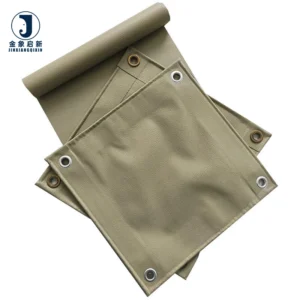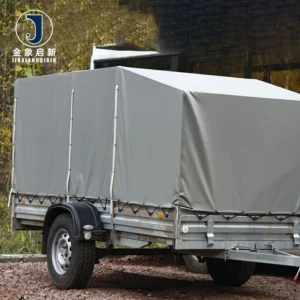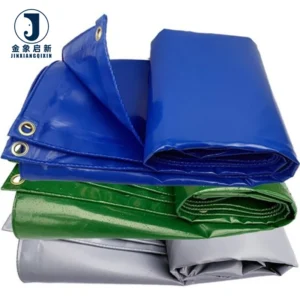
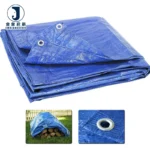
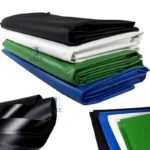
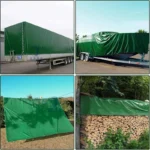
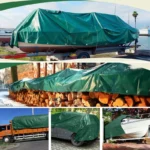
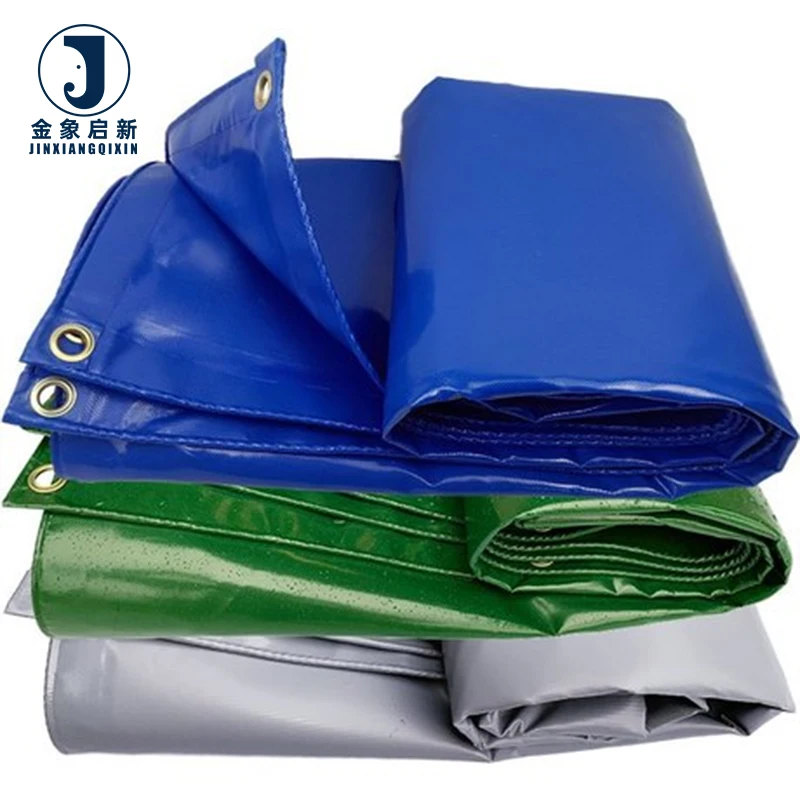
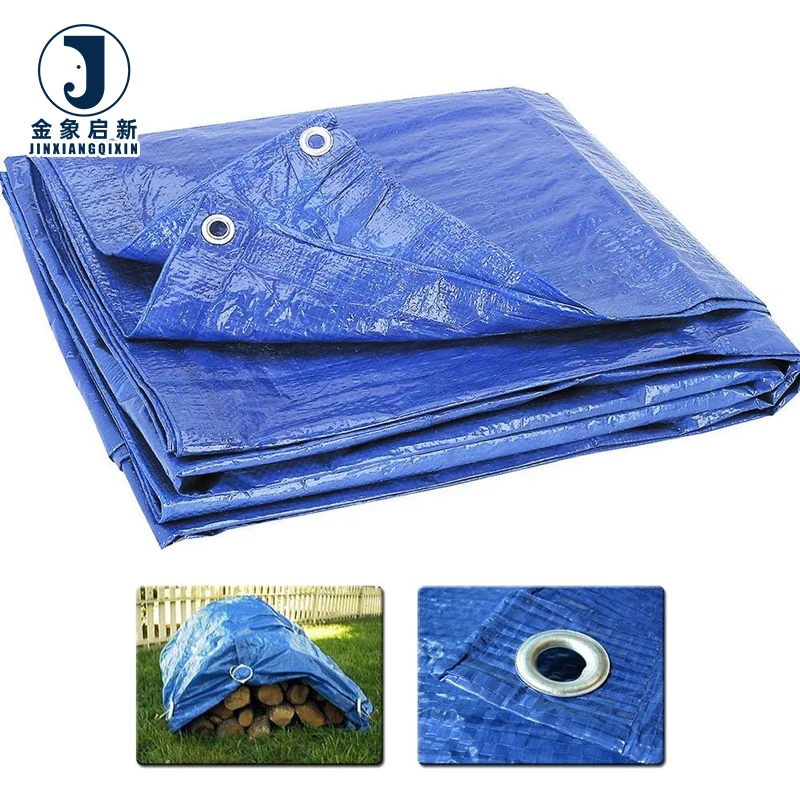
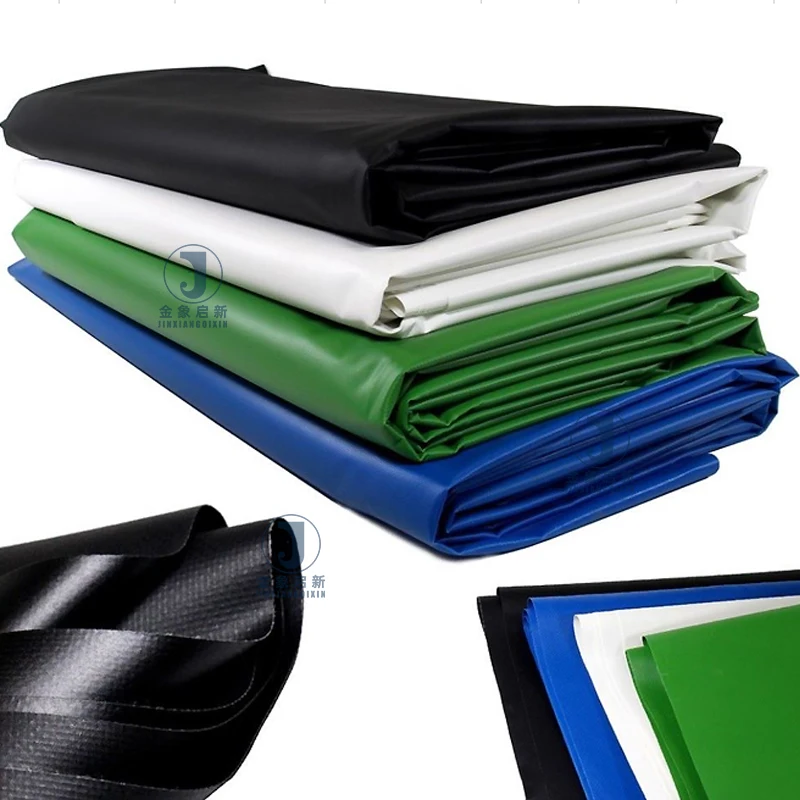
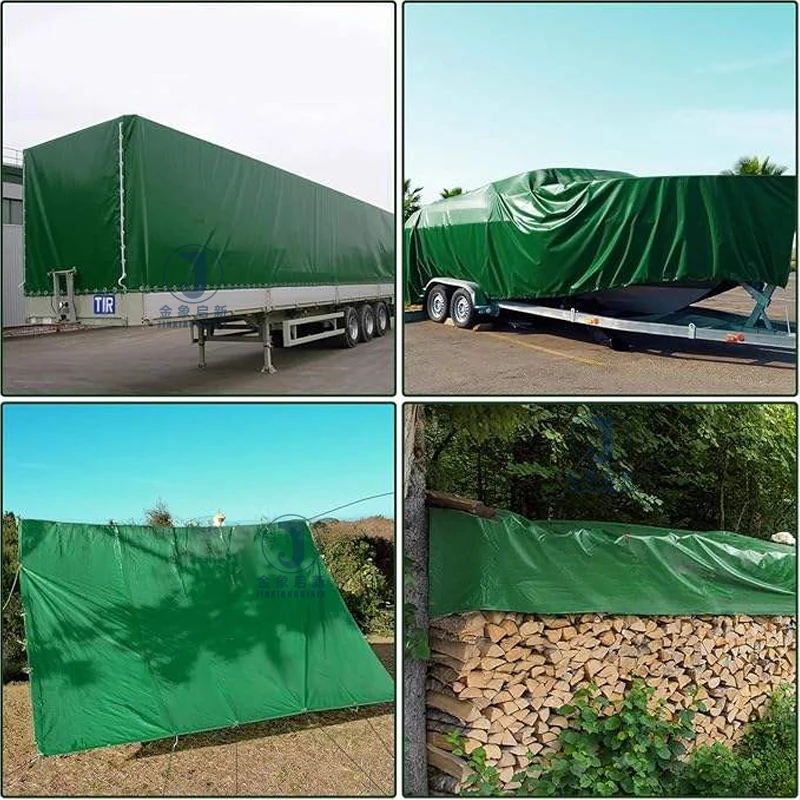
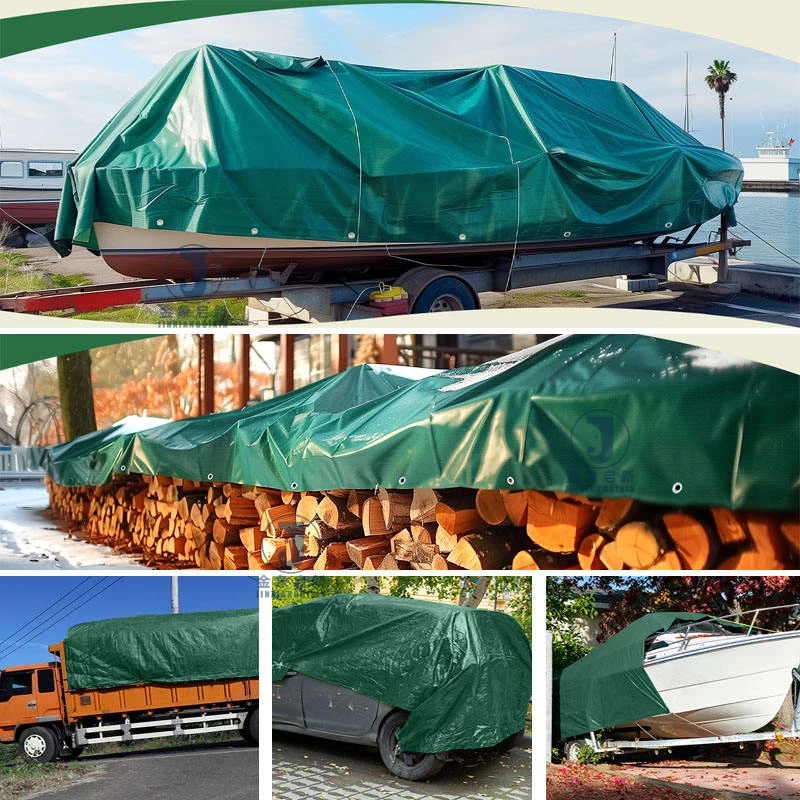
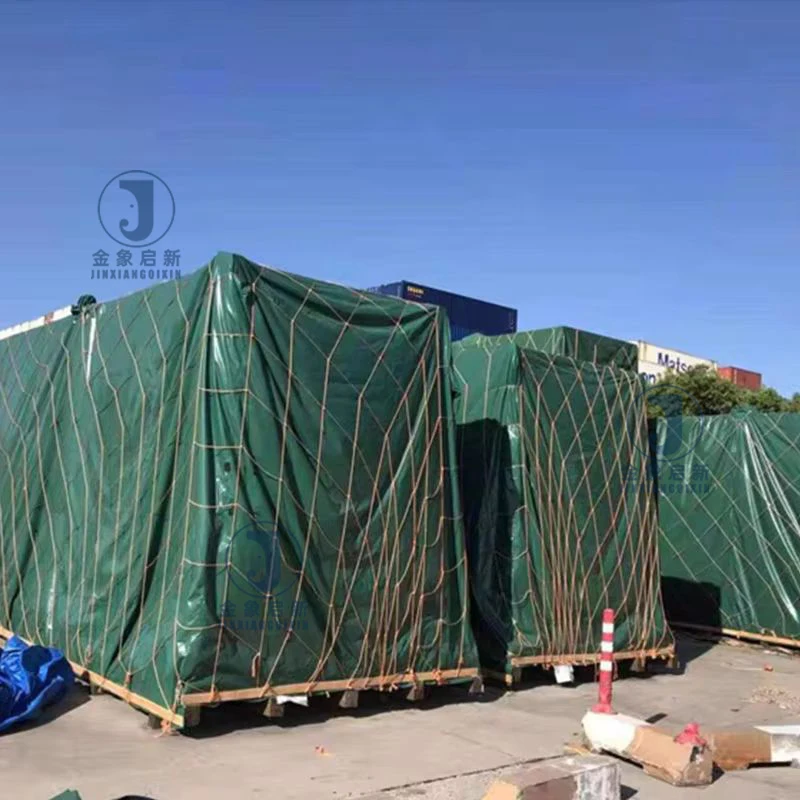
Deep Process Control — coating weight and adhesion verified at every stage across three dedicated production lines, ensuring each roll of industrial duct and technical fabric meets the stated specification before it leaves the factory.
Technical Specifications
| Parameter | Value |
|---|---|
| Product Type | PVC Coated Tarpaulin |
| Material | PVC coating on polyester base fabric (double-sided) |
| Yarn Count | 500D×500D |
| Weight Range | 450–900 g/m² (confirm required GSM at inquiry) |
| Surface Characteristics | Smooth, soft surface with a leather-like texture |
| Waterproof Performance | Fully waterproof coated construction |
| Abrasion Resistance | Very strong |
| UV Resistance | Anti-UV treatment available (test basis not stated in source) |
| Flame Retardancy | Flame-retardant option available (grade not stated — confirm required standard) |
| Repairability | Repairable by hot air welding |
| Package Options | Roll packing, bale packing, carton |
| Custom Color | Available |
| Custom Printing | Available |
| Standards | ISO, CE |
Application Suitability
| Application | Exposure & Requirement |
|---|---|
| Fire-retardant ventilation duct | Underground or confined-space airflow, strict site safety compliance, continuous flexing from fan pressure |
| Anti-static mining duct | Combustible dust environments, static discharge risk, abrasive particulate contact |
| Membrane and inflatable structure fabric | Permanent outdoor UV exposure, wind load tension, weld seam integrity at panel joins |
| Specialist aviation duct | Hangar ventilation, regulatory fire classification, lightweight yet dimensionally stable material |
| Tunnelling ventilation duct | High humidity, chemical exposure from blasting residues, repeated installation and removal cycles |
What "Certified Fire Retardant" Actually Means for Your Duct Specification
PVC coated tarpaulin fire retardant certified grade must be backed by a test report matching the standard your site or jurisdiction demands.
Too often, a fabric is labelled flame retardant on the quotation, yet no test certificate accompanies the shipment. When the site inspector asks for documentation, the buyer is left explaining why the ventilation duct in a confined tunnel or underground mine has no traceable fire classification [NEED_CITE: fire classification test standards for flexible ventilation duct materials]. This gap between claim and proof delays projects and creates compliance risk. Specifying the exact standard at the inquiry stage — whether DIN 4102, NFPA 701 or a local mining regulation — ensures the PVC coated tarpaulin fire retardant certified documentation arrives with the roll, not months later.
Coating Structure and Base Fabric Denier
The double-sided PVC coating over a 500D×500D polyester base fabric provides dimensional stability under the continuous pressure cycles of fan-driven ventilation systems. The yarn denier directly influences tear propagation resistance; a 500D weave limits the speed at which a puncture or cut spreads across the duct wall, which is critical when the fabric flexes repeatedly under positive or negative pressure [NEED_CITE: relationship between base fabric denier and tear propagation in coated technical textiles].
Hot-Air Weldability for Duct Fabrication and Field Repair
Hot-air welding allows fabricators to join panels into duct sections and attach flanges or junctions without mechanical fasteners that can loosen under vibration. In the field, the same repair method lets maintenance crews patch abrasion damage or seam splits without removing the entire duct run. The PVC coating formulation is engineered to soften and bond under controlled hot-air temperature, producing a welded joint that maintains continuity of the fire-retardant and anti-static treatment across the seam [NEED_CITE: hot-air welding parameters for PVC coated polyester fabrics].
Reading the GSM and Coating Weight Correctly
GSM alone does not define how the material will behave in a ventilation duct application. A 650 g/m² fabric with a lighter base fabric and heavier coating may resist puncture differently from a 650 g/m² fabric with a heavier base and thinner coating. The base fabric denier and weave density determine tensile and tear performance, while the coating weight governs waterproof sealing, surface abrasion resistance and weld behaviour. Requesting a material specification sheet that separates base fabric weight from coating weight gives a far clearer picture of how the PVC coated tarpaulin fire retardant certified material will perform once fabricated into duct sections.
The Cost of Specifying Without a Test Report
When flame-retardant grade is assumed rather than verified, the consequences surface at the worst possible moment — during site inspection or after an incident investigation. A duct installed in a mine or tunnel without the required fire classification certificate can halt operations until replacement material is sourced and installed. Colour inconsistency across rolls may seem secondary, but when duct sections are visible in public-facing infrastructure, mismatched panels trigger rework [NEED_CITE: compliance documentation requirements for ventilation materials in mining and tunnelling]. Specifying the exact standard and requesting the test report before production eliminates both risks.
Why Procure Technical Duct Fabric Here
Three full production lines and 36 sets of professional equipment support the volume and lead-time reliability that mining and tunnelling contractors depend on when planning ventilation infrastructure phases. A dedicated 10-person R&D team handles material selection and sample development for specialist requirements such as anti-static or specific fire-retardant grades. Every roll undergoes 100 percent inspection before dispatch, with pre-shipment records documenting GSM and coating verification. Custom widths and colours are developed as samples within days, allowing fabricators to confirm weld behaviour and colour match before committing to a full production run.
Documentation & Verification
- Material specification sheet separating base fabric denier, coating weight and total GSM for each roll
- Fire-retardant test report matched to the standard specified at inquiry stage
- Anti-static test certificate supplied where applicable for mining and tunnelling duct orders
- Pre-shipment inspection record confirming weight and visual quality per roll
- Roll packing list with batch reference for traceability across the shipment
- ISO and CE certificates available on request for compliance submissions
Fabrication, Handling & Storage
- Hot-air weld temperature and speed must be matched to the double-sided PVC coating thickness for consistent seam strength
- Store rolls upright on a flat surface to prevent permanent creasing in the 500D×500D polyester base fabric
- Allow cold-stored rolls to reach ambient temperature before unrolling to avoid coating micro-cracking
- Use PVC-compatible cleaners only; solvent-based products can degrade the leather-like surface finish
- Plan panel cutting layout to minimise welded seams at high-flex points in duct elbows and junctions
- Field repairs by hot-air welding require clean, dry surfaces for reliable adhesion to the PVC coating
Preparing Your Technical Inquiry
To ensure the material recommendation matches your ventilation or structural application, share the operating environment — underground mine, tunnel, hangar or outdoor structure — along with the fire-retardant or anti-static standard your site requires. Specify the duct diameter or panel dimensions, annual volume and whether you need rolls or fabricated sections. If colour matching across batches is important for visible installations, request a sample for approval before production begins.
Frequently Asked Questions
Q: How is the flame-retardant grade verified and which standards are available?
A: The flame-retardant grade is confirmed by a test report issued against the standard you specify at inquiry — for example DIN 4102 or NFPA 701. State the exact standard required by your site or jurisdiction when requesting a quotation, and the matching certificate will accompany the shipment documentation.
Q: What test basis supports the anti-UV treatment claim?
A: Anti-UV treatment is available and its performance basis is documented upon request. Because outdoor exposure conditions vary by geography and installation angle, share your expected service environment so the appropriate UV formulation can be recommended and supported with relevant test data.
Q: How is GSM measured and verified before shipment?
A: Each roll is sampled and weighed against the stated GSM during the pre-shipment inspection. The inspection record, included with your dispatch documentation, confirms the measured weight per roll so you can verify the material matches what was quoted before it leaves the factory.
Q: What are the hot-air welding parameters for seam and repair work?
A: Welding temperature, air pressure and travel speed depend on the specific coating weight and thickness of the rolls you receive. Sample material is available for your fabrication team to establish optimal machine settings before full production, ensuring consistent seam integrity in duct joins and field repairs.
Q: Can custom colour be matched consistently across multiple rolls?
A: Custom colour is produced to a reference sample approved before the production run begins. The in-process QA system monitors colour across the batch, and pre-shipment inspection includes a visual check for roll-to-roll consistency so adjacent duct panels match once installed on site.