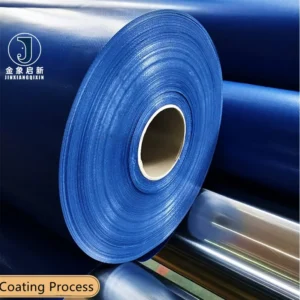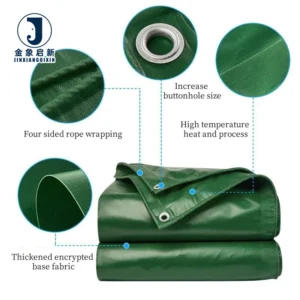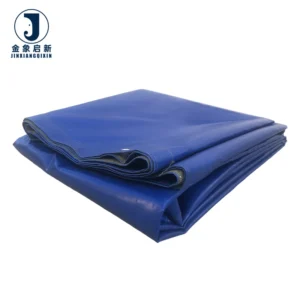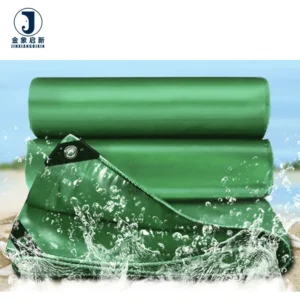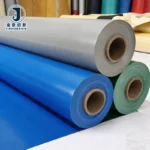
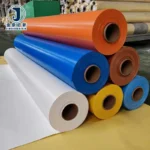
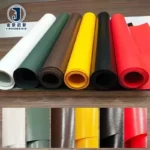
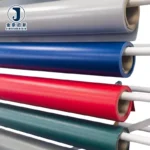
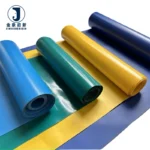
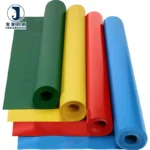
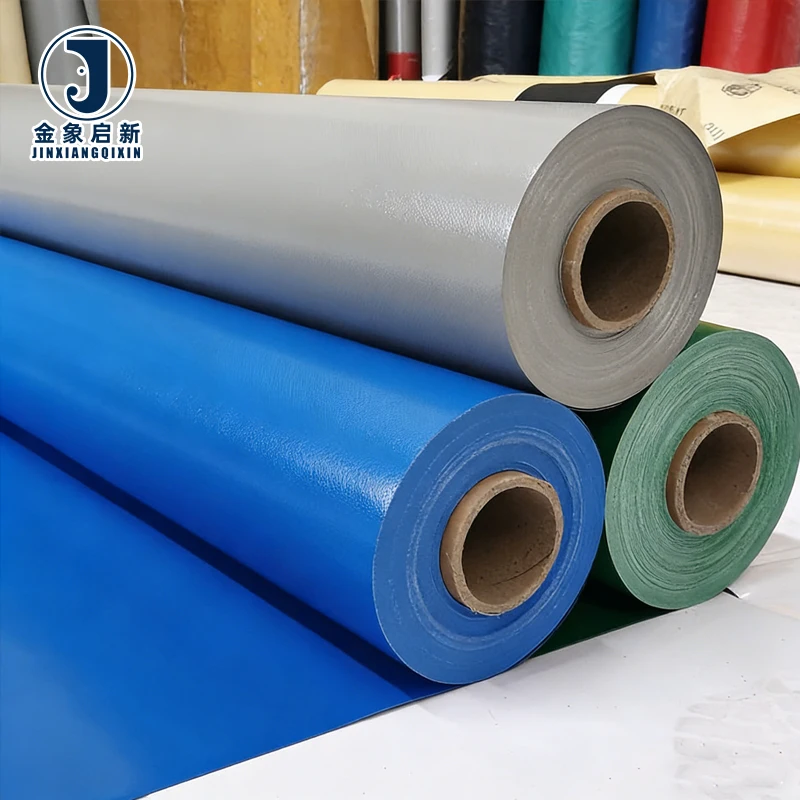
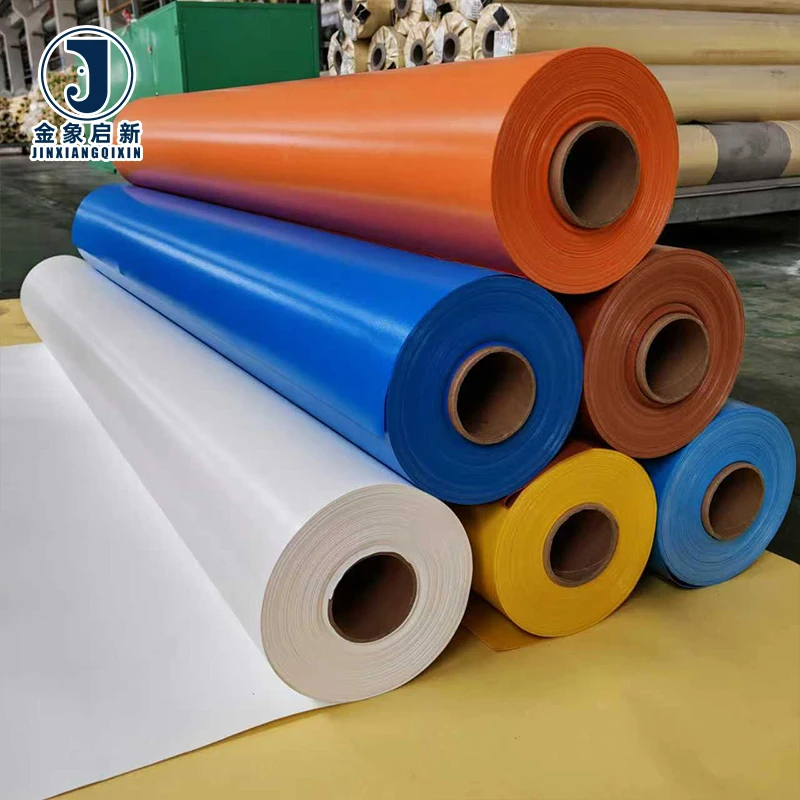
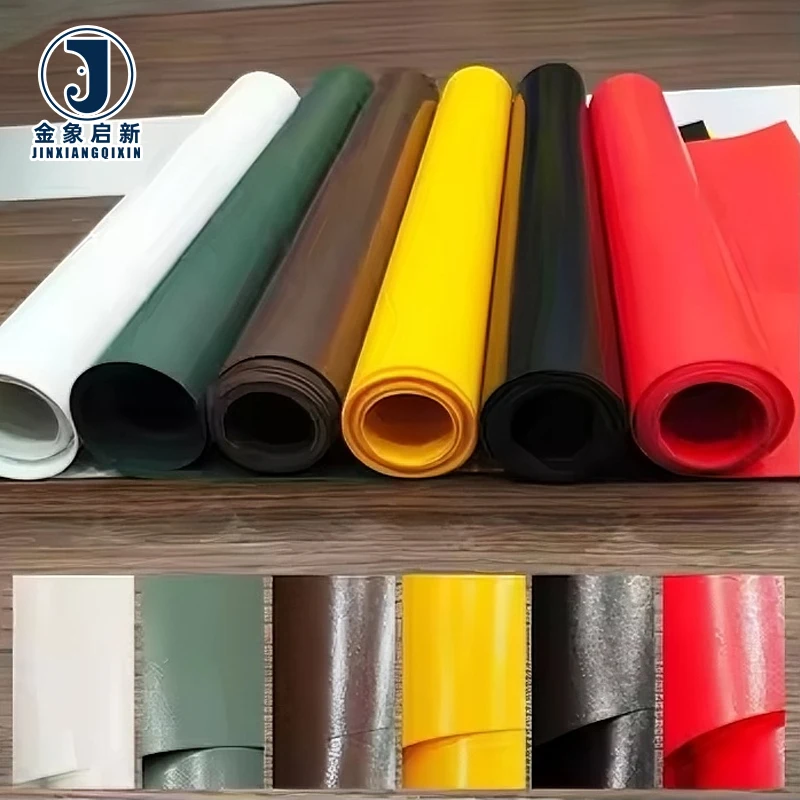
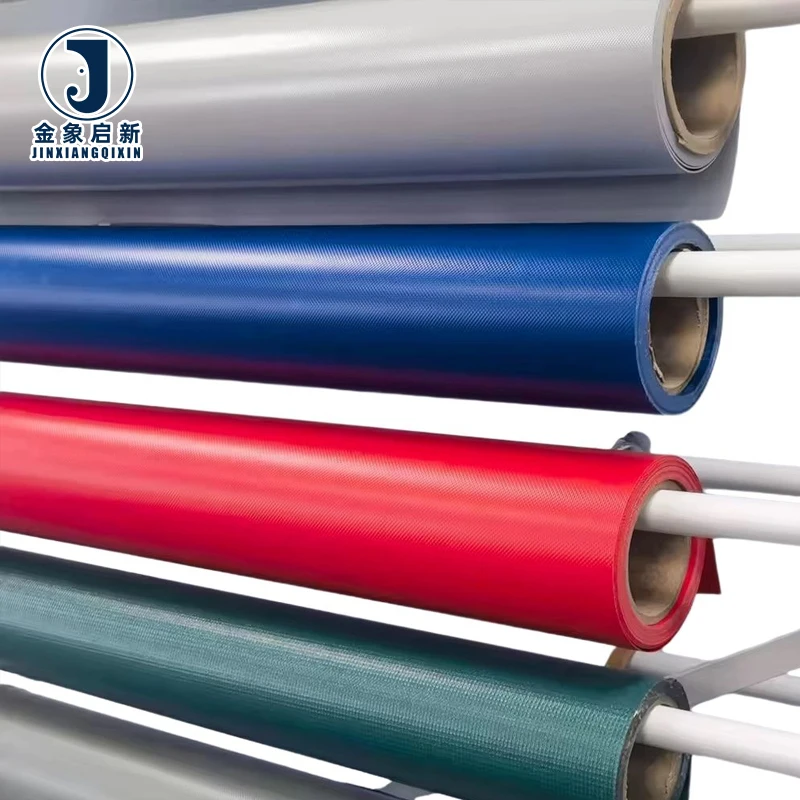
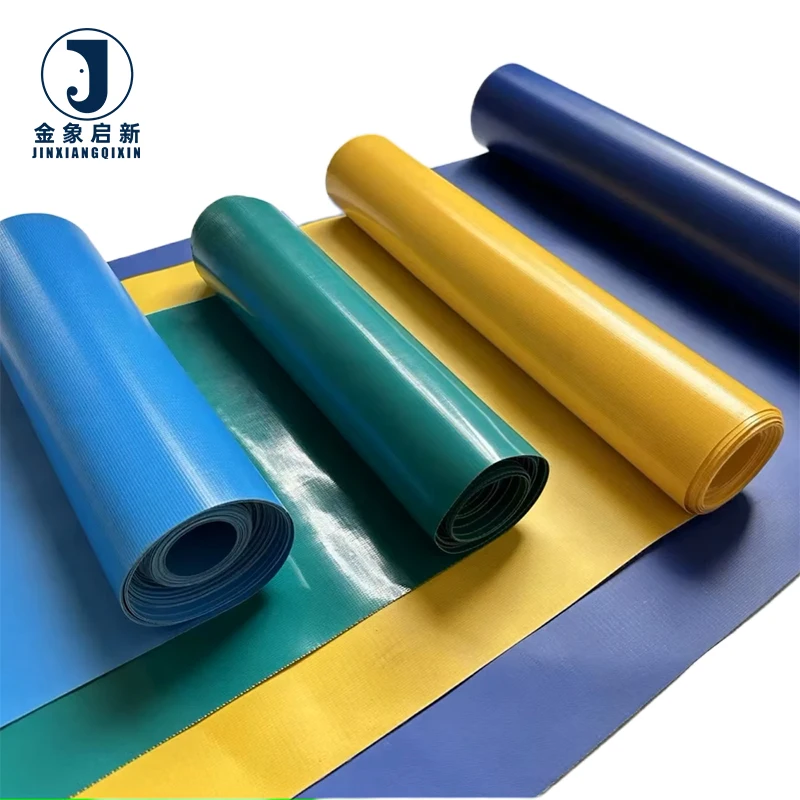
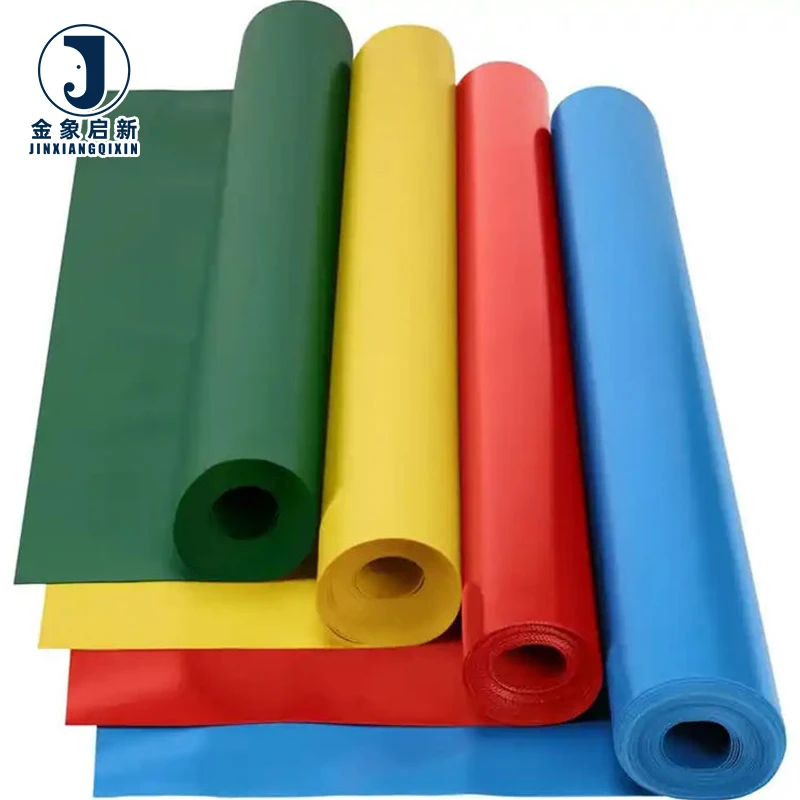
Deep Process Control Over Coating Weight — Three full production lines with 36 sets of professional equipment ensure every roll of fire retardant PVC tarpaulin meets the stated GSM and adhesion specification before dispatch.
Technical Specifications
| Parameter | Value |
|---|---|
| Product Type | PVC Coated Tarpaulin Roll |
| Material | PVC + High-strength polyester mesh fabric |
| Coating Technology | Laminated technology & Hot-melt Coating technology |
| Weight (GSM) | 350gsm / 420gsm / 500gsm / 550gsm / 600gsm / 750gsm |
| Total Thickness | 0.32mm / 0.35mm / 0.4mm / 0.45mm / 0.5mm / 0.65mm |
| Roll Width | 2m / 2.1m |
| Roll Length | 75m (for 2m width) / 50m (for 2.1m width) |
| Surface Finish | Glossy Surface or Matt Surface |
| Color Options | Blue / Red / Yellow / Light blue / Grey (Customized) |
| Flame Retardant | Available in fire-retardant grades — confirm the grade required for your market |
| Anti-Static | Anti-static treatment available — surface resistance standard to be confirmed per project |
| Key Features | High tenacity polyester yarns, cold crack resistance, anti-mildew, waterproof, color fastness, outstanding tearing strength for welding |
| Standards | ISO, CE |
Application Suitability
| Application | Exposure & Requirement |
|---|---|
| Mining & Tunnelling Ventilation Duct | Continuous airflow pressure, abrasive dust, mandatory fire-retardant and anti-static compliance for underground safety |
| Aviation Ground Support Ducting | Fuel vapour proximity, strict fire classification documentation, frequent deployment and retraction cycles |
| Inflatable & Membrane Structures | Tensile load from internal pressure, UV exposure, weld seam integrity at stress points |
| Industrial Temporary Enclosures | Wind loading, temperature fluctuation, rapid installation and teardown |
Why a Test Report Matters More Than the Words "Fire Retardant" on a PVC Coated Tarpaulin Roll
A fire-retardant claim without a matching grade and test standard is a compliance gap waiting to surface on site.
Ventilation duct fabric arrives at a mining or tunnelling project with a data sheet that says "flame retardant," but the site safety officer asks for the specific classification — M2, B1 per DIN 4102, or NFPA 701. When the documentation does not match the destination market’s regulatory requirement, the entire batch is held and the ventilation schedule stalls [NEED_CITE: fire classification standards for flexible duct materials in underground mining]. The cost is not just the replacement roll; it is the crew standing idle and the contractor’s compliance record taking a mark. Specifying the exact grade at the inquiry stage and receiving a test report with each shipment closes that gap before the fabric leaves the factory.
Coating Adhesion and Weld Seam Reliability in Duct Construction
Hot-melt coating technology bonds the PVC layer to the high-strength polyester mesh at elevated temperature, creating an adhesion bond that resists delamination when the fabric is heat-welded into duct sections. For ventilation applications, the weld seam carries the same internal pressure as the body of the duct. If the coating separates from the base fabric during welding, the seam becomes the first failure point under airflow load. Laminated technology offers an alternative construction where consistent coating weight across the roll supports reliable weld parameters throughout fabrication.
Anti-Static Compliance for Hazardous Atmosphere Ventilation
In mining and aviation fuel handling environments, static discharge from airflow over the duct surface presents an ignition hazard. Anti-static treatment modifies the surface resistivity of the PVC coated tarpaulin roll to dissipate charge buildup [NEED_CITE: surface resistivity testing methods for anti-static ventilation duct fabric]. The required resistance range depends on the site safety specification and the regulatory authority governing the project. Confirming the target value at the quotation stage ensures the treatment formulation matches the compliance threshold, and the test result accompanies the shipment documentation.
Reading the Specification Sheet Beyond Weight and Thickness
GSM alone does not define how the fabric performs under duct operating pressure. The base fabric denier and weave density determine the tensile and tear baseline, while the coating weight contributes waterproofing, chemical resistance, and the surface needed for heat welding. A 550gsm roll with a dense base weave may outperform a 600gsm roll built on a lighter mesh when the duct flexes under negative pressure. Total thickness correlates with puncture resistance during installation, but thicker is not always better — heavier rolls are harder to handle on scaffolding and increase the dead load on hanging brackets. Selecting the grade requires matching the duct diameter, airflow velocity, and hanging interval to the combined tensile and tear figures on the material data sheet, not just the GSM column.
What Happens When the Roll Specification Does Not Match the Duct Design
Fabricators who receive roll stock with lower adhesion strength than the data sheet indicated discover it only when the weld peels back during pressure testing. By then, sections are already cut and assembled. Batch colour inconsistency across rolls becomes visible once duct segments are hung end to end in a tunnel, requiring selective replacement. A roll width that does not match the pattern layout forces additional transverse welds, each one a potential leak path under positive pressure [NEED_CITE: weld seam integrity testing for industrial ventilation duct fabrication]. These issues surface on site, not in the factory, which is why pre-shipment inspection against the purchase specification is non-negotiable.
Why Fabricators Source This PVC Coated Tarpaulin Roll Here
Three full production lines and 36 sets of professional equipment provide the capacity to supply multiple container loads of consistent roll stock within a single production window. The 10-person R&D team develops sample rolls with your specified GSM, colour reference, and fire-retardant or anti-static treatment for approval before bulk production begins. Dedicated QA/QC checks coating weight and adhesion at every stage, with 100% inspection before any roll is packed. Custom widths and lengths are produced on the same lines as standard inventory, so the quality baseline does not shift between stock and made-to-order items.
Documentation & Verification
- Material specification sheet stating GSM, base fabric denier, and coating type for each roll batch
- Fire-retardant test report matching the grade specified for your destination market’s regulatory standard
- Anti-static surface resistance measurement report where site safety specification mandates documented values
- Pre-shipment inspection record confirming roll-by-roll weight and colour consistency before dispatch
- Roll packing list with individual roll identification for traceability through fabrication
Fabrication, Handling & Storage
- Set heat-weld temperature and dwell time to match the coating technology — hot-melt and laminated constructions respond differently to the same wedge setting
- Store rolls horizontally on racking to prevent permanent creasing across the 2m or 2.1m width
- Allow rolls to acclimatise before unrolling in cold conditions to avoid stiff handling and surface cracking
- Cut pattern pieces along the warp direction to align the high-tenacity polyester yarns with the primary duct tension axis
- Clean glossy surface finishes with mild detergent only; solvent-based cleaners can soften the PVC coating layer
- Support the full roll weight on a cradle during pay-off to prevent edge damage on the outer wraps
Requesting a Quotation That Matches Your Project Specification
Provide the ventilation duct diameter, operating pressure range, and the fire-retardant or anti-static standard required by your site safety authority. Specify the roll width that fits your pattern layout and the colour reference for visual consistency across the installation. If your project requires custom roll lengths to minimise transverse welds, state the target length and the total metreage. Confirm whether you need sample rolls for weld parameter development before bulk release.
Frequently Asked Questions
Q: How do I select the correct fire-retardant grade for ventilation duct compliance?
A: The required grade depends on the regulatory authority governing your project — underground mining, aviation ground support, and construction each reference different test standards. Provide the specific classification your site safety officer requires, such as M2, B1, or NFPA 701, at the inquiry stage. The matching test report is then included with the shipment documentation for site inspection.
Q: What surface resistivity value does the anti-static treatment achieve?
A: Surface resistivity is formulated to meet the range specified by your project’s safety standard. Different authorities set different thresholds for acceptable static dissipation in hazardous atmospheres. Share the target resistance value from your site specification, and the treatment formulation is adjusted accordingly, with the measurement result documented on the test report accompanying your rolls.
Q: How does GSM relate to duct diameter and airflow pressure?
A: Higher GSM grades generally provide greater tensile and tear resistance, but the base fabric weave density also plays a significant role. Larger duct diameters and higher operating pressures demand stronger fabric to resist ballooning and seam stress. Review the material data sheet for tensile and tear figures alongside GSM, and select the grade that matches your duct engineering calculations rather than choosing on weight alone.
Q: Can I get a sample roll to set weld parameters before bulk production?
A: Yes. Sample rolls are produced with your specified GSM, coating technology, and treatment for weld parameter development on your fabrication equipment. This allows you to confirm heat-weld temperature, speed, and seam strength before the full production run is released, reducing the risk of seam failure during duct assembly.