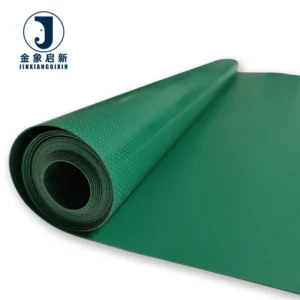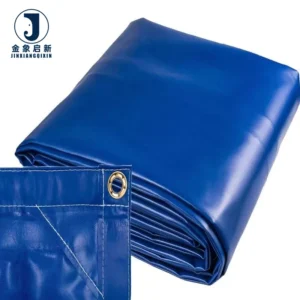



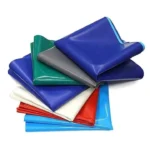
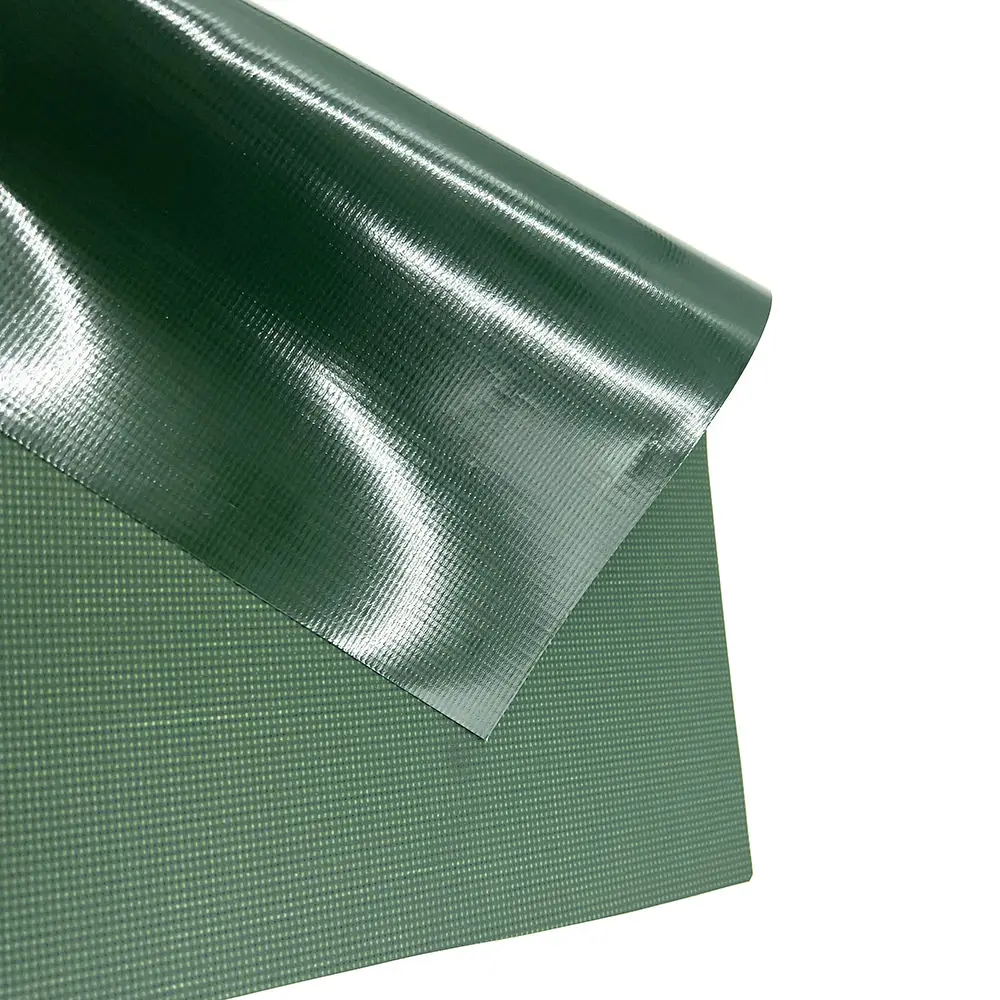
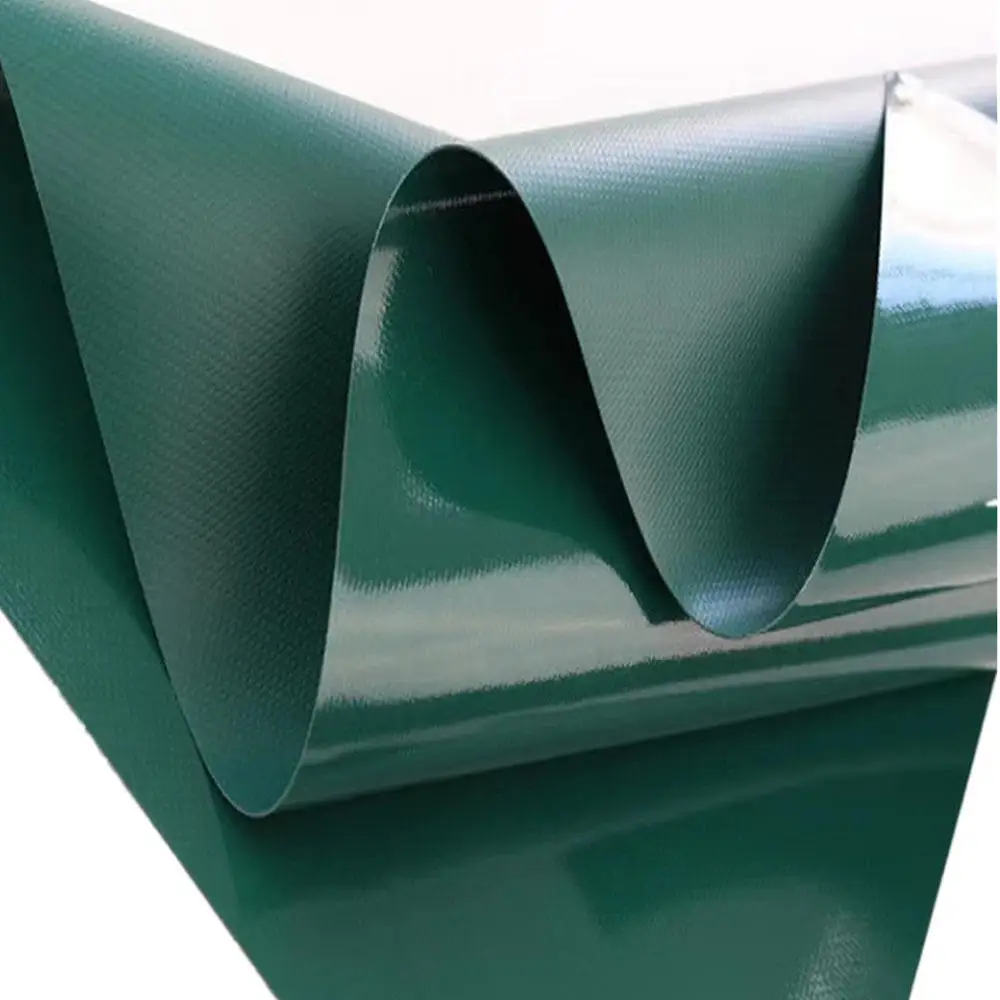
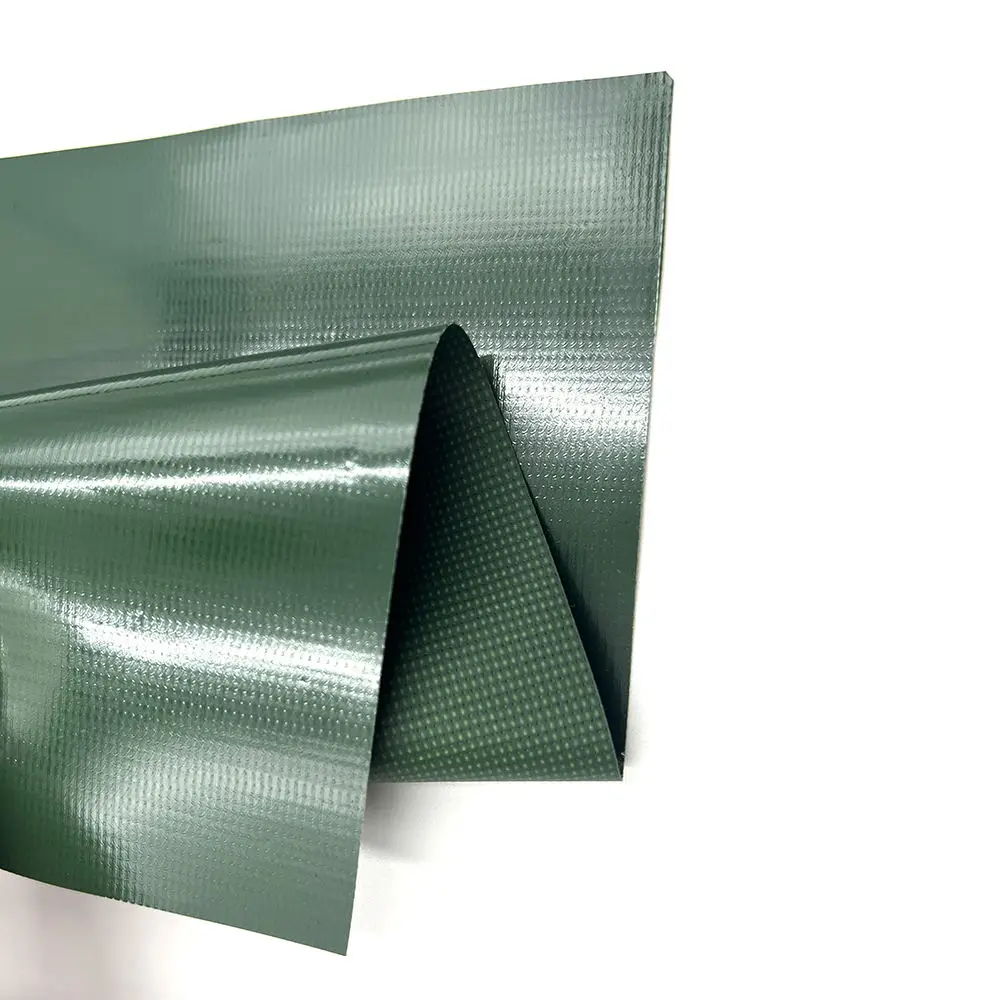
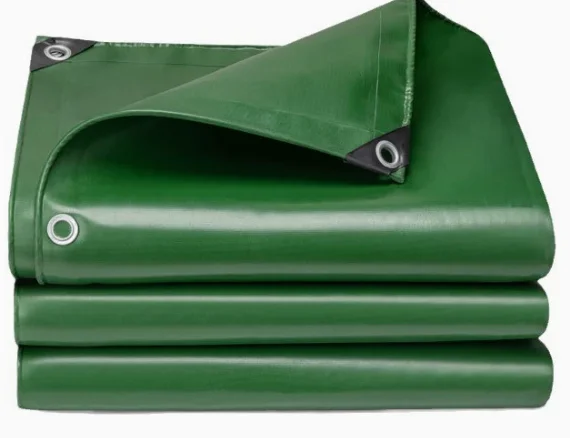
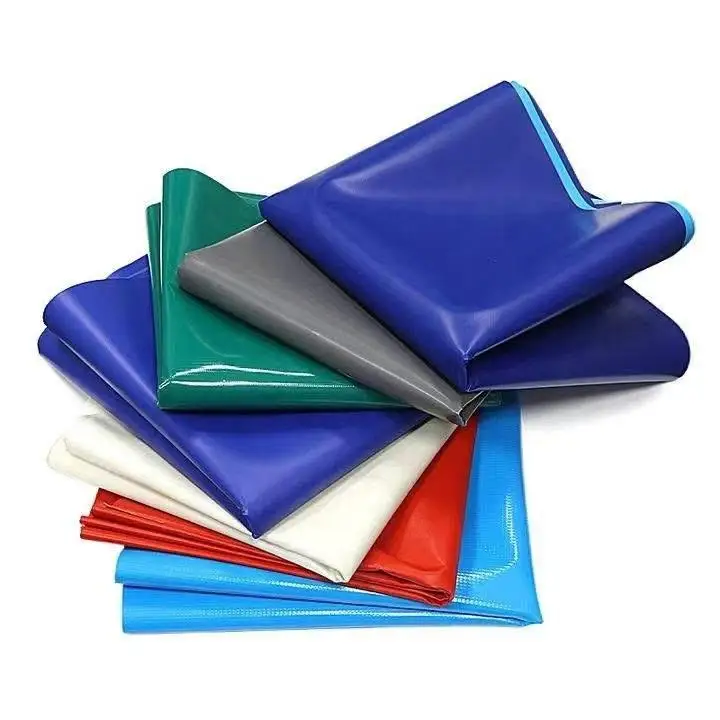
Knife Coated Consistency — Every roll of this green PVC knife coated tarpaulin undergoes 100% in-line coating-weight verification to ensure uniform tensile behaviour across the full batch.
Technical Specifications
| Parameter | Value |
|---|---|
| Product Type | PVC Coated Tarpaulin |
| Coating Method | Knife coated |
| Coating Material | PVC |
| Color | Green |
| Fire Retardant | Available in flame retardant grades — confirm the grade required for your market |
| UV Resistance | Available with UV stabilisation — request test basis and duration |
| Anti-Mildew | Yes |
| Antibacterial | Yes |
| Oil and Stain Resistance | Yes |
| Acid and Alkali Resistance | Yes |
| Temperature Resistance | High temperature and cold resistant (confirm range for project climate) |
| Anti-oxidation | Yes |
| Weather Resistance | Yes |
| Flexibility | Highly flexible, resistant to cracking |
| Self-Cleaning | Yes |
| Welding Options | HF, Hot Air, Sewing |
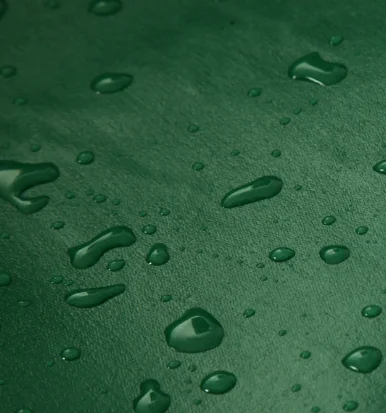
| Waterproof | Yes |
Application Suitability
| Application | Exposure & Requirement |
|---|---|
| Airport hangars and aviation shelters | Constant UV and wind loading, chemical exposure from fuels and de-icing agents, fire code compliance for enclosed structures |
| Stadium roofs and tensile canopies | Sustained biaxial tension, welded seam integrity under peak load, long-term colour and surface stability |
| Portable storage and shade systems | Abrasion from wind-driven dust, rapid deploy and strike cycles, mildew risk in humid environments |
| Mining and tunnelling ventilation structures | Confined-space fire compliance, anti-static requirements in classified zones, mechanical wear from airflow particulates |
| Inflatable and membrane structures | Repeated inflation cycles, crease recovery, airtight seam performance |
Why Claiming "Flame Retardant" Without a Grade Puts Your Project at Risk
A membrane structure is only as compliant as the test certificate behind the fabric.
When an airport hangar or stadium authority inspects the installed membrane, they do not look at marketing language — they ask for the fire classification per the local building code. PVC knife coated tarpaulin for tensile and membrane structures must carry a test report mapped to the standard your jurisdiction enforces: DIN 4102 B1 for many European projects, NFPA 701 for North American venues, M2 for French-regulated sites. Without that documentation, the fabric is simply a PVC-coated roll with an unverified claim, and the entire structure can fail inspection after installation [NEED_CITE: DIN 4102 fire classification for building materials].
I have seen project timelines slip by weeks because the membrane contractor could not produce a grade-matched test report at the handover stage. The cost of re-specifying and re-ordering fabric mid-build far outweighs the effort of confirming the grade before the purchase order is placed.
Weld Integrity Under Structural Tension
Tensile and membrane structures place the highest mechanical demand on seams, not on the field of the fabric. This PVC coated tarpaulin supports high-frequency welding, hot-air welding and sewing, giving fabricators the freedom to match the joining method to the load path. HF welding produces a continuous molecular bond suited to curved panels where peel forces are concentrated, while hot-air welding allows on-site repairs and field splices. Sewing remains relevant for edge details and attachment sleeves. The knife coated construction delivers consistent coating adhesion, which is the property that determines whether a welded seam outlasts the fabric itself [NEED_CITE: tensile and tear test methods for coated fabrics per ISO 1421].
Surface Chemistry for Harsh Environments
Airport hangars expose membrane fabric to jet fuel vapour, hydraulic fluid mist and de-icing glycol. Mining ventilation structures encounter alkaline dust and acidic groundwater seepage. The PVC knife coated tarpaulin for tensile and membrane structures carries acid, alkali, oil and stain resistance across the coating surface, reducing chemical degradation at the molecular level. Anti-mildew and antibacterial treatments protect the fabric in high-humidity environments such as indoor aquatics facilities or tropical storage domes. The self-cleaning characteristic means rain or wash-down removes surface contaminants without aggressive scrubbing that could damage the coating layer [NEED_CITE: chemical resistance testing protocols for PVC coated technical textiles].
How Coating Method and Base Fabric Define Structural Performance
Knife coating applies PVC paste directly onto the base fabric under controlled blade pressure, forcing the compound into the weave interstices and producing high peel strength between coating and yarn. This matters in tensile structures because the biaxial tension tries to delaminate the coating from the yarn at every weld point and attachment ring. The base fabric denier and mesh count govern the tear propagation path — a higher-denier yarn with a balanced warp-weft density forces a tear to break individual yarns rather than unzipping along a single course. GSM alone is an incomplete indicator: a heavy fabric with a loose weave will tear more easily than a lighter fabric with a tight, high-denier base. Coating weight and base fabric must be specified as a system, not as a single number. The temperature resistance range determines whether the membrane remains flexible at winter lows or resists softening at summer peaks, both of which affect the tension profile of the structure. Surface finish — glossy or matte — influences light reflectance inside a hangar and the adhesion behaviour of printed graphics or signage applied to the membrane.
The Hidden Cost of Specifying on Colour Alone
When a buyer specifies green PVC fabric for a stadium canopy based only on colour match, the roll arrives looking correct — until it is unrolled beside the next batch and the shade drift is visible under daylight. Colour variance between rolls installed side by side on a tensile structure is immediately noticeable and typically grounds for rejection. This is not a cosmetic issue; it signals inconsistent coating formulation between production runs. Equally, selecting a fabric without verifying the fire-retardant grade against the project’s building code can result in the membrane passing visual inspection but failing the fire marshal’s documentation audit, forcing removal and replacement of the installed structure at the contractor’s expense [NEED_CITE: membrane structure fire compliance failures during municipal inspection].
Why Fabricators Source This PVC Coated Tarpaulin from Jinxiang
Nearly 30 years of focused coated-fabric production gives the process engineering team deep control over coating weight distribution and adhesion consistency roll to roll.
Three full production lines and 36 sets of professional equipment support bulk order volumes without compromising delivery schedules for project-critical membrane installations.
A 10-person R&D team handles material selection, custom width development and sample fabrication so fabricators can validate welding parameters before committing to a production order.
Dedicated QA/QC at every production stage, with 100% pre-shipment inspection, catches coating defects and colour drift before rolls leave the facility.
ISO and CE certified production underpins the documentation chain that compliance-driven buyers in aviation and public-assembly venues require.
Documentation & Verification
- Material specification sheet stating coating method, base fabric construction and colour reference for this green PVC knife coated tarpaulin
- Fire-retardant test report with grade and standard matched to the destination building code
- UV-resistance test documentation stating method, exposure duration and retention values
- Pre-shipment inspection record confirming coating adhesion, colour consistency and dimensional accuracy per roll
- Roll packing list with individual roll identifiers for traceability on site
Fabrication, Handling & Storage
- HF welding parameters should be calibrated to the knife coated PVC thickness to achieve full molecular bonding at structural seams
- Hot-air welding temperature and speed must match the coating formulation to prevent surface scorching or incomplete fusion
- Store rolls upright on pallets in a dry, shaded area to prevent compression marks on the green PVC surface
- Unroll and allow the fabric to relax at ambient temperature before tensioning to avoid cold-crease memory in the membrane
- Use PVC-compatible cleaners only; solvent-based products may soften the knife coated surface and compromise self-cleaning properties
- Field repairs with hot-air welding and matching PVC patches restore airtight integrity on inflatable and membrane structures
Request a Specification Package
Provide the intended application, the structural span and expected wind or snow load category, and the fire classification your local authority requires. Share the required roll width, colour confirmation needs and whether you need sample panels for weld testing before committing to the full order. If the structure sits in a classified area, specify the anti-static surface-resistance threshold so the correct treatment can be included in the material build.
Frequently Asked Questions
Q: Which fire-retardant grade should I specify for an airport hangar membrane?
A: The grade depends on the aviation authority and local building code governing the site. Common requirements include DIN 4102 B1 in Europe, NFPA 701 in North America and M2 in France. Request a test report mapped to your specific standard before placing the order, and confirm the grade with your fire engineer.
Q: How is UV resistance validated for a tensile structure expected to perform outdoors?
A: Ask for the UV test method and exposure duration behind the resistance claim. Xenon-arc or QUV testing with documented retention of tensile strength and colour after a stated exposure period provides the evidence needed. A generic anti-UV label without a test basis does not satisfy most structural membrane specifications.
Q: Should I use HF or hot-air welding for tensile membrane seams?
A: HF welding creates a continuous molecular bond suited to factory-fabricated panels carrying peak biaxial tension. Hot-air welding is preferred for on-site splices and curved repairs where portability matters. This PVC knife coated tarpaulin supports both methods; validate parameters with sample welds before production.
Q: How do I verify coating weight and GSM on arrival?
A: Request the pre-shipment inspection record that documents per-roll weight checks. On site, cut a measured sample from each roll and weigh it to confirm the value matches the specification sheet. Any variance outside the agreed tolerance should be reported before fabrication begins.
Q: What anti-static performance is needed for a membrane in a classified mining zone?
A: Classified areas require a specific surface-resistance value, typically measured in ohms per IEC or EN standards. Confirm the threshold with the site safety officer and request an anti-static test report from the fabric supplier. Not all green PVC coated tarpaulin rolls carry this treatment, so it must be specified at inquiry stage.