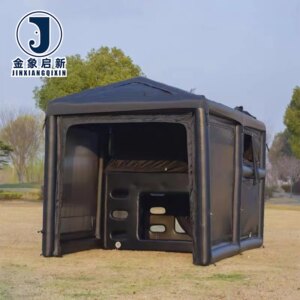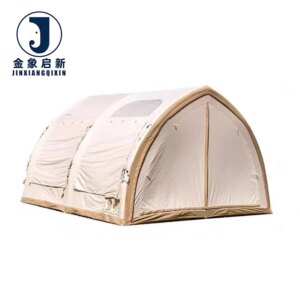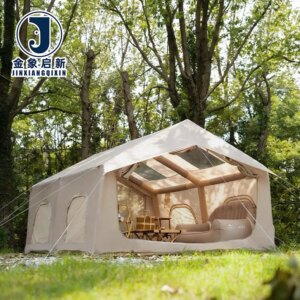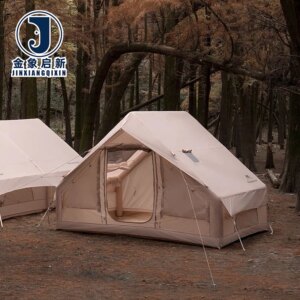

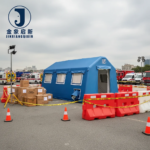
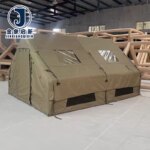
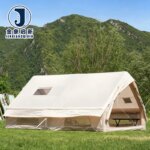
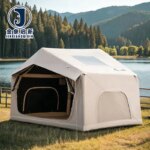


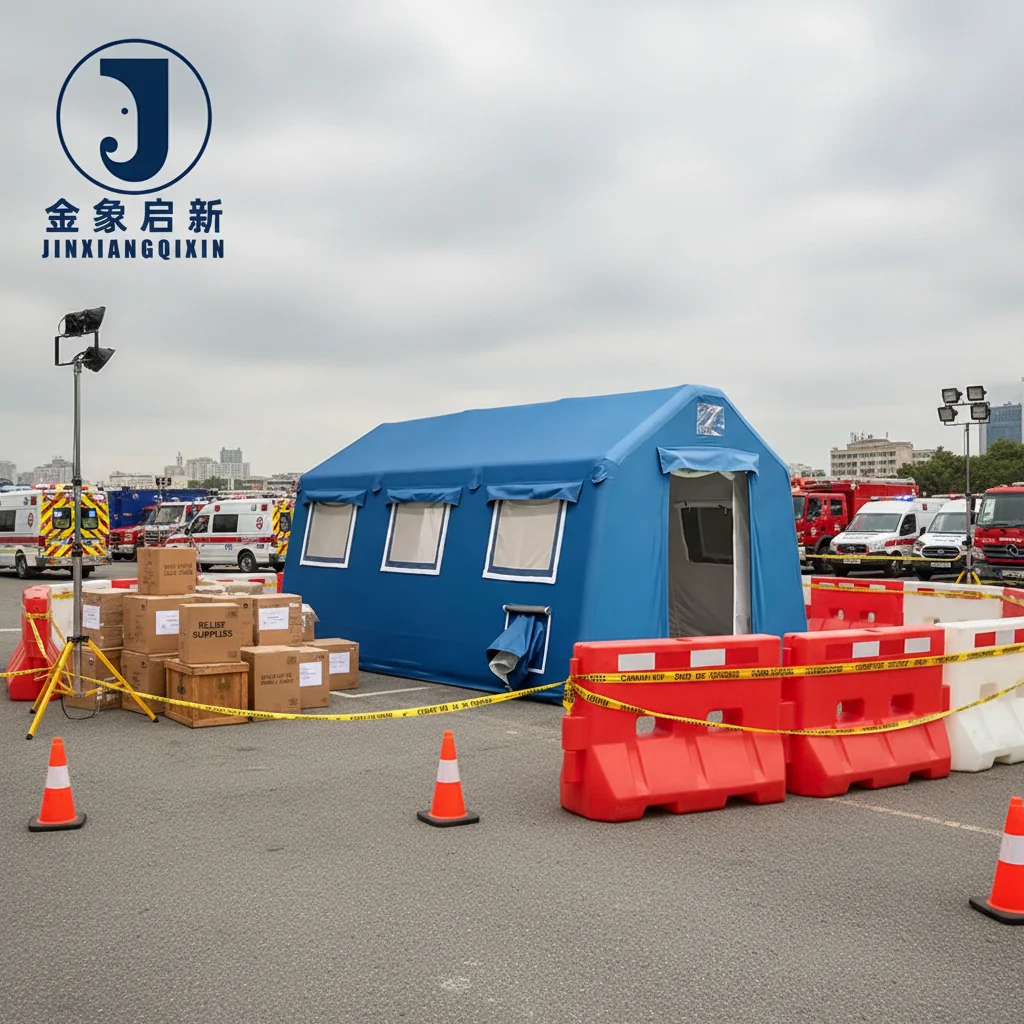
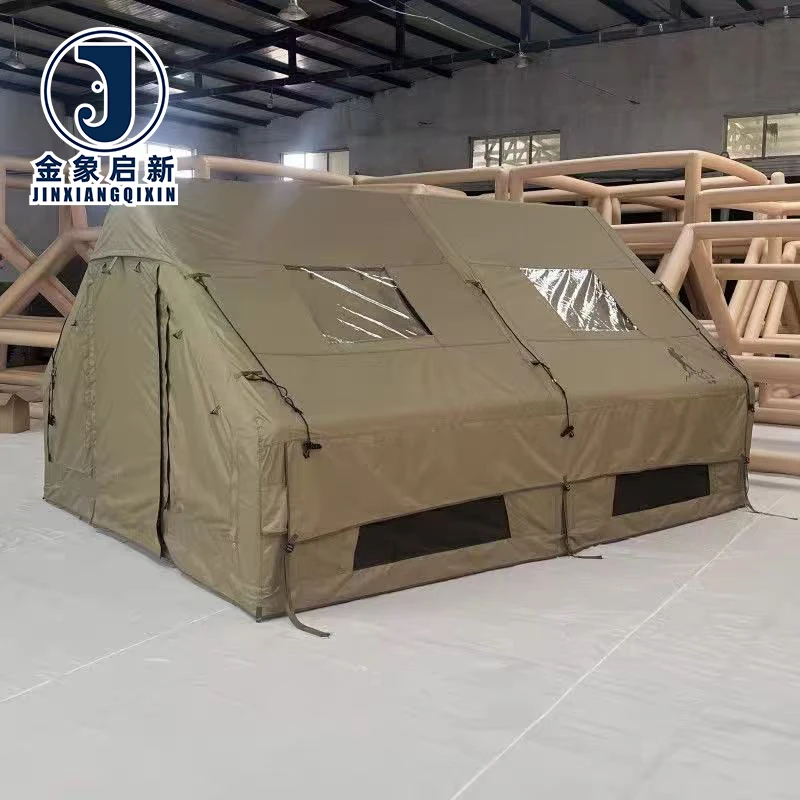
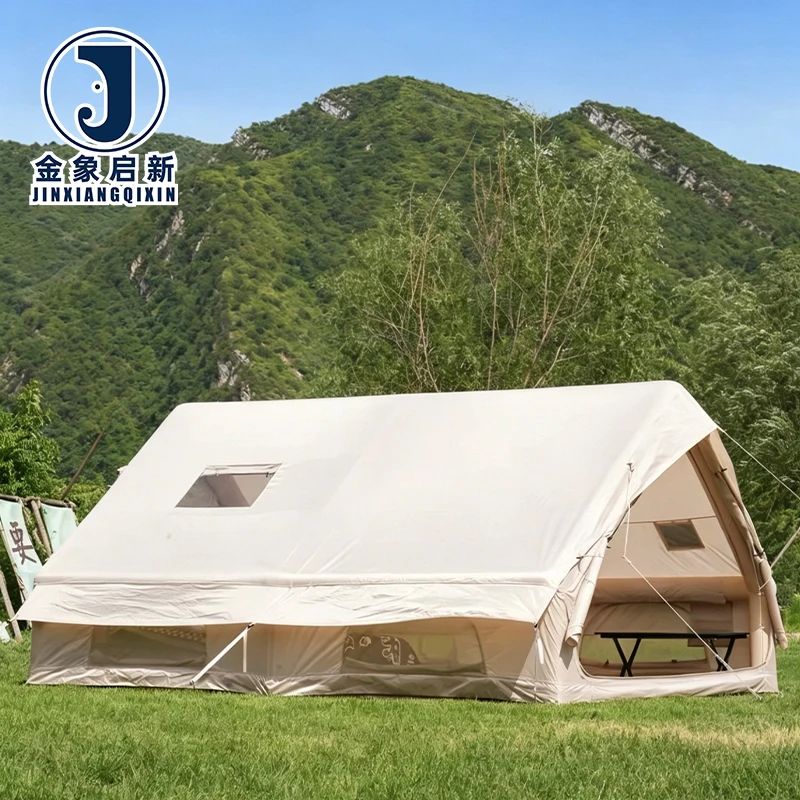
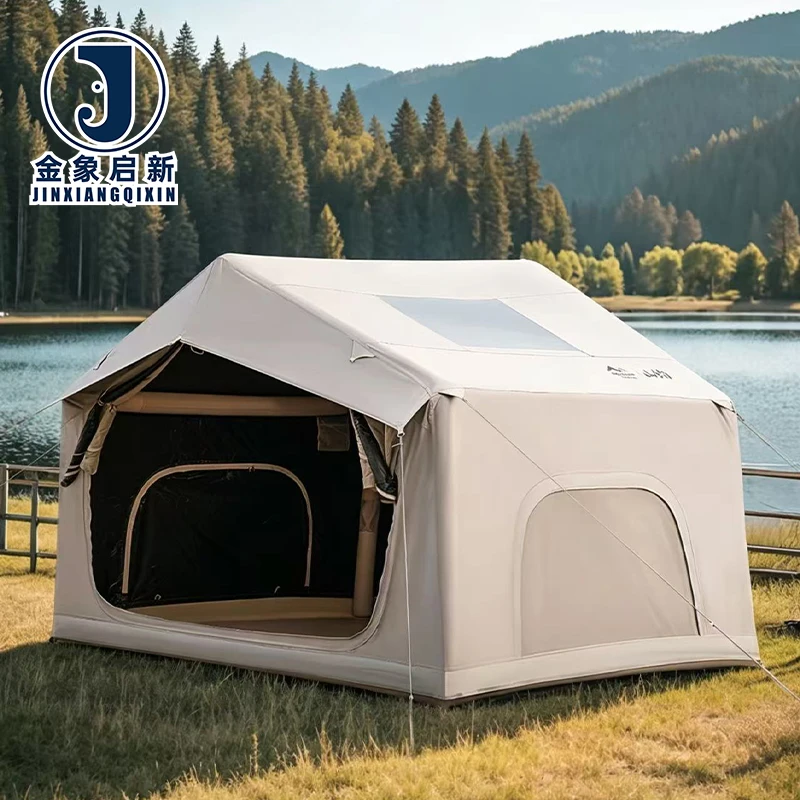
Fire-Rated Structural Fabric — PVC-coated membrane engineered to meet industrial fire compliance, backed by ISO-certified coating control and batch-traceable production.
Technical Specifications
| Parameter | Value |
|---|---|
| Product Type | Inflatable Tent Fabric |
| Core Material | PVC tarpaulin |
| Waterproof Rating | 3000 mm hydrostatic head |
| Fire Retardancy | Available in fire-retardant grades — confirm the grade required for your market |
| UV Resistance | UV-resistant formulation (test basis not stated in source) |
| Tear Resistance | Tear-resistant construction |
| Season Rating | 4-season deployment |
| Deployment Type | Quick automatic opening (inflatable frame) |
| Customization | OEM & ODM, sample customization, pattern printing |
| Production Lines | 3 full production lines |
| Processing Equipment | 36 sets of professional processing equipment |
| R&D Team | 10 technicians |
| Management Systems | ISO 9001, ISO 14001, ISO 45001, CE |
Application Suitability
| Application | Exposure & Requirement |
|---|---|
| Mining emergency response shelters | Particulate-laden air, rapid deployment, fire safety compliance underground and at surface sites |
| Aviation ground support structures | Fuel proximity, wind loading on membrane surfaces, strict airport fire codes |
| Tunnelling site command centers | High humidity, confined-space fire regulations, continuous ventilation interface |
| Industrial disaster recovery hubs | Prolonged outdoor exposure, chemical splash risk, multi-week occupancy |
Why "Fire Retardant" Means Nothing Without the Test Report Behind It
An inflatable tent marketed as fire retardant can still fail site inspection if the fabric lacks a grade tied to the local fire code. Compliance depends on the specific standard your project demands, not a generic label on the data sheet.
Industrial buyers regularly encounter membrane structures that pass initial quotation review but fail third-party fire testing when the certifying body asks for the underlying test method. Mining ventilation ducts, aviation temporary hangars, and tunnelling command tents each operate under different fire classification frameworks — DIN 4102, NFPA 701, or regional equivalents. [NEED_CITE: fire classification frameworks for temporary industrial structures] A fabric supplier that cannot produce a batch-specific test report matching your target standard creates schedule risk well beyond the material cost.
Membrane Compliance for Mining and Tunnelling
Inflatable tent structures used in mining and tunnelling environments must satisfy fire codes that address both the membrane surface and the inflatable frame tubing. The PVC fabric must resist ignition from welding sparks, equipment overheating, and electrical faults common in underground-adjacent operations. Fire-retardant grades available for this Inflatable Tent fire retardant fabric are formulated to self-extinguish once the ignition source is removed, reducing the chance of a membrane fire propagating through a temporary worksite.
Aviation and Specialist Structure Requirements
Aviation ground support applications impose additional layers of scrutiny because temporary hangars and maintenance shelters sit within controlled airside zones. Fire authorities typically require membrane materials to demonstrate limited flame spread and low smoke generation. [NEED_CITE: aviation temporary structure fire performance requirements] The inflatable tent fire retardant PVC supplied here can be produced with documentation packages aligned to project-specific certification pathways, allowing the contractor to submit material evidence during the planning approval stage.
Understanding the Waterproof-to-Breathability Trade-Off
The 3000 mm waterproof rating positions this fabric well above standard tarpaulin grades used for short-term covers, making it suitable for four-season inflatable shelters that face sustained rainfall and wind-driven moisture. Waterproof performance in inflatable structures depends not only on the coated surface but also on the welded seam integrity — a seam that fails before the fabric itself is a common failure mode in pressurised membrane structures. The UV-resistant formulation addresses the photodegradation pathway that causes PVC plasticiser migration and surface embrittlement after prolonged sun exposure. Tear resistance matters disproportionately in inflatable applications because the membrane carries internal air pressure loads; a puncture that propagates into a tear can collapse the entire structure. Fire-retardant treatment interacts with the PVC plasticiser system, so the balance between flame response and long-term flexibility must be managed at the compounding stage rather than added as a topcoat.
The Hidden Cost of Unverified Fire Documentation
When a membrane structure arrives on site without the fire test report the inspector requires, the contractor faces a binary choice: install at risk or hold the structure in storage while chasing paperwork. Both paths carry real cost. [NEED_CITE: project delays caused by non-compliant temporary structure materials] Storage fees, re-mobilisation of installation crews, and schedule penalties on downstream trades compound quickly. Worse, if the structure is installed and later found non-compliant during an audit, the removal and replacement cost dwarfs the original material spend. Batch-specific documentation — not a generic certificate downloaded from a website — is the only reliable protection against this exposure.
Why Source This Fabric Through Our Technical Process
Our 10-person R&D team handles material compounding adjustments when a project demands a specific fire-retardant grade or a custom membrane colour matched to corporate branding. Three full production lines running 36 sets of processing equipment give us the throughput to supply multiple inflatable tent units for large-scale disaster recovery deployments without sacrificing batch consistency. Every roll undergoes in-process QA at the coating stage, with dedicated QA and QC staff verifying coating weight and adhesion before the fabric moves to finishing. Sample development runs within days, allowing buyers to confirm fire-retardant response, weld behaviour, and colour accuracy before committing to bulk production. ISO 9001, ISO 14001, and ISO 45001 management systems govern the entire workflow, producing an auditable documentation trail from raw material receipt to pre-shipment inspection.
Documentation & Verification
- Material specification sheet stating PVC formulation, coating weight, and 3000 mm waterproof rating
- Fire-retardant test report matched to the grade specified for your target market
- ISO 9001, ISO 14001, ISO 45001, and CE certificates for cross-border procurement compliance
- Pre-shipment inspection record covering coating adhesion, dimensional accuracy, and weld seam integrity
- Certificate of origin and customs documentation package for international industrial shipments
Fabrication, Handling & Storage
- Heat-weld seams at temperatures validated for the specific fire-retardant PVC compound to prevent delamination under air pressure load
- Reinforce all anchor and tie-down points with additional PVC patches before inflation testing
- Store rolls vertically on pallets in a dry, shaded area to prevent compression creasing of the coated surface
- Allow the membrane to reach ambient temperature before unfolding in cold conditions to avoid coating micro-cracking
- Use only PVC-compatible cleaners — solvent-based agents can strip plasticiser and compromise fire-retardant performance
What We Need to Move Your Enquiry Forward
Share the fire safety standard your project must satisfy and the jurisdiction where the structure will be deployed, so we can align the test documentation before production begins. Confirm the membrane dimensions, required colour, and whether you need pattern printing for project branding or wayfinding signage. Specify the annual volume and whether you require finished inflatable units or roll stock for your own fabrication line.
Frequently Asked Questions
Q: What fire-retardant grades are available for this inflatable tent fabric?
A: We produce PVC membrane in multiple fire-retardant formulations. The specific grade depends on your target market’s fire code — DIN 4102, NFPA 701, or regional equivalents. Share your compliance requirement at enquiry stage so we can match the compound and include the correct test report with your shipment.
Q: How is batch-to-batch colour consistency controlled across multiple tent orders?
A: Each production run references a master colour standard, and our QA team verifies shade match under controlled lighting before the roll leaves the coating line. For multi-roll orders, we retain a reference swatch so subsequent batches can be matched against the original approval sample.
Q: Can the membrane dimensions and printing be customised for project branding?
A: Yes. Our R&D team develops cut patterns and print layouts based on your inflatable frame geometry and branding artwork. Custom samples are produced for dimensional and visual approval before bulk fabrication begins, ensuring the finished structure meets both fit and appearance requirements.
Q: What documentation is provided for international industrial procurement?
A: Each shipment includes a material specification sheet, fire-retardant test report matched to the agreed grade, ISO and CE certificates, pre-shipment inspection records, packing list, and certificate of origin. Additional project-specific documentation can be arranged at the enquiry stage.