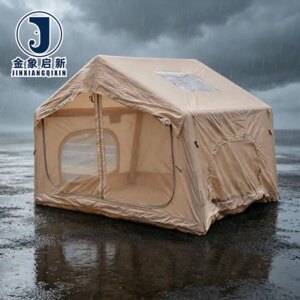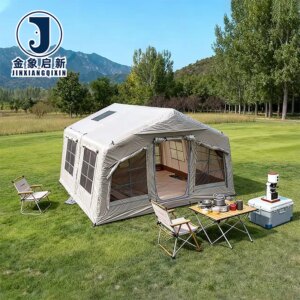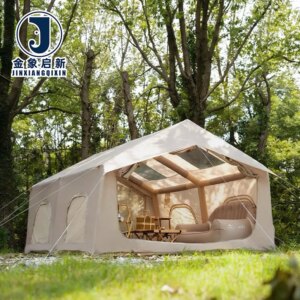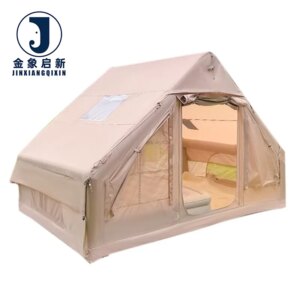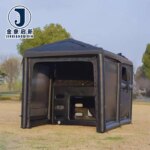
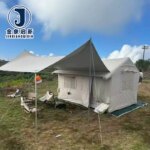
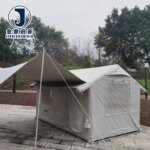
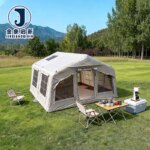
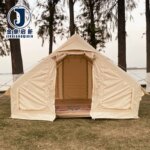
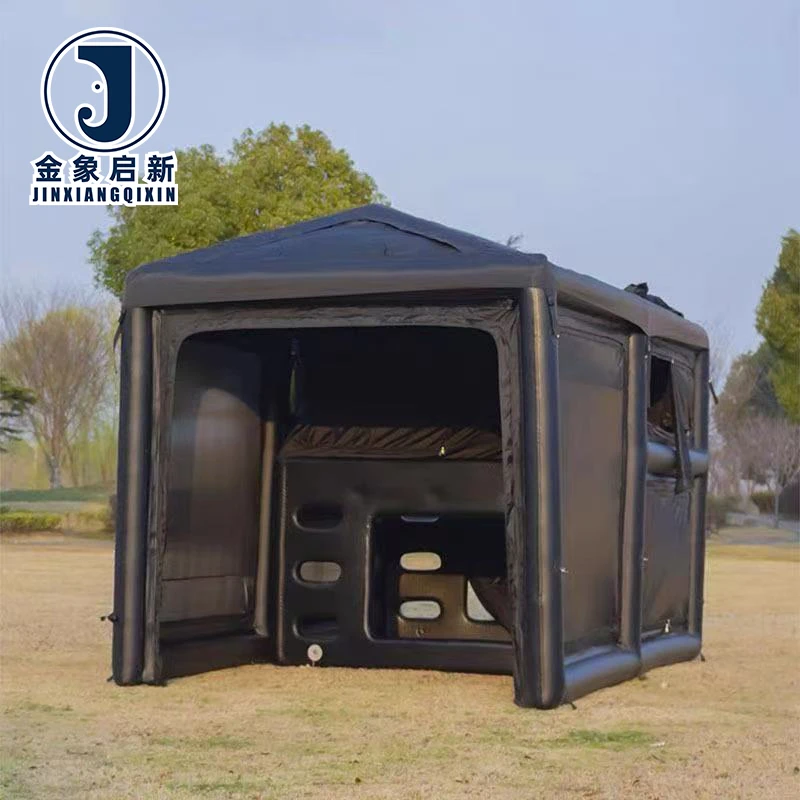
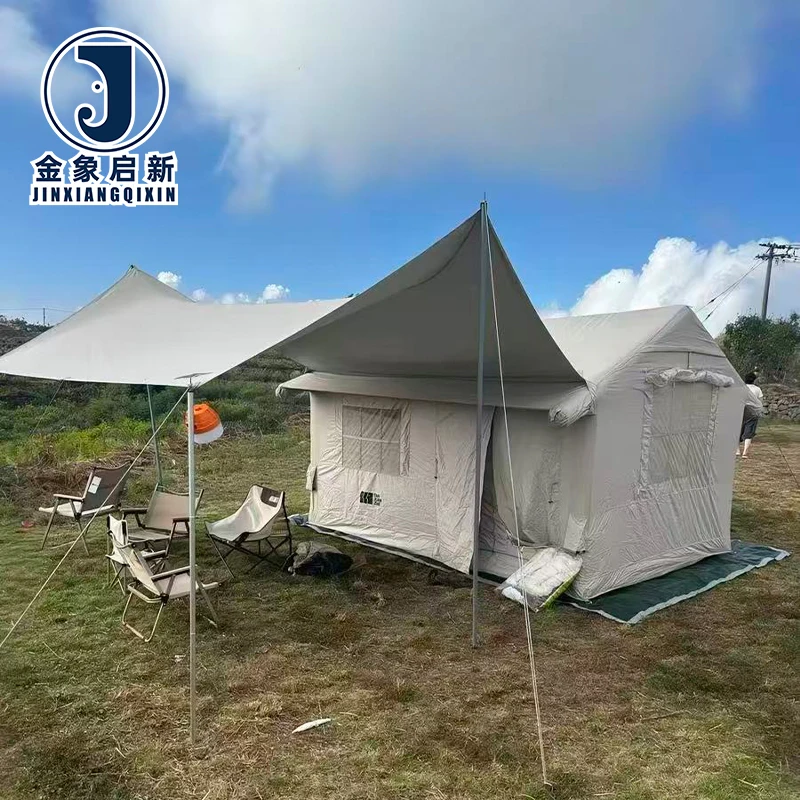
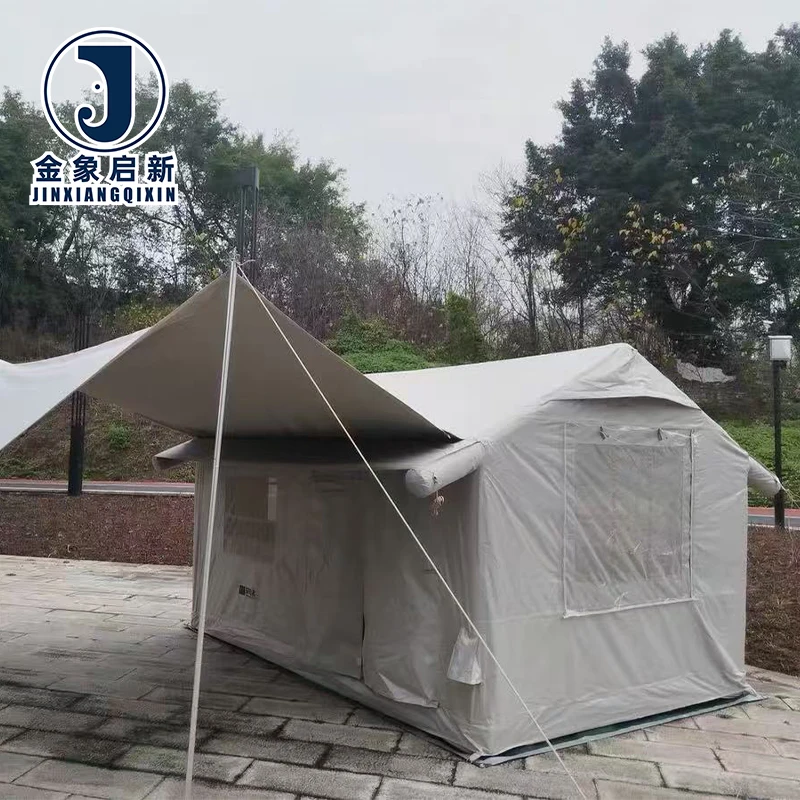
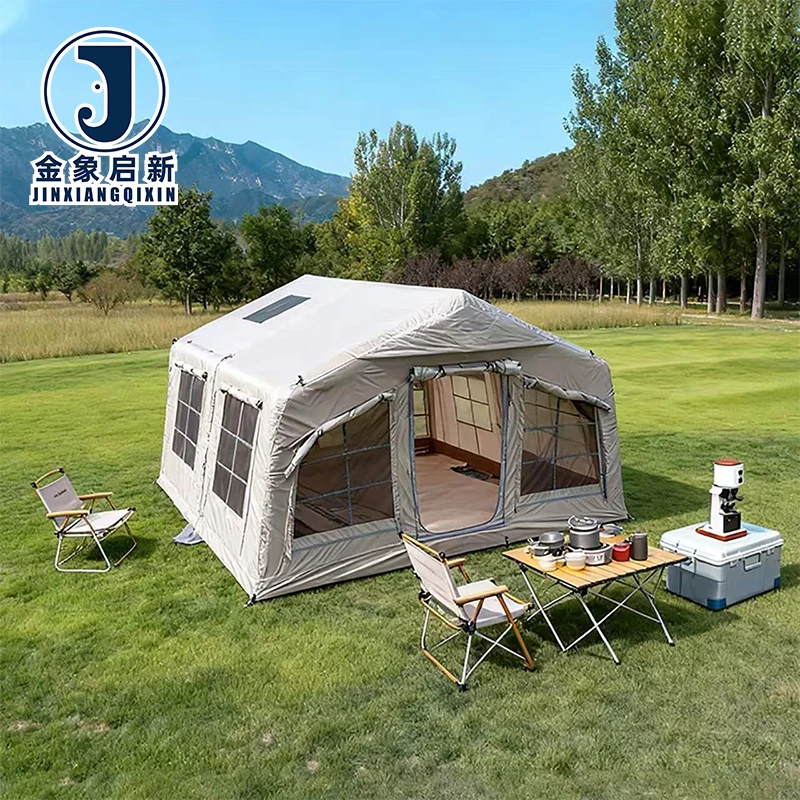
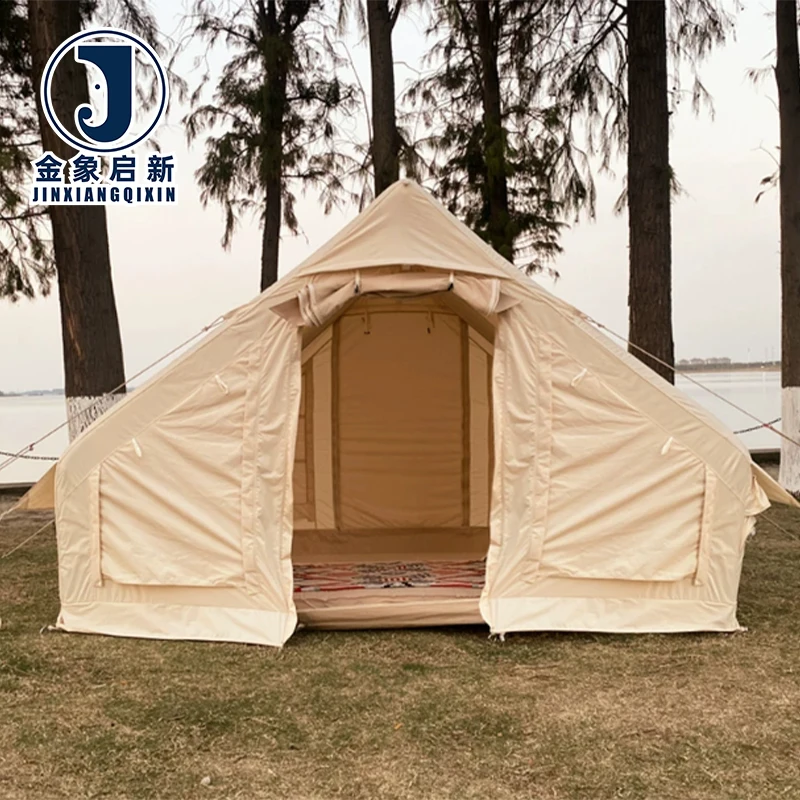
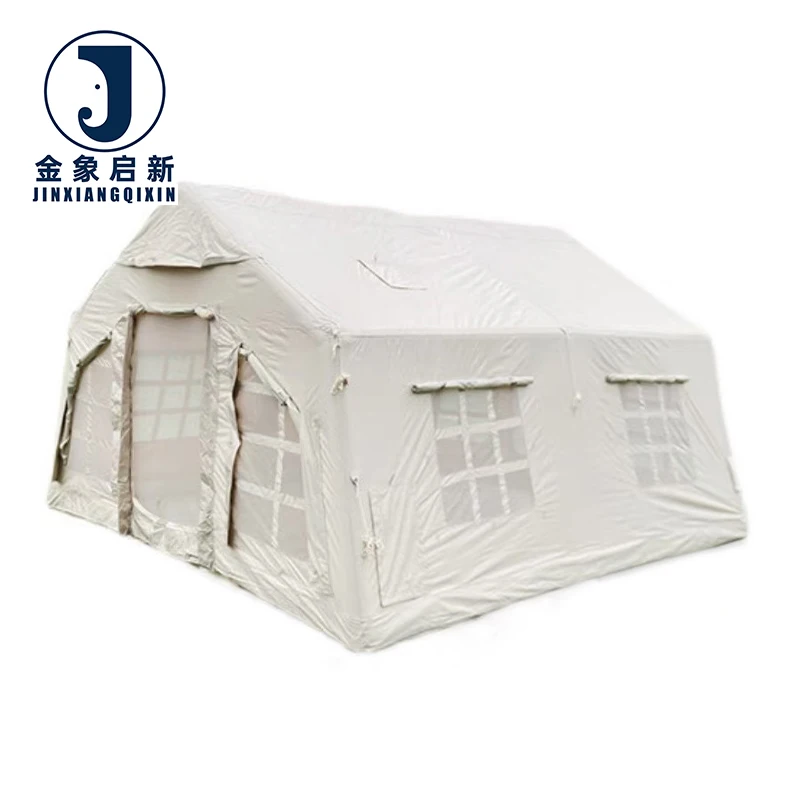
Proven Fire-Retardant Compliance — Every roll of inflatable tent fabric ships with ISO and CE documentation, ensuring site audit readiness from the moment it arrives at your mining or construction facility.
Technical Specifications
| Parameter | Value |
|---|---|
| Product Type | Inflatable Tent |
| Core Material | PVC knife-coated tarpaulin |
| Key Performance | Waterproof, UV-resistant (test basis not stated), Tear-resistant |
| Deployment Mechanism | Quick automatic opening |
| Product Forms | Single Layer Construction, Extended Type |
| Seasonal Rating | Four Seasons |
| Flame Retardant | Available in flame retardant grades — confirm the grade required for your market |
| Anti-Static | Available in anti-static grades — confirm the surface resistance standard required |
| Customization | OEM & ODM, sample customization, pattern printing, size adjustment, material thickness variation |
| Standards | ISO9001, ISO14001, ISO45001, CE |
Application Suitability
| Application | Exposure & Requirement |
|---|---|
| Mining and tunnelling temporary shelters | Dust ingress, high humidity, strict fire safety and anti-static compliance, rapid deployment needs |
| Aviation ground support structures | Fuel vapour environments, anti-static surface resistance, wind load resistance |
| Industrial emergency response logistics | All-weather outdoor exposure, rapid inflation and deflation cycles, repeated relocation |
| Commercial membrane structure projects | Long-term UV exposure, tensile load from inflation pressure, aesthetic surface consistency |
Why "Fire Retardant" on a Spec Sheet Means Nothing Without a Grade
Inflatable tent fabric must carry a named fire classification to pass site safety audits — a generic claim will not satisfy a mine safety inspector or an aviation authority.
When a membrane structure arrives on a tunnelling site without a recognised fire classification, work stops until the material is either tested locally or replaced. The delay compounds daily standby costs for crews and equipment. Contractors who specify based on a quotation line that simply says "fire retardant" routinely face rejection at the compliance gate. The same applies to anti-static performance: without a measured surface resistance value, the fabric cannot be cleared for use near combustible dust or fuel handling areas. [NEED_CITE: fire classification requirements for temporary structures on mining sites]
Rapid-Deployment Shelter Fabric for Time-Critical Operations
Mining and tunnelling contractors operate under schedules where shelter availability directly affects shift productivity. This inflatable tent fabric is engineered around a quick automatic opening mechanism, allowing ground crews to establish weatherproof enclosures without specialised rigging teams. The four-season rating means the material maintains structural integrity whether inflated in sub-zero winter conditions or under direct summer solar load, removing the need to stock separate summer and winter membrane grades.
Compliance-First Material for Hazardous Environments
In aviation refuelling zones, underground tunnelling faces, and chemical handling areas, inflatable structures must meet both fire-retardant and anti-static thresholds before they are permitted on site. This inflatable tent fabric is available in certified grades aligned with recognised standards — request the specific test report that matches your regulatory jurisdiction before approving the purchase order. The PVC knife-coated construction provides the coating adhesion necessary to maintain consistent surface treatment performance across the entire inflated envelope, preventing localised weak points where fire or static discharge could initiate. [NEED_CITE: anti-static surface resistance standards for inflatable structures in hazardous zones]
Reading the Coating and Base Fabric Relationship
The tear resistance of any inflatable structure depends on how the base fabric denier and weave density interact with the PVC coating weight — none of these values can be evaluated in isolation. Knife coating forces the PVC compound into the interstices of the woven polyester, creating a mechanical lock that directly improves peel strength at welded seams. This matters at inflation stress points where the membrane flexes under internal pressure. A heavier coating does not automatically mean higher tensile strength if the base fabric has low thread count; conversely, a dense base fabric with insufficient coating penetration will delaminate at the heat-weld line before the fabric itself fails. For membrane structures that undergo repeated inflation and deflation cycles, the coating-to-fabric bond is the single most critical durability factor. [NEED_CITE: coating adhesion test methods for PVC-coated technical textiles per ISO 2411]
The Cost of Specifying on Quotation Weight Alone
When the inflatable tent fabric arrives lighter than the GSM stated on the quotation, the consequences cascade through the entire project. Under-weight coating reduces the material’s ability to hold inflation pressure, forcing continuous blower operation and higher fuel consumption. Welded seams on thinner coating lack the thermal mass needed for a reliable heat bond, and seam failure at flex points is the most common field defect reported on inflatable shelters. For contractors operating in regulated environments, a material that does not match its stated fire classification test sample can invalidate the entire site safety certification. These failures are not visible at the receiving dock — they appear weeks into deployment when the membrane is under sustained load. [NEED_CITE: weld seam failure analysis in PVC-coated inflatable structures]
Why Source Inflatable Structure Fabric Through This Facility
Nearly three decades of PVC coated fabric production have concentrated process control specifically on coating weight accuracy and adhesion consistency — the two parameters that determine whether an inflatable membrane performs as specified. Three full production lines and 36 sets of professional equipment provide the capacity to fulfil large-volume membrane orders without splitting production across external subcontractors, maintaining batch-to-batch uniformity. A dedicated 10-technician R&D team handles material selection, sample development, and pattern printing specifications in-house, reducing the sampling cycle for custom inflatable structure projects. Every production stage includes QA/QC checkpoints, and 100% pre-shipment inspection covers coating weight verification and weld seam integrity before any roll leaves the facility.
Documentation & Verification
- Material specification sheet stating base fabric denier, weave construction, coating method, and verified GSM
- Fire-retardant and anti-static test reports matched to the grade specified on the purchase order
- ISO9001, ISO14001, ISO45001, and CE certificates included with every shipment
- Pre-shipment inspection record covering coating adhesion, waterproof integrity, and visual consistency
- Roll packing list with individual roll identification for traceability on multi-roll membrane projects
- Certificate of origin and customs documentation prepared for cross-border project logistics
Fabrication, Handling & Storage
- Heat-weld temperature and dwell time must be calibrated to the specific PVC coating thickness before production runs begin
- Reinforce inflation port and anchor point areas with additional PVC patches to distribute stress across the knife-coated surface
- Store rolls horizontally on pallets in a dry environment to prevent permanent creasing of the PVC coating layer
- Allow cold-stored rolls to reach ambient temperature before unrolling to avoid cracking the PVC surface coating
- Use only PVC-compatible cleaners on the membrane surface — solvent-based products will degrade the knife-coated finish
- Field repairs require compatible PVC repair compound matched to the coating chemistry of the inflatable tent fabric
Project Specification Guidance for Inflatable Structure Contractors
To receive an accurate material recommendation, share the inflation dimensions, operating temperature range, and the specific fire-retardant or anti-static classification your site authority requires. If your project involves custom membrane shapes or pattern-printed branding, indicate the finished panel sizes so the R&D team can assess roll width utilisation and seam placement. Confirm whether you need supply by the roll for your own fabrication, or fully cut and welded inflatable structure components ready for deployment.
Frequently Asked Questions
Q: What fire-retardant grade is available for inflatable tent fabric, and does it meet mining site compliance?
A: The fabric is available in multiple flame retardant grades — the specific grade must match your site’s regulatory framework. Request the applicable test report before procurement approval so your safety officer can confirm alignment with local mining or tunnelling fire safety codes. Grade selection depends on whether the structure is classified as temporary or semi-permanent under your jurisdiction.
Q: How is anti-static performance verified for inflatable structures in hazardous environments?
A: Anti-static performance is measured by surface resistance testing at the production stage. For operations near combustible dust or fuel vapours, provide the specific surface resistance range your site safety standard requires. Test data is included in the shipment documentation package so it can be submitted directly to your compliance team during site audit preparation.
Q: What OEM and ODM customization options exist for project-specific inflatable structures?
A: Customization covers dimensional adjustments, material thickness variation, and pattern printing for branding or safety identification. The 10-technician R&D team develops samples based on your engineering drawings, and sample approval is required before bulk production begins. Custom colour matching and surface finish options are available — request physical samples to verify appearance under actual site lighting conditions.
Q: How does sample approval and pre-shipment inspection work for industrial inflatable tent orders?
A: Samples are developed within days of specification confirmation, allowing you to validate material performance and fabrication compatibility early. Once the sample is approved, full production proceeds with QA/QC checks at every stage. A 100% pre-shipment inspection covers coating weight, waterproof integrity, and dimensional accuracy before dispatch, with inspection records included in the documentation package.
Q: What documentation is provided for site audit and regulatory compliance?
A: Each shipment includes the material specification sheet, fire-retardant and anti-static test reports where applicable, ISO and CE certificates, pre-shipment inspection records, roll packing list, and certificate of origin. All documents reference the production batch for full traceability. If your project authority requires additional certification formats, communicate the exact document list needed before the order enters production.