


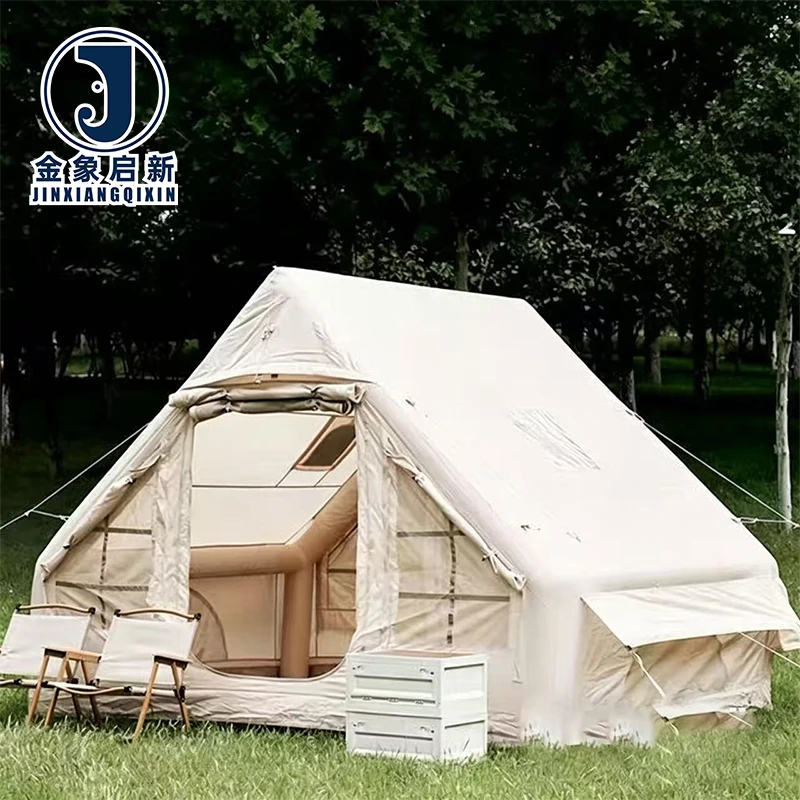
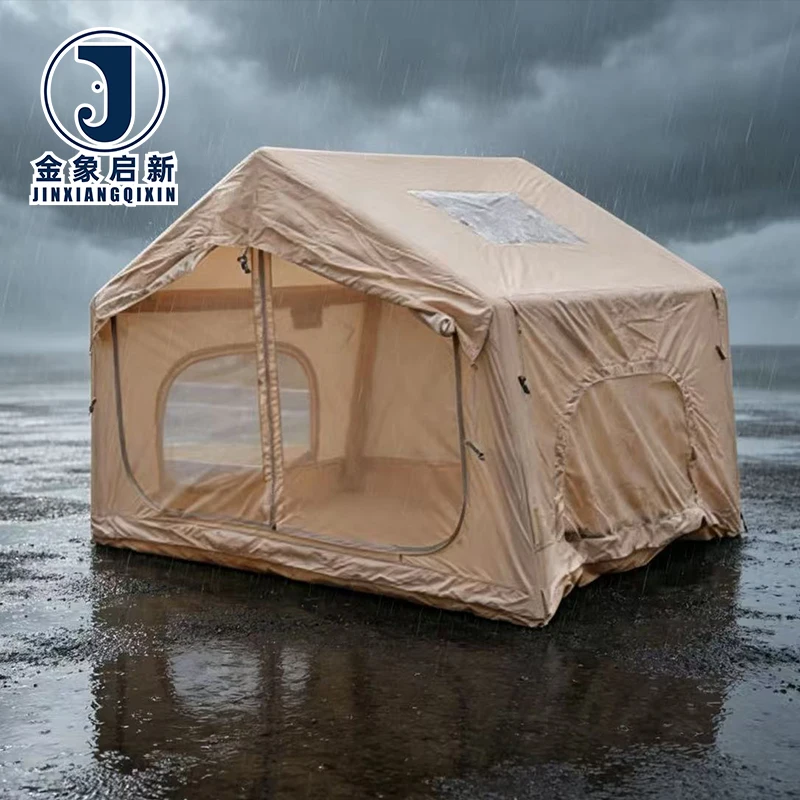
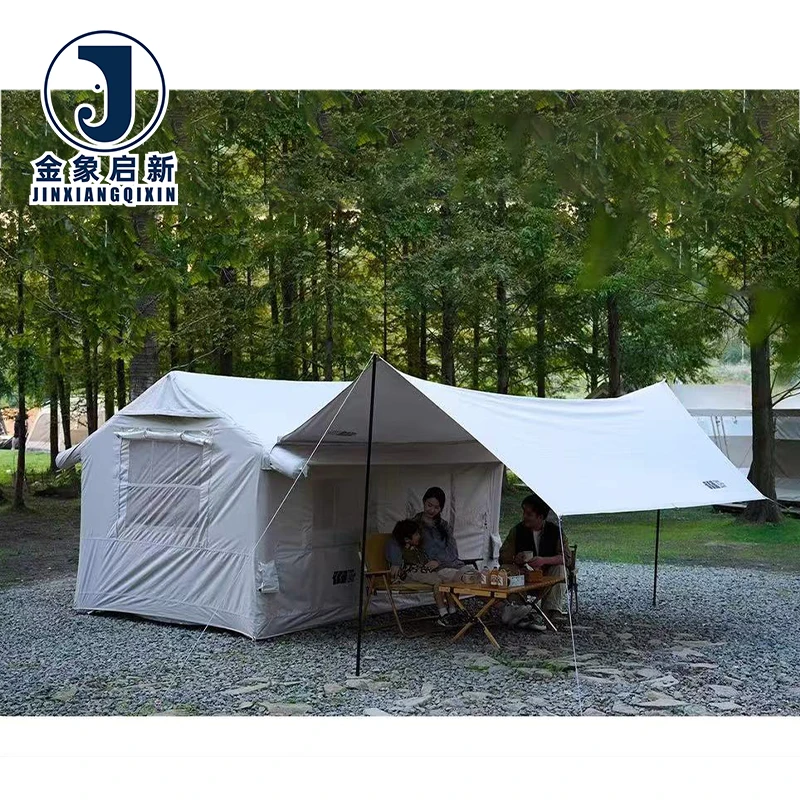
Specialist Fabric Focus — Nearly 30 years of industrial ventilation and technical fabric production, bringing the same compliance discipline from mining ductwork to inflatable temporary shelters.
Technical Specifications
| Parameter | Value |
|---|---|
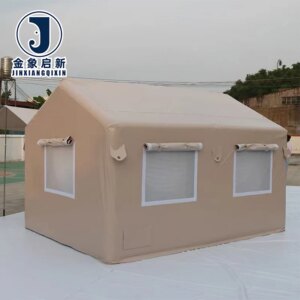
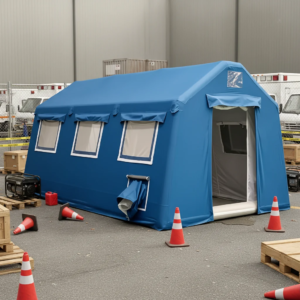
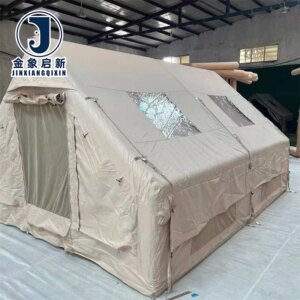
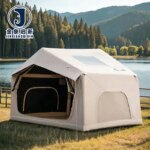
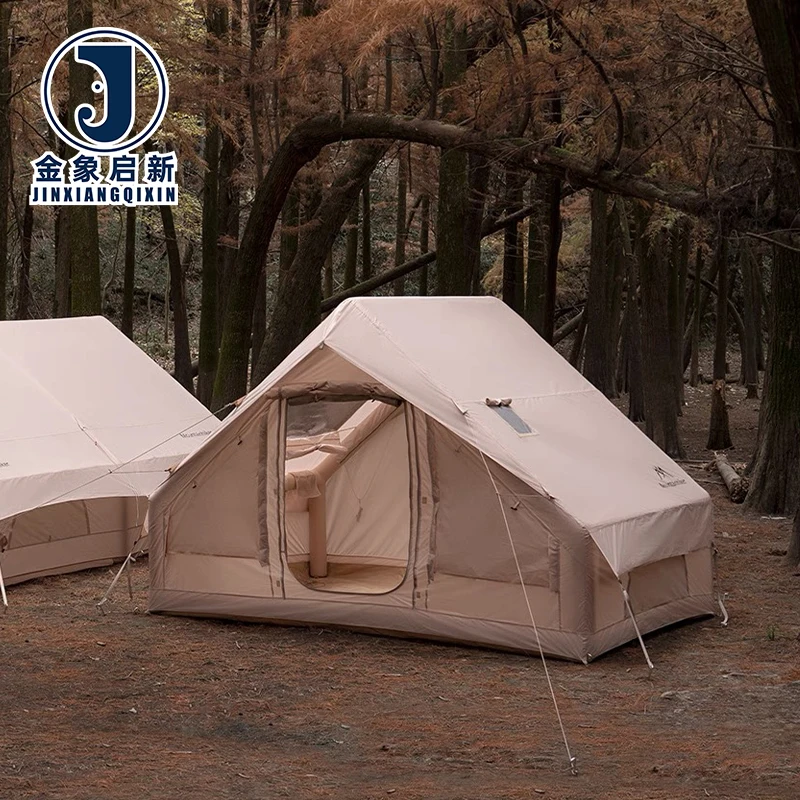
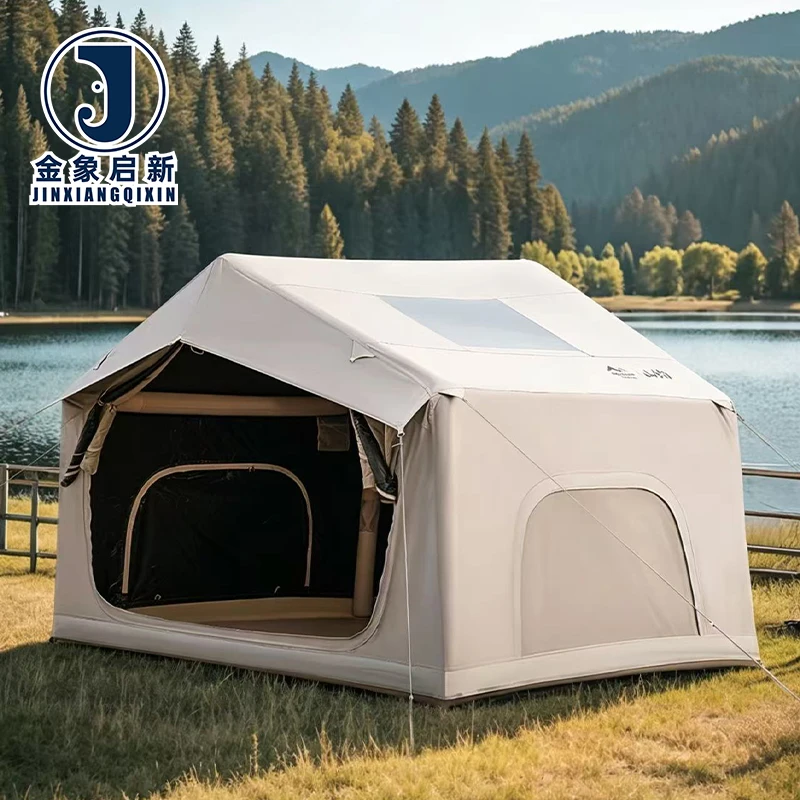
| Product Type | Inflatable Camping Tent |
| Core Material | PVC tarpaulin |
| Construction | Single-layer |
| Season Rating | Four-season |
| Deployment | Quick automatic opening |
| Water Resistance | Waterproof coated construction |
| UV Resistance | UV-resistant treatment (test basis not stated) |
| Fire Retardancy | Fire-retardant (grade not stated) |
| Static Control | Anti-static (standard not stated) |
| Tear Resistance | Tear-resistant |
| Capacity | 4-6 Person |
| OEM / ODM | Sample customization, pattern printing, custom dimensions, material thickness adjustments available |
| Certifications | ISO9001, ISO14001, ISO45001, CE |
Application Suitability
| Application | Exposure & Requirement |
|---|---|
| Mining and tunnelling site shelters | Dust, moisture, confined ventilation zones; fire-retardant and anti-static compliance mandatory on site |
| Aviation ground-support structures | Electrostatic discharge sensitivity near avionics and fuel handling; rapid deployment between flights |
| Remote construction crew accommodation | Variable climatic zones, sustained wind and rain, repeated relocation across project phases |
| Outdoor event temporary enclosures | High foot traffic, UV exposure during multi-day festivals, quick strike after event close |
| Beach and coastal operations | Salt spray, sand abrasion, high UV index, wind-driven moisture ingress |
Why Certified Fire-Retardant and Anti-Staric PVC Inflatable Tent Fabric Matters on Regulated Sites
Compliance documentation traceable to each batch is the only proof a site safety officer will accept.
Inflatable tents deployed on mining, tunnelling, or aviation sites sit within regulated environments where ventilation-adjacent structures must meet the same fire and static standards as the ductwork feeding them. Buyers routinely receive tent fabric described as fire-retardant with no grade attached, then face rejection at the site audit because the test report references a standard the local inspector does not recognise. Anti-static claims follow the same pattern — the surface is treated, but without a measured resistance value on the pre-shipment record, the fabric cannot be cleared for use near sensitive equipment [NEED_CITE: anti-static surface resistance testing standards for coated fabrics]. Specifying Inflatable Tent Fabric fire retardant anti-static certified means requiring the test report before the roll ships, not chasing documentation after delivery.
Fire and Static Compliance Built Into the Fabric, Not Added as Paperwork
The PVC tarpaulin core is produced with fire-retardant chemistry integrated during the coating stage rather than applied as a topical finish. This approach preserves the treatment through repeated inflation cycles, field cleaning, and exposure to the mechanical abrasion that accompanies site relocation. Available fire-retardant grades can be matched to the regulatory framework your destination market requires — confirm the grade needed before sampling so the test report aligns with the inspector’s expectations.
Anti-static treatment addresses environments where inflatable shelters stand near sensitive electronics, fuel systems, or dust-laden airflows. The single-layer construction reduces static accumulation points compared to multi-layer assemblies, and the surface resistance value can be measured and documented per batch. Inflatable Tent Fabric fire retardant anti-static certified is only meaningful when that measurement appears on the inspection record accompanying your shipment [NEED_CITE: DIN 4102 and NFPA 701 fire classification frameworks for temporary structures].
Balancing Structural Rigidity With Portability in Single-Layer Design
Inflatable air-beam frames demand fabric that holds shape under internal pressure while remaining light enough for one crew to deploy. The single-layer PVC tarpaulin construction strikes this balance by relying on coating adhesion and base fabric integrity rather than stacked plies. Quick automatic opening further reduces on-site labour — the structure inflates and reaches operational rigidity within minutes, critical when crews face weather windows or time-sensitive event schedules.
Four-season design extends deployment beyond fair-weather windows. UV-resistant treatment slows polymer degradation during prolonged sun exposure, and the waterproof coated surface prevents moisture intrusion during sustained rain. Tear-resistant properties protect against the punctures and snags that occur when the shelter is dragged across gravel, concrete, or rough ground during relocation.
How Coating Method and Base Fabric Interact Under Inflation Pressure
The PVC coating method directly determines how the fabric behaves when the air-beam frame pressurises. Knife-over-edge and dip coating produce different adhesion profiles, which in turn affect weld seam strength — the point where most inflatable structure failures originate. When coating weight and base fabric denier are matched correctly, the seam fails only after the fabric itself gives way. A mismatch produces the opposite: the weld peels while the body of the tent remains intact [NEED_CITE: tensile and tear test methods for coated fabrics per ISO 1421].
Base fabric weave density controls how tears propagate once initiated. A higher thread count in the warp and weft limits the tear path to a shorter run, preventing a small puncture from unzipping across an entire panel. The single-layer construction means there is no backup ply to arrest a running tear, making the base fabric specification more consequential than it would be in a laminated assembly.
When the Tent Fails Inspection Before It Ever Inflates
A fire-retardant claim without a grade on the test report leads to site rejection, forcing the project team to source replacement fabric under emergency lead times and absorb the downtime cost. Anti-static fabric that arrives without a documented surface resistance reading cannot be signed off by the site safety officer, leaving the shelter sitting on the tarmac while paperwork catches up. Batch-to-batch variation in coating weight produces inconsistent inflation rigidity — one tent holds shape in wind while the next sags under the same pressure, and the fault is only discovered after both are deployed side by side [NEED_CITE: pre-shipment inspection practices for coated technical fabrics].
Colour drift across rolls in a multi-shelter order creates a visible mismatch once the structures stand adjacent on site, requiring rework or acceptance of an unprofessional appearance at a client-facing event.
Production Capacity and Compliance Infrastructure Behind This Fabric
Three full production lines and 36 sets of professional processing equipment support volume orders for multi-site deployments without the bottlenecks that delay smaller operations. Dedicated QA and QC staff inspect every production stage, not just final packing, catching coating inconsistencies before they reach the cutting table.
A 10-person R&D team handles custom dimensions, air-beam sleeve configurations, and pattern printing specifications, developing pre-production samples within days so the buyer can verify fit and function before committing the full order. ISO9001, ISO14001, ISO45001, and CE certifications are maintained under active audit schedules, and the certificates are available for compliance verification during your site audit.
Inflatable Tent Fabric fire retardant anti-static certified from this facility ships with documentation traceable to each batch — the test report, the inspection record, and the certificate of origin all reference the same production run [NEED_CITE: ISO management system standards for coated fabric manufacturing].
Documentation & Verification
- Material specification sheet stating coating type, base fabric construction, and treatment options per batch
- Fire-retardant test report issued per batch referencing the standard applicable to your destination market
- Anti-static surface resistance measurement recorded on pre-shipment inspection documentation
- ISO9001, ISO14001, ISO45001, and CE certificates available for site audit and customs review
- Pre-shipment inspection record with batch traceability linking each roll to its production run
- Certificate of origin and customs support documentation included with every export shipment
Fabrication, Handling & Storage
- Hot-air welding parameters must match the PVC coating formulation to prevent seam failure under inflation pressure
- Store rolls upright on pallets in dry, shaded conditions to avoid permanent creasing in the single-layer fabric
- Allow cold-stored fabric to reach ambient temperature before unrolling to prevent coating crack damage
- Use PVC-compatible cleaners only; solvent-based products degrade the fire-retardant and anti-static treatments
- Air-beam sleeve seams require reinforced welding passes to withstand repeated inflation and deflation cycles
- Repair minor field punctures with PVC-compatible adhesive patches matching the coating weight of the base fabric
What We Need to Quote Your Requirement
Provide the deployment environment, the fire-retardant grade or anti-static standard your local authority requires, and the number of units in your initial order. If custom dimensions or air-beam sleeve configurations are needed, share the frame drawing or target inflated dimensions so the sample can be developed to match.
Frequently Asked Questions
Q: What fire-retardant grade does the inflatable tent fabric meet, and can it be matched to my local regulation?
A: The fabric is available in fire-retardant grades aligned with standards such as M2, B1, NFPA 701, and DIN 4102. Provide your destination market’s required standard at inquiry stage so the correct grade is formulated and a batch-specific test report is issued with your shipment.
Q: How is anti-static performance verified, and what surface resistance value is guaranteed?
A: Anti-static treatment is measured as surface resistance and recorded on the pre-shipment inspection document for each batch. Share the resistance range your site safety protocol requires, and the production team will confirm the achievable value before sampling begins.
Q: Can custom dimensions and air-beam sleeve configurations be developed with pre-production samples?
A: Yes. The 10-person R&D team develops samples incorporating your specified dimensions, sleeve placements, and any pattern printing requirements. Samples are produced within days so you can verify structural fit and inflation behaviour before the full production run is committed.
Q: What documentation ships with each order for site safety audits and customs clearance?
A: Every shipment includes a material specification sheet, fire-retardant test report, anti-static measurement record, ISO and CE certificates, pre-shipment inspection record, roll packing list, and certificate of origin. All documents reference the same batch number for full traceability.
Q: How does batch-to-batch consistency hold across large-volume orders for multi-site deployments?
A: Three production lines and in-process QA at every coating stage maintain consistent coating weight, colour, and treatment performance across rolls. The pre-shipment inspection record documents per-roll measurements, so you can verify consistency before the containers leave the facility.