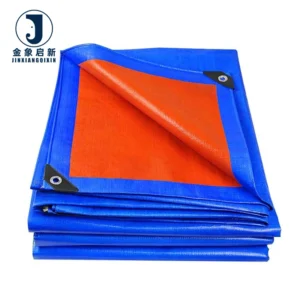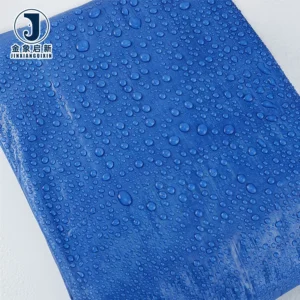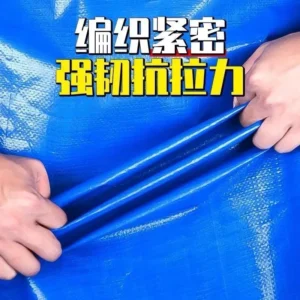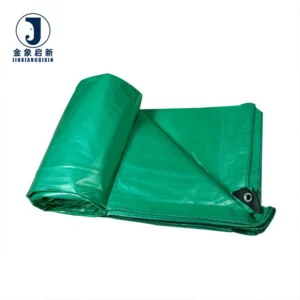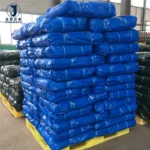
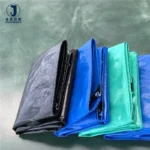

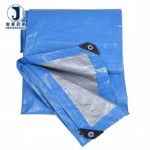

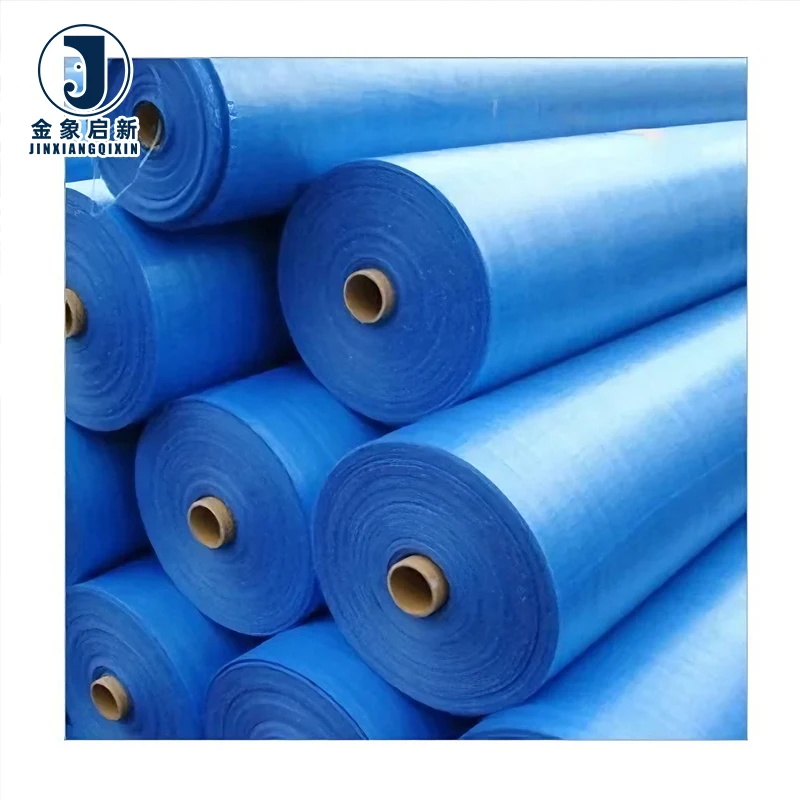
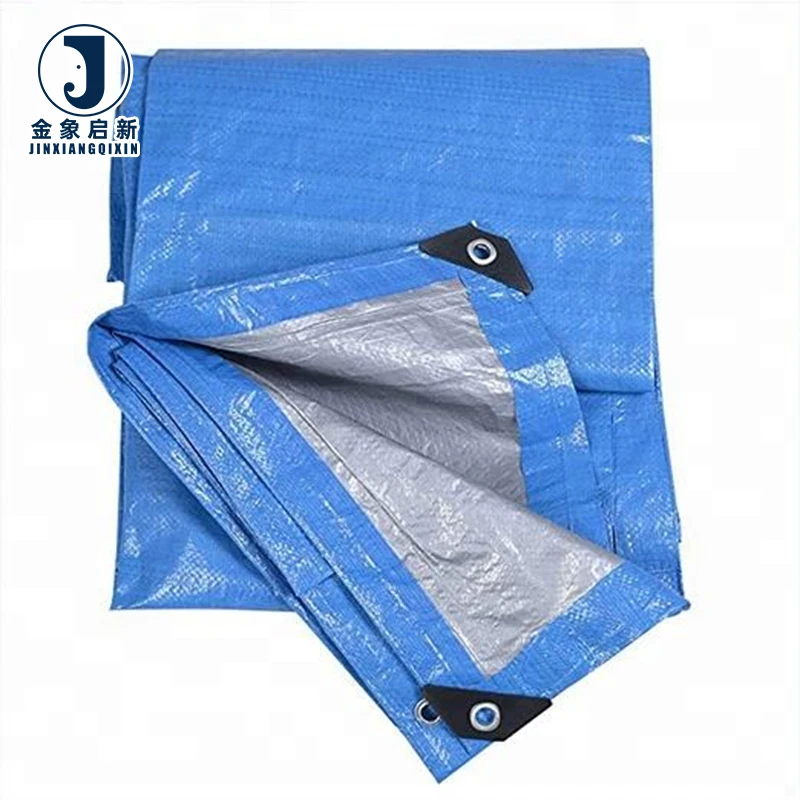
Coating Consistency — Every roll of PE Tarpaulin undergoes in-line weight verification across all three full production lines before it reaches pre-shipment inspection.
Technical Specifications
| Parameter | Value |
|---|---|
| Product Type | PE Tarpaulin |
| Material | Polyethylene (PE) |
| Weight Range | 40–500 g/m² |
| Thickness (Lightweight) | 0.18–0.22 mm |
| Thickness (Medium) | 0.22–0.28 mm |
| Thickness (Heavy-Duty) | 0.30–0.35 mm |
| Knitting Density (Lightweight) | 8×8 |
| Knitting Density (Medium) | 10×10 |
| Knitting Density (Heavy-Duty) | 12×12 |
| Tensile Strength (Lightweight) | Meridian 300–500 / Latitude 250–450 N/5cm |
| Tensile Strength (Medium) | Meridian 500–800 / Latitude 400–700 N/5cm |
| Tensile Strength (Heavy-Duty) | Meridian 900–1200 / Latitude 700–1000 N/5cm |
| Mesh Weave | 5×5 to 20×20 |
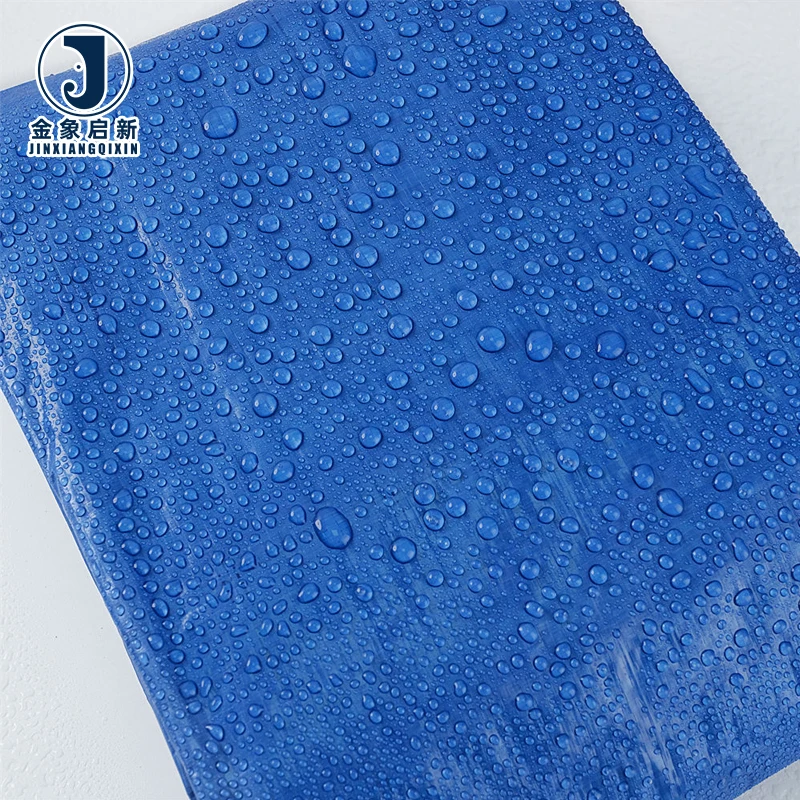
| Water Resistance | Double waterproof surfaces, reinforced corners |
| UV Treatment | Available — confirm the grade required for your market |
| Fire Retardant | Available in fire-retardant grades — confirm the grade required for your market |
| Anti-Static Treatment | Available — confirm certification required for your site |
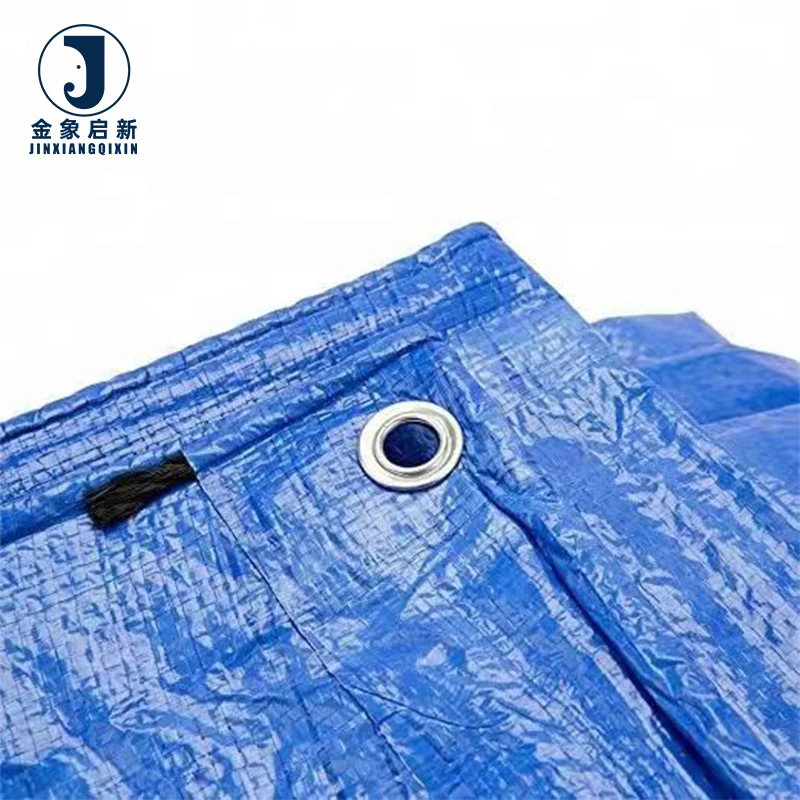
| Eyelet Spacing | 39.4 Inches |
| Size | Custom size |
| Color | Custom color |
| Standards | ISO, CE |
Application Suitability
| Application | Exposure & Requirement |
|---|---|
| Mining ventilation duct staging covers | Dust ingress, moisture, mechanical abrasion during surface storage before underground installation |
| Tunnelling equipment protective wraps | Constant humidity, contact with alkaline shotcrete residue, repeated handling |
| Aviation ground support duct storage | Outdoor UV exposure on tarmac, wind-driven debris, fuel vapour proximity |
| Membrane structure fabric transit covers | Long-distance transport vibration, rain ingress at fold lines, stack compression |
| Inflatable structure staging | Multi-week outdoor staging before inflation, puncture risk from site debris |
| Construction site equipment covers | Prolonged sun exposure, thermal cycling, tie-down stress at corners |
Why "Fire Retardant" on the Datasheet Is Not Enough for Site Compliance
A fire-retardant PE Tarpaulin ventilation duct cover only passes inspection when the test report matches the standard your site authority requires.
Mining and tunnelling projects routinely specify ventilation ductwork with fire-retardant and anti-static treatments, yet the protective covers used to store those ducts on-site often arrive with nothing more than a marketing claim. Site safety officers reject deliveries when documentation does not reference the applicable standard — whether that is a regional mining regulation or an aviation ground-handling specification. The PE Tarpaulin itself may perform adequately, but without a test report tied to a recognised classification, the entire shipment can be held at the gate [NEED_CITE: fire classification standards for temporary covers on mining and construction sites].
Matching Cover Weight to Site Exposure Duration
Selecting the correct weight grade for a PE Tarpaulin ventilation duct or fire retardant PE fabric application depends on how long the cover will remain deployed and what mechanical loads it will face. Lightweight grades in the 80–110 g/m² range serve short-term staging where covers are removed within days. Medium grades from 120–150 g/m² handle multi-week outdoor storage with moderate wind loading. Heavy-duty options at 160–240 g/m² are specified when covers must endure extended exposure across an entire construction season, resisting sustained tie-down tension and thermal cycling without degradation of the waterproof surfaces.
Fire-Retardant and Anti-Static Treatment Documentation
For mining and aviation projects, an anti-static tarpaulin or fire-retardant cover must ship with documentation that names the test method and the classification achieved. Stating "fire retardant" on a quotation without specifying the grade leaves the buyer exposed at site inspection. Our process requires confirming the target standard during the inquiry stage so the correct additive package is incorporated during extrusion, and the corresponding test report is generated from the same production batch [NEED_CITE: test methods for anti-static and fire-retardant classification of polyethylene fabrics]. Where fire-retardant or anti-static grades are specified, we include the test report alongside the material specification sheet in the dispatch documentation.
How Knitting Density and Tensile Strength Interact
Knitting density and tensile strength are interdependent in PE Tarpaulin construction, and neither parameter alone predicts field performance. An 8×8 weave in a lightweight grade yields meridian tensile values of 300–500 N/5cm, which is adequate for static covers that experience minimal flexing. Stepping to a 12×12 weave in a heavy-duty grade lifts meridian strength to 900–1200 N/5cm, providing the tear propagation resistance needed when a cover is pulled tight over irregular equipment profiles. The double waterproof surfaces maintain integrity only if the base fabric resists localised stress at tie-down points; a denser weave distributes load across more yarn intersections, reducing the risk of a single-point failure spreading into a full tear. Thickness works in parallel — a 0.30–0.35 mm heavy-duty construction adds stiffness that helps the cover bridge gaps without sagging into pooled water.
The Cost of Specifying a Cover Grade Below What the Site Demands
When a lightweight cover is deployed in a heavy-duty role, the first visible sign is usually not a tear but a loss of waterproof integrity at the reinforced corners, where tie-down loads concentrate beyond what the lower knitting density can distribute. On mining and tunnelling sites, a cover that fails mid-season exposes ventilation duct sections to moisture and contamination, forcing re-inspection and re-certification before installation — a delay that costs far more than the price difference between grades. Batch colour inconsistency across replacement covers can also trigger rejection when multiple sections are staged side by side for a client walk-through [NEED_CITE: common causes of protective cover failure on heavy industrial staging sites]. Selecting the correct GSM, weave density and treatment package at the inquiry stage eliminates these downstream costs.
Procurement Advantages for Technical Cover Applications
Three full production lines and 36 sets of professional equipment allow us to run dedicated batches of PE Tarpaulin in the exact weight grade and colour your project requires, avoiding the roll-to-roll variation that occurs when a single line switches between unrelated products. A 10-person R&D team handles custom sizing calculations, ensuring covers are cut to actual equipment dimensions rather than generic templates — critical when ventilation duct sections or membrane panels have non-standard profiles. Every roll passes through a dedicated QA/QC checkpoint at each production stage, culminating in a 100% pre-shipment inspection that verifies GSM, colour consistency and eyelet placement against the purchase order. Samples in your specified weight, colour and treatment are developed within days, letting you validate the material before committing to bulk volumes. ISO and CE certifications underpin the quality management system, and all documentation is compiled per shipment rather than supplied as generic downloads.
Documentation & Verification
- Material specification sheet stating exact GSM, base fabric denier and knitting density for the ordered grade
- Fire-retardant and anti-static test reports referencing the specific standard and classification when applicable
- ISO and CE certificates included in the dispatch document package
- Pre-shipment inspection record confirming weight, colour and dimensions per roll before loading
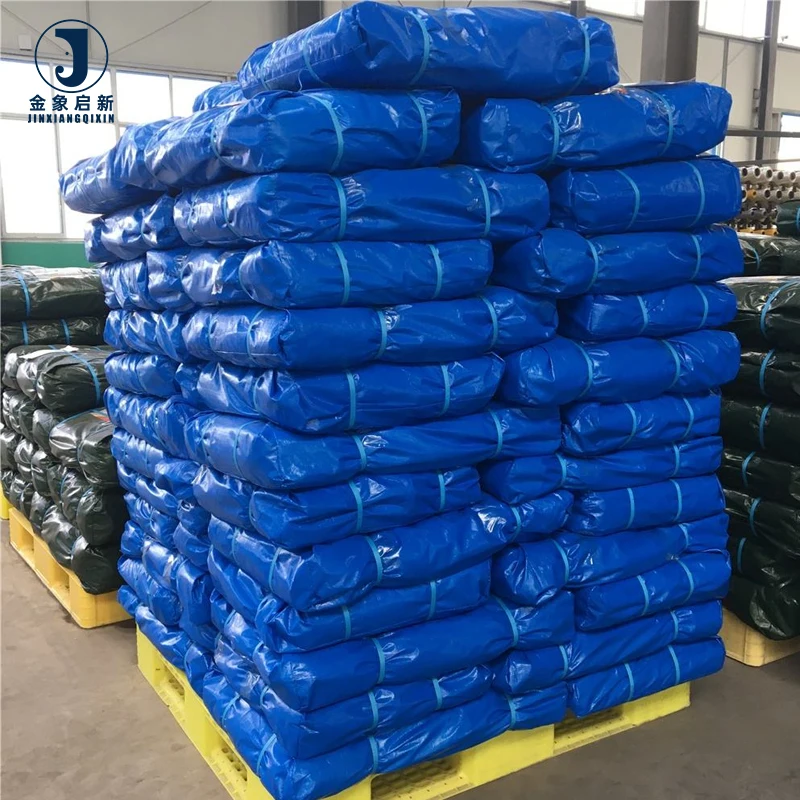
- Roll packing list with net and gross weights for container planning and customs clearance
- Certificate of origin prepared to match the importing country’s trade agreement requirements
Fabrication, Handling & Storage
- Heat-sealing parameters must match the selected thickness — 0.18–0.22 mm lightweight grades require lower platen temperatures than 0.30–0.35 mm heavy-duty sheets to avoid melt-through at seam lines
- Reinforced corners should be specified at all tie-down points, with eyelets at 39.4-inch spacing distributing load across the double waterproof surfaces
- Rolls must be stored horizontally on pallets in covered areas to prevent permanent creasing that can compromise the waterproof coating layer
- When deploying in cold conditions, allow the PE Tarpaulin to acclimatise before unfolding to prevent cracking at fold lines in grades below 0.22 mm thickness
- Clean with mild detergent only — solvents and alkaline cleaners can degrade the UV treatment and affect surface water beading
- Field repairs on heavy-duty grades (160–240 g/m²) can be performed with PE-compatible adhesive patches applied to clean, dry surfaces
Request a Specification Match
Provide the equipment dimensions or duct section profiles you need to cover, the expected staging duration, and any fire-retardant or anti-static standards your site authority mandates. If colour matching to existing site covers is required, share a RAL or Pantone reference so we can develop a sample in the correct weight grade. Confirm whether you need finished covers with eyelets and reinforced hems or roll stock for your own fabrication line.
Frequently Asked Questions
Q: Can PE Tarpaulin be supplied with fire-retardant treatment that meets mining ventilation regulations?
A: Fire-retardant grades are available for PE Tarpaulin, but the specific classification must be confirmed against your local mining authority’s requirements. We incorporate the additive package during production and generate a test report from the same batch. Share the standard your site references during the inquiry stage so we match the correct grade and documentation to your order.
Q: How do I select the right GSM grade for outdoor staging covers?
A: Lightweight grades (80–110 g/m²) suit short-term protection measured in days. Medium grades (120–150 g/m²) handle multi-week exposure with moderate wind loads. Heavy-duty grades (160–240 g/m²) are specified for extended deployment across full construction phases. Provide your expected exposure duration and tie-down method so we can recommend the matching knitting density and thickness.
Q: What documentation ships with a fire-retardant or anti-static PE Tarpaulin order?
A: Each shipment includes a material specification sheet stating the exact GSM and knitting density, test reports for any fire-retardant or anti-static treatment applied, ISO and CE certificates, a pre-shipment inspection record and a roll packing list. All documents are compiled per order, not supplied as generic templates, ensuring traceability to your specific production batch.
Q: Can I receive a sample in my exact weight and colour before placing a bulk order?
A: Yes. Our R&D team develops samples in your specified GSM, colour and treatment within days. The sample is produced on the same equipment used for bulk runs, so the material you evaluate is representative of the production output. Approve the sample before we schedule the full order to confirm weight, colour consistency and surface finish.
Q: How are custom sizes and eyelet layouts handled for irregular equipment shapes?
A: We cut covers to the exact dimensions you provide rather than using generic templates. Eyelet spacing at the standard 39.4 inches can be adjusted for non-standard profiles, and reinforced corners are added at every tie-down point. Share equipment drawings or photographs during the inquiry stage so we can confirm the layout before production begins.