
Specialist compliance documentation — every roll of this PE tarpaulin ships with test reports matching the fire-retardant and anti-static standards your mining or aviation site mandates, verified before dispatch.
Technical Specifications
| Parameter | Value |
|---|---|
| Product Type | PE Tarpaulin Roll / Finished PE Tarpaulin |
| Base Fabric | HDPE weave |
| Coating Material | LDPE |
| Coating Method | Laminated (LDPE on both sides) |
| Weight Range | 50 g/m² – 300 g/m² |
| Thickness | 0.2 mm – 0.4 mm / 8 mil – 16 mil (source value — verify against manufacturer catalog) |
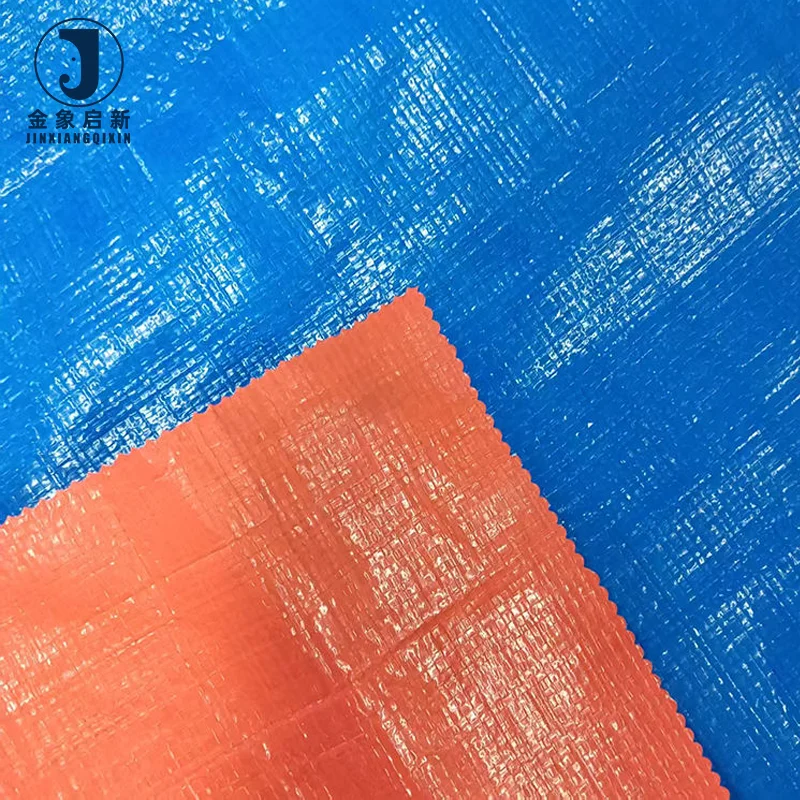
| Weave Density Options | 6×6, 6×7, 7×7, 7×8, 8×8, 9×9, 8×10, 10×10, 12×12, 14×14, 14×16 |
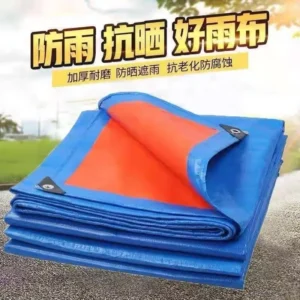
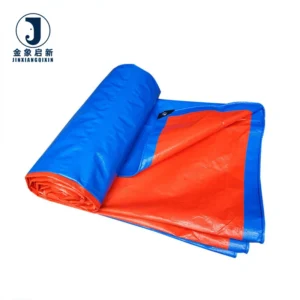
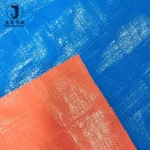
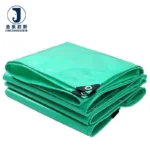
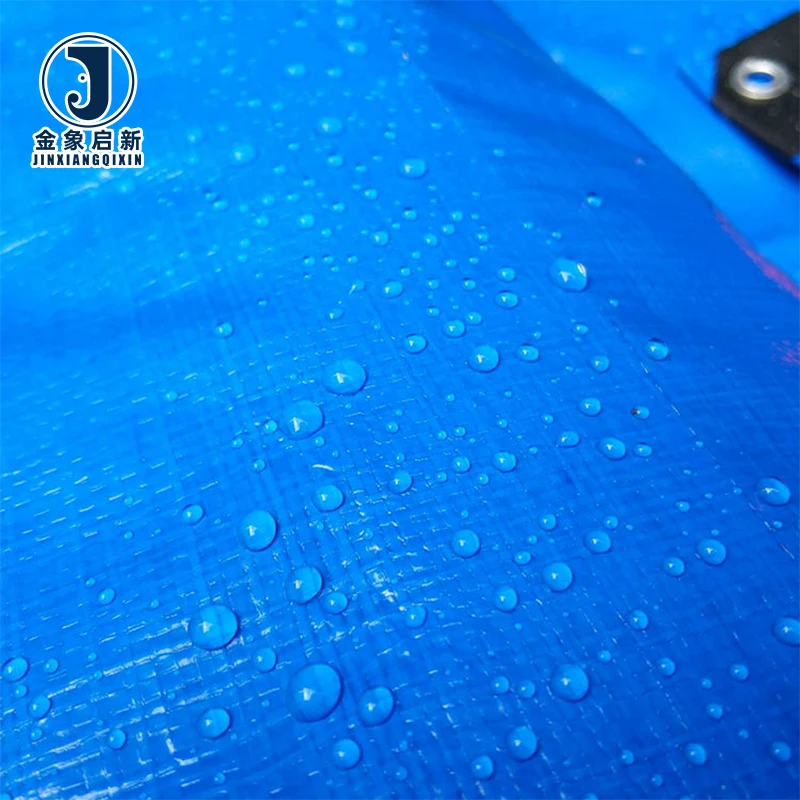
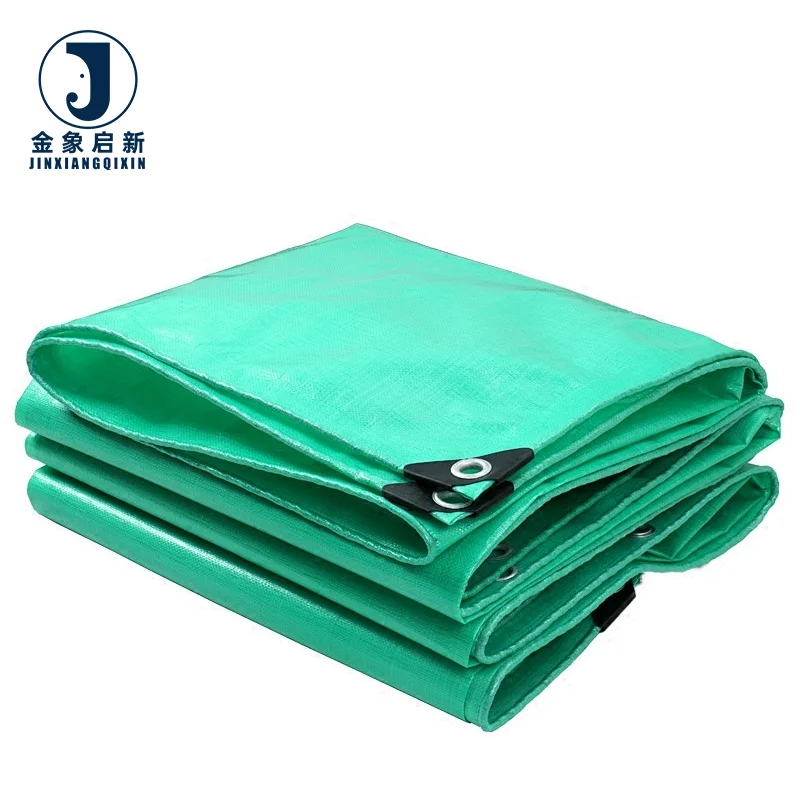
| Colour Options | Blue, Blue/Orange, Green, Grey, Black, Clear, Grey/Green, Orange, or custom |
| Roll Width Options | 6 ft, 8 ft, 10 ft, 12 ft / 2 m, 4 m, 6 m |
| Roll Length Options | 100 yards, 100 metres, or custom |
| Finished Edging | All four edges reinforced with PP rope in hem |
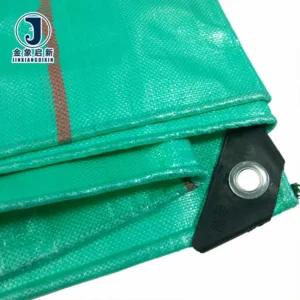
| Eyelets | Galvanized, every 3 ft or 1 metre interval |
| Corner Reinforcement | Reinforced plastic corners |
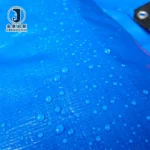
| Key Features | Waterproof, washable, tear resistant, UV treatment available (test basis not stated), mildew proof, anti-aging |
Application Suitability
| Application | Exposure & Requirement |
|---|---|
| Mining and tunnelling ventilation duct | Continuous airflow pressure, underground humidity, mandatory fire-retardant compliance on site |
| Aviation ground support air duct | Fuel-rich tarmac environment, anti-static surface requirement, repeated deployment and pack-down |
| Membrane and inflatable temporary structures | Wind load, solar exposure, structural stress at panel seams, fire classification for occupied spaces |
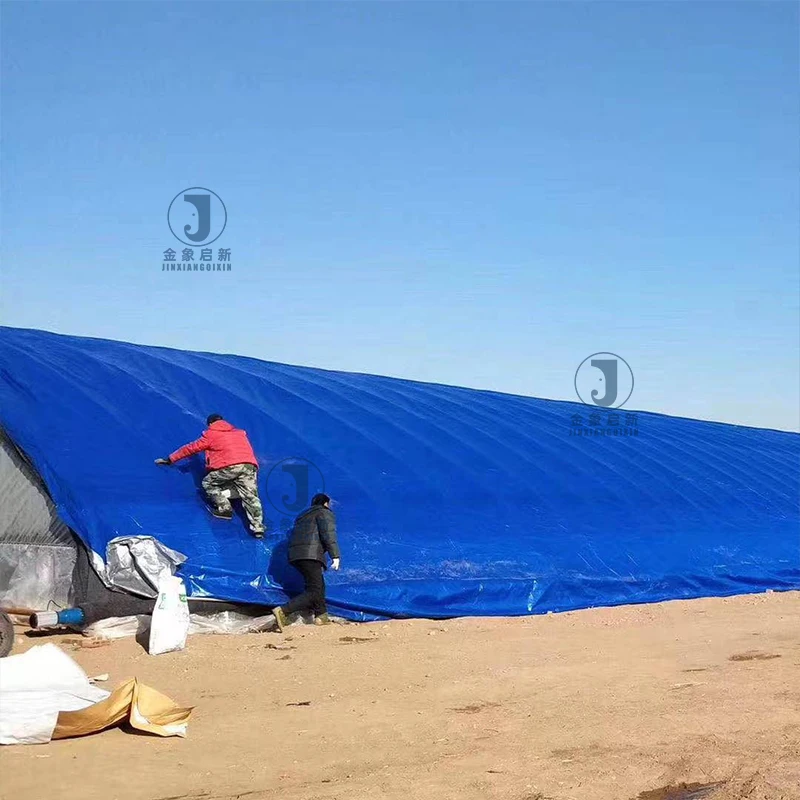
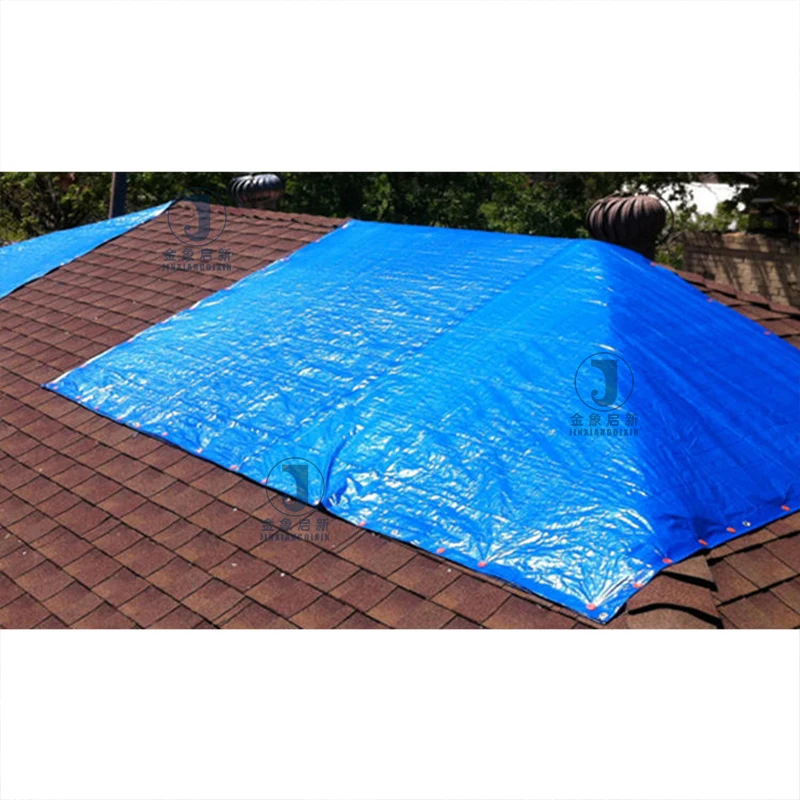
| Industrial equipment and stockpile covers | Dust ingress, rain, UV degradation over extended outdoor periods, tie-down load on eyelets |
Why PE Tarpaulin Fire Retardant and Anti-Static Certificates Decide Whether Your Site Passes Inspection
A ventilation duct installed underground without verifiable fire-retardant documentation is a shutdown-level compliance risk — the fabric itself matters less than the paperwork that accompanies it.
Mining and tunnelling sites operate under strict ventilation standards where every metre of duct must carry a traceable fire classification. When PE tarpaulin fire retardant claims arrive without a test report matching the grade your jurisdiction requires, the entire installation can be rejected at audit. Anti-static compliance carries similar weight in aviation ground support, where static discharge near fuel operations demands surface resistance data — not a supplier’s verbal assurance. [NEED_CITE: fire classification standards for underground ventilation duct materials]
The gap between "treated" and "certified" is where projects stall. Fabric that has been compounded with retardant additives but never tested to a published standard offers no compliance pathway. Procurement teams specifying PE tarpaulin for duct and membrane applications must match the test method — M2, B1, NFPA 701, DIN 4102 — to the exact clause their site safety plan references.
Airflow, Pressure and the Duct Fabric Envelope
Ventilation duct performance depends on the fabric holding its shape under positive or negative pressure without excessive stretching or collapse. The HDPE woven base of this PE tarpaulin provides the dimensional stability that keeps duct diameter consistent across long runs, while the LDPE lamination seals the weave against air leakage. Available in weave densities from 6×6 through 14×16, the range covers lightweight temporary duct sections and heavy-grade permanent installations alike.
Selecting the correct density means matching the airflow velocity and static pressure of the fan system to the tensile capacity of the fabric. Higher mesh counts deliver greater resistance to ballooning and collapse, reducing the frequency of support rings needed along the run.
Compliance Paperwork That Travels With Each Roll
Mining ventilation regulations in most jurisdictions require that duct fabric carries a permanent traceable link to a fire test certificate. This PE tarpaulin range ships with material specification sheets stating GSM, base fabric weave, coating method and colour reference per order. Where fire-retardant or anti-static treatment is specified, the corresponding test documentation is included in the dispatch package — not promised after delivery. [NEED_CITE: mining ventilation duct compliance documentation requirements]
Anti-static surface resistance values matter equally in aviation fuel-handling zones and grain storage environments where dust ignition is a hazard. Confirming the surface resistivity standard your site mandates before ordering ensures the PE tarpaulin supplied falls within the acceptable range, avoiding costly replacement after installation.
Reading Weave Density and GSM as a System, Not Isolated Numbers
The relationship between HDPE weave density and laminated coating weight determines how the PE tarpaulin behaves under load. A 14×16 weave at higher GSM delivers substantially greater tear resistance and puncture tolerance than a 6×6 weave at similar weight, because the tighter base fabric distributes stress across more yarn intersections before a tear propagates. Lamination weight on both sides adds waterproofing and surface durability but does not compensate for a loose weave when mechanical stress concentrates at tie-down or seam points.
LDPE lamination applied to both faces also governs heat-welding behaviour. The melting characteristics of LDPE differ from PVC, requiring adjusted temperature and dwell settings during duct fabrication. Double-sided lamination means the weld must penetrate through the coating layer to fuse fabric to fabric, and insufficient heat leaves a delamination-prone bond that fails under duct pressure cycling. Coating uniformity across the roll width is therefore critical — thin spots in lamination produce weak welds that show up only after the duct is pressurised underground.
Roll width directly affects duct fabrication efficiency. Wider rolls up to 6 m allow larger duct diameters to be produced with fewer longitudinal seams, reducing both labour and the number of potential leak paths in the finished duct. [NEED_CITE: coated fabric tensile and tear test methods per ISO 1421]
When Specification Mismatches Surface On Site
A duct fabricated from PE tarpaulin that lacks the fire-retardant grade your jurisdiction mandates cannot be remedied after installation — the entire run must be removed and replaced, along with the labour and downtime that carries. Anti-static shortfalls are equally binary: the surface either reads within the permitted resistance range or it does not, and no topical treatment applied on site will correct a base fabric that was not manufactured to specification.
Colour variation between rolls in the same shipment becomes visible the moment two membrane panels are joined side by side on a structure. Batch inconsistency in GSM or weave density means some duct sections will stretch or collapse at lower pressure than others, creating uneven airflow that forces fan systems to work harder and shortens blower service intervals. [NEED_CITE: batch consistency failures in coated fabric shipments]
What Distinguishes This Supply Chain
Three full production lines and 36 sets of professional equipment provide the capacity to hold bulk roll stock and meet vessel booking deadlines without sacrificing coating uniformity across long runs.
A dedicated 10-person R&D team handles material selection, sample development and specification matching for duct and membrane applications, reducing the gap between inquiry and confirmed sample.
QA and QC checkpoints operate at every production stage — weaving, lamination, slitting, rolling — with 100% pre-shipment inspection recorded and included in dispatch documentation.
Custom width, colour and length orders move through the same inspection protocol as stock grades, ensuring PE tarpaulin ordered for specialist duct fabrication arrives within the tolerances your workshop expects.
Samples are developed within days for custom requirements, allowing you to confirm weld parameters and seam strength before committing to full production volume.
Documentation & Verification
- Material specification sheet stating GSM, HDPE weave density and LDPE coating weight per roll
- Fire-retardant test report with stated grade provided where applicable against your site standard
- Anti-static surface resistance documentation available on request for mining and aviation duct use
- Pre-shipment inspection record covering weight, weave count and coating uniformity included per order
- ISO and CE certificates referenced in company profile supplied with first shipment
- Roll packing list with batch reference traceable to production date and line
Fabrication, Handling & Storage
- Adjust heat-weld temperature and dwell time for LDPE lamination — settings differ from PVC-coated fabrics
- Reinforce eyelet and hem zones with additional PP rope to resist pull-through under duct suspension load
- Store rolls upright on end caps to prevent flat-spot creasing across the 6 m width
- Allow cold-stored rolls to reach ambient temperature before unrolling to avoid coating micro-cracking
- Use mild detergent only — solvents can degrade the LDPE surface and compromise anti-static treatment
- Cut duct panels with heated blades to seal HDPE yarn ends and prevent fraying at seam allowances
Before You Send an Enquiry
Specify the ventilation duct diameter, run length and fan static pressure so we can recommend the correct weave density and GSM grade from the PE tarpaulin range. Confirm the fire-retardant classification and anti-static standard your site safety plan mandates — M2, B1, NFPA 701 or DIN 4102 — so test documentation is matched before production.
State the roll widths you need and whether you require finished cut-to-size panels or continuous rolls for your own duct fabrication line. If colour matching to existing membrane sections is critical, request a physical swatch before bulk commitment.
Frequently Asked Questions
Q: What fire-retardant grade does your PE tarpaulin carry, and which test standard is it measured against?
A: Fire-retardant treatment is available across this PE tarpaulin range — the specific grade depends on your market requirement. We supply test reports against standards such as M2, B1, NFPA 701 or DIN 4102 where applicable. Confirm the exact standard your site safety plan references so we match the correct documentation to your order before production begins.
Q: Can you supply anti-static test data with surface resistance values for mining ventilation duct use?
A: Anti-static treatment is available and surface resistance documentation can be provided on request. Mining ventilation regulations vary by jurisdiction, so share the specific resistance range your compliance officer requires. We will confirm the PE tarpaulin grade meets that threshold and include the test data in your dispatch package.
Q: How do you verify GSM and weave density on arrival — do you include a pre-shipment inspection record?
A: Every order goes through 100% pre-shipment inspection covering weight per square metre, weave count and coating uniformity. The inspection record travels with your shipment so you can verify on arrival that the PE tarpaulin matches the specification stated on your quotation, not just the claim made during inquiry.
Q: What roll widths and lengths are available for duct fabrication, and what is the MOQ on custom sizes?
A: Standard roll widths run up to 6 m, with lengths at 100 yards, 100 metres or custom. Wider rolls reduce longitudinal seams in large-diameter duct sections. MOQ depends on the specific weave density, colour and treatment combination — share your annual volume and we will confirm minimums and lead time for your configuration.
Q: How does LDPE lamination on both sides affect heat-welding and seam strength during duct construction?
A: Double-sided LDPE lamination requires weld parameters tuned to LDPE melting characteristics, which differ from PVC. The weld must penetrate both coating layers to fuse fabric to fabric. We recommend running test welds on sample material before production to dial in temperature and dwell time, ensuring seam strength matches the base fabric capacity.