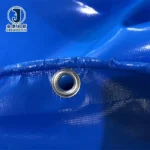

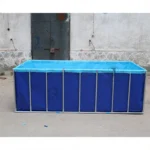
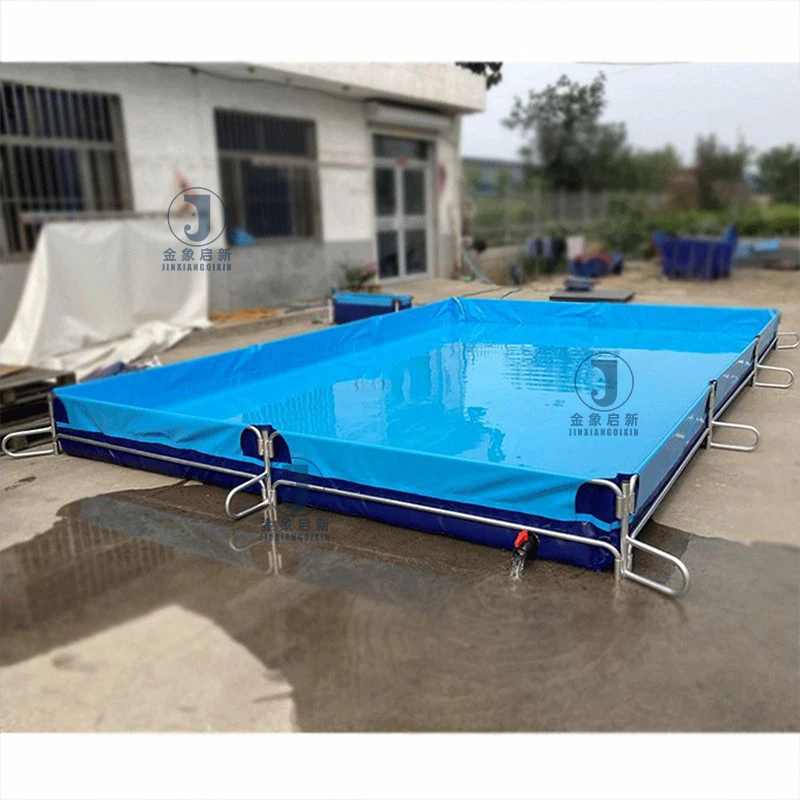
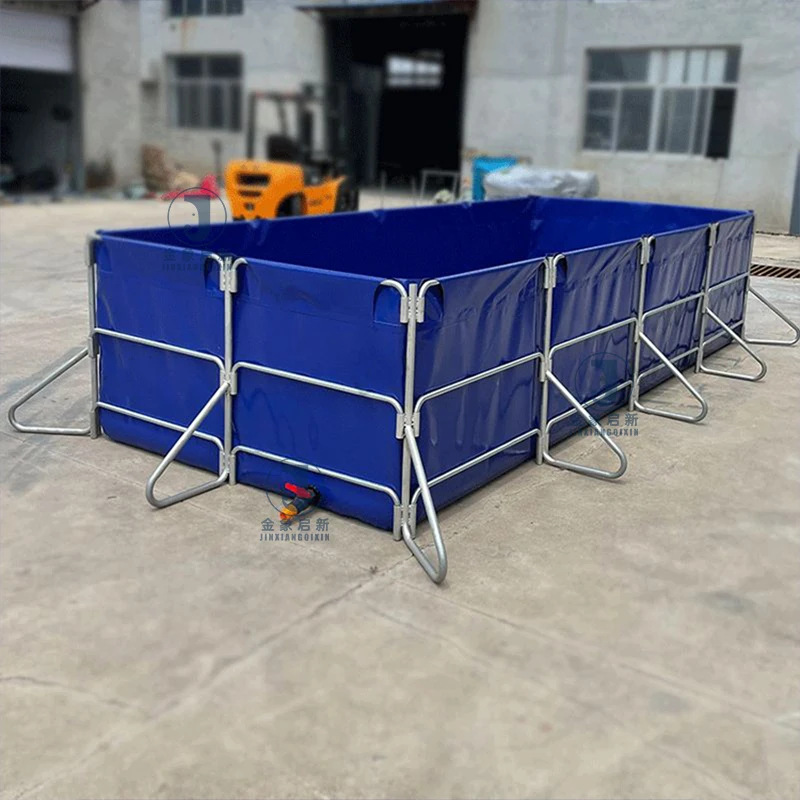
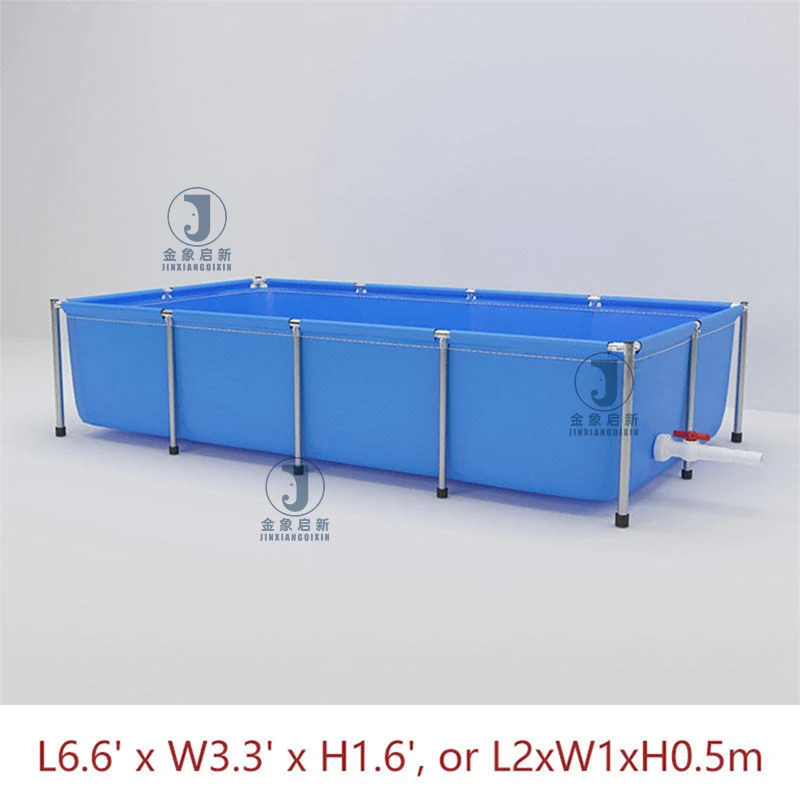
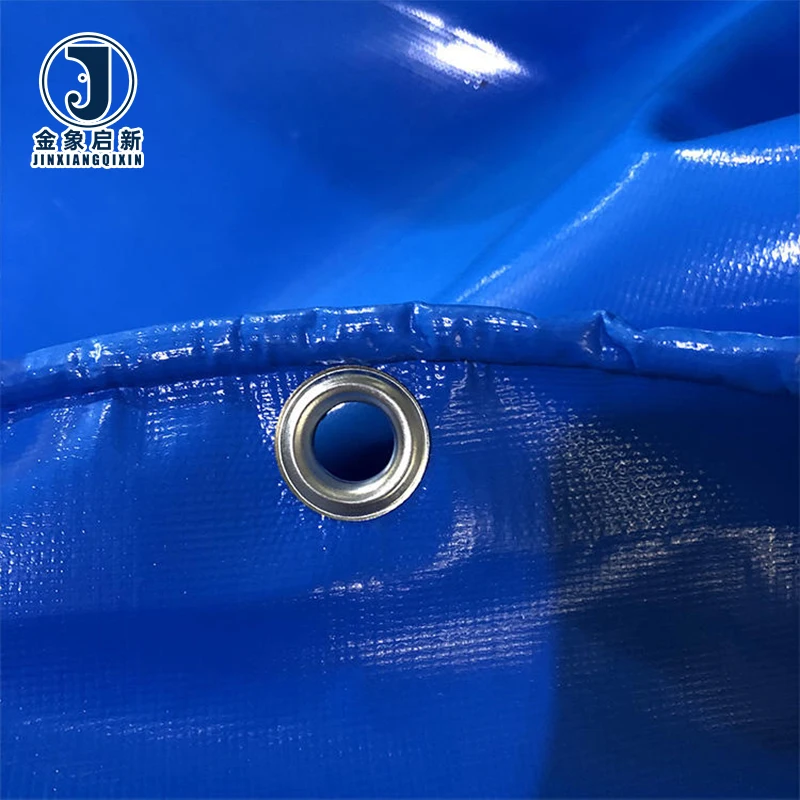
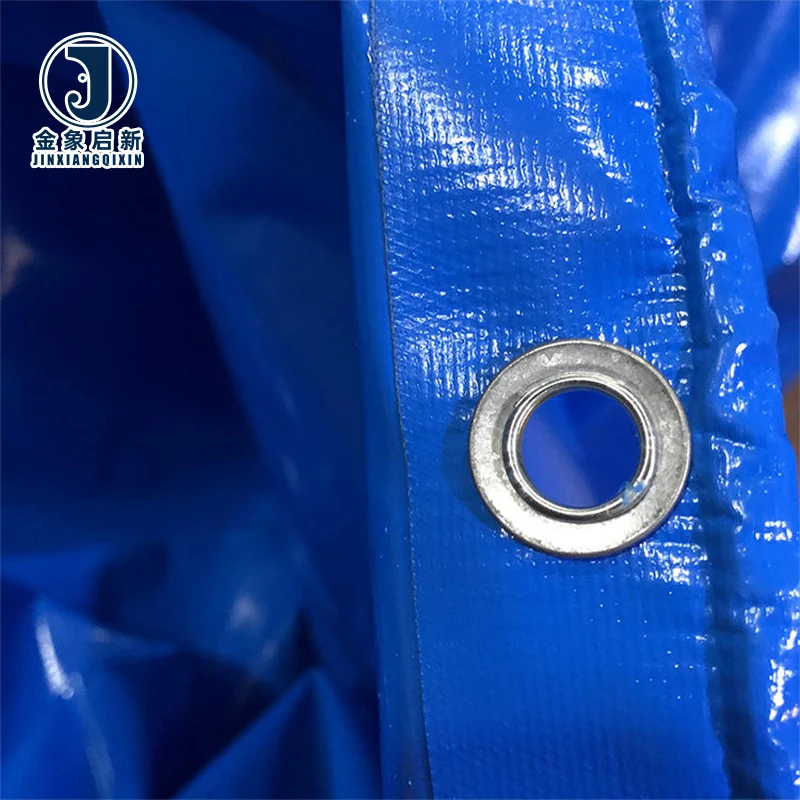
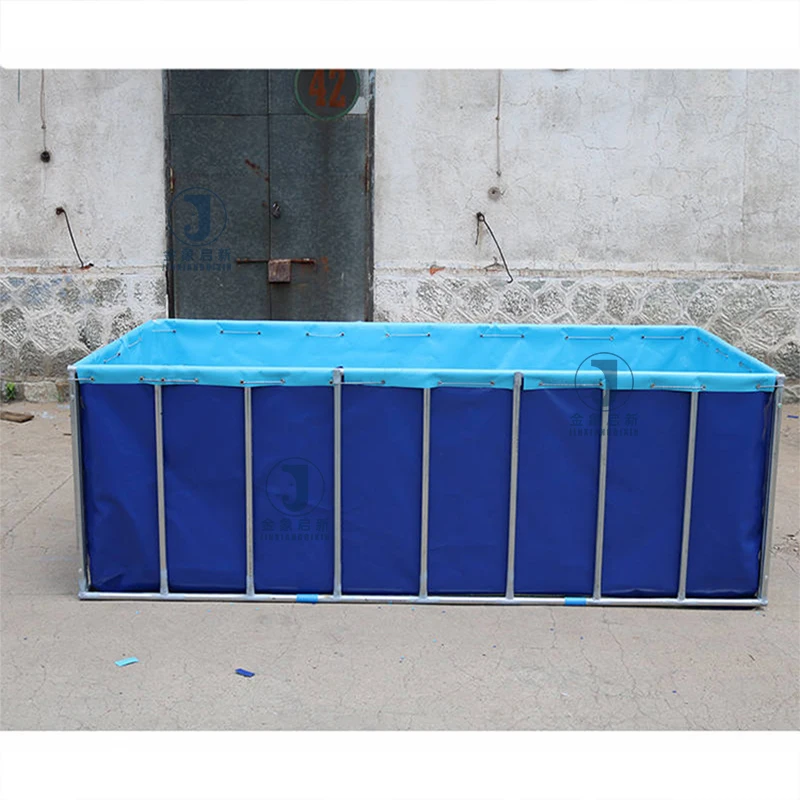
Coated Fabric Consistency — Every roll of PVC Coated Tarpaulin undergoes 100% pre-shipment inspection to verify GSM, coating weight, and dimensional accuracy before leaving the production floor.
Technical Specifications
| Parameter | Value |
|---|---|
| Product Type | PVC Coated Tarpaulin |
| Base Fabric | High-strength polyester mesh fabric |
| Coating Material | PVC |
| Coating Method | Laminated technology & Hot-melt Coating technology |
| Weight Options | 350gsm / 420gsm / 500gsm / 550gsm / 600gsm / 750gsm |
| Thickness Options | 0.32mm / 0.35mm / 0.4mm / 0.45mm / 0.5mm / 0.65mm |
| Roll Size | 2m width × 75m length / 2.1m width × 50m length |
| Finish Product Size | Custom items as per customer’s needs, or sold by inventory |
| Color Options | Blue / Red / Yellow / Light Blue / Grey (Customized) |
| Key Features | Cold crack resistance, anti-mildew, waterproof; anti-static and flame retardant available in specific grades — confirm the grade required for your market |
| Standards | ISO, CE |
Application Suitability
| Application | Exposure & Requirement |
|---|---|
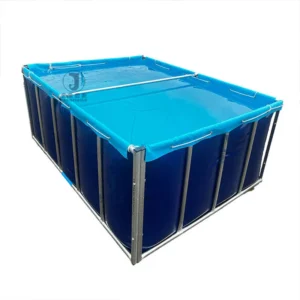
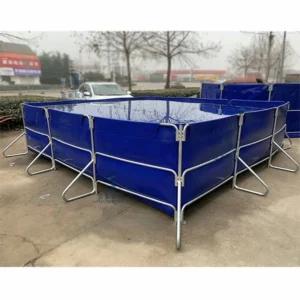
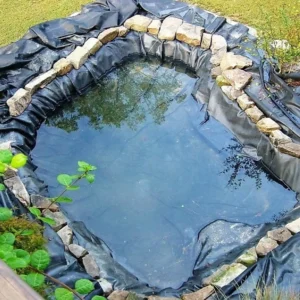
| Commercial fish farm pond lining | Continuous water immersion, hydrostatic pressure, soil chemistry contact, UV exposure from open-air installation |
| Aquaculture reservoir and raceway construction | Constant water containment stress, algae and biological growth resistance, puncture risk from substrate irregularities |
| Agricultural water storage ponds | Seasonal temperature fluctuation, prolonged sun exposure, mechanical stress from water volume changes |
| Inflatable and membrane structure fabric | Air pressure loading, flex fatigue at fold points, requirement for certified fire-retardant and anti-static grades |
| Aviation and mining ventilation duct fabrication | Internal airflow abrasion, regulatory compliance for fire retardancy and static dissipation, duct seam integrity under pressure |
Why a Missing Fire-Retardant Certificate Stops Your Ventilation Duct at Site Inspection
Compliance documentation must travel with the fabric roll, not arrive weeks later as an afterthought.
Mining and tunnelling contractors frequently discover that the PVC Coated Tarpaulin fire retardant specification on the quotation does not come backed by a test report the site safety officer will accept. The duct passes visual inspection but fails the compliance audit because the accompanying paperwork is generic, outdated, or references a different batch entirely [NEED_CITE: fire classification documentation requirements for underground ventilation materials]. This forces project delays, re-procurement, and in some cases, dismantling installed duct runs to replace non-compliant sections. Anti-static performance presents a similar gap — the term appears on data sheets without a surface resistance value or test standard attached, leaving buyers unable to verify suitability for environments where static discharge poses an ignition risk.
Ventilation Duct Compliance Starts with the Fabric Grade Selection
The distinction between a generic PVC Coated Tarpaulin and one specified for regulated ventilation environments lies in the treatment chemistry and the test standard behind it. Flame retardant grades vary significantly across regional mining codes and aviation authority requirements, and the correct grade must be confirmed before production begins. Our R&D team works with buyers to map the destination market’s compliance framework — whether that references DIN 4102 classifications or regional mining ventilation codes — and selects the treatment accordingly. Anti-static treatment follows the same discipline, targeting measurable surface resistance values rather than vague claims.
Hot-Melt Coating and Welded Seam Integrity Under Airflow Load
Duct fabrication places the highest mechanical demand on welded seams, where the fabric flexes under internal air pressure and external handling stress. Hot-melt coating technology creates a stronger bond between the polyester base fabric and the PVC layers compared to standard laminating, which translates directly to weld performance. When the seam is heat-welded, the coating melts into a continuous joint rather than sitting as a surface layer that can delaminate. For large-diameter duct runs and membrane structures, this bonding integrity prevents the common failure pattern where seams separate before the fabric body reaches its tensile limit [NEED_CITE: tensile and tear test methods for coated fabrics per ISO 1421]. Custom widths and roll lengths reduce the number of transverse welds needed in long duct sections, eliminating potential failure points.
Reading the Specification Sheet Beyond the GSM Number
GSM alone does not define how a coated fabric behaves under load. The base fabric denier, mesh count, and weave pattern determine how tensile force distributes across the material, while the coating weight contributes waterproofing, UV barrier properties, and surface characteristics. A 550gsm fabric built on a coarse, low-density mesh may tear more easily than a 500gsm fabric on a tighter weave — making the GSM-to-density relationship the critical specification to evaluate. Coating method matters equally: laminated technology delivers cost-effective coverage for general containment applications, while hot-melt coating technology provides the adhesion strength required for welded fabrication and structural loading. Thickness values from 0.32mm through 0.65mm correlate with puncture resistance and flex stiffness, guiding selection between applications that demand pliability for folding and those requiring rigidity for vertical pond walls. Total roll weight, governed by width and length combinations like 2m × 75m or 2.1m × 50m, affects container loading efficiency and handling logistics on site.
The Cost of Specifying Fabric Without Matching the Application Environment
Pond liners installed without verifying UV treatment documentation fade and embrittle within seasons, requiring premature replacement and disrupting aquaculture cycles. Ventilation ducts fabricated from fabric lacking the correct fire-retardant grade fail site inspection, forcing contractors to source replacement material on compressed timelines. Colour inconsistency across rolls in the same order becomes visible when membrane structure panels are installed side by side, triggering aesthetic rejection on architectural projects [NEED_CITE: batch colour consistency standards for architectural membrane fabrics]. Welded seams that fail under flex load indicate a mismatch between the coating method chosen and the fabrication demands of the end use — laminated coatings may delaminate at weld points where hot-melt coatings maintain integrity.
Sourcing Certainty from Coating Process to Dispatch
Deep process control over coating weight and adhesion has been refined across production runs, ensuring the GSM stated on the quotation matches the material that arrives on site. Three full production lines and 36 sets of professional equipment support bulk volume requirements while maintaining on-time delivery schedules. The 10-person R&D team handles material selection for specific compliance environments, pattern printing for branded applications, custom sizing for non-standard duct diameters, and rapid sample development for buyer approval. Dedicated QA/QC operates at every production stage, with 100% inspection before shipment catching dimensional deviations, coating defects, and colour drift. Samples for custom width, treatment grade, or finish requirements are developed within days, allowing buyers to verify material performance before committing to production volume.
Documentation & Verification
- Material specification sheet stating exact GSM, base fabric construction, coating method, and treatment options for the ordered grade
- Test reports for fire-retardant and anti-static grades where applicable, referencing the standard and batch tested
- Pre-shipment inspection record confirming roll dimensions, coating quality, and colour consistency before dispatch
- Weight verification per roll against the stated GSM before dispatch to prevent under-specification
- Certificate of origin and full customs documentation support for international shipment clearance
Fabrication, Handling & Storage
- Hot-welding temperature and dwell time should be adjusted to the hot-melt or laminated coating type to prevent delamination at seams
- Store rolls horizontally on pallets in dry conditions to prevent compression creases that affect weld quality on 2m and 2.1m widths
- Allow cold-stored rolls to reach ambient temperature before unrolling to avoid cracking the PVC coating at fold points
- Cut patterns should account for the 75m or 50m roll length to maximise yield and minimise transverse welds in duct fabrication
- Surface cleaning requires non-solvent agents compatible with PVC coating to preserve anti-mildew and flame retardant treatments
What to Include in Your Enquiry
Specify the ventilation duct diameter, duct run length, and the fire-retardant or anti-static standard your site requires so the correct treatment grade can be confirmed before quotation. Indicate whether you need full roll stock for in-house fabrication or pre-cut panels with welded seams, along with the target colour and any roll-to-roll consistency requirements for membrane structure applications. Providing annual volume estimates enables accurate lead time and production slot planning.
Frequently Asked Questions
Q: What fire-retardant grades are available and how do they map to regional mining or aviation standards?
A: Flame retardant treatment is available in multiple grades, and the correct specification depends on your destination market’s regulatory framework. We work with buyers to identify the required classification — whether referencing DIN 4102, regional mining ventilation codes, or aviation authority standards — and supply test reports matched to the batch produced. Confirm your specific grade requirement during enquiry so the R&D team can validate compliance before production begins.
Q: How is anti-static performance measured and what surface resistance values can be certified?
A: Anti-static treatment is applied to achieve measurable surface resistance values suitable for environments where static discharge poses a risk. The specific target value depends on the application standard governing your site, such as mining ventilation regulations or aviation duct requirements. We provide test documentation stating the measured surface resistance for the batch supplied, allowing your safety team to verify compliance against the relevant standard.
Q: Can the fabric be supplied in custom widths and roll lengths for large-diameter duct fabrication?
A: Yes, custom widths and roll lengths are produced to match specific duct diameters and membrane structure panel sizes, reducing transverse welds and material waste. Standard roll sizes include 2m × 75m and 2.1m × 50m, but non-standard dimensions are available subject to production line capability. Provide your target dimensions and annual volume so the team can confirm feasibility and lead time.
Q: What documentation accompanies each shipment to satisfy site compliance audits?
A: Every shipment includes a material specification sheet stating GSM, base fabric, and coating details, test reports for fire-retardant or anti-static grades where specified, a pre-shipment inspection record, and a certificate of origin. This documentation package is prepared to match the batch dispatched, ensuring traceability from production through to site inspection. Additional customs support documentation is provided for international shipments.
Q: How do welded seams perform on this PVC-coated fabric under flex and airflow load?
A: Hot-melt coating technology delivers strong adhesion between the polyester base fabric and PVC layers, which translates to weld integrity under mechanical stress. Welded seams on hot-melt coated grades maintain bonding strength at flex points where internal airflow pressure and external handling load concentrate. Laminated coating grades require careful weld parameter control to prevent delamination. We provide sample welds for buyer testing before full production commitment.