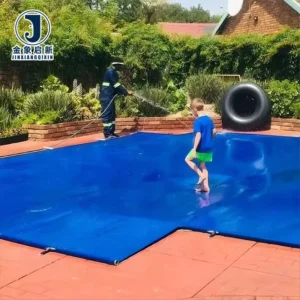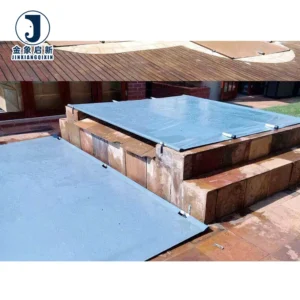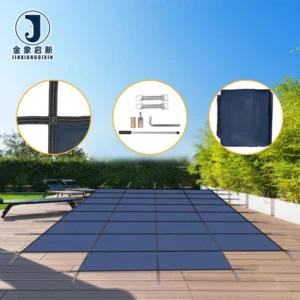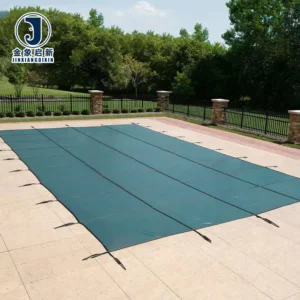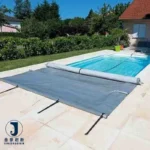
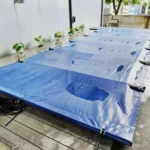
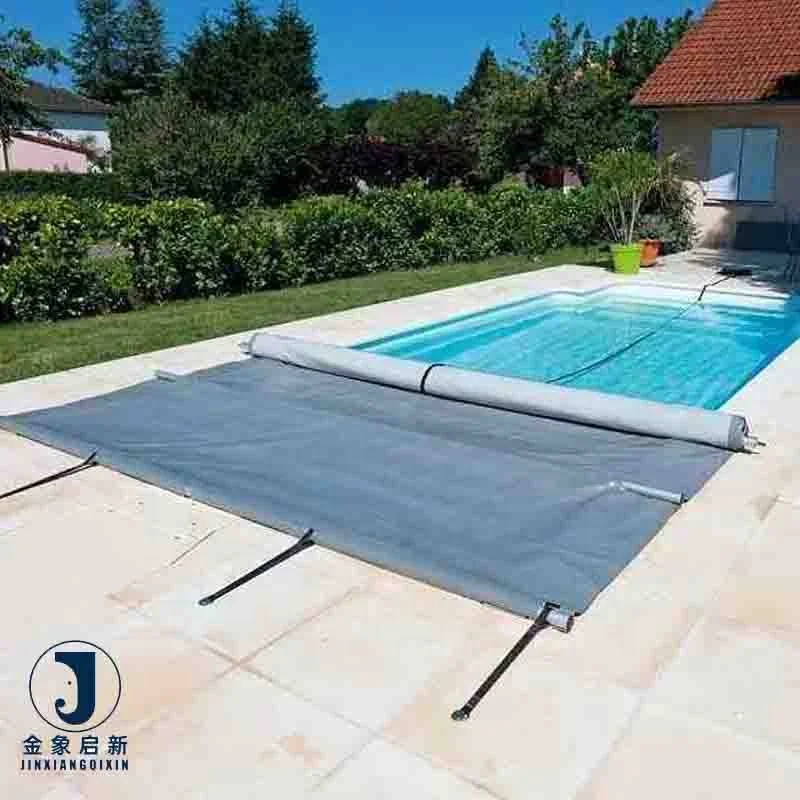
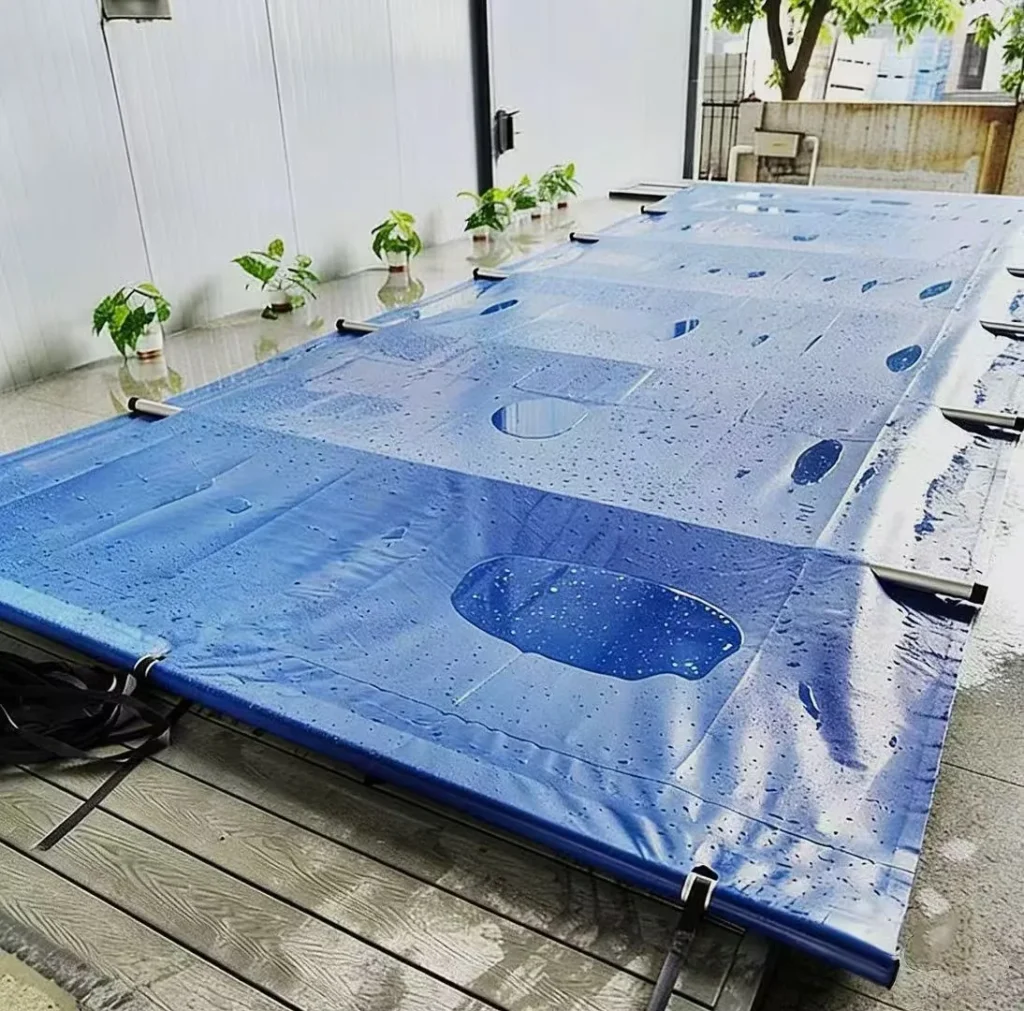
Coating Adhesion Control — deep process oversight on knife coated PVC ensures the coating bonds fully to the base fabric, preventing delamination under continuous poolside moisture and UV cycling.
Technical Specifications
| Parameter | Value |
|---|---|
| Product Type | PVC Pool Cover |
| Coating Material | PVC |
| Coating Method | Knife Coated |
| Waterproof Rating | 100% Waterproof |
| UV Treatment | Anti-UV (test basis not stated) |
| Anti-Mildew | Yes |
| Tear Resistance | High strength and tear resistant |
| Weather Resistance | Rain, wind, snow, extreme temperatures |
| Color | Custom |
| Size | Custom |
| Standards | ISO, CE |
Application Suitability
| Application | Exposure & Requirement |
|---|---|
| Residential swimming pool cover | Seasonal UV exposure, standing water, debris load, wind uplift at edges |
| Hotel and commercial outdoor pool | Year-round weather cycling, frequent removal and reinstallation, chemical splash from pool treatment |
| Custom-shaped pool cover | Non-standard dimensions requiring precise panel cutting and welded seam integrity |
Why Coated Fabric Selection Matters More Than Cover Thickness Alone
A pool cover fails at the coating-to-fabric interface long before the base material wears through.
Specifying a PVC pool cover tarpaulin based on weight alone misses the variable that actually determines service life: how well the coating penetrates and locks into the base weave. Knife coated construction forces PVC into the fabric interstices under controlled pressure, creating a mechanical bond that laminated or dipped alternatives cannot match [NEED_CITE: coating adhesion test methods for PVC coated fabrics]. When that bond holds, water cannot migrate between layers, mildew cannot establish under the surface, and the cover survives repeated folding without cracking at the crease lines.
Knife Coated Construction and Waterproof Integrity
The PVC pool cover tarpaulin produced here uses knife coated application, where a precise gap between the coating blade and the base fabric controls how much PVC compound is forced into the weave. This method produces a consistent coating weight across the full roll width, which is critical when multiple panels are welded together to cover larger pools. Any thin spot in the coating becomes the first point of water ingress.
Welded Seam Behaviour Under Poolside Conditions
Pool covers experience concentrated stress at welded seams every time wind lifts the cover or water pools on the surface. Knife coated PVC fabric allows heat welding at temperatures that fuse the coating layers without degrading the base yarns. The resulting seam holds as long as the surrounding fabric, which matters when a failed seam on a hotel pool cover means draining and rescheduling guest access [NEED_CITE: heat welding parameters for PVC coated tarpaulin seam strength].
Understanding the Specification Sheet Beyond Weight
Coating weight and base fabric denier together determine how the cover performs under load. A heavier coating on a low-denier base may feel substantial but tears easily when pulled taut across a pool frame. Conversely, a high-denier base with insufficient coating weight leaves the yarns exposed to UV degradation and chemical splash from pool chlorine. The specification sheet should state both values independently so you can assess the balance rather than relying on a single GSM figure. Anti-UV treatment is available for extended sunlight exposure — confirm the test basis required for your market before placing a production order.
The Hidden Cost of Underspecified Pool Cover Fabric
When a batch of pool cover fabric arrives lighter than the quoted GSM, the cover may look correct on installation but fails within the first season as the thinner coating cracks under temperature cycling. Colour variation between rolls in the same order becomes visible once panels are welded side by side on a commercial pool, forcing the contractor to replace the entire cover rather than a single panel. Anti-mildew treatment that is claimed but not verified means mold establishes under the cover during humid months, staining the pool surround and generating maintenance callbacks [NEED_CITE: batch consistency inspection protocols for coated fabric rolls]. These failures trace back to insufficient specification verification before production, not to material limitations.
Why Source This PVC Pool Cover Tarpaulin Here
Three full production lines and 36 sets of professional equipment support bulk roll output with consistent coating weight across every run. The 10-person R&D team handles custom sizing, colour matching, and sample development specific to pool cover geometry. A dedicated QA/QC process inspects every roll at each production stage, with 100% inspection before shipment — not a sampling check. Custom width and length orders are supported with sample development completed within days. Nearly 30 years of coated fabric production provides process control depth that directly translates to reliable coating adhesion on every roll.
Documentation & Verification
- Material specification sheet stating base fabric denier, coating weight, and GSM per roll
- UV test report provided where anti-UV treatment grade is confirmed for pool cover exposure
- Pre-shipment inspection record covering coating weight and colour consistency across all rolls
- Roll packing list with individual roll dimensions, net weight, and batch reference
- Certificate of origin and customs documentation for international pool cover fabric shipments
Fabrication, Handling & Storage
- Heat weld at temperatures matched to the knife coated PVC layer to avoid base yarn damage
- Store rolls upright on pallets to prevent flat-spot deformation on the coating surface
- Clean with mild detergent only; harsh solvents degrade the anti-mildew surface treatment
- Allow fabric to reach ambient temperature before unrolling in cold conditions to prevent crease cracking
- Cut panels with a minimum overlap allowance to ensure full weld penetration at seam joints
What We Need to Quote Your Pool Cover Fabric
Provide the pool dimensions or the roll width and length you require, along with the colour reference and any anti-UV or anti-mildew treatment grade your market demands. Confirm whether you need finished cut panels with hemmed edges or roll stock for your own fabrication. If you are sourcing for multiple pool installations, state the total roll count so we can confirm batch colour consistency across the full order.
Frequently Asked Questions
Q: How do I verify GSM and coating weight when the pool cover fabric arrives?
A: Request the material specification sheet before production, which states base fabric denier and coating weight separately. On arrival, compare the documented values against a sample cut from the delivered roll. Our pre-shipment inspection record includes per-roll weight verification against the stated GSM.
Q: What UV test basis supports the anti-UV claim for pool cover service life?
A: Anti-UV treatment is available for this PVC pool cover tarpaulin fabric. Ask for the specific test report and exposure duration rating before confirming your order. The test basis should match the climate zone and expected sunlight hours for the pool installation site.
Q: How is colour consistency controlled across multiple rolls for a large pool cover?
A: Every roll in a single production run is checked for colour match against the approved reference. The pre-shipment inspection record documents this verification. For orders spanning multiple production batches, request a colour consistency confirmation before dispatch.
Q: Can I order custom width and length to match my pool dimensions exactly?
A: Custom width and length are supported. Provide the exact pool dimensions or the panel size you need, along with edge finishing requirements. Samples are developed within days so you can confirm fit and weld behaviour before full production begins.
Q: What is the lead time for custom-size and custom-color pool cover fabric?
A: Lead time depends on the roll count, colour, and whether finished panels or roll stock is required. Custom colours and non-standard widths typically require multi-week production scheduling. Confirm your target delivery date at inquiry stage so the production plan can be aligned.