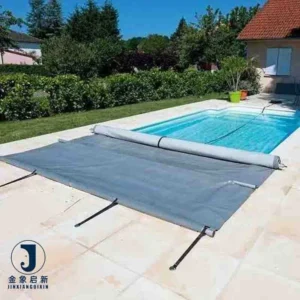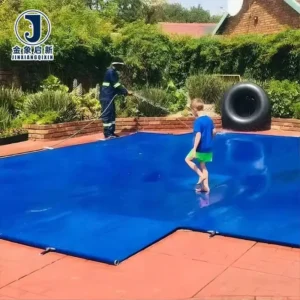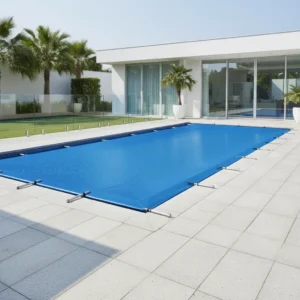
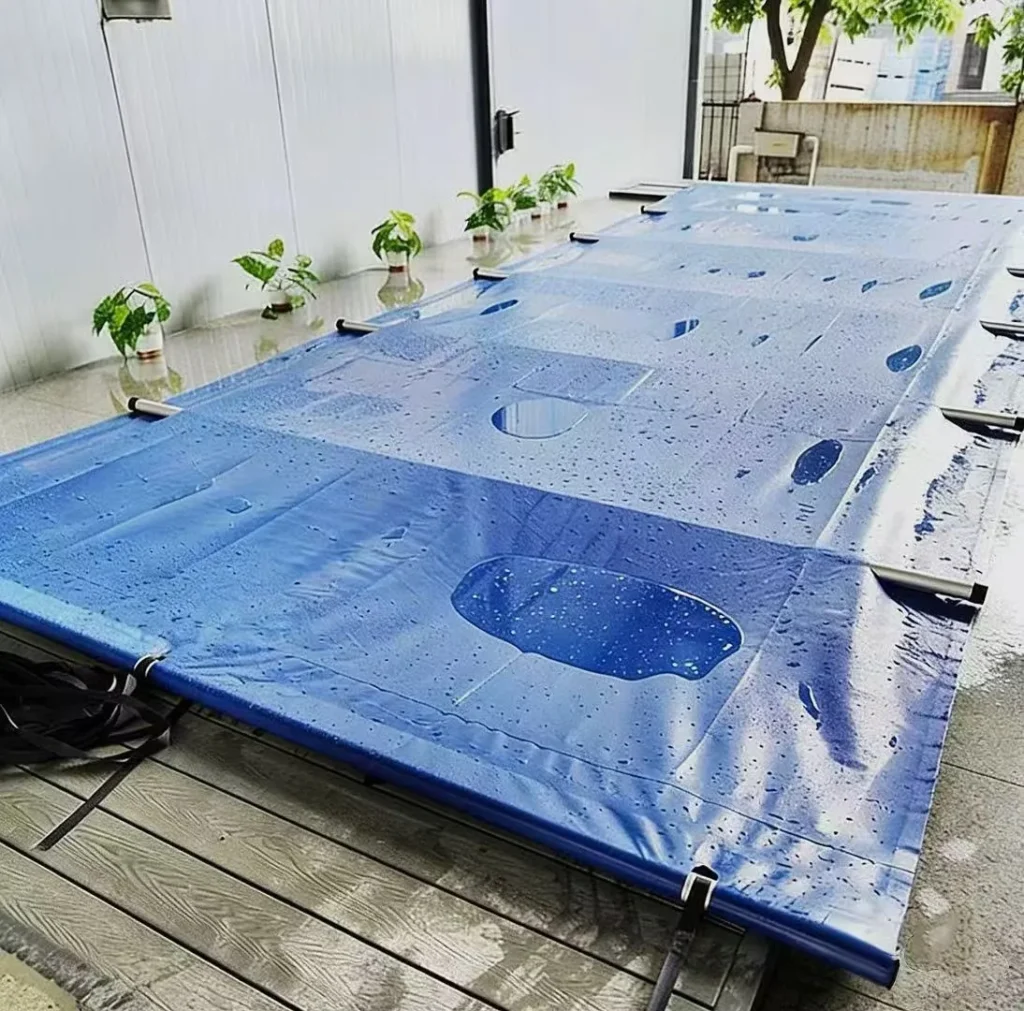
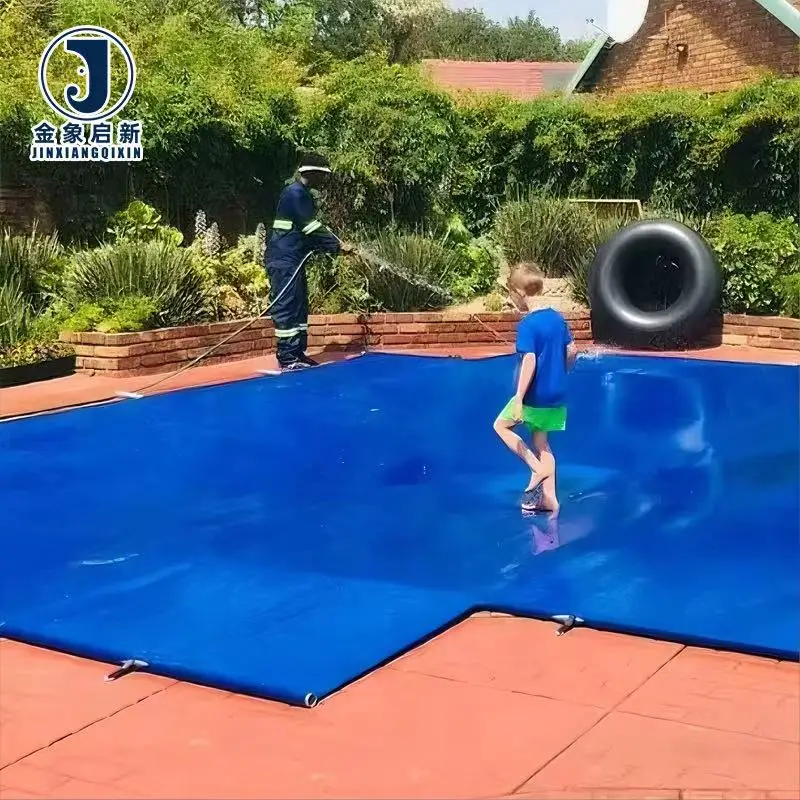
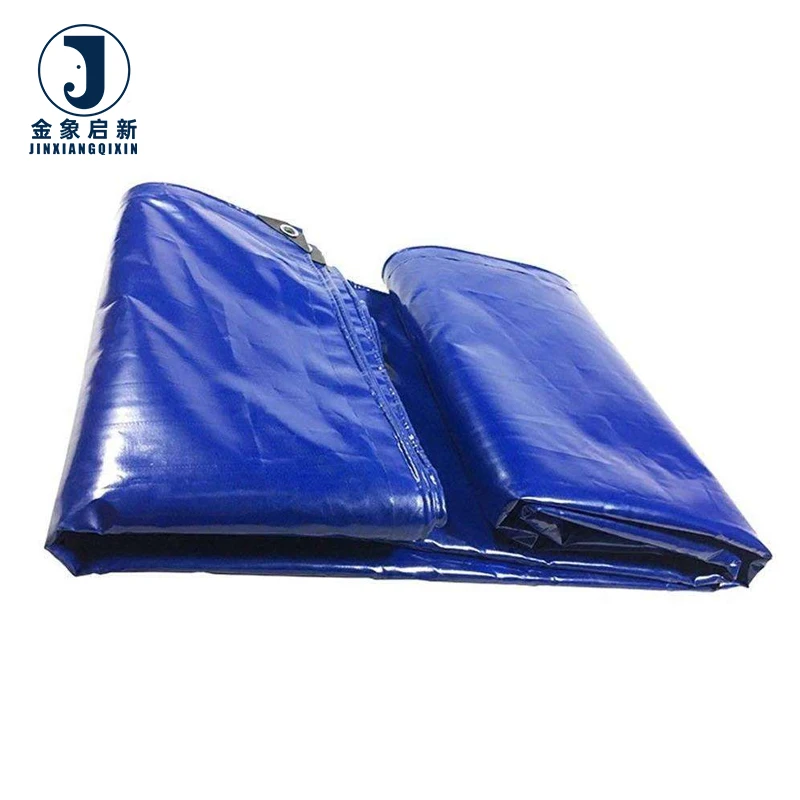
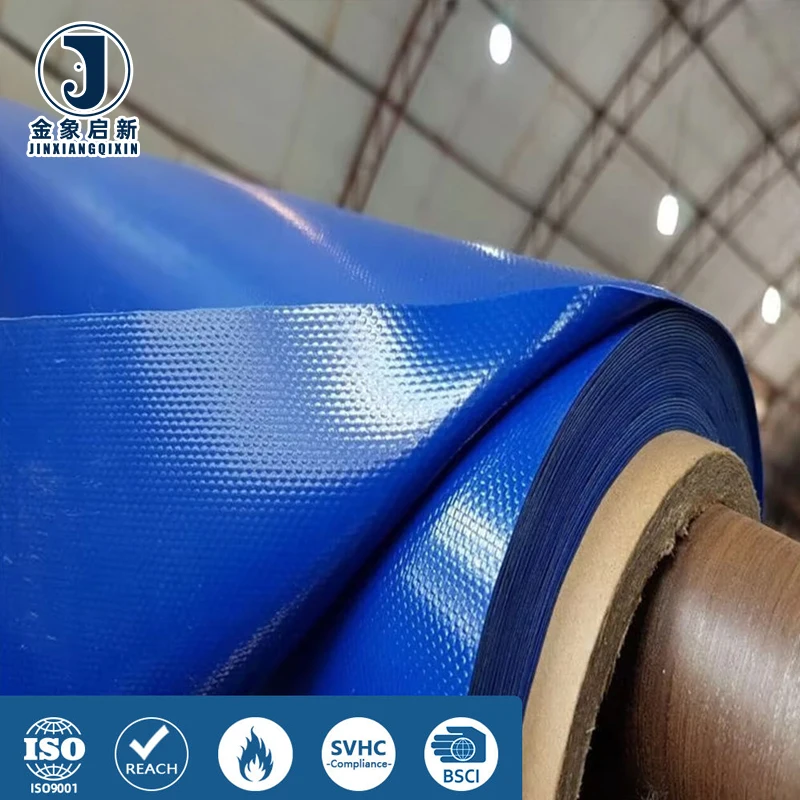
Verified Coating Control — Every roll of PVC pool cover material ships with documented GSM verification and full test reports, ensuring the fabric you specify for safety-critical pool installations is exactly what arrives on site.
Technical Specifications
| Parameter | Value |
|---|---|
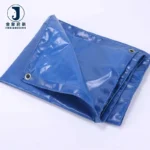
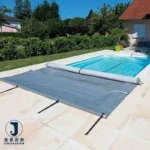
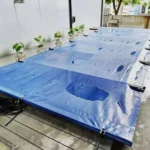
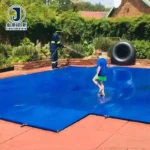
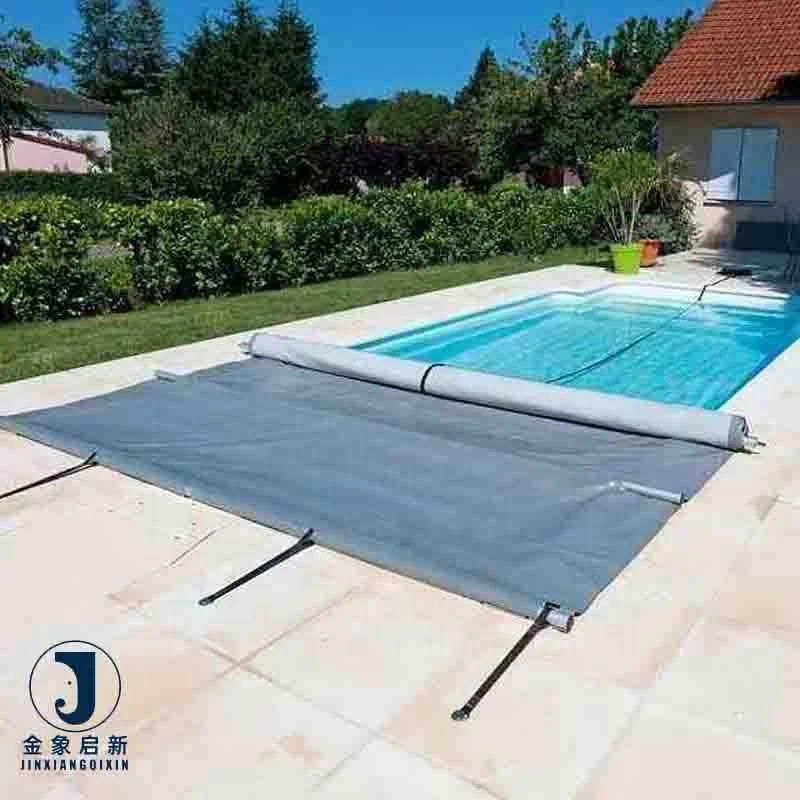
| Product Type | PVC Tarpaulin Swimming Pool Cover |
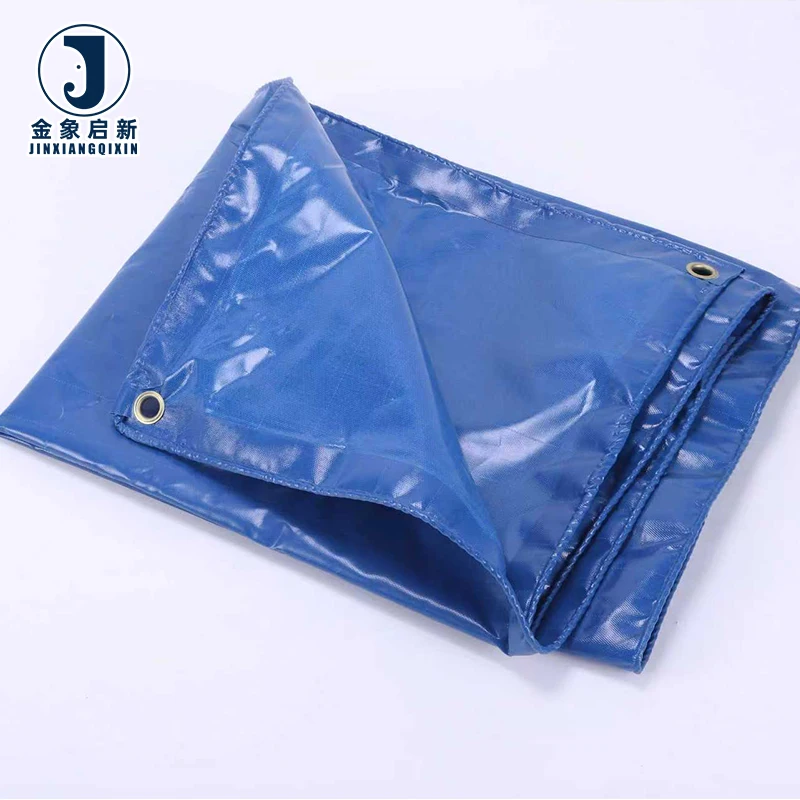
| Material | PVC Knife Coated Fabric |
| Weight (GSM) | 50gr/m2 ~ 220gr/m2 available |
| Thickness | 0.2-0.4mm / 8 mil-16 mil / Custom |
| Waterproof | Yes |
| UV Treatment | Available (test basis not stated) |
| Flame Retardant | Not stated in source |
| Anti-Static | Not stated in source |
| Anti-Mildew | Yes |
| Color Options | Blue, Blue/Orange, Green, Grey, Black, Clear, Grey/Green, Orange, or custom |
| Finish | Washable |
| Hardware Compatibility | Brass Anchor, Triangular Hook, Ratchet System, Aluminium Poles |
| Operation | Manual or motorized winders |
| Attachment | Six points using self-sinking stainless steel connections |
| Certifications | ISO 9001, ISO 14001, ISO 45001, CE |
Application Suitability
| Application | Exposure & Requirement |
|---|---|
| Residential swimming pool safety covers | Continuous UV exposure, chlorine atmosphere, seasonal wind load, building code compliance for fire performance |
| Commercial and hotel pool covers | Year-round sun and moisture, frequent manual or motorized winder operation, debris load from surrounding landscaping |
| Municipal and institutional aquatics facilities | Indoor ventilation-adjacent environments, stringent fire and safety codes, high-frequency use and maintenance cleaning |
| Irregular-shaped pool enclosures | Custom dimensional cutting, multiple welded seams at curves, consistent tension across non-standard geometry |
Why Undocumented UV and Fire Claims Put Pool Covers at Risk
Specified performance without test documentation is not performance — it is a liability.
When a pool cover fabric arrives at a commercial site without verifiable UV resistance data, the installer has no basis for warranty coverage or code compliance. I have reviewed project specifications where flame-retardant grades were stated on the quotation but no test report accompanied the shipment, leaving the contractor to source alternative material mid-project [NEED_CITE: fire classification requirements for pool enclosures in commercial buildings]. For PVC pool cover material used in safety-critical installations, the absence of documentation is the most common cause of project rejection at the inspection stage.
Coating Integrity Under Poolside Chemical Exposure
Pool environments expose cover fabrics to chlorinated water vapor, bromine-based sanitizers, and algaecide residue that accumulate on the underside during the swimming season. Knife-coated PVC construction delivers a continuous coating layer bonded directly to the base fabric, which resists delamination when exposed to these chemical agents over repeated wet-dry cycles. The PVC pool cover material maintains coating adhesion at the flex points where motorized winders roll and unroll the cover daily, a zone where laminated fabrics tend to separate at the coating-to-substrate interface.
Fire Performance Documentation for Code-Compliant Installations
Indoor pool facilities and enclosed commercial aquatics centers increasingly require documented fire performance for all textile materials within the building envelope. Flame-retardant grades are available for this PVC pool cover material — confirm the specific grade and test standard required for your market and building classification [NEED_CITE: NFPA and local fire codes for textile materials in recreational facilities]. Every shipment can include the applicable test report, giving the specifying engineer and the building inspector a clear chain of evidence from material selection through installation.
How Base Fabric and Coating Weight Define Real-World Durability
The GSM range of 50gr/m2 to 220gr/m2 spans lightweight seasonal covers through heavy-duty year-round installations, but GSM alone does not determine how the fabric performs under tension or at welded seams. The base fabric denier and weave density govern tensile and tear resistance, while the PVC coating weight controls waterproofing, abrasion resistance, and the thermal behavior during heat welding. A lighter fabric with a tight weave may outperform a heavier fabric with a loose base construction in tear propagation tests [NEED_CITE: tensile and tear test methods for coated fabrics per ISO 1421]. Knife coating produces a uniform coating thickness that supports consistent heat-weld parameters across the entire roll, reducing the risk of seam failure at the ratchet attachment points where the cover flexes under wind load.
The Hidden Cost of Batch Inconsistency Across Pool Cover Rolls
When a large commercial pool requires multiple rolls to fabricate a single cover, colour variation between rolls becomes visible once the panels are welded together and deployed on the pool deck. This is not a cosmetic issue alone — inconsistent coating weight between batches can cause heat-weld parameters to vary panel to panel, leading to seams that fail prematurely at the flex zones. For PVC pool cover material ordered in volume, pre-shipment inspection must verify both colour match and GSM consistency roll to roll before the fabric leaves the production facility [NEED_CITE: quality control standards for batch consistency in coated textile production].
Why Procurement Teams Choose This Supply Chain
Production runs on three full lines with 36 sets of professional equipment, giving the capacity to deliver multi-roll orders on schedule without splitting batches across different machines. A dedicated 10-person R&D team handles custom sizing, colour matching, and sample development, producing samples within days so that specifying engineers can verify material properties before committing to full production. QA and QC checkpoints at every production stage feed into a 100% pre-shipment inspection protocol that catches GSM deviations and colour drift before the rolls are packed. ISO 9001, ISO 14001, ISO 45001, and CE certifications underpin the production system, and complete customs documentation supports shipments to international pool construction markets.
Documentation & Verification
- Material specification sheet stating exact GSM, base fabric denier, and coating weight for the pool cover grade ordered
- UV resistance test report supplied when UV treatment is specified on the purchase order
- Flame-retardant test report and grade classification included where applicable to the destination market
- Pre-shipment inspection record confirming roll-to-roll colour consistency and dimensional accuracy
- Certificate of origin and full customs documentation package for international pool project shipments
Fabrication, Handling & Storage
- Heat-weld temperature and dwell time must be calibrated to the specific PVC coating thickness selected for the pool cover grade
- Brass anchors and ratchet systems distribute load across the six self-sinking stainless steel attachment points to prevent localized tearing
- Store rolls upright on pallets in shaded, dry conditions to avoid compression marks on the knife-coated PVC surface
- Use mild, non-solvent cleaners on the washable finish to preserve coating integrity and anti-mildew treatment over the cover service life
- Allow motorized winder mechanisms to roll the cover at even tension to prevent creasing at the PVC coating fold lines
Requesting a Quotation for Your Pool Cover Project
Provide the pool dimensions, cover operation type, and any fire or safety code requirements specific to your installation jurisdiction. Include the target GSM range, colour specification, and whether you need rolls or finished cut-and-welded covers with hardware kits. Sample development is available to confirm material properties and colour match before production begins.
Frequently Asked Questions
Q: How is the GSM of the pool cover fabric verified before shipment?
A: Each roll undergoes weight verification during the 100% pre-shipment inspection process. The measured GSM is recorded on the inspection report and compared against the specification stated on your purchase order. Any roll falling outside the agreed tolerance is flagged and replaced before dispatch, so the material arriving at your pool construction site matches the documented specification.
Q: What flame-retardant grades are available and which test standards do they meet?
A: Flame-retardant treatment is available in multiple grades depending on the destination market and building classification requirements. The specific test standard and grade must be confirmed at the inquiry stage so that the correct formulation is applied during production. A corresponding test report ships with the order to support code compliance and building inspector approval.
Q: How do you ensure colour consistency across multiple rolls for large pool installations?
A: Production planning assigns all rolls for a single project to the same production run on the same line. The pre-shipment inspection includes a side-by-side colour comparison under controlled lighting conditions. Rolls showing visible variation are held back and reprocessed, ensuring uniform appearance once the panels are welded and installed on the pool deck.
Q: What certifications and test documents ship with each order?
A: Every shipment includes the material specification sheet, pre-shipment inspection record, certificate of origin, and packing list. UV and flame-retardant test reports are included where those treatments are specified on the order. ISO 9001, ISO 14001, ISO 45001, and CE certificates are available as part of the documentation package for project submittals.