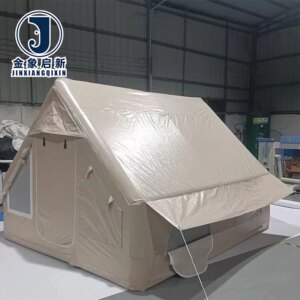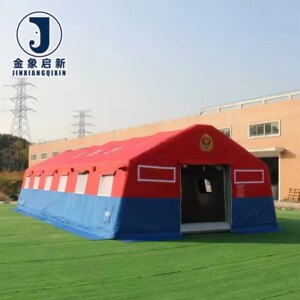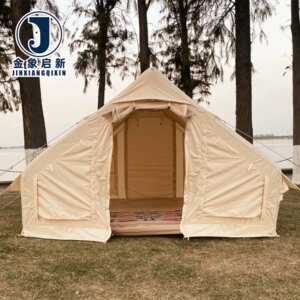
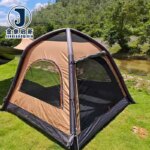
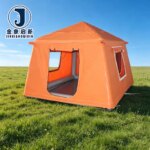


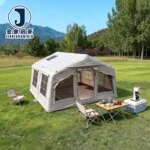
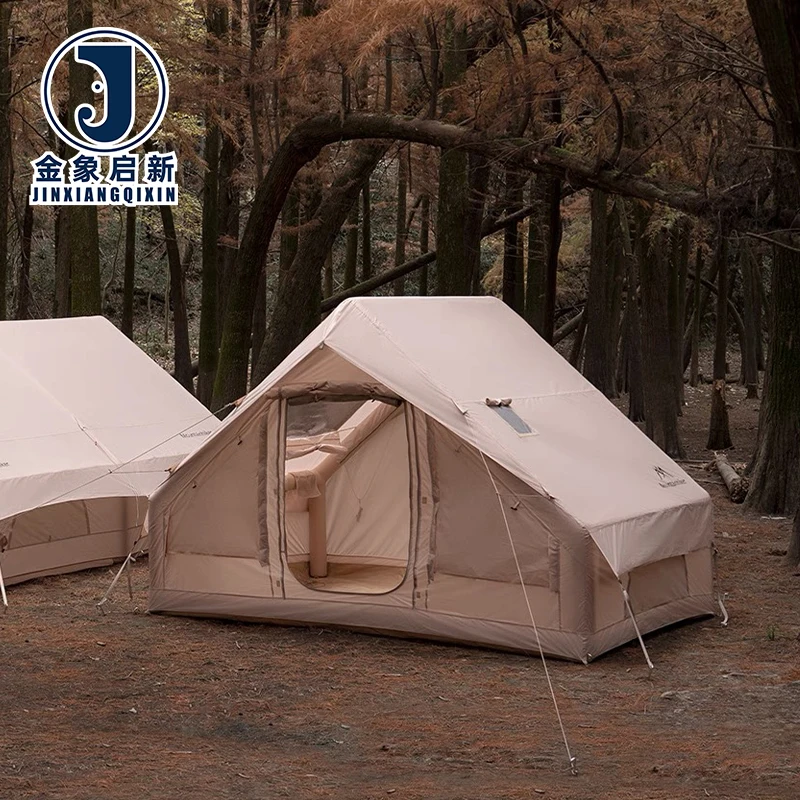
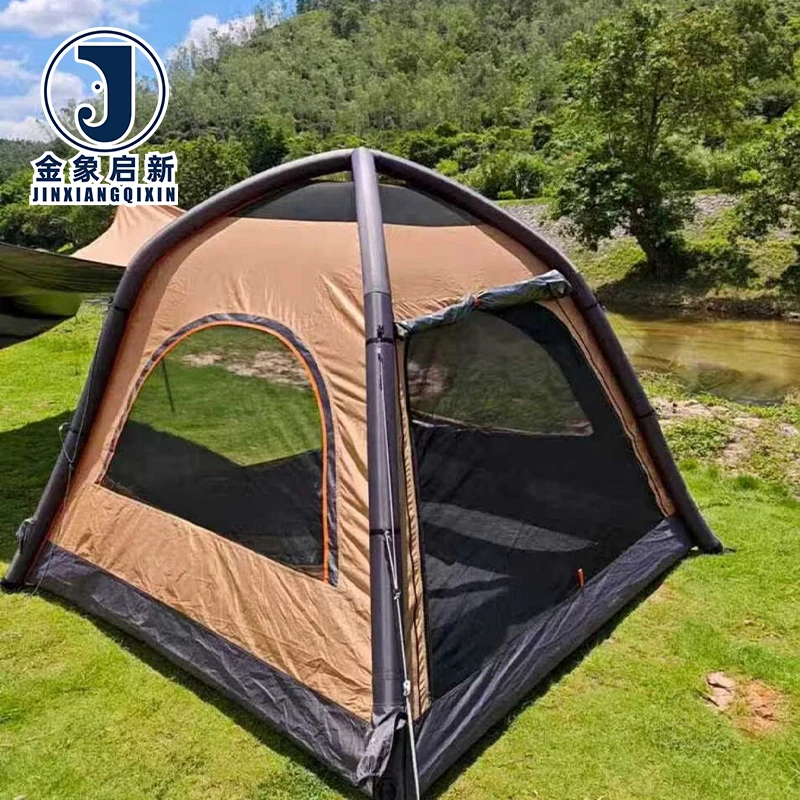
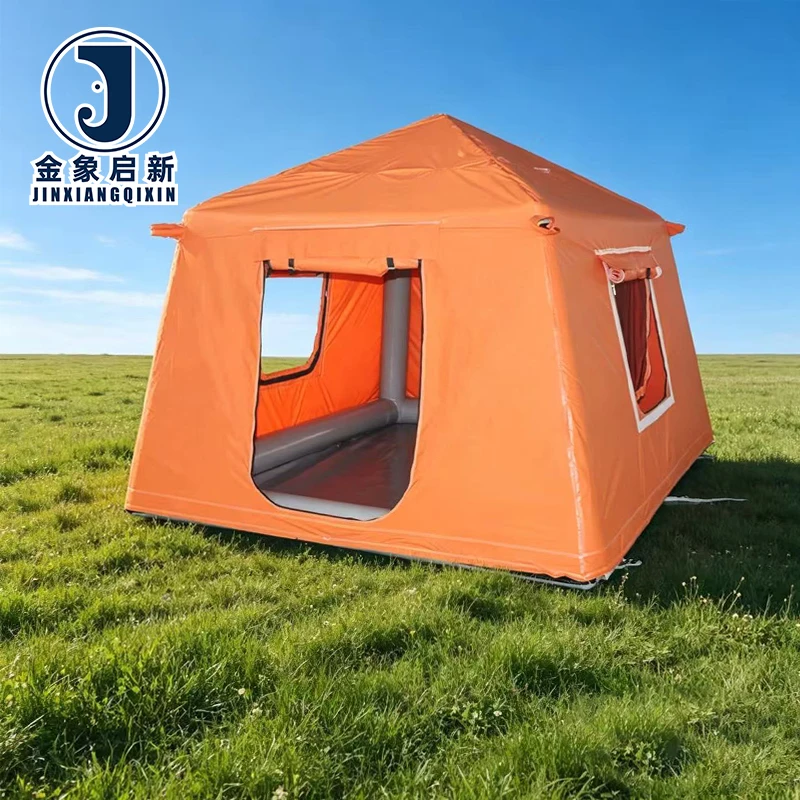
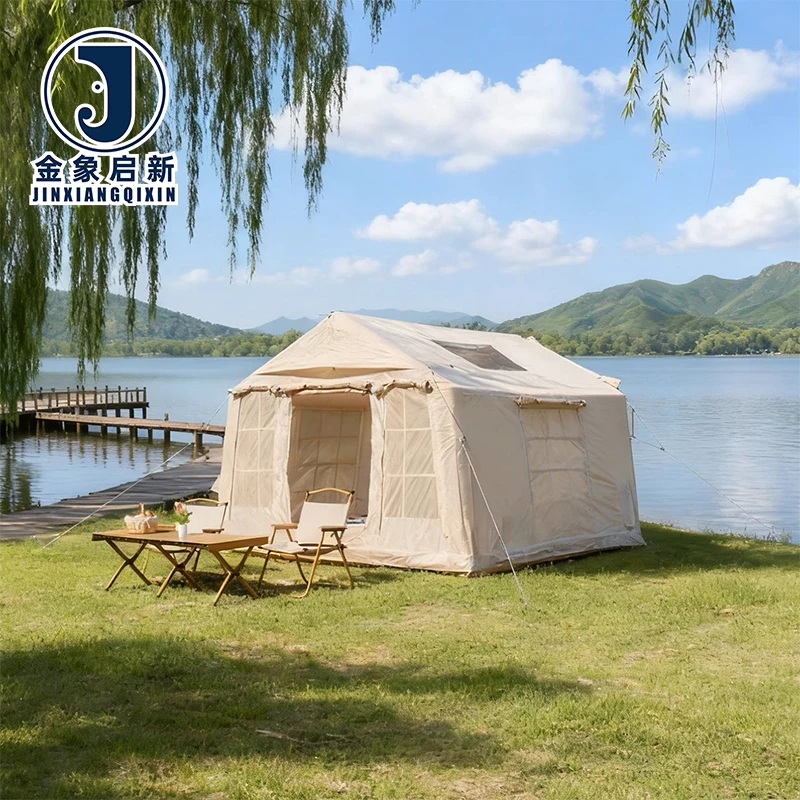
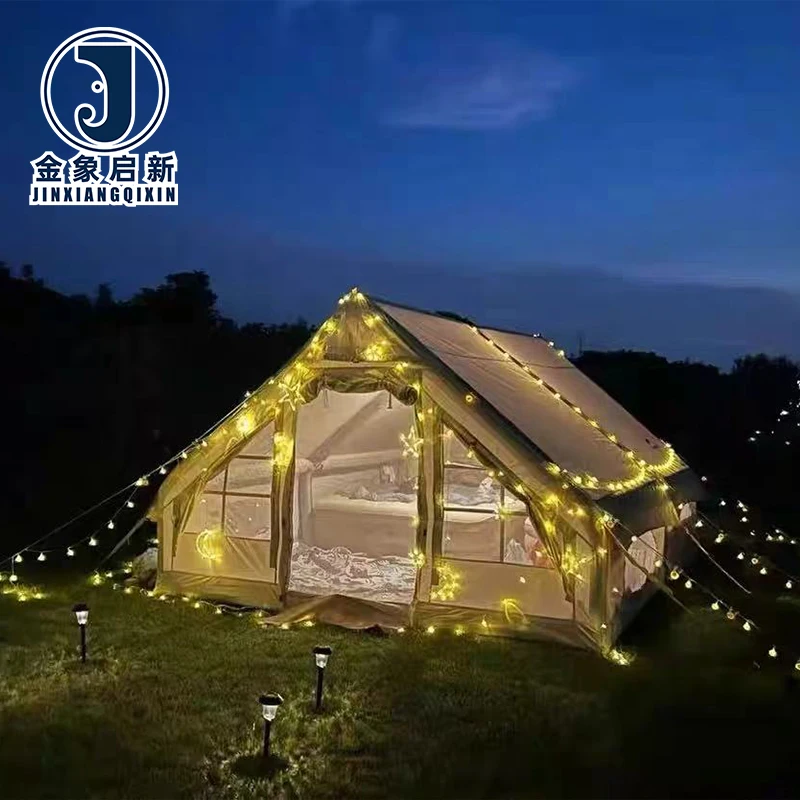
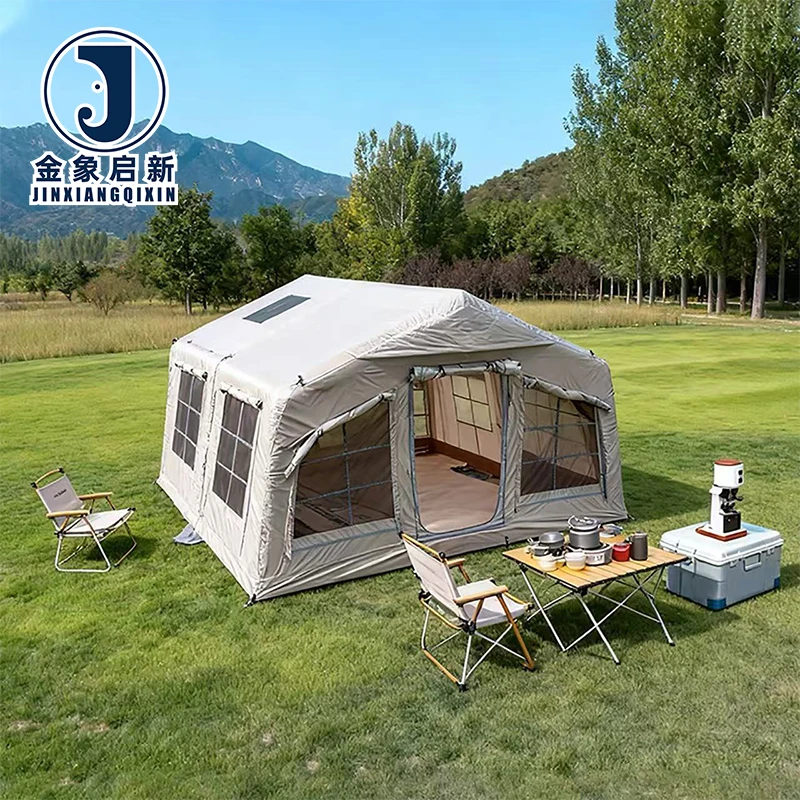
Deep coating process control — nearly three decades of knife-coated PVC manufacturing ensure every roll of inflatable tent fabric meets batch-level thickness, weight, and performance consistency before leaving the line.
Technical Specifications
| Parameter | Value |
|---|---|
| Product Type | PVC Tarpaulin for Inflatable Tent |
| Core Material | PVC knife-coated fabric |
| Waterproof Construction | Yes, multi-layered coated structure |
| UV Treatment | UV-resistant (test basis not stated — request report) |
| Flame Retardancy | Fire-retardant (grade not stated — confirm grade for your market) |
| Anti-Static Property | Anti-static (surface resistance or standard not stated) |
| Tear Resistance | Tear-resistant (test standard not stated — request report) |
| Customization Scope | OEM & ODM: sample customization, pattern printing, thickness adjustment, custom dimensions |
| Production Facility | 9,180 m² |
| Production Lines | 3 full production lines |
| Processing Equipment | 36 sets |
| R&D Team | 10 technicians |
| Quality Control | Full-process QA/QC with 100% pre-shipment inspection |
| Certifications | ISO 9001, ISO 14001, ISO 45001, CE |
Application Suitability
| Application | Exposure & Requirement |
|---|---|
| Commercial inflatable camping tents (4–6 person) | Repeated inflation/deflation cycles, direct sunlight, wind-driven rain, ground abrasion during pitch and strike |
| Adventure tourism inflatable structures | Prolonged UV exposure, high humidity, seasonal temperature swings, transport and storage compression |
| Industrial remote-site camping equipment | Dust-laden environments, potential static discharge, mandatory fire-retardant compliance for site safety audits |
| Outdoor gear brand roll stock | Batch-to-batch color and thickness consistency, pattern printing clarity, weld seam strength at air-beam channels |
Why Fire-Retardant Claims Mean Nothing Without a Verified Grade
Certified PVC inflatable tent fabric must carry a traceable test report matching the compliance framework of the destination market — anything less leaves your product liability exposure wide open.
Manufacturers sourcing inflatable tent fabric routinely receive quotations that state "flame retardant" as a line item, yet the material arriving on the cutting table has no accompanying test certificate tied to a recognized standard. When a finished tent is deployed on a commercial campsite, mining camp, or festival ground subject to fire safety inspection, the absence of a grade-specific report shifts all compliance risk onto the equipment brand. Inflatable Tent Fabric fire retardant anti-static certified supply chains remain thin — most coated fabric mills produce general-purpose tarpaulin and apply retardant additives without calibrating to the specific framework your end market enforces. The gap between a claim and a certificate is where product recalls originate. [NEED_CITE: fire classification frameworks for temporary structures vary by jurisdiction — confirm local code before specifying]
Coating Chemistry Behind Air-Beam Integrity
The air-holding beams of an inflatable tent place demands on PVC tarpaulin that go far beyond a conventional flat cover. Every inflation cycle flexes the coated fabric at the beam curvature, and the knife-coating process must deliver a bond between the PVC layer and the polyester base fabric that withstands this repeated deformation. Our PVC Tarpaulin for Inflatable Tent is produced on knife-coating lines that control coating weight and penetration depth independently, ensuring the coating anchors into the base weave rather than sitting as a surface film that can delaminate under cyclic pressure stress.
Anti-Static Treatment for Dry-Environment Deployment
Static charge accumulation on inflatable tent surfaces is more than a nuisance — in arid climates or dust-heavy environments such as desert base camps and mining exploration sites, electrostatic discharge from the tent skin can interfere with sensitive electronic equipment stored inside. The anti-static treatment applied during the coating stage reduces surface charge buildup across the PVC inflatable tent fabric. Because surface resistance values and the applicable test standard are not stated in the current specification sheet, we recommend requesting the anti-static test report and verifying that the measured values align with the safety thresholds required at the deployment site. [NEED_CITE: surface resistance testing methods for coated technical textiles]
Reading Between the Specs: What Drives Real-World Tent Fabric Performance
The interaction between base fabric denier, weave density, and coating weight determines how an inflatable tent material behaves under the combined stresses of internal air pressure, wind load, and ground contact. A heavier coating does not automatically translate into a stronger fabric — if the base cloth uses low-denier yarns with open weave spacing, the coating carries a disproportionate share of the structural load, and tear propagation can initiate at the yarn crossover points where the PVC bridges gaps rather than encapsulating a dense textile grid. Knife-coated construction, as used in this PVC inflatable tent fabric, forces the PVC compound into the interstices of the base weave under controlled pressure, producing a mechanical lock that resists delamination during heat welding and high-frequency joining — the two primary fabrication methods for inflatable beam chambers. For tent designers specifying air-beam diameters and internal pressure ratings, the peel strength between coating and substrate is as critical as the tensile rating of the base cloth alone. Flame-retardant additives, when present, must be compatible with the plasticizer system to avoid migration that would stiffen the fabric at low temperatures or reduce weld seam strength over time.
The Cost of Overlooking Batch Consistency in Tent Fabric Orders
When a production run of inflatable camping tents shows visible color variation between panels cut from different rolls, the entire batch faces rejection from quality-conscious brand clients who photograph finished products for catalog and e-commerce listings. Thickness inconsistency between rolls causes heat-weld parameters calibrated on the first roll to underperform on the second, producing beam seams that leak during the manufacturer’s own inflation test — or worse, fail silently in the field after weeks of cyclic use. These failures are rarely caught at incoming inspection because standard sampling protocols check the first and last roll while missing mid-batch drift. Full-process QA/QC with digital batch tracking and 100% pre-shipment inspection addresses this by verifying color reference and thickness at multiple points through the production run. [NEED_CITE: batch-to-batch color variance tolerance standards for coated fabrics]
Why Procurement Teams Consolidate Inflatable Tent Fabric Sourcing Here
Three full production lines running dedicated knife-coating processes mean capacity is allocated to your order without being queued behind unrelated tarpaulin grades competing for the same line time. A 10-technician R&D team develops custom samples — adjusting thickness, surface finish, and pattern printing — within days, allowing your design engineers to validate weld parameters and inflation behavior before committing to a production roll order. The 36 sets of processing equipment include high-frequency welders and slitting lines that support both raw roll dispatch and pre-cut panel supply for brands that outsource beam fabrication. Material specification sheets ship with every order detailing coating weight, base fabric construction, and applicable test reports, giving your incoming quality team the documentation needed to verify without destructive testing. ISO 9001, ISO 14001, ISO 45001, and CE certifications are maintained across all production stages, providing the audit trail that commercial outdoor equipment brands require for their own supply chain compliance filings.
Documentation & Verification
- Material specification sheet confirming PVC coating weight, base fabric denier, and treatment grades per roll
- Test reports for UV resistance, flame retardancy, and anti-static performance issued per production batch
- ISO 9001, ISO 14001, ISO 45001, and CE certificates included with every shipment
- Pre-shipment inspection record verifying color reference and thickness against order specifications
- Sample approval documentation linking production batch to validated pre-production sample
Fabrication, Handling & Storage
- Heat-weld parameters should be calibrated to the specific PVC knife-coated thickness before beam fabrication begins
- Store rolls vertically on padded racks to prevent flat-spot deformation of the coated surface
- Avoid compression stacking beyond two rolls high to preserve coating uniformity for air-beam channels
- Clean welded seams with PVC-compatible solvent only to protect anti-static and flame-retardant surface treatments
- Slit rolls to custom beam-panel widths using carbide blades to prevent edge fraying of the base fabric
- Allow cold-stored rolls to acclimate to workshop temperature before unrolling to prevent coating micro-cracking
How to Structure Your Inflatable Tent Fabric Inquiry
Provide the intended deployment environment — including expected UV exposure duration, ambient temperature range, and whether the tents will be used in areas with fire safety inspection requirements — so we can match the appropriate treatment package. Specify your annual roll volume and required widths, along with any pattern printing or custom color references needed to match your brand guidelines. Let us know whether you need raw roll stock for your own cutting and welding operations, or if you require pre-cut panels and finished beam sleeves, and whether a pre-production sample for weld parameter validation is needed before the main order.
Frequently Asked Questions
Q: What fire-retardant grade does the inflatable tent fabric carry, and does it meet my market’s compliance requirements?
A: The fabric is produced with fire-retardant treatment; however, the specific grade is not stated on the current specification sheet. We recommend confirming the fire classification framework required in your destination market — whether that is a European, North American, or regional standard — and requesting the corresponding test report. Our team can supply documentation aligned to the grade your compliance audit demands before you commit to a production order.
Q: How is anti-static performance verified and what surface resistance values can I expect?
A: Anti-static treatment is incorporated during the PVC coating stage to reduce surface charge accumulation on the finished tent fabric. The specific surface resistance values and the test method used are not stated in the standard specification. For deployment in dust-heavy or electronics-sensitive environments, request the anti-static test report to verify that measured values fall within the safety thresholds mandated by your site operator or regulatory authority.
Q: What UV-resistance test basis supports the outdoor durability claim for tent fabric?
A: The PVC tarpaulin is formulated with UV-resistant additives designed to maintain colorfastness and material stability during prolonged sunlight exposure. The test basis and exposure duration behind this claim are not stated on the standard specification sheet. We recommend requesting the UV test report for your records, particularly if your end clients operate in high-solar-radiation regions or require documented weathering data for their own product certifications.
Q: How do you ensure batch-to-batch color and thickness consistency across large production runs?
A: Full-process quality control monitors coating weight, color reference, and material thickness at multiple stages throughout each production run on all three coating lines. Every roll undergoes 100% pre-shipment inspection against the approved sample and order specification. Digital batch tracking links each roll to its production date, line, and test data, providing traceability that supports your incoming inspection and brand quality documentation requirements.
Q: What OEM/ODM customization options are available and what is the sample approval process?
A: Customization covers thickness adjustment, custom dimensions, pattern printing, and surface finish selection to match your tent design requirements. The process begins with a specification review and sample development by the 10-technician R&D team, typically delivered within days for evaluation. Once you validate weld parameters, inflation behavior, and visual appearance on the sample, mass production proceeds under the locked specification with QA checkpoints throughout the run.