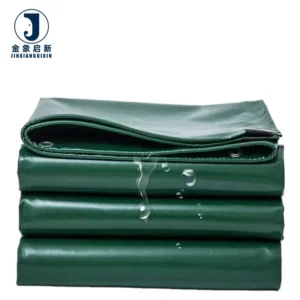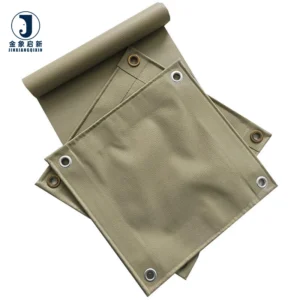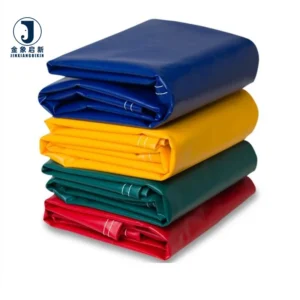
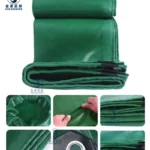

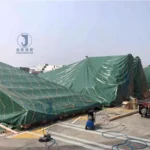
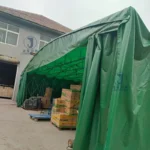

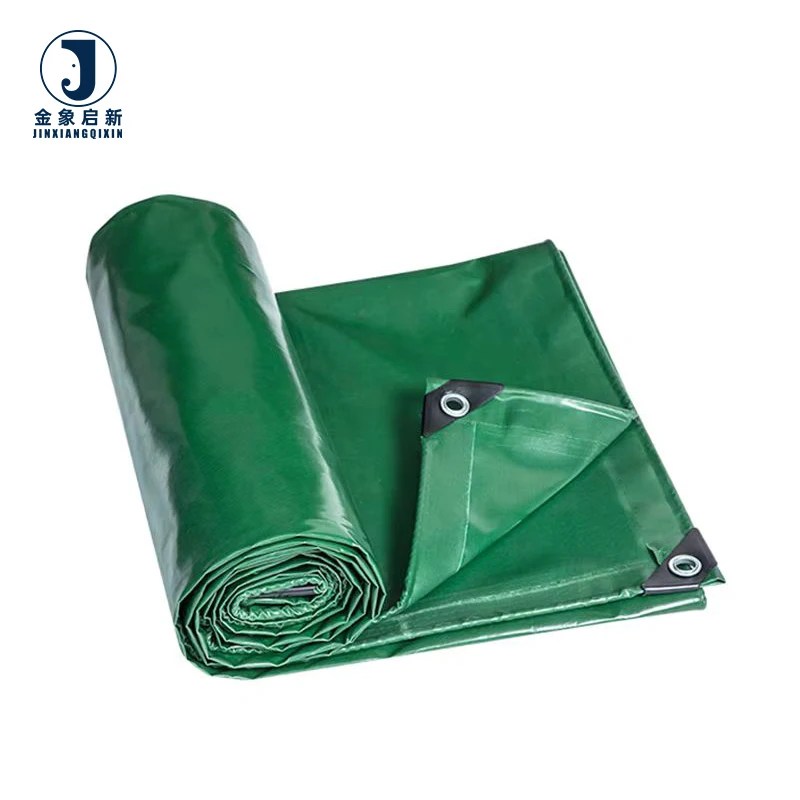
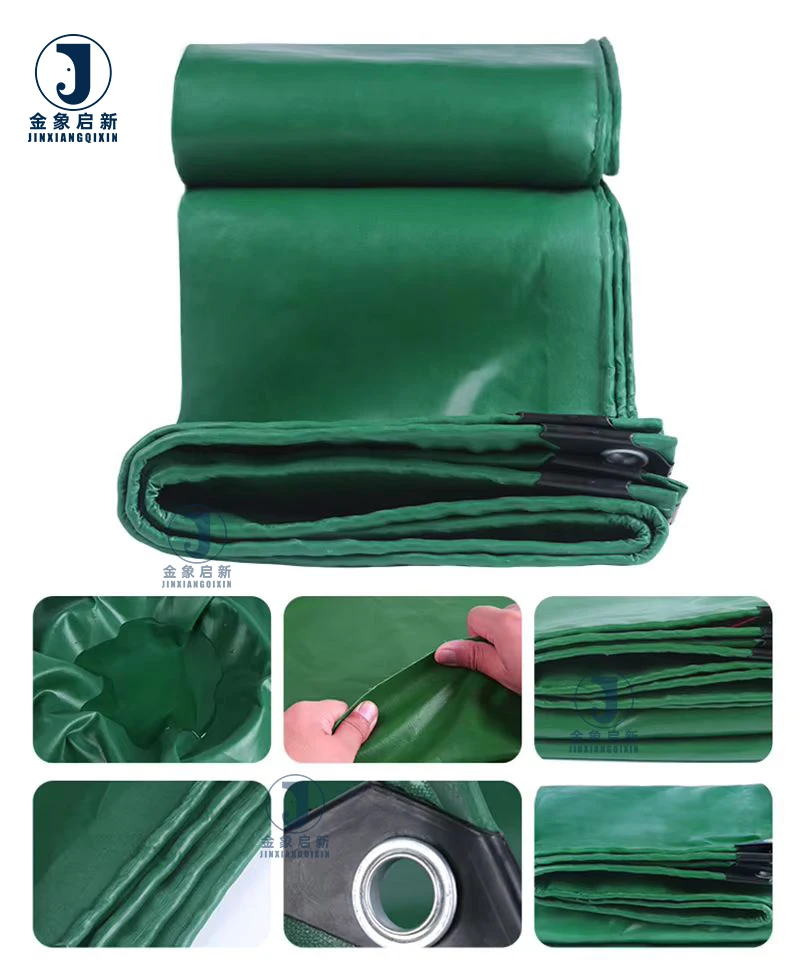
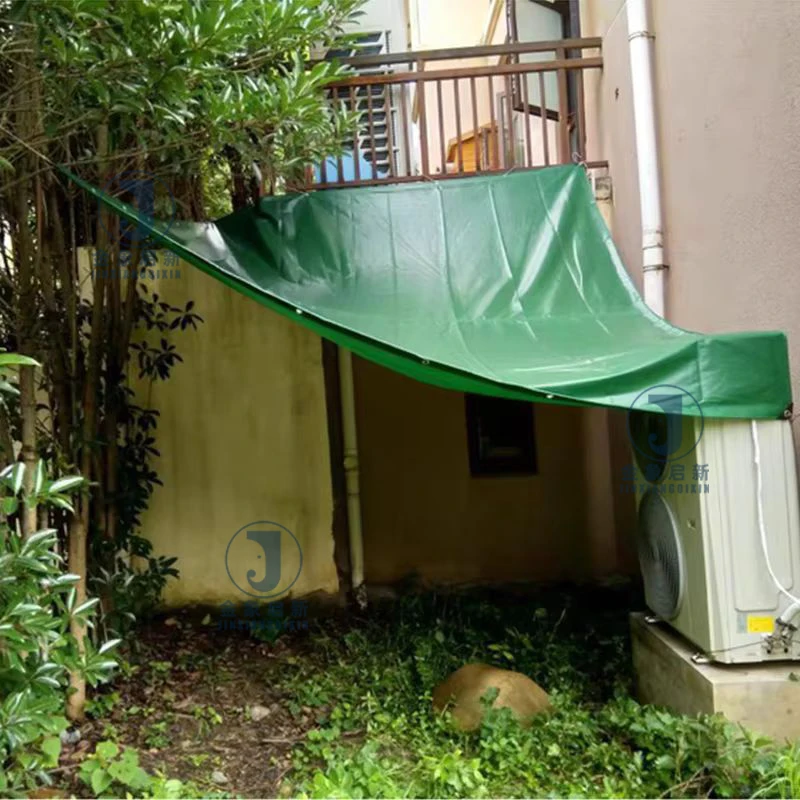
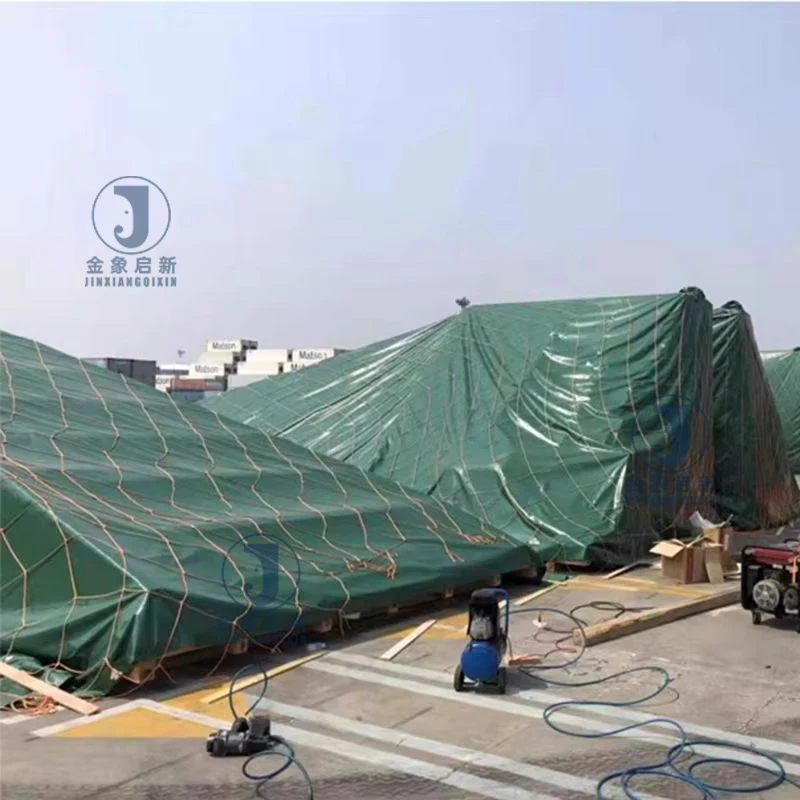

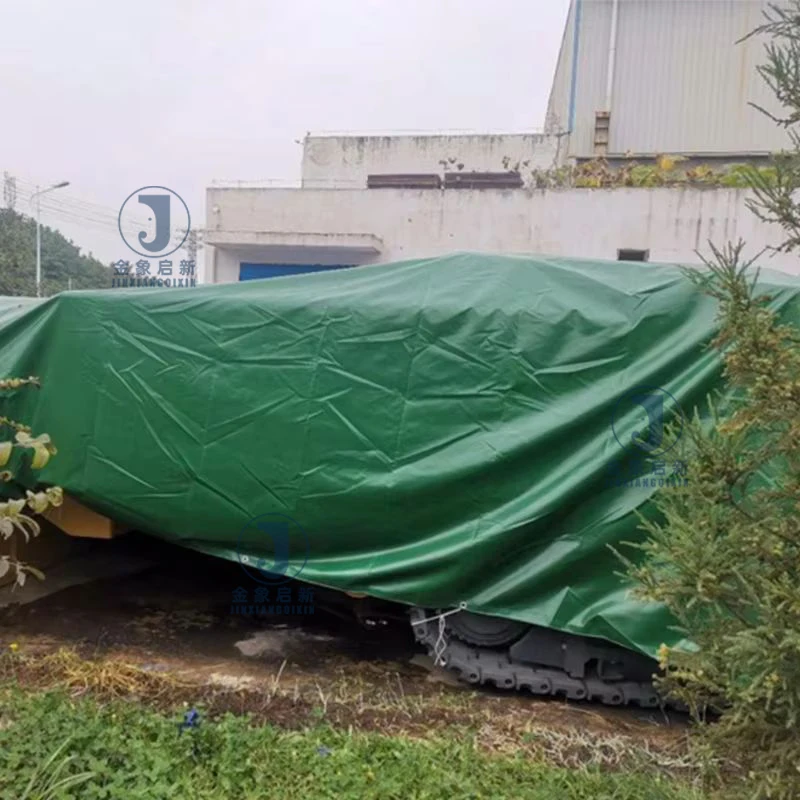
Coating Weight Control — three full production lines and 36 sets of equipment maintain GSM accuracy within strict tolerances on every roll of PVC coated tarpaulin fire retardant fabric produced for ventilation and specialist structure applications.
Technical Specifications
| Parameter | Value |
|---|---|
| Product Type | PVC Coated Tarpaulin |
| Base Fabric | Woven polyester |
| Coating Material | PVC vinyl |
| Weight | At least 450 gsm (source value — verify against manufacturer catalog) |
| Waterproof | Yes — fully coated barrier construction |
| Fire-Retardant Options | Available in flame retardant grades — confirm the grade required for your market (M2 / B1 / NFPA 701 as applicable) |
| Anti-Static Options | Available with anti-static treatment — surface resistance test report provided on request |
| Surface Finish | PVC coated, suitable for heat welding and fabrication |
Application Suitability
| Application | Exposure & Requirement |
|---|---|
| Mining and tunnelling ventilation ducts | Confined-space airflow, moisture, mandatory fire-retardant certification for underground compliance |
| Aviation ground support ducting | Fuel-adjacent environments requiring anti-static fabric to prevent electrostatic discharge |
| Inflatable and membrane structures | Tensile loading at seam lines, outdoor weather exposure, repeated inflation cycles |
| Temporary enclosures and shelters | Rain, wind loading, rapid deployment and dismantling |
Why Certification Documentation Matters More Than the Label on the Roll
A fire-retardant claim without a test standard is a liability, not a specification.
Ventilation ducts installed in mining or tunnelling sites must meet specific fire classification requirements before commissioning. Procurement teams regularly receive PVC coated tarpaulin fire retardant rolls that carry a generic label but arrive without the test report the site safety officer needs to sign off [NEED_CITE: fire classification requirements for underground ventilation per regional mining codes]. When the documentation gap surfaces during an audit, the entire duct run can be rejected — not because the fabric failed, but because the paperwork was never shipped. Anti-static specifications for aviation ground ducting follow the same pattern: the surface resistance value must be measured, recorded, and matched to the project compliance file before installation proceeds.
Coating Integrity at Duct Flex and Joint Points
Ventilation ducts flex continuously under positive and negative air pressure, concentrating stress at welded seams and joint collars. The woven base fabric in this PVC coated tarpaulin fire retardant material provides dimensional stability so the coating does not crack or delaminate at repeated bend radii. PVC vinyl coating bonds to the woven substrate through a controlled application process that maintains adhesion across the full roll width. Fabricators working with this material can heat-weld seams rather than relying on sewn joints, which reduces the number of needle holes that compromise the waterproof barrier and the fire-retardant coating continuity.
Compliance Alignment for Confined-Space and Ground-Support Environments
Mining ventilation regulations in most jurisdictions require duct fabric to carry a documented fire classification — typically M2, B1, or NFPA 701 — and the test report must travel with the shipment to the site compliance file. Aviation ground support ducting specifies anti-static fabric to prevent charge accumulation near fuel systems, and the surface resistance reading must fall within the range the project engineer has approved [NEED_CITE: anti-static surface resistance ranges for aviation ground handling materials]. This PVC coated tarpaulin fire retardant fabric is available with both treatment options, and the corresponding documentation is prepared per roll so that each unit shipped can be traced back to its test result.
How Base Fabric and Coating Weight Interact in Duct Fabrication
The 450 gsm coating weight provides enough PVC mass to form a continuous waterproof barrier while keeping the total fabric weight manageable for duct sections that must be hung, joined, and sometimes repositioned underground. However, GSM alone does not determine how the fabric behaves during fabrication. The woven base fabric denier and thread count control tear propagation: a tight weave limits the distance a tear travels once initiated at a cut edge or an eyelet punch. The coating method — whether knife-over-roll or calender — affects peel strength between the PVC layer and the woven substrate, which directly influences how well heat-welded seams hold under duct pressure cycling. Fabricators should request the material specification sheet showing base fabric construction alongside GSM to evaluate weld parameter settings before committing to a production run [NEED_CITE: tensile and tear test methods for coated fabrics per ISO 1421].
What Happens When the Specification Gap Reaches the Site
A duct fabricated from fabric that lacks the required fire-retardant grade does not fail visibly — it simply cannot be approved during the commissioning inspection, halting the entire ventilation system until replacement material arrives and is reinstalled. Anti-static non-compliance follows the same pattern: the duct may perform adequately in service, but without a surface resistance test report on file, the safety audit flags the installation and work stops. Colour variation between rolls used on the same membrane structure becomes apparent only after panels are hung side by side, forcing a full reorder when the project owner rejects the appearance [NEED_CITE: batch consistency standards for coated fabric used in visible architectural applications]. These are not material failures — they are specification and documentation failures that surface late and cost far more than the original fabric order.
Production Control That Reaches the Duct Fabricator
Deep process control over coating weight and adhesion is maintained across three full production lines, giving consistent PVC vinyl thickness roll after roll. A 10-person R&D team handles material selection and sample development, so fabricators can receive trial rolls cut to their duct diameter and seam geometry before committing to bulk. Dedicated QA/QC inspection at every production stage catches GSM drift, coating voids, and colour deviation before the roll is packed. Samples for custom width or treatment requirements are developed within days, reducing the gap between specification and confirmed material in hand. Pre-shipment inspection records document the actual measured values for each roll in the order, not just the target specification.
Documentation & Verification
- Material specification sheet stating GSM, base fabric denier, weave, and PVC coating method for each roll
- Fire-retardant test report documenting grade (M2 / B1 / NFPA 701) applicable to the destination market
- Anti-static surface resistance measurement recorded per roll for mining and aviation duct orders
- Pre-shipment inspection record with actual GSM and coating weight readings
- Certificate of origin and customs documentation included with every dispatch
Fabrication, Handling & Storage
- Heat-weld seams at temperatures matched to the PVC vinyl coating thickness to avoid burn-through on 450 gsm fabric
- Store rolls horizontally on padded racks to prevent permanent creasing of the woven PVC coated surface
- Allow cold-stored rolls to reach ambient temperature before unrolling to avoid coating crack at low-temperature flex
- Use rotary cutters rather than shears on woven base fabric to prevent frayed edges that compromise weld integrity
- Clean fabricated ducts with mild detergent only — solvent-based cleaners can degrade the PVC coating plasticiser layer
What to Include in Your Enquiry
Provide the ventilation or structure application, the fire-retardant grade or anti-static standard your project requires, and the target duct diameter or panel dimensions. Specify roll width and length preferences to minimise fabrication waste. If colour matching across multiple rolls is critical for a visible membrane installation, include the RAL or Pantone reference so batch consistency can be confirmed before production.
Frequently Asked Questions
Q: Which fire-retardant standard applies to my ventilation duct project?
A: The required standard depends on your jurisdiction and the site classification. Common specifications include M2 for European underground works, B1 per DIN 4102 for German-regulated sites, and NFPA 701 for North American installations. Confirm the standard with your project safety officer, and the corresponding test report will be prepared and shipped with your PVC coated tarpaulin fire retardant rolls.
Q: How is anti-static performance verified for mining duct orders?
A: Each treated roll undergoes surface resistance testing, and the measured value is recorded on the inspection report shipped with the fabric. This document provides the data the site compliance team needs to approve the duct installation. Request the specific resistance range your project requires so the treatment can be matched before production begins.
Q: How is GSM confirmed before the fabric leaves the factory?
A: A sample is cut from each roll and weighed under controlled conditions during pre-shipment inspection. The actual measured GSM is recorded on the inspection report and compared against the specification sheet. Rolls falling outside the agreed tolerance are held and not included in the dispatch.
Q: Can this fabric be heat-welded for duct construction?
A: Yes. The PVC vinyl coating on the woven base fabric is compatible with standard hot-air and wedge welding methods used in duct fabrication. Weld temperature and speed should be set based on the coating thickness. Request a sample roll to dial in your weld parameters before starting production.
Q: What custom widths and roll lengths are available?
A: Rolls can be produced in custom widths to match your duct circumference or membrane panel layout, reducing off-cut waste. Roll length is adjusted to your fabrication run size. Provide your required dimensions and annual volume so the production team can confirm lead time and minimum order for your specification.