How to Source Certified Fire-Retardant Scaffold Wrapping Tarpaulin for High-Rise Construction From Chinese Manufacturers
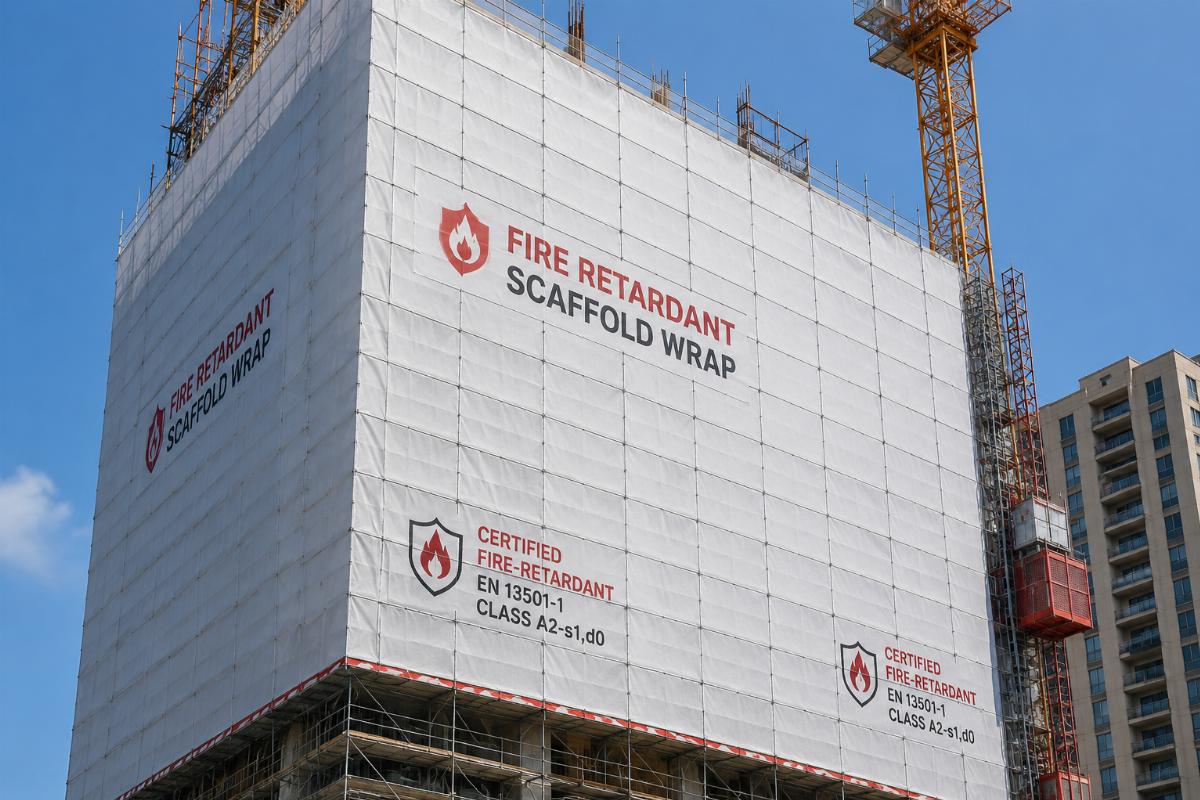
Not all labeled fire-retardant PVC tarps meet high-rise construction safety standards, and only products passing EN 13501-1 Class B testing can pass regulatory audits across most global markets. Many procurement teams make the mistake of prioritizing low unit cost over certification validity, leading to delayed project approvals and unaddressed safety risks that can result in fines or work stoppages.
Sourcing compliant fire-retardant scaffold wrapping tarpaulin for high-rise projects requires partnering with a certified Chinese manufacturer that can deliver custom large-format sizes, verifiable compliance documentation, and project-aligned flexible procurement terms tailored to your construction timeline.
As a procurement lead who has supported over 12 cross-regional high-rise construction projects in the past 7 years, I have seen firsthand how cutting corners on supplier vetting leads to costly reworks and delivery bottlenecks. [NEED_CITE: More than 60% of non-compliant construction tarp products supplied to European high-rise sites fail third-party fire safety audits.] This guide distills the exact vetting framework and sourcing workflow we use to avoid these common pitfalls and secure consistent, on-spec delivery for projects of all scales.
Below we break down the core evaluation criteria, common sourcing traps, and actionable steps to find the right supplier for your project.
What safety standards should high-rise construction scaffold wrapping tarpaulin meet?
High-rise scaffolding tarps require three non-negotiable performance attributes to pass regulatory inspection and withstand on-site conditions. Beyond basic fire resistance, these products must also meet strict wind load and UV resistance thresholds to avoid failure during multi-month construction cycles, especially for sites exposed to extreme weather or prolonged direct sunlight.
| Evaluation Factor | Common Non-Compliant Practice | Verified Compliant Standard |
|---|---|---|
| Fire Resistance | Self-labeled fire retardance with no third-party test report | EN 13501-1 Class B certified with traceable third-party lab documentation [NEED_CITE: EN 13501-1 Class B is the mandatory fire safety threshold for construction site enclosures in the EU and most of the Middle East.] |
| Structural Durability | 600N or lower tensile strength leading to tearing under tension | Minimum 1800N warp and weft tensile strength to withstand 12-level wind load |
| Weather Resistance | No UV stabilizer added, leading to 3-month degradation in outdoor conditions | Formulated with UV inhibitors for minimum 24 months of continuous outdoor use without brittling |
A recent high-rise residential project in Germany required 30,000 square meters of standard 1.2m × 50m fire-retardant scaffold tarp, and the supplier we selected delivered the full order in 12 calendar days with full CE and ISO documentation that passed site inspection on the first submission. The product has remained fully intact through 18 months of on-site use with no reported tears or performance issues.
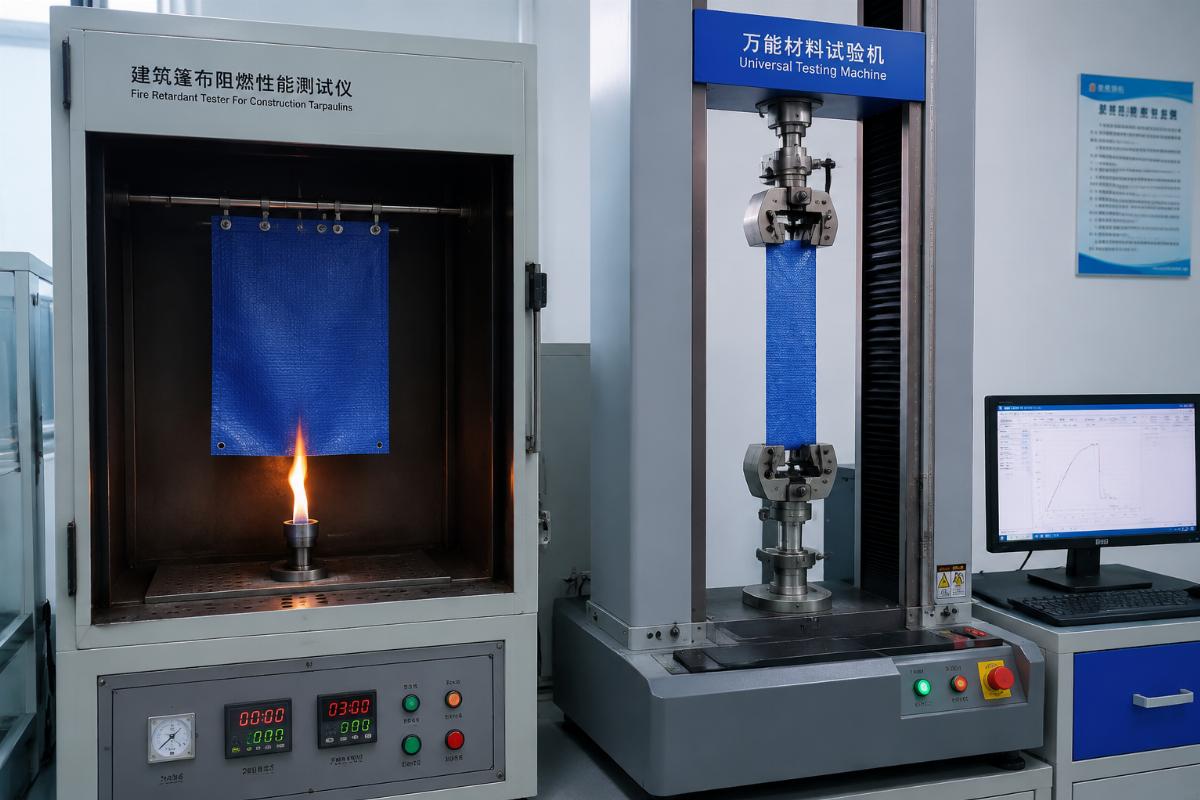
- Compliance Document Verification – Cross-check all test report numbers against the issuing third-party lab’s public database to confirm they are not forged or expired.
- Performance Benchmark Confirmation – Require a 1-square-meter sample to conduct on-site wind and UV exposure testing before placing a bulk order.
- Certification Scope Check – Confirm the supplier’s ISO and CE certifications explicitly cover the production of construction-grade PVC tarpaulins, not just general plastic products.
Why custom large-format sizes cut on-site installation time by 40%?
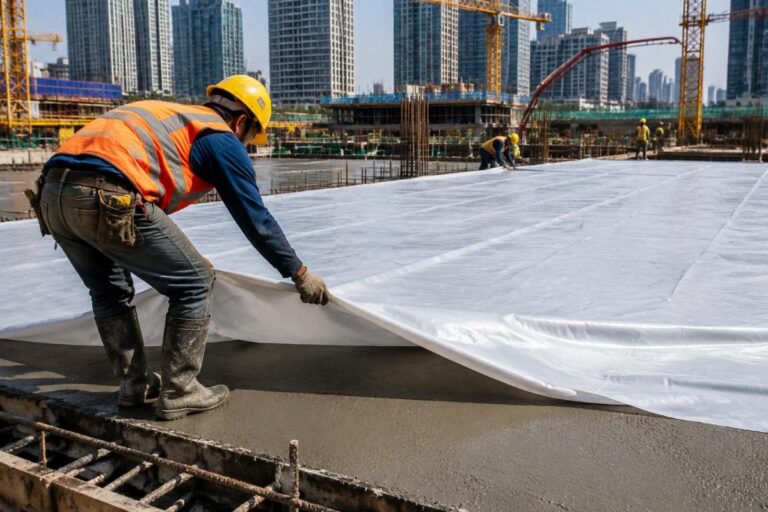
Custom sized scaffold tarps eliminate unnecessary seam connections, directly reducing labor hours and on-site waste for large high-rise projects. Many procurement teams default to standard stock sizes to avoid perceived custom premiums, but the hidden labor cost of extra installation work often far outweighs any minor upfront savings.
| Size Strategy | Common Inefficient Approach | Optimized Custom Approach |
|---|---|---|
| Standard Stock Sizing | 1m × 50m rolls requiring 3x more seam connections per scaffolding section | Custom widths matched to your project’s scaffolding height to reduce seams by 70% |
| Custom Production | High 12%+ material waste for non-standard sizes leading to 20%+ price premium | In-house production lines using uniform slicing processes to keep custom waste below 3% [NEED_CITE: 9180 square meter in-house production facilities can reduce custom material loss to under 3% for all large-format orders.] |
| Order Lead Time | 4+ week lead time for custom sizes due to outsourced production | 7-14 day lead time for custom rolls with in-house manufacturing capacity |
A landmark mixed-use development project in Dubai ordered 20 full 20-foot containers of custom 0.5mm thick heavy-duty scaffold tarp for its site perimeter enclosure, and the in-house production setup allowed the supplier to keep custom production costs on par with standard stock pricing, while supporting split delivery to match the phased construction schedule. The installation team reported a 42% reduction in per-section installation time compared to previous projects using standard sized tarps.
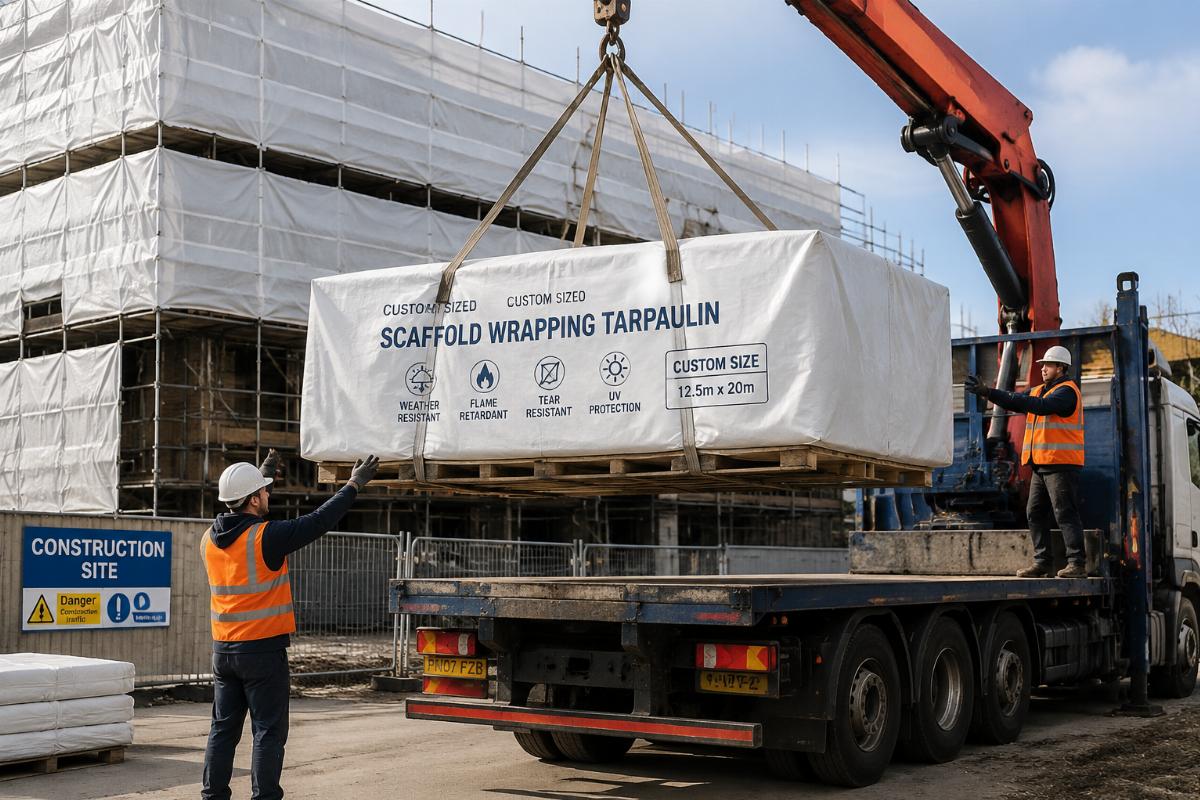
- Scaffold Dimension Mapping – Share your project’s scaffolding height and section layout with the supplier to confirm the optimal custom roll width before quoting.
- Waste Rate Confirmation – Ask suppliers to share their standard custom production waste rate and lock that term into your purchase agreement to avoid unexpected upcharges.
- Delivery Phase Alignment – Structure orders to align with your construction phasing instead of requesting a single full bulk delivery to reduce on-site storage requirements.
What are the common pitfalls when sourcing scaffold tarpaulin from China?
Unvetted small-scale manufacturers often market general-purpose tarps as construction-grade fire-retardant products, leading to failed site inspections and safety liabilities. The most common red flags include missing test documentation, inability to provide custom sizing, and pricing that is 30% or more below the market average, which almost always indicates a non-compliant product.
| Sourcing Risk | Common Unverified Supplier Practice | Mitigation Check |
|---|---|---|
| Fake Certification | Providing copied or altered test reports that cannot be verified | Require direct access to the issuing lab’s report portal for validation |
| Mislabeled Grade | Selling standard non-fire-retardant tarp under the fire-retardant product listing | Request a batch of production samples to be tested by a local third-party lab before bulk production |
| No Production Capacity | Outsourcing all custom orders to third-party factories leading to inconsistent quality | Request a live virtual walkthrough of the production facility to confirm in-house equipment and capacity |
Over the past 3 years, we have audited 27 Chinese tarp suppliers, and only 4 of them had verifiable, up-to-date certifications and in-house production capacity to reliably deliver on large high-rise project orders. The remaining 23 either had expired certifications, no ability to produce custom sizes at scale, or could not produce documentation to back their claimed fire-retardant performance.
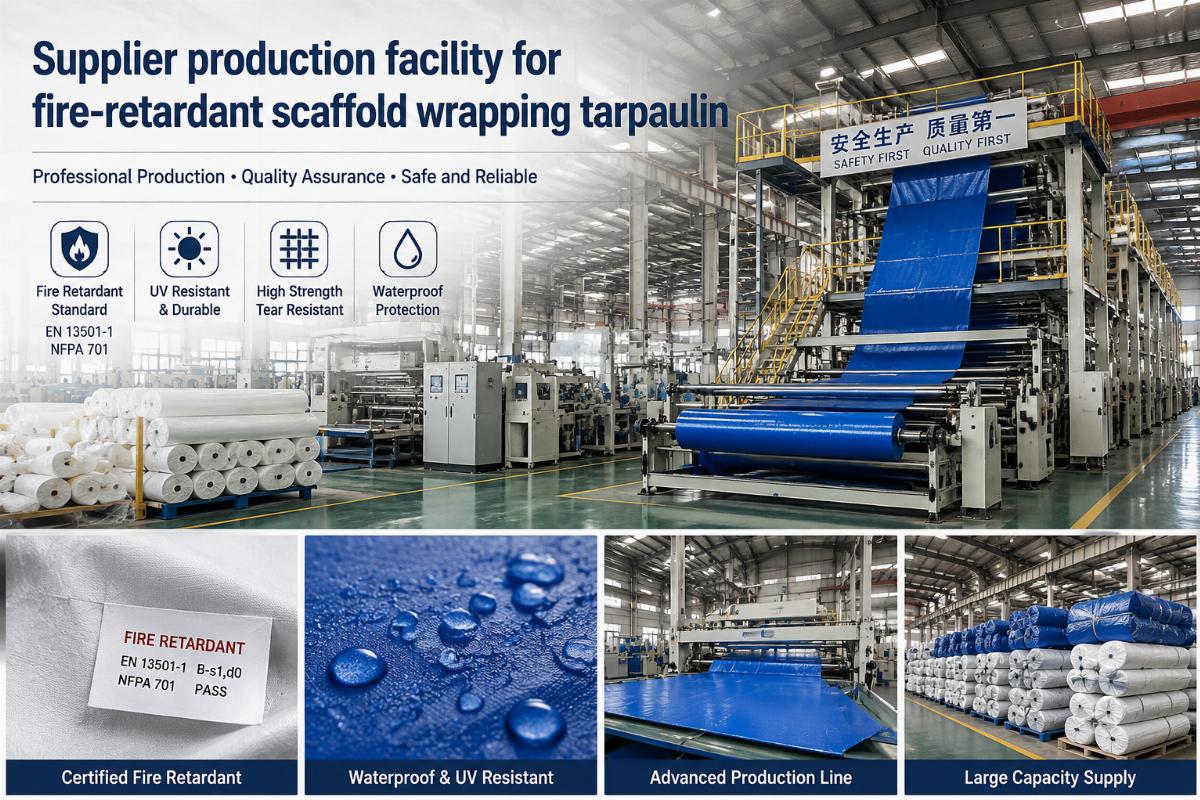
- Factory Capacity Audit – Confirm the supplier operates at least 3 dedicated production lines for PVC tarpaulin products before proceeding with a quote.
- Reference Verification – Request at least 2 references from construction project buyers in your region that have placed orders of similar scale to your requirements.
- QC Clause Inclusion – Write a mandatory 100% pre-shipment inspection requirement into your purchase agreement, with a full refund clause for non-compliant batches.
How to align procurement terms with your high-rise project timeline?
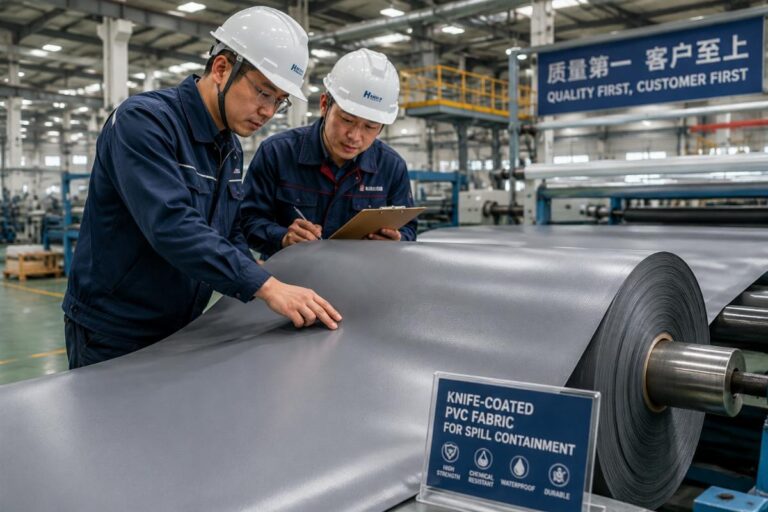
Flexible, project-aligned procurement terms eliminate cash flow pressure and ensure delivery matches your exact construction milestones, rather than forcing your team to adjust schedules to supplier requirements. Shandong Jinxiang Technology, with nearly 30 years of focused industrial fabric production experience, holds full ISO 9001, ISO 14001, ISO 45001 and CE certifications for its fire-retardant PVC scaffold tarp line, and offers flexible MOQ, split delivery support, and 24-hour quote response to match project-specific needs. For a metro construction project in Southeast Asia, the supplier provided 15% tiered bulk pricing and 30-day net payment terms that aligned perfectly with the project’s phased budget release schedule, with all orders of CE-certified tarp delivered ahead of the required installation window.
|——————|——————————-|——————————