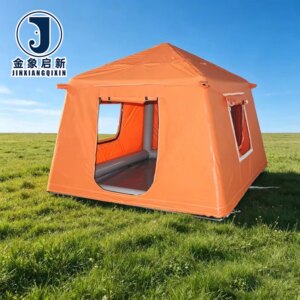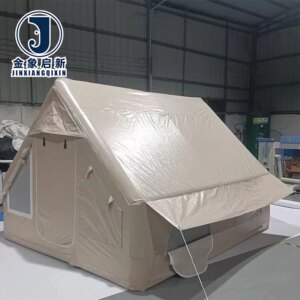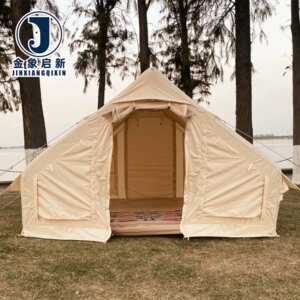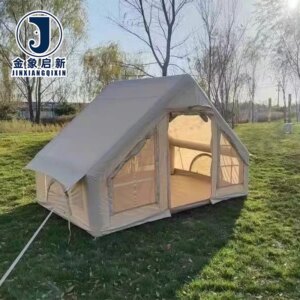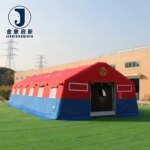


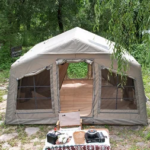
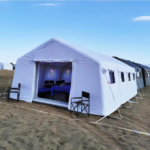

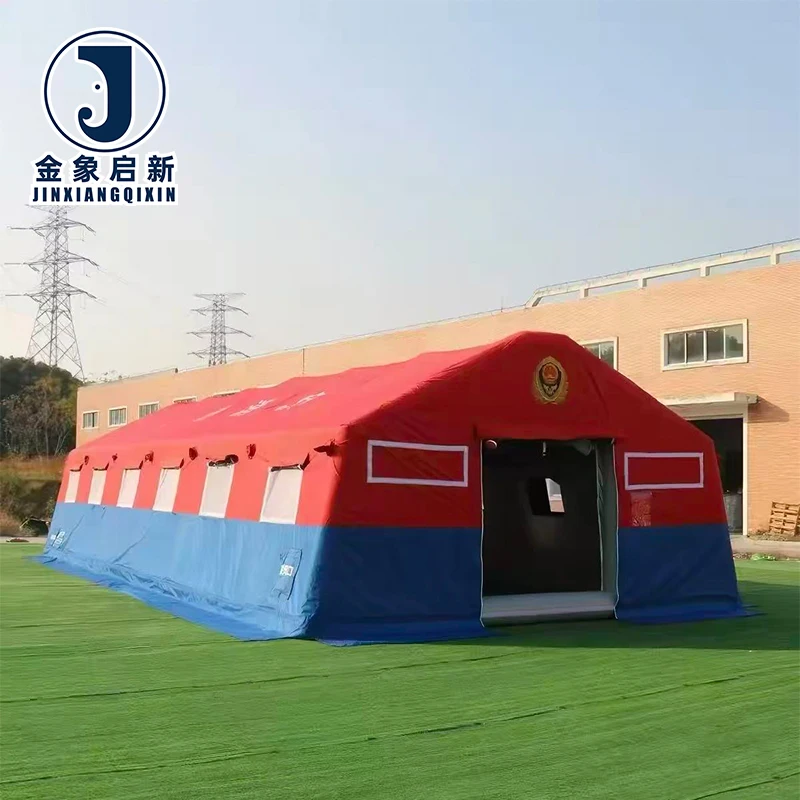
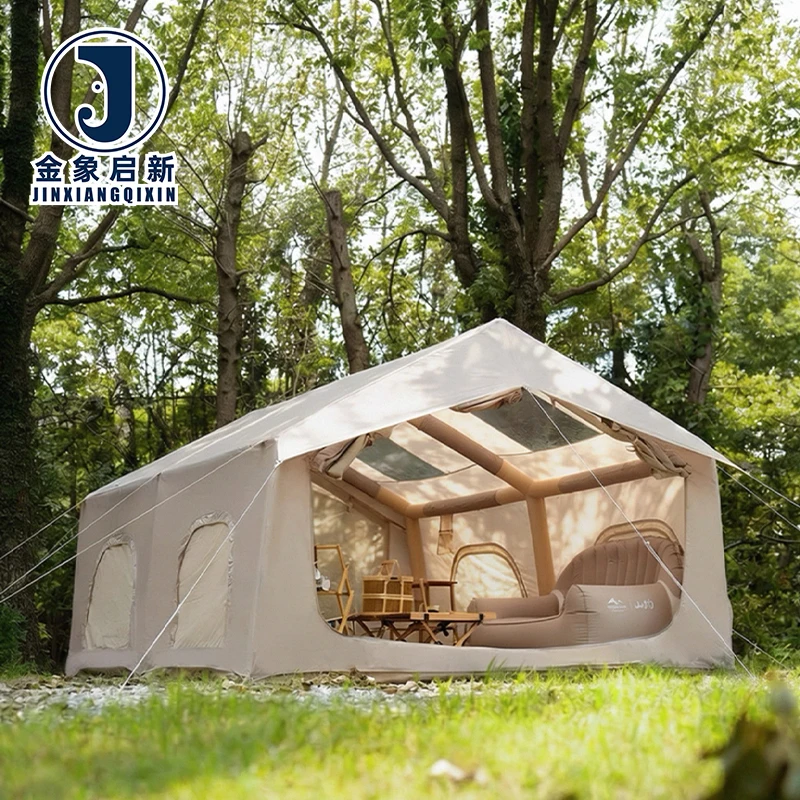


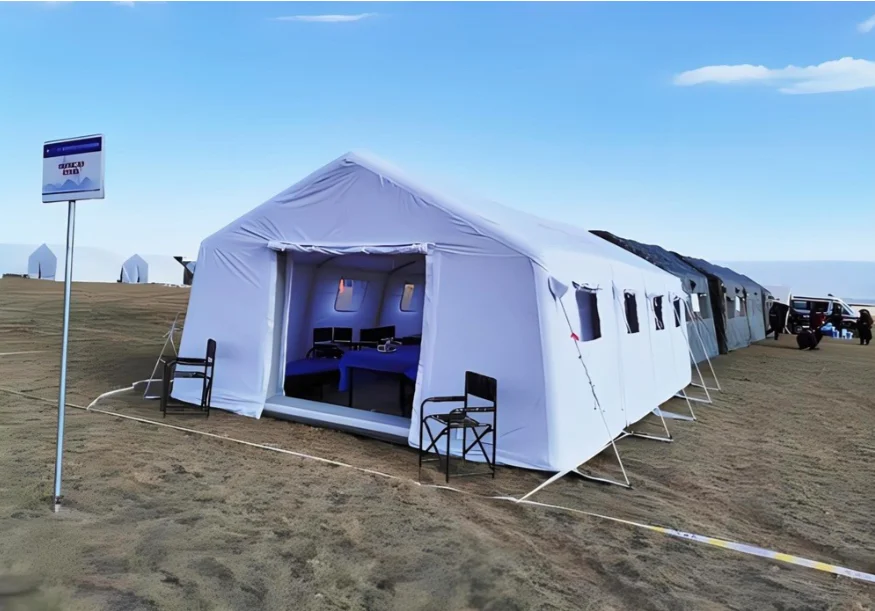

Deep Process Control Over Coating — every batch of inflatable tent fabric is produced on dedicated lines with in-process weight verification to maintain coating consistency across the full order.
Technical Specifications
| Parameter | Value |
|---|---|
| Product Type | PVC Inflatable Tent |
| Core Material | PVC tarpaulin |
| Product Forms | Inflatable structure with single layer construction |
| Key Performance | Waterproof, UV-resistant, tear-resistant, fire-retardant, anti-static |
| Design Feature | Quick automatic opening, four-season use |
| Customization | OEM & ODM, sample customization, pattern printing |
| Production Facility | 9,180 m² with 3 full production lines, 36 sets of processing equipment |
| R&D Support | 10 technicians for material selection and sample development |
| Quality System | Full-process QA & QC with dedicated inspection staff |
| Standards | ISO 9001, ISO 14001, ISO 45001, CE |
Application Suitability
| Application | Exposure & Requirement |
|---|---|
| Emergency response command centers | Rapid deployment demand, repeated inflation cycles, all-weather exposure requiring certified fire-retardant fabric |
| Disaster relief rapid deployment shelters | Immediate field installation, variable climate conditions, compliance with temporary structure safety codes |
| Temporary construction site shelters | Continuous UV and rain exposure, mechanical abrasion from site activity, equipment storage needs |
| Mobile field operations bases | Transport and redeployment stress, four-season temperature fluctuation, anti-static requirement for sensitive equipment |
| Seasonal storage facilities | Long-term outdoor standing, moisture ingress prevention, structural airtightness over extended periods |
What "Fire-Retardant" Means Without a Grade Behind It
Certified inflatable tent fabric must ship with a documented test report, not just a label.
Buyers sourcing PVC inflatable tent material for emergency shelters or mining site structures regularly receive fabric described as fire-retardant without any reference to the test standard or classification achieved. Site inspectors then reject the installation because no paperwork supports the claim. The inflatable tent fabric fire retardant certified specification you specify at inquiry must match the certificate delivered with the roll. [NEED_CITE: fire classification standards for temporary structures and inflatable membranes]
Compliance Documentation That Travels With the Fabric
When procurement specifies PVC inflatable tent for disaster relief or industrial shelter projects, the material certificate and test report must arrive with the shipment. Our production workflow ties each batch to its fire-retardant and anti-static test results, so the documentation package references the exact production run you receive. This eliminates the gap between what the quotation promised and what the site inspector can verify on arrival.
Airtightness and Structural Integrity Under Repeated Deployment
Inflatable structures depend on the fabric maintaining seam integrity and coating adhesion through repeated inflation and deflation cycles. The PVC tarpaulin core used in this inflatable tent fabric fire retardant certified product is processed on lines configured for consistent coating weight, which directly supports reliable heat-welded seams. Welds that fail before the fabric itself are a common cause of inflatable shelter breakdown in the field. [NEED_CITE: weld strength versus base fabric tensile performance in coated technical textiles]
How Base Fabric and Coating Weight Interact in Inflatable Applications
The single-layer inflatable construction requires the PVC tarpaulin to serve as both the structural membrane and the air-retaining barrier. Base fabric denier and weave density determine how the material resists tear propagation when the structure flexes under wind load, while the coating weight governs airtightness and surface durability. A heavier coating does not automatically mean higher tear resistance — if the base fabric is loosely woven, the coating fills gaps rather than reinforcing fibres. Specifying both parameters together ensures the inflatable tent fabric performs under the mechanical stress of rapid deployment and four-season temperature variation. The relationship between GSM and actual field performance is non-linear and depends on the coating method and base fabric construction chosen for the application.
The Hidden Cost of Undocumented Treatment Claims
Fabric ordered with UV-resistant and anti-static treatment but delivered without batch-specific test reports creates a compliance exposure that surfaces only at site inspection or after premature weathering becomes visible. Rolls that vary in coating weight between batches produce visible inconsistency once panels are welded side by side on the inflatable structure. Welded seams that separate under load typically indicate a mismatch between the heat-welding parameters and the actual coating thickness delivered — a problem that traces back to insufficient in-process weight control. [NEED_CITE: coating weight variance and its effect on heat-weld parameters for PVC tarpaulin]
Why This Production Line Matches Technical Fabric Requirements
Three full production lines and 36 sets of professional processing equipment allow this facility to handle inflatable tent fabric fire retardant certified orders at volume while maintaining batch-to-batch consistency. The 10-person R&D team develops pre-production samples so you validate dimensions, coating feel, and custom printing before committing to the full run. Dedicated QA and QC staff inspect every roll at each production stage, with 100 percent pre-shipment inspection covering coating adhesion, airtightness, and surface finish. Custom width, pattern printing, and sizing are handled in-house rather than outsourced, keeping lead times predictable for project schedules.
Documentation & Verification
- Material specification sheet confirming PVC tarpaulin grade and treatment properties per roll
- Fire-retardant test report referencing the applicable standard and classification achieved for the batch
- Anti-static surface resistance measurement record included where site compliance requires it
- ISO 9001, ISO 14001, ISO 45001, and CE certificates provided with every shipment
- Pre-shipment inspection record covering coating weight, airtightness, and visual surface consistency
- Roll packing list with batch traceability linking each roll to its production run
Fabrication, Handling & Storage
- Heat-weld temperature and dwell time must match the PVC tarpaulin coating weight to prevent seam delamination under inflation pressure
- Store rolls upright on pallets in a dry, shaded area to avoid compression marks on the coated surface
- Avoid dragging single-layer inflatable fabric across abrasive ground during field deployment to protect coating integrity
- Use PVC-compatible cleaners only — solvent-based products can soften the coating and compromise airtightness
- Field repairs require compatible PVC adhesive patches applied to clean, dry surfaces for reliable bonding
Preparing Your Specification for Quotation
Provide the intended application, deployment frequency, and environmental exposure conditions so we can recommend the appropriate PVC tarpaulin grade and treatment combination. If your project requires a specific fire-retardant grade or anti-static standard for site compliance, state the test method your inspector will reference. Indicate whether you need rolls for your own fabrication or finished inflatable structures with custom sizing and pattern printing, and whether pre-production samples are required before bulk commitment.
Frequently Asked Questions
Q: What fire-retardant grade does the inflatable tent fabric meet, and which test standard applies?
A: The fabric is produced with fire-retardant treatment and ships with a test report documenting the classification achieved. The specific grade depends on the formulation selected for your market and application. We confirm the applicable test standard — such as the classification required by your local building or temporary structure code — during the specification stage before production begins.
Q: How is anti-static performance verified, and what surface resistance standard is tested?
A: Anti-static treatment is applied during the coating process and verified through surface resistance measurement on the finished fabric. The test standard applied depends on the compliance framework your project requires. We provide the measurement record with the shipment documentation so your site team can confirm the result matches the specification on the purchase order.
Q: Can inflatable structure dimensions and fabric specifications be fully customized?
A: Yes. OEM and ODM customization covers size adjustment, pattern printing, and material specification selection. We produce pre-production samples so you validate dimensions, coating characteristics, and any printed branding before authorizing mass production. This sample approval step ensures the bulk order matches the confirmed specification exactly.
Q: What compliance documentation is included with each shipment?
A: Every shipment includes a material specification sheet, fire-retardant and anti-static test reports where applicable, ISO 9001, ISO 14001, ISO 45001, and CE certificates, a pre-shipment inspection record, and a roll packing list with batch traceability. Additional documentation such as certificates of origin can be arranged to support your import and customs clearance process.
Q: How does the factory ensure airtightness and structural integrity before dispatch?
A: Each production run undergoes full-process QA and QC inspection, including checks on coating adhesion, weld strength at seam lines, and surface consistency. The 100 percent pre-shipment inspection covers airtightness verification and structural load assessment on inflatable constructions. Rolls or finished units that do not meet the confirmed specification are held and reworked before release for dispatch.