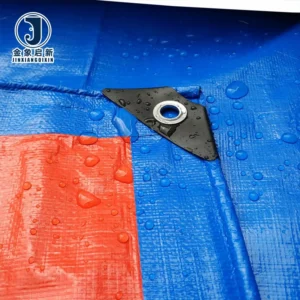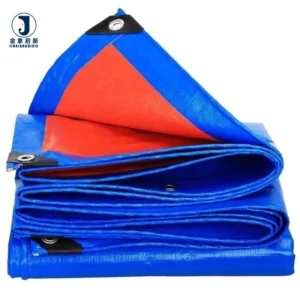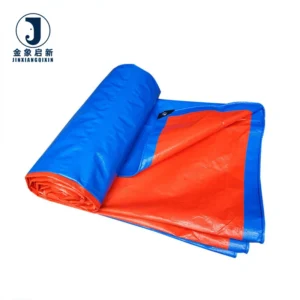
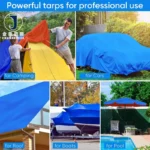
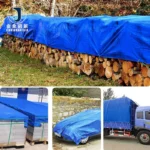
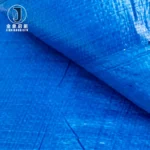

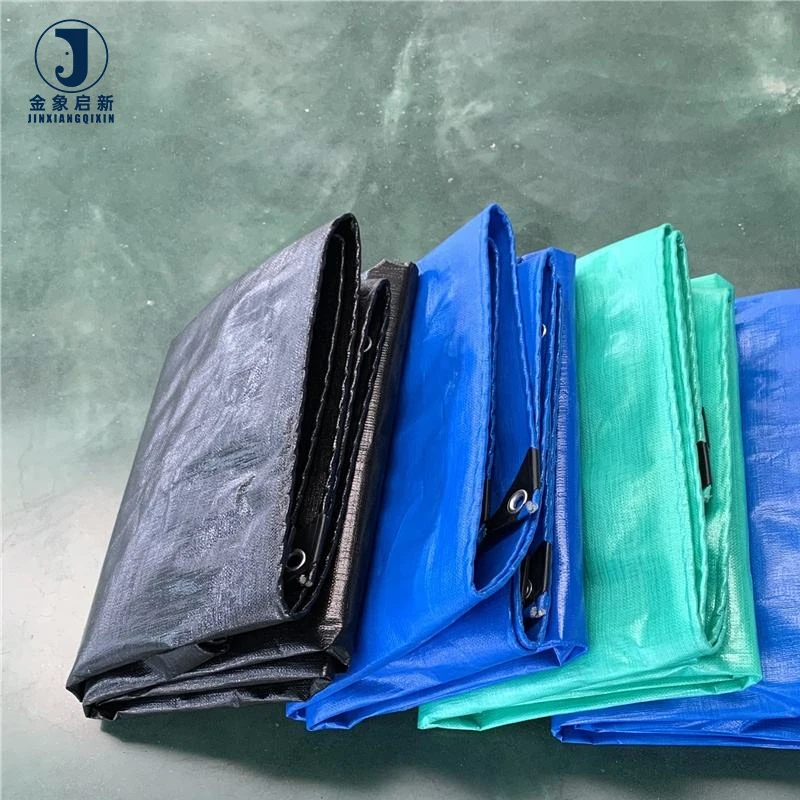
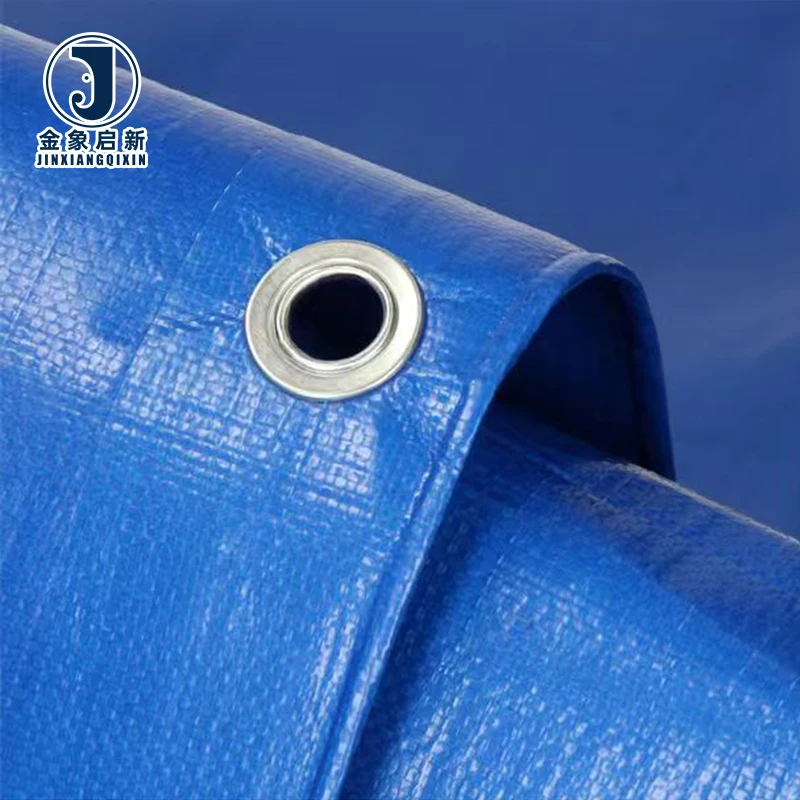
Process Control Over Lamination — HDPE weaving and LDPE lamination adhesion monitored at every production stage, ensuring GSM and coating weight remain within tolerance across the full PE Tarpaulin product family.
Technical Specifications
| Parameter | Value |
|---|---|
| Product Type | PE Tarpaulin Roll / Finished PE Tarpaulin |
| Base Fabric | HDPE woven |
| Coating Method | LDPE lamination on both sides |
| Weight Range (GSM) | 50 g/m² – 220 g/m² (confirm the grade for this item) |
| Total Thickness | 0.2–0.4 mm / 8–16 mil (source value — verify against manufacturer catalog) |
| Lightweight Grade Thickness | 0.18–0.22 mm |
| Lightweight Grade Weight | 80–110 g/m² |
| Lightweight Grade Mesh Count | 8×8 |
| Lightweight Grade Tensile Strength | Meridian 300–500 / Latitude 250–450 N/5cm (test standard not stated) |
| Medium Grade Thickness | 0.22–0.28 mm |
| Medium Grade Weight | 120–150 g/m² |
| Medium Grade Mesh Count | 10×10 |
| Medium Grade Tensile Strength | Meridian 500–800 / Latitude 400–700 N/5cm (test standard not stated) |
| Heavy-duty Grade Thickness | 0.30–0.35 mm |
| Heavy-duty Grade Weight | 160–240 g/m² |
| Heavy-duty Grade Mesh Count | 12×12 |
| Heavy-duty Grade Tensile Strength | Meridian 900–1200 / Latitude 700–1000 N/5cm (test standard not stated) |
| Roll Width | 6 ft, 8 ft, 10 ft, 12 ft / 2 m, 4 m, 6 m |
| Roll Length | 100 yards, 100 meters, or custom |
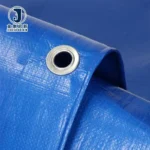
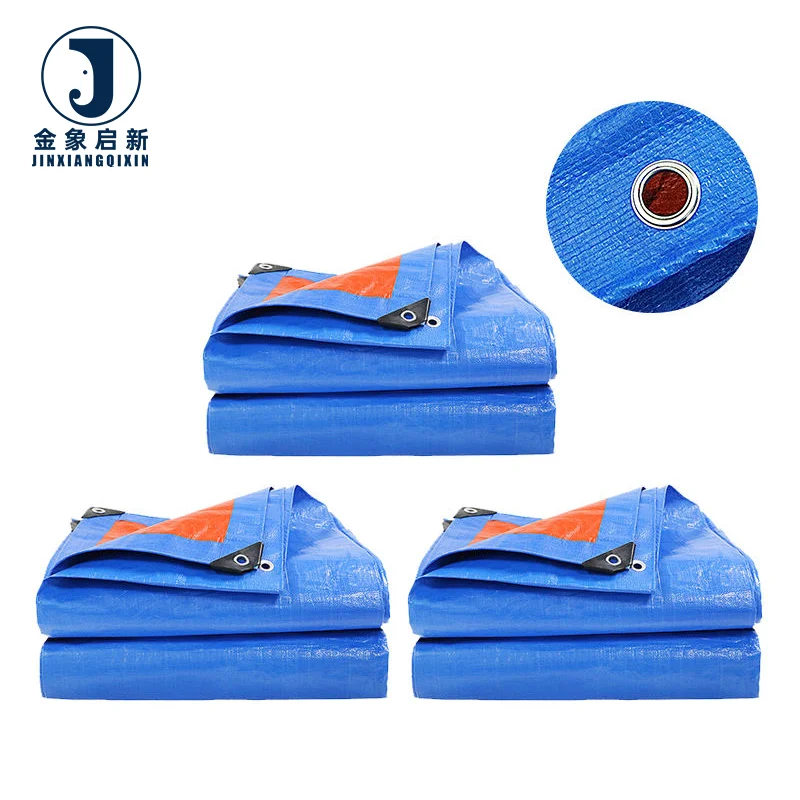
| Finished Edge | All four edges reinforced with PP rope in hem |
| Eyelet Options | Galvanized eyelets every 3 ft or 1 m interval |
| Corner Reinforcement | Reinforced plastic corners |
| Color Options | Blue, Blue/Orange, Green, Grey, Black, Clear, Grey/Green, Orange, or custom |
| UV Treatment | Available (test basis not stated) |
| Waterproof | Yes |
| Mildew Proof | Yes |
| Anti-aging | Yes |
| Key Features | Waterproof, washable, tear resistant, weather proof, sunproof, mildew proof, anti-aging |
Application Suitability
| Application | Exposure & Requirement |
|---|---|
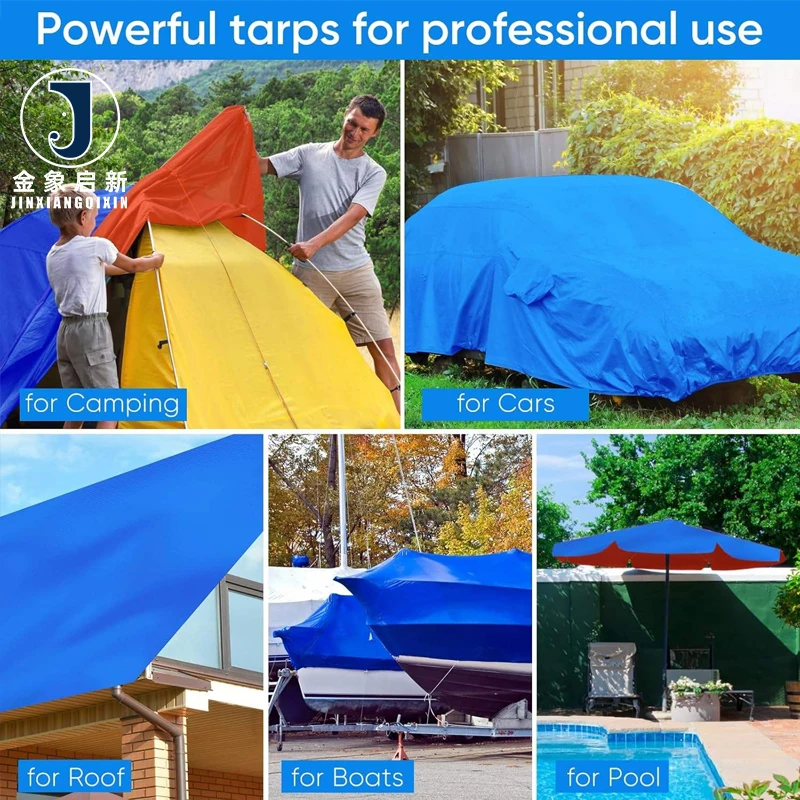
| Mining and tunnelling site enclosure | High abrasion from rock contact, dust and moisture ingress, heavy-duty grade required for prolonged deployment |
| Aviation and construction ventilation auxiliary cover | Proximity to duct systems, exposure to airflow turbulence, temporary weather protection during installation phases |
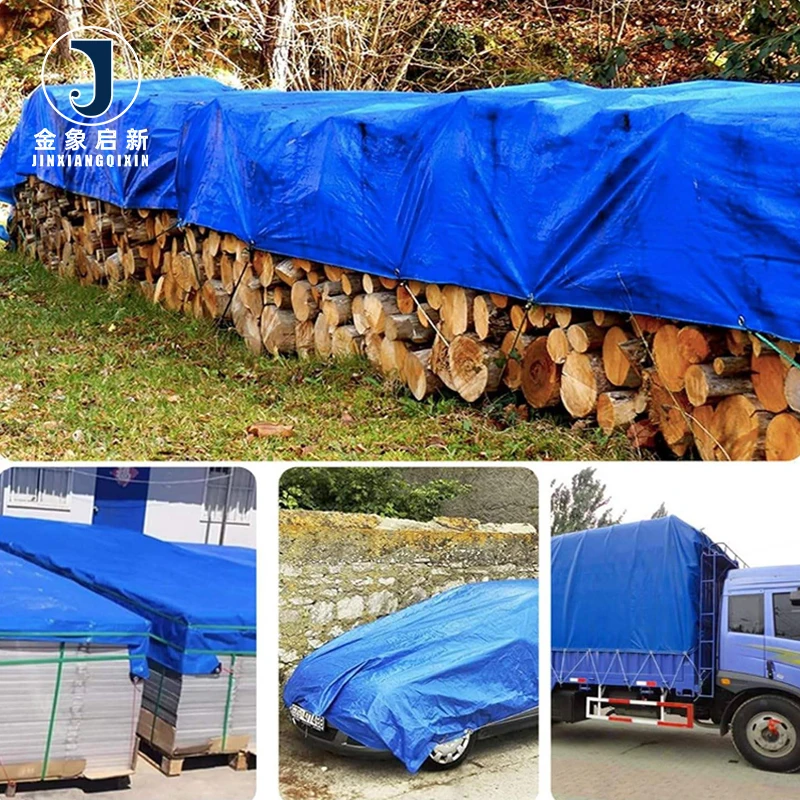
| Flatbed load cover and transit protection | Wind uplift at speed, road debris impact, UV exposure on long-haul routes, tie-down stress at eyelet points |
| Agricultural stockpile and pond lining | Continuous water contact, soil chemistry exposure, puncture risk from ground irregularities |
| Warehouse material staging cover | Forklift handling abrasion, condensation drip, moderate UV from skylights and bay doors |
When the Quoted GSM Does Not Match What Arrives on Site
GSM verification belongs on the inspection table, not buried in a marketing brochure.
Procurement teams sourcing PE Tarpaulin for industrial projects have encountered rolls that arrive noticeably lighter than the weight stated on the quotation. When a 160 g/m² specification lands on site at a lower actual weight, the tensile capacity and puncture resistance drop accordingly. The material flexes under load where it should hold rigid, and tie-down points fail before the project timeline requires a cover change. This mismatch is not a rounding error — it reflects a gap in production control between the coating line and the shipping dock. [NEED_CITE: tensile and tear test methods for coated fabrics per ISO 1421]
Ventilation Duct Projects and Auxiliary Fabric Requirements
Mining and tunnelling ventilation projects rely on certified duct systems for primary airflow, yet PE Tarpaulin frequently enters these sites as an auxiliary covering material. Temporary enclosures around duct junctions, crosscut curtains in development headings, and protective wrapping for stored duct segments all demand a material that can withstand the same underground environment. Industrial PE Tarpaulin Certified documentation is what site safety officers check when an inspector walks through, and rolls without proper paperwork delay commissioning.
Matching the Grade to the Exposure Class
Specifying a single generic PE grade across an entire project creates weak points. Lightweight 80–110 g/m² fabric serves well for short-term agricultural cover and indoor staging, while heavy-duty 160–240 g/m² grades handle the abrasion and wind loads of mining site enclosures. The mesh count — 8×8, 10×10, or 12×12 — works together with GSM to determine how the fabric distributes stress across its surface. A high GSM with a loose weave behaves differently under point load than a medium GSM with a tight weave. [NEED_CITE: relationship between mesh count and tear propagation in woven coated fabrics]
How Base Fabric and Lamination Work Together
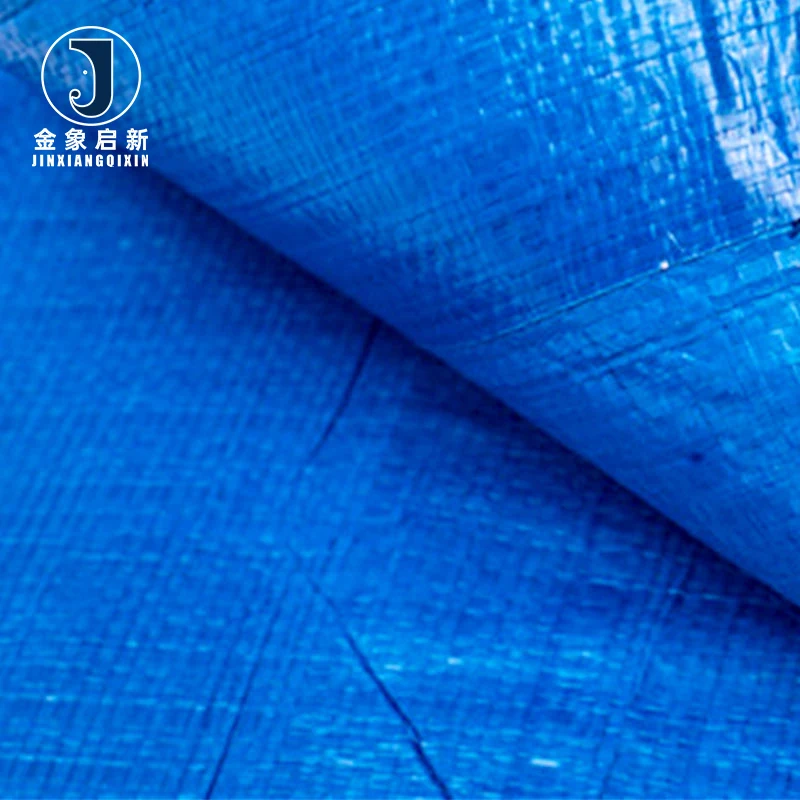
The HDPE woven base provides the structural skeleton, while LDPE lamination on both sides seals the weave and delivers waterproof performance. The lamination method — as opposed to liquid coating — means the polymer film is bonded to the fabric under heat and pressure, creating a distinct layer interface. This affects how the material behaves at fold lines: laminated PE Tarpaulin tends to show white stress marks at sharp creases sooner than paste-coated alternatives, but the bond strength between film and weave is what prevents delamination when the cover is dragged over rough ground. Tensile strength values across the three grade tiers reflect this composite behaviour, with heavy-duty grades reaching meridian values up to 1200 N/5cm when the mesh density and lamination thickness are both at the upper end of the range.
The Hidden Cost of Picking the Wrong Grade
Selecting a medium grade for an application that demands heavy-duty performance shows no problem during the first week on site. The failure appears gradually: eyelets pull through the fabric under repeated wind gusts, the lamination cracks at fold points where the cover is tied down, and colour fades unevenly across rolls that were never from the same production batch. When a mining contractor orders PE Tarpaulin for a ventilation crosscut curtain and receives a lighter grade than the site specification requires, the material tears at the mounting rail before the duct system itself is commissioned. Rework costs on underground sites multiply because every replacement requires re-entry permits and safety briefings. [NEED_CITE: cost of unplanned fabric replacement in underground mining operations]
Why Procurement Teams Source PE Tarpaulin Here
Three full production lines and 36 sets of professional equipment support bulk roll output with on-time delivery scheduling. A 10-person R&D team handles custom colour matching, non-standard width development, and sample production for project-specific requirements. Every production stage includes dedicated QA/QC oversight, with 100% pre-shipment inspection covering GSM verification and visual assessment across the roll batch. Nearly 30 years of focused experience in coated fabric production means the relationship between HDPE weave density and LDPE lamination adhesion is controlled through process parameters, not left to line operator judgment. ISO and CE certification frameworks underpin the quality management system. Samples for custom requirements are developed within days, allowing specification confirmation before committing to full production runs.
Documentation & Verification
- Material specification sheet stating exact GSM, mesh count, and lamination type for the ordered grade
- Pre-shipment inspection record with GSM verification and colour consistency check across rolls
- Certificate of origin and customs documentation included with each consignment
- ISO and CE certificates available upon request from the manufacturer
- Roll packing list detailing weight, dimensions, and batch reference for each roll shipped
Fabrication, Handling & Storage
- Heat-sealing laminated PE Tarpaulin requires lower platen temperatures than PVC-coated fabric to avoid film blistering
- PP rope hem reinforcement distributes tie-down loads across the edge rather than concentrating stress at individual eyelets
- Store rolls horizontally on pallets to prevent compression marks that create permanent crease lines in the LDPE layer
- Galvanized eyelets at 3 ft intervals suit most tie-down configurations; specify 1 m spacing for metric-standard projects
- Clean with mild detergent only — solvent-based cleaners can soften the LDPE lamination and reduce surface adhesion
What to Include in Your Enquiry
Project specifications for industrial PE Tarpaulin should state the intended exposure environment, the grade tier required, and any site-specific compliance documentation your safety team will request at delivery. Confirm roll widths against your coverage dimensions to minimise on-site joins, and specify whether you need roll stock or finished tarpaulins with hems and eyelets already installed. If your project requires colour consistency across a multi-roll order, note this at enquiry stage so batch allocation can be planned before production begins.
Frequently Asked Questions
Q: How is GSM verified before shipment and what documentation accompanies delivery?
A: Every roll undergoes 100% pre-shipment inspection with GSM verification recorded against the quoted specification. A material specification sheet stating exact GSM, base fabric mesh count, and lamination type ships with the consignment, along with the pre-shipment inspection record, packing list, certificate of origin, and customs documentation. ISO and CE certificates are available upon request.
Q: What UV treatment is available and is there a test report to confirm the protection level?
A: UV treatment is available across the PE Tarpaulin range. The specific test basis for UV performance should be confirmed at enquiry stage to match your regional compliance requirements. Request the applicable test report when placing your order so your site safety team has the documentation needed for project approval.
Q: What roll widths and lengths are available, and can custom dimensions be produced?
A: Standard roll widths include 2 m, 4 m, 6 m and 6 ft, 8 ft, 10 ft, 12 ft. Roll lengths are supplied at 100 yards or 100 meters, with custom lengths available. Custom width requirements are supported by the in-house R&D team, with samples developed within days for specification confirmation before full production.
Q: How do you ensure colour consistency when multiple rolls are ordered for the same project?
A: Dedicated QA/QC oversight at every production stage includes visual colour assessment across rolls within the same batch. Batch allocation is planned at order stage for multi-roll projects to minimise roll-to-roll colour variation. Any specific colour reference or custom colour requirement should be confirmed through the sample approval process before production begins.
Q: What eyelet spacing and edge reinforcement options are available for finished tarpaulins?
A: Finished PE Tarpaulins feature PP rope reinforcement in the hem on all four edges with galvanized eyelets at 3 ft or 1 m intervals. Reinforced plastic corners provide additional strength at high-stress mounting points. Eyelet spacing and corner reinforcement can be specified at enquiry stage to match your tie-down and mounting hardware configuration.