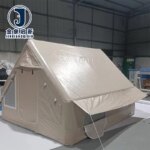

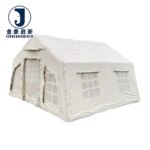
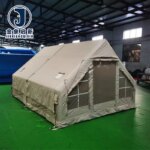
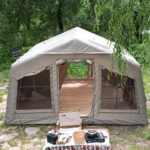

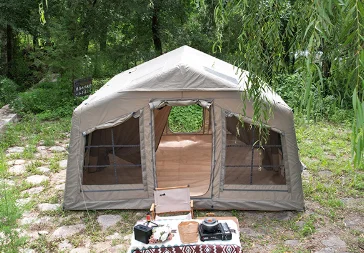
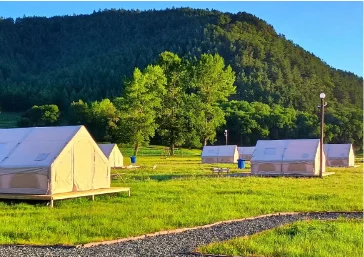
Proven Process Control — Coating weight, adhesion and treatment consistency verified at every production stage for inflatable and membrane structure fabric orders.
Technical Specifications
| Parameter | Value |
|---|---|
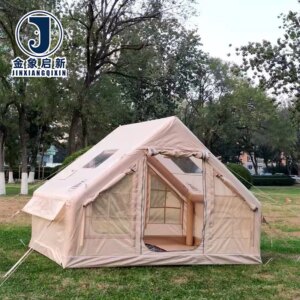
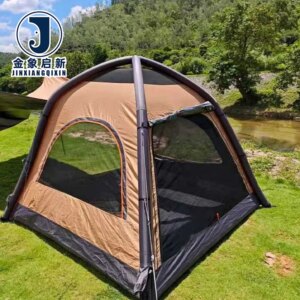
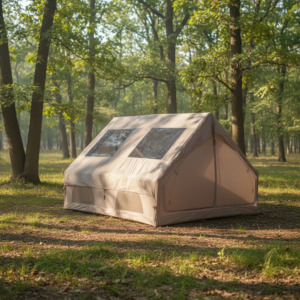
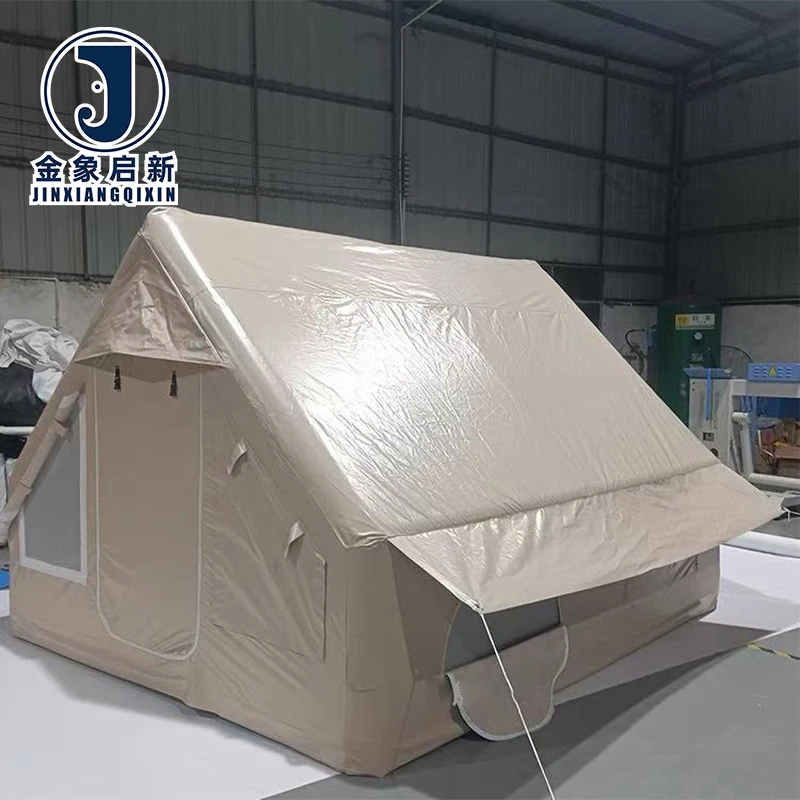
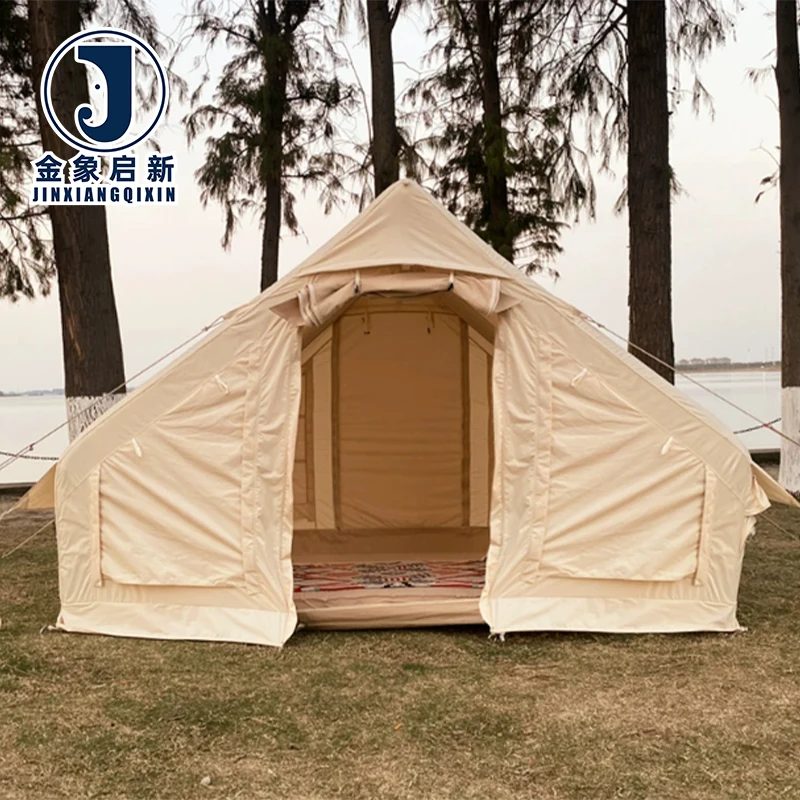
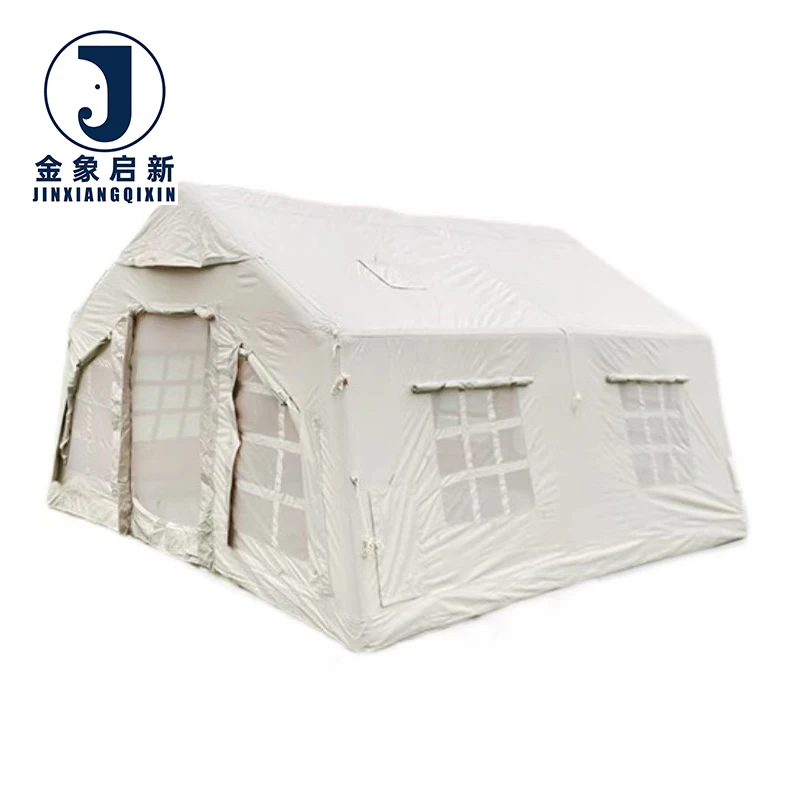
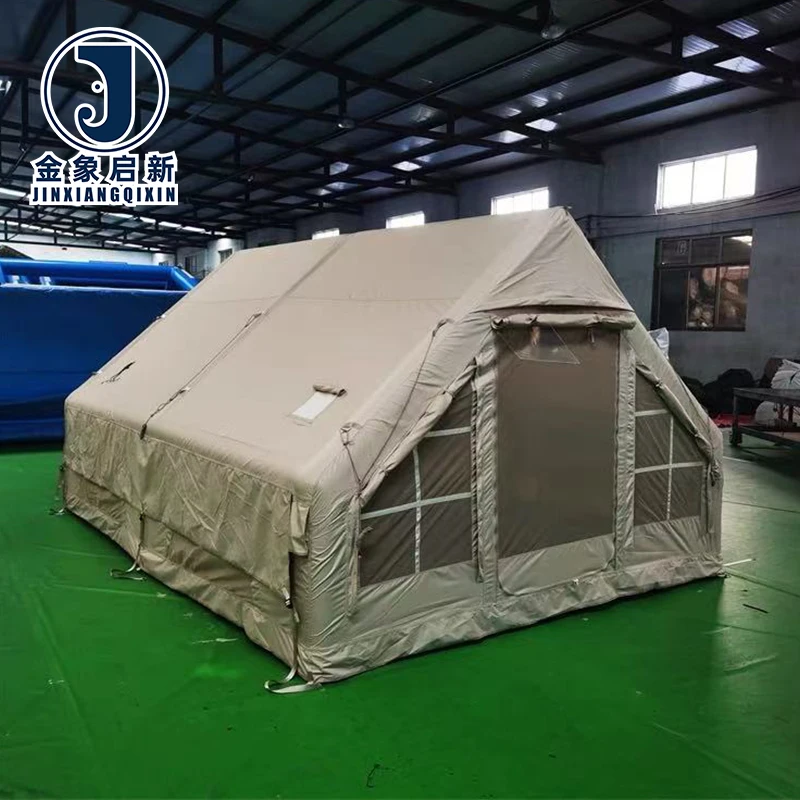
| Product Type | Inflatable Tent |
| Core Material | PVC tarpaulin |
| Key Performance | Waterproof, UV-resistant (test basis not stated in source), tear-resistant, fire-retardant (grade not stated in source), anti-static (standard not stated in source) |
| Capacity | 5-8 Person |
| Opening Mechanism | Quick Automatic Opening (Inflatable) |
| Season Rating | All-Season |
| Certifications | ISO 9001, ISO 14001, ISO 45001, CE |
| Customization | OEM & ODM, sample customization, pattern printing |
Application Suitability
| Application | Exposure & Requirement |
|---|---|
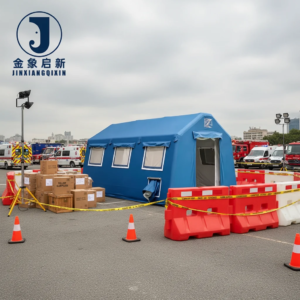
| Temporary site accommodation for construction crews | Constant weather exposure, repeated inflation cycles, ground anchoring stress, fire safety compliance on regulated sites |
| Mobile field operations bases for engineering teams | Remote deployment, rapid setup and teardown, UV and rain exposure across varying climates |
| Emergency response shelters for industrial disaster management | Immediate deployment under hazardous conditions, certified flame-retardant and anti-static materials required by incident command protocols |
| Infrastructure development and resource exploration camps | Extended outdoor deployment in unprepared terrain, abrasion from wind-blown particulates, thermal cycling |
| Large-scale event management structures | Public occupancy fire codes, branded exterior surfaces, high-visibility colour consistency across multiple units |
Why Certified Grades Matter More Than the Word "Fire-Retardant"
A fire-retardant claim without a documented grade leaves your site safety officer with nothing to file and your project exposed to compliance shutdowns.
When industrial sites mandate temporary inflatable shelters, procurement teams often receive fabric described simply as "flame retardant" with no classification attached. Safety auditors on mining, tunnelling and construction sites reject materials that cannot be traced to a recognised standard — and the inflatable tent fabric you specified arrives without the paperwork to prove it passed. The result is a shelter that sits uninstalled while your crew waits in the cold and your timeline slips [NEED_CITE: fire classification standards for temporary structures on industrial sites].
This PVC inflatable tent is manufactured with fire-retardant and anti-static PVC coating, but the specific grade and surface resistance standard must be confirmed against your site’s regulatory framework before production begins. We supply test reports matched to each batch so your compliance file is complete on arrival.
Matching the Fabric to the Inflation Cycle
Inflatable structures place demands on coated fabric that static shelters do not. Every inflation and deflation cycle flexes the material at seam lines, valve surrounds and structural ribs. The PVC tarpaulin used in this inflatable tent is engineered to withstand repeated structural flexing without coating delamination or seam separation. Heat-welded joints are reinforced at stress concentration points where air pressure pushes outward against the fabric during inflation.
Specifying the correct PVC inflatable tent fabric fire retardant anti-static certified grade ensures the material meets both the mechanical demands of pressurised deployment and the safety mandates of your operating environment. Batch-to-batch colour and GSM consistency are verified through in-process quality checks before any roll leaves the facility.
Compliance Documentation That Travels With the Batch
Mining and tunnelling contractors operate under ventilation and fire safety regulations that demand traceable material certification. Aviation ground operations and construction sites enforce anti-static requirements in environments where electrostatic discharge poses ignition risks. Emergency response deployments require shelters that can be erected immediately without waiting for third-party lab verification.
Each production batch of this inflatable tent fabric ships with documentation that addresses these requirements directly. The material specification sheet states the base fabric construction, coating weight and treatment parameters. Test reports for fire-retardant grade and anti-static surface resistance are matched to the specific batch being dispatched [NEED_CITE: anti-static surface resistance testing methods for industrial coated fabrics]. ISO 9001, ISO 14001, ISO 45001 and CE certificates accompany the shipment documentation package.
How Coating Formulation Determines Field Performance
The performance of an inflatable shelter in the field depends on the interaction between the PVC coating formulation and the base fabric it encapsulates. Waterproof performance is determined by coating continuity — any pinhole or thin spot in the PVC layer becomes a leak path under sustained rain or pooling water. UV-resistant treatment must be integrated into the coating compound rather than applied as a surface dressing, because surface treatments abrade away during handling and inflation cycles.
Fire-retardant chemistry within the PVC compound affects both the flame response and the long-term flexibility of the fabric. Some retardant systems stiffen the material at low temperatures, which directly impacts how the inflatable structure behaves during winter deployment. Anti-static treatment modifies the surface resistivity of the coating to dissipate charge buildup, a property that must be verified by measurement rather than assumed from formulation alone. The base fabric denier and weave density work together with coating weight to determine tear propagation resistance — a critical property for inflatable structures where a small puncture can escalate into a structural failure under internal pressure [NEED_CITE: relationship between base fabric weave and tear strength in coated technical textiles].
The Hidden Cost of Specifying Without Verification
When inflatable tent fabric arrives on site without the fire-retardant grade your safety plan specifies, the entire shelter deployment halts. Regulatory inspectors on mining and construction sites will not accept a general claim — they require the test certificate showing the specific classification your jurisdiction mandates. Fabric that fails this checkpoint sits in storage while your project incurs daily costs for alternative accommodation.
Colour inconsistency between rolls in the same order becomes immediately visible once multiple inflatable units are erected side by side at a large-scale event or field camp. Welded seams that fail before the fabric itself tears create air leaks that compromise structural integrity, particularly at the flex points where inflation pressure concentrates during wind loading [NEED_CITE: seam failure modes in heat-welded PVC inflatable structures]. These are not manufacturing defects — they are specification and verification gaps that procurement can close before the order ships.
What This Facility Brings to Your Inflatable Structure Project
Three full production lines and 36 sets of professional equipment support bulk inflatable tent fabric orders with reliable on-time delivery, whether you require standard roll stock or custom-width production runs for large membrane structures.
A 10-person R&D team handles material selection, pattern printing, custom sizing and sample development, producing samples within days so you can validate inflation behaviour, weld compatibility and colour accuracy before committing to full production.
Dedicated QA/QC personnel inspect every production stage with 100% pre-shipment inspection, verifying GSM, coating adhesion, colour consistency and weld integrity against your specification sheet before dispatch.
Full OEM and ODM capability covers custom dimensions, valve configuration compatibility, pattern printing and branded packaging, so the inflatable tent fabric arrives configured for your fabrication process rather than requiring rework on site.
Nearly 30 years of focused coated fabric production provides deep process control over coating weight and adhesion — the two properties that determine whether an inflatable structure holds pressure through repeated deployment cycles.
Documentation & Verification
- Material specification sheet stating base fabric, coating weight and treatment parameters per order
- Fire-retardant test report matched to production batch and target market grade
- Anti-static surface resistance certificate aligned with site safety requirements
- ISO 9001, ISO 14001, ISO 45001 and CE certificates included with shipment
- Pre-shipment inspection record with photographic evidence of weld and coating integrity
Fabrication, Handling & Storage
- Heat-weld seam parameters must match the PVC coating formulation to prevent air leakage at inflation stress points
- Store rolls vertically on end cores to avoid flat-spotting the PVC coating before fabrication
- Verify inflation valve compatibility with your pump systems before cutting and welding the fabric
- Use PVC-compatible cleaners only to avoid dissolving the fire-retardant or anti-static surface treatment
- Repair punctures with matching PVC patches heat-welded to the inflatable tent fabric surface
Requesting a Specification Match for Your Project
To move from inquiry to sample, provide your intended application environment, the fire-retardant classification and anti-static standard your site mandates, and the required dimensions or roll quantities. If your project involves custom pattern printing or branded exterior surfaces, include artwork files and colour references so the R&D team can develop a matched sample. Confirm whether you need finished inflatable units or roll fabric for your own fabrication line, and specify any valve configuration requirements for compatibility with your existing inflation equipment.
Frequently Asked Questions
Q: What fire-retardant and anti-static certifications ship with each batch?
A: Each batch ships with test reports for fire-retardant grade and anti-static surface resistance matched to that specific production run. The exact grade and standard depend on your site’s regulatory requirements, which must be confirmed at the inquiry stage so the correct formulation is produced. ISO 9001, ISO 14001, ISO 45001 and CE certificates accompany all shipment documentation.
Q: Can tent dimensions and valve configuration be customised to my site requirements?
A: Full OEM and ODM customisation is available, including custom dimensions, valve placement and pattern printing. The R&D team develops samples within days so you can validate inflation behaviour and structural fit before full production begins. Provide your required dimensions, valve specifications and any branding requirements at the inquiry stage.
Q: How is seam strength tested before shipment?
A: Heat-welded seams are inspected during 100% pre-shipment quality control, with photographic evidence of weld integrity included in the inspection record. Seam construction focuses on stress and flex points where inflation pressure concentrates, ensuring the weld holds through repeated deployment cycles without air leakage or structural failure.
Q: What is the lead time for custom-sized orders?
A: Lead times depend on order volume, customisation complexity and current production scheduling. Custom widths, colours and printed patterns typically require multi-week lead times from sample approval to dispatch. The quotation stage provides a confirmed timeline based on your specific configuration and quantity requirements.
Q: Do you supply repair kits and replacement inflation components?
A: Repair patches in matching PVC material can be supplied alongside the inflatable tent fabric order for field maintenance. Replacement inflation components and valve compatibility should be discussed at the inquiry stage so the correct specifications are included in the production scope and shipment documentation.