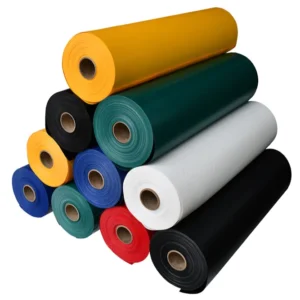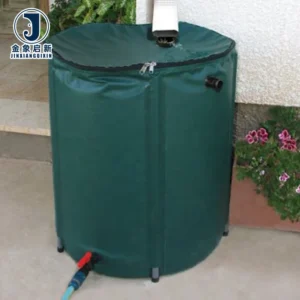

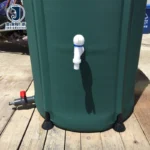
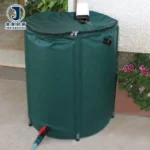
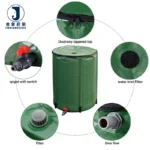
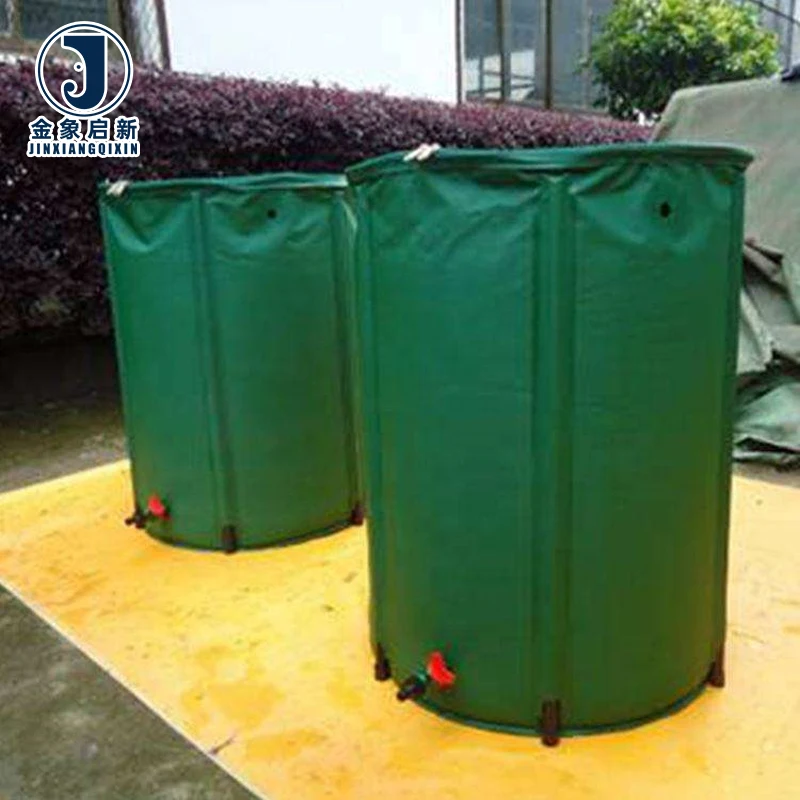
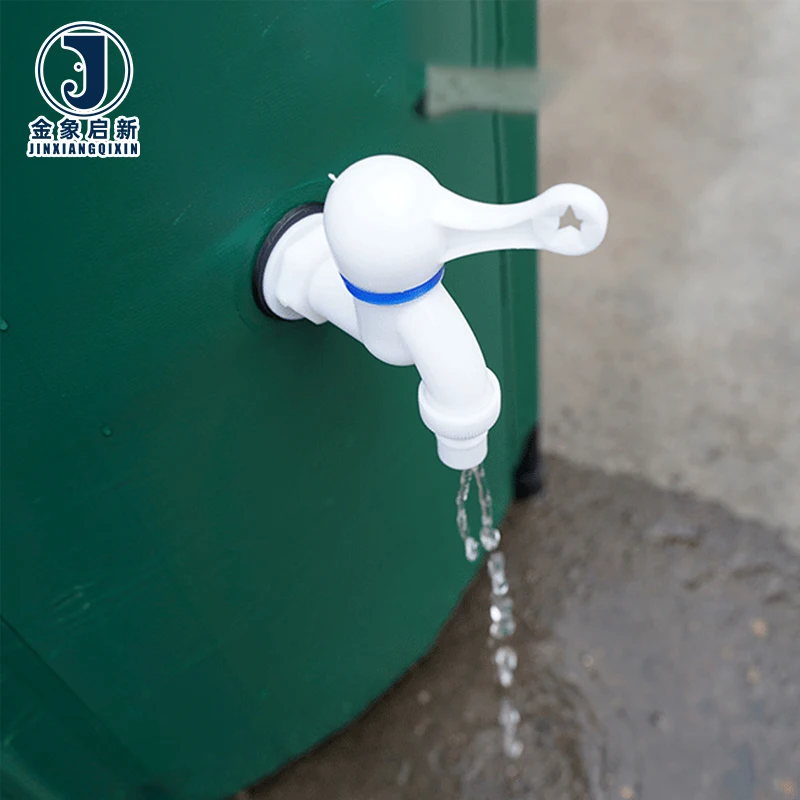
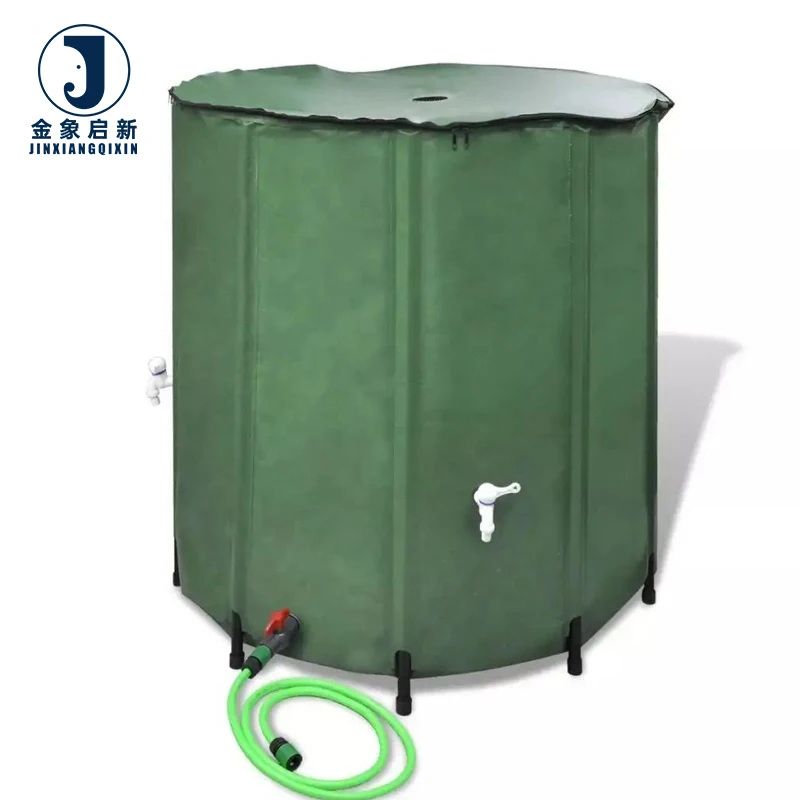
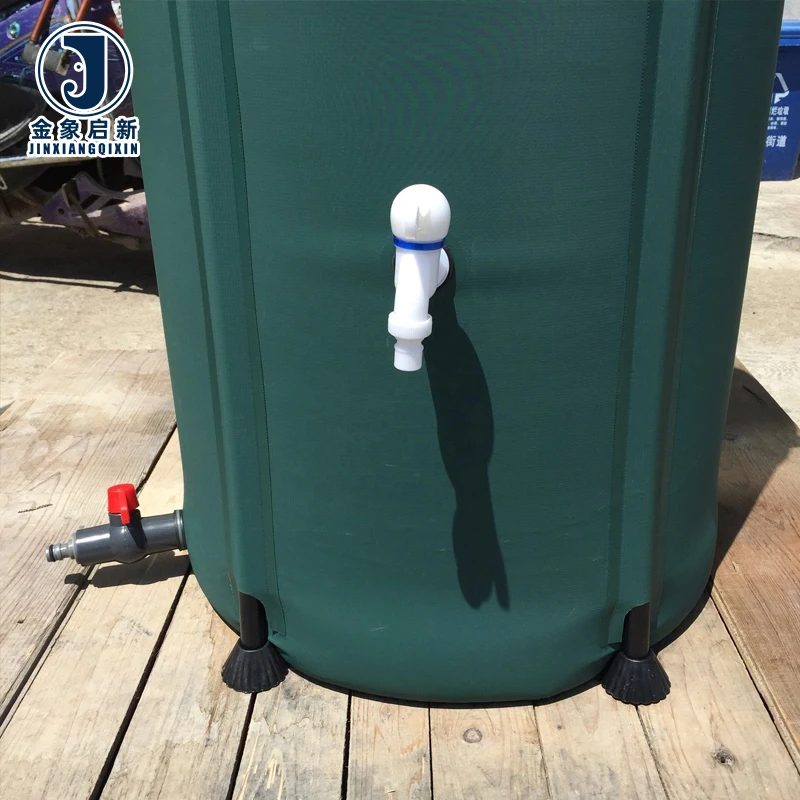
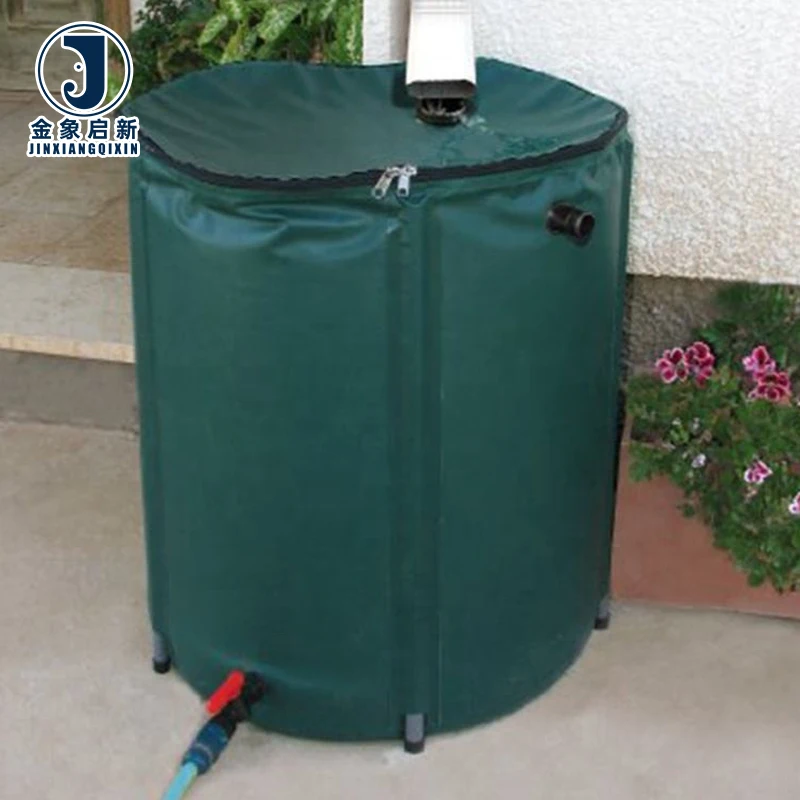
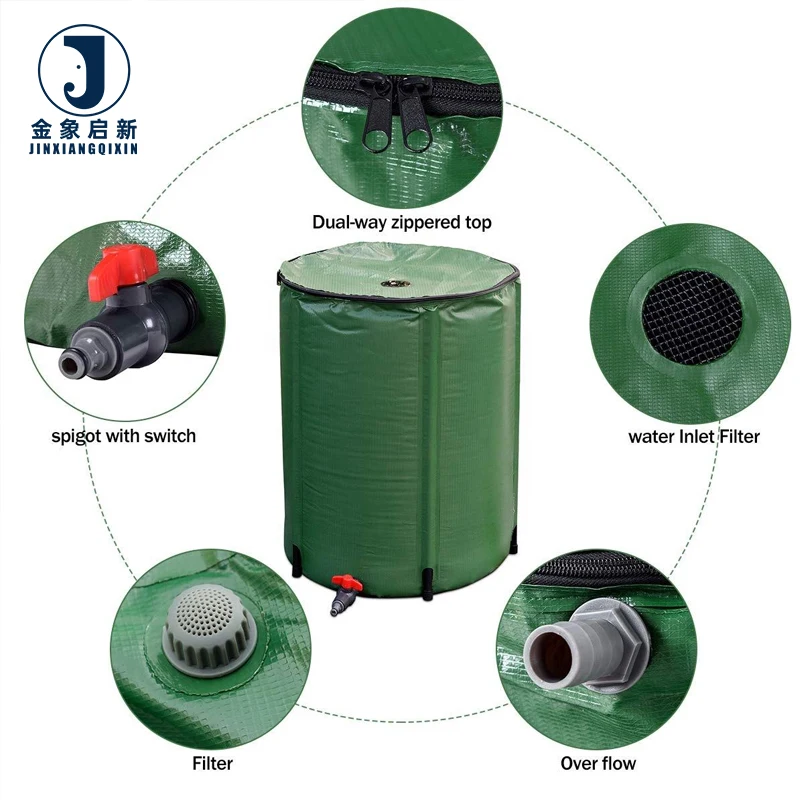
Deep Coating Process Control — every PVC tarpaulin water tank we produce undergoes strict coating weight and adhesion checks, ensuring leak-free seams and consistent fabric integrity across all collapsible units shipped.
Technical Specifications
| Parameter | Value |
|---|---|
| Product Type | PVC Tarpaulin Water Tank |
| Capacity Range | 100L / 225L / 250L / 750L / 1000L |
| Coating Material | PVC |
| Base Fabric | PVC tarpaulin (denier and mesh count available on request) |
| Waterproof Rating | Waterproof (test basis available on request) |
| UV Treatment | UV-resistant (test basis available on request) |
| Anti-Mildew | Mildew-proof (test basis available on request) |
| Construction | Flexible, collapsible, foldable |
| Key Features | Waterproof, UV-resistant, mildew-proof |
| Standards | ISO, CE certified production |
Application Suitability
| Application | Exposure & Requirement |
|---|---|
| Garden rainwater harvesting | Prolonged UV exposure, standing water contact, seasonal temperature variation |
| Agricultural irrigation reservoir | Continuous outdoor sunlight, water-borne algae and mildew pressure |
| Hydroponic water reservoir | Nutrient solution contact, indoor/outdoor flexing during deployment |
| Industrial temporary water storage | Job-site abrasion, frequent relocation, chemical contact from site runoff |
| Aquaculture water containment | Permanent water immersion, biological fouling, UV degradation risk |
Why Seam Integrity Determines the Real Service Life of a PVC Tarpaulin Water Tank
The seam fails before the fabric does — and that failure almost always starts at the flex point where water load concentrates stress.
A flexible collapsible PVC tarpaulin water tank holds hundreds of litres of liquid. When full, the base and lower sidewalls bear constant hydrostatic pressure, while fold lines and valve cutouts endure cyclic stress every time the tank is filled, drained, or moved. If heat-welded seams lack consistent adhesion across the full weld length, microscopic channels open and propagate under load. I have seen coated-fabric tanks weep at the corner welds within a single growing season, while the main body fabric remained intact [NEED_CITE: seam adhesion test methods for PVC-coated fabrics per ISO 1421]. The welding temperature, dwell time and pressure must be calibrated to the exact coating formulation, not just the stated GSM.
Coating Adhesion and the Waterproof Barrier
The waterproof performance of any PVC tarpaulin water tank depends on coating-to-fabric adhesion measured as peel strength. During production, PVC compound is applied to the base fabric under controlled heat and pressure, creating a continuous film that prevents water migration through the weave. When adhesion is insufficient, water penetrates between coating and yarn, causing delamination that spreads from cut edges and seam zones outward. Our coating process is monitored at every stage to maintain uniform bond strength across the full surface area, including the regions that will later become high-stress weld lines.
UV and Mildew Resistance in Continuous Outdoor Exposure
Outdoor water storage exposes fabric to ultraviolet radiation that degrades PVC polymer chains over time, leading to surface chalking, loss of flexibility and eventual cracking at fold points. UV-resistant treatment is incorporated into the coating compound to slow this degradation, though the specific test duration and standard should be confirmed for your local climate and compliance requirement. Mildew-proof treatment on the fabric surface inhibits fungal growth in standing-water environments, keeping stored water suitable for irrigation and hydroponic recirculation without frequent biocide dosing [NEED_CITE: UV stability test standards for PVC-coated textiles].
Reading Capacity, Fabric Weight and Coating Weight Together
Capacity determines the hydrostatic head pressure the tank must withstand: a 1000L unit exerts substantially more force on base seams than a 100L unit, requiring higher coating adhesion and stronger base fabric. GSM alone does not define performance — a high GSM achieved through heavy filler loading can produce stiff fabric that cracks when folded cold, while a lower GSM with high-tenacity yarns and proper coating penetration may outperform it at flex points. Base fabric denier and mesh count, combined with coating weight and method, define the real tear and tensile behaviour. Request the full material specification sheet to evaluate these parameters together rather than relying on a single number.
The Hidden Cost of Underspecifying a Collapsible Water Bladder
Choosing a tank grade too light for the intended capacity creates a cascade of failures: the base fabric stretches under hydrostatic load, concentrating stress at inlet/outlet fittings until the coating micro-cracks and water migrates into the base yarn. Once moisture reaches the yarn core, mildew colonises from the inside, invisible from the exterior until structural integrity is already compromised. I have observed this pattern repeatedly in agricultural installations where a lighter grade was selected to reduce unit cost, only for the tank to require replacement before the second season [NEED_CITE: hydrostatic pressure effects on flexible PVC containment membranes]. Batch-to-batch coating weight variation compounds this risk — when the delivered fabric weighs less than quoted, the margin of safety you calculated during specification disappears.
Why Procurement Verification Matters Here
Our production line runs dedicated QA at every stage: coating weight is measured inline, base fabric denier is verified against the specification before coating begins, and every tank undergoes leak testing after seam welding is complete. The R&D team handles custom capacity sizing, valve placement and sample development so that the first bulk unit matches the approved prototype. Pre-shipment inspection covers 100 percent of finished tanks, with seam integrity, dimension tolerance and visual defect checks recorded before packing. Documentation includes the material specification sheet, applicable test reports and the inspection record, giving your receiving team traceability back to the production batch.
Documentation & Verification
- Material specification sheet stating base fabric denier, coating weight and GSM for each tank capacity ordered
- UV and mildew test reports with stated test standard and duration applicable to the grade supplied
- Pre-shipment inspection record confirming seam weld integrity and leak-test results per tank
- Roll and cut-sheet traceability linking finished tank to production batch and coating run
- ISO and CE certificates covering the production facility and quality management system
Fabrication, Handling & Storage
- Heat-weld seams at temperature and dwell time matched to the PVC coating formulation, not generic settings
- Reinforce inlet and outlet cutouts with additional PVC patches to distribute fitting load across coated fabric
- Store empty tanks flat or loosely rolled to prevent permanent crease marks in the coating layer
- Avoid dragging filled tanks across abrasive surfaces that can score the waterproof PVC underside
- Clean interior with mild detergent only; solvent-based cleaners attack the plasticiser in the PVC coating
- Patch minor field damage with compatible PVC repair cement applied to both coating and exposed yarn edges
Request a Specification Matched to Your Site Conditions
To provide an accurate recommendation, share the intended application, required capacity, deployment environment and any local compliance standards for water contact materials. If you need custom dimensions, specific valve configurations or non-standard colour options, our sample development process delivers physical units for your evaluation before bulk commitment. Let us know the annual volume and preferred delivery schedule so we can align production slots accordingly.
Frequently Asked Questions
Q: What fabric GSM and coating weight are used for each tank capacity?
A: GSM and coating weight are selected based on the hydrostatic load each capacity must bear. We provide a full material specification sheet for the exact grade quoted, listing base fabric denier, coating weight and total GSM. Request the spec sheet with your capacity requirement to review the parameters before committing to production.
Q: Can the tank be custom-sized or fitted with specific inlet and outlet connectors?
A: Yes. Our R&D team develops samples in custom dimensions and capacities beyond the standard range, with valve types and positions specified to your system layout. Physical samples are produced for fitment verification before bulk fabrication begins, ensuring connector placement and tank footprint match your site infrastructure.
Q: How does the PVC tarpaulin handle temperature extremes in outdoor installation?
A: PVC-coated fabric remains flexible across a broad temperature range, but extreme cold can stiffen the coating and increase crack risk at fold points during handling. We recommend confirming the low-temperature flexibility requirement for your climate so the correct plasticiser grade is selected during compounding.
Q: What fire-retardant or anti-static fabric grades are available for industrial site compliance?
A: Fire-retardant and anti-static grades are available in our coated fabric range. Confirm the specific classification required by your site safety regulations — such as the relevant national or project fire standard — and we will match the grade and provide the supporting test report with your shipment documentation.
Q: What is the expected service life under continuous UV exposure?
A: Service life depends on UV intensity, seasonal temperature cycles and water chemistry at your location. Our UV-resistant treatment slows polymer degradation, and we can supply the UV test report showing the performance basis for the grade selected. Discuss your local conditions to confirm whether the standard grade meets your durability requirement or if an enhanced UV formulation is warranted.