Process Control & QA Integrity — Every roll of 18oz 610gsm PVC coated tarpaulin undergoes 100% pre-shipment inspection with verified coating weight, adhesion strength, and colour consistency across the entire batch.
Technical Specifications
| Parameter | Value |
|---|---|
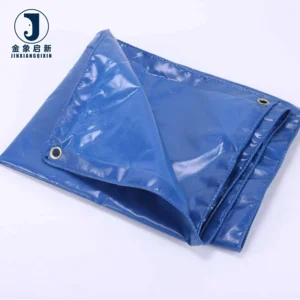
| Product Type | PVC Coated Tarpaulin Fabric |
| Weight (GSM) | 610gsm (18oz) |
| Width | 0.914m – 3.42m (available in multiple widths across the range) |
| Mesh Count Options | 20×20 / 20×18 / 23×23 / 30×30 |
| Coating Material | PVC |
| Flame Retardant | Available in flame retardant grades — confirm the standard required for your jurisdiction |
| UV Treatment | Anti-UV treatment available — test basis to be confirmed per order |
| Anti-Mildew / Antibacterial | Stated by manufacturer — request test documentation |
| Chemical & Oil Resistance | Acid, alkali, and oil resistance stated — verify against site exposure |
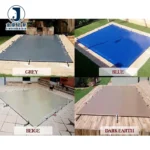
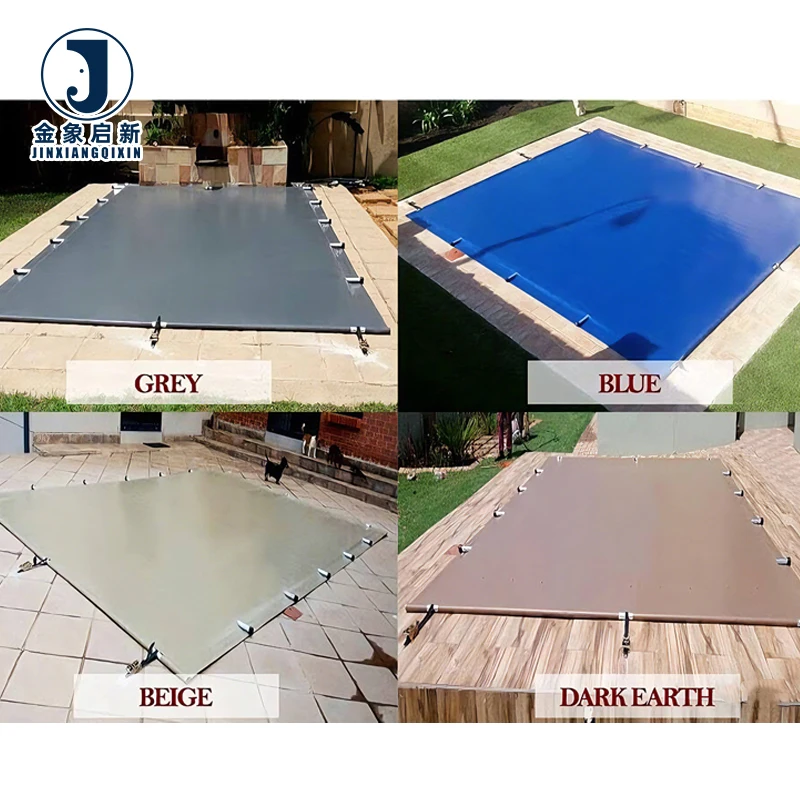
| Colour | Full colour customization available per project |
| Waterproof | Fully waterproof PVC coated construction |
Application Suitability
| Application | Exposure & Requirement |
|---|---|
| Inflatable and membrane structures | Internal air pressure loading, repeated inflation cycles, UV and weather exposure |
| Temporary mining and tunnelling enclosures | Dust, moisture, confined space fire safety compliance, mechanical contact |
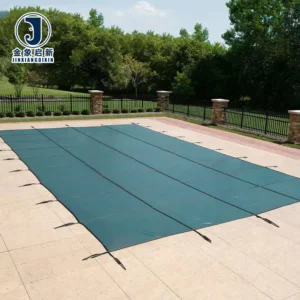
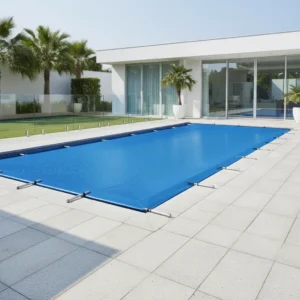
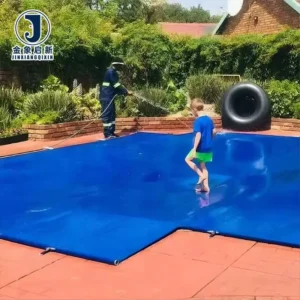
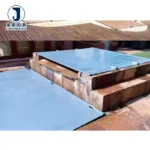
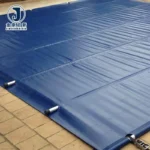
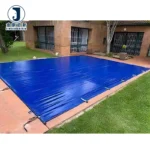
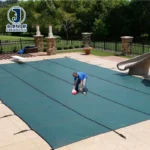
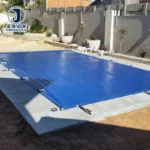
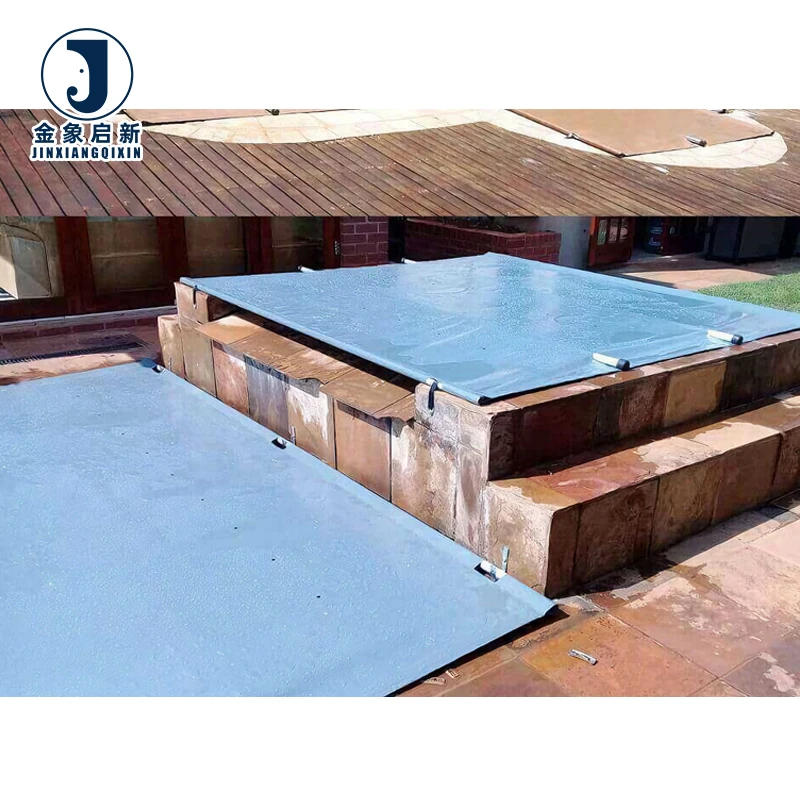
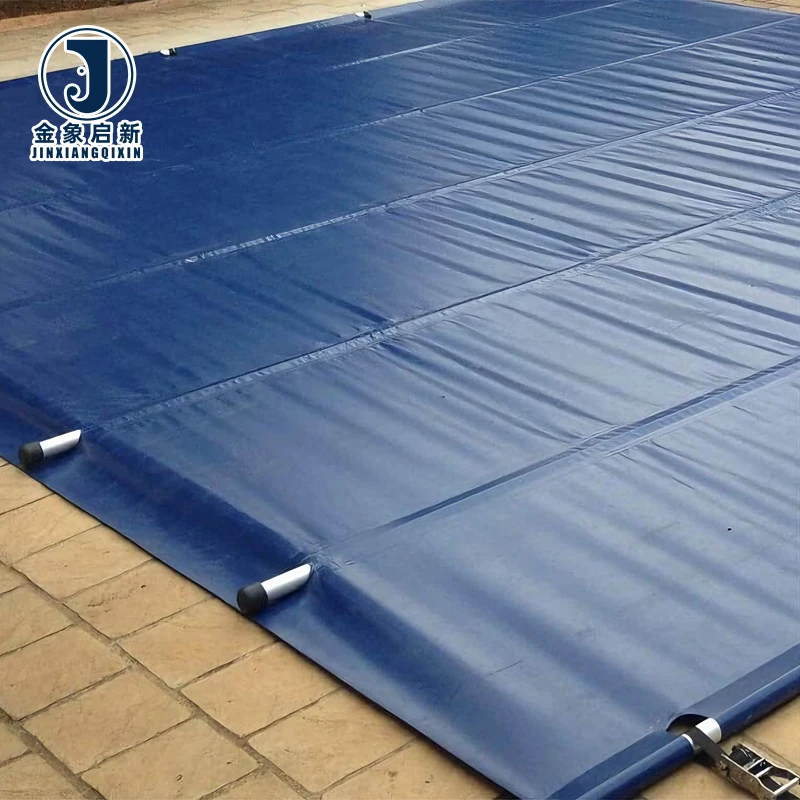
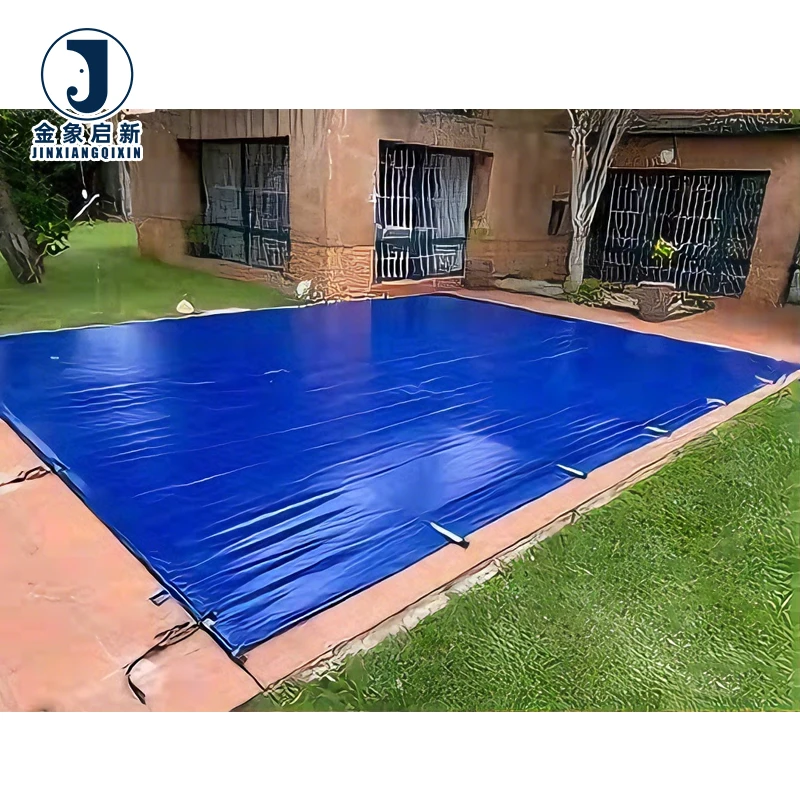
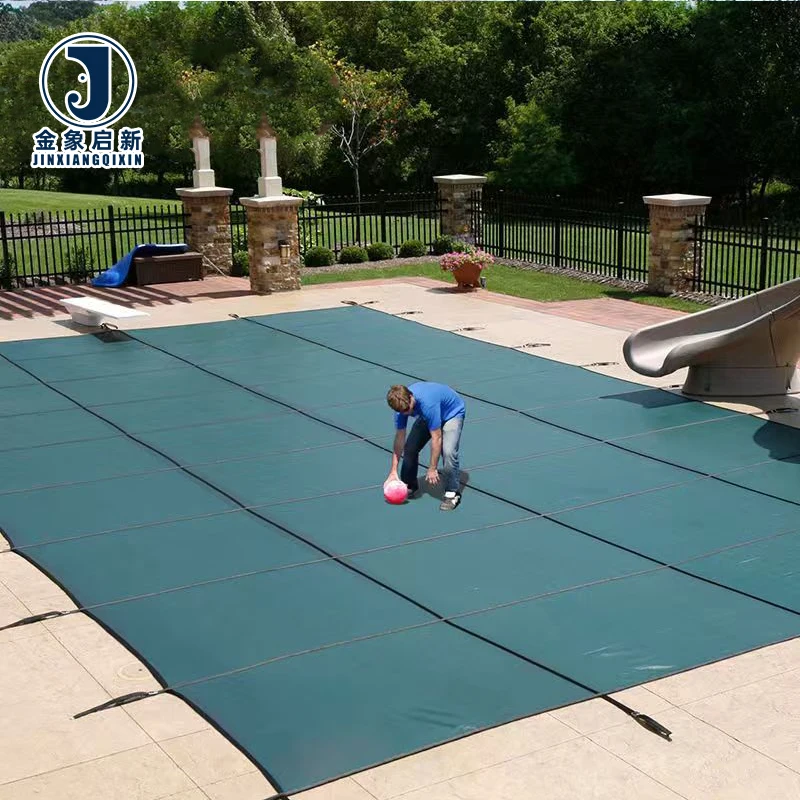
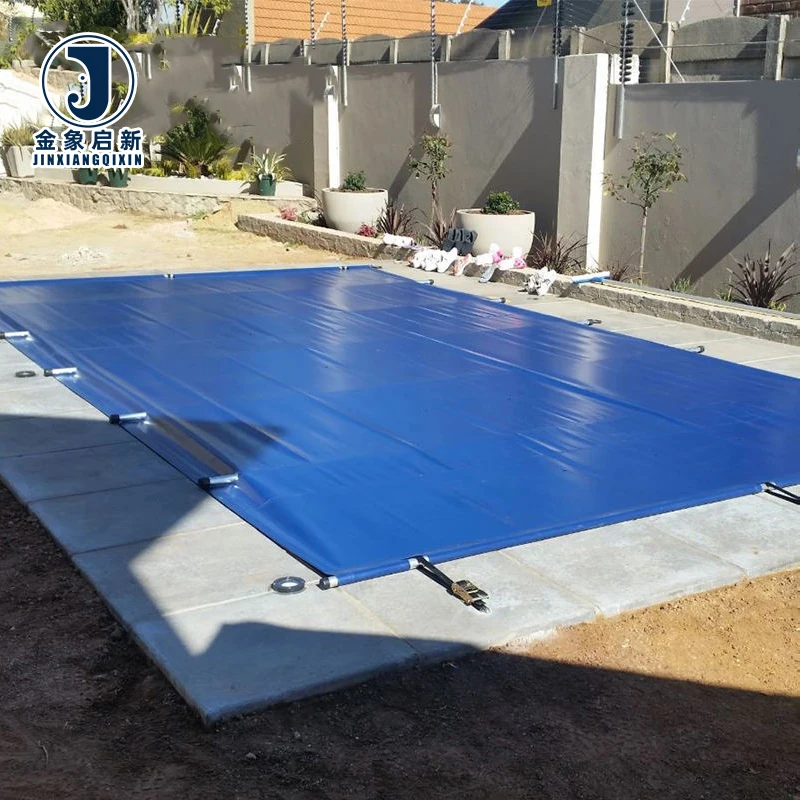
| Swimming pool and water containment covers | Continuous water immersion, chlorine and chemical contact, solar UV degradation |
| Industrial equipment protective covers | Outdoor weathering, abrasion from handling, site debris impact |
| Specialist structure roofing | Tensile load under wind, UV degradation, thermal expansion at fixings |
What "Flame Retardant" Means When No Grade Is Quoted
A fabric is only as fire-safe as the test report that backs the claim.
When sourcing PVC coated tarpaulin 610gsm fire retardant fabric for specialist structures, mining enclosures, or pool environments, the term "flame retardant" on a quotation is meaningless without a specific grade and test standard. Different jurisdictions require different classifications — M2 in France, B1 under DIN 4102 in Germany, NFPA 701 in North America — and a fabric passing one does not automatically pass another. [NEED_CITE: fire classification standards for textile building materials per DIN 4102 and NFPA 701] I have reviewed tender submissions where the specified fabric arrived with a generic certificate that did not match the site inspector’s requirement, forcing the contractor to source replacement material under schedule pressure. Always request the test report before placing the order, not after the rolls arrive on site.
Coating Weight and Structural Load Capacity
The 610gsm coating weight positions this PVC coated tarpaulin 610gsm fire retardant fabric in the heavy-duty range, providing the body and stiffness needed for membrane and inflatable structures where the fabric must hold shape under internal pressure or wind load. Coating weight alone, however, does not determine structural adequacy — the base fabric mesh count and denier work together with the PVC coating to deliver the final tensile and tear performance. A 610gsm fabric with a loose mesh will behave very differently under load than the same weight applied over a dense 30×30 base.
Fire Safety and Compliance Documentation
For mining ventilation enclosures, tunnelling shelters, and any specialist structure where occupants are present, the fire performance of the fabric is a contractual and regulatory requirement, not a preference. This material is available with flame-retardant treatment, but the specific grade — whether B1, M2, or NFPA 701 — must be confirmed against the project specification before production. [NEED_CITE: fire performance classification requirements for temporary structures in mining and construction] The test report should reference the exact standard, grade achieved, and the testing laboratory. Without this documentation, site inspectors have grounds to reject the installed structure regardless of the fabric’s actual performance in a fire event.
Reading the Mesh Count Against the Application
The available mesh count options — 20×20, 20×18, 23×23, and 30×30 — determine the base fabric density and directly affect how the 610gsm PVC coating performs in different applications. A 30×30 mesh provides a tighter weave that yields a smoother coating surface, better for applications where print quality or visual appearance matters, such as inflatable structures or architectural membranes. A 20×20 or 20×18 mesh uses heavier yarns with more open space between threads, allowing the PVC coating to penetrate deeper and create a stronger mechanical bond — this construction favours high-stress applications like pool covers where chemical exposure and repeated handling demand maximum adhesion between coating and base fabric. The choice between mesh counts should always be driven by the dominant load type: tensile loads favour denser meshes, while peel and flex loads benefit from the deeper coating penetration of an open mesh.
The Cost of Selecting the Wrong Specification
Specifying a fabric based on GSM alone, without confirming the mesh count and coating adhesion, leads to predictable field failures. [NEED_CITE: weld seam failure modes in heavy-duty coated fabrics under cyclic flex loading] A pool cover that looks correct on the quotation but uses an open mesh with shallow coating penetration will delaminate at the weld seams after repeated exposure to pool chemicals and solar UV — the seams fail before the fabric body does, precisely where the load concentrates during deployment and retrieval. Similarly, selecting a flame-retardant fabric without matching the grade to the jurisdiction’s requirement results in failed inspections, replacement orders, and schedule delays that far exceed the cost of getting the specification right at the inquiry stage. Batch colour inconsistency across rolls compounds the problem on visible membrane structures, where panels installed side by side reveal differences that should have been caught at pre-shipment inspection.
Why This Source Supports Specialist Fabrication
Deep process control over PVC coating weight and adhesion is maintained across three full production lines, ensuring that the stated 610gsm is what arrives on your loading dock, not a lighter substitute. A dedicated 10-person R&D team handles material selection, mesh count matching, and sample development for specialist structures and inflatable applications, shortening the path from inquiry to confirmed specification. Every roll passes through dedicated QA/QC with 100% inspection before shipment — coating weight, colour consistency, and adhesion are verified, not assumed. Samples are developed within days for custom requirements, allowing you to test weld parameters, flex behaviour, and chemical resistance on your own equipment before committing to bulk production. Documentation accompanies every dispatch: material specification sheets, test reports where applicable, ISO and CE certificates, and a pre-shipment inspection record that ties each roll back to its production batch.
Documentation & Verification
- Material specification sheet stating GSM, base fabric mesh count, and coating method per roll
- Test report for flame-retardant and UV grades citing the specific standard achieved
- ISO and CE certificates supporting project compliance and site audit requirements
- Pre-shipment inspection record verifying weight, colour, and adhesion consistency
- Roll packing list and certificate of origin included for customs clearance
Fabrication, Handling & Storage
- Set hot-air weld temperature and speed based on the 610gsm coating thickness before full production runs
- Match seam reinforcement method to the flex load expected at panel junctions and tie-down points
- Store rolls horizontally on a clean, flat surface to prevent permanent creasing in the PVC coating
- Allow cold-stored rolls to reach ambient temperature before unrolling to avoid coating micro-cracking
- Use neutral pH cleaners on the PVC surface — solvents and alkaline agents degrade the coating over time
- Plan panel layout around the selected width to minimize off-cut waste and transverse weld seams
Requesting a Project-Specific Quotation
Provide the intended application, the environmental exposure conditions including chemical contact and fire safety jurisdiction, and the required panel dimensions or roll quantities. Specify whether flame-retardant certification to a particular standard — such as DIN 4102 B1 or NFPA 701 — is contractually required for your site. Confirm the mesh count preference or request a recommendation based on your dominant load type, and indicate whether samples are needed for in-house weld and flex testing before production.
Frequently Asked Questions
Q: What flame-retardant standard can this 610gsm fabric meet?
A: The fabric is available with flame-retardant treatment, but the specific grade — B1, M2, NFPA 701, or other — must be confirmed against your project requirement and jurisdiction before production. Request the applicable test report with your inquiry so the grade can be matched to your site compliance obligation.
Q: How is UV resistance verified for this material?
A: Anti-UV treatment is available on this PVC coated tarpaulin, but the test method and duration must be specified per order. Provide your expected outdoor exposure conditions and request a test report citing the standard and grade so you can evaluate suitability for your climate zone.
Q: How do I confirm the 610gsm weight on arrival?
A: A pre-shipment inspection record is provided with every order verifying coating weight per roll. On receipt, you can perform a destructive cut-and-weigh check on a sample piece to confirm the stated GSM falls within acceptable manufacturing tolerance against your quotation.
Q: Which mesh count should I choose for an inflatable structure?
A: Inflatable structures typically benefit from a denser mesh such as 23×23 or 30×30, which provides a smoother coating surface and more uniform air retention. The final selection depends on your panel size, internal pressure, and welding method — request samples of multiple grades to test on your production equipment.
Q: Can I order custom widths for membrane panel layouts?
A: Widths from 0.914m to 3.42m are available across the range. Specify your target panel dimensions so the optimal roll width can be selected to minimize transverse welds and off-cut waste, and request a roll layout plan before production confirms.