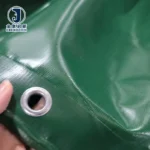
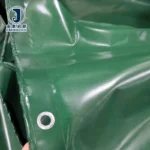
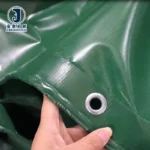
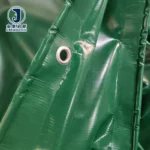
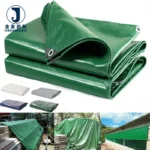
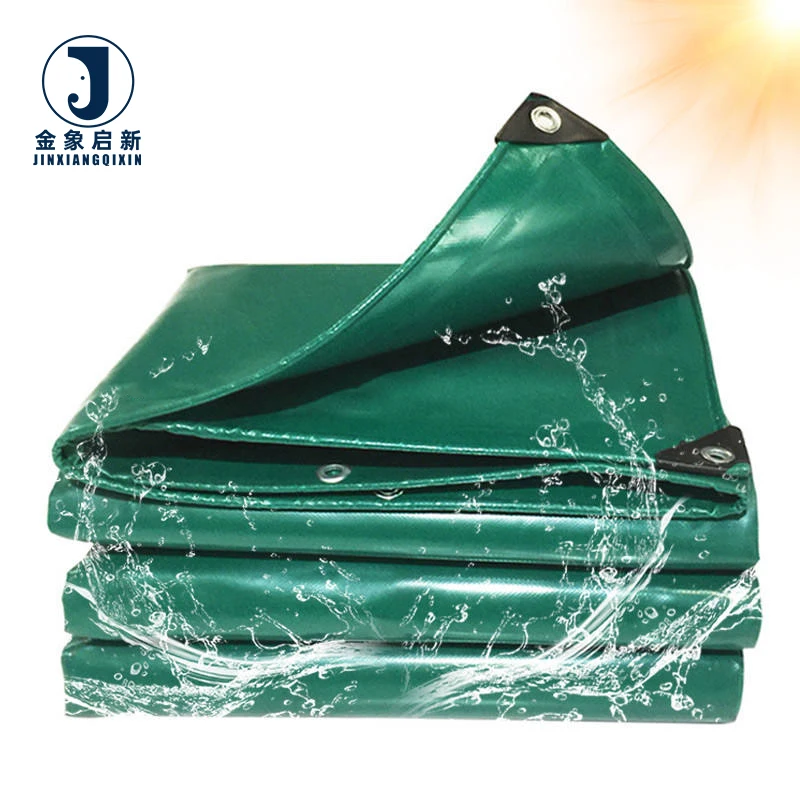
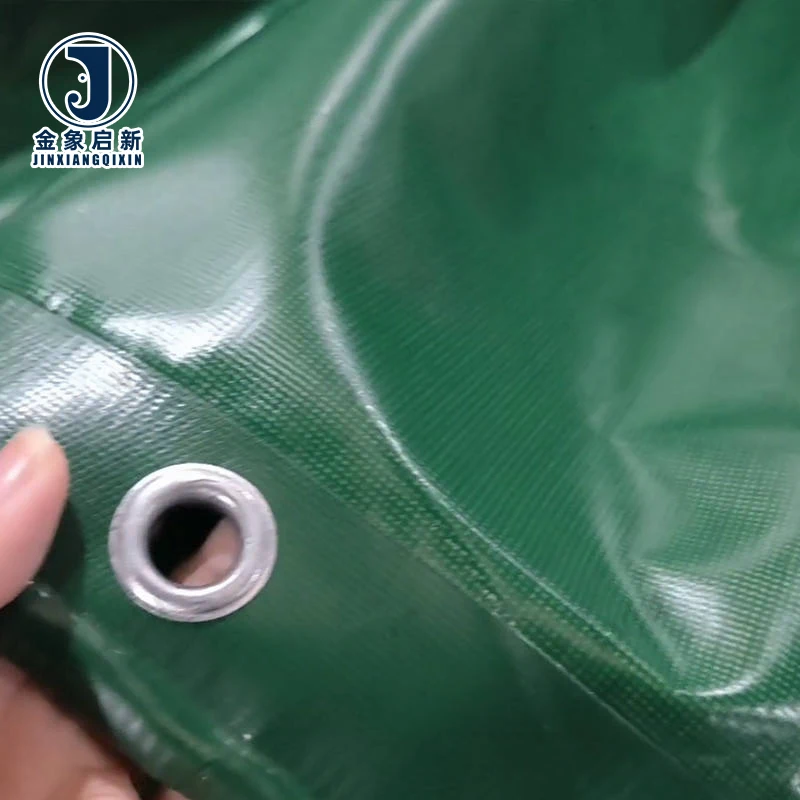
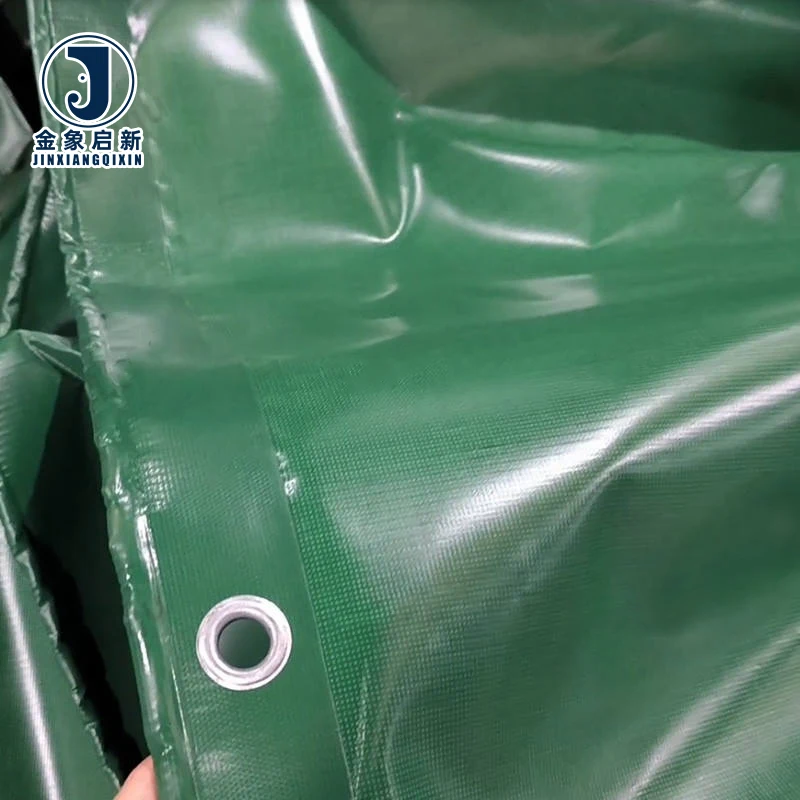
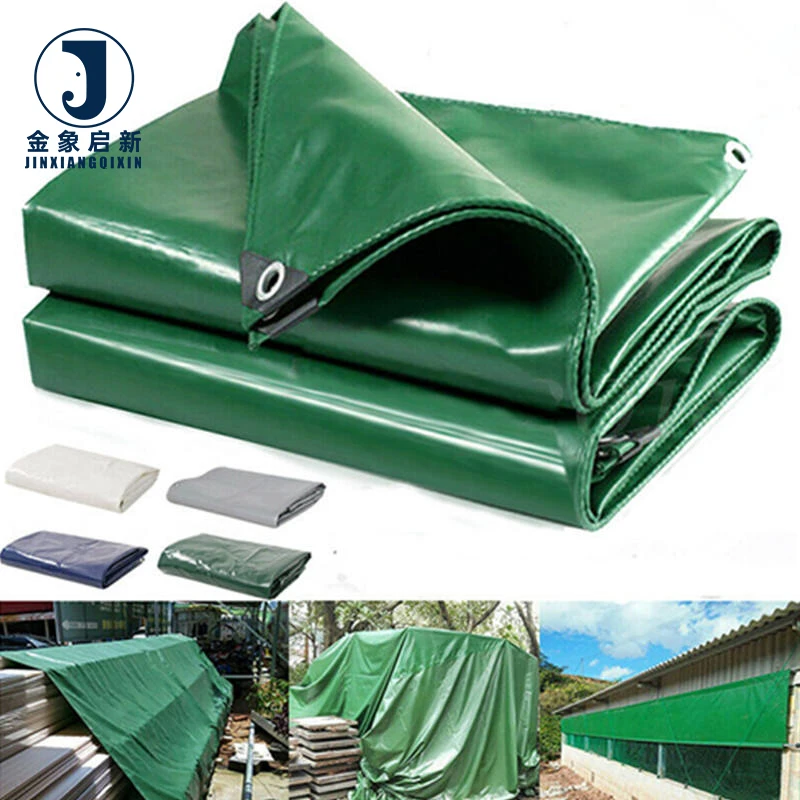
Coating Process Mastery — Deep control over PVC coating adhesion and weight consistency across eight grade steps, verified by pre-shipment inspection on every roll dispatched.
Technical Specifications
| Parameter | Value |
|---|---|
| Product Type | PVC Coated Tarpaulin |
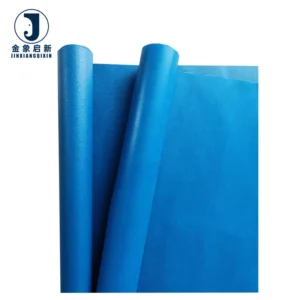
| Coating Material | PVC, double-sided coating on polyester base fabric |
| Weight (GSM) | 350, 400, 420, 500, 600, 650, 750, 900 |
| Base Fabric Denier | 500D×840D (350/400/420); 500D×1000D (500); 1000D×1000D (600); 1000D×1300D (650); 1300D×1300D (750); 1000D×2000D (900) |
| Total Thickness | 0.29mm (400); 0.32mm (420); 0.38mm (500); 0.44mm (600); 0.46mm (650); 0.55mm (750); 0.65mm (900) |
| Density | 30×19 (350/400/420/500); 20×20 (600/650/750); 30×15 (900) |
| Tensile Strength Warp (N) | 1650 (350); 1800 (400); 1850 (420); 2050 (500); 2500 (600); 2550 (650); 2750 (750); 3900 (900)* |
| Tensile Strength Weft (N) | 1600 (350); 1700 (400); 1750 (420); 1900 (500); 2200 (600); 2250 (650); 2850 (750); 3500 (900)* |
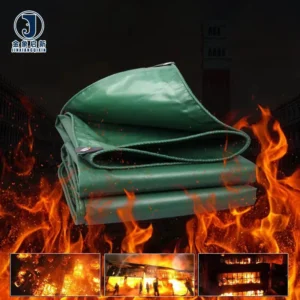
| Flame Retardant | Available in flame retardant grades — confirm the grade required for your market |
| UV Treatment | Available with UV treatment — confirm test standard required for your application |
| Anti-Mildew | Claimed |
| Heavy Metal Free | Claimed |
| Finish | Self-clean surface |
| Treatment Options | High frequency hot melt, hot air welding, sewing |
| Printing Option | Printable, customized |
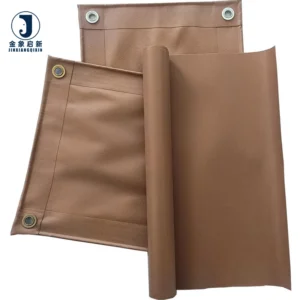
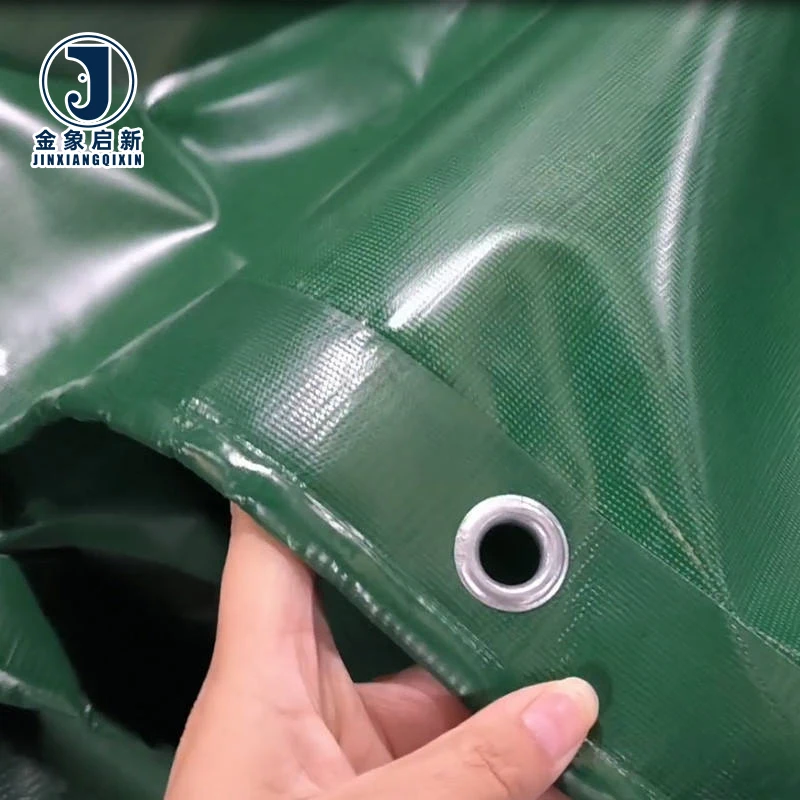
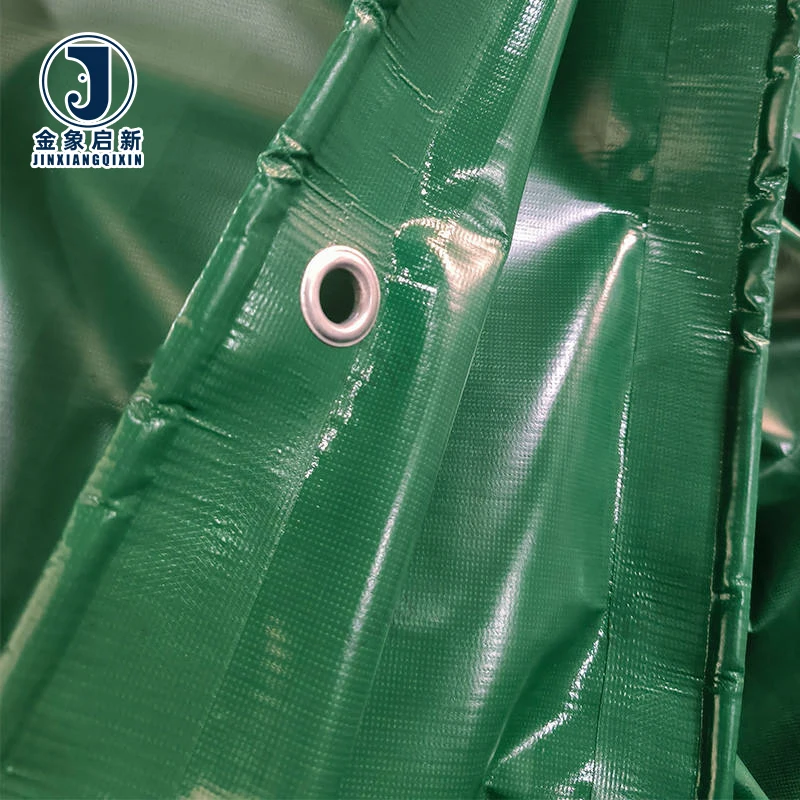
| Hem | Reinforced corners, high temperature heat sealed seamless edge wrapping, 5mm rope without splicing |
| Eyelet | 3cm enlarged aluminum alloy buttonhole, brass eyelets at 1m spacing |
| Temperature Range | Brittle temperature ≤ -50~-60°C; Softening temperature ≥ 80°C; Melting point 212°C |
| Standards | ISO, CE |
*Test basis not stated in source
Application Suitability
| Application | Exposure & Requirement |
|---|---|
| Mining and tunnelling ventilation duct | Continuous airflow pressure, fire-retardant compliance, anti-static discharge risk in confined underground environments |
| Aviation ground support ducting | Jet blast proximity, fuel vapour exposure, strict flame and static certification for airside operations |
| Membrane and inflatable structures | Sustained tensile load, UV and weather exposure, certified flame performance for public-occupancy buildings |
| Specialist military and construction shelters | Rapid deployment, repeated folding and unfolding, documented material traceability for contract compliance |
| Industrial containment covers | Chemical dust, abrasion from bulk materials, requirement for hot air weld repair in the field |
What "Fire-Retardant" Means Without a Verified Grade Behind It
Every industrial PVC coated tarpaulin shipment must carry the test report matching the standard your site jurisdiction demands — not a generic claim.
Ventilation duct fabric arriving on a mining site without batch-specific fire-retardant documentation causes immediate work stoppage. Compliance officers reject installations where the certificate references a standard different from local regulation, or where the test report covers a different production batch than the rolls delivered. The cost is not just the material — it is the downtime, the re-procurement cycle and the audit trail gap. PVC Coated Tarpaulin fire retardant and anti-static grades from this range ship with documentation tied to the specific order, so your site compliance file closes on day one. [NEED_CITE: fire classification standards for industrial textile applications]
Duct Construction and Airflow Demands
Industrial ventilation duct requires fabric that holds its shape under sustained negative or positive pressure without delaminating at the coating-to-yarn interface. The double-sided PVC coating on a polyester base fabric provides full encapsulation of the weave, preventing air leakage through pinholes that single-coated or laminated alternatives develop after repeated flex cycles. PVC Coated Tarpaulin in the heavier denier options — particularly the 1300D×1300D and 1000D×2000D constructions — delivers the dimensional stability needed for large-diameter duct runs in mining and tunnelling.
Anti-Static Compliance for Hazardous Environments
Underground mining and aviation fuel-handling zones require fabric with controlled surface resistivity to prevent electrostatic discharge. Anti-static treatment is available across this range — confirm the surface resistance value and the specific standard your operation must satisfy before ordering. The self-clean surface finish reduces dust accumulation that can otherwise alter static dissipation behaviour over time, maintaining more consistent performance between scheduled wash-downs. [NEED_CITE: anti-static textile testing methods for mining environments]
How Denier, Density and Coating Weight Interact in Practice
Selecting the correct grade for a duct or membrane structure requires reading GSM alongside base fabric denier and weave density rather than treating weight as the sole indicator of strength. A 650 GSM fabric built on 1000D×1300D yarn at 20×20 density distributes tensile load across thicker individual filaments, resisting tear propagation differently from a 600 GSM fabric on 1000D×1000D yarn at the same density. The double-sided PVC coating method ensures the coating penetrates and locks the weave intersection, which directly affects peel strength and hot air weld behaviour. The brittle temperature threshold of -50 to -60°C means the coating remains flexible in sub-zero surface conditions, while the softening point above 80°C sets the upper boundary for hot air welding parameters — too aggressive a heat setting risks coating migration at the weld zone.
The Cost of Specifying the Wrong Grade
Duct fabric that lacks the fire-retardant grade required by the site authority results in failed inspections and project delays that cascade through the construction schedule. Rolls that arrive with inconsistent GSM across the batch create weak zones at duct joints where thinner sections flex and fatigue ahead of the rest. Anti-static fabric supplied without a matching test certificate forces the contractor to source independent lab verification at their own expense and timeline. Welded seams on underspecified grades fail at flex points long before the body fabric shows wear, because the coating-to-yarn bond breaks down under repeated pressure cycling. [NEED_CITE: coated fabric weld failure analysis under cyclic loading]
Why Source This Range Through Jinan Jinxiang
Three full production lines with 36 sets of professional equipment support bulk roll output for ventilation duct projects without splitting orders across external mills. The 10-person R&D team handles material selection and sample development specific to your duct diameter, membrane geometry or shelter specification. Dedicated QA/QC at every production stage with 100% inspection before shipment catches GSM deviation and coating defects before rolls leave the facility. Full documentation — from material specification sheets to pre-shipment inspection records — ships with each dispatch, eliminating the back-and-forth that delays site approval. Samples for custom width, colour or treatment requirements are developed within days, not weeks.
Documentation & Verification
- Material specification sheet stating GSM, base fabric denier, coating method and colour reference for each roll
- Test report for fire-retardant and anti-static grades citing the standard applicable to your site jurisdiction
- 100% pre-shipment inspection record with roll-to-roll consistency verified across the full order
- ISO and CE certificates with certificate of origin and full customs documentation pack included in every dispatch
- Roll packing list with individual roll weight and dimensions for receiving verification
Fabrication, Handling & Storage
- Hot air welding parameters must account for the specific GSM and coating thickness of the selected grade to avoid seam delamination
- Reinforced corners and 5mm rope hem distribute tie-down and suspension loads across the duct or shelter frame attachment points
- Store rolls upright on pallets in shaded, ventilated areas to prevent flat-spot deformation on the PVC coating surface
- Allow cold-stored rolls to acclimatise to ambient temperature before unrolling to avoid coating micro-cracking below the brittle threshold
- Field repairs on punctures and seam failures are achievable with hot air welding using compatible PVC welding rod and matching GSM offcuts
- Brass eyelets at 1-metre spacing suit standard duct suspension hardware; verify load rating against the specific denier grade selected
Inquiry Guidance for Specialist Applications
Provide the ventilation duct diameter, run length and operating pressure so the correct denier and GSM grade can be matched to your structural load requirement. Specify the fire-retardant standard and anti-static surface resistance value mandated by your site authority or national regulation. Indicate whether you require rolls in standard width for on-site fabrication or pre-cut panels with welded seams and eyelet reinforcement finished to your drawing.
Frequently Asked Questions
Q: Which fire-retardant standard does the fabric meet and is the test report batch-specific?
A: Fire-retardant grades are available across this range — the specific standard (such as DIN 4102, NFPA 701 or M2) must be confirmed at inquiry stage to match your market requirement. Each test report is issued against the production batch shipped, not a generic reference sample, so your compliance file documents the exact rolls installed on site.
Q: What surface resistance value is achieved for anti-static grades?
A: Anti-static treatment is available as a customisable option. The surface resistance value and the test method used must be specified at quotation stage to align with the mining or aviation standard your operation follows. Request the applicable test report with your sample approval so compliance can be verified before bulk production begins.
Q: How is GSM verified on arrival and what tolerance applies?
A: Every roll undergoes weight verification as part of the 100% pre-shipment inspection, and the results are documented in the inspection record that ships with your order. On receipt, you can cross-check against the material specification sheet provided. Tolerance expectations should be agreed at the quotation stage based on the specific GSM grade ordered.
Q: Can the fabric be repaired in the field by hot air welding?
A: Yes. The double-sided PVC coating supports hot air welding for field repairs on punctures, seam failures and cut-outs. Use compatible PVC welding rod and adjust heat settings to the coating thickness of your specific grade. Offcuts from the original order can serve as repair patches, ensuring colour and coating consistency.
Q: What documentation package ships with each roll for site compliance audits?
A: Each dispatch includes a material specification sheet, fire-retardant and anti-static test reports where applicable, pre-shipment inspection record, roll packing list, ISO and CE certificates, and certificate of origin. This package provides the complete traceability chain your compliance officer or site auditor requires before installation sign-off.