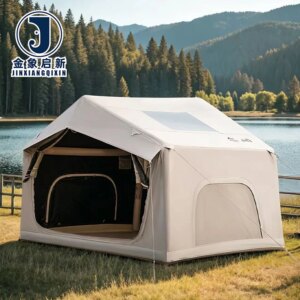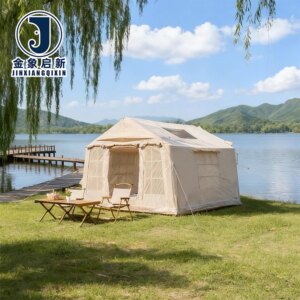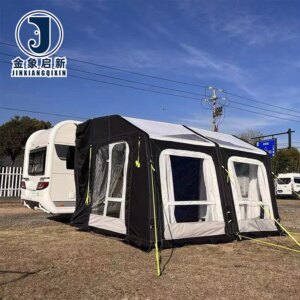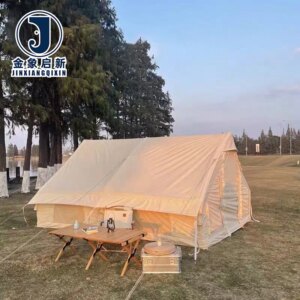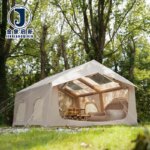
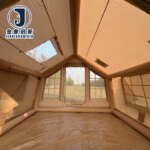
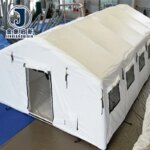
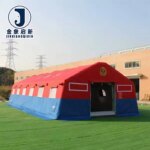
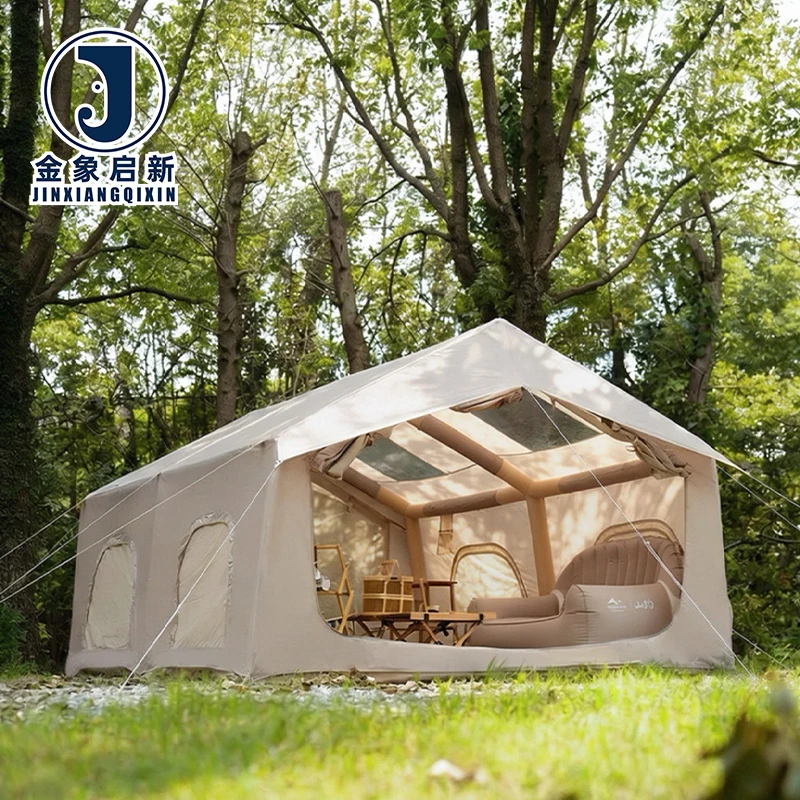
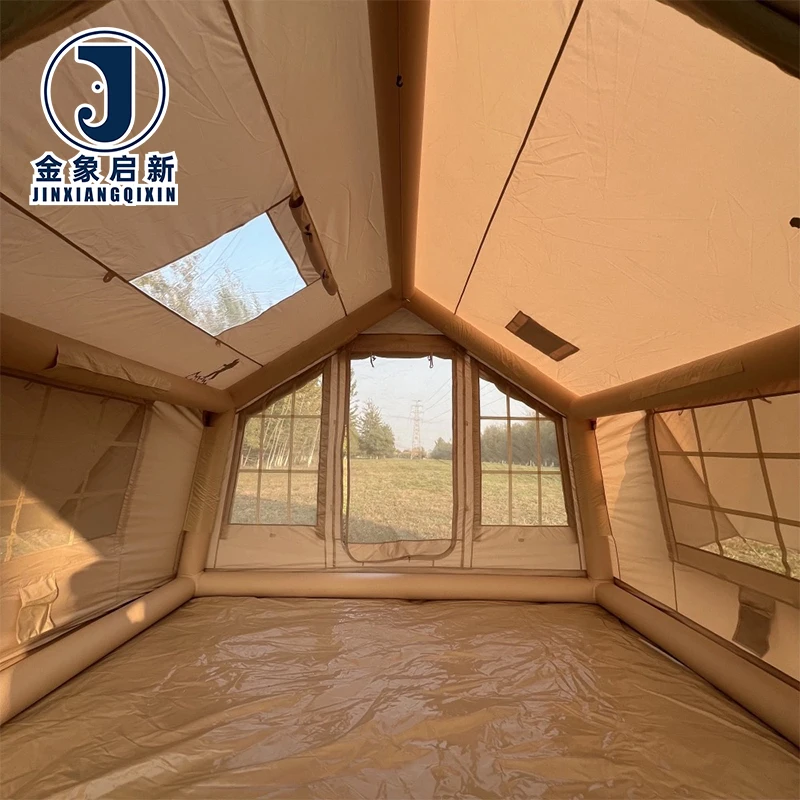
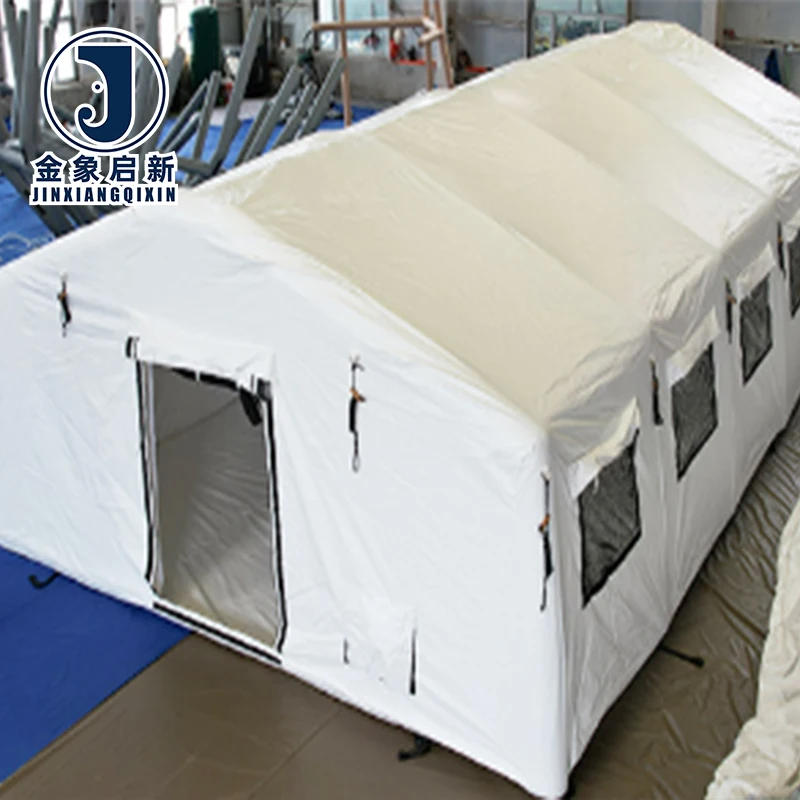
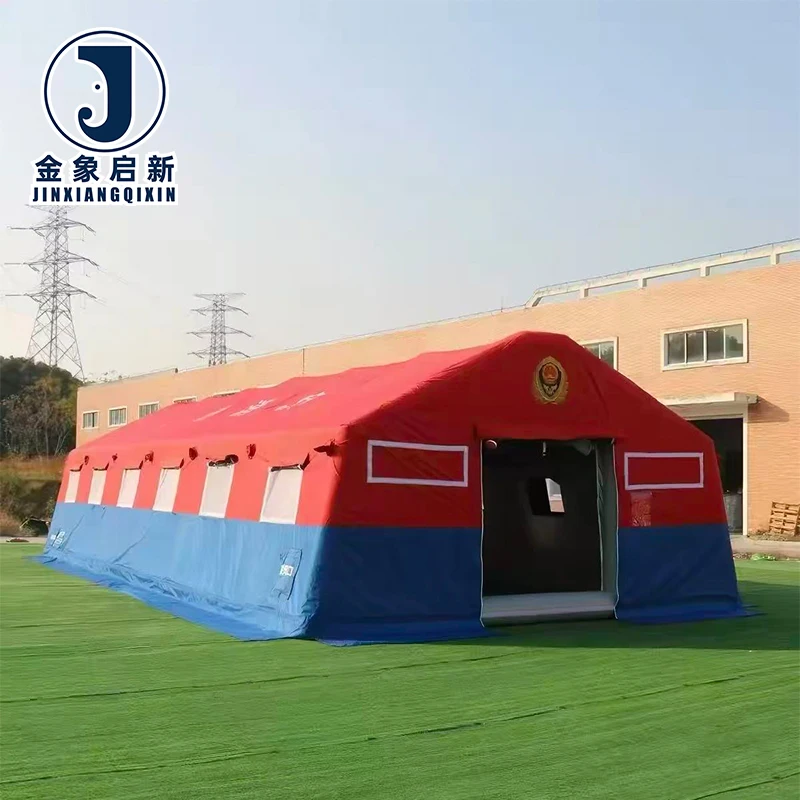
Deep Process Control Over Coating — nearly three decades of coated fabric production, supported by 36 sets of professional processing equipment and a dedicated R&D team, ensure every batch of inflatable tent fabric meets the exact compliance and performance requirements of emergency and specialist deployments.
Technical Specifications
| Parameter | Value |
|---|---|
| Product Type | Inflatable Tent |
| Core Material | PVC waterproof fabric |
| Product Forms | Single Layer Construction, Extended Type |
| UV Resistance | Available with UV resistant treatment — test basis to be confirmed per market requirement |
| Flame Retardant | Available in flame retardant grades — confirm the grade required for your market |
| Key Performance | Waterproof, quick automatic opening |
| Season Rating | Four-season |
| Customization | OEM & ODM support: material selection, structural design, pattern printing |
| Quality System | Full-process QA/QC inspection with 100% pre-shipment verification |
| Certifications | ISO9001, ISO14001, ISO45001, CE |
Application Suitability
| Application | Exposure & Requirement |
|---|---|
| Emergency disaster relief shelters | Rapid automatic deployment in uncontrolled field conditions, wind loading, moisture exposure, compliance with humanitarian procurement standards |
| Temporary construction site offices | Continuous UV exposure, abrasion from site traffic, dust ingress prevention, flame retardant compliance for site safety regulations |
| Mobile command centers for industrial events | Repeated inflation and deflation cycles, brand visibility requirements, weather resistance across varied climates |
| Remote mining and tunnelling workspace | Anti-static requirements in confined environments, fire safety compliance, structural integrity under continuous inflation pressure |
| Infrastructure maintenance emergency shelters | Quick-deploy capability in adverse weather, waterproof integrity, thermal insulation potential for occupant safety |
Why "Certified" Inflatable Tent Fabric Means Nothing Without the Paperwork
An inflatable tent used for emergency shelter or industrial deployment must carry test-backed fire and safety documentation — not just a quotation claim.
Procurement teams sourcing Inflatable Tent Fabric fire retardant / anti-static / certified material often discover that the certificates provided do not match the specific batch delivered, or that the flame retardant grade claimed does not align with the safety regulations of the destination market. This gap between quotation promise and delivery reality causes project delays, failed site inspections, and in worst cases, rejected shipments at port of entry. Mining contractors and disaster relief agencies operate under strict compliance frameworks where fabric documentation is audited alongside structural engineering reports. [NEED_CITE: ISO and CE certification requirements for temporary industrial shelters and inflatable structures]
Compliance Documentation That Travels With Every Shipment
When sourcing Inflatable Tent Fabric fire retardant / anti-static / certified for aviation, mining or disaster relief projects, the material specification must be verifiable at every handover point. We provide fire-retardant and anti-static test reports matched to batch and order number, so the documentation arriving at the site safety officer’s desk corresponds exactly to the fabric deployed in the field. Each roll carries a pre-shipment inspection record signed off by dedicated QA/QC staff. [NEED_CITE: batch traceability requirements for fire-retardant textile procurement in mining and aviation]
Rapid Deployment Demands Reliable Material Behaviour
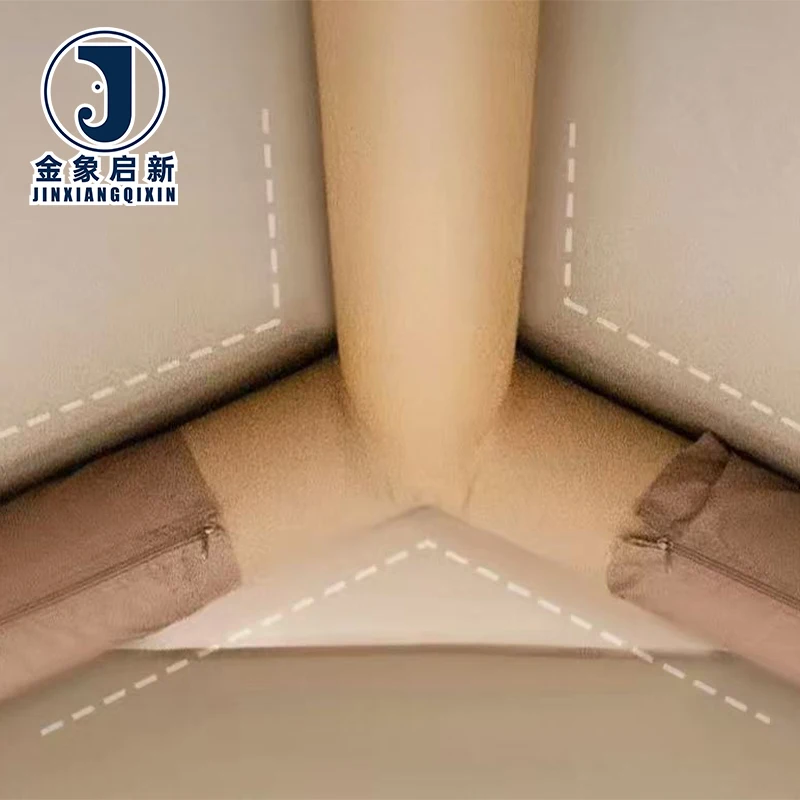
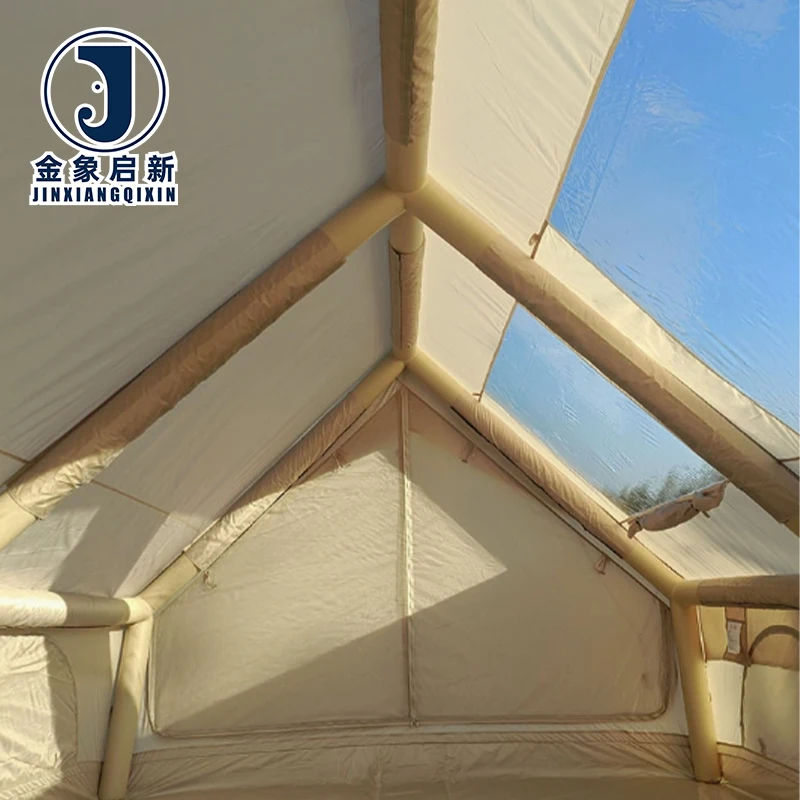
Emergency and temporary shelter projects succeed or fail based on how predictably the fabric behaves during inflation and under sustained wind load. The single layer and extended type configurations of this PVC inflatable tent are engineered for quick automatic opening, meaning the fabric must tolerate rapid stress application without seam separation or coating delamination. Welded seams are constructed to handle flex points where inflation pressure concentrates, a common failure zone identified across inflatable membrane structures.
Coating Weight and Base Fabric Interaction
The tensile and tear performance of any inflatable tent fabric depends on the relationship between the PVC coating weight and the base fabric’s denier and weave density. Coating weight alone does not determine strength — a heavier coating on a low-denier base fabric may resist abrasion well but propagate tears more readily than a balanced construction. The PVC waterproof fabric used in this inflatable tent is processed under controlled coating conditions across our production lines, where adhesion between coating and substrate is monitored at each stage. The choice between single layer and extended type construction further influences how the material distributes inflation loads across the structural envelope. [NEED_CITE: tensile and tear test methods for coated fabrics per ISO 1421]
Seam Integrity Under Inflation Cycles
Every inflatable structure subjects its seams to cyclic loading — inflation, sustained pressure, deflation, and re-inflation. The welded seams on this PVC inflatable tent are constructed using heat-welding parameters calibrated to the specific coating formulation, ensuring the bond strength at the seam matches or exceeds the parent material. When seam parameters are mismatched to the coating type, the joint becomes the weakest point, failing before the fabric body shows any degradation. Our R&D team develops welding profiles for each material variant, and sample development confirms seam behaviour before bulk production begins.
What Happens When the Specification Does Not Match the Deployment Environment
Inflatable tents deployed in mining or tunnelling environments require anti-static properties to prevent charge accumulation in confined, potentially explosive atmospheres. If the fabric supplied lacks verified anti-static treatment, the entire structure may be rejected during site commissioning — a failure that cannot be remedied in the field. Similarly, emergency disaster relief shelters specified without adequate UV resistant treatment will show visible degradation after extended outdoor exposure, compromising waterproof integrity and structural appearance. Colour variation between rolls in a multi-tent order becomes immediately visible once structures are installed side by side, forcing contractors into costly replacement cycles. [NEED_CITE: anti-static surface resistance testing standards for inflatable structures in hazardous environments]
What Consistent Process Control Delivers
Our production facility operates three full production lines with 36 sets of professional processing equipment, providing the capacity to fulfil bulk orders while maintaining batch-to-batch consistency. The 10-person R&D team handles material selection, structural design modifications and pattern printing requirements, developing samples within days so buyers can verify fabric behaviour before committing to production volume. Full OEM and ODM customization is supported, from custom sizing to colour matching, with dedicated QA and QC staff conducting 100% pre-shipment inspection on every order.
Documentation & Verification
- Material specification sheet stating PVC coating type, base fabric details, colour reference and performance parameters for this inflatable tent
- Fire-retardant and anti-static test reports matched to batch and order number where applicable
- ISO9001, ISO14001, ISO45001 and CE certificates included with every shipment
- Pre-shipment inspection record with dedicated QA/QC sign-off confirming GSM, coating weight and visual consistency
- Roll packing list with certificate of origin and customs documentation support
Fabrication, Handling & Storage
- Heat-weld seams using temperature profiles matched to the PVC coating formulation to maintain bond strength across inflation cycles
- Store rolls horizontally on padded racking to prevent creasing that could compromise the waterproof coating layer
- Allow fabric to acclimatise before deployment in cold conditions to avoid stiffness-related handling damage during inflation
- Use compatible PVC-based repair patches for field maintenance, ensuring adhesive compatibility with the coating surface
- Plan cutting layouts to minimise offcuts and preserve material yield across custom-sized inflatable tent panels
Structuring Your Inflatable Tent Enquiry
To provide an accurate specification recommendation, share the deployment environment — including expected wind loads, temperature range, and any site-specific fire safety or anti-static regulations. Confirm whether you require finished tents in specific dimensions or roll stock for your own fabrication, along with colour, pattern printing or branding requirements. Indicate target order volume and whether samples are needed for structural testing before bulk production.
Frequently Asked Questions
Q: What fire-retardant grades are available for inflatable tent fabric in different markets?
A: We supply inflatable tent fabric in various flame retardant grades to meet regional safety regulations. The specific grade required depends on your destination market’s building and temporary structure codes. Confirm the classification standard applicable to your project — such as local mining or aviation fire safety requirements — and we will match the material and provide the corresponding test report with your shipment.
Q: How is anti-static performance verified for specialist deployment environments?
A: Anti-static treatment is applied during the coating process and verified through surface resistance testing. For inflatable tents deployed in mining, tunnelling or other confined environments where charge accumulation presents a hazard, we provide test documentation matched to the production batch. Specify your site’s anti-static compliance requirements at enquiry stage so we can confirm the appropriate treatment grade.
Q: What UV resistant treatment options exist for extended outdoor emergency shelter use?
A: UV resistant treatment is incorporated into the PVC coating formulation to protect against degradation during extended outdoor exposure. The test basis and expected performance vary by treatment grade and must be confirmed against your deployment climate and duration. Request the UV test documentation relevant to your application when specifying the material for disaster relief or long-term temporary shelter projects.
Q: What are the minimum order and lead time for custom-sized inflatable tents?
A: Custom sizing, colour matching and pattern printing are supported through our OEM and ODM service, with sample development completed within days for approval before bulk production. Minimum order quantities and lead times depend on the level of customization and total volume required. Share your project dimensions, colour specifications and target delivery date at enquiry stage for a confirmed production schedule.
Q: How is batch-to-batch quality consistency maintained across large inflatable tent orders?
A: Every production batch undergoes 100% pre-shipment inspection by dedicated QA/QC staff, with coating weight, colour consistency and seam integrity verified against the material specification sheet. Inspection records are provided per order number, ensuring full traceability from raw material through to dispatch. This process applies to both roll stock supply and finished inflatable tent production across our three production lines.