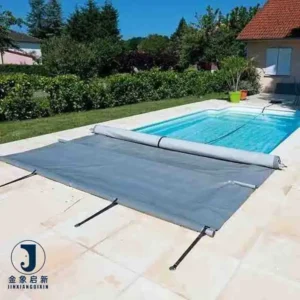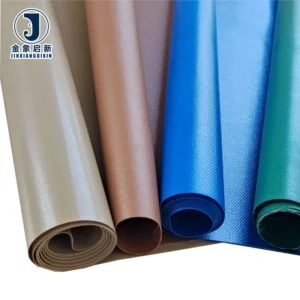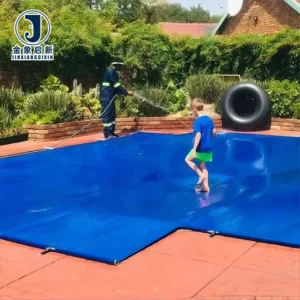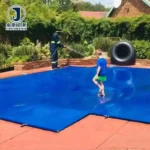
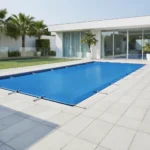
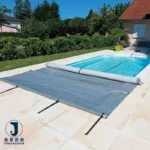
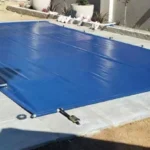
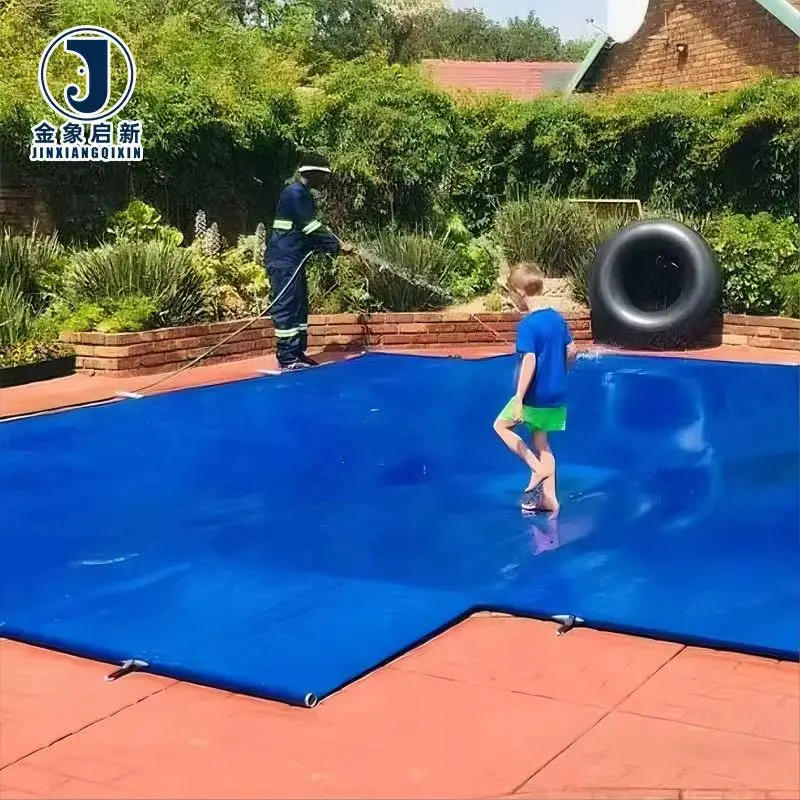
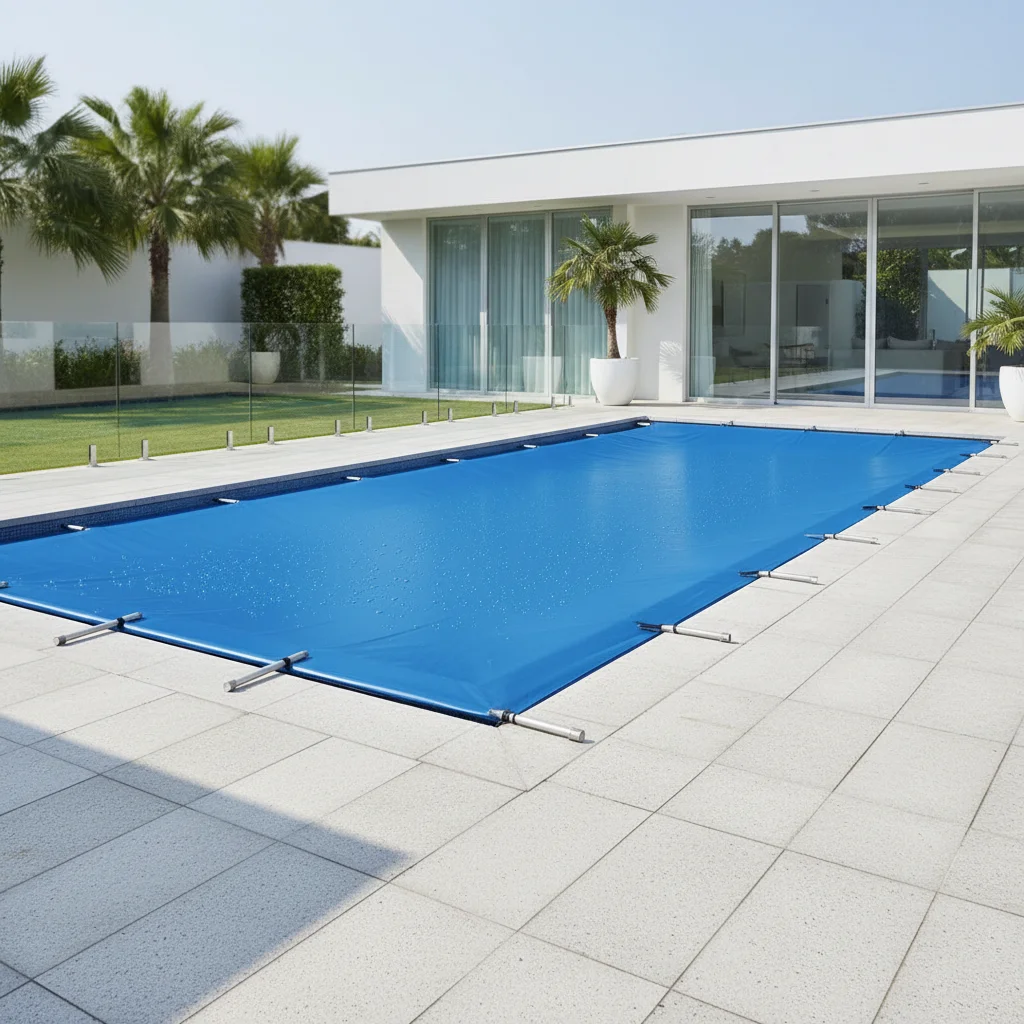
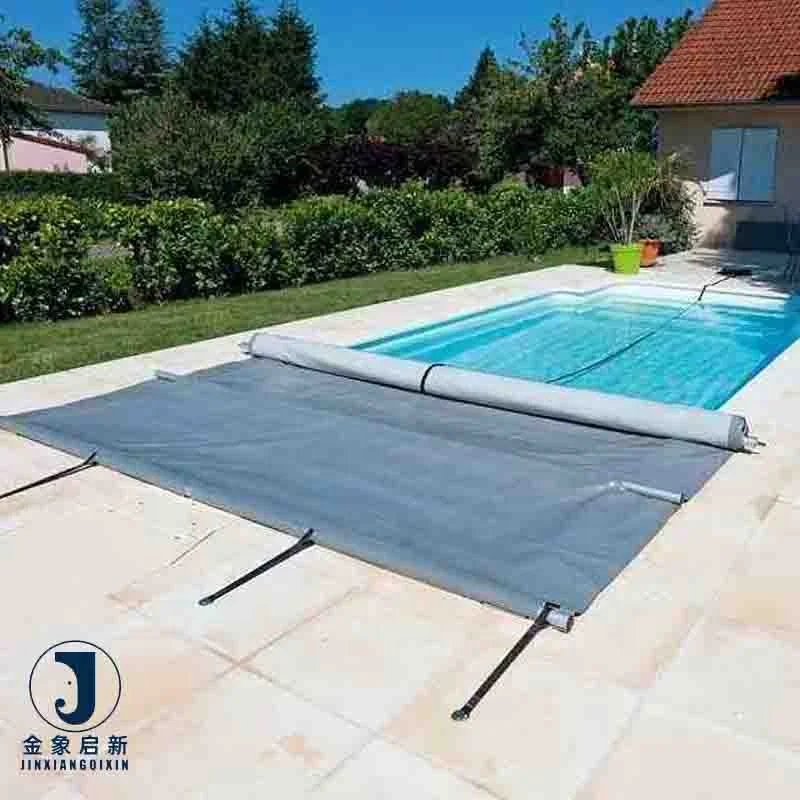
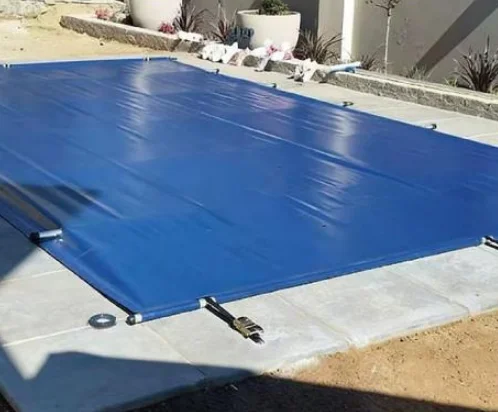
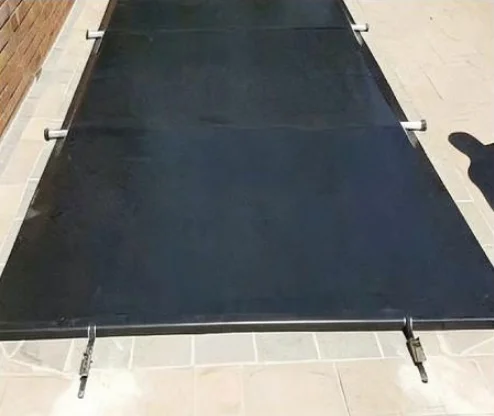
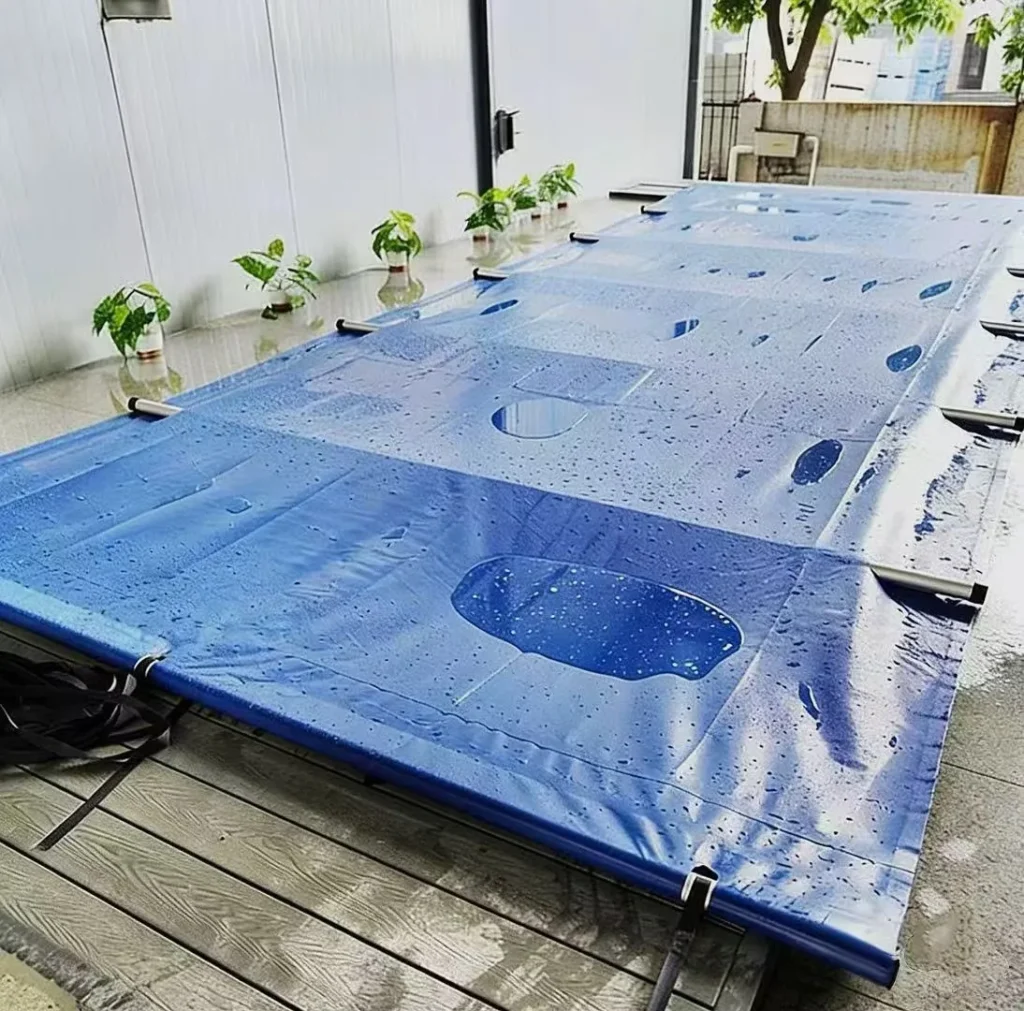
Laminated Coating Expertise — three dedicated production lines ensure consistent PVC-to-polyester adhesion across every roll of pool cover tarpaulin we coat.
Technical Specifications
| Parameter | Value |
|---|---|
| Product Type | PVC Coated Tarpaulin Roll |
| Material | PVC + High-strength polyester mesh fabric |
| Coating Method | Laminated technology & Hot-melt Coating technology |
| Weight (GSM) | 350gsm / 420gsm / 500gsm / 550gsm / 600gsm / 750gsm |
| Total Thickness | 0.32mm / 0.35mm / 0.4mm / 0.45mm / 0.5mm / 0.65mm |
| Roll Width | 2m / 2.1m |
| Roll Length | 75m (2m width) / 50m (2.1m width) |
| Color | Blue / Red / Yellow / Light blue / Grey (Customized) |
| Waterproof | Yes |
| Anti-Mildew | Yes |
| Cold Crack Resistance | Yes |
| UV Treatment | Anti-UV (test basis not stated) |
| Flame Retardant | Available as special treatment (grade not stated) |
| Anti-Static | Anti-Static treatment (surface resistance not stated) |
| Key Features | Outstanding tearing strength for welding, best color fastness, good adhesion strength, breathable construction |
Application Suitability
| Application | Exposure & Requirement |
|---|---|
| Swimming pool safety cover | Continuous UV and water exposure, tensioning at anchor points, debris load |
| Aquaculture and fish tank liner | Permanent water contact, chemical and biological fouling, seam integrity under hydrostatic pressure |
| Inflatable and membrane structure enclosure | Internal pressure cycling, wind load, fire-retardant compliance in public venues |
| Temporary specialist containment cover | Site debris, weather exposure, possible anti-static requirement in restricted zones |
Why "Fire Retardant" on a Pool Cover Quotation Is Not Enough
Every facility manager has received a tarpaulin marked fire retardant, only to discover the site safety officer rejects it because the certificate names a different standard. For pool enclosures and inflatable structures in public venues, the exact classification — not a generic claim — determines whether the installation passes inspection. Specifying the grade up front and demanding the matching test report eliminates this gap.
When a PVC Pool Cover Tarpaulin fire retardant treatment is applied, the flame behaviour changes fundamentally at the molecular level, but without a documented grade such as B1 per DIN 4102 or M2 per French standard, the buyer has no way to verify compliance against local building codes [NEED_CITE: fire classification standards for textile building materials]. The same applies to anti-static specifications in mining or aviation adjacent sites, where surface resistance values must fall within a defined range. We supply flame retardant and anti-static grades as special treatments — confirm the exact grade required for your target market before placing the order.
Ventilation, Containment and Fire Compliance Overlap
Pool enclosures, inflatable domes and temporary mining structures all rely on PVC coated fabric, but the compliance demands differ sharply. A residential pool cover needs UV stability and water resistance, while a structure sited next to a fuel handling area demands certified anti-static performance. Our PVC Coated Pool Cover Tarpaulin fire retardant and anti-static treatment options let the same base fabric family address both ends of this spectrum, provided the specification is locked before production begins.
Coating Technology and Long-Term Adhesion
Laminated and hot-melt coating methods bond the PVC layer to the high-strength polyester mesh under heat and pressure, producing adhesion levels that support high-frequency welding. This matters directly for pool covers, where welded seams carry the tension load at every anchor point. When adhesion is weak, the coating peels back from the weld line long before the base fabric reaches its tearing limit [NEED_CITE: peel strength test methods for laminated PVC fabrics]. Hot-melt coating also reduces plasticiser migration, helping the fabric retain flexibility over extended outdoor exposure.
Reading the Specification Sheet Beyond GSM
Weight in grams per square metre is the single most quoted figure in coated fabric procurement, but it tells only part of the story. A 550gsm fabric woven from high-denier yarns at low thread count will tear more easily than a 550gsm fabric woven from lower-denier yarns at higher density, because tear propagation follows the path of least resistance through the weave. Thickness, measured from 0.32mm to 0.65mm across our range, correlates more closely with puncture resistance than GSM alone. The base fabric denier and weave density together determine how the material behaves when a pool cover is tensioned over a rectangular frame or when an inflatable structure flexes under wind load. Coating method also plays a role: laminated construction typically delivers higher weld strength than simple knife-over-roll coating, which matters at every seam on a custom-shaped pool cover.
What Happens When Colour and Grade Are Assumed but Not Confirmed
Colour variation between rolls in the same shipment becomes visible the moment two panels are welded side by side on a pool deck. The same principle applies to flame retardant and anti-static treatments: if the purchase order says "FR treated" without naming the grade, the mill may apply a formulation that passes one standard but fails the one your site requires [NEED_CITE: common mismatches in flame retardant certification for imported coated fabrics]. GSM verified on the quotation but not rechecked on arrival means the material may be lighter than agreed, reducing both tensile capacity and service life. These are not hypothetical failures — they show up regularly in post-shipment inspection disputes.
Why Sourcing This Fabric Here Makes Sense for Technical Buyers
Deep process control over coating weight and adhesion comes from nearly 30 years focused exclusively on coated fabric, not from a catalogue that spans unrelated product lines. Three full production lines and 36 sets of professional equipment support bulk roll output while maintaining batch-to-batch colour consistency — critical when multiple rolls are installed side by side on a large pool or containment structure. The 10-person R&D team handles custom width, pattern printing and sample development, returning finished samples within days rather than weeks. Dedicated QA/QC at every production stage, backed by 100% pre-shipment inspection, means each roll is checked against the specification sheet before it leaves the factory floor.
Documentation & Verification
- Material specification sheet stating exact GSM, base fabric and coating type per roll
- Test report for UV and flame-retardant grades where applicable to your market
- ISO and CE certificates included with every shipment documentation package
- Pre-shipment inspection record confirming roll-by-roll weight and visual check
- Certificate of origin and customs documentation for cross-border clearance
Fabrication, Handling & Storage
- Hot-air welding temperature and speed must match the specific GSM grade — 750gsm requires higher energy input than 350gsm to achieve full seam penetration
- Store rolls horizontally on pallets in a shaded, ventilated area to prevent flat-spot deformation on the 2m or 2.1m width
- Unroll and allow laminated PVC fabric to acclimatise before welding in cold conditions to avoid micro-cracking at the fold line
- Cut pool cover panels with a minimum overlap allowance to account for the shrinkage that occurs during high-frequency welding
- Clean finished covers with mild detergent only — solvent-based cleaners can degrade the anti-mildew and UV surface treatments
What We Need to Quote Accurately
To match the correct grade and treatment to your project, share the pool or containment dimensions, the climate zone and expected UV exposure level, and any fire-retardant or anti-static classification your local authority requires. Specify whether you need rolls at standard width or custom cut-to-size panels, and confirm the colour reference so we can prepare a lab dip for approval before bulk production.
Frequently Asked Questions
Q: What fire-retardant grades are available and which standards do they meet?
A: Flame retardant treatment is applied as a special finish. The exact grade depends on your market requirement — common references include B1 per DIN 4102, M2, or NFPA 701. Provide your local building code reference so we can confirm the matching formulation and supply the corresponding test report with the shipment.
Q: Is anti-static treatment certified with surface resistance test data?
A: Anti-static treatment is available on request. Surface resistance values and the test standard applied will be confirmed once you specify the compliance framework your site demands, such as mining ventilation or aviation fuel handling area requirements. We include the test data with the dispatch documentation.
Q: How is GSM verified before shipment and how can I recheck on arrival?
A: Every roll is weighed during our 100% pre-shipment inspection and recorded against the specification sheet. On arrival, cut a measured sample from the roll, weigh it on a calibrated scale, and compare the result to the stated GSM. We provide the inspection record so you can cross-reference each roll number.
Q: What are the minimums for custom width, colour or cut-to-size pool covers?
A: Minimum order quantities depend on whether you need rolls in a non-standard width or finished panels cut to your pool dimensions. Custom colours require a lab dip approval step before bulk coating. Share your total area requirement and target colour so we can confirm the viable production run size.
Q: What UV test basis supports the claimed outdoor service life?
A: Anti-UV treatment is included in the standard formulation, but the specific test method and exposure duration have not been stated in the base specification. Request the UV test report for your target grade, and we will provide the data that applies to the formulation assigned to your order.