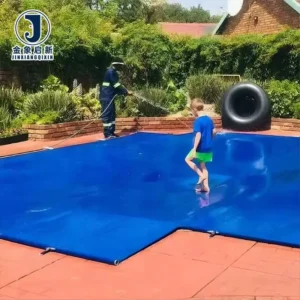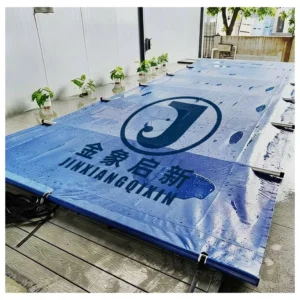


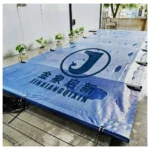
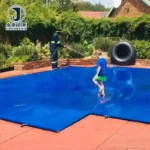
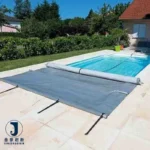
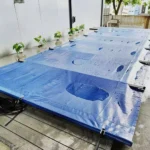
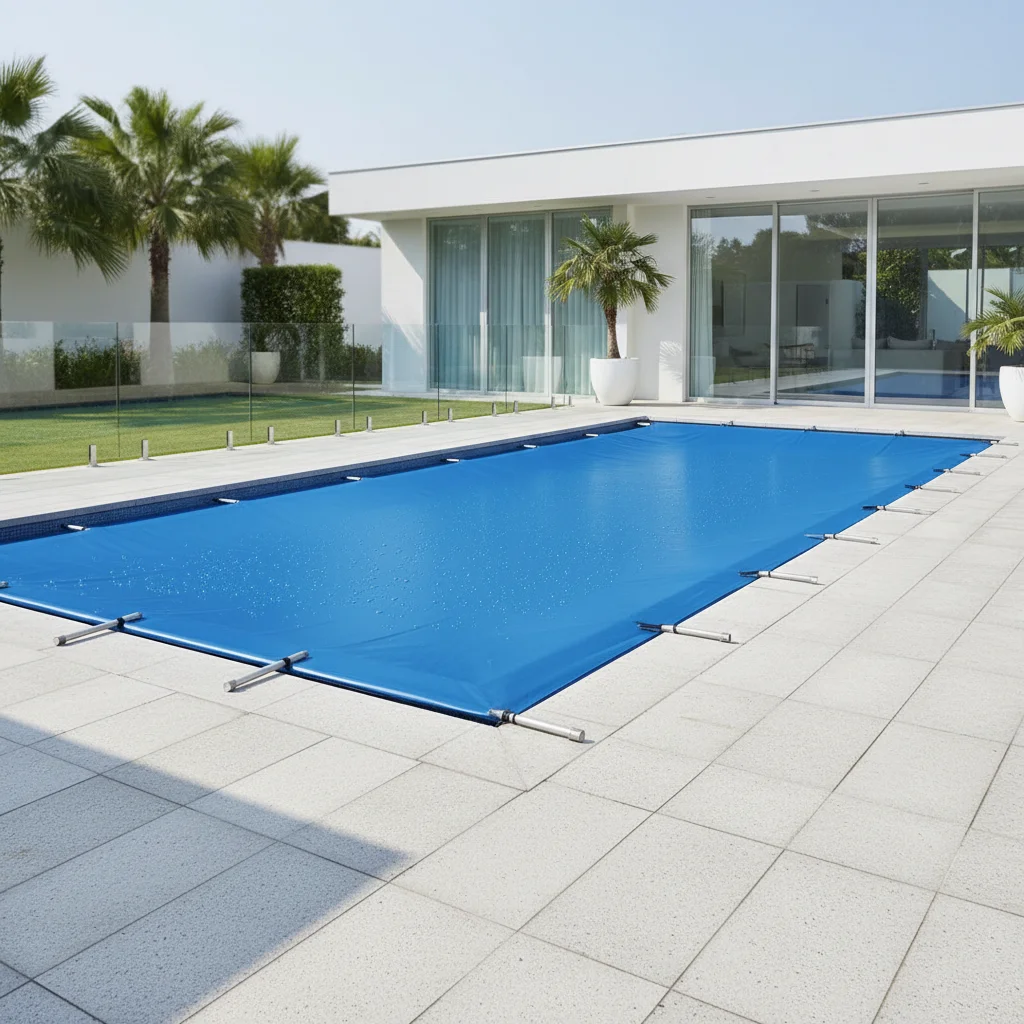
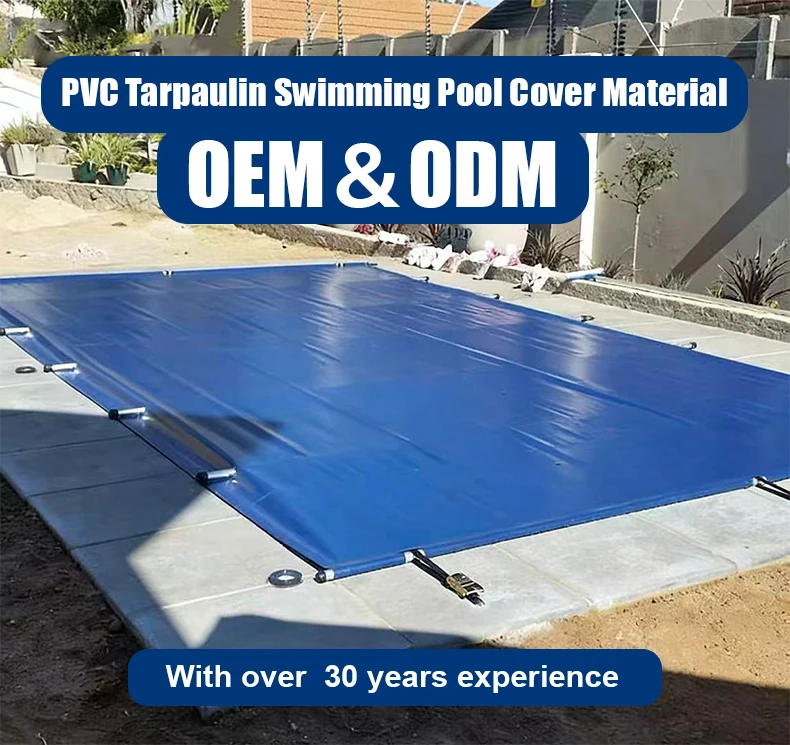
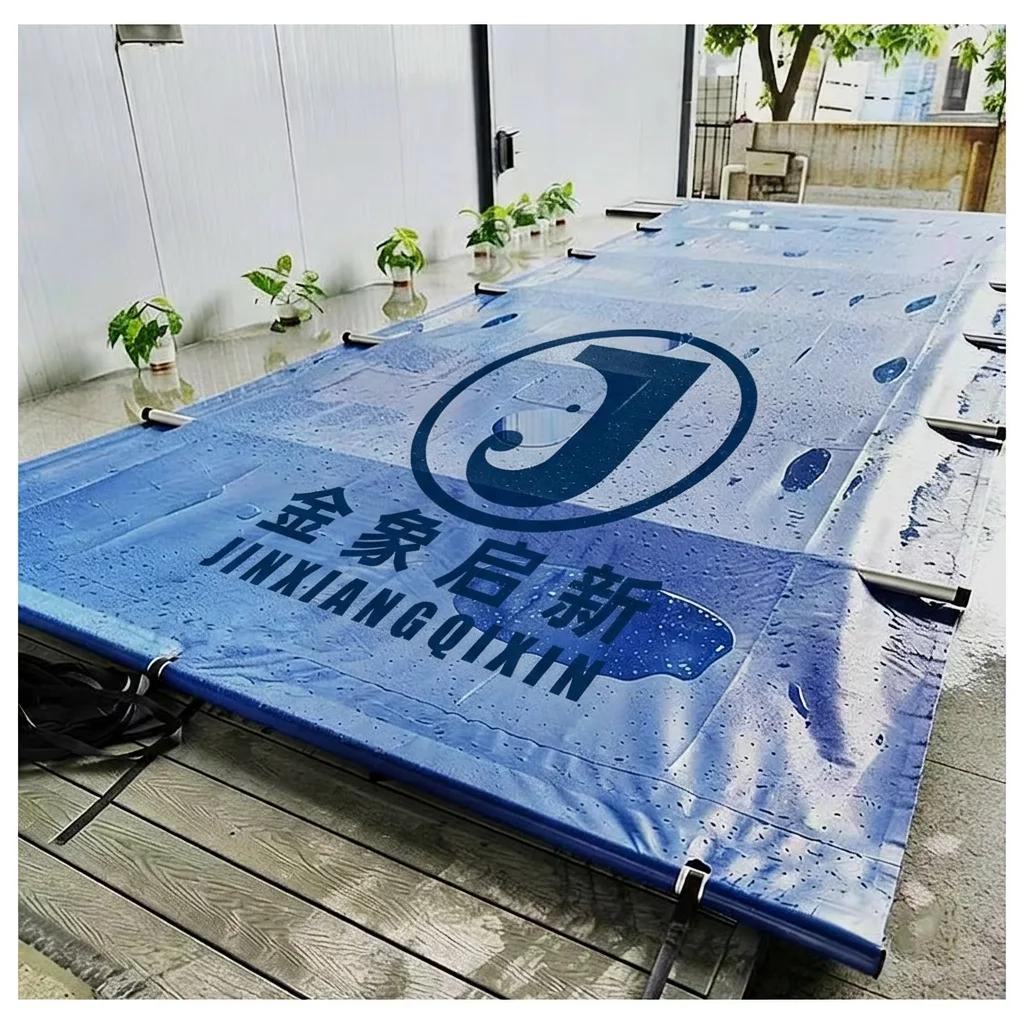
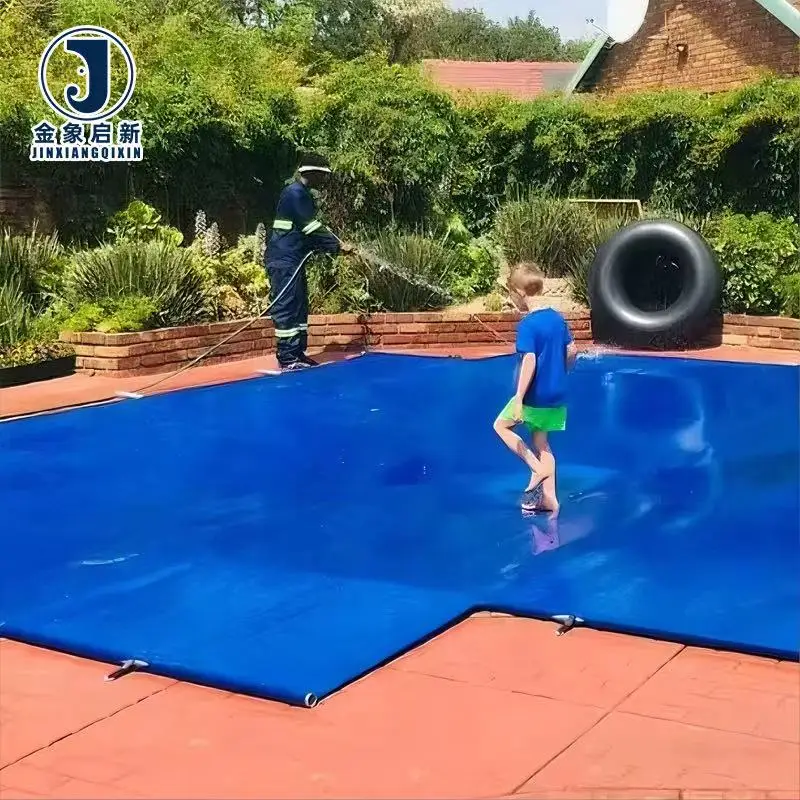
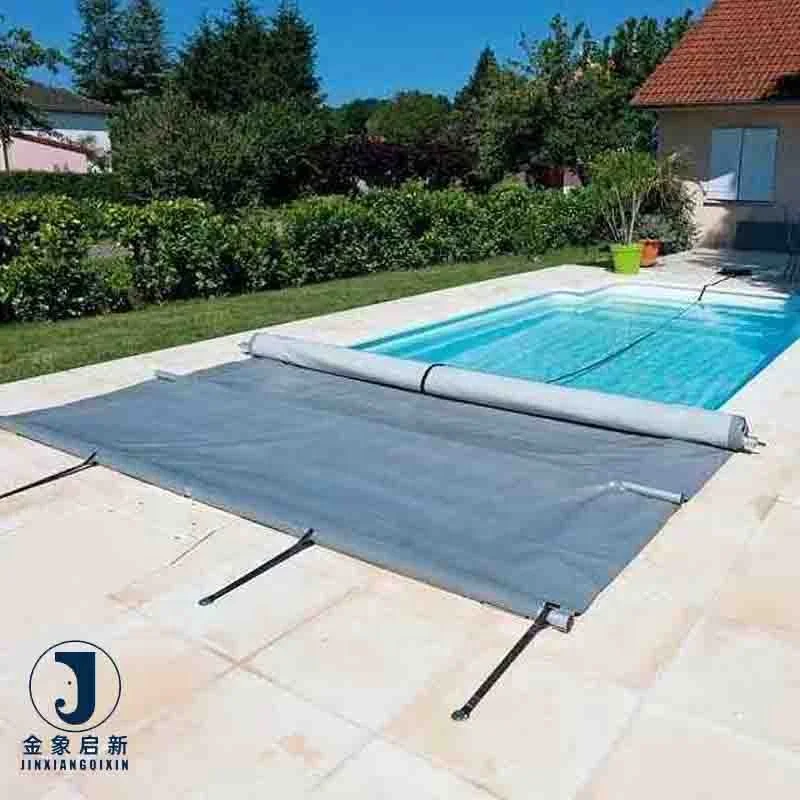
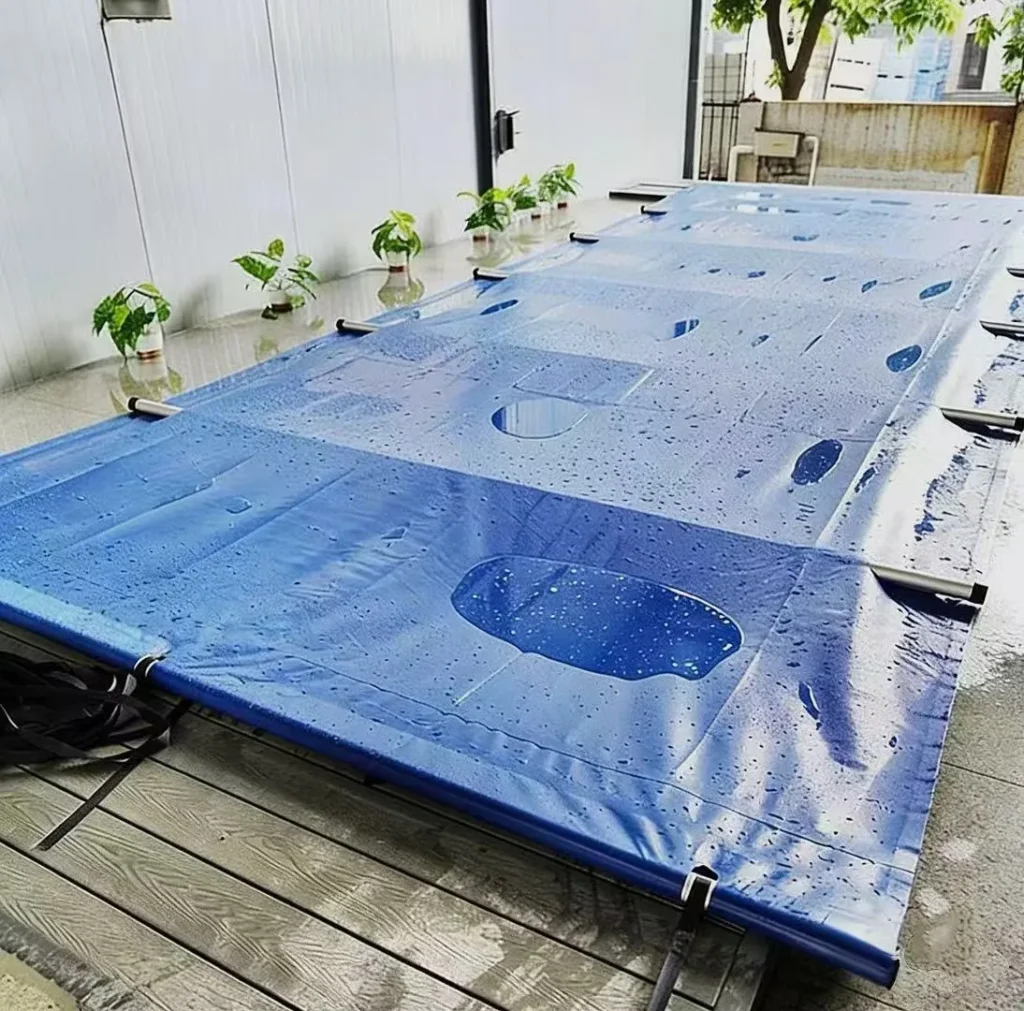
Proven Process Control — coating weight and fabric adhesion verified at every stage, ensuring the PVC laminated pool cover fabric you specify is the material that arrives on site.
Technical Specifications
| Parameter | Value |
|---|---|
| Product Type | PVC Coated Tarpaulin |
| Material | PVC + High-strength polyester mesh fabric |
| Coating Technology | Laminated technology & Hot-melt coating technology |
| Weight Options | 350gsm / 420gsm / 500gsm / 550gsm / 600gsm / 750gsm |
| Total Thickness | 0.32mm / 0.35mm / 0.4mm / 0.45mm / 0.5mm / 0.65mm |
| Roll Width | 2m / 2.1m |
| Roll Length | 75m (for 2m width) / 50m (for 2.1m width) |
| Finish Product Size | Custom items as per customer’s needs or sold by inventory |
| Color Options | Blue / Red / Yellow / Light blue / Grey (Customized) |
| Surface Treatment | Anti-UV, Anti-Mildew, Anti-Static, Flame Retardant, Anti-cold (special treatments available) |
| Cold Crack Resistance | Yes |
| Welding Tear Strength | Outstanding |
| Service Life | 3-7 years under normal circumstances |
| Standards | ISO, CE |
Application Suitability
| Application | Exposure & Requirement |
|---|---|
| Swimming pool safety covers | Constant water contact, UV exposure, tension from hook or aluminium bar systems, chemical resistance to pool treatment agents |
| Aquaculture pond and fish tank liners | Permanent water immersion, soil chemistry, puncture risk from substrate, anti-mildew demand |
| Reservoir and containment covers | Extended outdoor weathering, wind load, large span requiring high tensile base fabric |
| Cargo ship and truck awnings | Road salt, abrasion at flex points, UV and rain exposure, cold crack risk in northern routes |
Why Stated GSM Is Not Enough to Guarantee Cover Longevity
A quoted weight means nothing if the coating adhesion fails at the welded seam under tension.
Buyers regularly receive PVC pool cover tarpaulin that matches the GSM on paper but separates at the heat-welded joints once installed and tensioned over a pool frame. The coating delaminates from the polyester mesh at the exact point where the cover flexes most — around the anchor hooks and aluminium bar channels. This failure is not a weight issue; it is a lamination quality issue. Hot-melt coating technology addresses this by fusing the PVC layers into the base fabric rather than sitting on top of it, producing adhesion strength that matches or exceeds the tear resistance of the mesh itself [NEED_CITE: tensile and tear test methods for coated fabrics per ISO 1421].
Hot-Melt Lamination and Weld Integrity
The laminated and hot-melt coating process forces PVC into the weave of the high-strength polyester mesh, creating a mechanical bond that resists separation under welding heat. When fabricators heat-weld seams to join panels for large pool covers, the weld line must hold as firmly as the parent fabric. PVC pool cover fabric produced with inferior coating methods often shows the weld failing before the fabric does, leaving a split seam along the tension axis. Hot-melt lamination ensures the welded seam tear strength stays consistent with the body of the material.
Cold Crack Resistance Across Climates
Pool covers in continental climates face sub-zero temperatures that make standard PVC brittle and prone to cracking when folded or tensioned. This PVC pool cover tarpaulin carries cold crack resistance as a standard property, meaning the plasticiser formulation and coating structure remain flexible at low temperatures. Covers can be removed, folded, and reinstalled in cold weather without developing micro-fractures along fold lines — fractures that later propagate into full tears under wind load [NEED_CITE: cold crack test methods for flexible PVC coated textiles].
Reading the Weight and Thickness Matrix
The available weight range from 350gsm to 750gsm corresponds to thickness options from 0.32mm to 0.65mm, but weight alone does not define performance. The base polyester mesh denier and weave density determine how load distributes across the fabric when a pool cover is tensioned. A 550gsm fabric with a high-density base mesh may outperform a 600gsm fabric with a looser weave in tear resistance, because the yarn structure — not just the coating mass — arrests tear propagation. Specifiers should request the base fabric construction data alongside the GSM figure to match the grade to the structural span and tensioning system of the pool. The hot-melt lamination process ensures that regardless of the weight grade selected, the coating-to-yarn bond remains consistent, which directly affects how well heat-welded seams perform in the field.
The Cost of Overlooking Colour Consistency
When multiple rolls of PVC pool cover tarpaulin are installed side by side on a large commercial pool or aquaculture facility, even slight shade variation between rolls becomes immediately visible. This is not a cosmetic complaint — it signals inconsistent coating batches, which often correlates with variation in GSM and treatment concentration across the order. Rolls from the same production batch should carry identical colour references, and buyers should confirm pre-shipment inspection records that verify shade uniformity before the material leaves the factory [NEED_CITE: colour fastness and batch consistency standards for coated fabrics].
Why Fabrication Capability Matters for Pool Covers
Pool covers are rarely simple rectangles. Residential pools have freeform contours, step-outs, and spa cut-outs that require precise fabrication from the base PVC pool cover fabric. The in-house R&D team handles custom pattern development and sample fabrication, producing cut-and-finished samples within days so buyers can verify fit and tensioning hardware compatibility before committing to bulk production. This eliminates the common problem of generic-size covers that do not seat properly into aluminium track systems or hook anchor points.
Production Accountability at Every Stage
Dedicated QA/QC checkpoints run through every production stage, from base fabric inspection to final coating weight verification. Each roll undergoes 100% inspection before shipment, not spot-check sampling. Three full production lines and 36 sets of professional equipment support bulk capacity while maintaining the process control that keeps coating weight, colour, and treatment concentration within tolerance across the entire order. The facility holds ISO and CE certification, and documentation ships with every dispatch to support compliance verification at the destination.
Documentation & Verification
- Material specification sheet stating exact GSM, base fabric construction, coating method, and colour reference per roll
- Test reports for flame retardant and anti-static grades matching the compliance standard required on your site
- Pre-shipment inspection record confirming weight verification against stated GSM before dispatch
- Certificate of origin, ISO and CE certificates, and customs documentation package included with every shipment
- Roll packing list detailing roll count, individual roll dimensions, and net weight for container planning
Fabrication, Handling & Storage
- Heat-weld seams at temperatures matched to the hot-melt coating formulation to maintain adhesion strength at joints
- Store rolls horizontally on padded racks to prevent permanent creasing in the 0.32mm to 0.65mm thickness range
- Allow cold-stored rolls to reach ambient temperature before unrolling to avoid stress cracking in anti-cold treated grades
- Cut patterns with allowance for hem folding and eyelet reinforcement zones, factoring in the 2m or 2.1m roll width
- Clean surfaces with mild detergent only; avoid solvent-based cleaners that attack the PVC plasticiser layer
- Repair minor field punctures with PVC-compatible adhesive patches matched to the laminated coating chemistry
What We Need to Move Your Enquiry Forward
Provide the pool dimensions, contour drawings, and the tensioning system you plan to use — hook anchors, aluminium bar track, or ratchet-pole setups. State the fire-retardant or anti-static compliance standard your local authority or facility operator requires, so we match the treatment grade and supply the corresponding test documentation. Confirm whether you need roll stock for your own fabrication or finished cut-to-size covers with hemmed edges.
Frequently Asked Questions
Q: Which fire-retardant grade does this pool cover fabric carry, and will it satisfy local compliance?
A: Flame retardant treatment is available in multiple grades. The specific grade depends on the compliance standard your facility or local building authority requires. Specify the standard when enquiring, and the corresponding test report will ship with the order. Confirm the grade needed for your market before production begins.
Q: How is GSM verified — do I get weight test data per roll?
A: Every roll is checked against the stated GSM during pre-shipment inspection. A material specification sheet documenting the verified weight, base fabric construction, and coating method accompanies each shipment. Third-party weight test reports are available on request for buyers who require independent validation.
Q: What anti-static standard is met, and is a certificate supplied?
A: Anti-static treatment is available for applications where surface charge dissipation is required. The surface resistance standard depends on your site specification. State the required standard at enquiry stage so the correct treatment is applied and a matching test certificate is included in the documentation package.
Q: Can covers be fabricated to custom pool shapes, and what tensioning hardware is supported?
A: Custom-contoured covers are fabricated to your pool drawings, supporting hook anchor systems, aluminium bar track, and ratchet-tensioned pole setups. The R&D team produces samples within days for fit verification. Confirm your tensioning system type and provide contour dimensions to receive a fabrication proposal.
Q: How do you ensure colour consistency when multiple rolls are ordered for one installation?
A: Rolls within a single order are produced from the same coating batch with matched colour references. Pre-shipment inspection verifies shade uniformity across all rolls. For large installations where covers sit adjacent, request the inspection record confirming batch consistency before dispatch.