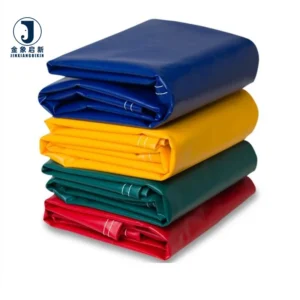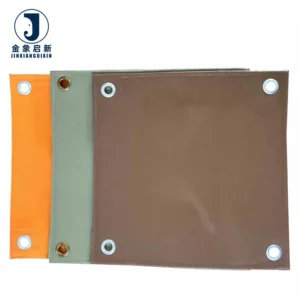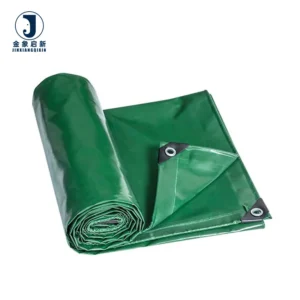
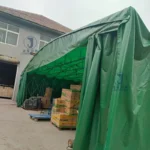
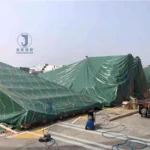
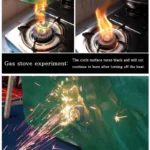
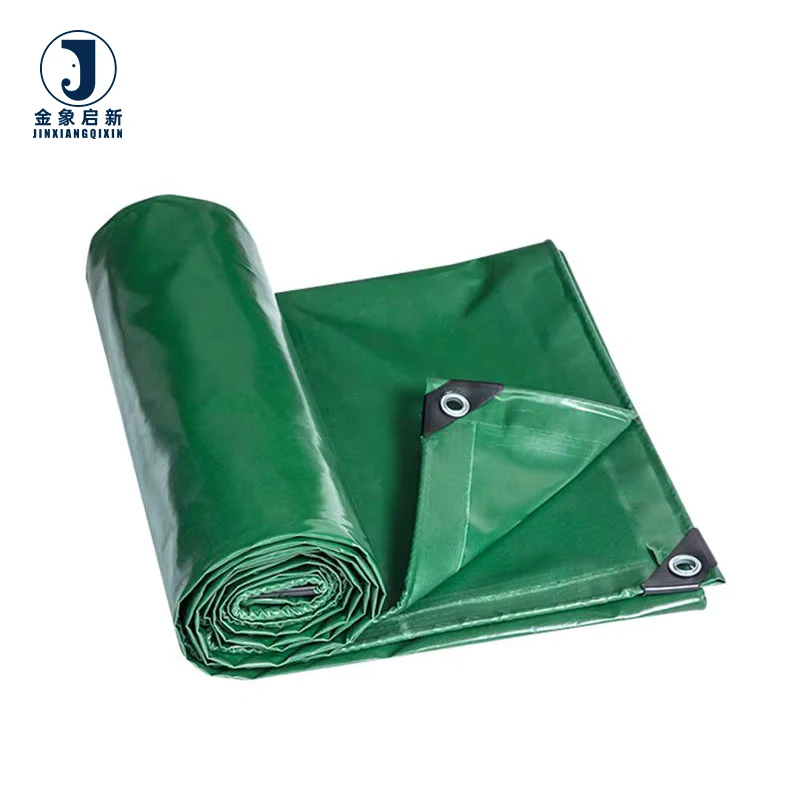
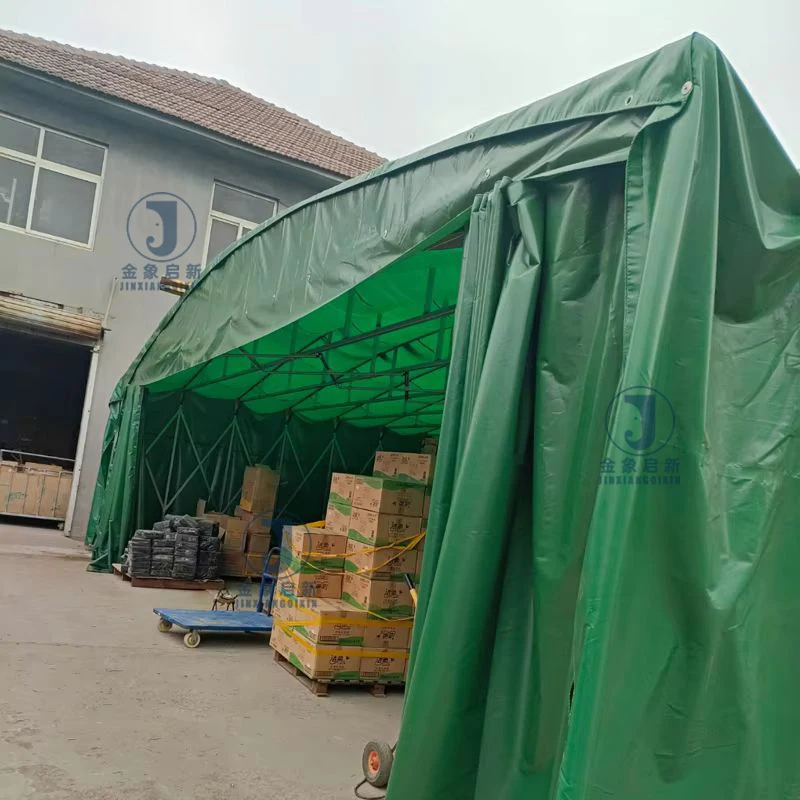
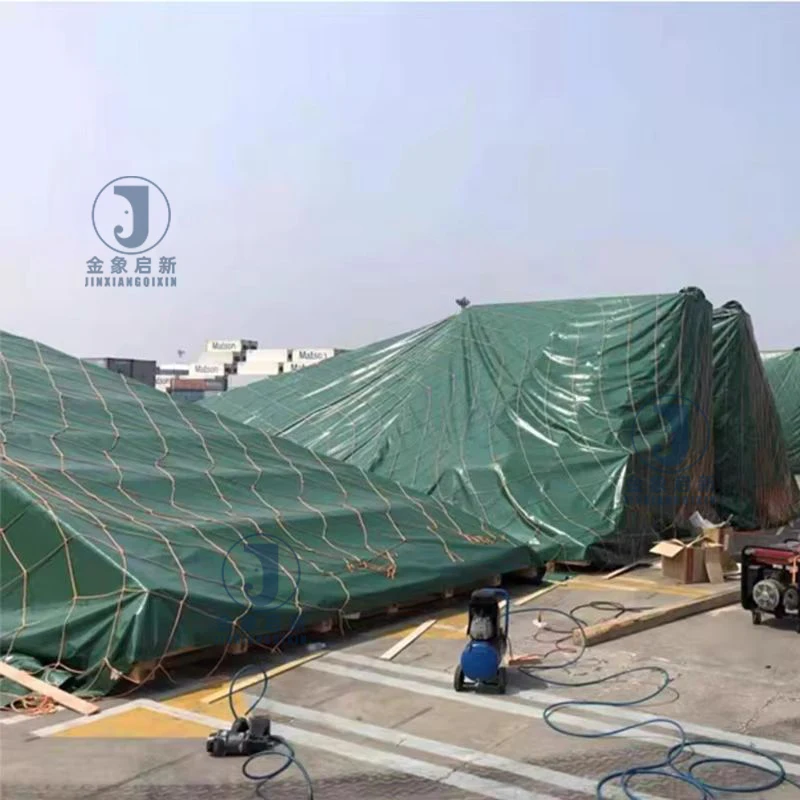
Coating Adhesion Mastery — Hot melt coating technology bonds PVC to high-toughness polyester yarn at the molecular level, ensuring welded seams in tensile membrane structures hold under sustained structural loads.
Technical Specifications
| Parameter | Value |
|---|---|
| Product Type | PVC Coated Fabric |
| Material | 100% high toughness polyester yarn with PVC coating |
| Coating Technology | Lamination technology and hot melt coating technology |
| Thickness | 0.35–1.5 mm (varies by grade) |
| Weight | 400–1500 g/m² (varies by grade) |
| Knitting Density | 500D–2000D |
| Tensile Strength | Warp 1500–3000 N/5cm / Weft 1200–2800 N/5cm (varies by grade) |
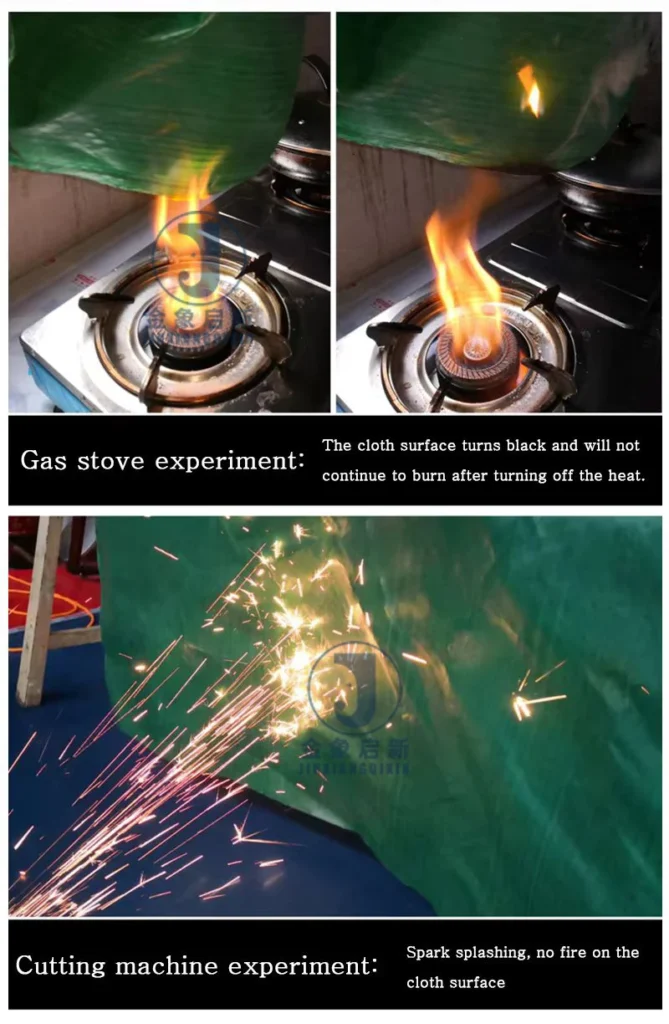
| Flame Retardant | Available in flame retardant grades — confirm the grade required for your market |
| Anti-Static | Anti-static treatment available — surface resistance standard to be confirmed |
| UV Treatment | Good weather resistance (3–5 years) (test basis not stated in source) |
| Anti-Mildew | Mold proof |
| Cold Resistance | Cold resistant cracking |
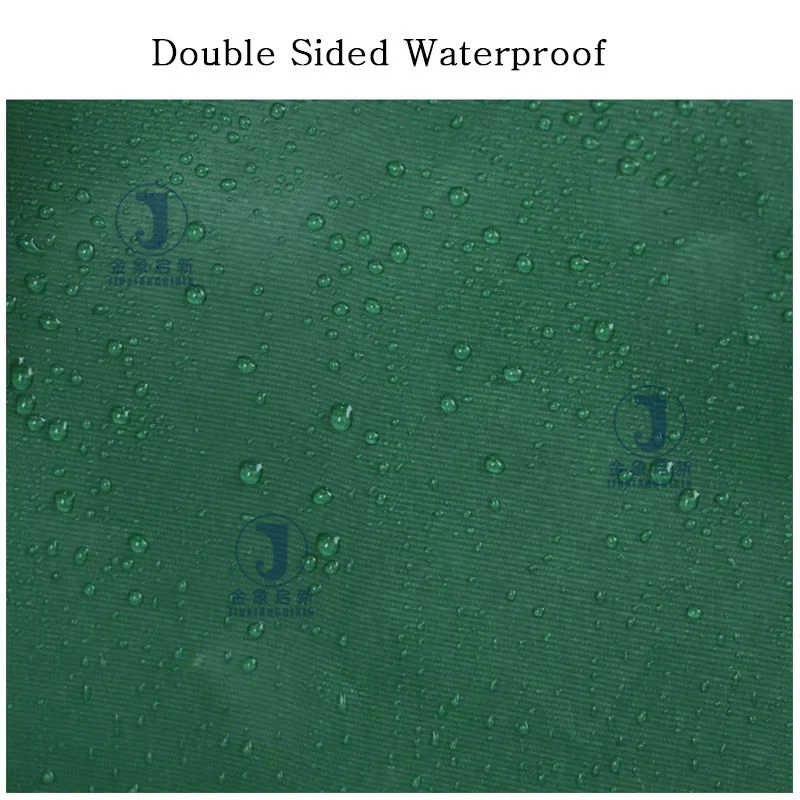
| Waterproof | Yes |
| Color Fastness | Best color fastness rated (test standard not stated in source) |
| Key Features | Cold resistant cracking, mold proof, anti-static treatment, waterproof, flame retardant available |
Application Suitability
| Application | Exposure & Requirement |
|---|---|
| Stadium and sports arena tensile membrane roofing | Sustained structural tension, UV exposure, wind load, thermal cycling, public fire safety compliance |
| Inflatable and air-supported dome structures | Continuous internal air pressure, flex fatigue at seams, temperature fluctuation, rapid deployment |
| Permanent and semi-permanent architectural membrane facades | Long-term weathering, color consistency across panels, welded seam integrity under load |
| Industrial pipe canopies and protective enclosures | Chemical exposure, mechanical abrasion, moisture ingress, site safety color coding |
Why Coating Adhesion Matters More Than GSM in Membrane Structures
A higher GSM reading on a specification sheet does not guarantee that the PVC coating will remain bonded to the polyester base fabric when the membrane is tensioned across a stadium roof or inflated dome frame. The real failure point in tensile structures is almost always the weld line, where heat and pressure must fuse two coated surfaces together without delaminating the coating from the yarn beneath.
Hot melt coating technology creates a mechanical and chemical bond between the PVC layer and every individual polyester filament, so the weld seam fails only when the base fabric itself reaches its tensile limit.
We have reviewed project failure reports where membrane panels separated at welded joints within the first season of installation. In most cases, the base fabric showed no sign of tearing — the coating had simply peeled away from the yarn under sustained tension. This points directly to inadequate coating adhesion during manufacturing, not insufficient GSM or denier [NEED_CITE: tensile and tear test methods for coated fabrics per ISO 1421]. PVC coated fabric for membrane structure must deliver both surface integrity and weld performance to function as a structural element.
Coating-to-Yarn Bond Performance Under Structural Tension
The lamination and hot melt coating process used for this PVC coated membrane structure fabric drives the PVC compound into the interstices of the woven polyester base at elevated temperature. This produces an adhesive bond that resists peeling forces at the weld zone, where temperatures during fabrication can momentarily soften the coating. For tensile membrane applications, this bond must survive years of cyclic loading from wind gusts, thermal expansion, and snow accumulation without progressive delamination.
Fire Safety and Anti-Static Compliance for Public Venues
Stadium roofs, exhibition halls, and air-supported domes used for public assembly fall under strict building fire codes that govern the combustibility of every interior and roofing material. This PVC coated fabric is available in flame retardant grades and with anti-static treatment — however, the specific fire classification and surface resistance values must be confirmed against the compliance requirements of your installation jurisdiction before ordering. Requesting a test report matched to your local building code [NEED_CITE: fire classification standards for tensile membrane structures in public venues] is a necessary step in the specification process, not an optional one.
How Base Fabric Denier and Coating Weight Interact
Knitting density, expressed in denier from 500D to 2000D, determines the baseline tensile and tear resistance of the polyester substrate. A higher denier yarn provides greater individual filament strength, but it also creates a more open weave that requires a heavier coating fill to achieve a continuous waterproof barrier. The relationship between denier, coating weight, and finished GSM is not linear — a 1000D fabric with a thin coating can weigh less than a 500D fabric with a thick one, yet deliver higher tear resistance. Selecting the correct grade means matching both denier and coating weight to the structural span and expected load profile, rather than specifying by GSM alone. The hot melt coating process ensures consistent coating weight distribution across the full roll width, which is critical for uniform weld performance on large membrane panels [NEED_CITE: relationship between denier, coating weight, and tensile performance in PVC coated polyester].
The Hidden Cost of Specifying the Wrong Grade
Selecting a grade with insufficient denier for a long-span stadium roof means the membrane may meet initial tension requirements but progressively deform under sustained load, leading to ponding water and eventual seam overload. Conversely, over-specifying denier and weight for a small canopy inflates material cost and makes field handling difficult without adding structural benefit. Flame retardant grades specified without a matching test report for the local jurisdiction result in failed building inspections and costly panel replacement after installation is already complete. Color inconsistency between rolls destined for the same facade or roof section becomes visible once panels are installed side by side, requiring selective replacement and project delays. These outcomes are preventable with proper grade selection and documentation review before production begins [NEED_CITE: common failure modes in architectural membrane installations].
Why Source This Membrane Fabric Here
Nearly 30 years of continuous coated fabric production provides the process control needed to maintain consistent coating adhesion across every roll in a large membrane project. Three full production lines and 36 sets of professional equipment support bulk volume orders with reliable scheduling for project timelines. A dedicated 10-person R&D team handles grade selection, custom width development, and sample production so that the exact membrane specification can be validated before full order commitment. Quality assurance at every production stage with 100% pre-shipment inspection ensures roll-to-roll consistency, which is essential when multiple rolls are welded into a single continuous membrane surface. Full documentation packages accompany every dispatch to support customs clearance and site compliance verification.
Documentation & Verification
- Material specification sheet stating exact GSM, denier, and coating method for each roll
- Flame retardant and anti-static test reports matched to installation jurisdiction requirements
- Pre-shipment inspection record confirming weight and coating consistency per roll
- Certificate of origin and customs documentation for international project logistics
- Roll packing list with individual roll identification for site receiving verification
Fabrication, Handling & Storage
- Hot melt coated surfaces require calibrated heat settings during welding to avoid delamination at the seam
- Store rolls horizontally on padded supports to prevent permanent creasing in the PVC coating layer
- Allow cold-stored rolls to acclimate to ambient temperature before unrolling for membrane panel fabrication
- Cut panels using sharp blade tools to avoid fraying the polyester base yarn at edges before welding
- Clean installed membrane surfaces with pH-neutral detergent only to preserve coating surface integrity
- Plan panel layout from roll width to minimize transverse welds across high-tension zones of the structure
What We Need to Prepare Your Quotation
To provide an accurate specification recommendation and quotation for your membrane structure project, please share the application type and structural span dimensions, the fire safety classification required by your local building code, and the total fabric area or number of rolls needed. If your project requires custom roll widths to minimize welding waste on large panels, include the target panel dimensions so our R&D team can assess production feasibility. Samples are available for weld testing and physical evaluation before full order commitment.
Frequently Asked Questions
Q: What fire safety documentation accompanies the membrane fabric for building code approval?
A: The fabric is available in flame retardant grades, but the specific classification depends on the treatment applied and must match your local building code. We provide a test report for the grade produced, which your structural engineer or fire consultant can submit for approval. Confirm the required standard for your jurisdiction before placing the order.
Q: How is coating adhesion verified to ensure weld seam integrity in tensioned structures?
A: Our hot melt coating process bonds PVC to every polyester filament, and coating adhesion is verified during in-process quality checks. Pre-shipment inspection includes peel strength assessment. We recommend that fabricators conduct weld trials on sample material to validate heat settings before committing to full panel production.
Q: Can custom roll widths be produced to reduce welding on large membrane panels?
A: Yes, custom widths are available and can be developed by our R&D team to match your panel layout. This reduces the number of transverse welds in high-tension zones and improves material utilization. Minimum order quantities and lead times for non-standard widths will be confirmed during the quotation stage.
Q: How does UV exposure affect tensile properties of the membrane fabric over time?
A: The fabric is treated for weather resistance with good UV stability rated for multi-year outdoor exposure. However, UV degradation rates depend on installation orientation, climate intensity, and maintenance. We recommend requesting UV test data specific to the grade selected so your structural calculations can account for long-term strength retention.
Q: What anti-static certification is provided for structures where static discharge is a concern?
A: Anti-static treatment is available as an option, but the surface resistance value and applicable test standard must be confirmed based on your environment and safety requirements. We provide test documentation for the treatment applied — specify the required standard during inquiry to ensure compliance with your site safety protocol.