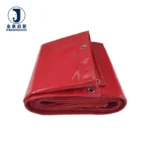
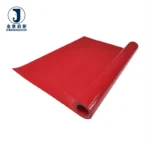
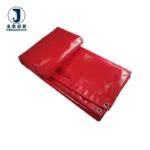
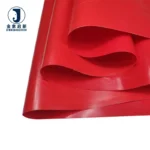
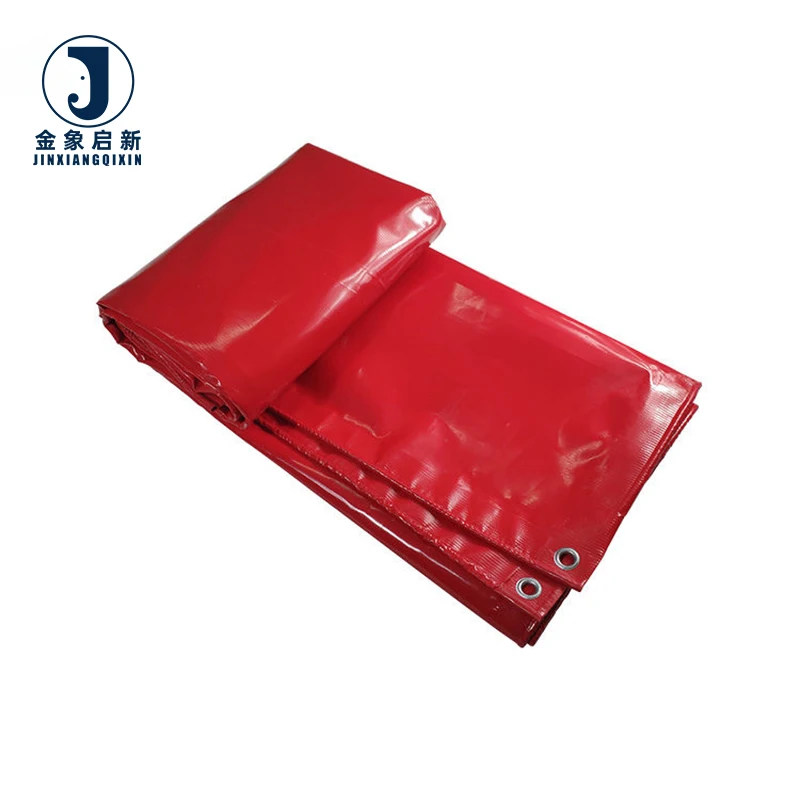
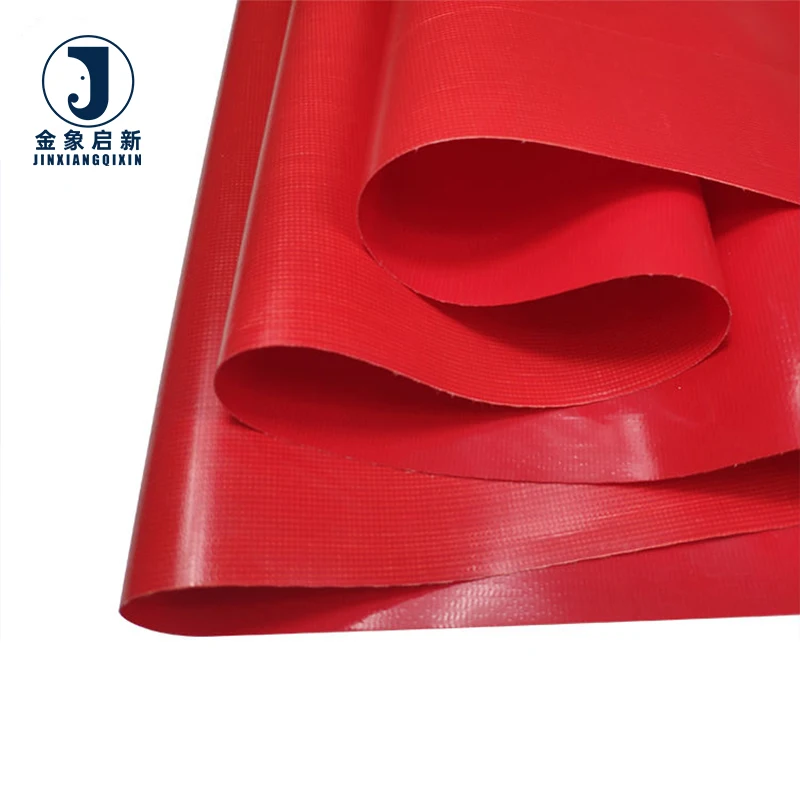
Precision Coating Control — nearly 30 years focused on coated fabric production with deep process control over coating weight and adhesion, supporting reliable material performance for inflatable and membrane structure applications.
Technical Specifications
| Parameter | Value |
|---|---|
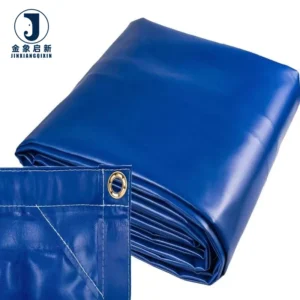
| Product Type | PVC Coated Tarpaulin |
| Coating Material | PVC (double-sided) |
| Base Fabric | Polyester |
| Base Fabric Denier Options | 500D×840D, 500D×1000D, 1000D×1000D, 1000D×1300D, 1300D×1300D, 1000D×2000D |
| Weight Range | 350gsm to 900gsm (confirm the grade for this item) |
| Thickness Range | 0.29mm (350gsm) to 0.65mm (900gsm) |
| Tensile Strength (Warp) | 1650N (350gsm) to 3900N (900gsm) — test standard not stated in source |
| Tensile Strength (Weft) | 1600N (350gsm) to 3500N (900gsm) — test standard not stated in source |
| Softening Temperature | ≥80°C |
| Brittle Temperature | ≤-50~-60°C |
| Melting Point | 212°C |
| Joining Methods | High frequency hot melt, Hot air, Sewing |
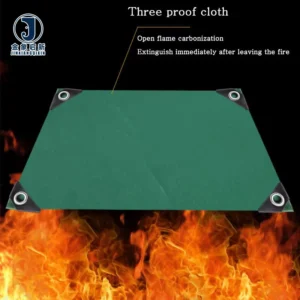
| Flame Retardant | Available in flame retardant grades — confirm the grade required for your market (grade not stated in source) |
| UV Treatment | Available with UV treatment — confirm test basis for your specification (test basis not stated in source) |
| Anti-Mildew | Stated (test basis not stated in source) |
| Heavy Metal Free | Stated |
| Key Features | Waterproof, Flexible, Heavy Duty, Self Clean |
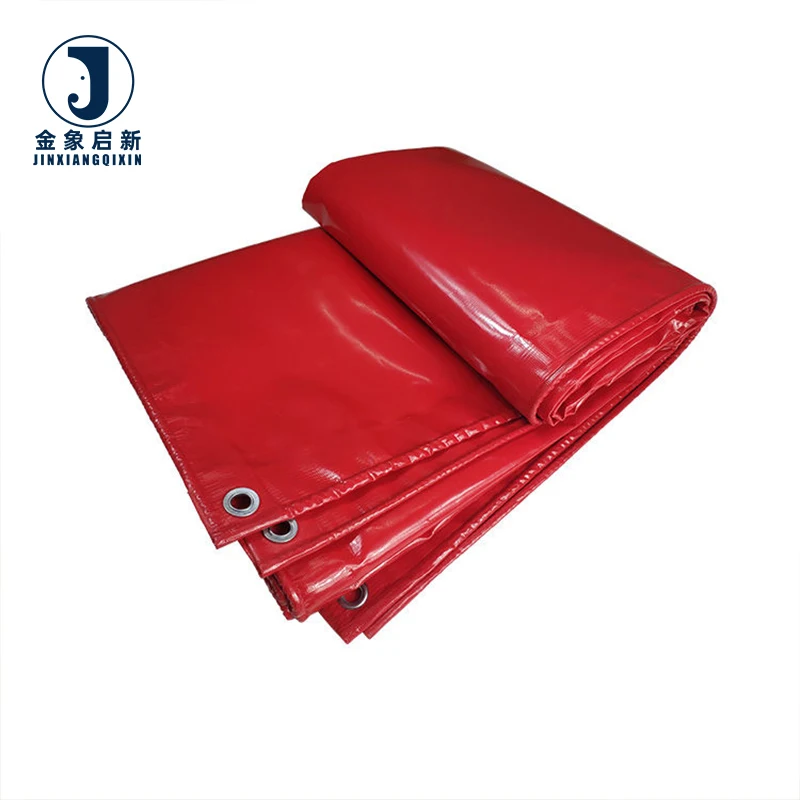
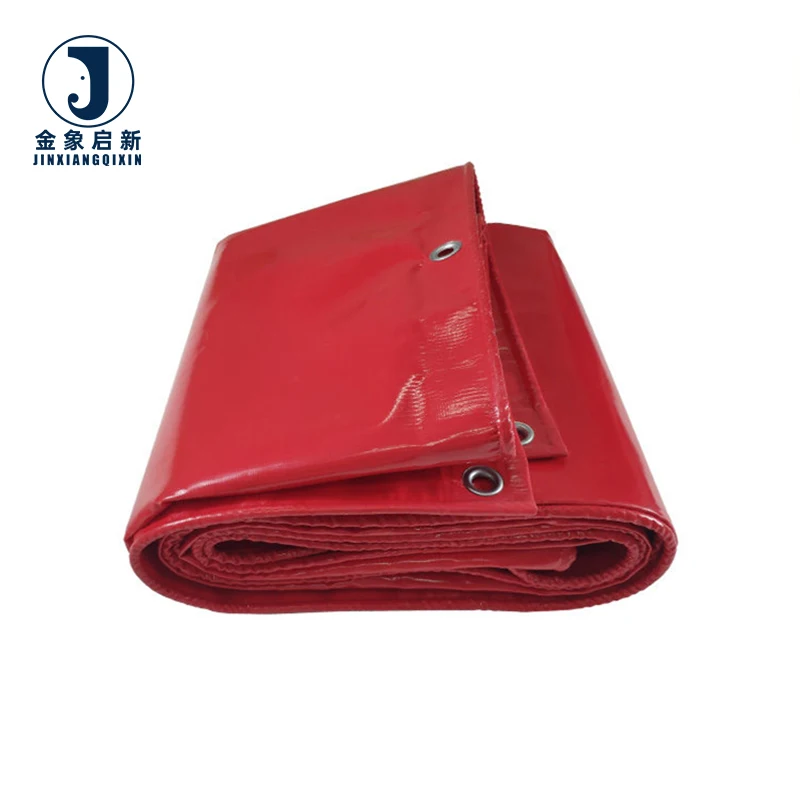
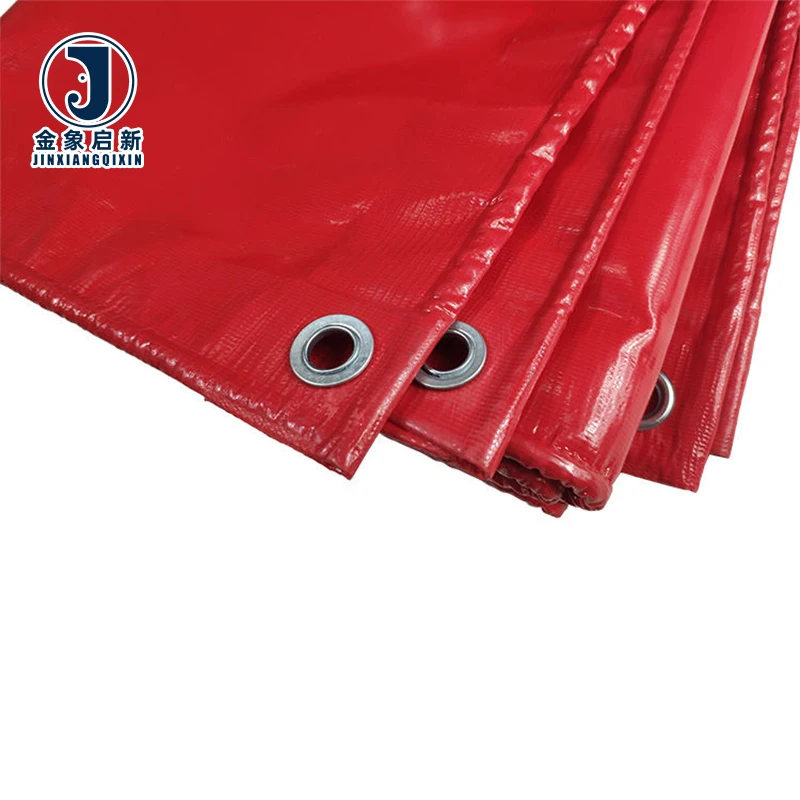
| Edge Finish | High temperature heat sealed seamless edge wrapping |
| Reinforcement | 5mm thick rope without splicing; reinforced corners on all sides |
| Eyelet | 3cm enlarged aluminum alloy buttonhole |
Application Suitability
| Application | Exposure & Requirement |
|---|---|
| Membrane and inflatable structures | Sustained internal air pressure, cyclic flex loading, UV and weather exposure, airtight seam integrity under repeated inflation cycles |
| Mining and tunnelling ventilation ducts | Continuous airflow, abrasive dust contact, mandatory fire-retardant and anti-static compliance on regulated sites |
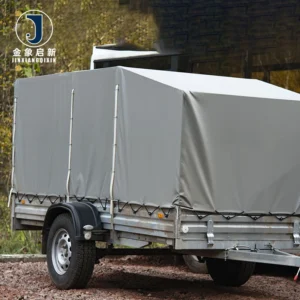
| Construction enclosure and temporary roofing | Wind uplift, rain ingress, site fire safety codes requiring verified flame retardant classification |
| Specialist covers for aviation and industrial plant | Chemical exposure, fuel contact, requirement for heavy metal free certification |
| Temporary event and military structures | Rapid deployment, repeated folding and packing, weather protection across climate zones |
What "Flame Retardant" Means Without a Verified Grade
A material is only as fire-safe as the test certificate that accompanies it.
PVC coated tarpaulin for industrial ventilation and technical fabric applications is frequently specified with a generic fire retardant claim, yet the grade and the underlying test standard often remain undefined at the point of purchase. Mining sites, tunnelling operations, and aviation facilities each mandate a specific classification — M2, B1 per DIN 4102, or NFPA 701 — and a certificate that names the product, not just the manufacturer [NEED_CITE: DIN 4102 fire classification for building materials]. When the documentation arrives after the fabric is already on site, a mismatch means work stops, the installation is rejected, and replacement material must be sourced under emergency lead times. Specifying the exact grade before the order is placed eliminates this risk entirely.
Selecting the Correct Denier for Structural Load
The base fabric denier is the first variable to match to the structural demands of your project. A 500D×840D polyester weave serves lighter inflatable fabric and temporary membrane applications where weight and pack size matter. For permanent or semi-permanent structures exposed to sustained wind load and higher internal pressure, moving to 1000D×1300D or 1300D×1300D provides the warp and weft strength needed to resist progressive tear propagation. This PVC coated tarpaulin range covers six denier options, allowing the specification to be matched precisely to the tensile and tear demands of each installation rather than defaulting to a single stock grade.
Seam Integrity Under Flex and Pressure Loading
Inflatable and membrane structures place every welded joint under continuous stress. High frequency hot melt joining and hot air welding are both available for this PVC coated tarpaulin, and the choice depends on the seam geometry and the production environment. High frequency welding delivers consistent energy along a continuous seam, which is critical for long inflation chambers where any pinhole leak causes pressure loss. The heat sealed seamless edge wrapping and reinforced corners on all sides reduce the number of potential failure points where flex fatigue concentrates. Confirming the welding parameters — temperature, pressure, and dwell time — with a small test panel before full production prevents seam delamination once the structure is inflated on site [NEED_CITE: high frequency welding parameters for PVC coated polyester fabrics].
Reading the Weight and Tensile Relationship
GSM alone is an incomplete indicator of structural performance. A 650gsm fabric woven at 1000D×1300D with a 30×19 thread count will behave very differently under load than a 650gsm fabric woven at 500D×1000D with a 20×20 count, even though the weight is identical. The warp and weft tensile values — ranging from 1650N to 3900N on the warp axis across the weight range — reflect how yarn denier and weave density combine to produce usable strength. Coating weight also plays a role: heavier coating improves abrasion resistance and waterproof integrity but adds stiffness, which matters when the fabric must fold compactly for transport or inflate smoothly without creasing. The brittle temperature of ≤-50~-60°C and softening temperature of ≥80°C define the thermal envelope within which the material retains its mechanical properties, a critical factor for membrane structures in extreme climates.
The Hidden Cost of Underspecifying Technical Fabric
When a membrane structure or ventilation duct fails in service, the root cause is frequently a specification gap rather than a manufacturing defect. A duct installed in a mine without the required anti-static certification will be pulled from service during the next compliance audit, regardless of how well the fabric performs mechanically. Colour variation between rolls used on the same inflated structure becomes visible once panels are joined side by side, forcing a full replacement to restore visual uniformity. Welded seams that fail before the fabric itself does typically trace back to incorrect welding temperature or insufficient edge reinforcement at high-flex points [NEED_CITE: tensile and tear test methods for coated fabrics per ISO 1421]. Each of these failures costs far more in downtime and replacement than specifying the correct grade, verifying the test report, and inspecting every roll before it leaves the factory.
Why Procurement Teams Specify Through This Facility
Three full production lines and 36 sets of professional equipment support bulk capacity for PVC coated tarpaulin orders, enabling reliable on-time delivery for project-timed installations. A dedicated 10-person R&D team handles material selection, custom sizing, and sample development, producing samples within days when a project requires a specific denier or treatment combination. QA/QC checkpoints at every production stage culminate in 100% inspection before shipment, with GSM, tensile values, and colour verified roll by roll. The coating process control built over nearly 30 years of focused production ensures that the stated weight and adhesion properties are consistent across every roll in a batch, which is essential when membrane panels must weld together without visible or structural variation.
Documentation & Verification
- Material specification sheet stating confirmed GSM, base fabric denier, and coating weight for the exact grade ordered
- Fire retardant test report citing the specific grade and standard applicable to the installation site
- Pre-shipment inspection record with verified GSM, tensile values, and colour reference per roll
- ISO and CE certificates included with shipment documentation package
- Certificate of origin and customs documentation for cross-border logistics
Fabrication, Handling & Storage
- Hot air welding temperature and dwell time must be calibrated to the specific GSM and coating thickness of the ordered grade
- High frequency welding is recommended for long continuous seams on inflatable structures to ensure airtight integrity
- Store rolls upright on a flat surface to prevent permanent creasing that affects inflation behaviour
- Reinforce all tie-down and anchorage points with the supplied 5mm rope and corner patches before tensioning
- Clean with mild detergent only; solvents can degrade the PVC coating and compromise seam adhesion
- On-site repairs are feasible using hot air welding with matching PVC repair tape
Requesting a Specification-Matched Quotation
Provide the structural application type, the internal pressure or wind load the membrane will experience, and the fire-retardant classification your site or local authority mandates. Specify the required base fabric denier, the target GSM, and whether you need rolls or finished panels cut to dimensional drawings. Include the annual volume and any colour or printing requirements so that batch consistency can be planned from the first production run.
Frequently Asked Questions
Q: What fire-retardant grade and test standard can be supplied for structural or mining applications?
A: Flame retardant treatment is available across the PVC coated tarpaulin range, but the specific grade — such as B1 per DIN 4102, M2, or NFPA 701 — must be confirmed at the inquiry stage to match your site or regulatory requirement. The test report citing the exact grade and standard accompanies the shipment documentation.
Q: How is GSM verified on arrival, and what inspection documentation accompanies each shipment?
A: Every roll undergoes 100% pre-shipment inspection with GSM, tensile values, and colour reference recorded. The signed inspection report ships with the goods, allowing you to verify that the received material matches the quoted specification before installation begins on site.
Q: What base fabric denier and coating weight is recommended for inflatable and membrane structure use?
A: The selection depends on the structural load and inflation pressure. Lighter structures typically use 500D×840D or 500D×1000D, while permanent membrane installations require 1000D×1300D or higher. Share your design load and we will recommend the denier and GSM combination that balances strength, flexibility, and weld performance.
Q: What are the heat-seal and welding parameters for joining PVC coated fabric on-site?
A: High frequency hot melt and hot air welding are both suitable. The exact temperature, pressure, and dwell time depend on the GSM and coating thickness of the grade you receive. We provide welding guidance matched to your specific material with each order to ensure consistent seam strength.
Q: What is the thermal operating range of the coated fabric in extreme climates?
A: The material retains mechanical properties from a brittle temperature of ≤-50~-60°C up to a softening temperature of ≥80°C, with a melting point of 212°C. This envelope covers most outdoor installation climates, but confirm the specific grade if the structure will experience sustained temperatures near either boundary.