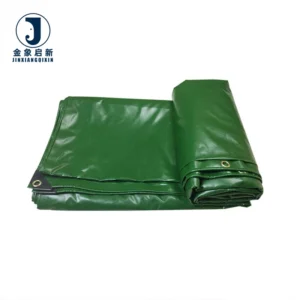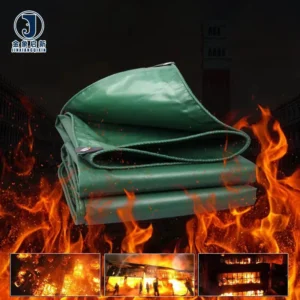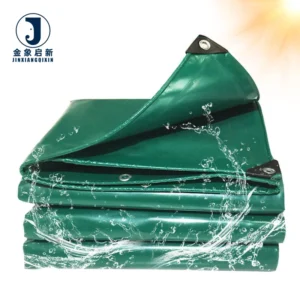
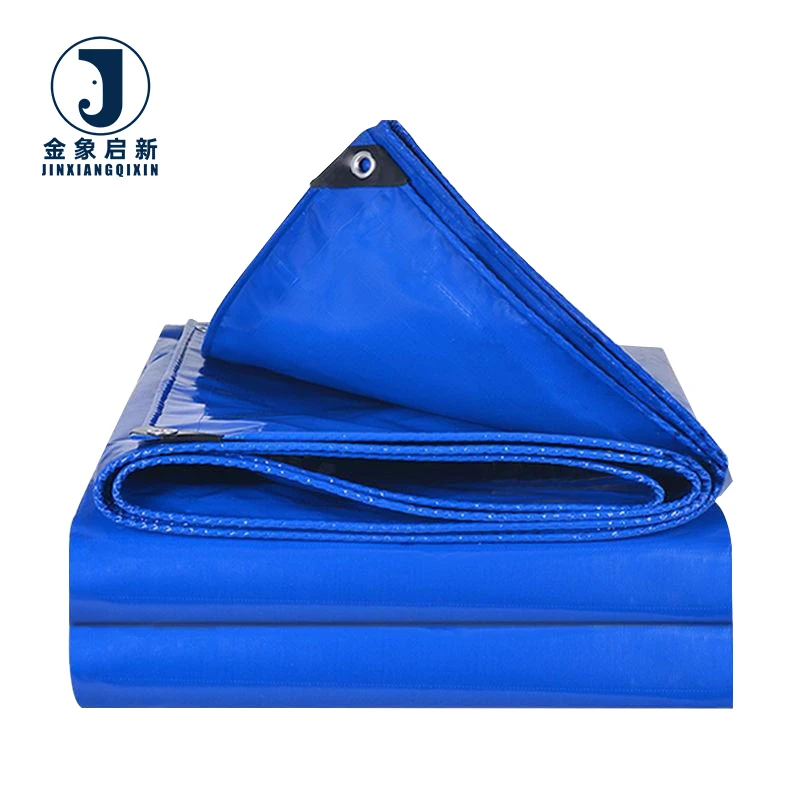
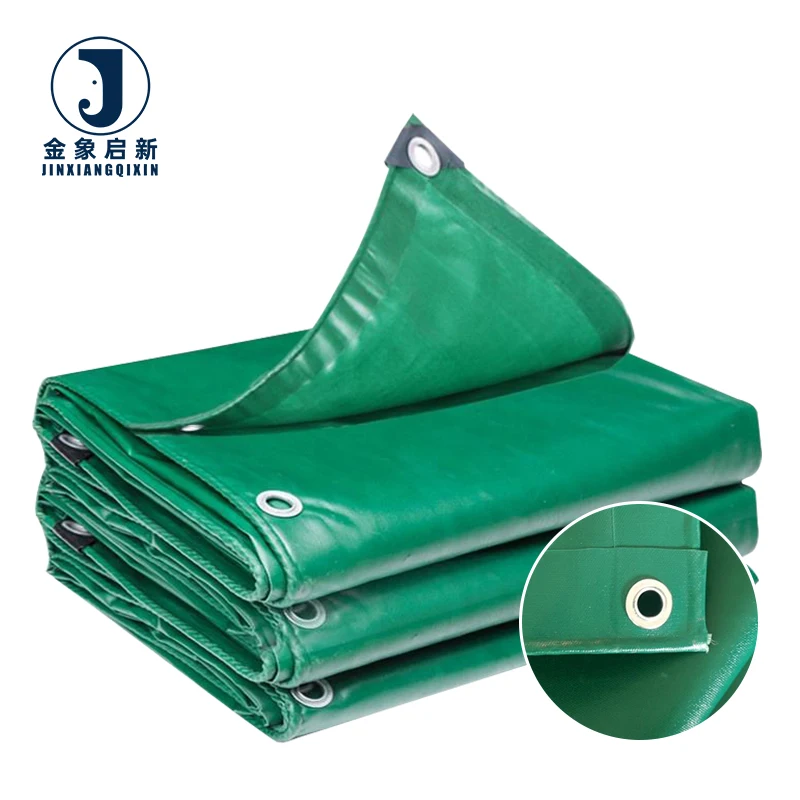
Deep Process Control Over Coating Weight — Adhesion and GSM are verified at every production stage for this PVC Coated Tarpaulin, ensuring consistent performance in heavy-duty transport and industrial cover applications.
Technical Specifications
| Parameter | Value |
|---|---|
| Product Type | PVC Coated Tarpaulin |
| Material | PVC & Polyester |
| Base Fabric | 500D-500D Polyester |
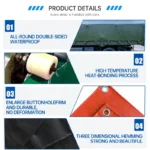
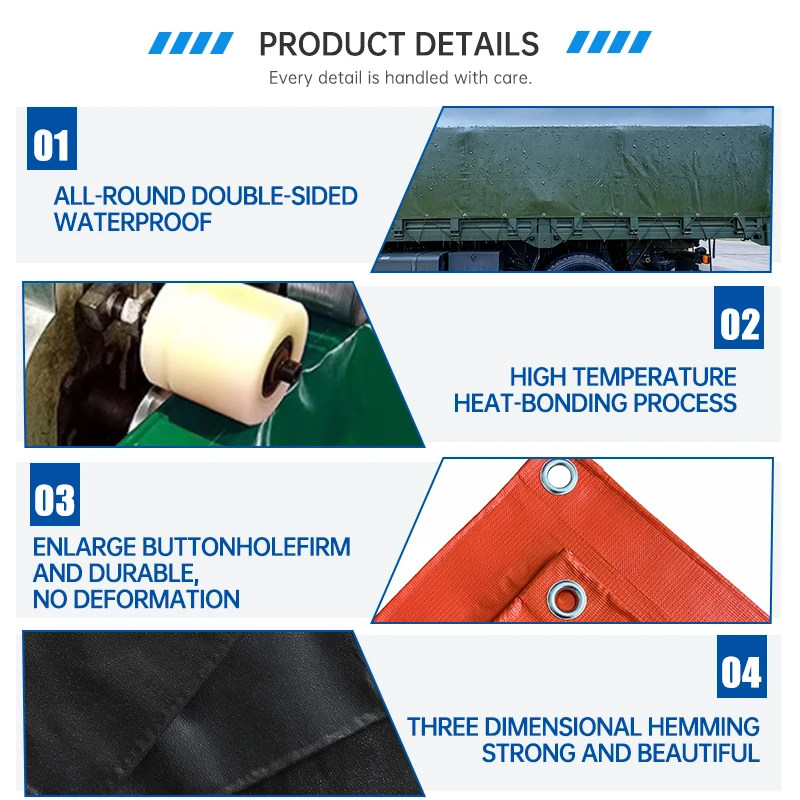
| Coating Material | PVC (double-sided) |
| Thickness Range | 450–900 g/m² |
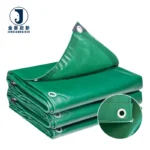
| Surface Characteristics | Smooth, leather-like texture |
| Waterproof | Fully waterproof coated construction |
| Flame Retardant | Available in flame retardant grades — confirm the grade required for your market (grade not stated in source) |
| UV Treatment | Anti-UV treatment available — confirm test basis on request (test basis not stated in source) |
| Repairability | Hot air weldable for field maintenance |
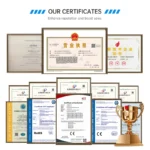
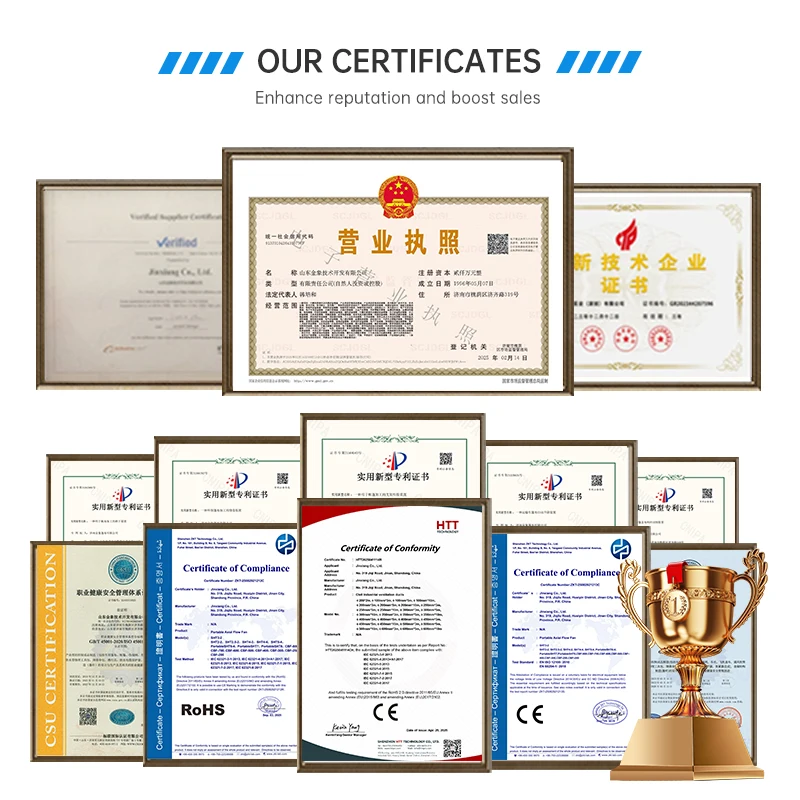
| Certifications | ISO, CE |
Application Suitability
| Application | Exposure & Requirement |
|---|---|
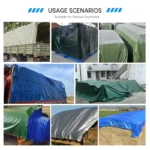
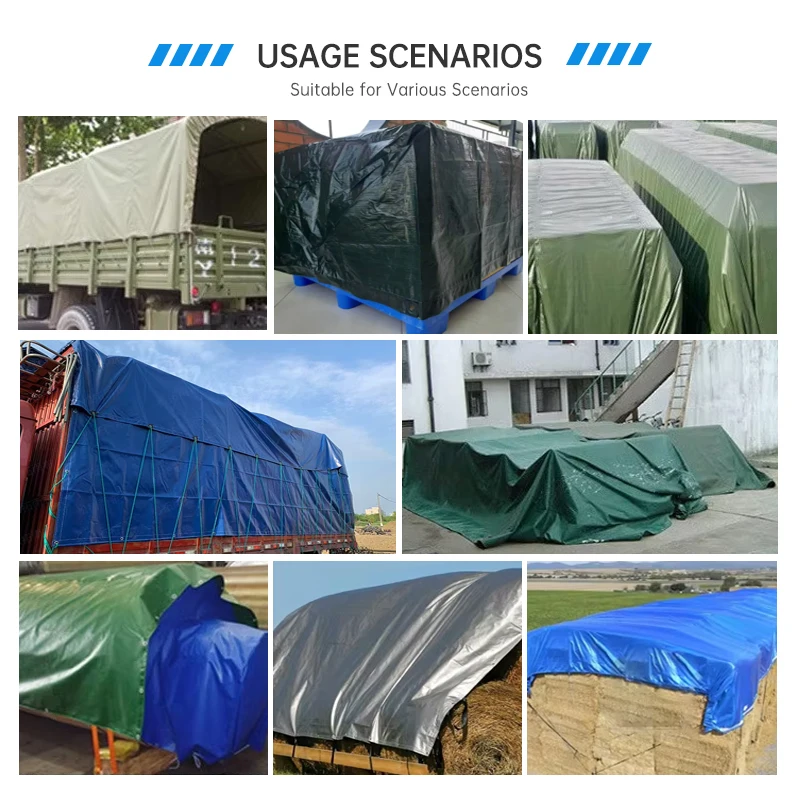
| Truck and trailer side curtains | Constant flexing, road abrasion, prolonged UV exposure, wind-driven rain |
| Machine and equipment covers | Outdoor weathering, dust ingress, handling abrasion during removal and refit |
| Timber and construction material covers | Long-term outdoor stacking, moisture ingress, UV degradation of stored materials |
| Awning and tent fabrication | Tensile load under frame tension, repeated deployment folding, solar heat buildup |
| Inflatable and membrane structures | Air pressure stress, seam integrity under continuous load, fire compliance on site |
Why "Flame Retardant" Means Nothing Without a Grade Behind It
Flame retardant claims must match the compliance standard enforced at your project site, not just a supplier declaration.
PVC Coated Tarpaulin is specified daily for mining ventilation, aviation ground covers, and construction enclosures where fire classification is non-negotiable. Yet a fabric labelled simply as "flame retardant" may not satisfy the specific test method required by your local authority or main contractor [NEED_CITE: fire classification standards for temporary structures and industrial covers]. When a roll arrives without a matching test report, the entire installation can fail site inspection, forcing replacement at the contractor’s expense. This PVC Coated Tarpaulin material specifications breakdown clarifies exactly which grades are available and how to request verified test data before your order enters production.
Base Fabric Denier and Tensile Behaviour
The 500D-500D polyester base fabric sets the structural backbone of this PVC coated tarpaulin. Denier defines yarn thickness, and when warp and weft are matched at 500D, the load distributes evenly across both axes. This balance matters most on truck side curtains where the fabric flexes repeatedly under road vibration and wind load — an unbalanced weave would develop bias distortion over time. The base fabric alone does not determine final strength; the PVC coating must penetrate the weave fully to lock the yarns in position and prevent slippage under tension.
Coating Method and Long-Term Adhesion
Double-sided PVC coating applied to the polyester base creates a sealed, waterproof barrier that protects the yarns from moisture, chemical exposure, and mechanical abrasion. The smooth, leather-like surface on each side allows dirt and road grime to release during cleaning rather than embedding into the fabric [NEED_CITE: coating adhesion test methods for PVC coated polyester per ISO 1421]. Hot air weldability is a direct result of the PVC coating composition — thermoplastic PVC melts at a controlled temperature to form a bond that can match or exceed the base fabric strength, enabling field repairs and custom fabrication without returning the material to a workshop.
Understanding the Relationship Between GSM, Denier, and Real Performance
A 500D-500D base fabric paired with PVC coating produces a range from 450–900 g/m², and understanding this spread is critical for specification decisions. GSM reflects the combined weight of base yarn plus coating, but two fabrics at the same GSM can perform very differently if one achieves its weight through heavier coating and lighter yarn. Heavier coating adds stiffness and reduces flexibility at low temperatures, while a denser base fabric contributes more to tear resistance and tensile stability. For truck covers that deploy and retract daily, flexibility under cold conditions matters as much as ultimate strength. For static equipment covers left in place for months, higher coating weight provides additional abrasion protection against wind-blown debris and UV exposure.
The Hidden Cost of Specifying on Price Per Kilogram Alone
When PVC coated tarpaulin is sourced on a cost-per-kilogram basis without verifying GSM against the actual roll delivered, the consequences surface weeks or months later. A material that arrives lighter than specified may have a thinner coating that cracks at fold lines during winter, or a base fabric with lower yarn density that tears from a single puncture point. Flame retardant treatment applied at insufficient concentration passes the supplier’s in-house test but fails the independent laboratory standard enforced on your job site [NEED_CITE: discrepancies between supplier declarations and third-party fire test results]. Colour inconsistency across rolls from the same order becomes visible only after installation, when adjacent panels installed side by side show noticeable shade variation that forces removal and replacement.
Why Technical Buyers Source This PVC Coated Tarpaulin Here
Three full production lines and 36 sets of professional equipment support bulk roll output with consistent coating weight across every batch. The 10-person R&D team handles material selection and sample development, producing custom samples within days so you can verify hand feel, weld response, and colour before committing to volume. A dedicated QA/QC protocol runs at every production stage — coating weight, adhesion, and surface quality are checked in-process, not just at final inspection. Every roll undergoes 100% inspection before shipment, with a pre-shipment record documenting actual measured values against your specification sheet [NEED_CITE: in-process quality control standards for coated fabric manufacturing]. ISO and CE certified processes underpin the entire workflow, and material specification sheets travel with each shipment to support your incoming goods verification.
Documentation & Verification
- Material specification sheet stating exact GSM, base fabric denier, and coating type per roll
- UV resistance and flame retardant test reports supplied with grade and test standard confirmed
- ISO and CE certificates included in shipment documentation package
- Pre-shipment inspection record with measured coating weight and visual quality confirmation
- Certificate of origin and customs documentation for international freight clearance
- Roll packing list with individual roll IDs matching the material specification data
Fabrication, Handling & Storage
- Hot air weld at controlled temperature matching the PVC coating thickness to achieve full seam adhesion
- Store rolls horizontally on pallets to prevent permanent creasing across the 500D-500D base fabric
- Avoid stacking heavy items on rolls during transport to protect the smooth leather-like surface texture
- Clean with mild detergent — the double-sided PVC coating resists chemical attack from standard cleaning agents
- Field repair tears immediately using hot air welding to prevent moisture ingress through the polyester base
- Allow cold-stored rolls to reach ambient temperature before unrolling to avoid coating stiffness cracking
- Plan cutting layouts to minimise waste and reduce the number of welded seams in the final cover assembly
Inquiry and Specification Guidance
Provide your application type, expected environmental exposure, and any fire classification or UV resistance standard enforced at your project site. Specify the required roll width, length, and annual volume so we can confirm production capacity and lead time against your schedule. Indicate whether you need raw roll stock for your own fabrication or finished cut-to-size covers with hem reinforcement and eyelet installation. If colour consistency across multiple rolls is critical for your installation, request a colour reference sample before order confirmation.
Frequently Asked Questions
Q: How is the 500D-500D base fabric denier verified on arrival?
A: Each shipment includes a material specification sheet documenting the base fabric denier and construction. You can independently verify yarn count by unravelling a sample section and counting threads per centimetre in both warp and weft directions. Our pre-shipment inspection record confirms the denier matched your specification before the rolls left the production line.
Q: What test standard supports the flame retardant claim?
A: Flame retardant grades are available for this PVC coated tarpaulin, but the specific standard depends on your market requirement. Request the applicable test report before confirming your order, specifying whether your site enforces DIN 4102, NFPA 701, or another regional classification. We supply the matching test documentation with your shipment.
Q: Can anti-UV and flame retardant treatments be combined?
A: Yes, both treatments can be applied to the same PVC coated tarpaulin fabric. However, combining treatments may affect the coating formulation and weld temperature settings. Request a sample with both treatments applied so you can verify hot air weld response and confirm each treatment’s test report meets your compliance requirements before full production.
Q: PVC vs. PE tarpaulin — what changes in material structure and service life?
A: PVC coated tarpaulin uses a woven polyester base fabric with thermoplastic coating on both sides, while PE tarpaulin is typically a woven polyethylene film laminated between polyethylene layers. The PVC construction is hot air weldable for field repair and fabrication, substantially extends usable life through repairability, and delivers higher tensile and tear resistance at equivalent weight grades.
Q: What welding method works for field repair of this tarpaulin?
A: Hot air welding is the recommended method for repairing tears and joining panels on this PVC coated tarpaulin. The thermoplastic PVC coating melts at controlled temperature to fuse with the adjoining material. Clean the repair area first, overlap the patch adequately, and apply consistent heat and pressure to achieve a bond that matches the surrounding coating integrity.