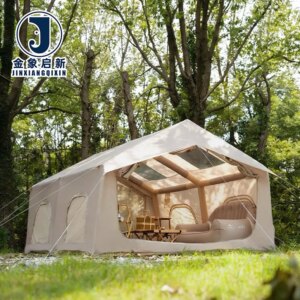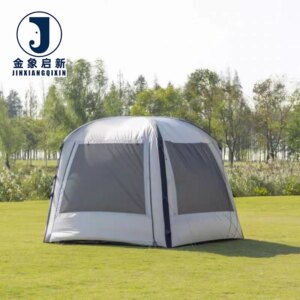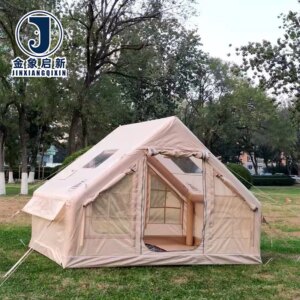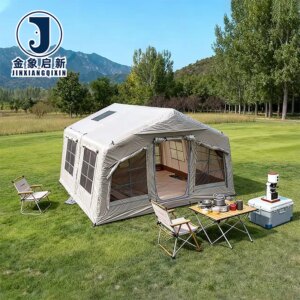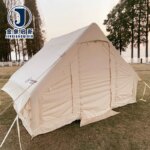
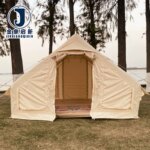
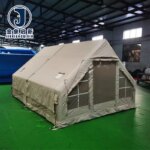

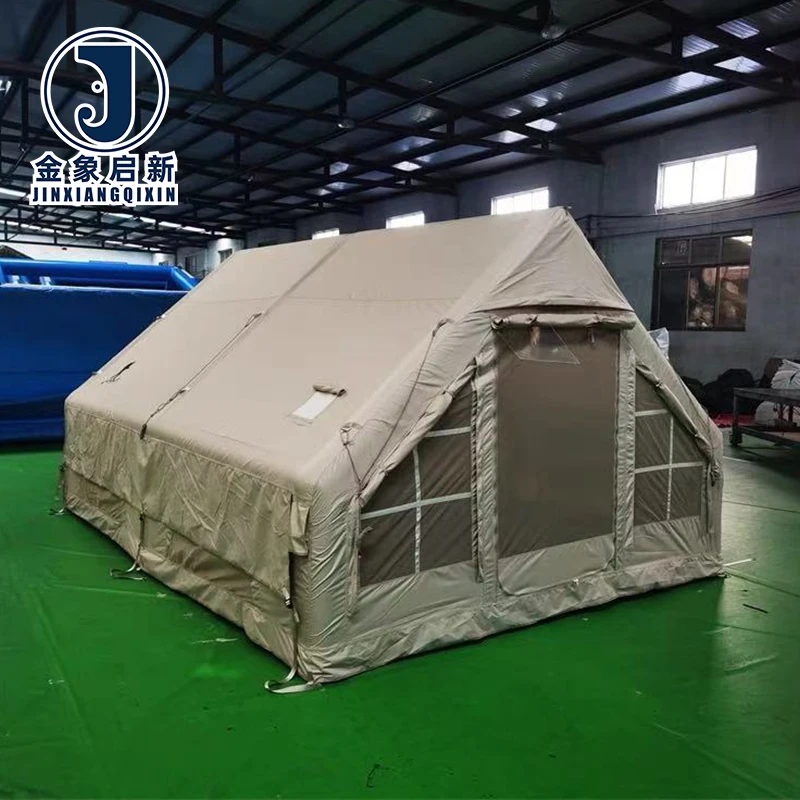
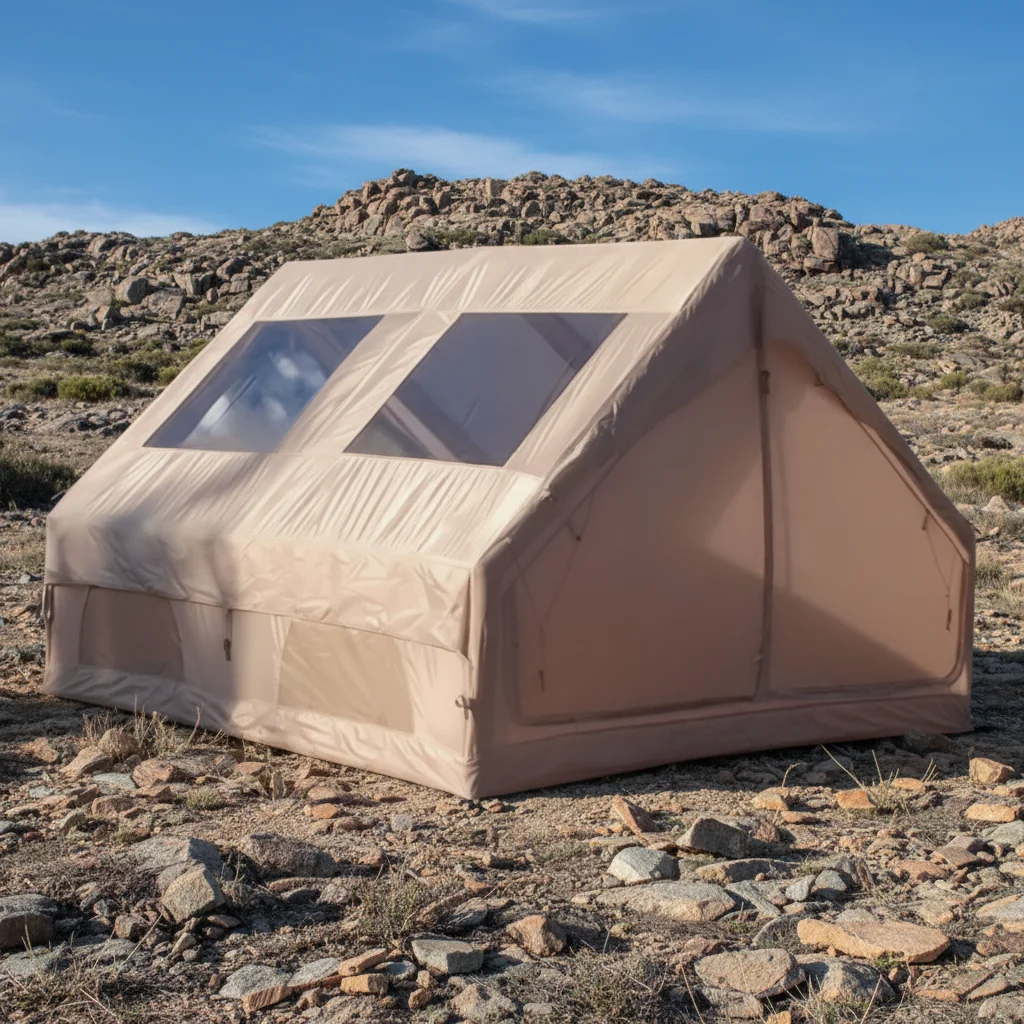
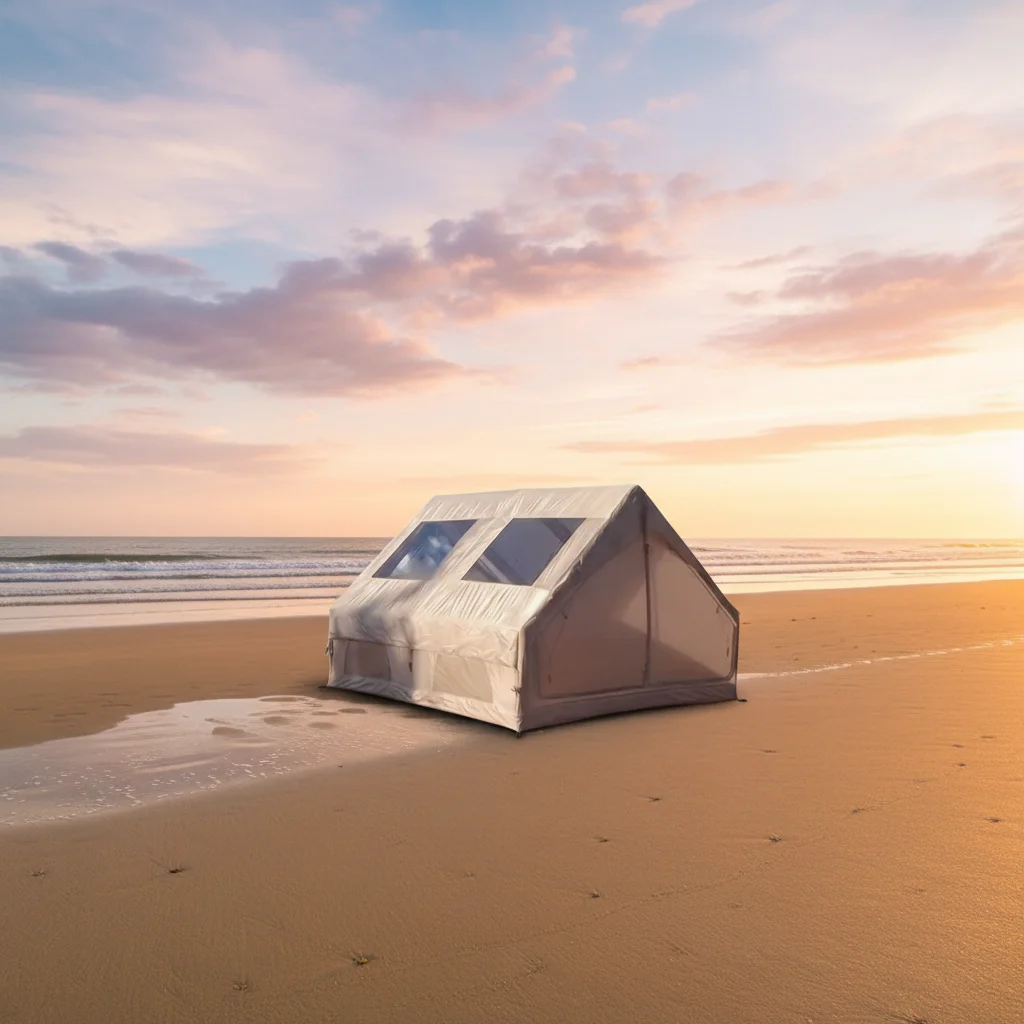
Certified Compliance Focus — PVC inflatable tent fabric backed by ISO 9001, ISO 14001, ISO 45001, and CE certification, with fire-retardant and anti-static grades available for regulated mining and aviation shelter projects.
Technical Specifications
| Parameter | Value |
|---|---|
| Product Type | Inflatable Tent Fabric / PVC Tent |
| Core Material | PVC Tarpaulin |
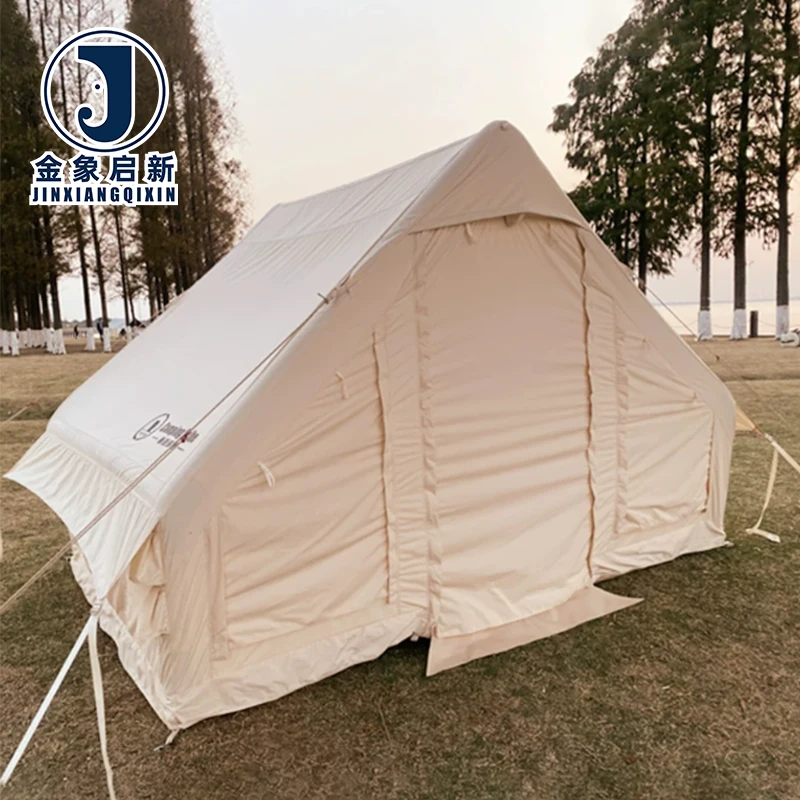
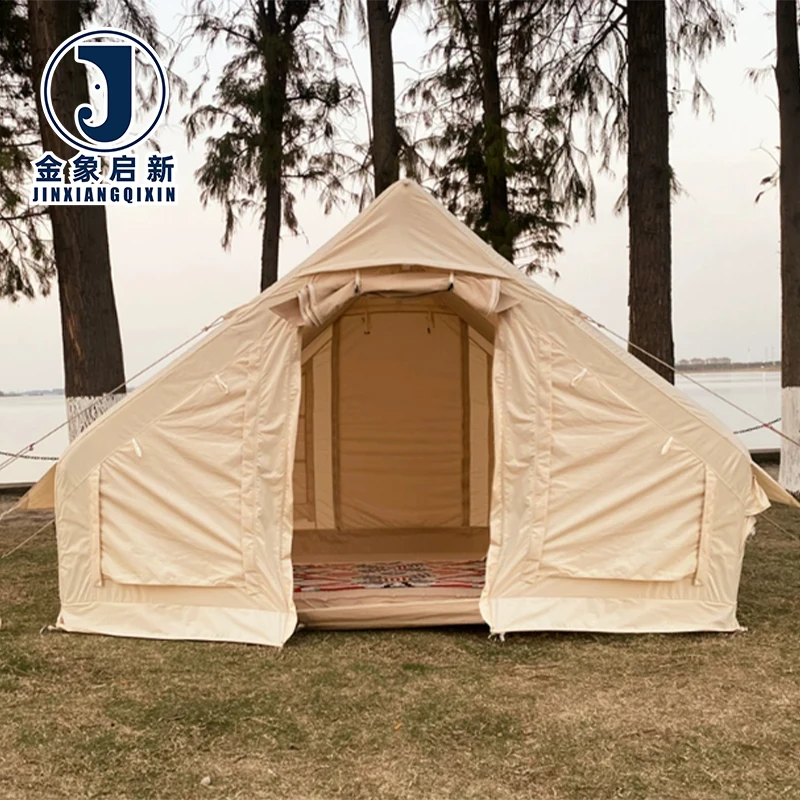
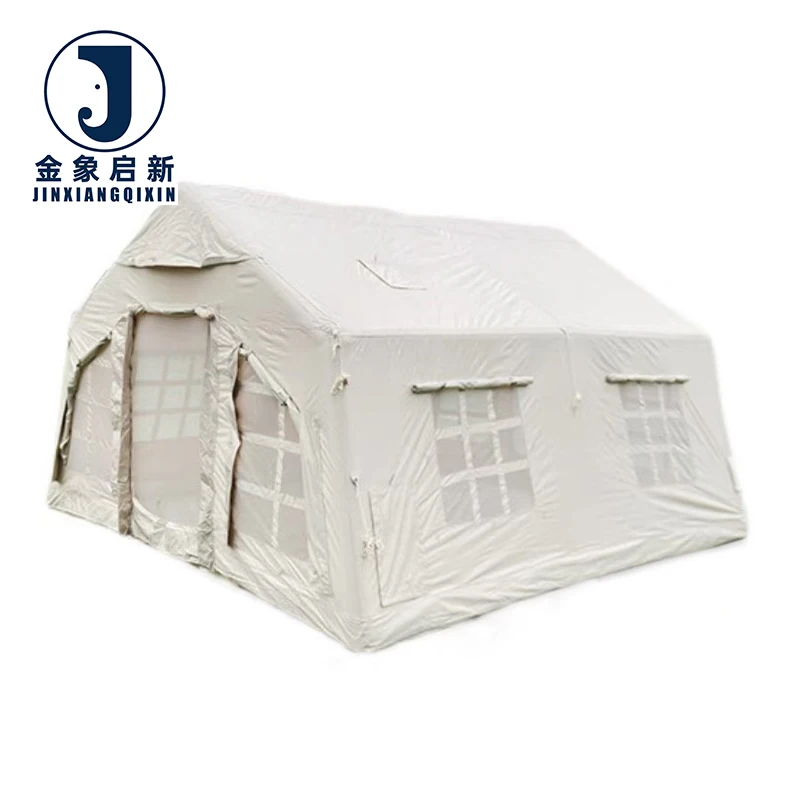
| Product Forms | Inflatable Camping Tent |
| Key Performance | Waterproof, UV-Resistant (test basis not stated in source), Tear-Resistant |
| Capacity | 2-8 Person |
| Construction | Single-layer |
| Design Feature | Quick automatic opening, 4-Season |
| Customization Service | OEM & ODM (sample customization, pattern printing, size adjustments, material thickness modifications) |
| Standards | ISO 9001, ISO 14001, ISO 45001, CE |
Application Suitability
| Application | Exposure & Requirement |
|---|---|
| Mining and tunnelling site shelters | Continuous underground moisture, dust ingress, mandatory fire-retardant and anti-static compliance |
| Aviation maintenance enclosures | Fuel vapour zones requiring documented flame-retardant certification, rapid deployment and teardown |
| Temporary event and exhibition shelters | High foot traffic, repeated inflation cycles, UV exposure across multi-day outdoor installations |
| Emergency response field structures | Immediate deployment under adverse weather, airtight chamber integrity, transport durability |
| Commercial camping ground installations | Seasonal UV and rain exposure, guest safety expectations, seasonal assembly and storage |
What "Fire-Retardant Inflatable Fabric" Means Without Certification Attached
A flame-retardant claim without a test report is a compliance gap that stops your structure at the site gate.
Mining and tunnelling contractors specifying a PVC Inflatable Tent fire retardant certified manufacturer quickly learn that procurement teams demand documentation before the fabric ever reaches the site. A supplier stating "flame retardant" on a quotation but unable to produce a batch-specific test report leaves the buyer carrying the regulatory risk. Inflatable shelters concentrate air volume inside sealed chambers — when fire performance is in question, the entire structure becomes a liability rather than an asset. [NEED_CITE: fire classification standards for temporary membrane structures in industrial sites]
Coating Adhesion and Air-Holding Chamber Integrity
Inflatable tent structures depend entirely on the coating-to-fabric bond holding under internal pressure across repeated inflation and deflation cycles. The PVC tarpaulin base used for this fabric is coated to achieve consistent adhesion across the full roll width, which directly influences weld seam strength during fabrication. Manufacturers converting this material into inflatable chambers need predictable coating behaviour at the heat-weld interface — uneven coating weight produces weak spots that fail before the base fabric reaches its tensile limit. A PVC Inflatable Tent fire retardant certified manufacturer controls coating weight at every stage to deliver this consistency.
Weld Compatibility and Seam Engineering for Pneumatic Structures
The seam is the most stressed point on any inflatable shelter. This PVC tarpaulin is produced to support heat-weld fabrication, with coating composition selected for thermal compatibility at standard welding temperatures. Membrane and inflatable structure contractors benefit from receiving recommended welding parameters alongside the material specification sheet, reducing trial-and-error on the production floor. Consistent roll-to-roll coating behaviour means welding settings validated on the first roll transfer reliably to subsequent rolls in the same batch. [NEED_CITE: heat welding parameters for PVC coated fabrics in inflatable structure fabrication]
Reading the Specifications That Matter for Inflatable Applications
Base fabric denier and weave density determine how the material resists tear propagation when a puncture occurs under internal pressure — a higher denier yarn in the warp direction slows tear spread along the length of the panel. Coating weight, expressed as part of the total GSM, influences both airtightness and flexibility; heavier coating improves air retention but adds stiffness that affects packing and deployment speed. UV-resistant treatment is available in grades suited to extended outdoor exposure — confirm the grade required for your target market and request the corresponding test report. The single-layer construction keeps weight manageable for transport while relying on coating integrity for waterproof performance across all four seasons of deployment.
The Cost of Overlooking Batch Consistency in Inflatable Fabric Orders
Colour variation between rolls in the same shipment becomes immediately visible once panels are welded side by side on a large inflatable structure — a problem that forces contractors to reject entire sections and delay project handover. Thickness inconsistency across a batch causes uneven inflation behaviour, where some chambers expand faster than others and place asymmetric stress on internal baffles. Welded seams failing before the fabric body reaches its expected service life traces back to coating weight variation that the supplier did not control during production. These failures are not material defects in the traditional sense — they are process control failures that proper pre-shipment inspection would catch. [NEED_CITE: pre-shipment inspection protocols for coated technical fabrics]
Why Technical Buyers Source Inflatable Structure Fabric Here
Three full production lines and 36 sets of processing equipment provide the capacity to fulfil bulk inflatable fabric orders without splitting production across incompatible batches. A 10-person R&D team handles material thickness modification, custom sizing, and pattern printing directly from specification to sample. Every roll undergoes dedicated QA and QC inspection at each production stage, with 100% pre-shipment verification against the stated specification. Samples for custom inflatable structure requirements are developed within days, allowing fabricators to validate weld settings and colour matching before committing to full production volume. The facility maintains ISO 9001, ISO 14001, ISO 45001, and CE compliance, providing the documentation framework that regulated industrial and mining projects require.
Documentation & Verification
- Material specification sheet stating base fabric denier, coating composition, and total GSM for each inflatable fabric batch
- Flame-retardant test reports issued per batch, matched to the grade specified for your site compliance requirements
- ISO 9001, ISO 14001, ISO 45001, and CE certificates available for project submission and regulatory documentation
- 100% pre-shipment inspection record confirming coating weight and colour consistency before dispatch
- Certificate of origin and roll packing list included with every shipment for customs and receiving verification
Fabrication, Handling & Storage
- Heat-weld temperature and dwell time settings vary by PVC coating thickness — request the recommended parameters for your specified grade before production
- Store rolls upright on end caps to prevent flat-spot deformation that causes uneven inflation behaviour in finished chambers
- Allow cold-stored PVC tarpaulin rolls to reach ambient temperature before unrolling to avoid coating micro-cracking at the fold lines
- Cut patterns with seam allowance calibrated to the specific coating weight, as heavier coatings require wider weld flanges for full-strength joints
- Clean fabricated inflatable panels with mild detergent only — solvent-based cleaners can degrade the PVC coating surface and reduce UV treatment effectiveness
- Repair minor punctures with compatible PVC weld patches rather than adhesive tape, maintaining the airtight integrity of the chamber structure
Specify Your Inflatable Fabric Requirements
To move from enquiry to sample, share your target market’s fire-retardant or anti-static compliance requirements, the chamber dimensions and inflation pressure your design operates at, and the annual volume you expect to source. Confirm whether you need rolls in stock widths or custom widths cut to your panel layout, and indicate if pattern printing or specific colour matching is part of the project scope. Sample development begins once these parameters are confirmed, giving your fabrication team material to validate before full production commitment.
Frequently Asked Questions
Q: What flame-retardant grades are available, and how do I match them to my market’s fire code?
A: Flame-retardant treatment is available in grades suited to different regulatory frameworks. Share your project location and the applicable fire safety standard — such as those required for mining sites or public event venues — and the corresponding test report will be provided with the material specification. Grade selection must align with local authority requirements before production begins.
Q: Can you supply anti-static certified fabric for mining and tunnelling inflatable shelters?
A: Anti-static treatment is available for inflatable tent fabric destined for underground and fuel-adjacent environments. The required certification level depends on your site’s safety regulations. Provide your compliance documentation requirements during enquiry so the correct treatment grade and test report are included with your shipment.
Q: How do you ensure colour consistency across multiple rolls for a single inflatable structure project?
A: Each production batch is monitored for colour uniformity through dedicated QA inspection at every stage. Rolls destined for the same project are produced together and verified against the approved colour reference before packing. The pre-shipment inspection record documents this consistency check, reducing the risk of visible panel mismatch after fabrication.
Q: What custom widths and thicknesses can be produced for membrane and inflatable structure applications?
A: Custom width and material thickness modifications are handled by the R&D team based on your panel layout and inflation pressure requirements. Samples are developed within days for your approval, allowing weld testing and structural validation before bulk production proceeds. Minimum order quantities vary by specification and are confirmed at quotation stage.
Q: How quickly can samples be developed for a new inflatable tent fabric specification?
A: Sample development typically proceeds within days of specification confirmation, depending on the complexity of custom thickness, colour, or treatment requirements. Approved samples serve as the production benchmark for coating weight, colour, and weld compatibility across the full order. This process ensures your fabrication team receives material matching validated parameters.