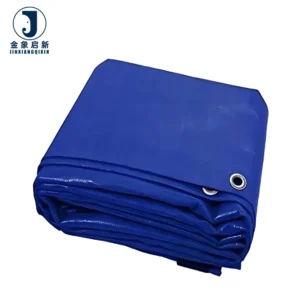
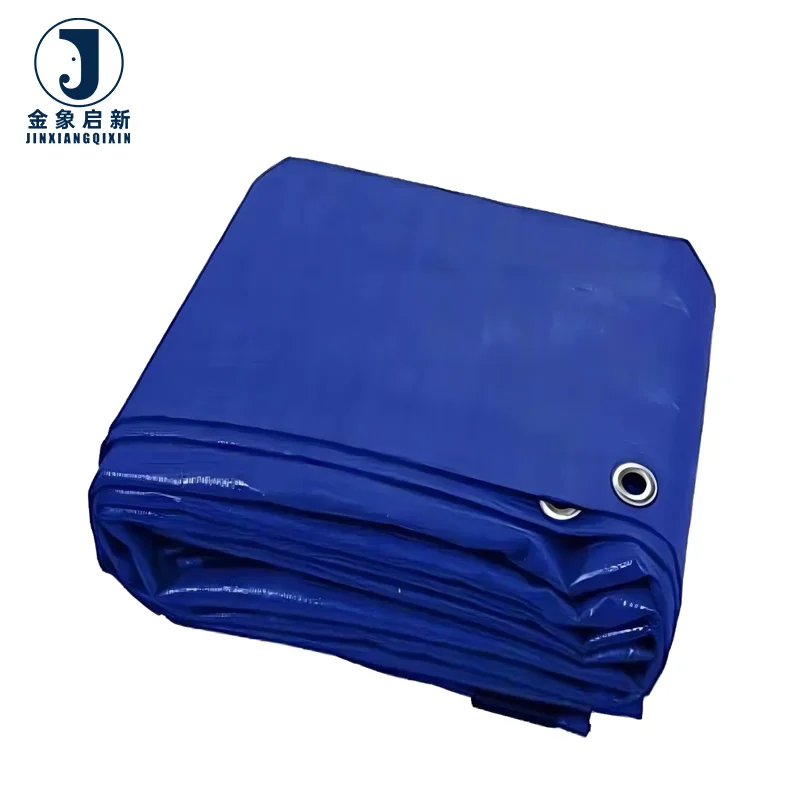
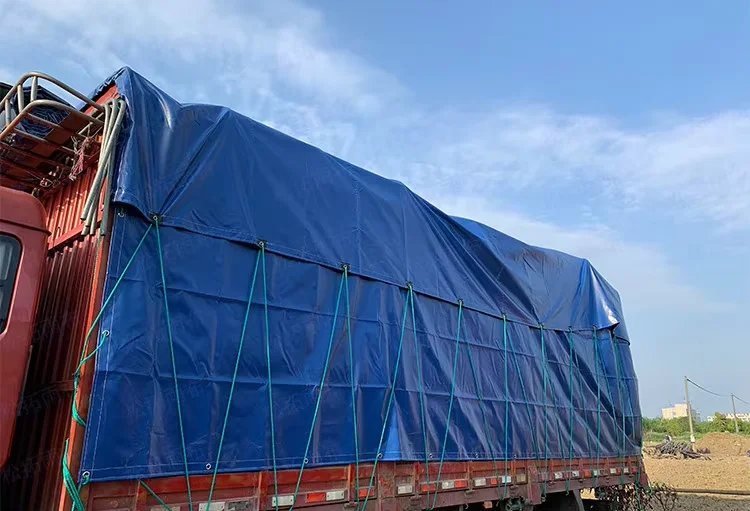
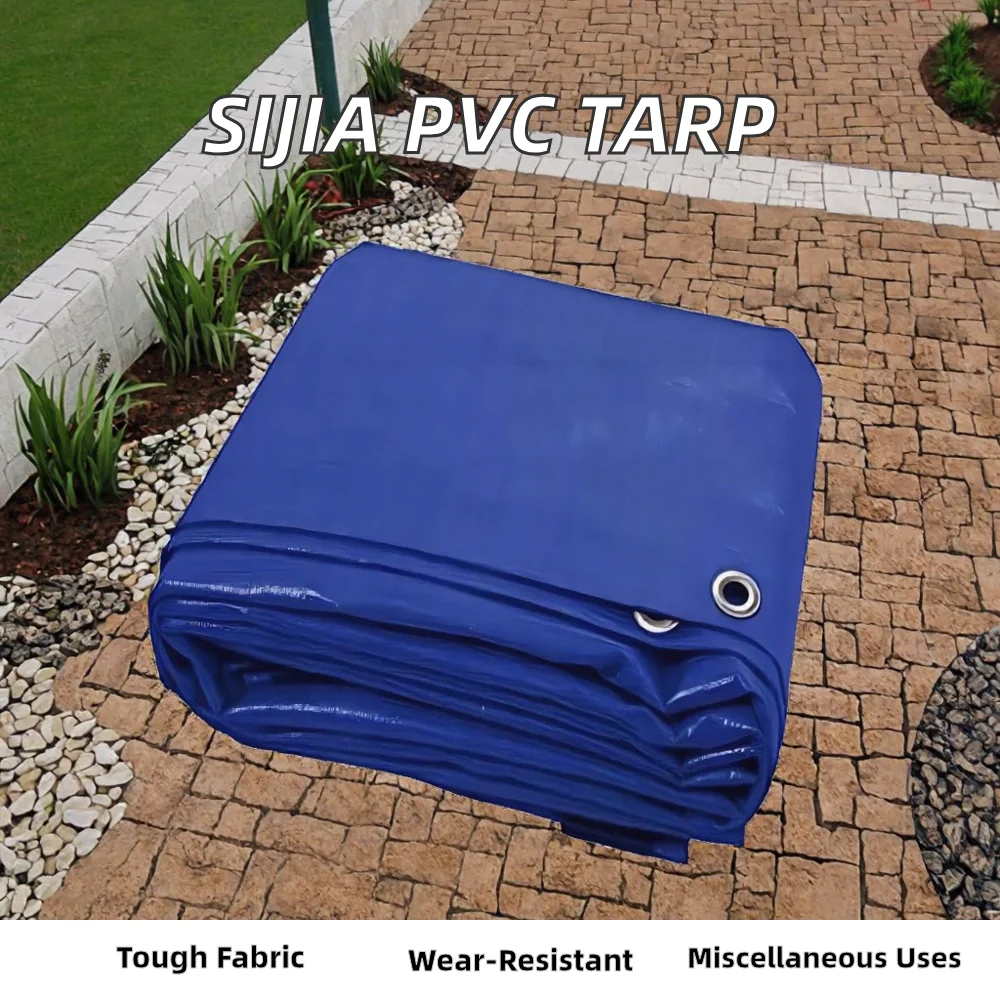
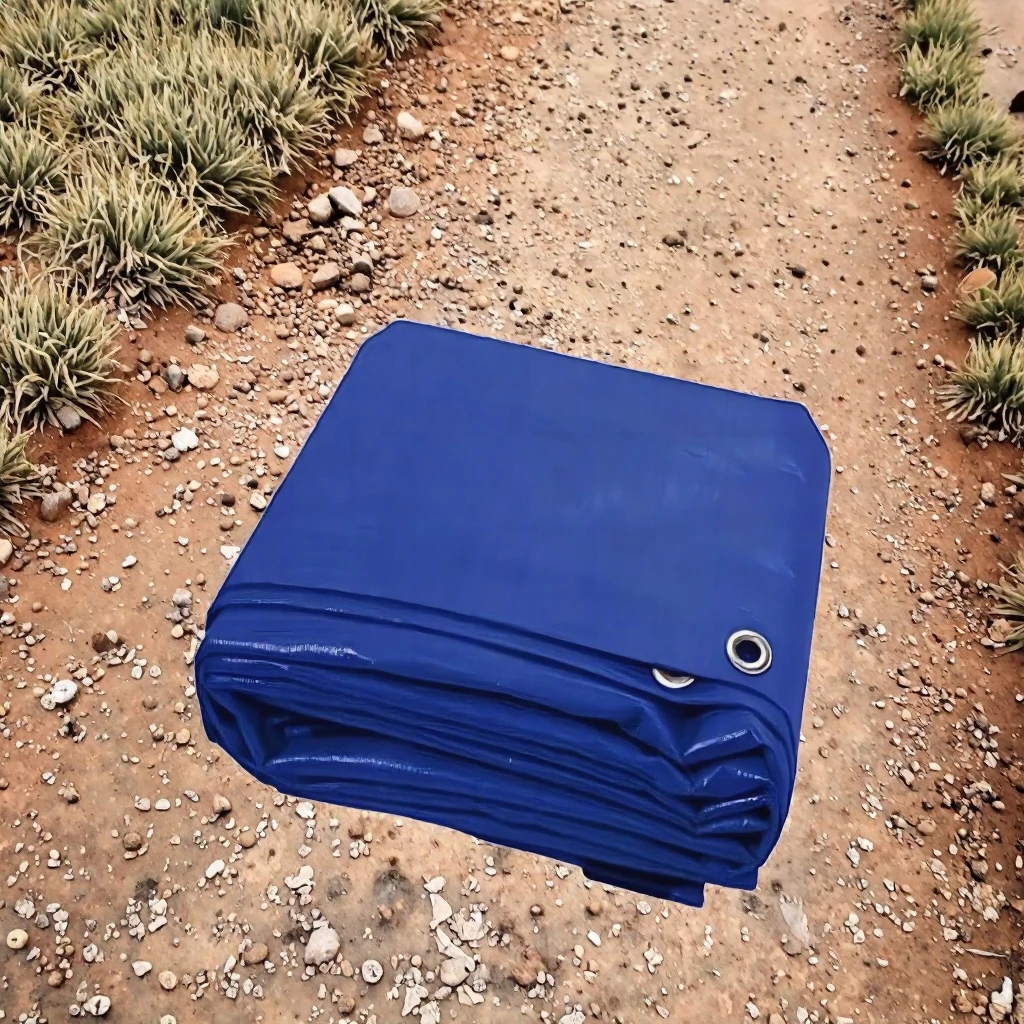
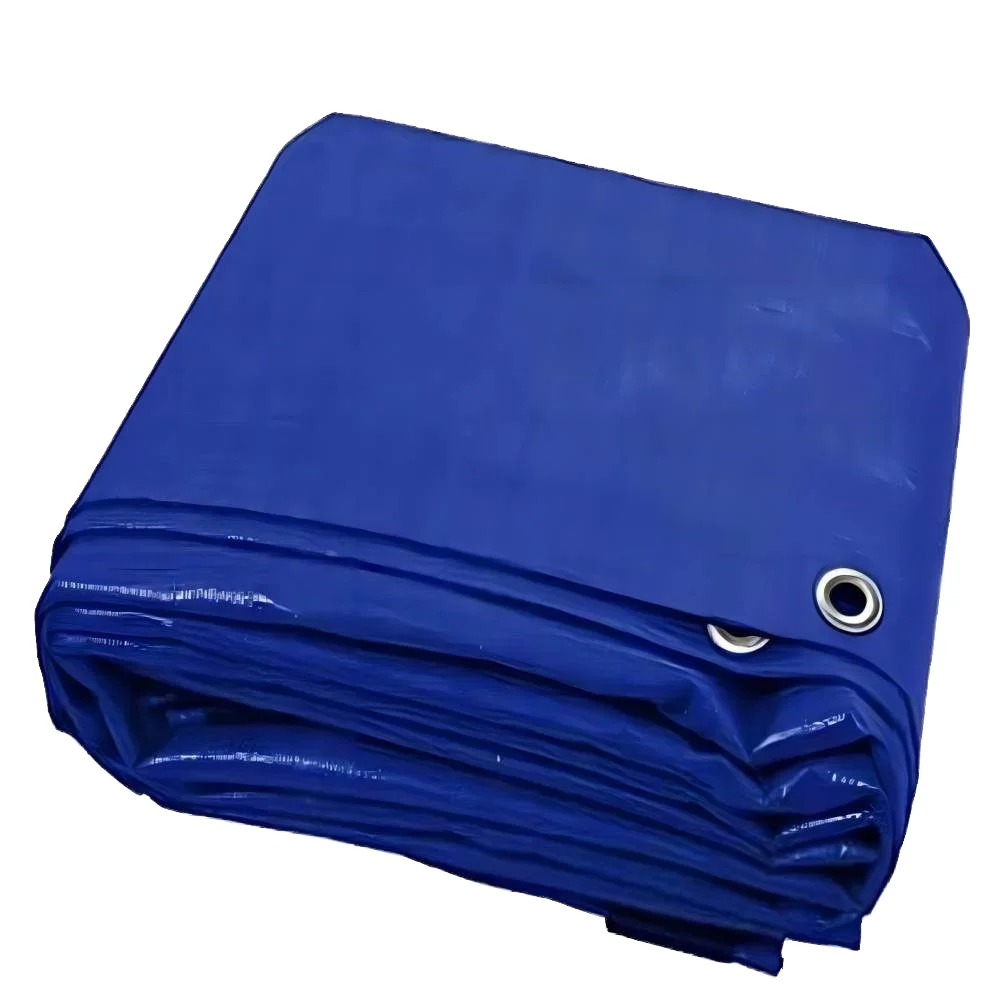
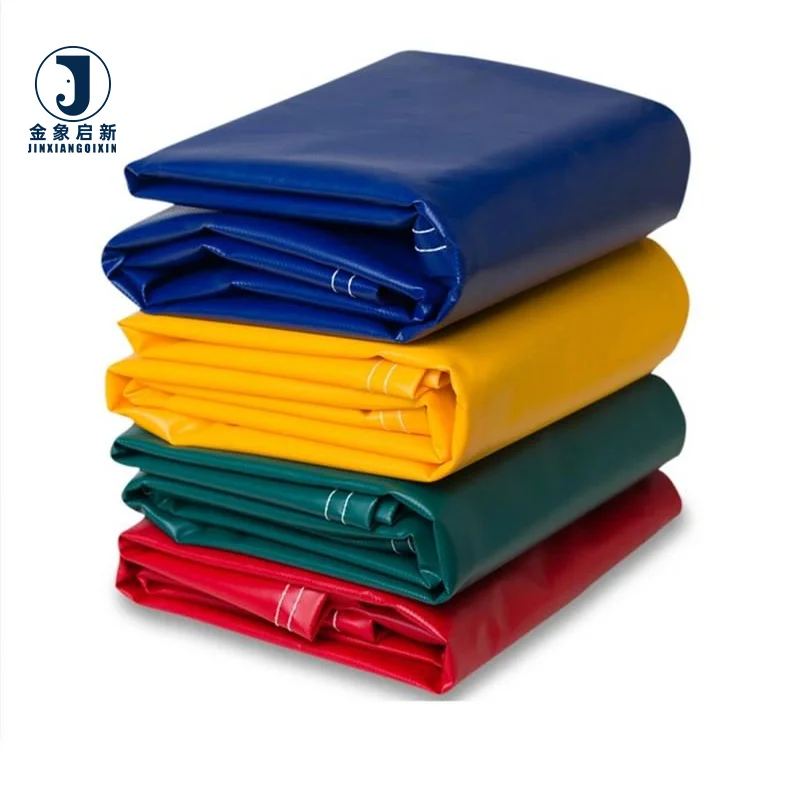
Coating Adhesion Control — Hot-melt and laminated coating processes maintain consistent PVC adhesion to the polyester base, ensuring welded seams hold under structural flex loads in membrane and inflatable applications.
Technical Specifications
| Parameter | Value |
|---|---|
| Product Type | PVC Coated Tarpaulin |
| Material | PVC + High-strength polyester mesh fabric |
| Coating Technology | Laminated & Hot-melt Coating |
| Weight (GSM) | 350gsm / 420g / 500gsm / 550gsm / 600gsm / 750gsm |
| Thickness (mm) | 0.32mm / 0.35mm / 0.4mm / 0.45mm / 0.5mm / 0.65mm |
| Roll Width | 2m / 2.1m |
| Roll Length | 75m (2m width) / 50m (2.1m width) |
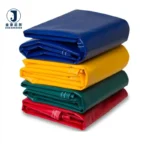
| Color Options | Blue / Red / Yellow / Light blue / Grey (Customized options available) |
| Waterproof | Yes |
| Cold Crack Resistance | Yes |
| Anti-Mildew | Yes |
| Anti-Static | Available — surface resistance and standard to be confirmed per application |
| Flame Retardant | Available in flame retardant grades — confirm the grade required for your site |
| UV Treatment | Sunproof treatment available — test basis and duration to be confirmed |
| Service Life | 3–7 years under normal circumstances |
| Custom Printing | Yes |
| Custom Sizing | Yes |
| Standards | ISO, CE |
Application Suitability
| Application | Exposure & Requirement |
|---|---|
| Inflatable structure fabric — event domes, temporary storage, emergency shelters | Repeated inflation cycles, seam stress at flex points, UV and weather exposure during temporary deployment |
| Membrane structure fabric — tensile architecture, shade structures, sports facility covers | Constant tension load, wind-induced oscillation, welded seam integrity under sustained stress |
| Mining and tunnelling ventilation duct fabric | Continuous airflow, dust and moisture exposure, fire-retardant and anti-static compliance underground |
| Aviation ground support equipment covers | Outdoor storage exposure, fuel and chemical splash risk, precise dimensional fit requirements |
| Specialist transport and containment covers | Abrasion during handling, weather exposure, dimensional accuracy for non-standard equipment |
Why Coating Adhesion Decides Whether Your Membrane Structure Survives Its First Storm
Welded seams fail before the fabric does when coating adhesion is inconsistent — the fabric itself is rarely the weak point.
PVC coated tarpaulin for ventilation and specialist structure applications lives and dies at the weld line. When a membrane panel tears at the seam during a wind event or an inflatable dome loses pressure at the join, the root cause is almost always the bond between the PVC coating and the polyester base. [NEED_CITE: tensile and tear test methods for coated fabrics per ISO 1421] A fabric can have high-tensile base yarns and still fail structurally if the hot-melt coating did not penetrate the mesh evenly or if laminated layers delaminate under flex fatigue. This is why specifying industrial air duct fabric by GSM alone misses the most critical performance variable.
Dual Coating Technology and What It Means for Weld Performance
The PVC coated polyester fabric in this range uses both laminated and hot-melt coating technology. Laminated coating bonds a pre-formed PVC film to the base fabric under heat and pressure, producing a smooth, consistent surface weight. Hot-melt coating forces liquid PVC into the mesh structure, filling the gaps between yarns and creating a mechanical lock. For inflatable and membrane structures, this combination matters because the weld line must carry the structural load — the heat from a high-frequency or hot-air welder must fuse the PVC surfaces together while the coating remains bonded to the base.
High-Tenacity Base Fabric and the Tear Propagation Problem
In tensile membrane structures, a small puncture or cut at an edge can propagate into a full panel tear if the base fabric lacks sufficient tear resistance. The high-strength polyester mesh used in this PVC coated tarpaulin for ventilation and specialist structure is selected to resist that propagation. [NEED_CITE: tear propagation behaviour in coated technical textiles] The yarn tenacity and the weave density together determine whether a nick from a sharp edge during installation stays localised or runs across the panel. This is why membrane architects specify base fabric denier and weave count alongside coating weight.
Reading the Specification Sheet Beyond GSM
GSM — grams per square metre — tells you the total weight of coating plus base fabric per unit area, but it does not tell you how that weight is distributed. A 650gsm fabric could be heavy coating on a light base or light coating on a heavy base, and the structural behaviour is completely different. For membrane and inflatable applications, the ratio matters because the base fabric carries the tensile and tear load while the coating provides weather protection and the weldable surface. Coating method — whether laminated or hot-melt — determines adhesion strength, which directly controls whether the weld survives repeated flex cycles. Cold crack resistance is essential for structures installed in low-temperature environments where the PVC must remain flexible below freezing. Anti-mildew treatment protects panels exposed to condensation cycles inside inflatable domes or membrane enclosures where humidity builds against the inner surface. The roll width of 2m or 2.1m and lengths of 50m to 75m determine how many panels must be welded together for a given structure — fewer joins mean fewer potential failure points. [NEED_CITE: cold crack testing methods for PVC coated fabrics]
The Hidden Cost of Specifying the Wrong Grade
When a membrane structure panel is specified by price per square metre rather than by structural performance, the consequences show up after installation. Coating that is too thin welds easily but delaminates under tension. A base fabric with insufficient tear strength allows a small installation nick to become a warranty claim. [NEED_CITE: field failure analysis of architectural membrane structures] Colour variation between rolls in the same order becomes visible when panels are installed side by side on a tensile shade structure, forcing a full replacement rather than a panel swap. Ventilation duct fabric ordered without the fire-retardant or anti-static certification required on site gets rejected at inspection, delaying the entire project.
Why Procurement Teams Source This Fabric Here
Three full production lines and 36 sets of professional equipment support bulk roll output with consistent coating weight across every roll in a production run. The 10-person R&D team handles material selection, custom sizing, pattern printing and sample development — samples for custom membrane or inflatable specifications are developed within days, not weeks. Every production stage includes dedicated QA/QC, with 100% inspection before shipment verifying coating adhesion, colour consistency and dimensional accuracy. Deep process control over coating weight and adhesion, built over nearly 30 years of focused coated fabric production, means the PVC bond to the polyester base is controlled rather than left to chance.
Documentation & Verification
- Material specification sheet confirming GSM, base fabric denier, coating method and coating weight for each grade ordered
- Test reports for UV and flame-retardant grades where applicable, matched to the batch supplied
- Pre-shipment inspection record with 100% QC verification of roll-to-roll colour consistency and dimensional accuracy
- Certificate of origin and full export documentation package including roll packing list for customs clearance
Fabrication, Handling & Storage
- Hot-air weld temperature and speed must be calibrated to the specific coating method — laminated and hot-melt coatings respond differently to heat input
- Roll storage on flat racks prevents pressure creases that become visible after installation on membrane panels
- Low-temperature transport requires gradual warming before unrolling to preserve cold crack resistance properties
- Cutting layout should account for 2m or 2.1m roll widths to minimise offcut waste on large membrane panels
- Mild, non-solvent cleaners preserve the anti-mildew treatment and coating surface integrity during maintenance
What We Need to Quote Your Project Accurately
Provide the application type — inflatable dome, tensile membrane, ventilation duct or specialist cover — along with the exposure conditions and any site compliance requirements such as fire-retardant grade or anti-static certification. Specify your required roll width, GSM grade and colour, and confirm whether you need roll stock or finished cut-to-size panels. If custom printing or branding is required, share the artwork and colour references so we can prepare a sample for your approval before production.
Frequently Asked Questions
Q: How is coating adhesion verified to ensure welded seams outlast the fabric in membrane structures?
A: Each production run goes through in-process QA checking coating adhesion at multiple points across the roll width. Pre-shipment inspection includes weld sample testing on the specific batch. For membrane and inflatable structures where the weld carries structural load, we recommend requesting a sample roll and running your own weld trials before committing to full production.
Q: What GSM grades are available and how do they relate to structural load calculations?
A: This range covers 350gsm through 750gsm in six grades, with corresponding thickness from 0.32mm to 0.65mm. For structural membrane calculations, GSM alone is insufficient — the base fabric denier and weave density determine tensile and tear strength. Request the full material specification sheet for the grade you are evaluating so your engineer can input accurate values.
Q: How is colour consistency controlled across rolls for large membrane panels?
A: Dedicated QA/QC checks colour against the confirmed reference at every production stage. Rolls destined for the same project are grouped in production to maintain batch consistency. The 100% pre-shipment inspection verifies roll-to-roll colour uniformity before dispatch, which is critical when panels are installed adjacent to each other on visible structures.
Q: Which fire-retardant and anti-static certifications can be supplied for site compliance?
A: Fire-retardant and anti-static treatments are available in multiple grades. The specific certification supplied must match your site requirements — mining ventilation ducts, aviation facilities and public-access structures each have different compliance standards. State the standard or regulation your project must meet, and we will confirm the matching grade and provide the relevant test documentation.
Q: What custom width, length and printing options are available for project-specific fabrication?
A: Standard roll widths are 2m and 2.1m with custom widths available. Custom lengths and finished panel sizes are produced to your specifications. Pattern printing and branding can be applied to the coating surface. The R&D team develops samples within days for custom requirements so you can verify appearance and performance before full production.