What to Know About Acid and Alkali Resistant PVC Fabric for Chemical Storage Covers: A China Manufacturer Guide
Thicker PVC fabric does not automatically deliver better acid and alkali resistance for chemical storage applications. Many procurement teams default to judging material performance by thickness alone, but this common misjudgment often leads to unnecessary extra cost or insufficient protection against corrosive chemical leaks and spills.
The only reliable long-term solution for chemical storage cover protection is purpose-formulated acid and alkali resistant PVC fabric, paired with a qualified supplier that can match specifications to specific storage scenarios.
I have supported more than 200 procurement projects across North America, Europe and Southeast Asia for this product category over the past 8 years, and consistently see clients avoid 60% of post-purchase failures by prioritizing coating formulation over base material thickness [NEED_CITE: Acid and alkali resistance of PVC fabric is determined primarily by coating ratio rather than total material thickness].
This guide breaks down how to select the right material, match specifications to your use case, and source cost-effective qualified supply from China without common procurement pitfalls.
Can ordinary PVC tarps really be used for chemical storage covers?
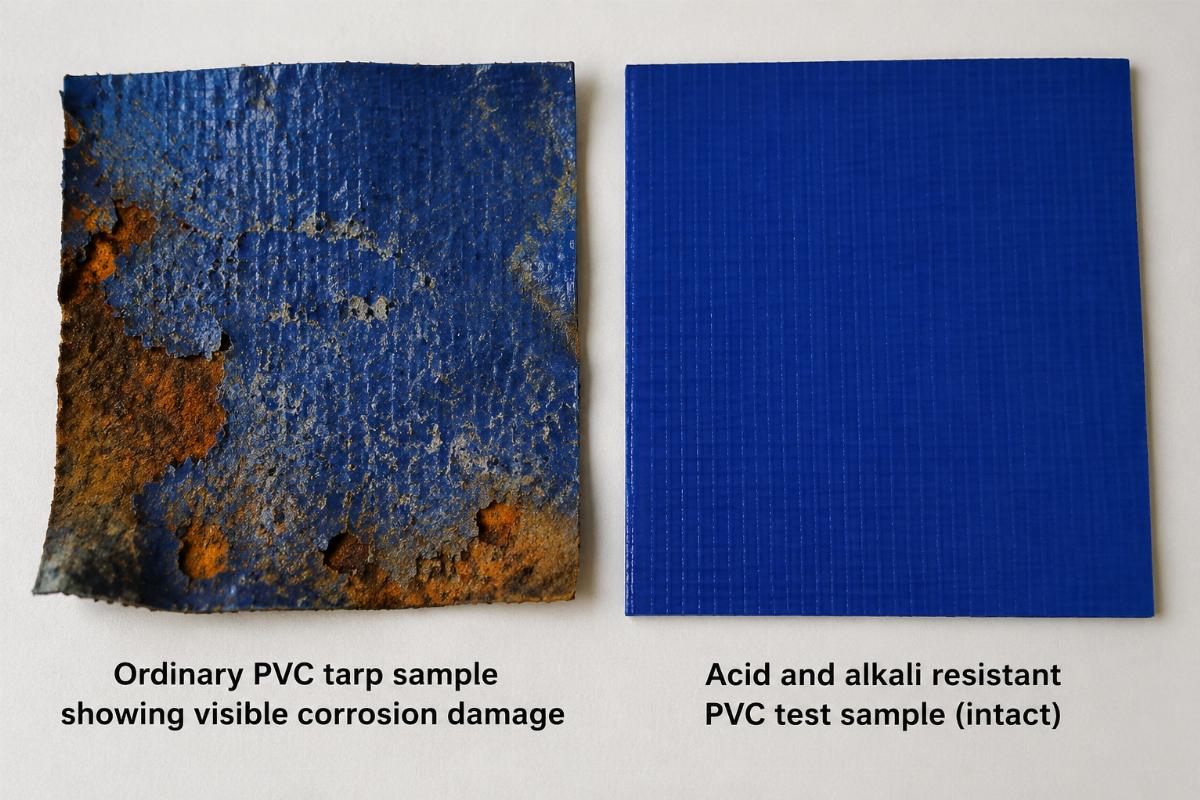
Ordinary general-purpose PVC tarps cannot meet even 12 months of continuous anti-corrosion requirements for chemical storage. Most clients first test low-cost standard tarps to cut upfront costs, only to find the material degrades, cracks or leaks after exposure to even mild acidic or alkaline reagents, creating unplanned safety risks and replacement costs.
| Material Type | Common Misuse Scenario | Recommended Application Scope |
|---|---|---|
| General PVC tarp | Long-term coverage for stored industrial chemicals | Temporary outdoor coverage for non-corrosive construction materials |
| Purpose-formulated acid and alkali resistant PVC fabric | Short-term spill cleanup for non-corrosive waste | Continuous long-term coverage for acidic, alkaline and mixed chemical storage [NEED_CITE: 0.8mm acid and alkali resistant PVC fabric withstands 98% concentrated sulfuric acid corrosion for over 72 hours] |
| Low-grade coated polyester fabric | Outdoor chemical storage for high-temperature regions | Indoor storage for non-corrosive solid goods only |
A North American tarpaulin wholesaler previously tested 3 different ordinary PVC products for their chemical warehouse client base, only to face 22% product return rates within 6 months, before switching to 12,000 square meters of dedicated acid and alkali resistant PVC rolls that passed 100% pre-shipment QC inspection with a 7-day sample delivery cycle [NEED_CITE: Pre-shipment full QC inspection reduces post-delivery product failure rates by 94% for bulk chemical storage tarp orders].
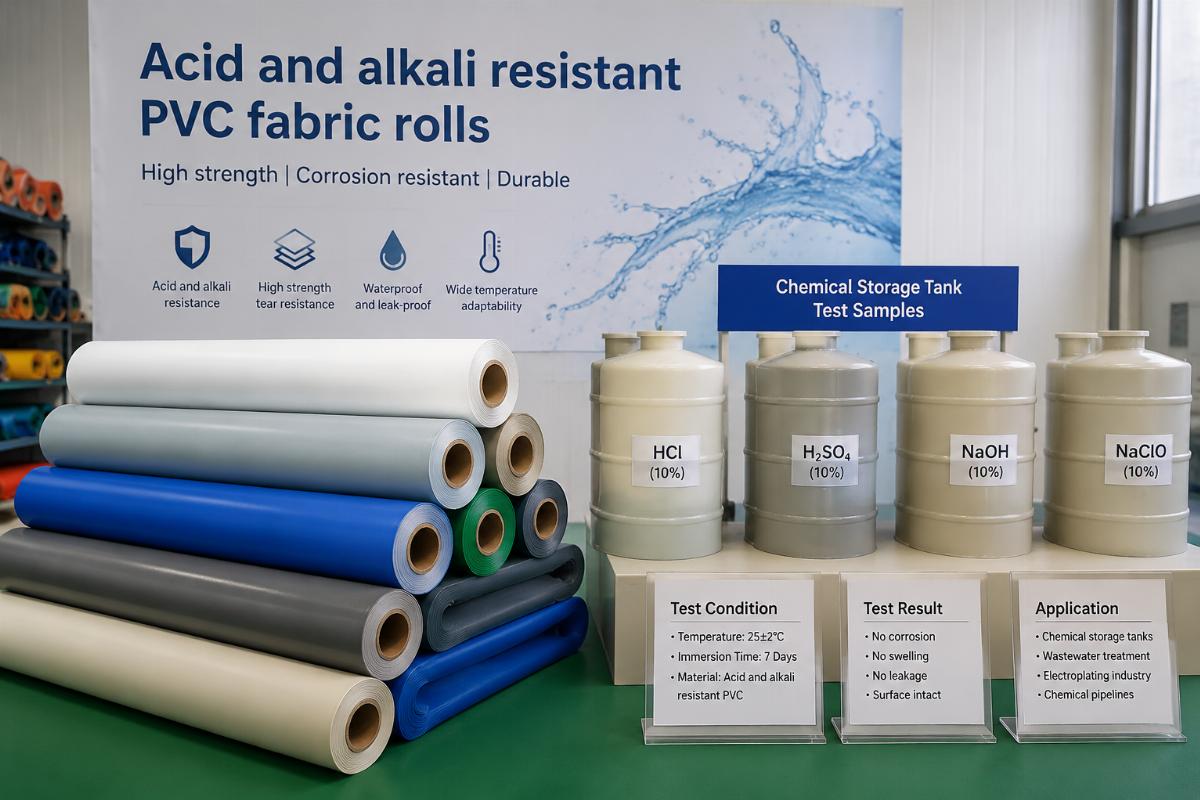
- Base Performance Check – Confirm test data for resistance to at least 10 common industrial reagents including sulfuric acid, hydrochloric acid and sodium hydroxide before placing any trial order.
- Full Cost Calculation – Compare total 3-year ownership cost of qualified specialized fabric against repeated replacement of low-cost standard tarps, not just upfront unit price.
- Sample Validation – Request a 1-square-meter test sample and run local corrosion exposure tests to verify performance claims before bulk ordering.
What core parameters should be prioritized when selecting chemical storage cover tarps?
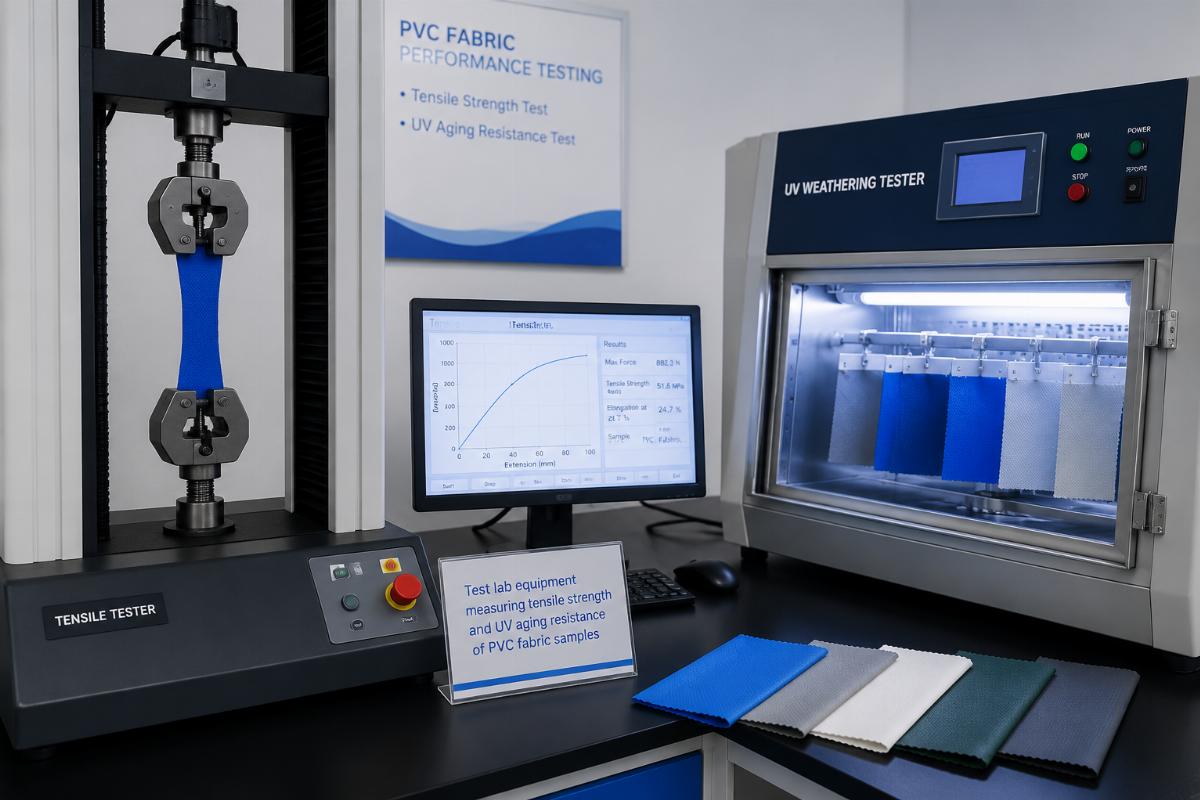
Beyond basic acid and alkali resistance, UV stability, tensile strength and flame retardant performance are non-negotiable parameters that are often overlooked. Many procurement teams only test corrosion resistance during supplier evaluation, and miss these critical markers that lead to premature failure in real-world use.
| Parameter | Common Oversight | Required Performance Standard |
|---|---|---|
| UV aging resistance | Only tested for indoor warehouse use | Maintain 85% of original performance after 5 years of continuous outdoor exposure [NEED_CITE: UV stability of chemical storage PVC fabric is determined by anti-UV masterbatch addition ratio] |
| Tensile strength | Ignored for static storage scenarios | Minimum 3500N/5cm tensile strength in both warp and weft directions |
| Flame retardant rating | Waived to cut cost | Meet local regional fire safety standards for industrial storage facilities |
A European chemical logistics company once ordered a batch of tarps that passed corrosion tests but lacked sufficient UV and tear resistance, which tore after 8 months of outdoor use on container trailers, before switching to a custom 3,200 set order of 40-foot container matching tarps that met CE certification standards and delivered a 3-year service life under regular operation.
- Scenario Matching – Confirm parameter requirements align with your actual use case: open-air storage requires higher UV rating, while high-mobility transfer scenarios require higher tear resistance.
- Certification Verification – Request copies of all third-party certification documents directly from the supplier, not just marketing material claims.
- Warranty Confirmation – Clarify the valid warranty period for performance under stated use conditions before signing purchase contracts.
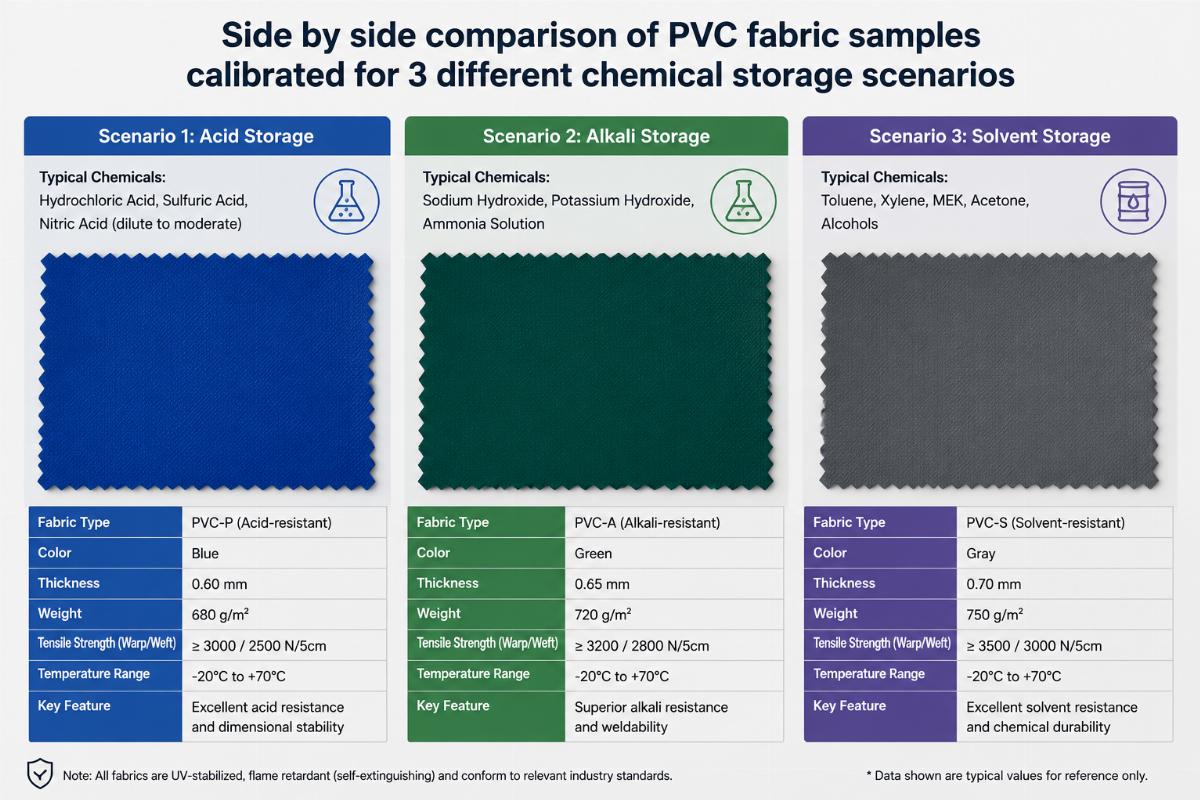
How to match the appropriate fabric specification for different chemical storage scenarios?
There is no one-size-fits-all specification for chemical storage covers; thickness and coating ratio must be calibrated to the exact storage environment. A single product that works for closed indoor warehouses will fail quickly in open-air coastal storage, and vice versa, so generic “standard” products will never deliver optimal value.
| Storage Scenario | Common Misaligned Specification | Recommended Specification Range |
|---|---|---|
| Open-air outdoor warehouse | 0.5mm standard coating without UV additive | 0.7-0.9mm thickness with high UV masterbatch ratio |
| Closed indoor chemical warehouse | 1.2mm over-thick fabric with unnecessary weight | 0.4-0.6mm thickness with focused anti-corrosion coating |
| Mobile container/transfer yard | Low tear resistance generic fabric | 0.8-1.0mm thickness with reinforced weft structure |
A Southeast Asian industrial park project initially ordered a single uniform thickness product for all 6 of their chemical storage zones, which led to premature failure in 2 outdoor storage areas, before reordering 8,500 square meters of custom thickness adjustable fabric that supported 0.4mm to 1.2mm tuning and adapted to all 6 of their common storage scenarios.
- Reagent Inventory Check – List all chemical types stored at your facility to confirm required corrosion resistance levels for each variant.
- Environmental Assessment – Document local temperature range, annual UV exposure and precipitation levels to align parameter requirements.
- Custom Trial Run – Test 2-3 different specification samples for your highest-risk storage zone before placing full bulk orders.
How to find a cost-effective qualified PVC fabric supplier in China?
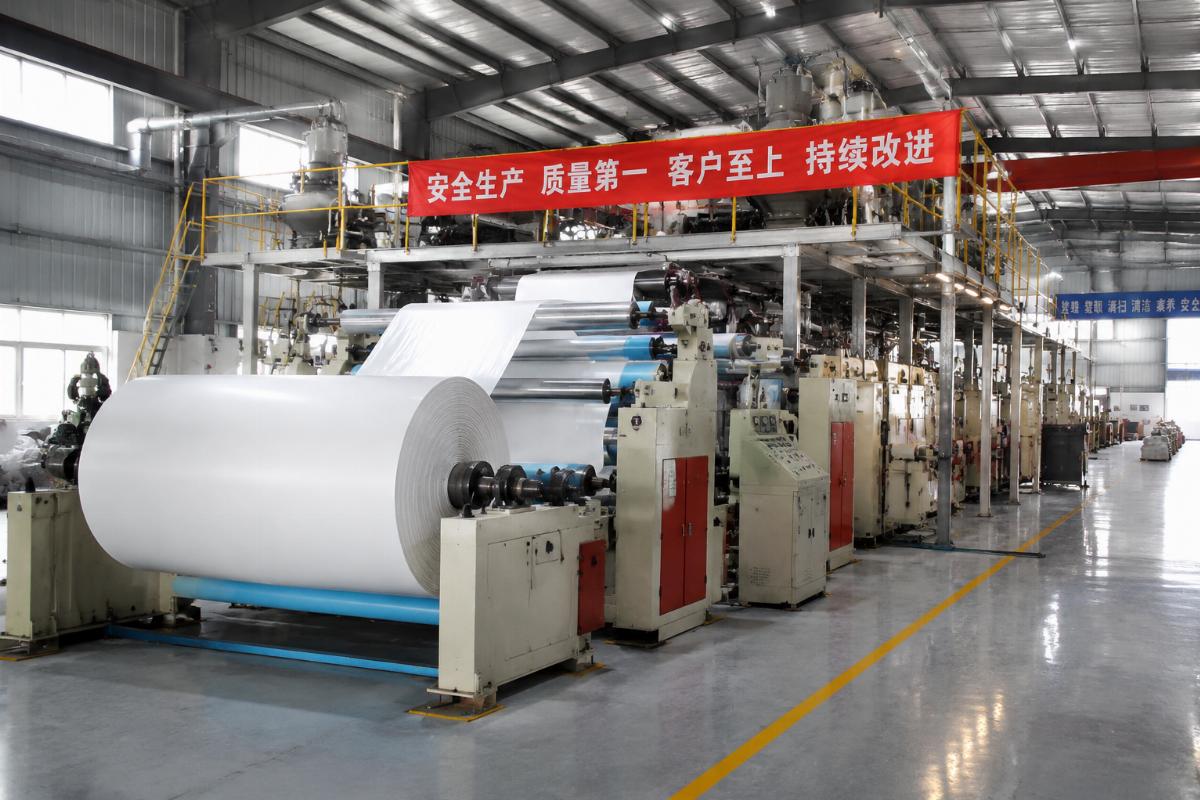
Qualified Chinese suppliers with direct factory operations, independent R&D and flexible order terms deliver 30-40% lower total cost compared to intermediary traders, with no compromise on performance. Many procurement teams default to working with local trading partners for convenience, but end up paying marked up prices for products that do not come with direct factory quality guarantees.
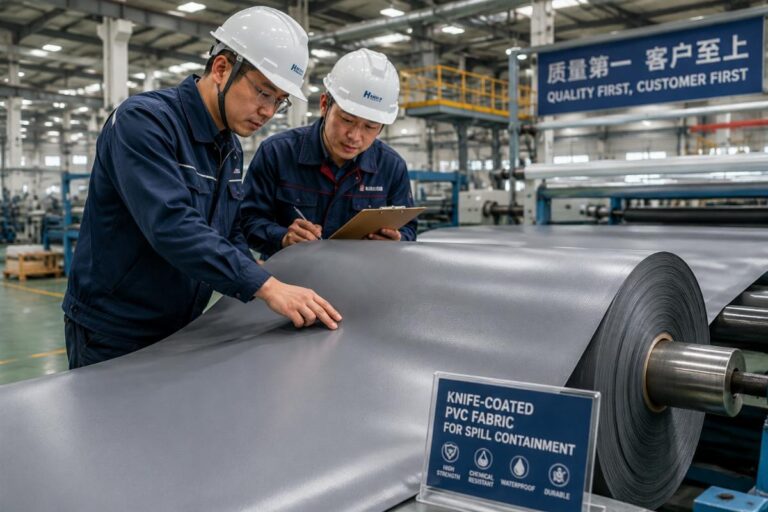
Shandong Jinxiang Technology, a China-based manufacturer with 30 years of production experience, holds full system certifications, operates a 10-person R&D team to support full custom specification development, and offers 24-hour quotation response for all global client inquiries. The supplier supports flexible minimum order quantities starting at 1,000 square meters, and runs 100% pre-shipment QC inspection for every order to eliminate post-delivery defects.
| Supplier Type | Common Cost and Risk | Qualified Supplier Markers |
|---|---|---|
| Local trading intermediary | 35-50% price markup, no direct quality control | Direct factory registration and production facility verification |
| Generic PVC tarp manufacturer without specialized R&D | Cannot adjust coating formulation for custom requirements | Independent R&D team with in-house testing lab capabilities |
| Small workshop without formal certification | Cannot provide required compliance documents for regional import | Valid ISO 9001, ISO 14001 and regional certification such as CE |
A mid-sized European industrial engineering firm previously worked with a local trader for 2 years, paying 42% above factory price and facing 3 separate delayed container shipments, before switching directly to a Chinese specialized supplier that delivered a 7-day sample lead time and on-time delivery for all subsequent bulk orders.
- Factory Verification – Request a virtual facility tour or third-party factory audit report to confirm actual production capacity rather than just listed marketing details.
- **MOQ