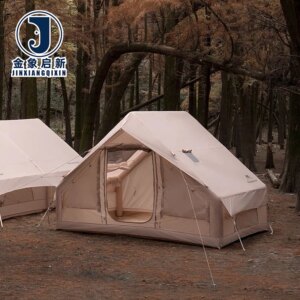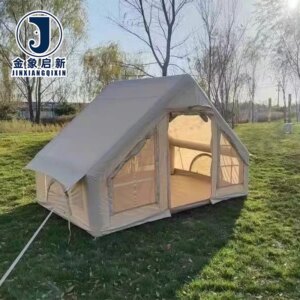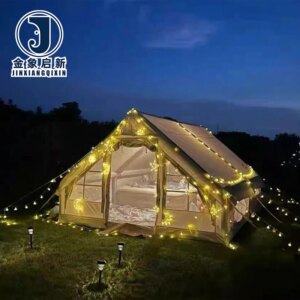


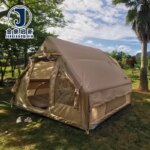
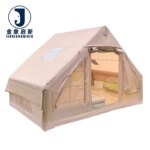

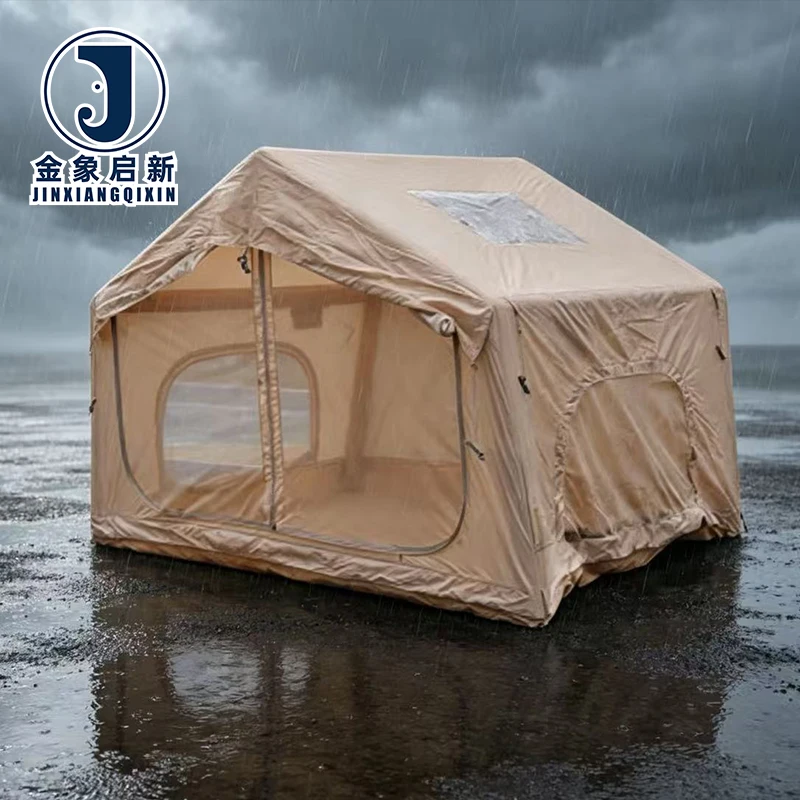

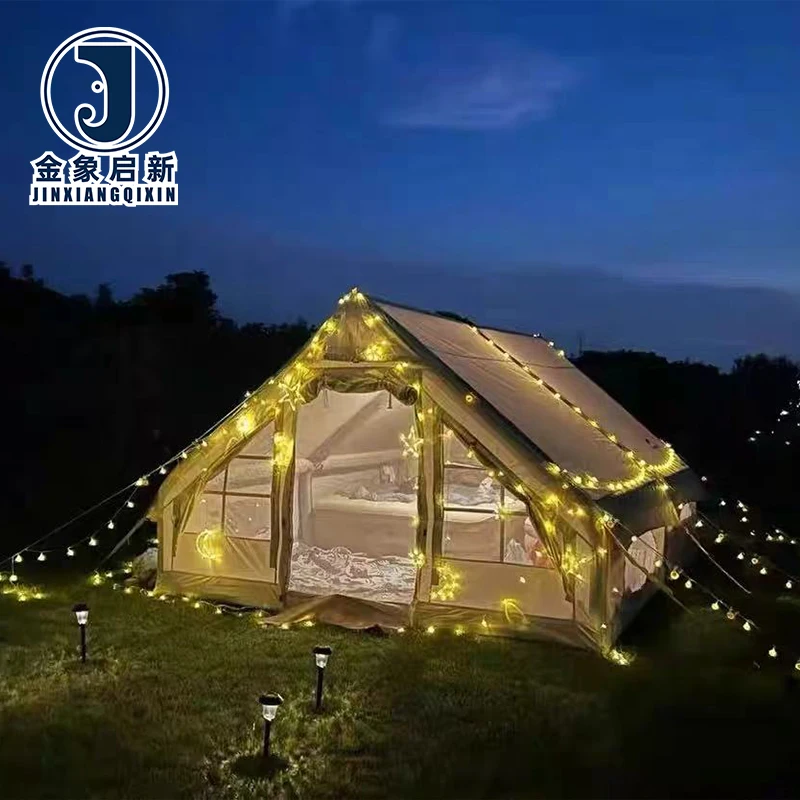
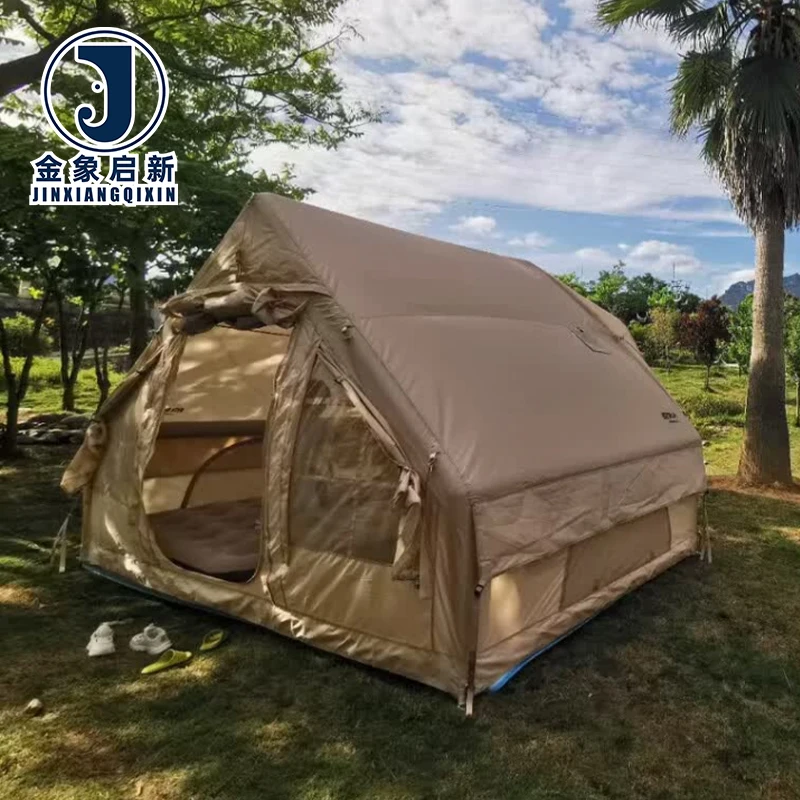
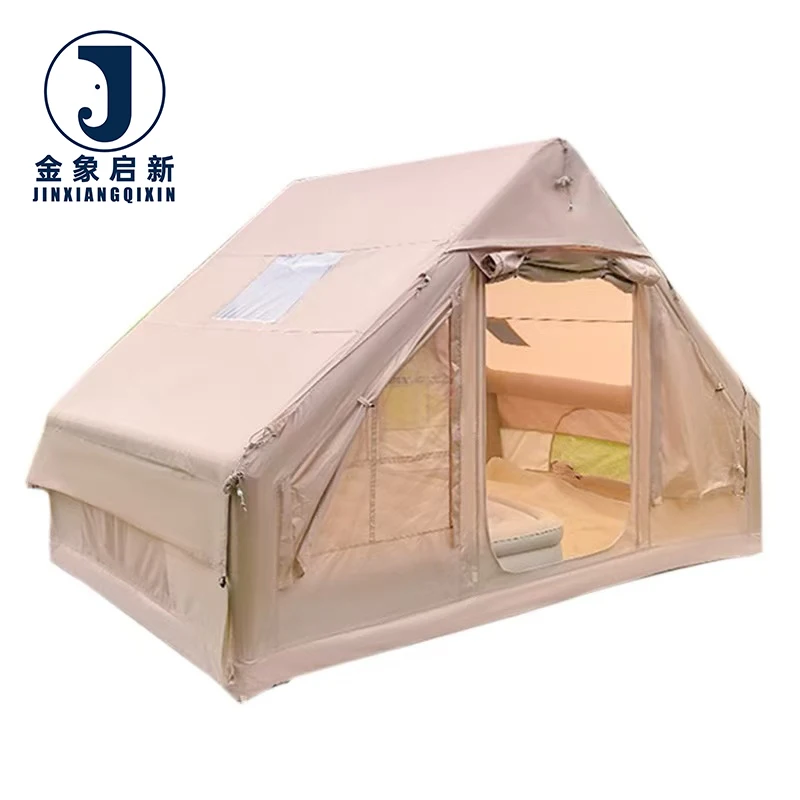

Production Consistency — Three full coating lines and 36 processing units maintain uniform PVC film weight and adhesion across every inflatable tent fabric roll, backed by ISO and CE certified QA checkpoints at each manufacturing stage.
Technical Specifications
| Parameter | Value |
|---|---|
| Product Type | Inflatable Tent |
| Core Material | PVC tarpaulin |
| Waterproof | Fully waterproof coated construction |
| UV-Resistant | Available with anti-UV treatment — confirm the UV stability grade required for your deployment climate |
| Tear-Resistant | Reinforced PVC-coated construction (tear grade available on request) |
| Flame Retardant | Available in flame retardant grades — confirm the grade required for your local compliance code |
| Anti-Static | Available with anti-static treatment — confirm the surface resistance standard applicable to your site |
| Customization | OEM & ODM including sample customization, pattern printing, material selection, and product design |
| Standards | ISO9001, ISO14001, ISO45001, CE |
Application Suitability
| Application | Exposure & Requirement |
|---|---|
| Construction site temporary shelters | Continuous weather exposure, heavy equipment abrasion, rapid deployment and takedown cycles |
| Outdoor event temporary structures | High foot-traffic UV exposure, frequent inflation and deflation, visual appearance consistency |
| Agricultural mobile storage | Remote-site weather extremes, prolonged sun exposure, resistance to organic and chemical contact |
| Mining and tunnelling ventilation zones | Underground fire safety compliance, static charge accumulation risk, confined-space air quality standards |
Why Fire-Retardant and Anti-Static Inflatable Tent Fabric Certifications Matter on Site
A fire-retardant claim without batch-specific test documentation is a compliance liability, not a safety feature.
When industrial sites reject inflatable structures at inspection, it is rarely because the fabric failed a burn test on arrival. The problem surfaces when the site safety officer asks for the test report and the supplier cannot produce one tied to that specific production batch [NEED_CITE: fire classification documentation requirements for temporary industrial structures]. Mining operations and aviation ground-support areas enforce strict fire and static control codes, and accepting uncertified Inflatable Tent Fabric fire retardant anti-static certified material exposes both the contractor and the site operator to regulatory and insurance consequences. We ship documented test data and compliance certificates referenced by order number so that every roll or finished unit can be traced back to its production run.
Compliance Documentation That Matches Your Site Audit Requirements
Every batch of Inflatable Tent Fabric fire retardant anti-static certified material leaves the facility with a specification sheet stating material composition, coating weight, and treatment parameters. Fire-retardant and anti-static test data are filed by order number and released with the shipment, giving site inspectors and procurement teams a verifiable paper trail. This matters most in mining, tunnelling, and aviation environments where temporary structures sit within regulated safety zones.
OEM and ODM Capability for Project-Specific Inflatable Structures
The 10-technician R&D team supports material selection, custom dimensions, pattern printing, and product design from initial sample through bulk production. Whether the project requires a specific membrane geometry, branded exterior, or a particular combination of flame-retardant and anti-static treatment, the development process confirms specifications through pre-production samples before mass manufacturing begins [NEED_CITE: coated fabric OEM development cycle for custom inflatable structures].
Reading the Specification Sheet Beyond GSM
Material weight alone does not predict how an inflatable structure performs under sustained internal pressure and external wind load. Base fabric denier and weave density determine how the material distributes tensile stress across the membrane, while coating weight and adhesion method govern seam integrity during thermal welding. PVC tarpaulin produced by knife-over-roll coating typically delivers stronger coating-to-fabric bonding than lamination, which directly affects how well welded seams resist peeling when the structure flexes under wind or snow load. Surface finish selection also plays a role: matte finishes reduce glare in high-visibility event settings, while glossy surfaces shed dirt more effectively in agricultural and construction environments. Understanding these relationships helps buyers specify the right material combination rather than defaulting to weight alone [NEED_CITE: tensile and tear test methods for coated fabrics per ISO 1421].
The Hidden Cost of Specifying Without Batch Verification
Inflatable structures deployed on industrial sites face immediate compliance scrutiny. When flame-retardant treatment is claimed but no per-batch test report accompanies delivery, the entire order may be rejected at site inspection, causing project delays and re-procurement costs. Anti-static properties that degrade between production batches create inconsistent surface resistance readings, which can trigger safety audits in aviation fuel-handling zones. Colour variation across rolls intended for the same event structure becomes visible once panels are welded side by side, forcing cosmetic rework or partial replacement. Thermal welds that fail before the membrane itself tears indicate a coating-to-fabric adhesion problem, often traced to inconsistent coating weight across the roll [NEED_CITE: common failure modes in welded PVC inflatable membrane seams].
Why Buyers Source Inflatable Tent Fabric Here
Process control over coating weight and adhesion has been refined across nearly 30 years of focused PVC tarpaulin production, which directly affects the consistency that inflatable structure manufacturers depend on. Three full production lines and 36 sets of processing equipment provide capacity for multi-unit orders without compressing lead times at the expense of quality. The dedicated QA/QC team conducts 100% inspection at critical manufacturing stages, not just final sampling, catching coating inconsistencies before they reach the packing line. Pre-production samples for custom specifications are developed within days, allowing buyers to confirm material behaviour before committing to bulk quantities. Every shipment includes a batch quality inspection report, specification sheet, and compliance documentation referenced to the order number.
Documentation & Verification
- Material specification sheet covering PVC composition, coating weight, and base fabric details per order
- Fire-retardant and anti-static test data filed and released by production batch number
- ISO9001, ISO14001, ISO45001, and CE certificates included with every shipment
- Pre-shipment inspection record documenting coating consistency and dimensional accuracy
- Roll packing list with individual unit identification for traceability
Fabrication, Handling & Storage
- Thermal welding parameters should be adjusted to PVC tarpaulin coating thickness to prevent seam peeling under inflation pressure
- Store rolls vertically in climate-controlled conditions to avoid permanent creasing across the coated surface
- Allow cold-transported PVC material to reach ambient temperature before unrolling to prevent coating micro-cracking
- Use compatible PVC adhesives for field repairs on inflatable membrane punctures and seam separations
- Confirm pattern printing ink compatibility with the selected surface finish before committing to full production runs
What to Include in Your Material Enquiry
Provide your intended deployment environment, expected wind and weather exposure, and the specific fire-retardant or anti-static compliance code enforced at your site. Include required dimensions, annual volume estimates, and whether you need finished panels or raw roll stock. If custom colour matching or branded printing is required, share reference samples or Pantone codes so the R&D team can develop accurate pre-production samples for your approval.
Frequently Asked Questions
Q: What fire-retardant grade does the inflatable tent fabric carry, and does it meet my local mining or aviation compliance code?
A: Fire-retardant treatment is available in multiple grades depending on your market requirements. Confirm the specific classification standard applicable to your site — such as local mining ventilation codes or aviation ground-support regulations — and the corresponding test report will be prepared and shipped with your order for compliance documentation.
Q: How is anti-static performance verified, and what surface resistance data is available per batch?
A: Anti-static treatment is applied during the coating process and verified through surface resistance testing. Test data is documented by production batch number and released with your shipment. Specify the resistance range required by your site safety standards so the correct treatment formulation is selected during material development.
Q: How do you ensure batch-to-batch colour and coating consistency across large inflatable structure orders?
A: All 3 production lines operate under the same QA/QC protocol with 100% inspection at critical coating and finishing stages. Colour references are matched against approved samples before each production run, and coating weight is verified per roll to maintain consistent material behaviour across the entire order.
Q: What customization options are available for dimensions, printing, and material grade selection?
A: OEM and ODM services cover custom panel sizing, pattern printing, material grade selection, and full product design. The 10-technician R&D team develops pre-production samples so you can evaluate fabric handling, weld behaviour, and print quality before authorising bulk manufacturing.
Q: What documentation ships with each order for site compliance audits?
A: Each shipment includes a material specification sheet, batch quality inspection report, fire-retardant and anti-static test data referenced to order number, ISO and CE certificates, a roll packing list, and a certificate of origin. All documents are prepared to support site safety audits and procurement verification.