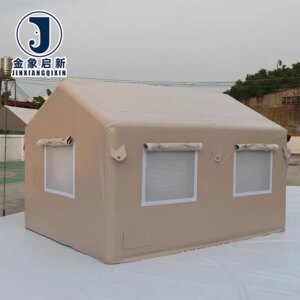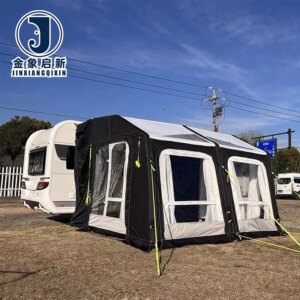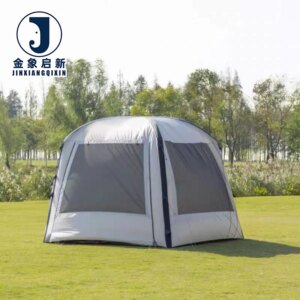





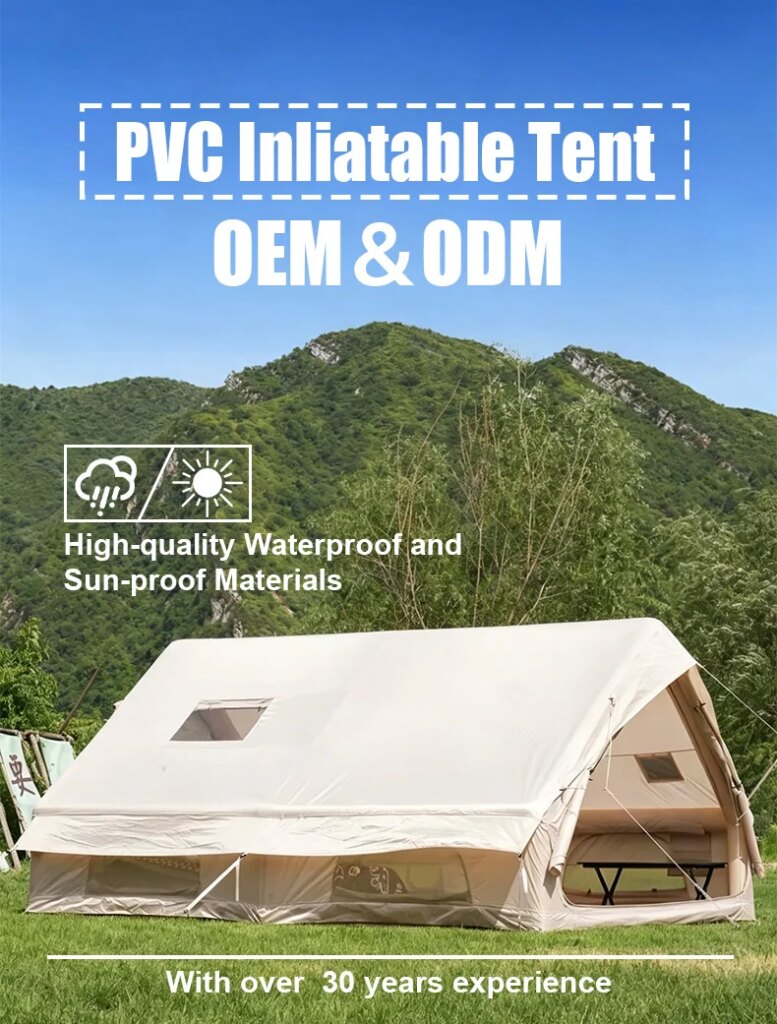
Deep Process Control Over Coated Fabric — Jinan Jinxiang’s 10-person R&D team develops inflatable tent fabric with verified fire-retardant and anti-static treatment, backed by full material traceability and ISO/CE certification for mining and aviation compliance.
Technical Specifications
| Parameter | Value |
|---|---|
| Product Type | Inflatable Tent |
| Core Material | PVC Tarpaulin |
| Waterproof | Yes |
| Tear-resistant | Yes (test standard not stated in source) |
| Fire-retardant | Grade available on request (confirm grade required for your market) |
| Anti-static | Available (surface resistance or standard not stated — unconfirmed) |
| UV-resistant | Test basis not stated in source — confirm requirement |
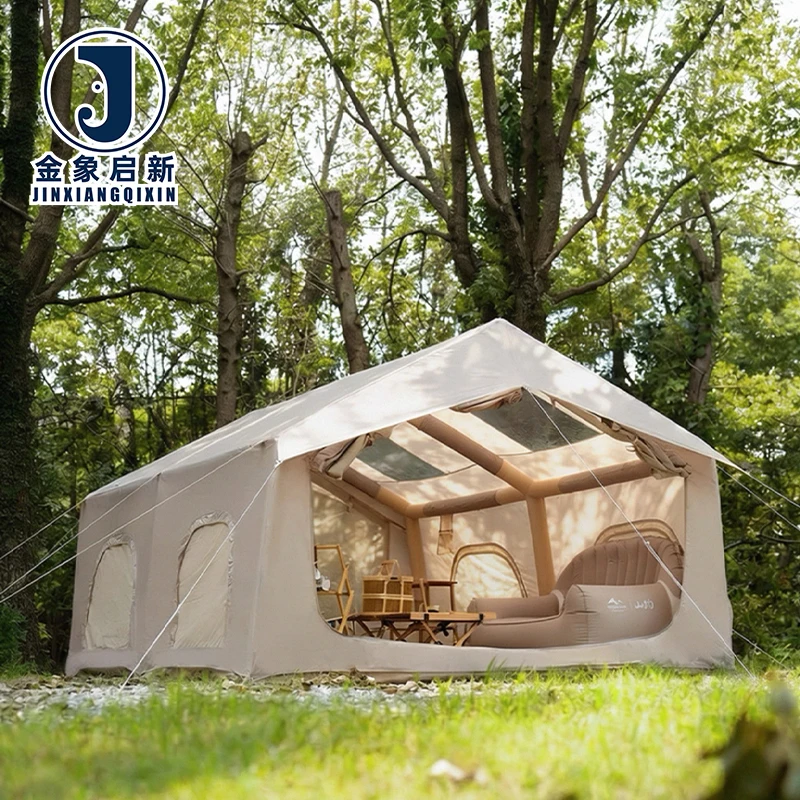
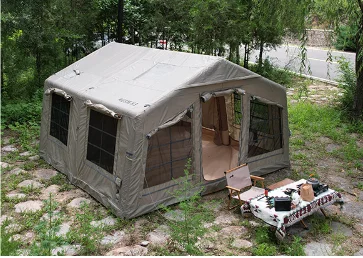
| Product Forms | Single Layer Inflatable Tent |
| Customization Service | Sample customization, pattern printing, OEM & ODM |
| Certifications | ISO9001, ISO14001, ISO45001, CE |
Application Suitability
| Application | Exposure & Requirement |
|---|---|
| Mining and tunnelling temporary shelters | Continuous underground or open-pit exposure, dust ingress, strict fire-retardant and anti-static site compliance |
| Aviation ground support inflatable structures | Rapid deployment on tarmac, high wind load, fuel proximity requiring anti-static surface |
| Emergency response command centres at construction sites | Short-notice setup, weather exposure, repeated inflation and deflation cycles |
| Infrastructure inspection field stations in remote locations | Transport over rough terrain, UV exposure, requirement for documented material specs on arrival |
| Specialist membrane and inflatable structure projects | Custom profiles, architectural tension, weld integrity under flex load |
What "Certified" Really Means When You Order an Inflatable Tent fire retardant / anti-static / certified
A certificate is only as useful as the batch it references — demand batch-specific test reports, not a generic PDF.
Site safety officers in mining and aviation do not accept a blanket statement that fabric is fire-retardant. They ask for the test standard, the grade, and the batch number. I have seen ventilation duct and shelter fabric arrive on site with a certificate that references a product family, not the specific roll that was delivered. The result is a failed inspection and a stand-down that costs the contractor far more than the fabric itself [NEED_CITE: fire classification test methods for coated fabrics in mining ventilation].
When the inflatable tent fire retardant / anti-static / certified specification is vague at the inquiry stage, the gap only surfaces at the gate. The material may perform adequately, but without the paperwork mapped to the shipment, it cannot be used.
Compliance Documentation That Travels With the Roll
Every roll of PVC inflatable tent fabric leaves the facility with a material specification sheet stating the fire-retardant grade and anti-static standard applicable to that production run. The documentation package is built around the specific order, not a template, so the site safety auditor can trace the test result back to the coated fabric batch installed in the shelter.
Rapid Deployment Without Compromising the Safety Audit
The single-layer inflatable tent construction allows a two-person crew to inflate and secure the structure within minutes. This speed advantage is lost if the safety team then spends days chasing missing paperwork. By shipping the test report, ISO and CE certificates, and the pre-shipment inspection record together with the goods, the inflatable tent fire retardant / anti-static / certified package clears the documentation gate on day one.
Matching the Grade to the Jurisdiction
Fire-retardant requirements differ between an Australian underground coal mine, a European construction site, and a Middle Eastern aviation hangar. The PVC inflatable tent fabric is available in flame retardant grades — confirm the grade required for your market before production begins. This avoids the situation where fabric passes one standard but fails the local authority’s inspection [NEED_CITE: regional fire safety standards for temporary industrial structures].
How Coating Weight Relates to Structural Rigidity in an Inflatable Form
An inflatable tent relies on internal air pressure to maintain its shape, which means the fabric must resist stretching under constant tension without adding excessive weight that slows deployment. The PVC tarpaulin core material provides the necessary tensile base, while the coating weight determines both the air-holding capability and the surface characteristics. A heavier coating improves impermeability and weld strength but increases pack weight; the R&D team balances these factors during sample development based on the target inflation pressure and structure size.
Anti-Static Treatment for Sensitive Environments
In aviation ground support and certain mining applications, static charge buildup on the fabric surface presents an ignition risk near fuel or combustible dust. The anti-static treatment modifies the surface resistivity of the PVC inflatable tent fabric to dissipate charge rather than accumulate it. Because the required surface resistance value varies by jurisdiction and application, the specification must be confirmed at inquiry stage so the correct treatment formulation is applied during coating [NEED_CITE: anti-static surface resistance testing for industrial coated textiles].
Reading the Specifications Beyond the Data Sheet
The relationship between base fabric denier, weave density, and coating weight determines how the inflatable tent fabric behaves under load. A high-denier yarn in the warp direction provides tensile strength along the length of the roll, which matters most for the long spans of an inflated arch. The coating method — whether knife-over-roll, dip, or calender — affects peel strength at the weld line, which is where most inflatable structure failures originate. Glossy finishes shed dust and water more readily in outdoor mining environments, while matte finishes reduce glare for aviation structures where visual distraction must be minimised. Fire-retardant grades correspond to different test frameworks: a fabric rated to one standard may not automatically satisfy another, so the target standard must be named explicitly in the purchase specification.
The Hidden Cost of an Underspecified Shelter Fabric
When fire-retardant or anti-static claims are made without a supporting test report tied to the batch, the contractor discovers the gap at the worst possible moment — during the site safety audit after the structure is already erected. The shelter must then be deflated, removed, and replaced with compliant material, while the project timeline stalls. Colour variation between rolls in the same order becomes visible once panels are welded side by side on a large membrane structure, forcing a cosmetic rejection that delays handover [NEED_CITE: batch colour consistency standards for PVC coated fabrics]. Weld failures at flex points occur when the welding temperature was set for a generic PVC rather than the specific coating formulation delivered, meaning the seam parts before the fabric itself reaches its load limit.
Why Source This Inflatable Tent Fabric Here
Three full production lines and 36 sets of professional processing equipment give the facility the capacity to run large custom orders without sacrificing lead time reliability. The 10-person R&D team handles material selection, sample development, and pattern printing in-house, which means a custom-sized inflatable tent profile can move from drawing to sample within days rather than weeks. Dedicated QA and QC staff inspect every production stage, with 100% pre-shipment inspection ensuring the roll that leaves the gate matches the specification sheet. ISO9001, ISO14001, ISO45001, and CE certifications are maintained as active management systems rather than wall decorations, and the documentation shipped with each order reflects that discipline.
Documentation & Verification
- Material specification sheet stating fire-retardant grade and anti-static standard per batch
- Test reports for UV and flame-retardant grades where applicable to the order
- ISO9001, ISO14001, ISO45001, and CE certificates included in shipment package
- Pre-shipment inspection record signed against the roll production batch
- Certificate of origin and customs documentation for international dispatch
Fabrication, Handling & Storage
- Heat-weld single-layer inflatable tent panels using temperature settings matched to the specific PVC coating formulation delivered
- Reinforce inflation valve attachment points with additional PVC patches bonded to the coated surface
- Store rolls upright on pallets in a dry, shaded area to prevent flat-spot deformation of the coated fabric
- Allow cold-stored PVC inflatable tent rolls to reach ambient temperature before unrolling to avoid coating crack
- Clean the glossy or matte PVC surface with mild detergent only — solvent-based cleaners degrade the coating layer
- Repair minor field punctures using compatible PVC patch kits and hot-air welding for structural seams
Request a Specification That Matches Your Site Requirements
To receive a quotation aligned with your project, provide the target fire-retardant standard and anti-static surface resistance value required by your site authority, along with the inflatable structure dimensions and annual volume estimate. Specify whether you need the PVC inflatable tent fabric supplied in roll form for your own fabrication, or as finished single-layer inflatable tent units with valves and accessories. If colour matching or pattern printing is required, request a production sample for approval before bulk coating begins.
Frequently Asked Questions
Q: What fire-retardant grade does the inflatable tent fabric carry, and does it meet my local mining or aviation compliance?
A: The fabric is available in flame retardant grades, but the applicable grade depends on your jurisdiction and site authority. Provide the specific standard your site requires — such as the relevant mining ventilation regulation or aviation hangar fire code — and the production team will confirm whether the available grade meets that requirement and supply the corresponding batch test report with shipment.
Q: What anti-static standard is applied, and is the surface resistance tested per batch?
A: Anti-static treatment is available for environments where static dissipation is mandated, such as fuel-proximate aviation areas or combustible dust zones. The target surface resistance value or standard must be stated at inquiry stage so the correct formulation is applied. Confirm with the sales team whether batch-level surface resistance testing is included in your documentation package.
Q: Can the inflatable tent be custom-sized for a specific membrane structure or tunnel profile?
A: Yes. The 10-person R&D team develops samples based on your dimensional drawings and inflation pressure requirements. Custom width, length, and profile shapes are produced on the dedicated coating and fabrication lines. A pre-production sample is supplied for your approval before the bulk order is coated and cut.
Q: How is batch-to-batch colour and coating consistency controlled for large orders?
A: Colour reference standards are established during sample approval and maintained through in-process QA checks at each production stage. The 100% pre-shipment inspection verifies coating weight and visual consistency across rolls within the same order, and any deviation is flagged before dispatch.
Q: What documentation ships with the order for site safety audits and procurement compliance?
A: Each shipment includes a material specification sheet, fire-retardant and UV test reports where applicable, ISO and CE certificates, a pre-shipment inspection record, roll packing list, certificate of origin, and customs support documents. This package is assembled per order, not per product family, so the paperwork references your specific batch.