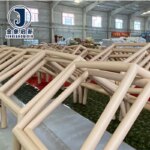

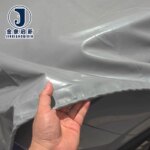

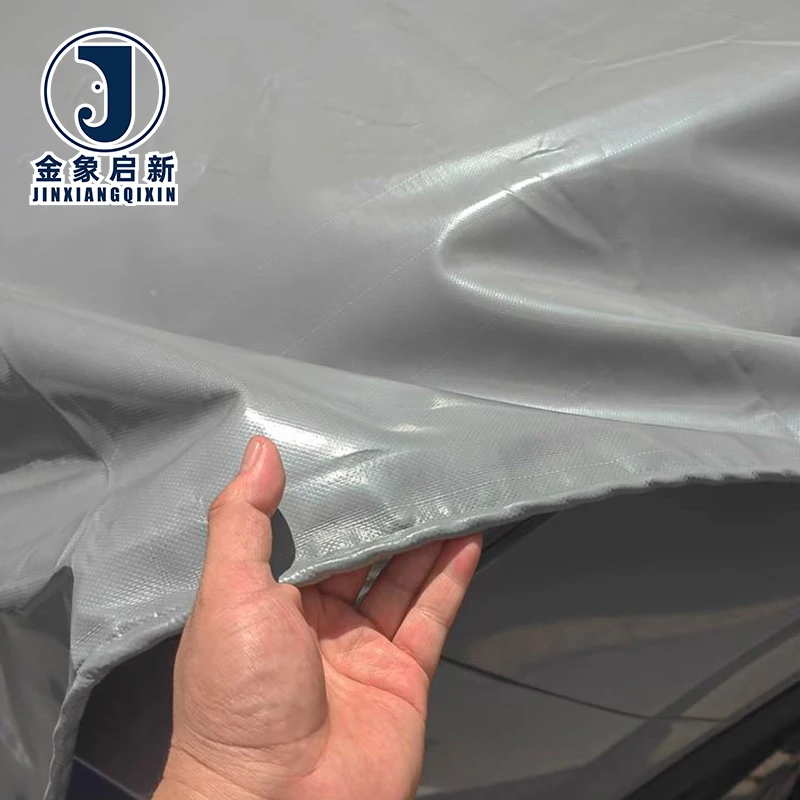

Coating Weight Precision — Every roll of PVC tarpaulin for inflatable structures undergoes dedicated QA/QC verification to ensure the stated coating mass matches the material delivered, supporting reliable weld seam performance and structural integrity.
Technical Specifications
| Parameter | Value |
|---|---|
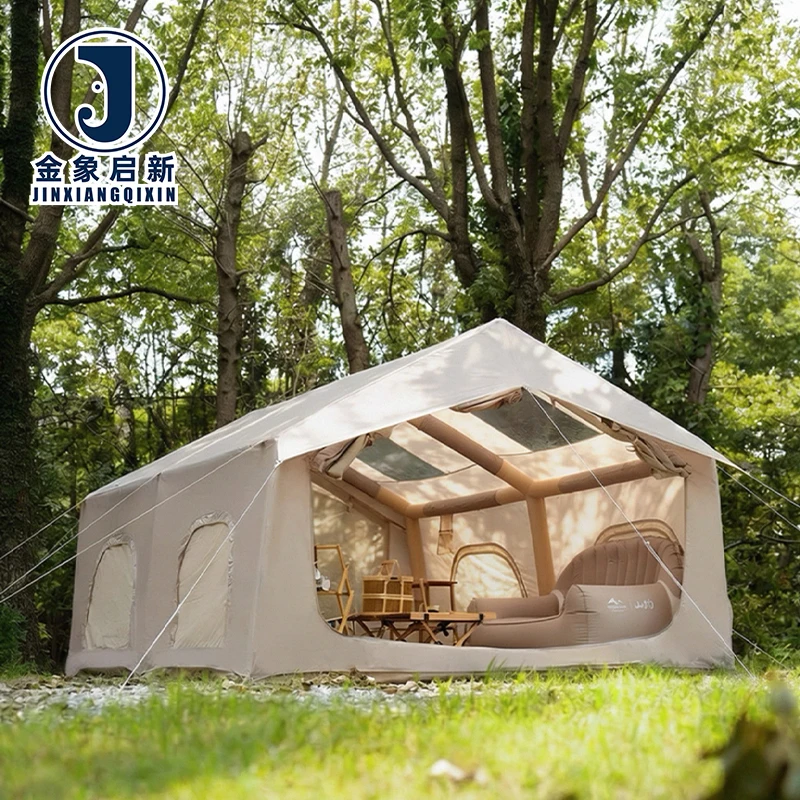
| Product Type | Inflatable Tent |
| Core Material | PVC Tarpaulin |
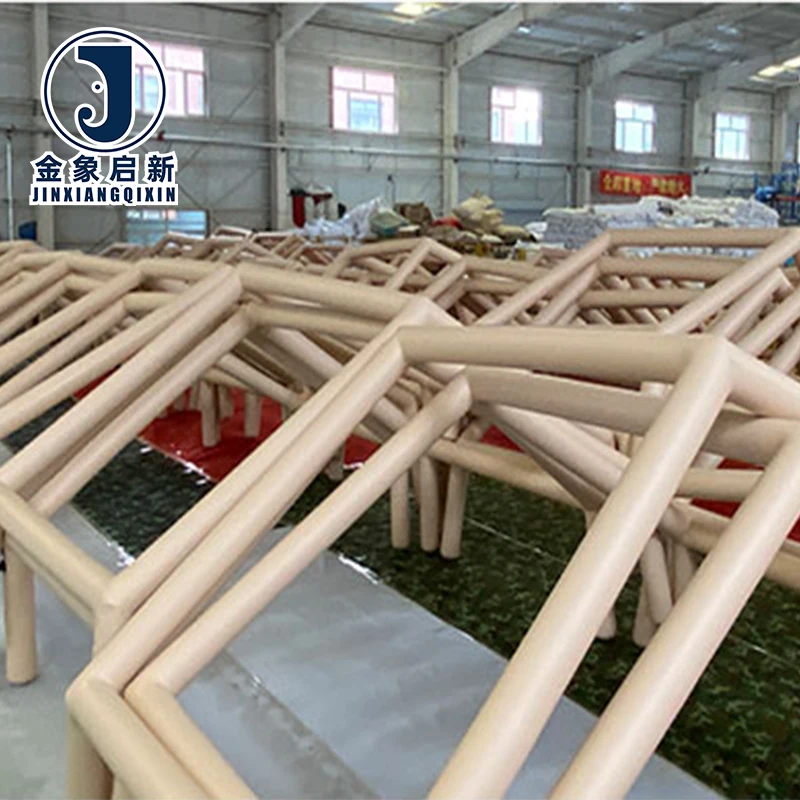
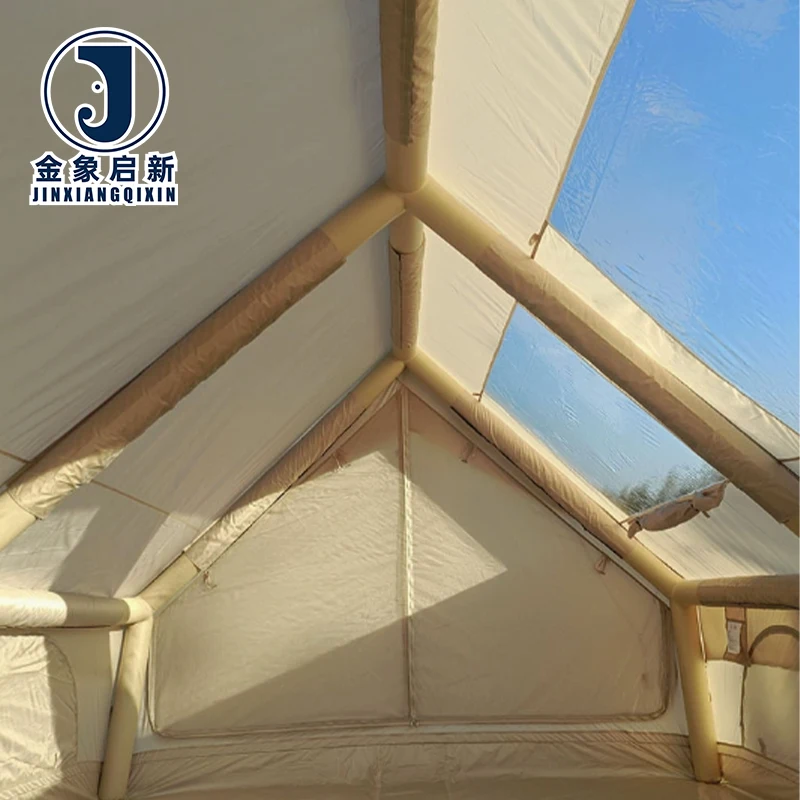
| Product Forms | Inflatable structure, single layer construction |
| Key Features | Waterproof, UV-resistant, Tear-resistant, Fire-retardant, Anti-static |
| Fire-retardant Grade | Available in fire-retardant grades — confirm the grade required for your market |
| Anti-static Property | Available in anti-static grades — confirm the standard required for your application |
| Customization | OEM & ODM, sample customization, pattern printing |
| Certifications | ISO9001, ISO14001, ISO45001, CE |
| R&D Team Scale | 10 technicians |
Application Suitability
| Application | Exposure & Requirement |
|---|---|
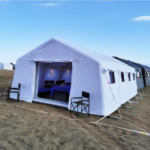
| Temporary site accommodation for infrastructure projects | Wind stress, variable weather, rapid deployment requirement, fire safety compliance on regulated work zones |
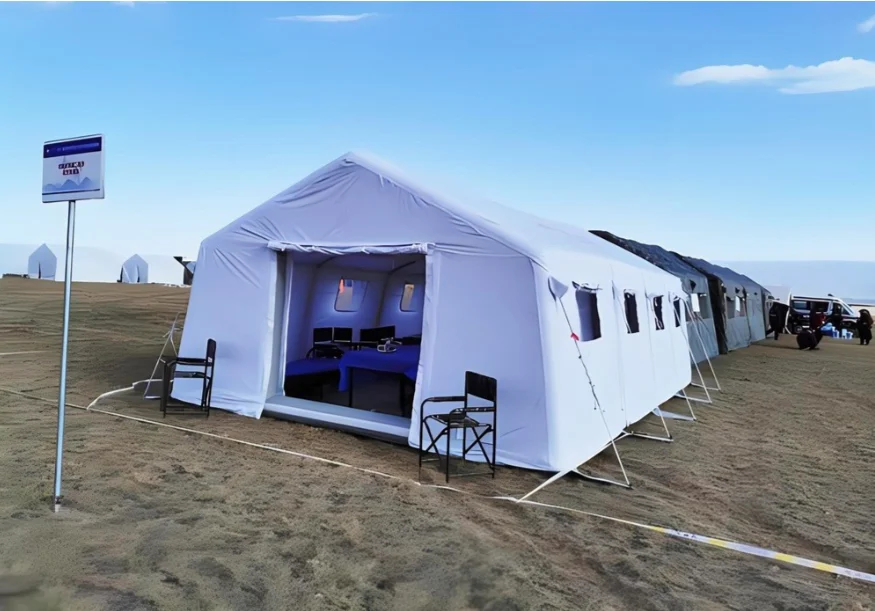
| Emergency response shelters in disaster relief operations | Extreme weather exposure, fast inflation cycles, structural integrity under load, safety certification for relief staging areas |
| Mobile storage solutions for outdoor events | UV exposure, precipitation, abrasion from equipment loading, fire-retardant compliance for public gathering venues |
Why Certification Gaps in Inflatable Shelter Fabric Cost More Than Material
Certified inflatable tent fire retardant performance requires a test standard behind the claim, not just a marketing label.
When procurement teams source inflatable structures for construction sites, mining camps, or emergency relief zones, the fire-retardant and anti-static properties of the fabric are non-negotiable compliance requirements. An inflatable tent fire retardant certified to a recognized standard protects against audit failures and operational shutdowns. Yet fabric arrives on site described as "fire-resistant" without documentation naming the specific classification or test method [NEED_CITE: fire classification standards for temporary structures in mining and construction]. The consequence is either rejected inspection or, worse, a structure deployed without meeting the fire safety threshold the regulator mandates. This gap between stated performance and documented proof creates risk that extends beyond the material invoice.
Compliance Documentation That Travels with the Material
For inflatable tent fire retardant certified applications, the fabric specification must be supported by batch-specific test reports that name the classification achieved. This means a test standard referenced against the specific coating formulation and base fabric construction supplied, not a generic statement covering the product family. Mining and tunnelling contractors, aviation maintenance operators, and disaster relief coordinators all face regulatory environments where the absence of a valid fire classification document halts deployment. Our approach assigns documentation at the batch level, aligning test results to the exact roll produced for your order.
How Fire-Retardant Integration Affects Fabric Engineering
The integration of fire-retardant additives into PVC coating formulations alters the processing parameters during coating and curing. Achieving consistent fire classification across production runs requires control over additive dispersion within the coating compound. An inflatable tent fire retardant certified material must demonstrate that the fire performance does not degrade after inflation cycles or prolonged UV exposure [NEED_CITE: aging effects on fire-retardant performance of coated technical textiles]. This engineering challenge shapes how we approach formulation consistency and in-process testing at each production stage.
Reading the Specification Sheet Beyond Marketing Claims
The relationship between base fabric construction and final performance in inflatable structures depends on how the PVC coating interacts with the weave under inflation pressure. A single layer construction requires the coated fabric to carry both structural load and environmental protection simultaneously. The base fabric denier and weave density determine how the material distributes stress when inflated, while the coating weight and adhesion strength govern the waterproof barrier integrity and resistance to seam separation during flexing. Fire-retardant grades add formulation complexity that must be validated through testing specific to the coated construction, not the base fabric alone. Surface treatment selection influences how the fabric responds to cleaning agents used in decontamination protocols for emergency shelters.
The Cost of Undocumented Performance Grades
When inflatable shelter fabric arrives without fire-retardant grade documentation matching the regulatory requirement, the project faces either costly replacement or delayed deployment while alternative certification routes are pursued. Anti-static properties claimed without surface resistance testing create compliance exposure in zones where static discharge presents ignition risk. Batch-to-batch variation in coating formulation can shift fire performance classification between orders, making historical acceptance of previous deliveries an unreliable indicator of current compliance [NEED_CITE: batch consistency requirements for fire-rated coated fabrics in industrial applications]. These hidden costs compound when structures are deployed across multiple sites under a single procurement contract.
Production Capabilities Aligned to Inflatable Structure Requirements
Our three full production lines and 36 sets of professional processing equipment support the capacity requirements for bulk inflatable tent orders without sacrificing batch consistency. The 10-person R&D team handles material selection and sample development specific to inflatable structure applications, validating coating formulations against project-specific compliance targets. Dedicated QA/QC at every production stage ensures that fire-retardant and anti-static grades are verified before rolls leave the facility. A 9,180 square meter production facility provides the floor space for controlled coating operations. Pre-shipment inspection with 100% coverage validates that documentation accompanies every roll dispatched.
Documentation & Verification
- Material specification sheet stating PVC coating type, base fabric construction, and fire-retardant grade achieved per batch
- Test report for fire classification and anti-static surface resistance naming the applicable standard and test method
- ISO9001, ISO14001, ISO45001, and CE certification documentation with scope covering coated fabric manufacturing
- Pre-shipment inspection record validating coating weight and performance properties against order specification
- Roll packing list and certificate of origin supporting customs clearance and compliance verification
Fabrication, Handling & Storage
- Heat welding parameters must account for fire-retardant additive presence in the PVC coating formulation
- Single layer construction requires inflation pressure calculations matched to base fabric tensile capacity
- Store rolls horizontally in shaded conditions to prevent coating deformation before fabrication
- Anti-static treated surfaces require specific cleaning agents to preserve surface resistance properties
- UV-resistant coating performance depends on storage orientation avoiding prolonged direct exposure before deployment
Specifying for Your Compliance Environment
To match the correct fire-retardant grade and anti-static standard to your inflatable structure application, we need to understand the regulatory framework governing your deployment zone. Provide the target market fire classification requirement, whether anti-static compliance is mandated by your site safety protocol, and the deployment environment exposure conditions. Confirm whether sample development for design validation is required before bulk production commitment, and specify if pattern printing or branding customization is part of the project scope.
Frequently Asked Questions
Q: What fire-retardant grades are available for inflatable tent fabric?
A: Fire-retardant grades are available across multiple classification systems. The specific grade applicable to your project depends on the regulatory framework governing your deployment zone — mining, construction, aviation, or emergency relief each reference different standards. Request the test standard required for your market and we will confirm the formulation and batch test documentation available for that classification.
Q: Can anti-static properties be verified with test data?
A: Anti-static surface resistance testing is available with results documented per batch. The applicable standard depends on whether the inflatable structure is deployed in a zone where static discharge presents ignition hazard, such as mining ventilation adjacent areas or aviation fuel handling zones. Specify the compliance standard required and we will provide the corresponding test report with your shipment documentation.
Q: What is the sample development process for custom inflatable designs?
A: Our R&D team develops samples within days based on your structural design requirements, including size specifications and pattern printing needs. Sample validation allows you to confirm fabrication parameters, inflation behaviour, and material performance before committing to bulk production. This process reduces risk on large-scale orders where design modifications after production are costly.
Q: Which certifications support compliance verification and customs clearance?
A: ISO9001, ISO14001, ISO45001, and CE certification documentation is provided with scope covering coated fabric manufacturing operations. Additional documentation includes material specification sheets, batch-specific test reports, pre-shipment inspection records, certificates of origin, and customs support documents. Each document references the specific product and batch to support traceability through your compliance verification process.