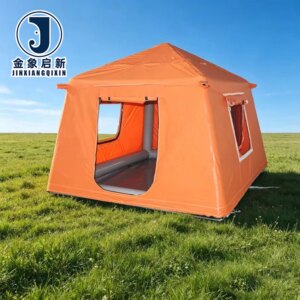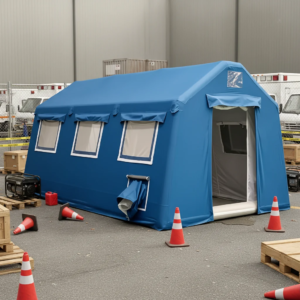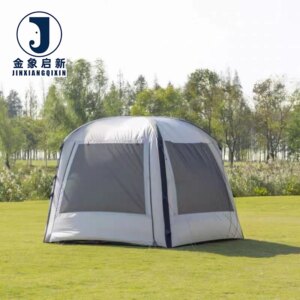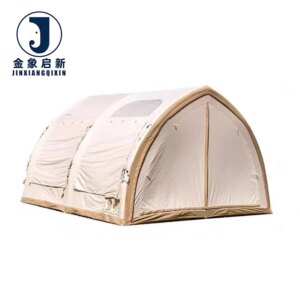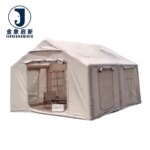
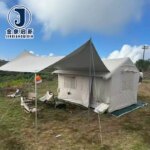
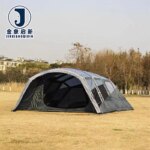
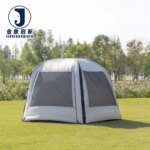
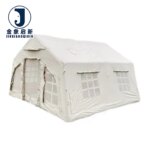
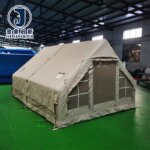
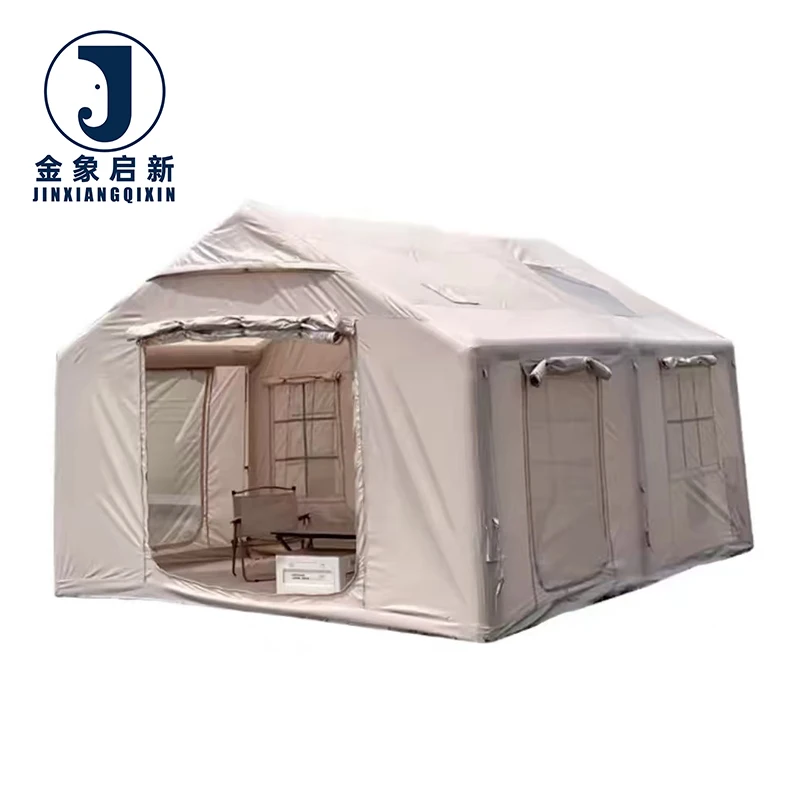
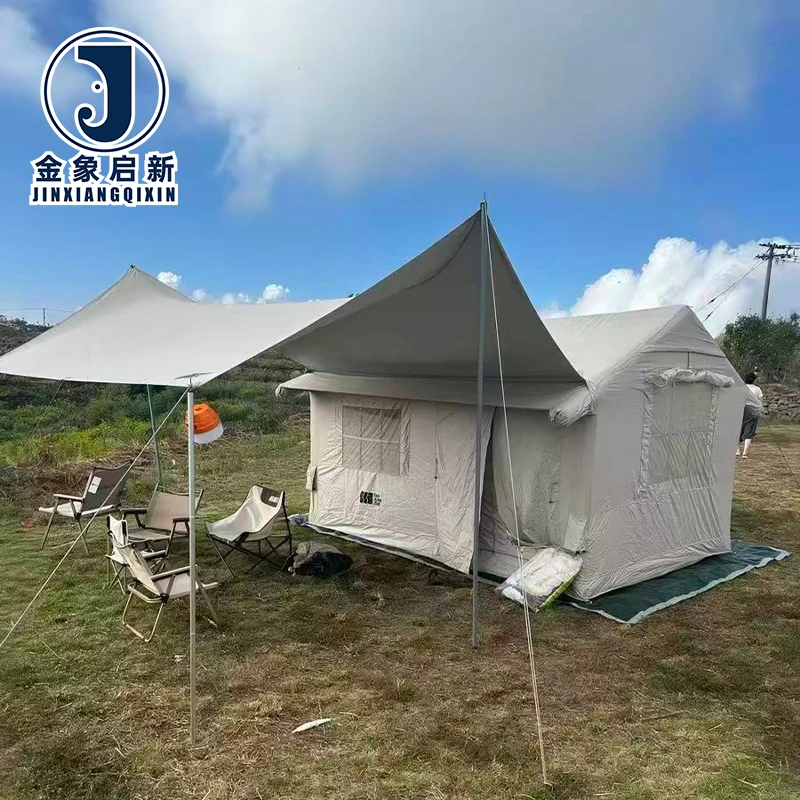
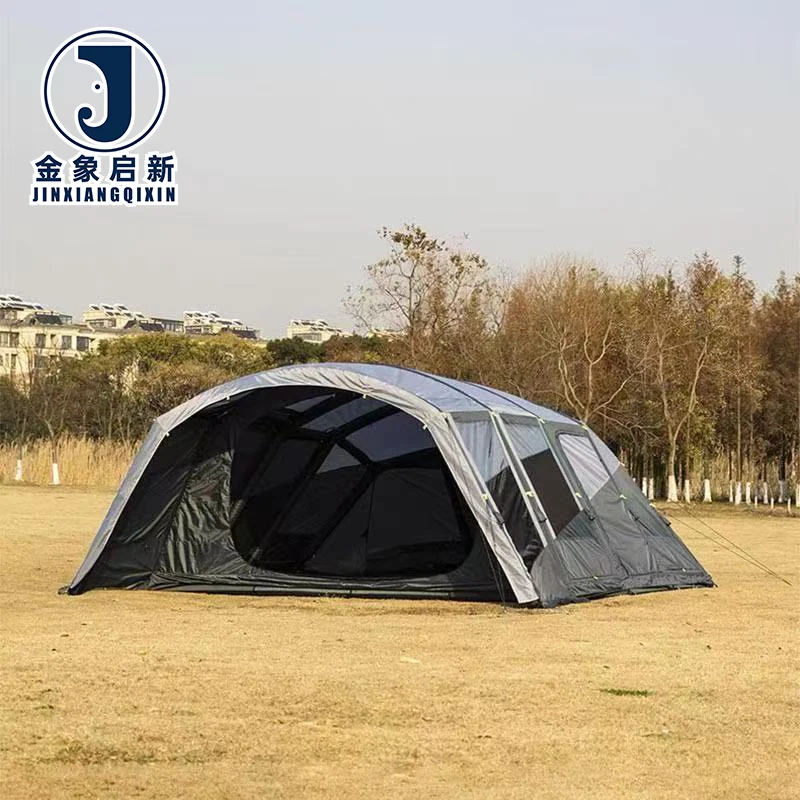
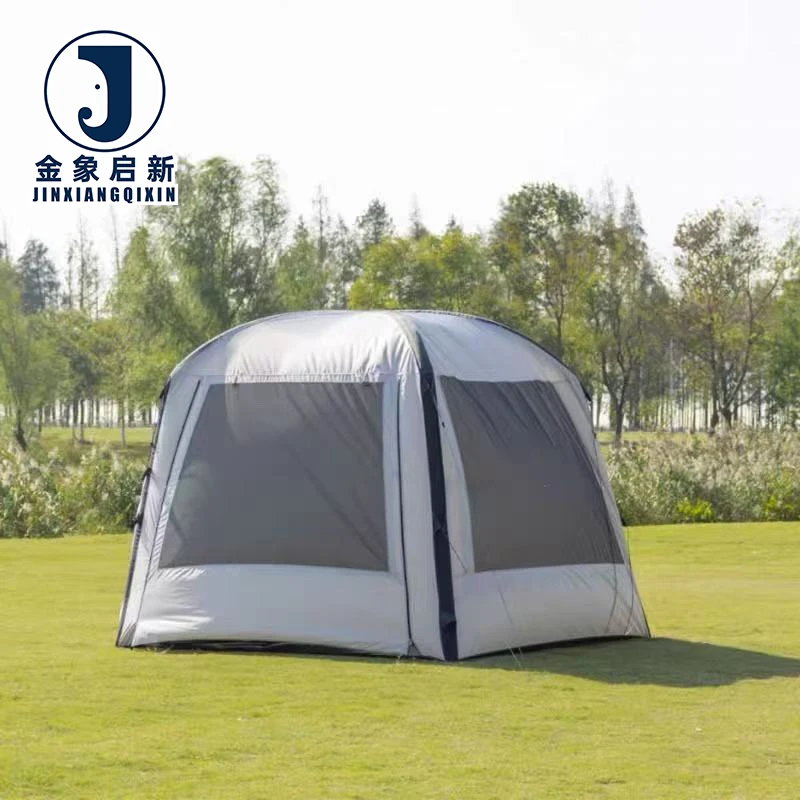
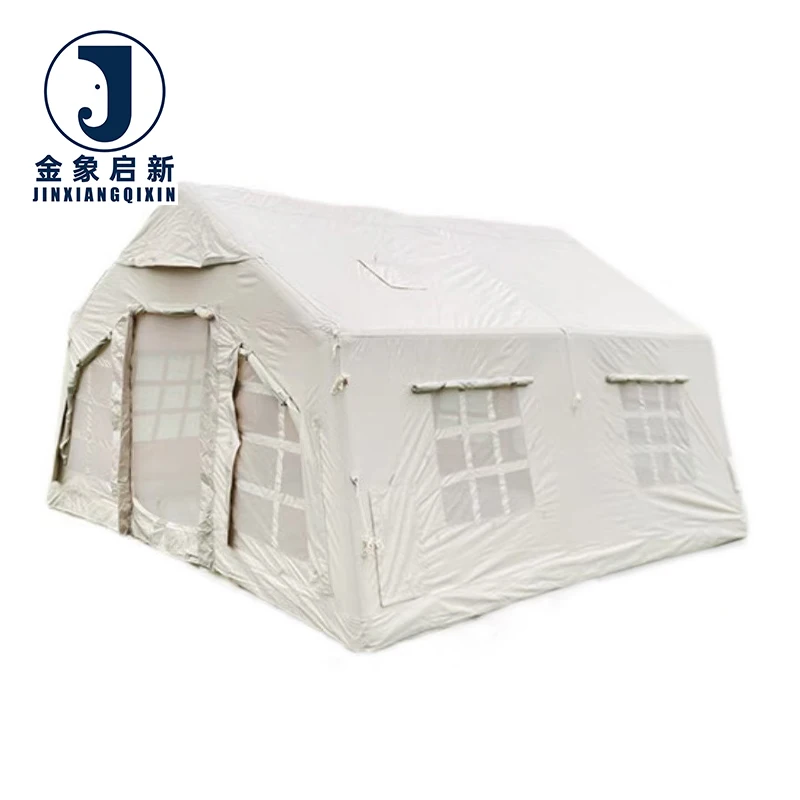
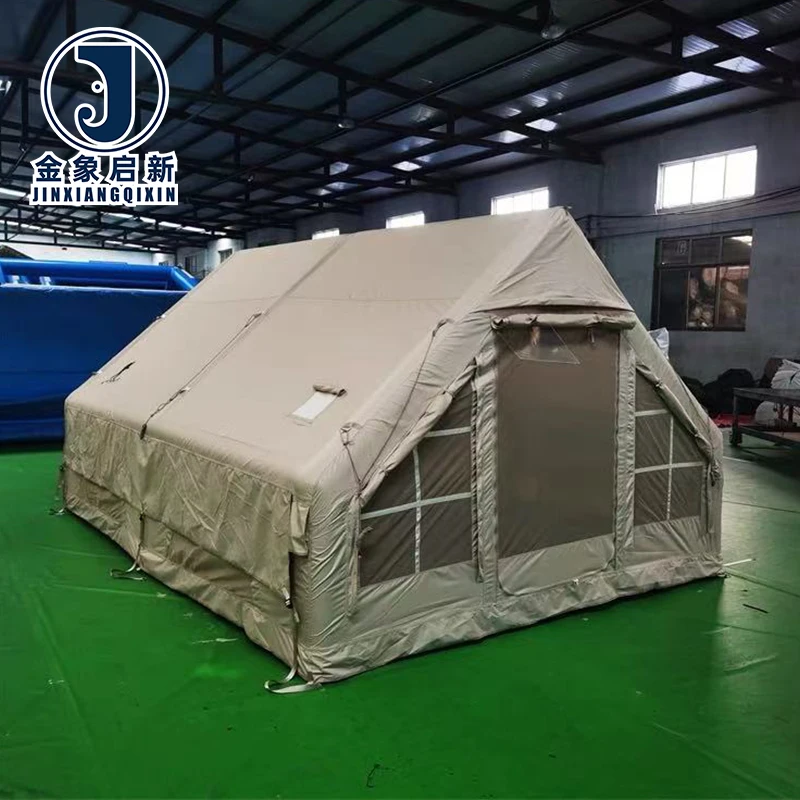
Coated Fabric Compliance Focus — Delivered with ISO and CE documentation for industrial procurement, built on nearly three decades of PVC coating process control and full pre-shipment inflation testing.
Technical Specifications
| Parameter | Value |
|---|---|
| Product Type | Inflatable Tent |
| Core Material | PVC tarpaulin (knife-coated fabric) |
| Capacity | 3-5 person |
| Design | Four-Season Use, Single Layer Construction, Extended Type |
| Waterproof Performance | Fully waterproof coated construction |
| UV Resistance | UV-resistant coating (test basis not stated) |
| Tear Resistance | Tear-resistant knife-coated PVC fabric |
| Deployment Mechanism | Quick automatic opening |
| Customization Service | OEM & ODM support (size adjustments, material thickness variations, custom color options) |
| Certifications | ISO9001, ISO14001, ISO45001, CE |
Application Suitability
| Application | Exposure & Requirement |
|---|---|
| Emergency command centers for large-scale industrial facilities | Rapid deployment, continuous occupancy, weather exposure, compliance documentation for site audits |
| Temporary site offices during infrastructure recovery | Prolonged UV exposure, wind loading, repeated inflation and deflation cycles, crew safety |
| Equipment storage shelters in post-disaster operations | Waterproof integrity, abrasion from stored materials, dust and debris ingress prevention |
| Mining and tunnelling contractor site shelters | Fire-safety requirements, underground or remote environment deployment, regulatory inspection readiness |
| Specialist structure contractor membrane installations | Certified fabric sourcing, structural air-beam integrity, four-season thermal performance |
What Compliance Documentation Actually Covers When Procurement Demands Proof
Certification without traceability is just paperwork — the inflatable tent must arrive with batch-specific test records tied to the fabric used in your shipment.
Industrial and mining site managers increasingly face audits where the shelter on-site must match the specification submitted at the procurement stage. A gap between the two halts operations and triggers non-conformance reports. When the fire-retardant grade or the material specification cannot be traced back to a test report covering the actual batch produced, the entire installation becomes a regulatory liability. [NEED_CITE: compliance verification requirements for temporary structures on industrial sites]
Fire-Safety Alignment for Regulated Industrial Sites
Inflatable emergency shelters deployed on mining, tunnelling, or heavy industrial sites must satisfy site-specific fire-safety protocols before installation is approved. The PVC knife-coated fabric used in this inflatable tent fire retardant configuration is available in grades formulated for regulated environments — buyers should confirm the exact fire classification required by their jurisdiction and request the corresponding test documentation before production begins.
Rapid Deployment Without Compromising Compliance Traceability
The automatic inflation mechanism enables the shelter to be operational within minutes of arrival, which matters when disaster response timelines are measured in hours rather than weeks. However, speed of deployment does not eliminate the need for proper documentation. Each unit can be supplied with pre-shipment inspection records confirming inflation performance, seam integrity, and material specification alignment with the purchase order.
Single Layer Construction for Transport Efficiency and Structural Simplicity
The single layer extended design reduces packed volume and weight compared to multi-layer alternatives, which directly affects how many units can be staged at a logistics hub or loaded onto a response vehicle. This construction approach also simplifies field repair — a puncture or seam failure can be addressed with standard PVC repair methods without requiring specialist multi-layer re-bonding equipment on site. [NEED_CITE: field repair methods for single-layer PVC inflatable structures]
How Knife-Coated PVC Delivers the Strength Profile This Application Demands
The knife-coating process forces PVC paste into the interstices of the base fabric under blade pressure, creating a mechanical bond between coating and yarn that directly influences peel strength and weldability. Unlike laminated fabrics where the coating sits on the surface, knife-coated construction means the tear resistance is a function of both the base fabric denier and the coating penetration depth. For an inflatable tent that relies on air-beam pressure to maintain its shape, the coating adhesion to the base fabric determines whether a puncture stays localised or propagates along the beam. [NEED_CITE: tensile and tear test methods for coated fabrics per ISO 1421]
The Hidden Cost of Specifying Without Verification
A shelter that passes visual inspection on arrival can still fail compliance audit if the material batch used does not match the specification submitted for site approval. Colour variation between units deployed side by side signals inconsistent production batches and raises questions about whether other properties — coating weight, UV treatment concentration — also varied between rolls. Inflatable tents deployed without batch-specific documentation create a procurement trail that cannot withstand regulatory scrutiny, and replacing non-conforming units after installation costs far more than verifying specifications before production. [NEED_CITE: batch consistency risks in coated fabric procurement for safety-critical applications]
Why Technical Buyers Source This Inflatable Tent Here
The 10-person R&D team handles pre-production sample development, allowing buyers to confirm dimensions, material thickness, and colour before full-scale manufacturing begins — eliminating specification mismatches at delivery. Three full production lines and 36 sets of professional equipment support bulk order volumes without sacrificing the dedicated QA/QC inspection at each production stage that technical procurement demands. Nearly 30 years of focused coated fabric production means the coating weight, adhesion, and weld parameters are controlled through established process knowledge rather than trial and error. Full certification documentation — ISO9001, ISO14001, ISO45001, and CE — is supplied as standard, not as an afterthought requested post-shipment. 100% pre-shipment inspection includes inflation testing and structural integrity checks on every unit before dispatch.
Documentation & Verification
- Material specification sheet stating PVC coating type, base fabric construction, and material thickness
- Batch-specific quality inspection report with test results tied to production date and roll number
- CE certification documentation confirming alignment with European industrial safety requirements
- Pre-shipment inflation test record confirming air-beam pressure retention and structural integrity
- Certificate of origin and customs documentation for international industrial procurement
Fabrication, Handling & Storage
- Heat welding parameters must account for the knife-coated PVC thickness to ensure beam seam adhesion matches fabric strength
- Avoid folding inflatable tent units along the same crease line repeatedly to prevent coating micro-cracking at stress points
- Store rolled or packed units in dry conditions away from direct sunlight to preserve UV-resistant coating stability
- Use PVC-compatible adhesives for field repair of single layer construction punctures to maintain coating bond integrity
- Clean with mild detergent only — solvent-based cleaners can degrade the knife-coated PVC surface finish
What We Need From Your Enquiry
Provide the specific site compliance requirements your jurisdiction mandates, including any fire classification or anti-static standards that apply to temporary inflatable structures. Specify the number of units required, the deployment environment — altitude, temperature range, exposure conditions — and whether you need OEM sizing adjustments or custom colour options. If your procurement system requires pre-production sample approval before bulk release, state this in your initial enquiry so the sample development timeline can be factored into your project schedule.
Frequently Asked Questions
Q: What fire-retardant or safety certifications apply to the inflatable tent fabric, and how do they align with site-specific compliance requirements?
A: The inflatable tent is produced under ISO9001, ISO14001, ISO45001, and CE certification frameworks. Fire-retardant fabric grades are available — buyers must confirm the specific classification required by their site regulations and request the corresponding test report before production. This ensures the documentation package matches your compliance submission.
Q: How is UV resistance validated, and what test basis supports long-term outdoor exposure claims?
A: The PVC coating includes UV-resistant treatment formulated for prolonged sunlight exposure. The specific test basis is not stated in standard product documentation. For applications requiring verified UV performance data, request test reports during the sample approval stage so the results can be reviewed before bulk production commitment.
Q: What OEM/ODM customization options are available for dimensions, material thickness, and color?
A: The 10-person R&D team supports size adjustments, material thickness variations, and custom color options. Pre-production samples are developed for buyer approval before full-scale manufacturing begins. This process ensures the final product matches your specification requirements and avoids discrepancies at delivery.
Q: What quality documentation is included with each shipment for integration into industrial procurement systems?
A: Each shipment includes a material specification sheet, batch-specific quality inspection report, CE certification documentation, pre-shipment inflation test record, and certificate of origin. Additional test reports for specific performance properties can be arranged during the enquiry stage to meet your procurement system requirements.
Q: How does the pre-production sample process work, and what is the timeline for custom specification approval?
A: Submit your dimensional requirements, material thickness preferences, and colour specifications with your enquiry. The R&D team develops a sample for your review and approval. Once confirmed, production proceeds with in-process QA at every stage. Typical sample development takes several days, with production timelines confirmed at the quotation stage.