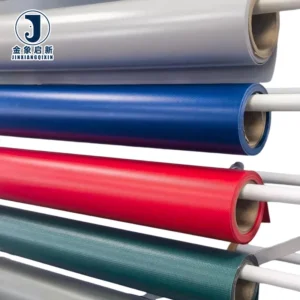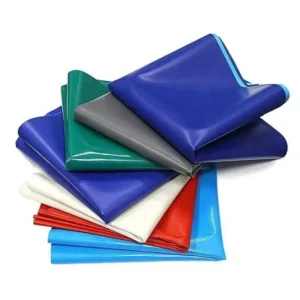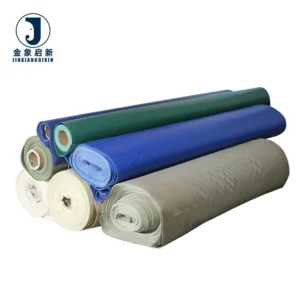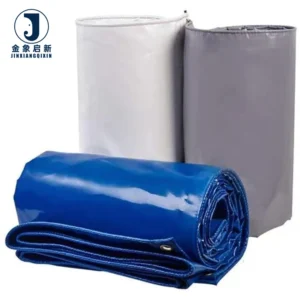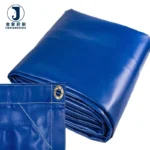
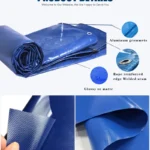
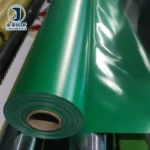
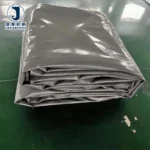
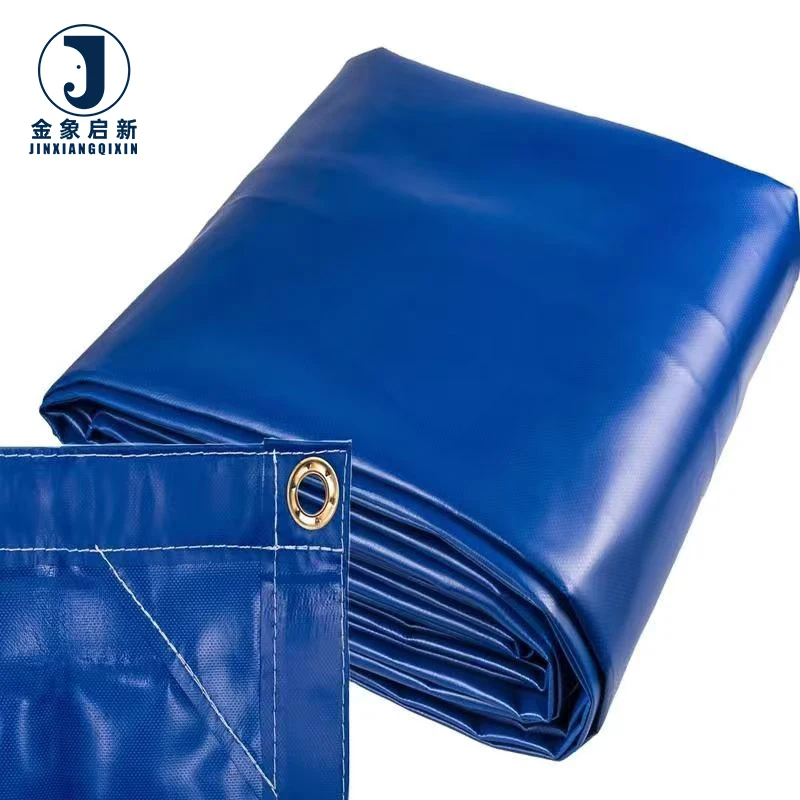
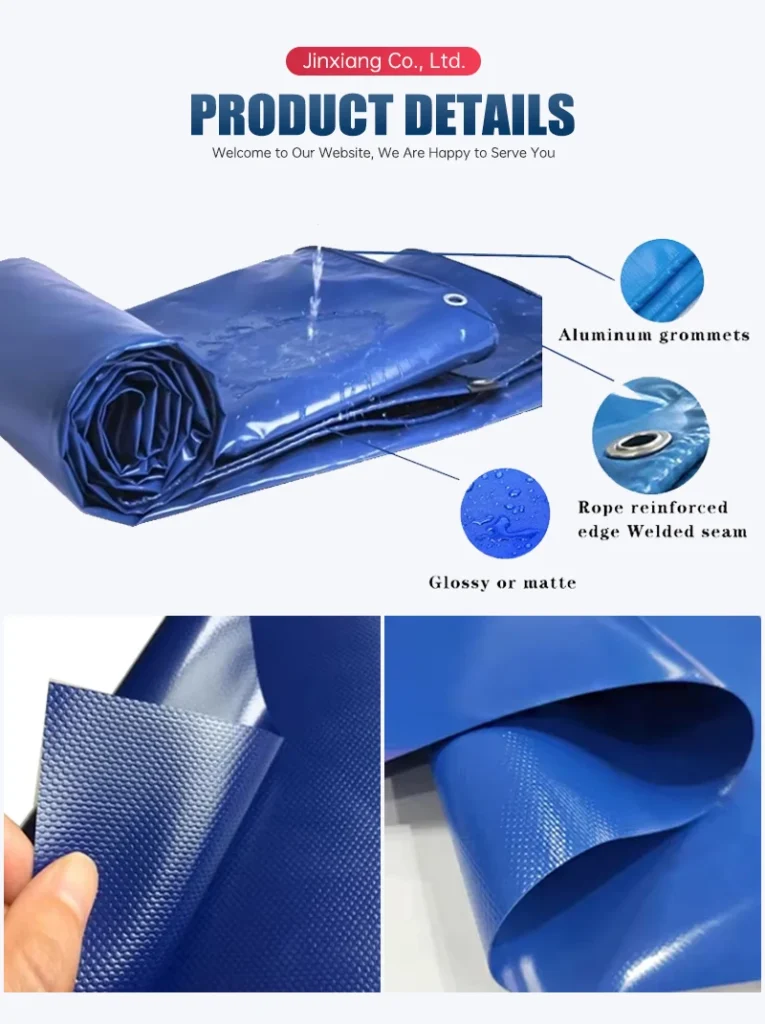
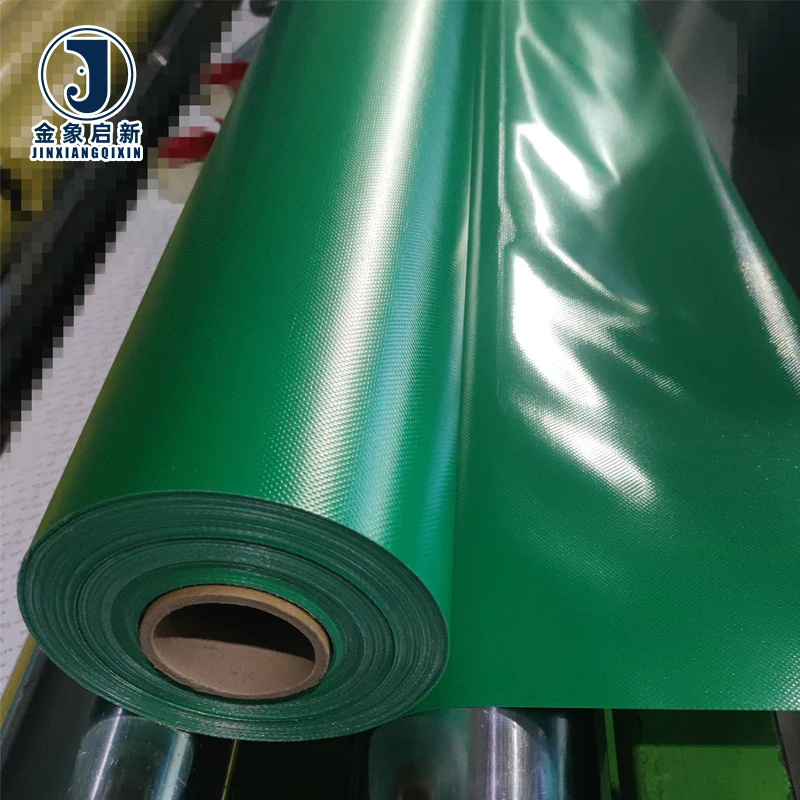
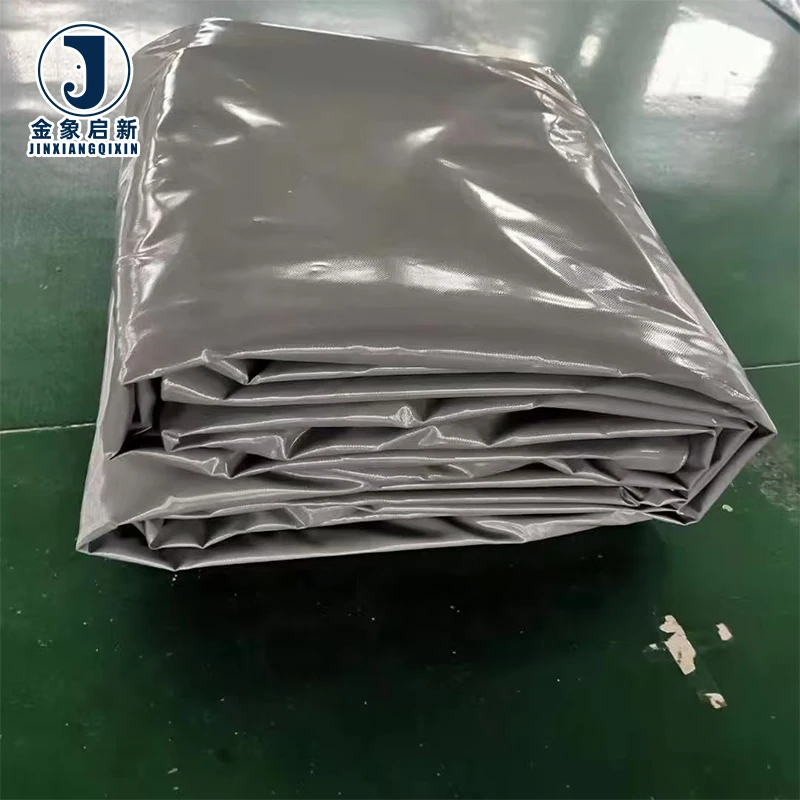
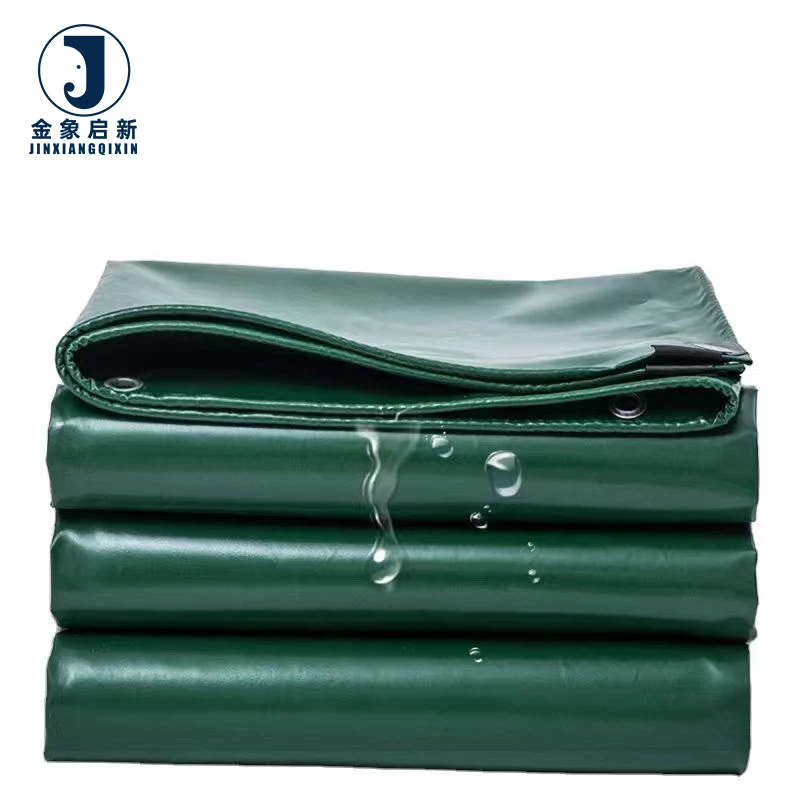
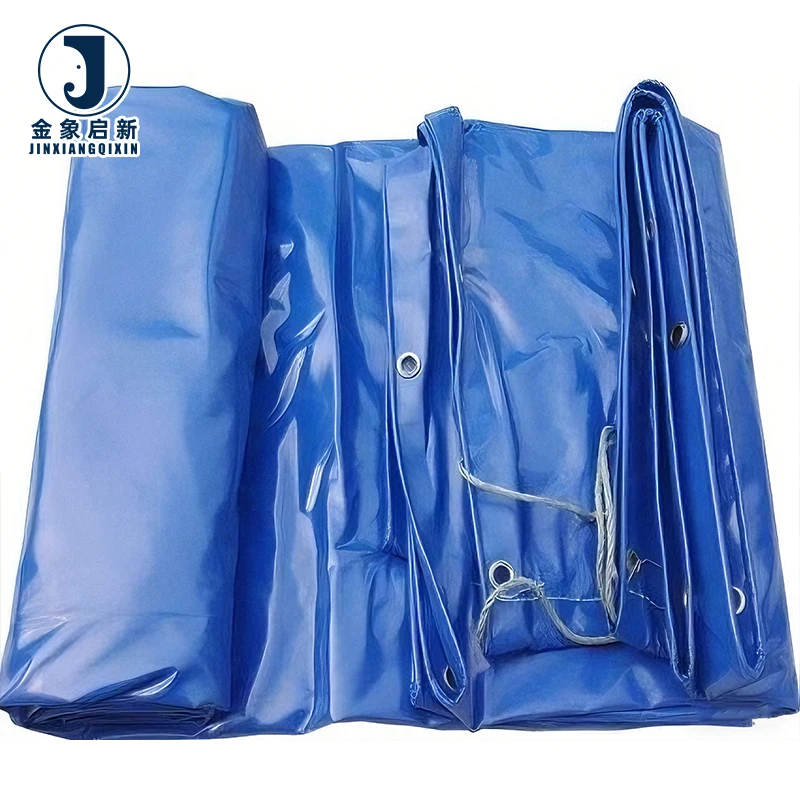
Deep Coating Process Control — three dedicated production lines maintain tight adhesion and weight tolerance across every PVC coated polyester tarpaulin roll leaving the facility.
Technical Specifications
| Parameter | Value |
|---|---|
| Product Type | PVC Coated Tarpaulin |
| Coating Material | PVC (vinyl coated polyester) |
| Base Fabric | Polyester, rip-stop construction |
| Weight Range | 500 to 800 g/m² (grade-dependent — confirm required GSM for your application) |
| Waterproof Rating | Anti-permeable ≥20KPa |
| Low Temperature Flexibility | No fracture at -30℃ |
| Flame Retardant | ≤10 seconds (grade not stated — request test report for applicable standard) |
| Anti-Mildew | Mildew proofing treatment |
| Corrosion Resistance | Acid, alkali and brine resistant |
| Seaming Method | High-frequency heat combined |
| Edge Reinforcement | Reinforced edges |
| Water Absorption | Almost none |
Application Suitability
| Application | Exposure & Requirement |
|---|---|
| Truck and trailer load covering | Constant road vibration, flex at tie-down points, rain and UV exposure, aerodynamic drag abrasion |
| Industrial equipment and site covers | Chemical splash from acid or alkali agents, brine environments, dust ingress, outdoor weathering |
| Open-air stockpile and agricultural covering | Prolonged water pooling, mildew-promoting humidity, temperature cycling across seasons |
| Cold-climate transport | Sub-zero handling and folding, brittleness risk during winter loading and unloading |
What Separates a Reliable PVC Coated Tarpaulin from One That Fails at the Seam
Seam integrity must equal fabric strength — high-frequency heat-bonded joins deliver that parity.
I have seen heavy-grade coated rolls fail not in the field of the fabric but along the weld line, precisely where the load flexes most during transit. The base cloth and coating may hold their rated tensile values, yet a poorly calibrated heat weld creates a brittle zone that cracks under repeated stress. When procurement teams evaluate PVC coated polyester tarpaulin for industrial covering, seam construction deserves as much scrutiny as GSM or coating weight [NEED_CITE: tensile and tear test methods for coated fabrics per ISO 1421].
High-Frequency Welding and Load-Bearing Join Integrity
Conventional sewing punctures the coated surface with needle holes, creating potential water ingress paths at every stitch. High-frequency heat-combined seaming avoids perforation entirely, fusing PVC layers at the molecular level to produce a continuous, water-tight bond. For truck and trailer covers subjected to wind load and tie-down tension, this means the join resists peeling even at stress-concentrated corners and hem turns. The PVC coated polyester tarpaulin maintains its anti-permeable rating across the entire assembled panel, not just in the body of the roll.
Low-Temperature Flexibility in Sub-Zero Logistics
Coated fabrics that stiffen below freezing become prone to cracking when folded or handled in cold weather. This material retains flexibility down to -30℃ without fracture, a critical property for fleets operating in northern climates or cold-chain logistics where covers are removed and re-applied in freezing conditions. The vinyl coating formulation resists the plasticiser migration that typically causes embrittlement over repeated thermal cycles [NEED_CITE: low-temperature bend test methods for plasticised PVC coatings]. Transport operators covering open-deck loads in winter can expect the fabric to fold and unfold without developing micro-fractures along crease lines.
Reading GSM, Base Fabric and Coating Weight Together
Specifying coated tarpaulin by weight alone is incomplete. A 500 g/m² fabric with a dense, high-denier rip-stop polyester base and a thin coating will outperform a 500 g/m² fabric built from a loose weave under a thick, heavy coating layer. The rip-stop construction in this PVC coated polyester tarpaulin interrupts tear propagation — if a puncture occurs, the reinforced grid structure limits the tear from spreading across the panel. Coating weight must be evaluated alongside base fabric denier and weave density. The anti-permeable ≥20KPa rating reflects the combined barrier performance of both layers working together. Acid, alkali and brine resistance is primarily a function of the PVC compound formulation in the coating, while structural strength derives from the polyester base cloth — understanding this separation helps procurement teams specify more accurately for corrosive environments.
The Cost of Overlooking Weld Calibration and Batch Consistency
When heat-seaming parameters are not matched to the specific coating formulation and GSM of a roll, the resulting weld can be either under-fused (delaminating under tension) or over-fused (scorching the coating and creating a brittle strip). On a truck cover, this failure typically appears after several months of flex cycles. Equally, colour variation between rolls in a single order becomes visible once panels are installed side by side on adjacent trailers or equipment covers. These are not cosmetic issues — inconsistent coating weight across a batch signals uneven process control that also affects waterproof performance and weld repeatability. Procurement teams specifying PVC coated tarpaulin for industrial covering should require pre-shipment inspection records that verify weight and colour on every roll [NEED_CITE: common failure modes in PVC coated fabric installations].
Why Procurement Teams Source This PVC Coated Tarpaulin Here
Three full production lines with 36 sets of professional equipment deliver bulk roll capacity while maintaining coating weight consistency across long runs. A dedicated 10-person R&D team handles material selection, custom sizing and sample development, producing samples within days when a new GSM grade or treatment is required. QA/QC inspection covers every production stage, with 100% roll-by-roll verification before dispatch — weight, colour and seam integrity are checked against the order specification, not a batch average. The rip-stop base fabric and reinforced-edge construction are process-controlled from weaving through coating, ensuring structural properties remain consistent container-load after container-load.
Documentation & Verification
- Material specification sheet stating exact GSM, base fabric denier, and PVC coating weight for the grade ordered
- Flame-retardant test report with applicable standard and grade — request before confirming order
- Pre-shipment inspection record verifying weight, colour consistency, and seam integrity per roll
- ISO and CE certificates confirming management system compliance
- Roll packing list with individual roll weights and dimensions for customs clearance
- Certificate of origin for preferential tariff treatment in destination markets
Fabrication, Handling & Storage
- High-frequency welding parameters must match the specific PVC coating weight and GSM grade ordered
- Reinforced edges distribute tie-down and grommet loads — position hardware within the reinforced zone
- Store rolls upright on pallets in a dry, shaded area to prevent coating compression marks
- Allow cold-stored rolls to reach ambient temperature before unrolling to protect the -30℃ rated coating
- Use mild, non-solvent cleaners to preserve the anti-mildew treatment on the PVC surface
- Plan panel cutting layouts to maximise yield from the roll width and minimise welded join count
Before You Request a Quote
Provide your end-use application and the specific environmental exposure — chemical splash, sub-zero handling, prolonged UV, or static load — so the correct GSM grade and treatment can be recommended. State whether you need full rolls at stock width or custom-cut panels with finished edges and reinforcement. If your market or installation site mandates a fire-retardant standard, identify the applicable regulation so a compliant test report can be sourced with the quotation.
Frequently Asked Questions
Q: How is GSM verified before shipment against the quoted specification?
A: Every roll undergoes weight verification during pre-shipment inspection. The QA team samples at multiple points along each roll and records actual GSM against the stated value on the inspection report. This record accompanies your shipment documentation so you can cross-check on arrival.
Q: What flame-retardant standard applies to my market and can I get a valid test report?
A: Fire classification requirements vary by region and application — some markets reference DIN 4102, others NFPA 701 or local building codes. Confirm the standard your site or regulation requires at inquiry stage so the appropriate flame-retardant grade and matching test report can be arranged before production.
Q: How does high-frequency welding compare to sewing for seam strength?
A: Sewing perforates the coated fabric, creating needle holes that can admit water and weaken under flex stress. High-frequency welding fuses the PVC layers without puncturing, producing a continuous bond that matches the fabric’s waterproof rating and resists cracking at load-bearing flex points.
Q: How is colour consistency maintained across multiple rolls in one order?
A: Coating batches are mixed to a single colour reference and verified before the production run begins. The pre-shipment inspection includes side-by-side colour comparison of rolls within your order. Any visible deviation triggers a review before dispatch.
Q: What are the minimums and lead times for custom width or length?
A: Custom widths and roll lengths are subject to minimum order quantities that vary by GSM grade and treatment specification. Share your required dimensions and annual volume at inquiry stage so accurate lead times and minimums can be confirmed in the quotation.