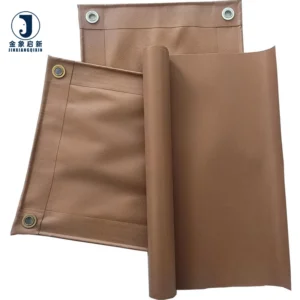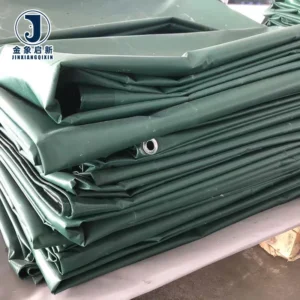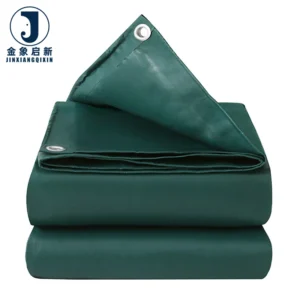
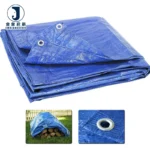
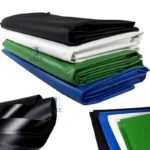
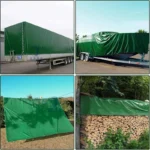
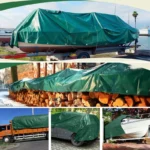
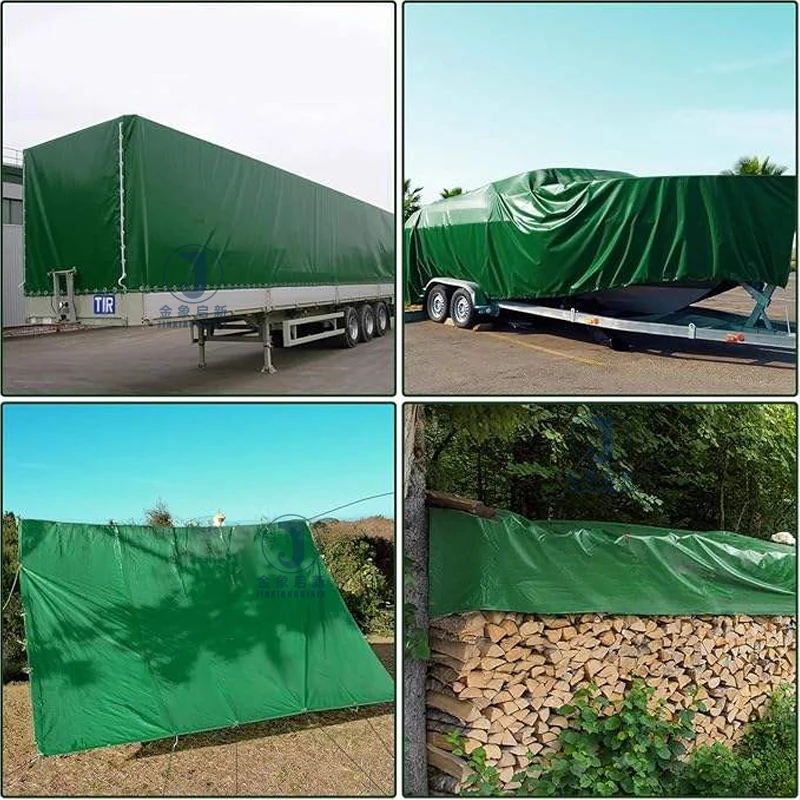
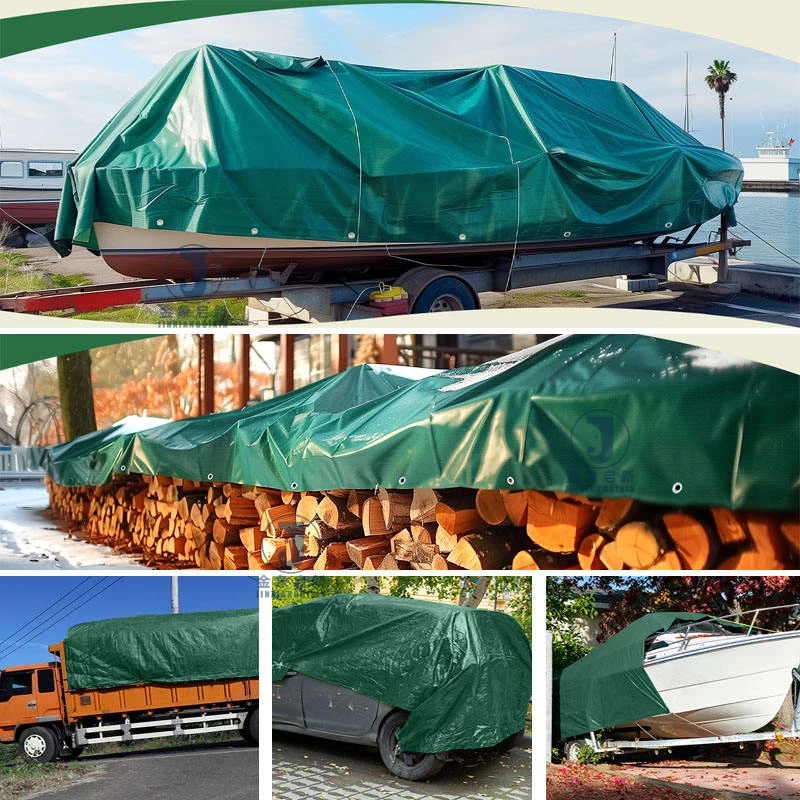
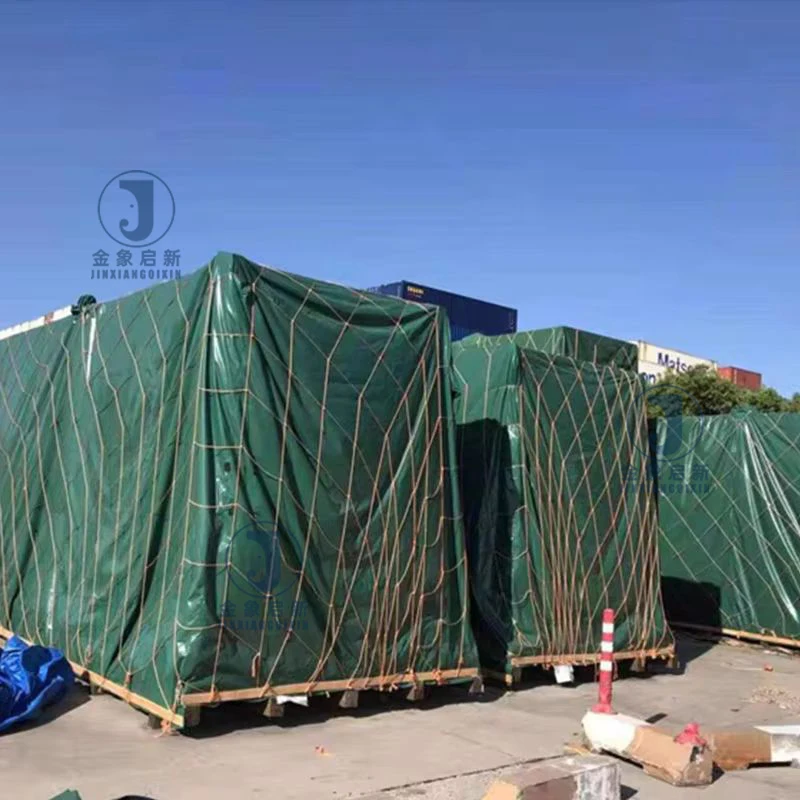
Certified Duct Fabric — We supply fire-retardant and anti-static test reports with every roll of PVC coated tarpaulin destined for mining, tunnelling or membrane structure projects.
Technical Specifications
| Parameter | Value |
|---|---|
| Product Type | PVC Coated Tarpaulin |
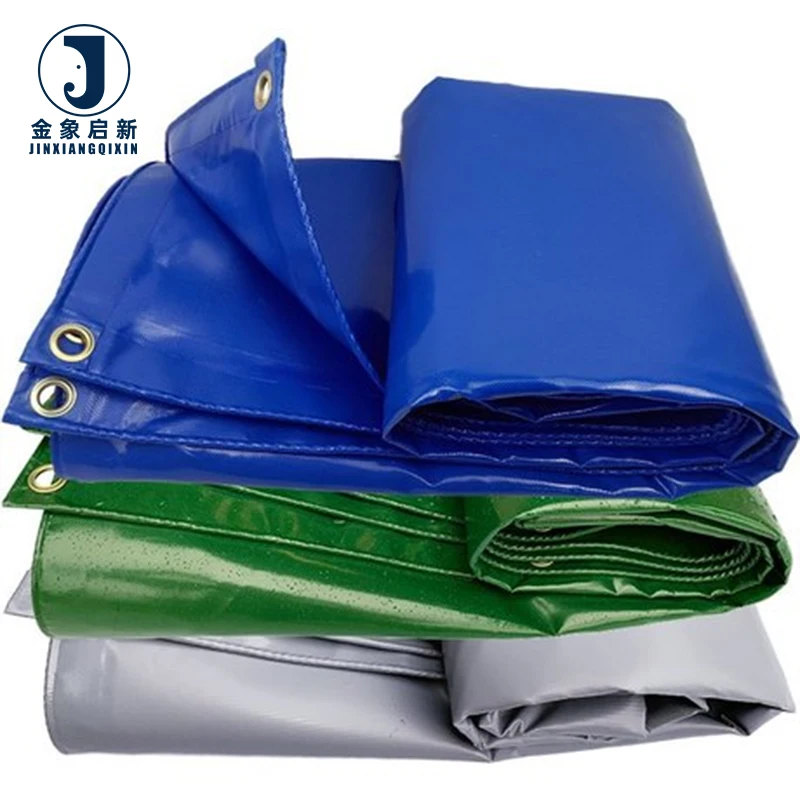
| Base Fabric | Polyester, 500D x 500D |
| Coating | Double-sided PVC |
| Weight Range | 450-900 g/m² (grade to be confirmed per project specification) |
| Flame Retardancy | Available in flame retardant grades — confirm the grade required for your market |
| Anti-Static | Available in anti-static grades — confirm the surface resistance standard for your site |
| Waterproof | Fully coated, waterproof construction |
| UV Resistance | Anti-UV treatment available — confirm the test basis for your region |
| Surface | Smooth, leather-like texture |
| Weldability | Suitable for hot air welding |
Application Suitability
| Application | Exposure & Requirement |
|---|---|
| Mining ventilation duct | Continuous airflow, rock dust, mandatory fire-retardant and anti-static compliance underground |
| Tunnelling ventilation | High humidity, mechanical impact from equipment, strict safety certification at site entry |
| Aviation ground support duct | Fuel proximity, outdoor weathering, flame-retardant specification from aviation authority |
| Membrane structures | Structural tension, wind load, UV exposure, fire code compliance for public spaces |
| Inflatable temporary buildings | Internal air pressure, repeated inflation cycles, rapid deployment requirement |
What "Certified" Means for Your Ventilation Duct
Certification is not a claim on a quotation — it is a test report matching the standard your site inspector requires.
A ventilation duct fails its safety audit when the fabric arrives with a fire-retardant claim but no documentation the site safety officer can file. We have seen project delays caused by this gap. The PVC coated tarpaulin fire retardant specification must align with the local mining or construction code before the roll is slit. [NEED_CITE: fire safety compliance requirements for underground ventilation ducts]
Matching the Fabric to the Compliance Standard
A mining shaft in one jurisdiction requires anti-static surface resistance below a defined threshold, while a tunnelling project nearby specifies a different flame-retardant classification. The base 500D x 500D polyester fabric accepts different coating formulations to meet these distinct requirements. We formulate the PVC compound and apply it under controlled conditions so the finished PVC coated tarpaulin meets the target standard. The R&D team develops samples within days so you can submit a swatch for third-party verification before committing to a production run.
From Sample Approval to Site Delivery
Once the sample passes your compliance check, production runs on one of three dedicated coating lines. In-process checks monitor coating weight and adhesion at defined intervals. Every roll undergoes inspection before packing, and the pre-shipment record documents the actual measured values. This prevents the situation where a duct contractor receives material that looks right but fails the site spark test or flame spread test during commissioning. [NEED_CITE: pre-shipment inspection protocols for coated technical fabrics]
How Yarn Count and Coating Weight Interact
The 500D x 500D polyester base provides a balance between flexibility for duct folding and dimensional stability under airflow pressure. The double-sided PVC coating seals the weave and contributes to tensile performance, but the base fabric carries the structural load. Coating weight, selected from the 450-900 g/m² range, determines stiffness and handling during fabrication — lighter grades drape easier around bends, while heavier grades resist mechanical damage in rough tunnelling environments. The smooth surface finish supports efficient airflow by minimising turbulence inside the duct, and it allows hot air welding to produce a continuous bond along longitudinal seams.
When the Specification Does Not Match the Site
A duct fabricated from fabric that lacks the required anti-static property can accumulate charge in dry underground air, creating a discharge risk the safety audit will flag. A flame-retardant grade accepted in one country may not satisfy the classification demanded by another jurisdiction’s mining inspector. These mismatches are discovered at the worst moment — when the duct is hung and the inspector asks for paperwork. Selecting the grade against the specific site standard, confirmed by a test report from an accredited lab, avoids costly material replacement mid-project. [NEED_CITE: anti-static surface resistance testing standards for mining textiles]
Why Procurement Teams Specify This Source
Nearly 30 years of coating process control means the PVC compound formulation is matched to the fire-retardant or anti-static additive package without trial and error on your production run. The 10-person R&D team handles material selection and sample development, adjusting coating weight and additive levels to hit the target standard you specify. Three full production lines and 36 sets of professional equipment support bulk duct fabric orders with consistent roll-to-roll properties, so a 500-metre order behaves identically to the approved sample. Dedicated QA/QC at every stage, including 100% pre-shipment inspection, ensures the roll you weld into a duct performs exactly as the test report states.
Documentation & Verification
- Material specification sheet listing base fabric denier, coating weight and the confirmed fire-retardant grade
- Test report for flame-retardant classification matching your site’s compliance code
- Anti-static surface resistance measurement from an accredited laboratory
- Pre-shipment inspection record with roll-by-roll weight and visual verification
- Certificate of origin and customs documentation for international project sites
Fabrication, Handling & Storage
- Hot air weld temperature and speed to be set according to the specific PVC compound formulation used
- Store rolls upright on end caps to prevent flat spots that complicate duct fabrication
- Allow cold rolls to reach ambient temperature before unrolling to avoid coating micro-cracks
- Longitudinal seams require continuous overlap weld; avoid stitch-and-sew which creates needle holes
- Use PVC-compatible adhesive for patch repairs on site to maintain fire-retardant continuity
Requesting a Quotation
Provide the fire-retardant or anti-static standard your project site requires, along with the target duct diameter and total linear metres. If your specification calls for a particular surface resistance value or flame classification, include the standard reference so we can match the coating formulation. Specify whether you need rolls at full width or slit to a duct panel width, and confirm the colour requirement for site visibility codes.
Frequently Asked Questions
Q: Which flame-retardant grade should I specify for underground mining duct?
A: The required grade depends on the jurisdiction and the mining authority overseeing your site. Common references include classifications tested per methods such as DIN 4102 or NFPA 701, but your site safety officer will cite the specific standard. Send us the reference and we will formulate the PVC coating to match and supply the corresponding test report with your shipment.
Q: How do you verify anti-static properties before shipment?
A: Anti-static performance is measured as surface resistance on the finished coated fabric. We conduct testing per the standard specified in your purchase order and record the measured value on the pre-shipment inspection document. The test report from an accredited laboratory accompanies the shipping documentation so you can present it to your site compliance team upon delivery.
Q: Can the fabric be hot air welded into long duct sections?
A: Yes, the double-sided PVC coating on the 500D polyester base is designed for hot air welding. The smooth surface allows consistent heat transfer across the weld zone. We recommend running weld parameter trials on a sample piece to set the correct temperature and speed for your specific welding equipment before starting full production.
Q: What is the lead time for a custom fire-retardant grade?
A: Developing a custom formulation to meet a specific fire-retardant classification involves sample production and testing. The R&D team typically delivers samples within days for your approval. Once approved, production lead time depends on order volume and current line scheduling. We provide the confirmed dispatch date at the quotation stage so you can plan your duct fabrication timeline.