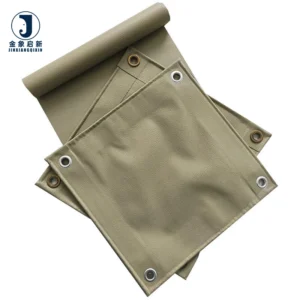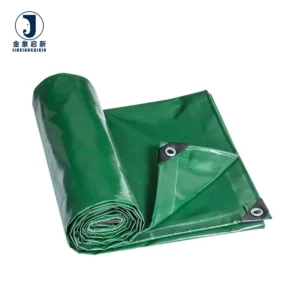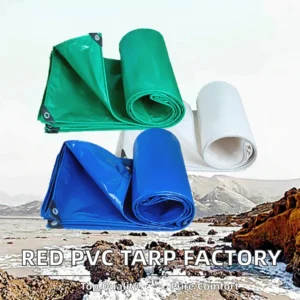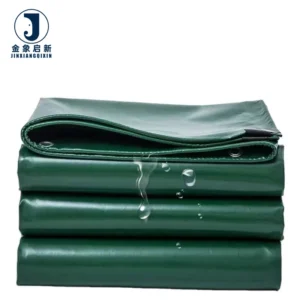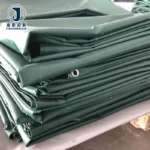
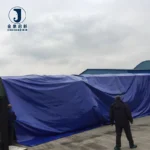

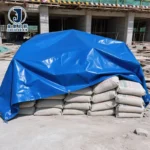

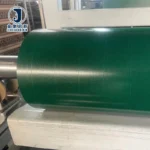
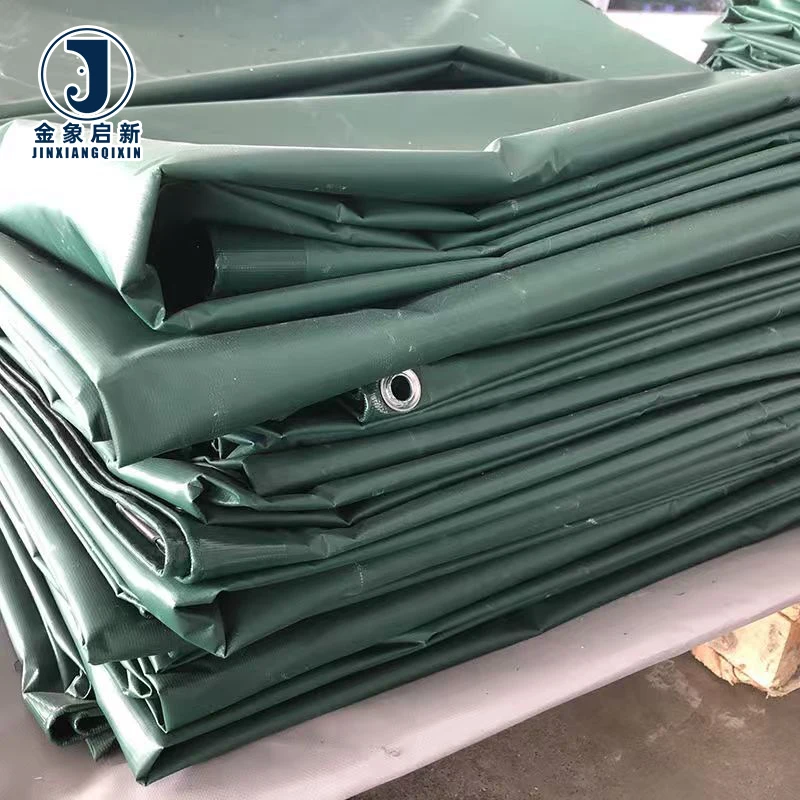
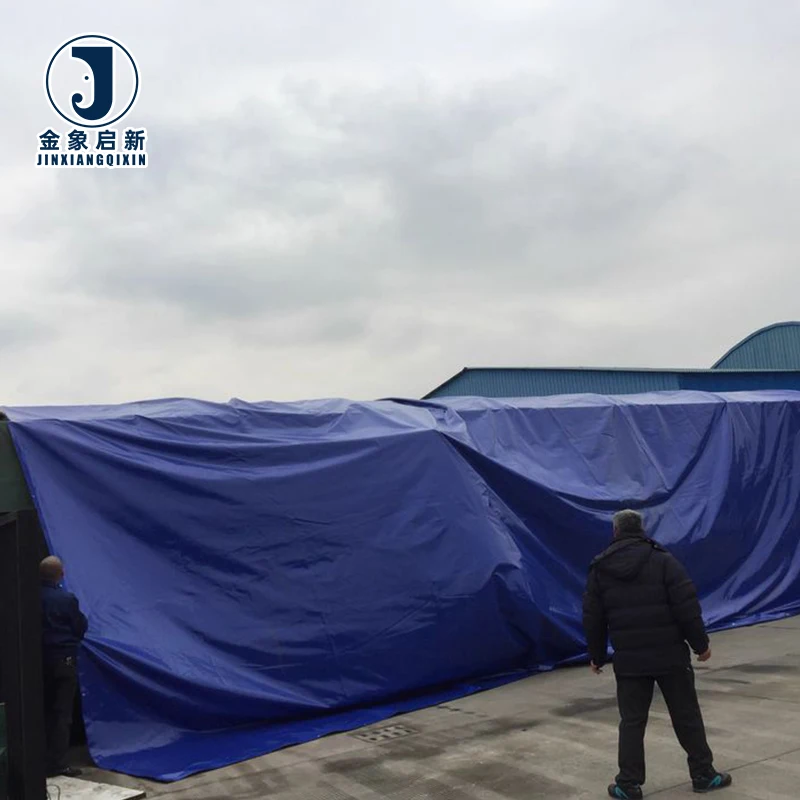
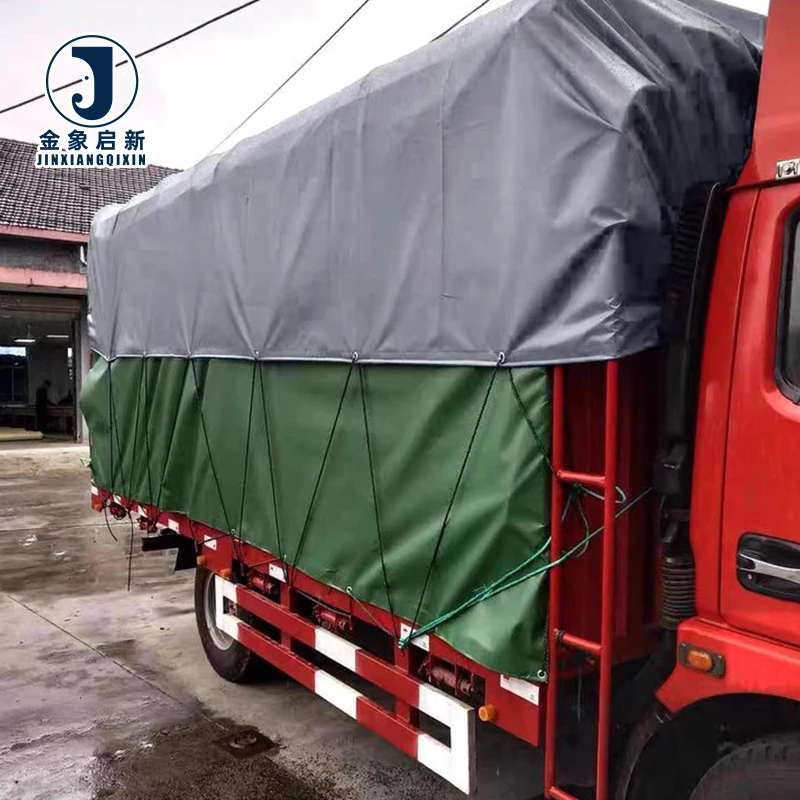
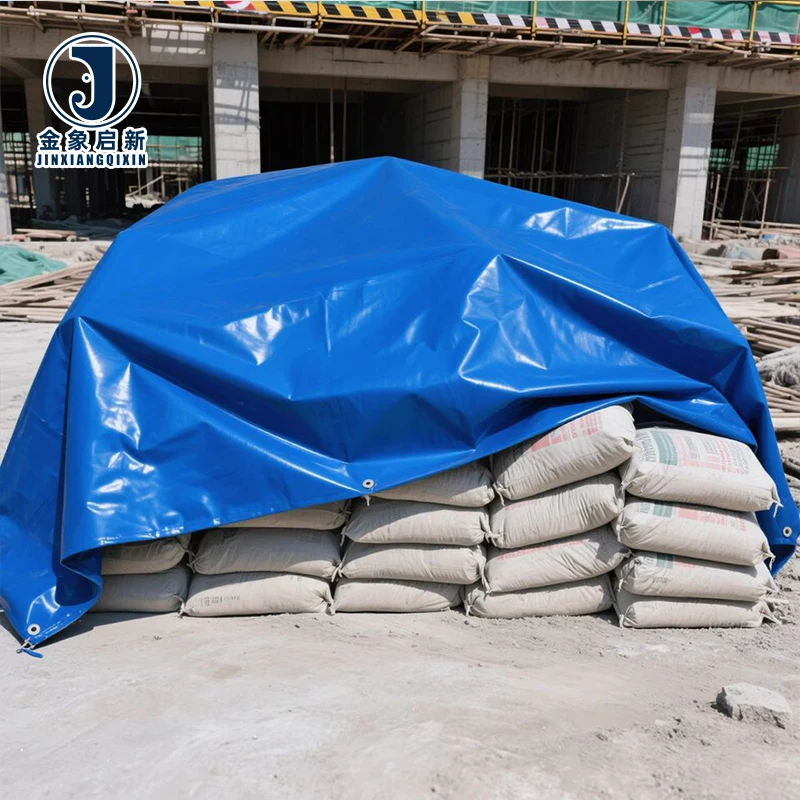

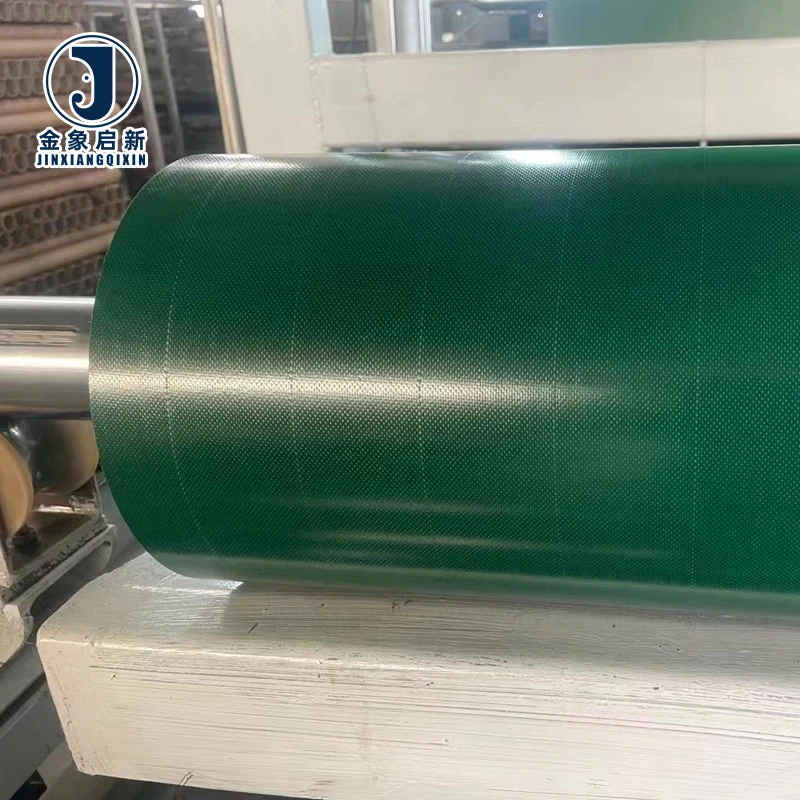
Process-Controlled Coating — Three full production lines with 36 sets of professional equipment maintain consistent adhesion and GSM accuracy across every roll of PVC coated fabric, backed by nearly 30 years of continuous coated textile manufacturing.
Technical Specifications
| Parameter | Value |
|---|---|
| Product Type | PVC Coated Tarpaulin |
| Material | 100% high toughness polyester yarn with PVC coating |
| Coating Technology | Lamination technology and hot melt coating technology |
| Weight (GSM) | 400–1500 g/m² |
| Thickness | 0.35–1.5 mm |
| Knitting Density | 500D–2000D |
| Tensile Strength | Longitude 1500–3000 N/5cm / Latitude 1200–2800 N/5cm |
| Key Features | Waterproof, cold resistant cracking, mold proof, anti-static treatment, flame retardant |
| Color Fastness | Best color fastness |
| Weather Resistance | 3–5 years outdoor guarantee |
| Standard Sizes Available | 8’x10′, 10’x12′, 12’x16′, 16’x20′, 20’x20′, 20’x30′ (metric equivalents available) |
| Custom Sizes | Available |
| Certification | ISO, CE |
Application Suitability
| Application | Exposure & Requirement |
|---|---|
| Mining ventilation duct | Continuous airflow pressure, underground moisture, mandatory fire-retardant and anti-static compliance |
| Tunnelling exhaust duct | High humidity, abrasive particulate, strict site safety certification |
| Aviation ground support ventilation | Fuel vapour proximity, static discharge risk, rapid deployment and retrieval |
| Membrane and inflatable structure | Tensile load under wind, UV exposure, weld integrity at panel joints |
| Industrial pipe canopy | Chemical splash, thermal fluctuation, long-term water contact |
| Tensioned structural fabric | Sustained biaxial stress, weather cycling, seam strength under load |
What Happens When the Duct Fabric Fails the Compliance Audit on Site
A ventilation duct without documented fire-retardant and anti-static certification will be rejected at site handover, regardless of how well the fabric performs mechanically.
Mining and tunnelling projects operate under safety standards that require the ventilation duct material to carry a traceable test report matching the project specification. PVC coated fabric that lacks a stated flame retardant grade or a confirmed anti-static surface resistance value creates a procurement risk that only surfaces when the inspector asks for paperwork. I have reviewed project specifications where the duct supplier quoted a generic "flame retardant" claim, only for the site safety officer to request the specific classification and find none on file [NEED_CITE: fire-retardant classification requirements for underground ventilation per regional mining regulations]. The cost of replacing installed duct mid-project dwarfs the effort of specifying the correct grade upfront.
How Coating Technology Determines Duct Fabric Performance
The lamination technology and hot melt coating technology used in this PVC coated tarpaulin range directly influence how the material behaves during duct fabrication. Hot melt coating produces a bond between the polyester base fabric and the PVC layer that resists delamination under the cyclic flexing a ventilation duct experiences during inflation and deflation. Lamination technology provides consistent coating weight distribution, which matters when the fabric is cut into panels and heat-welded into long duct sections.
The choice between these coating methods affects the thermal response of the material at the weld line. Fabricators running hot wedge or high-frequency welding equipment need to know the coating composition to set correct temperature and dwell time parameters, ensuring the weld reaches full strength without scorching the PVC surface.
Fire-Retardant and Anti-Static Grades for Underground Compliance
Underground ventilation applications demand documented compliance, not verbal assurance. This PVC coated fabric range is available with flame retardant treatment — confirm the specific grade required for your market, such as M2, B1 per DIN 4102, or NFPA 701, depending on the project jurisdiction. The 10-person R&D team develops samples against your target classification so that the correct additive package is locked in before production begins [NEED_CITE: DIN 4102 fire classification for building materials].
Anti-static treatment is also available for applications where static discharge presents an ignition hazard. Surface resistance values and the applicable test standard should be confirmed at the inquiry stage to ensure the treated fabric meets the threshold specified by the mine safety authority or aviation ground support protocol. Requesting a test report matched to the project standard eliminates ambiguity at site inspection.
Reading the Specifications Beyond the Weight Number
The weight range of 400–1500 g/m² spans from medium-duty duct panels to super-heavy membrane structure fabric, but GSM alone does not define how the material will perform. The knitting density of 500D–2000D polyester yarn determines the base fabric’s contribution to tensile and tear resistance — a 650 GSM fabric woven with 1000D yarn will behave differently under biaxial load than one using 500D yarn at the same weight.
Tensile strength values ranging from 1500 to 3000 N/5cm in the warp direction and 1200 to 2800 N/5cm in the weft reflect this interaction between yarn denier and coating mass. For large-diameter ventilation ducts operating under positive pressure, the warp strength must be sufficient to handle the hoop stress without creep. The hot melt coating technology contributes to peel strength at the interface, which governs whether a tear propagates through the coating or is arrested by the base fabric weave [NEED_CITE: tensile and tear test methods for coated fabrics per ISO 1421].
Thickness values of 0.35–1.5 mm correlate with puncture resistance and handling weight. Thinner grades suit collapsible duct sections that need to be folded and transported repeatedly, while heavier grades serve permanent membrane structures where stiffness and panel stability matter more than portability.
The Hidden Cost of Specifying Duct Fabric on Weight Alone
Selecting ventilation duct material based solely on a GSM figure, without verifying the flame retardant grade or anti-static surface resistance, leads to failures that are contractual rather than mechanical. A duct that passes tensile testing but arrives on site without the required fire classification documentation will be rejected before a single section is hung. I have encountered projects where the entire duct run had to be removed and replaced because the supplier could not produce a test report matching the specified standard [NEED_CITE: underground ventilation compliance audit procedures].
Colour variation between rolls in the same order also creates problems on membrane structures, where panels sit side by side under direct sunlight. Batch consistency across the production run matters for visual appearance and signals uniform coating formulation, which in turn affects weld behaviour. When one roll carries slightly different plasticiser content, the weld parameters that work on the next roll may produce a weak seam.
Why Source This PVC Coated Tarpaulin from Jinxiang
Nearly 30 years of continuous focus on coated fabric means the coating weight and adhesion process is controlled from the base fabric inspection through to the finished roll, not adjusted reactively after a quality complaint.
Three full production lines and 36 sets of professional equipment provide the capacity to supply multiple container loads of duct fabric on a single project timeline, with roll-to-roll consistency maintained through dedicated QA/QC at every stage.
The 10-person R&D team handles custom fire-retardant additive formulation and anti-static treatment development, producing samples within days so that your fabrication team can validate weld parameters and compliance testing before the bulk order is confirmed.
A 100% pre-shipment inspection record accompanies every order, documenting GSM verification, colour check, and weld test results per roll — the documentation that site inspectors request at handover.
Custom width and length capabilities allow duct fabric to be supplied in panel sizes that minimise weld seams on large-diameter projects, reducing both fabrication labour and potential failure points.
ISO and CE certification provides the compliance framework, with full customs documentation including certificate of origin supporting international shipments to mining and infrastructure projects.
Documentation & Verification
- Material specification sheet stating GSM, base fabric denier, and coating method for each roll
- Fire-retardant or anti-static test report matched to the compliance standard specified at inquiry
- Pre-shipment inspection record confirming GSM and colour consistency before dispatch
- ISO and CE certificates included with shipping documentation for customs clearance
- Certificate of origin and roll packing list for international project logistics
Fabrication, Handling & Storage
- Set hot wedge welder temperature to match the specific PVC coating formulation; request the recommended range from the technical team
- Allow heavier grades above 1000 g/m² to acclimatise before welding in cold conditions to prevent coating crack at the seam
- Store rolls upright on pallets to avoid compression marks that may transfer to the coated surface
- Use compatible PVC-based repair adhesive for field patching; solvent types that attack the plasticiser will soften the coating
- Plan panel cutting layout to align warp direction with the primary stress axis of the duct or membrane structure
Project Specification and Inquiry Guidance
To match the correct PVC coated tarpaulin grade to your project, provide the application type, the fire-retardant classification or anti-static standard required by the site authority, the duct diameter or membrane panel dimensions, and the total linear metres needed. If your fabrication facility has specific welding equipment, note the type so the technical team can recommend the coating formulation that performs best under your process. Samples are developed within days for weld trial and compliance pre-testing before bulk commitment.
Frequently Asked Questions
Q: What fire-retardant grades are available for underground ventilation duct fabric?
A: The PVC coated fabric range can be produced with flame retardant treatment matched to classifications such as M2, B1 per DIN 4102, or NFPA 701. Confirm the specific grade required by your project authority at inquiry stage. The R&D team will develop a sample with the target additive package and supply a test report for your compliance submission.
Q: How is anti-static performance verified for mining ventilation applications?
A: Anti-static treatment is available with surface resistance testing conducted to the standard specified by your mine safety authority. Request the target surface resistance range and test method at the inquiry stage so the treatment formulation can be validated on a sample before production. A test report accompanies the shipment.
Q: How do I verify GSM on arrival matches the quotation?
A: Every roll undergoes 100% pre-shipment inspection with documented GSM verification recorded on the inspection report. This report ships with the order. On arrival, you can cross-check the weight per square metre using a standard fabric scale against the inspection record and the material specification sheet provided.
Q: What welding parameters suit this PVC coated fabric for duct fabrication?
A: Hot wedge and high-frequency welding both work with this coating, but the exact temperature, speed, and pressure settings depend on the specific GSM and coating formulation of your grade. The technical team provides a recommended parameter range and sample material so your fabrication team can run weld trials and confirm peel strength before cutting the bulk order.
Q: Can custom panel widths reduce weld seams on large-diameter ducts?
A: Yes. The production lines accommodate custom widths that allow duct panels to be cut with fewer longitudinal weld seams. Fewer seams mean fewer potential failure points under positive pressure. Provide your duct diameter and preferred panel layout, and the technical team will confirm the maximum roll width available for your specification.